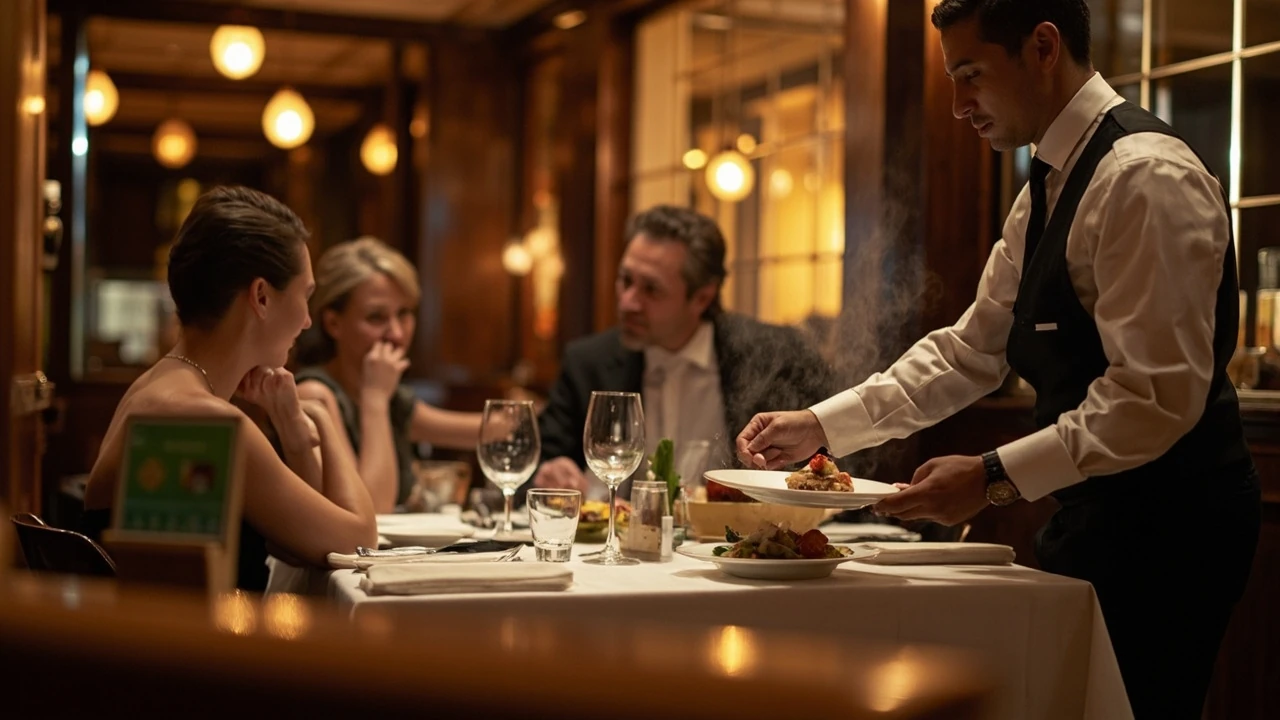
Restaurant table turn time without rushing guests
A line of guests is forming near the host stand, the bar is two-deep, and the floor is fully seated. The dining room manager leans toward the kitchen and quietly asks the expediter to push the next table. The host begins to hover. The buser watches the entrées like a stopwatch. The pressure to turn the room is real, and the temptation to nudge guests out the door is also real. The interesting problem is that the same action, a faster turn, can either grow revenue or quietly damage the brand, depending on how it is done.
This guide is about improving restaurant table turn time without rushing guests. It is written for owners, general managers, and floor leaders who feel the squeeze between rising fixed costs and a dining public that has become less tolerant of being hurried. The focus keyword, “restaurant table turn time without rushing guests,” describes a specific operational balance: move the room efficiently while keeping the experience comfortable enough that guests want to return, leave a tip, and book again next Friday.
Most guides treat turn time as a single lever. In practice it is the visible result of a chain of small decisions made before the guest arrives, during the meal, and after they leave. Improving that chain is what lets an operator compress average dwell time without ever asking a guest to leave.
What table turn time actually measures
Table turn time, also called table turn or seat turn, is the elapsed time from when guests are seated to when the table is cleared and ready for the next party. Operators usually measure it from the moment the host seats the guest until the check is presented, or sometimes until the buser resets the table. The exact definition matters because two restaurants can quote different numbers and still be describing the same dining room.
Many operators split the metric into dwell time and reset time. Dwell time is the guest-controlled portion: arrival, ordering, eating, paying, and lingering. Reset time is the operator-controlled portion: clearing, wiping, resetting glassware and cutlery, and signaling the host that the table is back in inventory. When a manager says a turn feels slow, it usually means one of those two phases has drifted.
The goal of working on restaurant table turn time without rushing guests is not to shrink a single number. It is to remove wasted minutes from each phase so the guest still feels unhurried. A table that turns in 55 minutes with a relaxed guest is a better result than a table that turns in 48 minutes with a guest who felt pushed. The first one comes back.
The non-negotiable baseline: what guests will and will not accept
Before changing any system, it helps to be honest about what guests tolerate. Industry research and operator experience converge on a few consistent patterns.
- Guests accept a busy room, a small wait, and a server who is clearly attending to several tables at once, as long as they feel noticed.
- Guests do not accept being asked to order before they have read the menu, being ignored for long stretches, or being brought the check before they have had a chance to enjoy their last bite.
- Guests accept efficient service. They do not accept theater that pretends to be efficient, such as plates being cleared while a fork is still in motion.
- Guests tolerate a soft time limit, like a single polite mention of a reservation that follows their visit, far better than an obvious one.
Any system that compresses restaurant table turn time has to respect that baseline. The minute guests feel they are being managed instead of served, the system is failing even if the number looks better.
Where the wasted minutes usually live
When a dining room feels slow, the loss of time is rarely caused by a single obvious problem. It accumulates across the visit. A useful exercise is to walk the guest journey and mark the moments where nothing useful is happening.
Before the guest sits down
Many turns are lost in the lobby. A host who seats the next table before the previous one has paid, who walks guests past a cluttered waiting area, or who seats a four-top at a table set for two will leak minutes before service begins. Reservation timing, table assignment, and lobby flow all feed into the eventual turn.
Between seating and ordering
Long menus, missing servers, slow drink delivery, and unanswered questions all stretch the front of the meal. The longer the gap between sitting and ordering, the more compressed the back of the meal will feel, which is where guests notice rushing.
Between courses
Kitchen timing errors, dropped tickets, and a server who is not aware of pacing are the most common sources of mid-meal delay. These delays cost more than a slow start because they are felt while the guest is trying to relax into the meal.
Around the check
The closing phase is where most operators either protect or destroy the experience. Asking for the check too early feels rude. Asking too late feels like an oversight. A long gap between the check landing and the card returning is one of the most reliable ways to inflate turn time and frustrate guests at the same time.
At reset
Slow busing, missed crumbs, a missing fork, a glass that has to be re-polished, and a host who is not looking at the floor all add up. A reset that takes eight minutes instead of three steals a turn from the entire evening.
Front-of-house systems that compress turn time without pressure
Most of the practical work on restaurant table turn time without rushing guests happens on the floor, not in the kitchen. The systems below are widely used in well-run independent and small-chain restaurants and are flexible enough to scale.
Reservation spacing that respects reality
Reservation spacing is the cheapest tool available, and many operators underuse it. Instead of booking tables at the exact moment a previous party is expected to leave, build in a buffer that matches your real performance. If your average dining time for a four-top is 75 minutes, a 90-minute spacing buffer is more honest than a 60-minute one. That buffer is what lets the host seat a new party without hovering at the old one.
Reservation spacing also protects the kitchen. A stack of four-tops that all need their main at 7:40 p.m. is how service collapses, and a collapsed service is what forces rushed pacing later. Spacing turns the bottleneck from the kitchen back into the dining room, where the operator has more control.
Table assignment by behavior, not just size
A table is not just a number of seats. Some tables are quieter, some are near the kitchen, some are under speakers, and some are in the path of the front door. Smart operators use those traits, not just party size, to assign tables. A two-top in a quiet corner will linger happily. A two-top near the pass will turn faster because the experience encourages it. Assigning with intent is one of the cleanest ways to influence turn time without a single word to the guest.
Service scripts that move the meal without sounding like a script
Servers do not need to memorize lines. They need a small library of phrases that let them guide the meal naturally. The phrases below are the kind of workhorse language a strong team uses to manage restaurant table turn time without rushing guests.
- Confirm the order, then say, “I will bring bread and water now and get your first round started.” This signals momentum without pressure.
- When the appetizer hits the table, ask one specific question such as, “How is the temperature on the crudo?” It is faster than “How is everything?” and makes the guest feel attended to.
- Between courses, use a soft touch like, “I will check on your main in just a moment.” Even if you do not return in thirty seconds, the expectation is set.
- When the check is the right move, offer a small next step, like, “I can bring the check whenever you are ready, or hold a dessert menu for a few more minutes.” Giving the guest a real choice removes the feeling of being pushed.
What ties these together is a simple principle: the server offers the next step and lets the guest accept or defer. That pattern is the opposite of the old-time pressure to clear plates quickly.
Course pacing as a shared responsibility
Pacing is usually imagined as a kitchen problem, but the front of house controls most of the inputs. If a server rings an entrée while the appetizer is still half full, the kitchen will fire it and the table will be asked to rush. If the server waits until plates are nearly empty, the kitchen will hit the right window and the meal will breathe.
Strong floors use a small set of rules that everyone follows:
- Fire the entrée when the appetizer is at roughly the last third, not on drop.
- Check dessert readiness before the entrée plates are cleared, and offer it as the plates leave the table, not as the check.
- Pre-bus aggressively between courses so the table feels cleared, even if the next course is five minutes away.
- Use a quiet signal between server, runner, and expediter so the team knows which table is in the home stretch and which is settling in.
These habits cost nothing to implement and can remove five to ten minutes from a typical turn without changing the guest’s experience of the meal.
Payment friction as a hidden turn killer
Closing the check is the part of the visit that the guest remembers most clearly. It is also where turn time is most often lost. Common pain points include a card terminal that needs a software update, a printed check that has to be re-run, a server who has to leave the table twice to fix a charge, and a bill that arrives on a tray and gets forgotten while the guest finishes a coffee.
Small changes in this phase protect turn time. Bringing the card reader to the table, splitting the check before the meal if asked, and confirming the payment method during the drink order are all routine moves in well-run rooms. None of them rush the guest. All of them remove a delay that used to feel invisible to staff and obvious to diners.
Back-of-house systems that protect the front
The dining room is where restaurant table turn time is measured, but most of the leverage is in the kitchen. A slow ticket, a misplaced modifier, a cold plate, or a misfired course will cost the floor far more minutes than a clumsy host.
Menu design that supports pacing
Menus that are too long, too ambitious, or too dependent on a single station create long ticket times. Long ticket times create stress at the pass. Stress at the pass creates rushed pacing. Rushed pacing creates rushed guests. A menu that is tight, station-balanced, and predictable in its cook times is one of the strongest defenses against the kind of slow burn that forces a turn to drag.
Operators who are serious about restaurant table turn time without rushing guests tend to study their cook times the way a factory studies cycle time. A dish that is genuinely five minutes faster than its neighbor is more valuable than a dish that is five dollars more profitable. Both matter, but only one of them is a turn-time tool.
Expediter as air traffic control
The expediter is the single role most responsible for holding the meal together. A good expediter calls out missing items before they become a problem, holds a course that is moving too fast, and releases a course that is ready on time. An expediter who is just a runner with a clipboard is a missed opportunity.
For most operations, the expediter needs three things to do this well: a clear view of all open tickets, a simple way to communicate with servers, and the authority to hold a course. Without those, the floor will fall back on rushing as a coping mechanism.
Pre-prep and station readiness
A cook who is searching for a pan during service is a cook who is not paying attention to the ticket. Station readiness, including labeled containers, pre-portioned proteins, and tidy mise en place, is the unglamorous work that lets the kitchen hit the same times every service. Consistency is what allows the front of house to promise a guest a confident pace.
Layout, furniture, and ambiance choices that quietly speed turns
Several physical decisions have an outsized effect on restaurant table turn time without rushing guests. They are easy to miss because they look like design choices rather than operational ones.
Chair comfort that politely ends the meal
A truly comfortable chair encourages lingering. A chair that looks comfortable but is just firm enough to remind the body that the meal is over will guide guests toward the check without anyone saying a word. This is not about punishing the guest. It is about removing the friction of asking someone to give up a piece of furniture they love.
Lighting that follows the meal
Some operators dim the lights slightly in the last hour of service. Others raise them just enough to signal that the room is closing. Either move creates a soft prompt that aligns with what the guest already knows. The same guests who would feel rushed by a server are usually comfortable with a room that is gently winding down.
Music tempo as a hidden tool
Music tempo is one of the most studied ambient factors in hospitality. A track list that gradually picks up tempo over the course of the evening nudges guests into a slightly faster energy without their noticing. A playlist that goes the other direction will hold guests at the table, which is great at lunch and risky at peak dinner. Few operators adjust the tempo deliberately, and that is a missed lever for restaurant table turn time without rushing guests.
Floor plan that supports server movement
Servers burn time and energy on steps. A floor plan with awkward corners, a station in the wrong place, or a path that crosses the kitchen door wastes minutes that eventually show up as long turn times. Re-mapping a floor after a few busy services is one of the cheapest operational improvements an operator can make.
Measuring restaurant table turn time without rushing guests
What gets measured gets managed, but the wrong metric will push the team in the wrong direction. A single average turn time hides as much as it reveals.
The table below shows the difference between measuring turn time the way a spreadsheet wants and the way a manager actually needs to see it.
| Metric | What it shows | Risk of relying on it alone |
|---|---|---|
| Average turn time across all tables | Overall room efficiency | Hides problem tables, day parts, and server patterns |
| Turn time by party size | How two-tops vs four-tops vs six-tops behave | Can push servers to seat smaller parties to protect the number |
| Turn time by server | Where training or support is needed | Can be misused to pressure the slowest server, which often backfires |
| Turn time by day part | How lunch compares to dinner | Useful for staffing, less useful for guest experience decisions |
| Time from check presented to payment | Closing-phase friction | Focuses energy on a phase the guest controls |
| Guest rebook rate after a turn of X minutes | Whether faster turns are costing return visits | The most honest measure of whether the system is working |
The bottom row is the one that should anchor any serious program of work on restaurant table turn time without rushing guests. A dining room that turns faster but books less is not a win. A dining room that turns in the same time but books more is a real win, even if the average turn time is unchanged.
A second table is useful for tracking the operational causes of a slow turn, separated from the guest experience. Many operators use a simple cause-and-effect sheet to identify where minutes are leaking.
| Phase of the visit | Typical time | Where minutes leak | Most common fix |
|---|---|---|---|
| Lobby and seating | 0 to 5 minutes | Host hunting for tables, slow greeting, mis-sized table | Pre-set tables, clear table-status board, seat by behavior |
| Order taking and first round | 0 to 8 minutes | Menu confusion, slow bar, server not on the floor | Pre-batched drinks, table touches within 90 seconds, simpler menu |
| Appetizer course | 10 to 20 minutes | Kitchen queue, dropped tickets, long menu | Tight cook times, station tickets, expediter authority |
| Main course | 20 to 40 minutes | Late fire, cold plates, runner delay | Pre-bus, fire at last-third, runner handoff at the pass |
| Dessert and check | 40 to 70 minutes | Forgotten check, slow terminal, unclear split | Table-side payment, pre-confirm split, offer dessert with check |
| Reset | 70 to 75 minutes | Slow bus, missing items, no signal to host | Dedicated reset team, reset checklist, status board |
Reading across the table, the same pattern appears: the most expensive minutes are lost in coordination, not in cooking. Improving restaurant table turn time without rushing guests is mostly a coordination problem dressed up as a hospitality problem.
The role of technology, used carefully
Modern point-of-sale systems, reservation platforms, and table-management tools can do real work on turn time, but only if they are configured to support the floor rather than to police it.
- Reservation platforms can spread bookings instead of stacking them. A smart platform will suggest a spacing buffer based on party size and day part.
- Table-management displays give the host and manager a real-time view of which tables are about to turn, which are holding, and which are waiting on the kitchen. The best displays are glanceable from across the room.
- POS systems can time-stamp each course and surface the tables that are drifting past their expected pace. This is useful only if the team trusts the data and acts on it before the drift becomes a problem.
- Payment tools that support tap-to-pay, split checks, and remote tip adjustments remove the closing-phase friction that is one of the most common causes of slow turns.
Technology does not replace the floor leader. It is the floor leader’s flashlight. Used well, it is one of the cleanest ways to improve restaurant table turn time without rushing guests, because it removes small delays that the team would otherwise have to fight with their gut.
Staff training that builds a culture of pace without pressure
Servers, hosts, runners, and busters will all reflect the culture they are trained in. A team that is rewarded for fast turns will eventually become a team that rushes guests. A team that is rewarded for guest rebook rate, average check, and online reviews will find ways to turn the room efficiently because the right behavior is what they are measured on.
A training program aimed at restaurant table turn time without rushing guests should cover at least the following:
- How to read a table, including the body language that says “we are wrapping up” versus the body language that says “we just ordered, leave us alone.”
- How to offer the next step, including the exact phrases the house considers appropriate and the ones that are off limits.
- How to time the check offer, including when to bring the card reader on the first ask and when to wait.
- How to reset a table so the next guest gets a clean, complete setup on the first try.
- How to flag a problem to the manager, such as a long ticket, a difficult modifier, or a guest who seems unhappy, before it becomes a complaint.
Training is not a one-time event. The best operators run a five-minute pre-shift each day that names the slow table from the night before, what caused it, and what the team will try tonight. That daily habit, more than any tool, is what keeps the system honest.
Common mistakes that quietly turn efficiency into rushing
Even thoughtful operators fall into a few predictable patterns. Catching them early is part of the work.
- Asking for the order before water arrives. It feels efficient. It feels rude. There is no version of this that improves guest experience.
- Clearing plates while the guest is still chewing. This is the single fastest way to make a guest feel pushed, and it is still common in busy rooms.
- Dropping the check without being asked. The check should always be offered, never dropped unprompted, unless the house is closing.
- Standing at the table while the guest decides on dessert. Hovering is the most obvious form of rushing and the easiest to fix.
- Commenting on how busy the kitchen is. Guests do not want to be your confidant about service stress. They want their meal.
- Treating a lingering guest as a problem. Some lingering is good. It is called dessert and a digestif, and it is revenue.
The list is not exhaustive, but every item on it is a mistake I have seen in working dining rooms. Each one is a small wound on the experience that adds up to a guest who does not come back.
A simple weekly review that keeps the system honest
Improving restaurant table turn time without rushing guests is not a project. It is a practice. A weekly review, even a 20-minute one, is what separates a system that drifts from a system that improves.
The review should ask four questions, in this order:
- What was our average turn time by party size this week, and how does it compare to last week?
- Which tables, if any, exceeded our target turn time, and what was the documented cause?
- What was our rebook rate, online review sentiment, and average check for the same period?
- What is one specific change we will try next week to improve either the turn time, the guest experience, or both?
The fourth question is the one that matters. A team that asks it every week will, in six months, run a tighter room than one that runs a quarterly review with a consultant. Most operational change is a function of small, repeated adjustments, not large ones.
How this connects to the rest of the operation
Table turn time is often treated as a floor problem, but it sits at the intersection of almost every other part of the restaurant. The list below shows the connections a serious operator will make.
- Menu engineering. Dishes that hold too long at the table or that are hard to send back out will slow turns. A tight menu is a turn tool.
- Staffing. A floor that is understaffed will over-correct with rushing. A floor that is overstaffed will lose money. The right number of servers, runners, and busers is what makes a calm room possible.
- Marketing and positioning. A restaurant that promises a leisurely tasting menu cannot be run like a quick-service cafe, and vice versa. The marketing promise has to match the operational reality, or the floor will be forced to choose between the brand and the number.
- Restaurant marketing that fills seats also has to be matched with marketing that respects the seat. Operators serious about long-term revenue look at the marketing side as part of the turn system, not as a separate function.
If you are already working on the larger picture of how to grow the business, a focused look at restaurant marketing is a useful next read, since the promise a restaurant makes in its marketing is the same promise the floor has to keep on every visit.
Quick-reference checklist for tonight’s service
The list below is a starting point for any operator who wants to begin work on restaurant table turn time without rushing guests. None of the items are expensive. All of them are within reach of a single manager on a single shift.
- Review the reservation book and adjust spacing where the same time is double- or triple-stacked.
- Walk the dining room with a stopwatch and time the gaps between seating, first drink, and appetizer drop.
- Confirm the expediter knows which tables are in the home stretch and has the authority to hold a course that is moving too fast.
- Brief the team on the check-offer language and make it clear that the check is offered, not dropped.
- Ask the busing team to pre-bus aggressively between courses and signal the host the moment a table is reset.
- Dim or brighten the room slightly in the last hour to signal a soft close without a hard push.
- Track the tables that exceed the target turn and write down the cause. A pattern will appear within a week.
Use the checklist as a starting point, not a script. The point is to build a small set of habits that the team can repeat without thinking, so the room can breathe and the numbers can move at the same time.
Frequently asked questions
What is a good table turn time for a full-service restaurant?
It depends on the concept. Casual full-service restaurants often target 45 to 60 minutes. Mid-scale independent restaurants usually target 60 to 90 minutes. Fine dining and tasting-menu restaurants often run 90 to 120 minutes or more. The right number is the one that matches your concept, your menu, and the experience you promise. A turn that is faster than the concept can support is a sign that the system is forcing guests out the door.
How do you speed up table turns without making guests feel rushed?
The reliable moves are reservation spacing, table assignment by behavior, consistent course pacing, pre-busing, table-side payment, and a thoughtful closing phase. The unreliable moves, including clearing plates early, dropping the check, and hovering, almost always backfire. The goal is to remove wasted time from the visit, not to compress the time the guest controls.
Does table turn time really matter for revenue?
Yes, but only when it is balanced with guest experience. A faster turn, holding average check constant, increases covers per labor hour and covers per seat, which is the core of restaurant math. A faster turn that hurts the guest experience will, over time, reduce rebook rate, average check, and review scores, which wipes out the gain. The right framing is turns per week, not turns per service.
What is the difference between dwell time and reset time?
Dwell time is the part of the visit that the guest controls, from seating to the moment they leave. Reset time is the part the operator controls, from leaving the table to it being ready for the next party. Working on restaurant table turn time without rushing guests means compressing reset time first, smoothing the moments that delay dwell time, and never trying to shrink the part of the meal the guest actually enjoys.
How many covers per hour is a good benchmark?
Benchmarks vary by segment. A well-run casual full-service restaurant often targets 1.5 to 2 turns per table on a busy night, which works out to roughly 30 to 50 covers per hour in a 25- to 30-seat room. Mid-scale restaurants typically run slower. The most useful benchmark is your own, comparing this week to last week with the same staffing, the same menu, and the same weather, rather than a national average.
What role does the host play in table turn time?
The host is the air traffic controller of the dining room. A strong host spaces reservations, seats by behavior, watches the floor for tables that are about to flip, and signals the busing team in real time. A weak host lets tables stack at the door, seats a large party at a small table, and waits for a server to wave before seating the next table. The difference shows up in the numbers within a single service.
Should I use a table management system?
If your dining room has more than about 20 seats, a table management system pays for itself quickly. The best systems are glanceable, integrate with your POS and reservation platform, and let the host and manager see the same view of the floor. If you are smaller, a simple status board and a disciplined pre-shift briefing can do most of the same work.
How do I know if my turn time is too aggressive?
The honest signals are rebook rate, online review sentiment, and average check. If those numbers are drifting down while turn time is getting faster, the system is pushing too hard. The other signal is your own team. Servers who feel they have to apologize to guests, or hosts who feel they have to apologize to servers, are working in a system that is asking the wrong question.
Can I fix a slow turn by changing the menu?
Often, yes. A menu that is too long, too dependent on a single station, or full of dishes with long cook times will create the kind of ticket drift that turns into slow turns. A menu that is station-balanced, cook-time consistent, and easy for a server to talk through will quietly fix many of the pacing problems that show up as slow turns at the table.
What is the single biggest lever for restaurant table turn time without rushing guests?
Reservation spacing. A reservation book that respects the real performance of the room removes pressure from the host, the kitchen, and the floor at the same time. Most of the other moves, from scripts to layout, work better when the book is not asking the team to do something physically impossible.
Improving restaurant table turn time without rushing guests is, in the end, a question of what kind of room you want to run. The room that moves fast and feels slow, the room that moves at the pace of its guests, and the room that is busy and welcoming. Most operators want the second one. The systems above are how you build it.