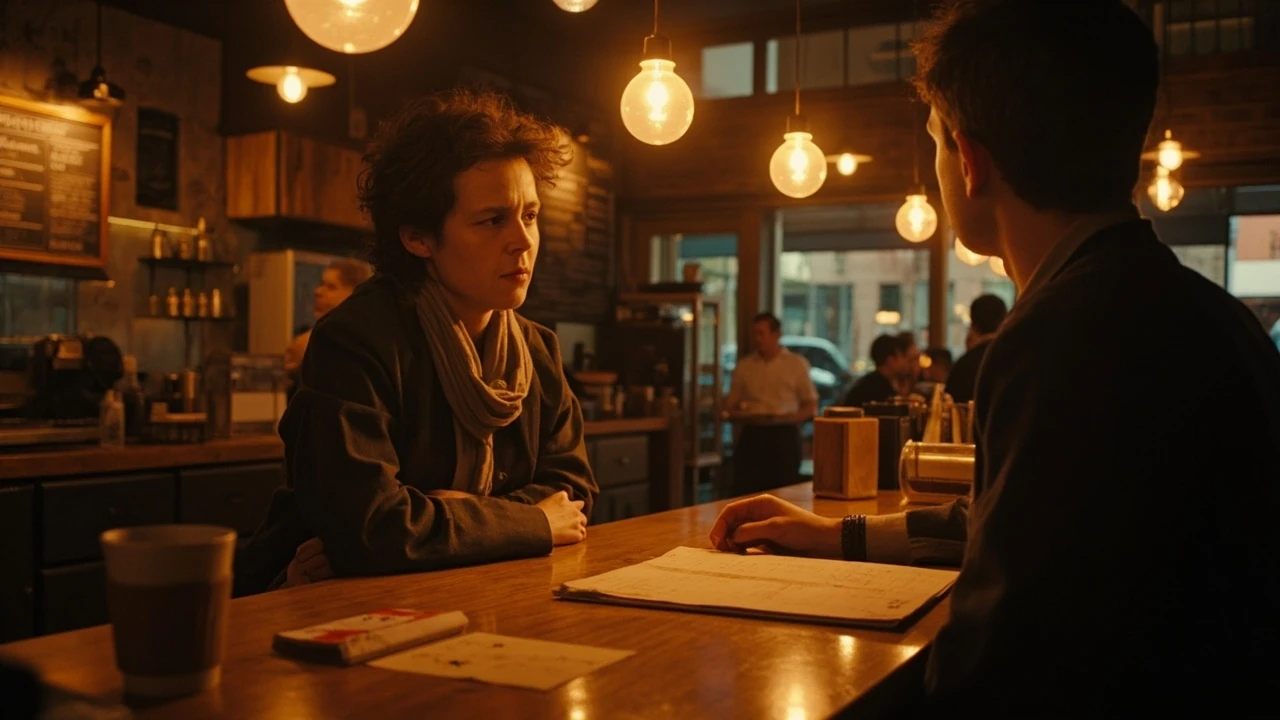
Customer loyalty is the quiet edge behind every food business that lasts
A line of regulars who walk in without looking at the menu is worth more than a month of paid ads. Most food businesses chase new guests, then wonder why the dining room feels cold on a Wednesday. The work that keeps a restaurant, café, bakery, or ghost kitchen alive is older and quieter: a regular who chooses you twice a month, then three times, then brings a friend. That arc is what the industry calls customer loyalty, and it is built by repeated, small decisions, not by one big campaign.
This guide is written for independent food operators, hospitality marketers, and small chains who want a working view of customer loyalty. It covers what it actually is, how it differs from a points program, what moves it, what quietly kills it, and how to measure whether your efforts are paying off. The focus is the kind of loyalty that survives a price increase, a bad review, or a new competitor opening across the street.
What customer loyalty means in a food business
In everyday restaurant talk, customer loyalty is the pattern of a guest choosing the same place again, without needing a discount to do it. It is not the same as customer satisfaction, although satisfaction is part of the foundation. A guest can be satisfied and still drift to a newer place down the block. Loyalty is what keeps them parked at yours.
Three layers are usually mixed together, and it helps to separate them:
- Behavioral loyalty is the visible part: visit frequency, average ticket on repeat visits, and the share of revenue that comes from returning guests.
- Attitudinal loyalty is the invisible part: how a guest talks about you to a friend, whether they defend you when someone criticizes you, and whether they would miss you if you closed.
- Engagement loyalty sits in the middle: opening your emails, saving your posts, joining your loyalty program, or following you on a platform you control.
Food businesses often optimize only for the first layer, because behavioral data is easy to pull from a point of sale. The mistake is treating the other two as automatic. They are not. A guest can come back out of habit for years and still leave the moment something better appears. The second and third layers are what keep them when the market shifts.
Why customer loyalty is harder now than five years ago
The basic mechanics of earning repeat visits are the same they have always been. What changed is the environment around the diner. Three shifts make this work harder in 2026 than it was in 2019.
First, discovery is faster. A new opening within a one-mile radius shows up in the same apps your regulars already use, and the price of switching is essentially zero. Loyalty has to be earned by something the new place cannot copy in a week.
Second, third-party platforms own more of the relationship. Delivery apps, search, and social platforms sit between you and the guest. Many operators realize too late that a third of their revenue is routed through a channel that knows the guest better than they do. When the platform raises fees or changes a feature, that revenue becomes fragile. The only defense is a relationship the platform does not control: a list of guests who know how to find you without it.
Third, expectations have risen quietly. Diners now expect accurate menu details, fair pricing, and a real answer when something goes wrong. The floor of “good enough” is higher, and the ceiling of “wow” is more crowded. Operators who only meet the floor will not generate the kind of memory that creates loyalty.
What actually drives customer loyalty in food
Loyalty in this industry is built from a small set of predictable drivers. The exact mix depends on the concept, but the same elements show up in research on customer loyalty and in operator experience.
Consistent core quality
A regular will forgive a Tuesday night when the kitchen is off, as long as the next visit tastes like the one they remember. Consistency is the basic contract. It is also the hardest thing to scale, because it depends on hiring, training, supplier reliability, and recipe discipline. Operators who treat quality as a creative project, not a manufacturing process, eventually produce a product their team cannot repeat.
A recognizable point of view
Guests return to places that feel like somewhere, not anywhere. Specificity is the lever. A bakery that only does laminated dough, a pizzeria that insists on a 72-hour cold ferment, a coffee bar that roasts its own beans, a taqueria with a single salsa program – each of these is easier to be loyal to than a generic concept that tries to please everyone. Specificity is the subject of From Scratch: Why Specificity Wins Food Marketing, and it is the single most underrated loyalty asset in food.
Recognition, not just rewards
Being remembered is more powerful than being rewarded. A server who says, “the usual?” to a guest standing in line is doing loyalty work that no barcode scan can match. The investment is zero dollars and a few weeks of training. The return is a guest who feels awkward going somewhere else, because the social cost of leaving is real.
A fair exchange of value
Loyalty programs work when the guest feels the exchange is honest: a free coffee after nine visits, a free entrée on a birthday, early access to a new menu. They fail when the math is tilted against the guest, when redemption is awkward, or when the reward is something the guest could get for a dollar anywhere. The clearest test is whether a regular would still feel respected without the program.
Easy to choose, hard to forget
If a guest has to think about coming back, they will not. The path back has to be short: a saved number, a bookmarked page, a recurring reminder, a known parking spot. Most of the work is removing friction, which is why the operational details of a restaurant often matter more than the marketing.
The most common loyalty mistakes in food businesses
Most loyalty problems are not strategy problems. They are execution problems dressed up as strategy. The patterns below show up in almost every audit I do.
Confusing a loyalty program with a loyalty strategy
A punch card is a tool, not a plan. Many operators install a digital loyalty platform, then expect behavior to change, only to find that fewer than ten percent of guests ever enroll. A program is one channel. A strategy is the whole system: what you serve, how you train, how you recover from mistakes, and what you do with the data you collect.
Treating price as the main lever
Discounts bring guests in once. They do not, by themselves, make guests return. Heavy discounting trains a guest to wait for the next deal, which is the opposite of loyalty. The operators who use price well fold it into a clear reason: a prix fixe lunch that respects a working guest’s time, a weekday happy hour that fills a slow night, a family bundle on a Sunday. The price has a story the guest understands.
Ignoring the off-premise guest
Takeout, delivery, and catering are now a meaningful share of revenue for most food businesses, and loyalty is rarely designed for these orders. The guest who eats your food on their couch three nights a week is as valuable as the one in your dining room, but the relationship is harder to build without a face-to-face moment. Operators who design for off-premise loyalty – packaging, follow-up, an easy reorder path – often find their overall repeat rate climbs.
Letting recovery be improvised
A wrong order, a long wait, a forgotten reservation, a cold entrée: each of these is a small test of whether the business can be trusted. Most loyalty is built in how a business responds to a mistake, not how it avoids one. Operators who write down a recovery playbook and train the team on it turn a complaint into a memory that strengthens the relationship.
How to design a customer loyalty program that earns its keep
A program is worth running only if it changes a specific behavior. Before you install software or print cards, write down what you want the program to do, in one sentence. “Increase the share of monthly revenue from repeat guests from 30% to 45% within twelve months” is a goal. “Reward our best customers” is not.
Then choose the simplest design that can deliver that behavior. The table below maps common program types to the behaviors they actually change.
| Program type | Best for | Behaviors it changes | Watch out for |
|---|---|---|---|
| Stamp / punch card | Coffee, bakeries, quick-service | Visit frequency, habit formation | Slow rewards, lost cards, hard to personalize |
| Points on spend | Casual dining, fast casual, delivery-heavy | Average ticket, multi-visit behavior | Math that feels stingy, complex tiering |
| Paid membership | Coffee programs, ghost kitchens, specialty retail | Upfront cash, very high visit frequency | Need a real perk, churn risk if poorly priced |
| Tiered status | Wine bars, multi-location restaurants | Aspirational engagement, larger groups | Tiers that mean nothing, opaque rules |
| Subscription (e.g., coffee, wine) | Roasters, wine bars, bakeries | Predictable recurring revenue, habit | Cancellation friction must be fair, not punitive |
| Surprise and delight | Fine dining, neighborhood spots with regulars | Word of mouth, attitudinal loyalty | Hard to scale, easy to fake, must be sincere |
Notice that none of these are about technology. The platform is the easiest decision and the least important one. The hard decisions are about the math, the moment of reward, and how the team explains the program to a guest who is in a hurry.
What to measure so you actually know what is working
Most operators track the wrong things because they are easy to track. Counting punch cards is not the same as measuring loyalty. A useful dashboard has a small set of metrics that together describe whether the relationship is healthy.
| Metric | What it tells you | How to read it |
|---|---|---|
| Repeat guest share | Share of transactions from guests who have visited in the last 60 days | A healthy independent restaurant usually sits between 35% and 55%; below 25% is a warning |
| Visit frequency | Average visits per active guest per quarter | Watch the trend, not the absolute number; a flat line is a warning |
| Average ticket on return visits | What a guest spends on a second or third visit | Often higher than first-visit ticket, but only if you have given them a reason to explore the menu |
| Time between visits | Average gap between a guest’s orders | Useful to segment; long gaps for some groups are a sign of drift |
| Program enrollment rate | Share of transactions that join the loyalty program | Below 15% after six months usually means the ask is in the wrong place |
| Redemption rate | Share of enrolled guests who actually use a reward | Below 30% means the reward is not connected to a real habit |
| Recovery rate | Share of complaints that lead to a second visit | One of the most honest signals of how a team treats people |
The list looks simple, but most of these numbers do not exist on a typical POS report. They have to be assembled from order data plus a guest identifier. A phone number, an email at the register, or a loyalty account are all enough. The work of building the dataset is unglamorous, and it is the difference between guessing and managing.
How to turn operational choices into loyalty assets
The choices that build loyalty are usually operational, not promotional. A short list of the highest-return moves, drawn from working with small food businesses:
- Write the welcome. Train the team on a short, specific greeting that uses the guest’s name when you know it. Two sentences, not a script.
- Protect the regular’s seat. If you can, hold a few peak-time spots for guests who come in weekly. Recognition beats a new reservation system.
- Own the follow-up. A short, personal note to a guest after a complaint does more than a refund. The format matters less than the timing.
- Make reordering easy. For delivery and takeout, build a saved-order flow that takes one tap. The single biggest loyalty lever in off-premise is the absence of friction.
- Pay attention to the second visit. The first visit is a try. The second visit is a decision. Focus the post-first-visit touch on the second visit, not on collecting an email.
- Use a menu to teach, not to list. A well-engineered menu is a loyalty tool because it helps a guest choose well. This is the subject of Menu Engineering Without Killing the Soul of the Menu.
The role of content in customer loyalty
Content is the cheapest, slowest, and most leveraged form of loyalty work. A guest who reads your supplier story, sees how the bread is made, or watches the chef explain a technique feels like they know you before they have walked in. That familiarity is one of the few competitive moats a small operator can build without spending on ads.
The mistake is treating content as a separate marketing job. The most effective content for a food business is the kind the team already has: the story behind a dish, the reason a supplier was chosen, the small change that fixed a busy night, the way a holiday menu comes together. Most of these become a paragraph, a 30-second video, or a few photos. How to Turn One Signature Product Into a Month of Content walks through the practical version of this.
Content becomes loyalty when the guest starts to feel like they are following a place, not a brand. The shift is small but the effect is durable. A guest who follows your process is harder to lose to a coupon from a competitor.
How to think about customer loyalty during hard stretches
Loyalty is built in the good weeks and tested in the bad ones. A price increase, a bad review, a construction project on the street, a slow season, a new competitor – each one is an opportunity to either deepen the relationship or quietly lose it. The work in these moments is mostly about honesty, timing, and follow-through.
Three rules hold up across most situations:
- Explain before you change anything. Guests accept price increases they understand. They do not accept surprises. A short, clear note – signed, not corporate – goes a long way.
- Protect the experience for the regular first. When capacity is tight, the regular should feel the priority. A simple note that they can still get their usual, or a small gesture when the kitchen is off, is remembered for years.
- Do the boring work. A weekly review of repeat-guest share, a quick read of recent complaints, a 15-minute look at your online presence. The discipline of paying attention is what keeps the relationship from drifting. A useful starting point is The 15-Minute Food Business Website Audit.
Customer loyalty versus customer retention, in plain language
The two terms get used as if they were the same, and they are not. Retention is a measurement: the share of guests who came back within a given window. Loyalty is a state: the disposition that makes the guest choose you next time without being asked.
You can retain a guest through contracts, friction, or inertia, and still have no loyalty. Subscription services that are painful to cancel are a common example. A restaurant does not have the same structural advantage, which is good news: a diner who comes back is almost always a diner who wants to come back. The work is to keep that want honest, and to make the next visit obvious.
What to do in the next thirty days
Loyalty does not need a budget or a platform to start. A reasonable thirty-day plan for a small food business looks like this:
- Week 1: Pull the share of repeat guests from your POS for the last 90 days. Set a target that is ten points above today’s number.
- Week 2: Pick one operational change that affects the second visit: a greeting, a follow-up, a saved-order path, a menu teach. Train the team on the specific behavior.
- Week 3: Choose one content piece per week that explains a real part of the business. Publish it on a channel you own, not only on a platform you rent.
- Week 4: Review the metrics. Keep the change if it moved the number. Adjust if it did not. Plan the next experiment.
The point is not the plan itself. The point is to put loyalty work on the calendar, in small repeated steps, the same way the kitchen puts mise en place on the schedule before service.
Frequently asked questions
What is the difference between customer loyalty and a loyalty program?
Customer loyalty is the overall pattern of a guest choosing you again. A loyalty program is one tool, usually a points or rewards system, that tries to influence that pattern. The program can help, but it is not the same thing as the relationship. Many businesses with strong loyalty have no formal program at all, and many with sophisticated programs have weak loyalty.
How long does it take to build customer loyalty for a new food business?
For an independent concept, the first signals of real loyalty usually show up between months four and eight, once the kitchen and service have stabilized and a core of regulars has formed. The first ninety days are almost always about finding the right guest, not retaining one. Trying to push loyalty messaging before the product is consistent is one of the most common early mistakes.
Do loyalty programs actually work for small restaurants?
They can, but only when the program is tied to a real habit the guest already has, the math is honest, and the team can explain it in one sentence. Programs that ask a guest to remember a separate app, scan a code, and track a small percentage of spend usually underperform. Programs that replace an existing habit – a paper punch card for a daily coffee, a phone number for a favorite neighborhood table – usually overperform.
What is the best loyalty metric to track first?
Start with repeat guest share, defined as the share of transactions from guests who have visited in the last sixty days. It is the single number that most directly describes the health of the relationship, and it can be calculated from order data plus a guest identifier. Add visit frequency and average ticket on return visits once the basic number is being tracked consistently.
How does customer loyalty relate to word of mouth?
Word of mouth is the marketing expression of loyalty. A loyal guest does not only come back; they also recommend, defend, and bring others. The two are linked but not the same. A guest can recommend you once and never return, and a guest can return for years without ever telling a friend. The work that produces both – a consistent product, a recognizable point of view, fair treatment – is the same work.
Should customer loyalty be measured by NPS or by repeat behavior?
Both have a place, but they answer different questions. NPS is a snapshot of attitude, useful for tracking perception over time and for understanding why behavior is moving. Repeat behavior is the actual economic outcome, useful for tracking the business. If you can only track one, track repeat behavior, because it is what pays the rent. If you can track both, watch how they move together; a divergence is usually a sign of something worth investigating.
Is customer loyalty worth more for off-premise orders than for in-house dining?
For most operators in 2026, off-premise is a larger share of revenue than it was a few years ago, and the off-premise guest is often harder to keep. There is no face-to-face moment, the relationship is mediated by an app, and the switch cost is near zero. Designing the off-premise experience specifically for loyalty – packaging, follow-up, easy reorder, personal notes – is usually a higher-leverage investment than adding another in-house perk.
What is the biggest threat to customer loyalty in food right now?
Dependence on third-party platforms is the largest structural threat. A guest whose relationship with you is mediated by a delivery app, a search result, or a social platform can be rerouted by a fee change, a feature update, or a competitor’s ad spend. The defensive move is to move as much of the relationship as possible onto channels you control: an email list, a phone number, a saved bookmark, a recurring reservation.
How do you rebuild customer loyalty after a major mistake?
Quickly, specifically, and without conditions. Acknowledge what happened in plain language, explain what will be different next time, and follow up. A small, relevant gesture – a free entrée, a personal note, a priority reservation – matters more than a refund. The most common mistake after a mistake is hiding. The most common rebuild is a short, honest conversation followed by visible change.
Can customer loyalty be measured for a brand new restaurant with no history?
Yes, but the metric will be different at the start. Track the share of second visits, the share of guests who return within thirty days, and the share of guests who bring someone with them on the second visit. These numbers are the leading indicators of the repeat behavior that will show up later. Treat the first six months as a calibration period, and resist the urge to optimize programs before the product is steady.