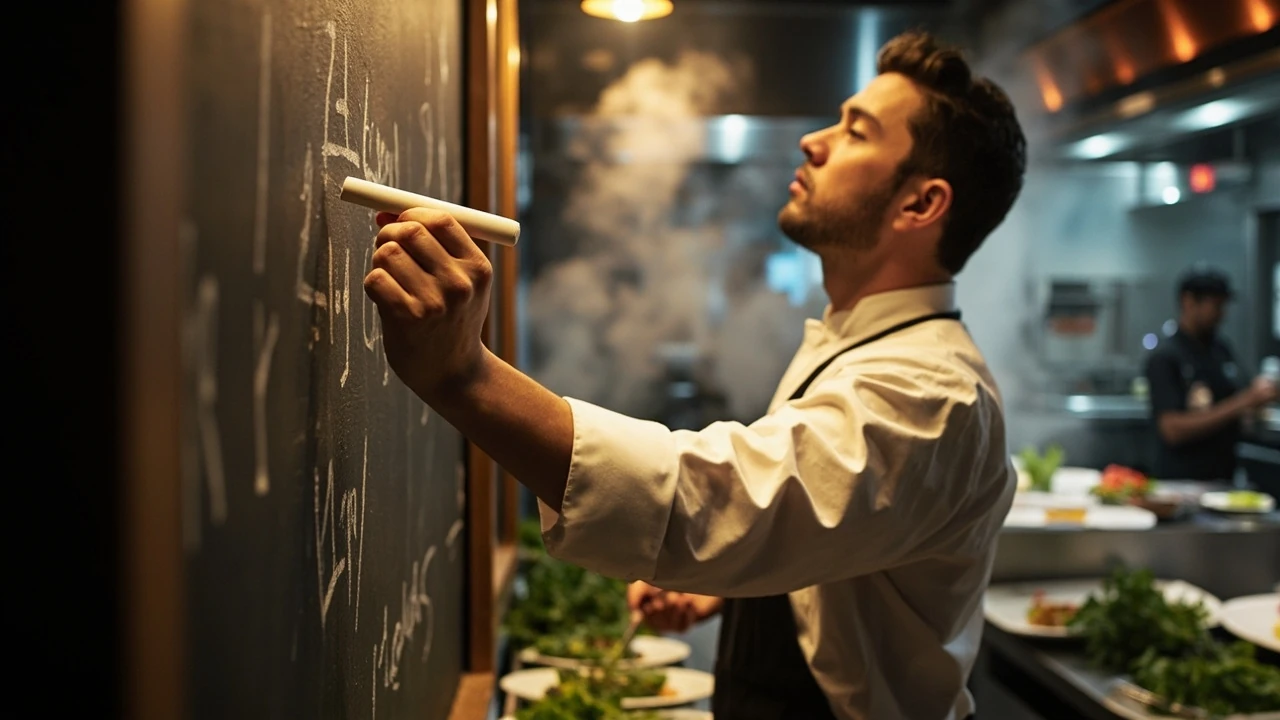
How to write daily special descriptions that sell more plates every night
A line cook at a 60-seat bistro in Austin rewrote the same chicken dish three different ways in a single week. The first version named the protein and the price. The second mentioned the sauce and the side. The third opened with a single sensory line about the grill, named the farmer who grew the herbs, and ended with a question for the guest. Sales of that protein tripled across the week, and the third version cost the kitchen nothing extra to produce. Daily specials are the most flexible piece of menu real estate most restaurants will ever own, and the description is the part that decides whether a guest ever orders it.
Learning how to write daily special descriptions that sell is less about literary flair and more about a repeatable framework. The goal of this guide is to give chefs, owners, and front-of-house managers a working system: how to choose what to feature, how to write a description guests can scan in under three seconds, how to avoid the clichés that flatten every special into background noise, and how to test what is actually working without needing a data team.
Why daily specials deserve real writing, not a chalkboard afterthought
Daily specials exist for a reason. They let a kitchen move product, test a new dish, reward regulars, and tell a story that a static menu cannot. The problem is that most descriptions are written at 4 p.m. by a cook who has thirty other things to think about, and they read like inventory lists. “Pan-seared salmon with lemon butter, roasted potatoes, and seasonal vegetables.” That sentence is technically correct, and it does almost nothing for the guest, the cook, or the business.
When a daily special is written well, three things change at once. Guests feel like they are getting access to something curated rather than something leftover. Servers can sell it with confidence because the description gives them a hook. The kitchen gets honest feedback because the dish has a clear identity, and any spike or drop in sales can be tied back to a specific change. That is the practical difference between a daily special that happens to be on the menu and a daily special that the room actually orders.
The job a daily special description has to do
Before worrying about adjectives, it helps to name the jobs the description has to perform. A good daily special description does at least four of the following:
- It tells the guest what the dish is, in plain language, without leaving them to guess.
- It creates a sensory picture that makes the guest taste it before they order it.
- It explains why this dish is on the menu today, instead of yesterday or tomorrow.
- It gives the server a hook they can repeat in their own voice.
- It protects the kitchen by setting expectations about flavor, portion, or richness.
- It quietly points the guest toward a higher-margin choice without feeling pushy.
Most weak descriptions only do the first job. Strong descriptions quietly do all six, and the guest never feels marketed to. The rest of this guide walks through how to build that.
How to choose what to feature before you write a single word
Writing a description in the wrong order is the most common reason specials stall. Chefs often start with the dish they want to cook, then try to dress it up after the fact. A better order is to start with the constraint, then move to the dish, then move to the words.
Start with what the room actually needs
Ask three questions before picking a dish. What is the kitchen already good at? What product is the walk-in pushing out the door? Where is the menu weakest on a given night of the week? A Monday special that uses up Saturday’s prep is a margin play. A Friday special that fills a slow fish category is a traffic play. The description you write will be different in each case, and pretending those are the same job is how specials end up sounding generic.
Pick the anchor before the adjectives
Every daily special has an anchor, the one thing you want the guest to remember after they put down the menu. Common anchors include a flavor, a producer, a technique, a season, or a nostalgia cue. A short rib special can be anchored on the braise, on the ranch the beef came from, or on the memory of a Sunday dinner. Choose the anchor first, because the rest of the description is built around it.
Match the special to the night
Tuesday is not Friday. A heavy, rich special on a slow Tuesday may feel brave on the menu and underperform at the table. Matching the weight, price, and format of the special to the typical guest on that night is a quiet form of menu engineering, and it is the layer most operators miss when they write the same kind of special seven days in a row.
The four-part structure that works for almost any daily special
Once you know what you are featuring and why, the description itself becomes much easier. A reliable structure for a daily special description has four parts, in this order: a sensory hook, the name of the dish in plain language, the detail that makes it special today, and a gentle close that gives the server somewhere to go.
| Part | Job it does | Example phrase |
|---|---|---|
| Sensory hook | Triggers appetite and curiosity in the first six words | “Slow-braised, fork-tender, and glossed in pan jus” |
| Plain name | Tells the guest what they are actually ordering | “grass-fed beef short rib over creamy polenta” |
| Why today | Explains the story, producer, or technique that makes it worth choosing | “from a small cooperative ranch in the Hill Country” |
| Server close | Leaves a hook a server can repeat or a pairing they can suggest | “pairs well with the peppery arugula side or a glass of barbera” |
That structure is not a rule, it is a default. Some specials will lead with the producer, some will lead with a memory, and some will skip the server close because the dish is self-explanatory. But having all four parts in mind is what stops a description from collapsing into a single, dry sentence.
Writing the sensory hook without sounding like a brochure
The sensory hook is the part that decides whether the guest reads the rest of the line. It is also the part most likely to go wrong, because the temptation to be poetic is high and the room for cliché is small. Words like “succulent,” “decadent,” “mouthwatering,” and “irresistible” have been used so many times that they signal nothing. They are the language of a brochure, not of a kitchen.
A more useful approach is to write the hook from the cook’s point of view, not the marketer’s. What does the dish look like when it comes off the line? What does it smell like in the first ten seconds? Where does the flavor land? If you can answer those, you can write a hook that is specific enough to be believable. Compare two versions of the same dish:
- Weak: “A delicious take on a classic comfort food, made with the freshest ingredients.”
- Strong: “Crisp at the edges, custardy in the middle, and finished with cracked pepper and a slick of brown butter.”
The first version could be any dish in any restaurant. The second version could only be this dish, on this night, in this kitchen. That specificity is what the guest is paying for, even when they cannot name it.
How to talk about producers, sourcing, and technique without name-dropping
Producers and sourcing matter more to guests every year, but name-dropping is the fastest way to sound like you are performing rather than cooking. A simple test is to ask whether the producer detail changes how the dish tastes or how it is made. If it does, it belongs in the description. If it does not, it belongs in a sidebar, a QR code, or your Instagram, not in a three-line special.
Technique is similar. A dish that is cooked over hardwood, finished in a wood oven, or hand-cut to order is a real difference a guest can taste. A dish that is “lovingly prepared” is a phrase the guest has read a thousand times. When you do mention technique, anchor it in something concrete: temperature, time, tool, or result. “Seared rare, rested, and sliced tableside” tells the guest something. “Cooked to perfection” tells them nothing.
Pricing, anchoring, and the quiet work of the daily special
Daily specials are also a pricing tool, whether you treat them that way or not. They sit outside the printed menu, which means the guest has no reference point for value. That is both a risk and an opportunity. A special that is priced far above the rest of the menu will feel like a mistake. A special that is priced slightly above the average entrée, with a clear reason for the difference, can pull guests up the price ladder without resistance.
| Special positioning | Typical price relationship to menu | What the description must do |
|---|---|---|
| Margin recovery (use up product) | At or slightly below menu average | Lead with flavor and comfort, not exclusivity |
| New dish test | At menu average | Frame as a limited try, invite feedback |
| Showcase or experience dish | Above menu average | Justify the premium with technique, producer, or portion |
| Loss-leader or traffic driver | Below menu average | Make the value obvious without sounding desperate |
Price is part of the description, even when the number is printed separately. The words on the chalkboard set expectations that either support the price or fight it. A short, dry description next to a high price reads as a mistake. A vivid, specific description next to a high price reads as a choice. If you are still thinking about how pricing and wording work together at a deeper level, the menu pricing strategies that protect margin without losing guests piece is a useful companion read.
Length, format, and how the description actually gets read
Daily special descriptions are read in a hurry, usually while a server is standing nearby, often under bad lighting. That reality should shape every word choice. A line that takes more than five seconds to read is too long for most specials. Two short lines beat one long one, and a line that breaks cleanly is easier for a server to repeat out loud than a sentence that wraps awkwardly.
Format matters too. A chalkboard with seven specials written in identical handwriting flattens every dish into the same shape. A simple visual hierarchy, with one or two dishes called out in a different color, font, or box, can do as much work as the words. The strongest operators treat the daily board as a small design problem, not a list of leftovers. If you want to see how that thinking connects to the rest of the menu, the menu descriptions that actually sell guide is a good adjacent read.
Words and phrases to retire from daily special writing
Some phrases have been used so widely that they now signal the absence of thought. A short list of phrases to retire from your daily special writing:
- “Fresh” used as a standalone adjective, with no detail about what is fresh or why it matters.
- “House-made” used for items that every other kitchen also makes in house.
- “Locally sourced” with no name, place, or distance attached.
- “Chef’s special,” which says that the chef made a decision but nothing about what the decision was.
- “Seasonal vegetables,” which the guest already assumes and which tells them nothing specific.
- “A twist on a classic,” which is almost always a downgrade in the guest’s mind.
None of these phrases is forbidden, and there are cases where each one is the right call. As a default, though, they are placeholders for the work you have not done yet. Swap them for the specific detail they were hiding.
How to train the team that actually writes the specials
In most restaurants, the person writing the daily special is not the person who decided to put it on the menu. That gap is where descriptions go wrong. The chef decides the dish. The sous-chef writes the special. A host copies it onto the chalkboard. By the time the guest reads it, three different people have touched the words, and nobody feels ownership.
A more reliable approach is to make the description part of the dish’s development, not an afterthought. When a new special is tested, ask three questions in the same form every time. What is the one thing a guest has to know to order this? What is the one detail that makes it worth the price? What is the one thing a server should be able to say about it? Answer those in two or three lines, and you have a description that survives contact with the room.
A repeatable writing process for the 4 p.m. rush
Most specials are written in a window of about thirty minutes between prep and service. A short, repeatable process helps a lot. The version below assumes a chef, a manager, and a front-of-house lead, and it can be compressed or expanded depending on the size of the operation.
- Walk the kitchen together. Note what product is moving, what is sitting, and what is at peak.
- Pick one anchor dish. Resist the urge to feature three competing items on the same board.
- Decide the price relationship to the rest of the menu, and whether the special is a margin play, a test, or a showcase.
- Draft the description in four parts: hook, name, why-today, server close.
- Read it out loud. If a server cannot repeat it in their own words, the description is too long or too clever.
- Place it on the board with a small visual treatment, then walk the floor once and ask two regulars what they would order.
That process can take fifteen minutes on a slow day and five minutes on a busy one. The point is not to slow the kitchen down. The point is to give the words the same respect you give the plate.
How to test, measure, and improve your daily special writing
Writing is a skill, and skills improve with feedback. The good news is that daily specials generate feedback faster than almost any other part of the menu. A few measurements, tracked lightly, are enough to start learning.
| Signal | What it tells you | How to capture it |
|---|---|---|
| Order rate of the special versus the menu average | Whether the description is pulling weight | POS data, weekly |
| Server confidence selling the special | Whether the description gives them a hook | Pre-shift huddle, one question per night |
| Guest questions about the special | Whether the description is clear | Note any “what is that?” moments |
| Returns, modifications, or complaints | Whether the description sets honest expectations | Server report at end of shift |
| Photo and social mentions | Whether the description is quotable | Tagged posts and saved stories |
You do not need a dashboard. A simple note on the prep sheet, kept for a few weeks, is usually enough to spot patterns. A special that is described well and still does not move is a different problem from a special that is described poorly and moves anyway. The first problem is about the dish. The second problem is about the words, and it is the one writing can fix.
Repurposing daily specials into content without sounding tired
Once you start writing specials with care, you also start producing a steady stream of material that can live beyond the chalkboard. A single daily special can become a short post, a reel, a staff talking point, or a teaching moment for new servers. The point is not to turn every dish into a campaign. The point is to stop letting that work disappear at the end of service.
If you want a structured way to think about pulling one good idea into a longer arc of content, the guide on turning one signature product into a month of content is a useful next step. It picks up where this article leaves off, once the daily special is already doing real work on the menu.
Frequently asked questions
How long should a daily special description be?
Most daily special descriptions work best at two short lines, roughly 18 to 28 words total. The first line should give a sensory hook and the dish in plain language. The second line should add the detail that makes it worth choosing today. Anything longer usually does not get read, especially during a busy service.
Should daily specials include prices on the same board?
Yes, in most cases. Guests are making a single decision, and forcing them to ask the price breaks the flow of the menu. Pricing also shapes how the description is read, so the words and the number need to support each other. A premium-priced special with a flat description feels like a mistake, and a discount special with a lofty description feels like a trap.
What is the difference between a daily special and a feature?
A feature is anything the kitchen wants to push, and it can stay on the menu for weeks. A daily special, by definition, is meant to rotate and to reflect what the kitchen is doing right now. The description for a daily special can be looser and more personal, because it is tied to a specific day, a specific product, or a specific decision. Features usually need a tighter, more repeatable description.
How do I write a daily special when the dish is not very photogenic?
Lean on the parts the camera cannot capture. Smell, texture, sound, and the way the dish feels at a certain temperature are all fair game. “Served in a cast iron skillet, bubbling at the table” is more useful than a description that pretends the dish is something it is not. Honest descriptions outperform aspirational ones, especially from regulars.
Can AI tools help write daily special descriptions?
They can be a useful starting point for variations and word lists, but the final description should be written or at least edited by a human who has tasted the dish. Guests can tell when a description was written by someone who never picked up the plate. Treat AI output as a draft to react to, not a finished line to paste.
How often should I change the daily special?
It depends on the kitchen, the guest mix, and how often your suppliers change. A useful default is to change the special at least two or three times a week, and to refresh the format of the board more often than the dishes themselves. The point is to keep the section feeling alive, not to chase novelty for its own sake.
What if a daily special does not sell well even with a strong description?
That is useful information, and it usually points to the dish, the price, the night, or the placement on the board rather than the writing. Try moving the special to a different position, adjusting the price by a small amount, or pairing it with a side or drink. If it still does not move, retire it and write a better one, because the room has given you its answer.
Should servers memorize the daily specials?
They should be able to describe each special in their own words, in one or two sentences, without reading the board. That is a good test of whether the description on the board is actually working. If a server has to read it verbatim, the description is probably too long or too clever, and the team should rewrite it together.
How do I write a daily special for a dietary restriction, like gluten free or vegan?
Lead with the dish, not the restriction. “Smoky black bean chili with pickled onions and lime crema” is more appealing than “vegan and gluten free option.” Guests with restrictions are used to scanning for the details they need, and burying the lead under a label is the fastest way to lose their interest. Put the dietary callout in a small tag or a separate line so the main description can stay appetizing.
What is the single biggest mistake in daily special writing?
Writing the description after the dish is plated, with no time left to think. The second biggest is treating the daily special as a place to unload product rather than as a curated choice. Both mistakes lead to the same flat, defensive language, and both are fixable with a short, repeatable process and a small amount of attention before service.