How to promote a new menu to existing customers without burning the launch
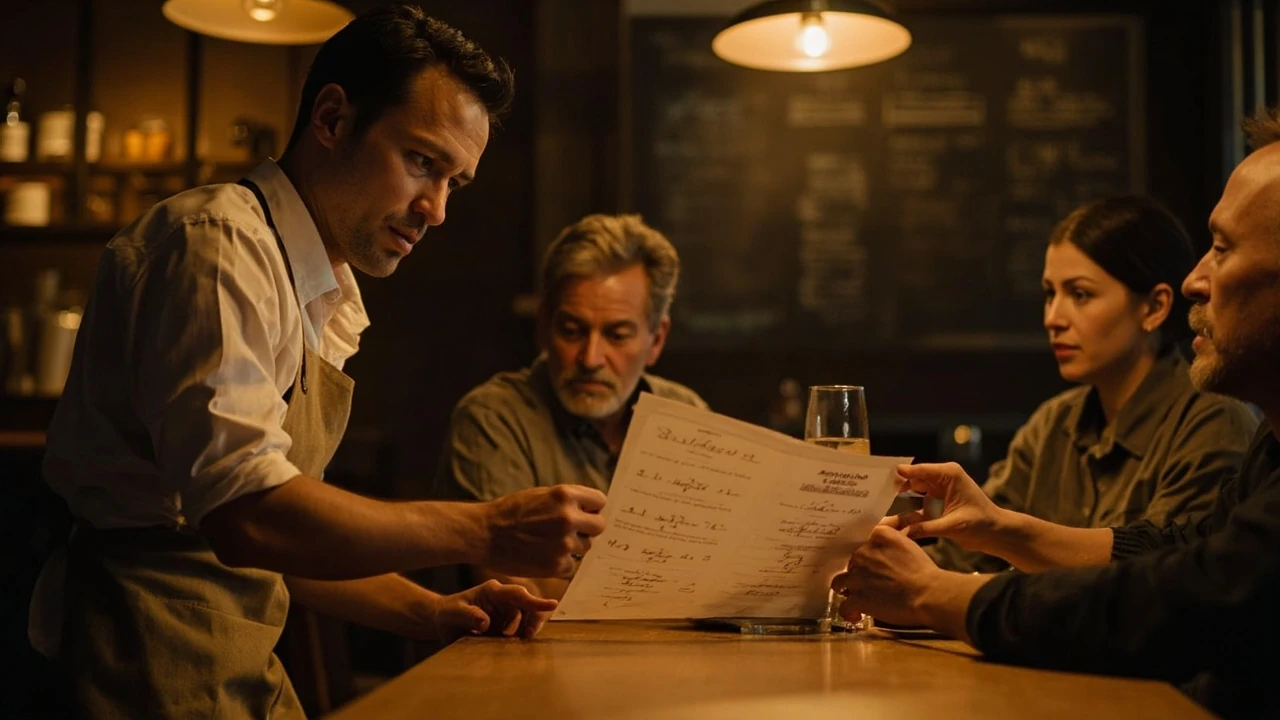
A line cook tapes a fresh printout of the new menu above the till. The dishwasher walks past, glances at it, and keeps moving. That single image captures the real challenge of any menu change: the people who already love your restaurant have a routine, a favorite order, and a low tolerance for being made to feel like a stranger in a room they consider theirs. Learning how to promote a new menu to existing customers is less about shouting and more about translating a change in your kitchen into a change in your regulars’ habits, without breaking the reason they walk through the door in the first place.
This guide is written for operators who already have traffic, a database, and a small amount of regular trust to protect. It assumes the menu update is real, the kitchen can actually deliver, and the goal is to convert curiosity into higher average checks on the next visit, not to chase a one-week spike.
Why the existing-customer launch is harder than the new-customer launch
New guests have no expectations. Existing customers do, and the moment a new menu lands, three things go to work at once. First, regulars are scanning for the items they order out of habit. If the braised short rib is gone, the absence itself becomes the story. Second, regulars are more sensitive to price shifts. A guest who has ordered the same burger for three years will notice a two-dollar increase even if the portion grew. Third, regulars are anchored to a previous version of “your place,” and any change carries a small risk of feeling like a betrayal of the unspoken contract.
The result is that the same menu change can read as progress to a first-time visitor and as disruption to a regular. A launch plan that ignores that asymmetry usually looks polished on Instagram and flat in the till. A plan that respects it treats the existing base as a separate audience with its own message, its own timing, and its own way of being asked to try something new.
Define the role of the new menu before you promote it
Before a single email goes out, decide what this menu change is meant to do. Without that, every tactic downstream becomes guesswork. Most operators are trying to do one of four things, and the promotion has to match the job.
| Menu change goal | What success looks like | Promotion tone |
|---|---|---|
| Increase average check size | Mix of items per ticket shifts upward over 4-6 weeks | Curated, framed as the natural next step up |
| Reposition the restaurant (e.g., more seasonal, more premium) | Perception changes among regulars before sales do | Editorial, story-led, slower burn |
| Clear kitchen complexity or improve margin | Back-of-house works cleaner; specific weak sellers are replaced | Quiet, behind-the-scenes, almost apologetic |
| Reactivate lapsed regulars | Bookings or visits from guests who have been away 60+ days | Personal, direct, low-key incentive |
Pick the dominant goal and write it down. The next decision, what to say and when, flows from this. A margin fix that gets marketed like a rebrand will confuse staff and irritate regulars. A premium repositioning that is sold like a coupon will cheapen the new offering before anyone tries it.
Segment your existing customers before you message them
“Existing customers” is a useful phrase for planning, but it is useless for messaging. The most useful segment split for a menu launch has three layers.
- Weekly regulars: guests who have visited in the last 30 days and ordered more than once. They are your most valuable and most fragile group. They are the first to feel a change and the first to tell you if the change is wrong.
- Monthly regulars: guests who visit every 4-8 weeks. They are easier to surprise and easier to upsell because they still have a touch of novelty about the place.
- Lapsed regulars: guests who have not visited in 60-180 days. They are the highest-leverage group for a re-engagement push, but they are also the most likely to assume the change is not for them.
Each of these groups needs a different message. The weekly regular wants reassurance that their routine still works. The monthly regular wants a reason to come back sooner. The lapsed regular wants permission to return without awkwardness. Sending the same email to all three, even a well-written one, leaves at least two of them thinking the email was not really for them.
Build a 21-day pre-launch runway
A new menu tends to fail when it appears overnight. The guests who would have ordered it never see it, and the guests who would have hated it anyway feel ambushed. A 21-day runway is usually long enough to seed awareness without dragging out the reveal.
| Window | Internal action | Customer-facing action |
|---|---|---|
| Days 21-14 before launch | Train staff, finalize recipes, lock cost cards, photograph the new dishes | Quiet social posts showing the kitchen working, no menu reveal |
| Days 14-7 before launch | Print menus, update POS, brief hosts and bartenders on the story of each new dish | Soft teaser to weekly regulars by name, in person or by SMS |
| Launch week | Run the new menu in soft mode for 2-3 services, adjust quickly | Email to segmented list, in-house signage, server script in place |
| Days 7-21 after launch | Track item-level sales, swap slow movers, gather server feedback | Targeted offers on items that need a push, re-engagement push to lapsed regulars |
The pre-launch runway is also your insurance. If a dish is not working, you find out in the soft-launch services, not on the night you sent the email. Staff get used to the new cards before they have to sell them under pressure.
What to put in the email to your list
The single most common mistake in a menu-launch email is to use it as a replacement for the menu itself. Readers do not want a list of every new dish. They want a reason to come back and a small number of dishes worth their attention. A clean structure works better than a press release.
- One short opening line that names the change honestly. “We updated the menu this week” is better than “Exciting things are happening.”
- Two or three anchor dishes with a one-sentence story each, not a full description. The story is usually about the ingredient, the producer, or the technique. None of the three should be the cheapest item on the new menu.
- One clear reason to visit soon, such as a soft-launch week offer for list members, a first-week tasting, or simply an honest “the kitchen is ready, we’d love to cook for you.”
- One human sign-off from the chef or owner, signed with a real name. The email should read like it came from a person, not a marketing tool.
If you can keep the email to about 250 words, you are usually in the right zone. Long enough to feel considered, short enough to read on a phone between meetings.
How to handle the in-restaurant reveal
The most important surface for a menu change is still the one a guest sits at. Email, social, and PR are amplifiers. The room is the proof. If servers cannot describe the new dishes in one accurate sentence each, the email will not save you.
Three things tend to make the in-restaurant reveal work. First, the menu format itself. A small printed card with the new items on top of the existing favorites often outperforms a full reprint, because regulars see that their old order is still there and that the new options are additions rather than replacements. Second, the table touch. A short, confident line from the server (“If you liked the old short rib, the new lamb shoulder is the closest cousin on the menu”) does more work than any menu description. Third, the visual cue. A small chalkboard near the entrance listing two or three new dishes gives the regular a reason to look at the menu differently without forcing a conversation.
For more on how the printed page shapes what guests actually order, the piece on menu engineering without killing the soul of the menu is a useful companion read, and the broader question of what food marketing is supposed to do is unpacked in what food marketing really is, and why most operators get it wrong.
Use your regulars as a feedback channel, not just a sales channel
Existing customers are a free research panel that most operators underuse. Within the first ten services of the new menu, three conversations are worth having on purpose rather than by accident.
- The weekly regular who orders the new item. Ask one specific question: what made them choose it. The answer usually tells you whether your menu design and server prompts are working.
- The weekly regular who orders their old favorite. Ask whether they noticed the change. If they did and they are happy with their usual, the launch is succeeding. If they are uneasy, you have a signal to address before it spreads.
- The monthly regular who has not been in for a while. A short, friendly check-in about whether the new menu is part of the reason they are back tells you whether the re-engagement angle is landing.
None of this requires a survey tool. It requires a manager who walks the floor and listens. The operators who get menu changes right are usually the ones who treat the first two weeks as a research project, not a marketing campaign.
Channels ranked by how much they actually move regulars
Not every channel earns its place in a menu launch. For most independent restaurants, the return on effort is uneven, and a few channels do almost all the work.
| Channel | Best use in a menu launch | Typical cost | Expected lift on regulars |
|---|---|---|---|
| Direct email to segmented list | Pre-launch tease and launch-day anchor | Low (tooling already in place) | High if list is clean |
| SMS to top spenders | Personal invite for the soft-launch services | Low to medium | High for weekly regulars |
| In-house signage and server script | Translating awareness into orders | Low | Highest per-cover lift |
| Instagram and social | Awareness, brand reinforcement | Low to medium | Medium, mostly new-customer pull |
| Local press or food writers | Repositioning or premium moves | Often free if invited | Uneven, useful for rebrand more than for refresh |
| Paid ads to existing customers | Reactivation of lapsed regulars | Medium to high | Medium, depends on offer |
The mistake is to spread effort evenly across all six. A better pattern is to invest heavily in the first three for the first three weeks, then decide whether the social and press work is worth continuing based on whether the direct channels are converting.
Pricing, offers, and how to discount without training your regulars
Discounts are tempting during a menu launch because they create a measurable spike. The risk is that you train your best customers to wait for the next promotion before they try anything new. A few rules help.
- Never discount the items you most want to be permanent. If a new signature dish is meant to anchor the menu for the next two years, do not put it on launch-week offer. Discount the items that are designed to be seasonal or experimental.
- Prefer value adds to price cuts. A complimentary small plate for the table, a free amuse-bouche, a complimentary glass of the house wine for the first two weeks, all create a sense of generosity without rewriting the price memory of the regulars.
- Make offers specific to lapsed regulars. An offer aimed at everyone is a discount. An offer aimed at “guests who have not been in since spring” is a reactivation, and that framing is easier to defend when the offer ends.
- Set an end date in advance and stick to it. The moment a launch offer is extended because it is “still working,” it becomes a permanent part of the price your regulars expect.
What to do when a favorite is gone
The hardest moment in a menu change is when a long-standing regular asks for a dish that no longer exists. The wrong move is to argue or to over-explain. The right move is to acknowledge the loss quickly and offer a path forward.
A short script usually works better than a heartfelt speech. “We took the short rib off because the new supplier could not match it, and the lamb shoulder is the closest thing we have in that style right now. If you try it and it is not the same, tell me, because we are still figuring it out.” That sentence does three things: it admits the change was a real decision, it offers a concrete next step, and it invites the guest back into the conversation.
The operators who lose regulars over menu changes are usually the ones who either pretend nothing is different or hide behind the kitchen. Regulars are adults; they can handle a real reason.
Measuring whether the launch is actually working
A menu launch is not a success because the email had a 40 percent open rate. It is a success because the kitchen is producing the new items cleanly, the servers are confident talking about them, and the average check among regulars is moving in the direction the menu was designed to push.
| Metric | What to look for | When to worry |
|---|---|---|
| Average check size among weekly regulars | Up 3-8 percent in the first month | Flat or down after week 3 |
| Penetration of new items (percentage of tickets with at least one new dish) | 15-25 percent by week 2 | Under 10 percent by week 3 |
| Mix of new versus legacy items | Stable mix of favorites and new dishes | New items cannibalizing your best margin dishes |
| Return rate of lapsed regulars | 10-20 percent of contacted lapsed guests back within 60 days | Under 5 percent, or only when re-offered |
| Server-reported confidence | Servers describe new dishes without checking the menu | Servers still reading the card at the table |
If the numbers are flat after three weeks, the most common cause is not the food. It is that the in-house story is not landing. Either the menu layout is hiding the new items, the server script is missing, or the regulars simply do not trust that the kitchen is committed to the new direction. Each of those has a different fix, and the data only helps if you are willing to look at it honestly.
Common mistakes that flatten a launch
A few patterns show up again and again when a menu change underperforms with regulars. Recognizing them early saves a quarter.
- Launching everything at once. A complete menu overhaul is harder to absorb than a seasonal refresh of 4-6 items. If you need to change more than a third of the menu, consider staging the change in two waves so regulars can adapt.
- Talking about the kitchen, not the guest. Emails and posts that focus on “our team has been working on this for months” leave the regular wondering what changed for them. Lead with the guest experience and let the kitchen story support it.
- Forgetting the bar. If you change the food menu without a parallel change in the bar menu, regulars who come in for a drink and a small plate will not see the launch at all. Coordinate the two.
- Relying on the chef to sell it. A chef presence works for openings and one-offs, but it does not scale across a launch week. The server team is the actual sales force, and they need real talking points, not enthusiasm.
- Treating the new menu as a one-time event. A menu is a living document. If the new items do not get a second and third push after launch, the regulars default back to their old orders and the new ones quietly die.
How this fits into a longer customer strategy
A menu launch is one of the few moments when an independent restaurant has a legitimate reason to contact its entire customer base. That makes it a useful forcing function for the broader work of staying in touch with regulars between launches. Operators who treat each menu change as a chance to update their database, segment their list, and tighten their server scripts tend to do better on the next change, and the one after that.
It also dovetails with loyalty work. A menu change is a natural moment to revisit the offer you make to your most frequent guests, whether that is a small plate on the house, a first-look at the next seasonal refresh, or simply a more personal way of being invited back. The piece on customer loyalty for food businesses goes deeper into the longer arc, and is worth reading alongside this one if the goal is to keep regulars loyal across multiple menu changes rather than just this one.
A short pre-launch checklist for the operator
Before you send the first message, walk through this list. It is deliberately short, because a long checklist usually means a delayed launch.
- The kitchen has run every new item at full service volume for at least three services.
- The POS is updated, and the printed menu is in the room, not still at the printer.
- Every front-of-house role, host, server, bartender, has a one-sentence description of each new dish.
- The email list is segmented into weekly, monthly, and lapsed regulars.
- The first two weeks of offers are planned, with end dates.
- There is a clear owner for the floor during launch week who can adjust the plan in real time.
If you can tick all six, you are ready. If you cannot, the launch is not the problem; the timing is.
Frequently asked questions
How far in advance should I tell regulars about a new menu?
About two weeks is the right window for most independent restaurants. Shorter than that and regulars feel ambushed; longer than that and they forget. The exception is a major repositioning, where a longer story-led build can work, but only if you have something new to say each week.
Should I email my whole list or only the most active customers?
Both, but with different messages. The most active customers want a personal, practical heads-up. The less active customers want a reason to come back that does not sound like a routine announcement. Sending the same email to both groups usually underperforms for everyone.
What is the best way to get regulars to actually try a new dish?
Put the new dish in front of them. A complimentary small taste, a server recommendation backed by a personal story, or a short flight of new items for the table all work better than a written description. Most regulars are not opposed to trying something new; they just need a low-friction reason.
How do I handle a regular who is upset that their favorite dish is gone?
Acknowledge the loss quickly, give a real reason rather than a vague one, and offer a concrete next step. Do not argue, do not over-apologize, and do not pretend the dish is still available. If you have a close substitute, name it.
Is it worth offering a discount during a menu launch?
Sometimes, but only on items you are prepared to see as promotional rather than permanent. Discounts on signature new dishes train regulars to wait for the next offer. Value adds, like a complimentary small plate, usually age better.
How long should a menu launch promotion run?
Two to three weeks of active promotion is usually enough. After that, the new items either hold their own on the menu or they do not. Extending the launch promotion past a month usually means the item was not the right fit, not that it needed more time.
What if my new menu items are not selling to regulars?
Look at the in-house experience first. The kitchen may be fine, but the menu layout, server script, and table touch may not be carrying the new items. If those are tight and sales are still flat after three weeks, the dish itself is probably the problem, and it is better to replace it than to keep promoting it.
Do I need to update my online listings when the menu changes?
Yes, ideally on the same day. Out-of-date menus on third-party platforms are one of the fastest ways to lose a regular’s trust, because the regular sees the old menu at home and the new one at the table, and the restaurant looks disorganized. Update Google, your delivery profiles, and any printed or PDF versions of the menu at the same time.
How do I measure success without overcomplicating it?
Pick three numbers before the launch: average check among regulars, penetration of new items, and return rate of any lapsed regulars you contact. If those three move in the right direction over four to six weeks, the launch is working. If they do not, simplify the plan before adding more channels.