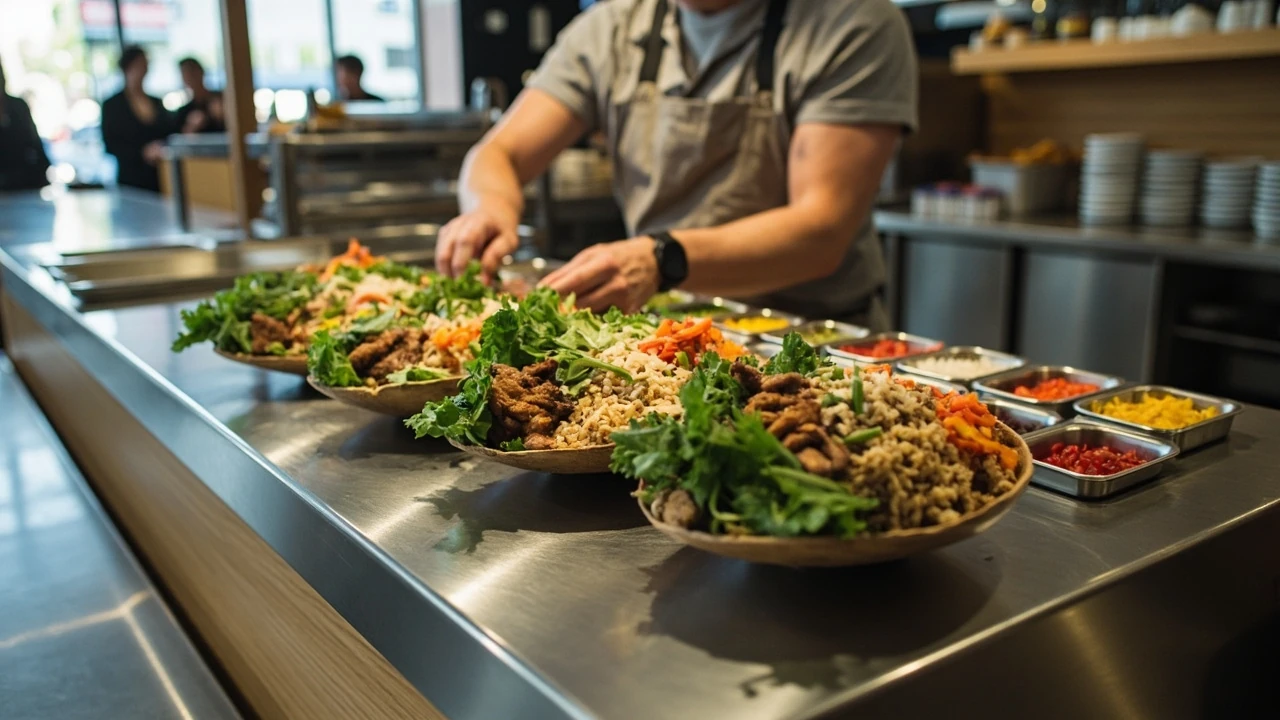
Healthy fast food: how to serve it without losing speed or margin
A lunch rush at a quick-service counter used to mean one thing: fryers, buns, and a short menu. The same counter today can sell a rice bowl with grilled chicken, a lentil wrap, and a cold-pressed juice without slowing the line. Operators across the country are rebuilding menus around the idea of healthy fast food, not because the term trends on social media, but because guests now weigh protein, fiber, sodium, and ingredient quality alongside wait time when they decide where to eat. The challenge for any operator is to add that nutritional discipline without breaking two older promises: speed at the counter and a margin that keeps the lights on.
This guide walks through what healthy fast food means in practice, which menu moves protect ticket time, how to price bowls and wraps so they actually make money, and where the real risks sit when a concept pivots from fried comfort food to something more balanced. It is written for owners, chefs, and operators who already run a fast-casual or quick-service kitchen and want a workable plan, not a manifesto.
What “healthy fast food” actually means at the counter
The phrase gets used loosely, so it helps to pin it down before changing a menu. For most guests, healthy fast food combines four things: a short wait, recognizable whole ingredients, a sensible balance of protein, fiber, and fat, and a price that does not punish them for choosing a salad over a burger. The U.S. Food and Drug Administration defines “healthy” on packaged food labels using specific thresholds for nutrients like saturated fat, sodium, and added sugars, and the agency has been updating that definition for the current food supply. Restaurant dishes are not held to that exact rule, but the underlying logic is the same: limit sodium, keep added sugar low, and emphasize food groups people should eat more of, like vegetables, whole grains, and lean protein. A clear internal definition stops the menu from drifting into vague marketing claims.
Operators who have done this well tend to write down a one-line standard for the kitchen, such as: every main dish must contain a defined protein portion, at least one serving of vegetables or legumes, and a whole-grain or starchy-vegetable base, and sodium must land under a specific milligram ceiling. Once that rule exists, the menu design becomes a math problem instead of a debate.
The five operational pillars that make it work
A bowl or a wrap can be built and served in under four minutes, but only if the kitchen is set up for it. Most of the failed healthy fast food pivots fail on operations, not on recipes. The five pillars below show up in every concept that has stayed profitable after the change.
- Ingredient prep ahead of service. Grains cook in bulk, proteins portion and chill quickly, and vegetables get washed, cut, and stored so any station can grab them in seconds.
- Station layout that mirrors the menu. A bowl line, a wrap line, and a cold line each live in their own zone so two tickets never collide on the same board space.
- Par-cooked proteins finished hot. Holding grilled chicken, tofu, or tempeh at safe temperature without drying it out keeps ticket time short and quality high.
- Standard recipes with measured portions. A scoop of grain, a weight of protein, a measured amount of sauce, and a counted handful of greens protect both nutrition and food cost.
- Cross-trained staff who can move. A line cook who can cover the cold station, or a cashier who can plate, prevents the rush from stalling when one station backs up.
Designing a menu that is both fast and genuinely healthier
Most operators do not need to start from scratch. They need to retune the existing menu so the healthier choices are also the easiest choices. Menu engineering research from the Cornell Hotel School treats the menu as a four-quadrant map: stars, plowhorses, puzzles, and dogs. The same tool helps decide which existing items can be re-engineered toward better nutrition, and which should be replaced. A bowl that is already a star in your sales mix can be lifted further by reducing sodium in its sauce and adding a second vegetable, without changing the price.
When new dishes are added, the right move is usually a small, repeatable template rather than ten one-off specials. A bowl template can be: one grain base, one protein, two vegetables, one sauce, one topping. The template protects speed because every cook can build any bowl the same way. It also protects nutrition because portion control is built into the structure.
| Menu element | Common problem | Healthier reset | Operational effect |
|---|---|---|---|
| Grain base | White rice, buttery mash | Brown rice, quinoa, farro, roasted sweet potato | Cooks in bulk, holds well, same scoop time |
| Protein | Fried, breaded, high-sodium cured meats | Grilled chicken, baked tofu, braised lentils, slow-roasted pork loin | Higher yield, lower added fat |
| Vegetables | Pickle and lettuce only | Roasted, raw, and pickled variety, including legumes | Adds fiber and color with little labor |
| Sauce | Creamy, sugar-heavy dressings | Yogurt-based, citrus, herb, and chili sauces | Less sodium and added sugar per portion |
| Topping | Crunchy fried onions, cheese heavy | Seeds, nuts, herbs, pickled vegetables, fresh citrus | Lifts perceived value without deep frying |
Speed: how to keep ticket time under five minutes
The promise of fast food is still speed. A guest who walks into a healthy concept with a 25-minute lunch break will not wait 12 minutes for a bowl. The good news is that most bowl and wrap stations can be designed to run faster than a typical fry line, because they do not have to recover from oil temperature drops or share fryer baskets. A small chain in the Midwest recently timed a six-station bowl line at an average 3 minutes 40 seconds from order to hand-off during peak, which beat their old burger line by almost a minute. Readers who want more background can use the Junk food as a reference while reviewing this point.
The pattern that makes this work is mise en place at a level that most kitchens already practice for breakfast and dinner, applied to the lunch peak. Rice is hot and held in a covered insert. Proteins are portioned, chilled, and finished in a flat top or combi oven in 90 seconds. Vegetables are pre-cut and stored in low pans in the line. Sauces are pre-portioned in squeeze bottles with a measured tip. Each station has only the tools it needs so no one is reaching across the line. When a concept builds that discipline, the menu can be 70 percent “healthy” without any ticket-time penalty.
Nutrition discipline without a dietitian on staff
Most independent operators cannot hire a full-time dietitian, and they do not need to. The FDA’s nutrition labeling rules and the USDA’s dietary guidance are publicly available, and they are the right reference points for recipe work. The same goes for sodium: the Dietary Guidelines for Americans have long recommended keeping daily sodium under 2,300 milligrams, which means a single restaurant entrée can carry only a fraction of that to leave room for the rest of the day. Realistic targets per main dish for a healthy fast food menu tend to fall in this range.
| Nutrient | Target per main dish | Why it matters | What to watch in recipes |
|---|---|---|---|
| Calories | 450 to 700 kcal | Lines up with a single lunch or light dinner for most adults | Hidden oils in grain salads, sugary sauces, cheese portions |
| Sodium | Under 800 mg | Leaves room for the rest of the day under common guidance | Soy sauce, cured meats, cheese, bread, broth-based sauces |
| Protein | 20 to 35 g | Supports satiety and perceived value | Portion drift, especially when scooping by eye |
| Fiber | At least 5 g, ideally 8+ | Distinguishes a bowl from a starch plate | Whole grains, legumes, vegetables, fruit, seeds |
| Added sugar | Under 10 g | Hidden in sauces, dressings, and marinades | BBQ sauces, sweet chili, teriyaki, sweetened yogurt dressings |
| Saturated fat | Under 20 percent of calories | Controlled by cooking method and topping choice | Cheese, coconut milk sauces, fried toppings |
You do not have to hit every number on every dish. You do have to be honest about the range you hit, because guests now read the menu board and the online nutrition page more carefully than the marketing copy.
Pricing bowls and wraps so they actually make money
The single most common reason a healthy fast food concept loses money is underpricing. A bowl with a 4-ounce portion of grilled salmon, a cup of quinoa, two vegetables, and a hand-made sauce costs more in raw goods than a fried chicken sandwich on a bulk bun, and it cannot be sold for the same price without hurting the margin. Operators who work this out before launching tend to succeed. Those who copy quick-service prices because “guests won’t pay more for a salad” tend to bleed out in year one.
A practical exercise: take your three most popular bowls and run a real plate cost, including sauce, garnish, and the compostable bowl or wrap. Then compare that to a food cost target you can defend, usually somewhere between 28 and 32 percent of menu price for fast casual. That gives you a floor. If the floor is higher than your guests will accept, the answer is not to drop the price, it is to re-engineer the bowl: a less expensive protein on one day, a legume-forward option, or a smaller protein portion sold as a half-bowl at a lower price.
| Pricing lever | What it changes | Risk to watch | When to use it |
|---|---|---|---|
| Protein tiering | Chicken, tofu, or legume at one price, salmon or steak at a premium | Guests feel the upcharge if it is too high | Default to one plant-forward option, premium proteins optional |
| Combo bundling | Bowl plus drink plus side at a clear bundle price | Drinks and sides can carry poor margin if the bundle is too generous | Keep the side as something the kitchen can prep fast, like fruit or a small salad |
| Half portions | Smaller bowl at a lower price, often aimed at lighter appetites | Labor cost per plate barely drops with the portion | Best when the kitchen can scale portions without changing the workflow |
| Menu as a price ladder | Anchor with one signature bowl, surround it with lower and higher options | Anchor can become a loss leader if its cost is miscalculated | Use a dish that is genuinely popular and reasonably priced to build |
Operators who treat pricing as a per-dish engineering problem, rather than a percentage added to cost, tend to land on menus that are both profitable and easy to defend when a guest asks why a bowl costs more than a burger. The honest answer is usually some version of: that bowl is mostly whole food, portioned by hand, and the protein is real, and that is what it costs to do that every day. Another relevant reference is the move to ban junk food soda, which adds context without changing the practical guidance here.
Where the real risks sit
Healthy fast food carries risks that the traditional quick-service playbook does not prepare you for. Most of them are quiet and only show up after a few months of operation.
- Perception of value. A bowl of vegetables and grains can look small to a guest used to a stacked burger, and they will judge value by volume, not by nutrition. The fix is honest portion sizing, visible protein, and a board that explains the components.
- Ingredient shrink. Fresh vegetables, herbs, and fresh proteins have higher waste rates than frozen fries, and they have to be managed actively with daily prep counts.
- Supplier reliability. A short, fresh menu is only as strong as its supply chain. One missed produce truck can pull half the menu for a day.
- Recipe drift. Without written standards, a busy line will drift toward more sauce, more cheese, and more salt, which quietly erodes the health story.
- Marketing mismatch. If the website promises a “clean, whole-food kitchen” and the line uses a powdered ranch mix, the gap will show up in reviews within weeks.
A short list of decisions before you change the menu
If you are thinking about a real shift toward healthy fast food, the questions below are the ones to answer before you start changing recipes. They save months of trial and error.
- What is the one-line nutritional standard your kitchen will hold itself to, and is it written down?
- Which three existing items can be re-engineered toward better nutrition without slowing the line?
- What is the real food cost of each new bowl or wrap, including the bowl, lid, and napkin?
- Where will the prep work happen, and how early in the day does it start?
- Who owns the standard recipes, and how often are they reviewed?
- What story will the front-of-house tell, and how is that story written into the menu board?
- What is your backup plan if a key produce supplier misses a delivery?
How a few operators have made the shift work
The pattern is surprisingly consistent across successful healthy fast food concepts. The menu is short, often under fifteen items, with a clear template for most dishes. The kitchen is built around a par-cook and finish system, not a from-scratch line. The marketing is honest about what the food is and is not, and the brand voice reads like a kitchen that knows its work, not a wellness influencer. The pricing is defended on the board with ingredient callouts rather than hidden in fine print. None of this is a magic trick, but every piece has to be in place at the same time.
Operators who try to do half of it, for example a great bowl with a slow kitchen, or a fast kitchen with a vague health story, tend to stall. The whole system has to support the idea, because guests experience the idea as a single meal.
How this connects to the rest of the business
A move toward healthier food does not sit in one corner of the business. It touches the menu, the kitchen layout, the marketing message, the staff training, and the way the website talks about the food. Two pieces of the bigger picture are worth a closer read before you commit. Menu engineering without killing the soul of the menu walks through how to redesign a menu so the healthier items are also the smartest sellers, and Menu pricing strategies that protect margin without losing guests covers the pricing math in more detail than this article can fit.
A simple checklist for the first month
Once the menu is set and the kitchen is ready, the first month is about discipline. The list below is what to watch, week by week, in that first stretch.
- Week 1: Confirm that prep timing, ticket time, and waste rates match the plan. Adjust pars if they do not.
- Week 2: Run a nutrition spot check on the five top-selling bowls, including sodium, and tighten recipes that drift above the target.
- Week 3: Review customer feedback from the website, the order screens, and any third-party delivery platforms. Look for theme, not noise.
- Week 4: Re-run the plate cost for every menu item, and adjust the price ladder if a star dish is now a margin problem.
Healthy fast food is not a trend line on a chart. It is a workable operating model for a kitchen that has decided to take both the nutrition and the speed promise seriously. When the kitchen, the menu, the pricing, and the story all line up, the idea sells itself, one bowl at a time.
Frequently asked questions
What counts as healthy fast food in a real restaurant?
It is a quick-service or fast-casual menu where most main dishes are built around whole ingredients, with a defined portion of lean protein, a vegetable or legume component, a whole-grain or starchy-vegetable base, and a measured sauce. Sodium, added sugar, and saturated fat are kept within reasonable per-dish targets, and the line is set up to serve those dishes in about the same time as a traditional quick-service meal.
Can healthy fast food be profitable for an independent operator?
Yes, but only if the menu is priced on real plate cost, not on what a competitor charges for a burger. The operators who make it work treat each bowl or wrap as a per-dish engineering problem, with a food cost target that usually sits in the high twenties to low thirties as a percent of menu price, and they keep a clear price ladder across proteins and portion sizes.
How do I keep ticket time low with a bowl or wrap line?
The standard pattern is bulk prep ahead of service, par-cooked proteins finished hot, pre-portioned grains and toppings on the line, and a station layout that mirrors the menu. When those pieces are in place, a bowl line can beat a fry line on average ticket time, because the line is not waiting on oil recovery or shared fry baskets.
How much sodium is reasonable in a single fast-casual entrée?
Most guidance for adult sodium intake lands at under 2,300 milligrams per day, so a single entrée should usually sit well below that to leave room for the rest of the day. Many healthy fast food concepts target under 800 milligrams per main dish, and they control that number by writing sauce recipes, watching cured meats, and limiting cheese portions.
Do I have to be vegetarian or plant-based to be a healthy concept?
No. The most resilient healthy fast food menus keep at least one familiar animal protein on the board, because guests want choice, alongside one or two plant-forward or fully vegetarian options. The point is balance and ingredient quality, not a single dietary rule.
How do I market a healthier menu without sounding preachy?
Write like a cook, not a wellness influencer. Describe what is in the dish, where it comes from, and how it is prepared. Let the menu board carry the story, with simple ingredient callouts. Guests who care about healthy fast food will read that and respond, and guests who do not will still understand the dish.
What is the single biggest mistake when adding healthier items to a fast menu?
Underpricing the new items. A bowl with grilled protein, a grain, two vegetables, and a real sauce usually costs more in raw goods than a fried sandwich, and it has to be priced accordingly. Concepts that copy quick-service prices because they assume guests will not pay more for a salad tend to lose money in the first year.
How do I know if the new menu is actually working?
Track three numbers each week: average ticket time at peak, food cost as a percent of sales, and repeat visit rate among the customers who order the new dishes. If ticket time stays under five minutes, food cost holds near target, and the repeat visit rate climbs on the new items, the shift is working.
Should I post nutrition information on the menu board?
For most fast-casual concepts, yes, at least the calorie count and a few key allergens. Many guests now check the menu before they visit, and a posted calorie count is one of the strongest trust signals a healthy concept can send. Full per-dish nutrition is usually posted on the website rather than the board.
Where can I learn more about running a healthy fast concept at scale?
Start with the public nutrition guidance from the U.S. Food and Drug Administration and the U.S. Department of Agriculture, and combine that with operational writing on menu engineering and pricing. The combination of a clear nutritional standard and disciplined kitchen design is what separates a healthy concept that lasts from one that fades after the first year.