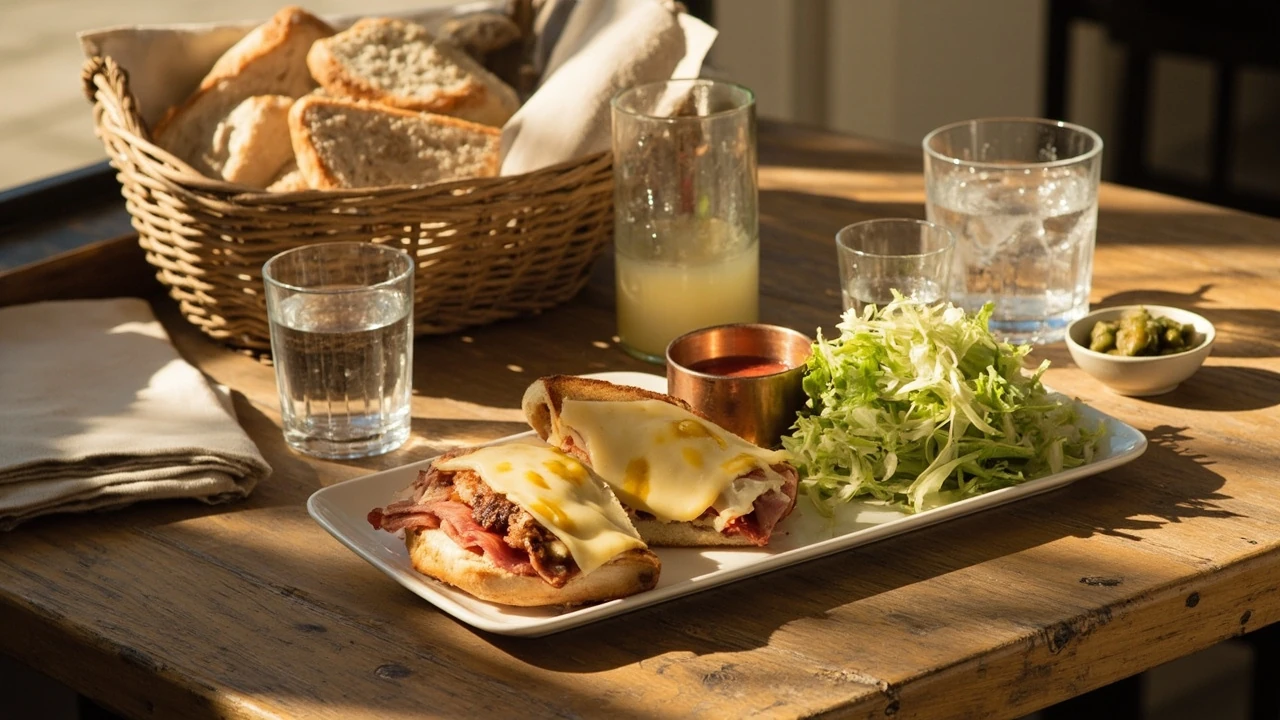
A diner staring at a French menu in a quiet bistro in Lyon does not need a history lecture. They need to know what is on the plate, what the kitchen expects of them, and which choices tend to disappoint. French food rewards that kind of attention, and the same is true for restaurant operators trying to build a French-leaning menu without tipping into cliché. This guide is written for both audiences: the curious diner who wants to order well, and the operator who wants to use French food with confidence instead of as decoration.
French food at a glance
French food is a regional, technique-driven cuisine built around a small set of core methods: braising, roasting, sautéing, confiting, and pastry work. What most outsiders call “French food” is really a federation of regional cuisines, from the butter-heavy cooking of Normandy to the olive-oil cooking of Provence, from the seafood plates of Brittany to the charcuterie of Alsace. Understanding that regional layer is the single biggest upgrade a diner or operator can make, because it explains why two French restaurants in the same city can feel like completely different cuisines.
The reputation French food carries also obscures a useful fact: a great deal of it is built on cheap cuts, leftovers, and pantry staples. Onion soup, pot-au-feu, cassoulet, and a properly made croque monsieur are not luxury food. They are the food of households and bistros that learned to make limited ingredients taste better than the sum of their parts. That is the part of French food worth taking seriously, not the butter sculpture version of the cuisine.
The regional map that actually shapes the menu
French food divides into roughly seven culinary regions, each with its own fats, herbs, proteins, and signature dishes. Treating “French food” as one block is the most common mistake, and the reason menus and travel plans often disappoint.
| Region | Dominant fats and flavors | Signature dishes | Best for |
|---|---|---|---|
| Paris and Île-de-France | Butter, cream, reduced stocks, fresh herbs | Steak frites, onion soup, croque monsieur, escargots | Bistro classics and pastry |
| Normandy and Brittany | Butter, cream, apples, cider, seafood | Moules marinières, galettes, tarte Tatin, sole meunière | Dairy-heavy comfort food and seafood |
| Provence and the South | Olive oil, garlic, tomato, herbs, anchovy | Ratatouille, bouillabaisse, pissaladière, daube | Vegetable-forward and Mediterranean-leaning plates |
| Lyonnaise and the Rhône | Butter, offal, pork, peppery greens | Quenelles, salade Lyonnaise, saucisson brioché, praline tart | Hearty mains and classic bistro cooking |
| Alsace and the East | Pork, cream, Riesling, mustard, sauerkraut | Choucroute garnie, tarte flambée, baeckeoffe | Germanic-influenced wine country food |
| Southwest (Gascony, Périgord, Basque) | Duck fat, foie gras, walnuts, Bayonne ham | Cassoulet, confit de canard, magret, piperade | Rich, slow-cooked food and preserved products |
| Loire and Central | Butter, freshwater fish, goat cheese, white wine | Tarte aux poireaux, sandre au beurre blanc, rillons | Light saucing, freshwater fish, and fresh goat cheese |
When a menu leans French and you can see the region, you can predict the plate. A restaurant that lists confit, cassoulet, and magret is a Southwest restaurant in spirit, and the rest of the menu will probably lean on duck, pork, and slow braises. One that lists bouillabaisse and pissaladière is leaning Mediterranean, so the proteins will be lighter and the herbs more aggressive. The region is the first filter, not the last.
The dishes that define French food for diners
There is a working list of French dishes that almost every operator and diner will encounter. These are the ones worth knowing by sight, by component, and by what a good version tastes like.
- Steak frites. A simply cooked steak, usually entrecôte or bavette, with thin French fries and a compound butter or simple pan sauce. The test of a bistro. Bavette is the more interesting cut; entrecôte is the more forgiving one.
- Croque monsieur and croque madame. Toasted ham and cheese sandwich on pain de mie, béchamel, gruyère, and in the madame, a fried egg. A barometer of ingredient quality and a useful benchmark for how a kitchen handles dairy.
- Onion soup gratinée. Caramelized onions, dry white wine, beef stock, baguette, gruyère. The version that works is deeply brown on top, not a pale film of cheese, and the broth underneath should taste of onion first, beef second.
- Escargots de Bourgogne. Snails baked in garlic-parsley butter, usually served with bread. A test of butter temperature, garlic freshness, and whether the kitchen makes the persillade in-house.
- Coq au vin. Chicken braised in red wine with bacon, mushrooms, and onion. A proper version takes a day. If it arrives within twenty minutes of order, something is being shortcut.
- Confit de canard. Salt-cured duck leg, slow-cooked in its own fat, finished crisp. A signature of the Southwest. The skin should shatter; the meat should be tender but not dry.
- Bouillabaisse. A Provençal fish stew that is half technique, half theater. The right version is served in two parts: a broth with bread and rouille, then the fish separately so the diner can see what is in the pot.
- Tarte Tatin. Apples caramelized under a butter pastry, then inverted. The benchmark French dessert for technique. A bad one is soggy; a good one is sticky and barely held together.
These eight dishes are not the whole cuisine, but they are the dishes that anchor how diners judge French food. If a kitchen can execute half of them well, the rest of the menu is usually safe.
How French dining customs shape the experience
French food comes with a set of customs that are easy to miss and useful to know. They are not rules to perform; they are the small habits that explain why French meals feel the way they do and why some operators design their rooms around them.
| Custom | What it looks like in a real room | Why it matters |
|---|---|---|
| Course order | Apéritif, starter, main, cheese or dessert, coffee | Sets the pace; rushing through the sequence breaks the meal |
| Bread placement | Bread sits directly on the tablecloth, not on the plate | Bread is part of the meal and used to clean the plate; placing it on the plate signals you are done |
| Cheese course | A small plate of cheese served before or after dessert, with bread | Cheese is a course, not a garnish, and the way it is offered signals the seriousness of the kitchen |
| Wine pacing | Wine poured with each course, water always available | Wine is treated as part of the dish, not as a separate track |
| Tipping | Round up or leave a small euro amount, not a percentage | Service is included; tipping is a sign of satisfaction, not a wage |
| Hours | Many kitchens close between lunch and dinner service | Explains why a 4 p.m. visit to a French kitchen often gets nothing |
Operators borrowing from French food often borrow only the dishes and skip the customs. That is the reason so many “French-inspired” restaurants feel slightly off, like the room and the plate do not match. A few of these customs cost nothing to copy. Bread on the table, water offered without asking, and a clear course order are all low-effort moves that signal the rest of the meal is being taken seriously.
What a French-leaning menu needs to actually work
For a restaurant operator, a French menu is a quality trap. The dishes are well known, the expectations are high, and most guests have eaten some version of the classics before. A few structural decisions make the difference between a French menu that earns its keep and one that just lists the names.
- Pick a region, not a continent. A menu that mixes steak frites, bouillabaisse, choucroute, and cassoulet looks generous and reads as confused. Pick one regional anchor and let the rest of the menu support it.
- Choose two or three technique anchors. Decide which French methods the kitchen will own. A good braise, a good pan sauce, and a good pastry program is enough to build a coherent menu around. Adding every technique the cuisine is known for spreads the kitchen thin.
- Buy better butter and better stocks. French food rises and falls on these two ingredients. A high-fat European-style butter and a properly made chicken or beef stock will improve more dishes than any other line item.
- Treat wine as part of the dish. A French menu without a thoughtful wine list is half a menu. The list does not need to be long, but it should match the region the menu is drawing from.
- Hold the cheese course if you cannot do it well. A tired wedge of brie with crackers is worse than no cheese. If the program cannot rotate two or three cheeses served at the right temperature with the right bread, drop it.
- Write the menu in plain language. French menu theater has its place, but a dish called “duck a l’orange, lightly lacquered, citrus gastrique, pommes purée” is not more authentic than “roast duck with orange sauce and mashed potatoes.” It is just harder to read.
These are decisions, not recipes. A French menu that respects its own region, owns two or three techniques, and treats the basics as serious is the one diners come back to.
How diners can order a French menu with confidence
Most of the awkwardness around French food at a restaurant is not the diner’s fault. Menus are often written in another language, prices are hidden, and the customs are different. A short checklist removes most of the stress.
- Look at the specials board first. The plat du jour is usually what the kitchen does best. It is also the dish that was prepped that morning, which is a real advantage for short-shelf-life French cooking.
- Order one fewer course than you think you need. French courses are sized so that three courses is a full meal. If the menu lists amuses, starters, mains, cheese, and dessert, treat the meal as a marathon and skip at least one stop.
- Ask about the fish or the daily braise. These are the two dishes most likely to be made from scratch in a real French kitchen. They are also the dishes most likely to disappoint if they are not.
- Order the cheese course if the list is small and the cheeses are named. A short list with named producers is a good sign. A long list with no producers is a warning sign.
- Skip the wine pairing unless the list is written by someone who can explain it. Wine pairings work when the person pouring can describe the choices. They fail when the list is generic.
None of this requires expertise. It just requires paying attention to a few signals the kitchen and the room are already giving.
French food outside of France: what travels and what does not
Not every French dish survives the move. Some are easy to execute anywhere with a decent pantry; others depend on specific ingredients, training, or time that most kitchens do not have. A short list of what travels and what does not helps both diners and operators set realistic expectations.
| Category | Travels well | Travels poorly | Why |
|---|---|---|---|
| Pastry and viennoiserie | Madeleines, financiers, simple tarts | Croissants, mille-feuille, Saint-Honoré | Lamination is hard to replicate without dedicated time and lamination-trained cooks |
| Pan sauces | Beurre blanc, pan butter for steak | Sauce hollandaise at scale | Emulsified sauces break under heat lamps; plated-to-order versions hold up |
| Braises and stews | Coq au vin, beef bourguignon, cassoulet | Dishes built on obscure regional charcuterie | Slow cooking forgives a missing ingredient; bad charcuterie cannot be hidden |
| Cheese programs | Two or three named cheeses, served properly | Wide boards with sliced industrial cheese | Cheese is one of the easiest programs to do well, and one of the easiest to do badly |
| Seafood | Moules marinières, sole meunière | Bouillabaisse, plateau de fruits de mer | Fresh fish supply and live shellfish handling are the deciding factors |
For operators, this is the table to plan against. The dishes in the right column are the ones to leave off the menu unless the kitchen is set up to handle them. The ones in the left column are the ones to lean on. A French menu built from the left column, with one or two ambitious dishes, almost always outperforms one that tries to do everything.
Pairing French food with wine, simply
Pairing is not a guessing game. French food developed alongside specific wine regions, which means the right answer is usually the regional match, not the most expensive bottle in the cellar. A short map covers most situations.
- Normandy butter-heavy cooking. Whites with acidity and body: Chablis, Muscadet, or an entry-level white Burgundy.
- Lyonnaise and Rhône-style mains. Reds with some structure: Côtes du Rhône, Crozes-Hermitage, Beaujolais from a serious producer.
- Southwest duck and confit. Reds with tannin and dark fruit: Cahors, Madiran, or a slightly older Bordeaux.
- Provençal seafood and vegetable plates. Dry rosés from Provence or Bandol, or a light white from the Languedoc.
- Alsace charcuterie and choucroute. Off-dry whites: Riesling, Pinot Gris, or Gewürztraminer from Alsace.
The list is not a rule. It is a starting point. When the wine list is built around regional matches and the food follows the same logic, the meal tends to feel coherent without anyone having to explain why.
How to read a French menu written in another language
Some of the friction around French food comes from menus that are written in French, translated loosely, or written in English using French terminology without explanation. A small glossary of the common terms removes most of the guesswork for diners and helps operators write clearer menus of their own.
| Term | What it usually means | What to look for |
|---|---|---|
| Entrée | Starter in France, sometimes misused as “main” in English | If the menu is translated, “entrée” may mean different things in different sections |
| Plat | The main course | Usually the largest section of the menu |
| Plat du jour | Daily special | Often the best-executed dish because it is made in small batches |
| Maison | House-style or house-made | Signals a kitchen doing real prep work |
| À la plancha | Cooked on a flat steel plate | High heat, light oil, fast finish; good for fish and vegetables |
| En croûte | Wrapped in pastry and baked | Useful for fish or game; check the pastry is not soggy |
| Façon | “In the style of” | “Façon grand-mère” is style of grandmother; usually signals slow, simple cooking |
| Garni | Garnished, often with parsley or vegetables | Mostly a description, not a flavor promise |
A menu that explains its own terms is a good sign. A menu that hides behind French for atmosphere is not, especially if the translations are wrong. Operators borrowing from French food should pick the terms that genuinely add information and drop the ones that are only decoration.
Common mistakes when cooking or ordering French food
Most of the bad experiences people associate with French food are not about the cuisine. They come from a small set of repeated mistakes that are easy to avoid once they are named.
- Overcooking the protein. French technique rewards precision. Steak frites with a well-done steak, sole meunière that is dry, or a coq au vin that has been held too long all share the same problem: the protein was treated as an afterthought.
- Undercooking the vegetables. The opposite mistake. French vegetable cookery, especially in the South, is about texture. A ratatouille of mush is a different dish, and a worse one.
- Using the wrong stock. Most French sauces are built on stock. A stock that tastes of bouillon cubes will produce a sauce that tastes of bouillon cubes, no matter how much wine and butter go in.
- Serving cheese cold from the fridge. Cheese needs twenty to thirty minutes at room temperature to taste like itself. A cold wedge is a wasted wedge.
- Skipping the bread. Bread is part of how French food is eaten. A French menu without decent bread is missing a course in disguise.
- Treating the menu as a museum. Listing the classics with no regional logic or technical confidence turns French food into a list of names. Diners notice this even when they cannot name what is wrong.
None of these are hard fixes. They are mostly decisions made before service, not during it.
A short ordering checklist for the table
When a French menu lands at the table and the room is moving, a small mental checklist tends to help more than any amount of menu research.
- Read the specials board first, then the printed menu. The board is the kitchen’s best work today.
- Pick one starter, one main, and decide later on cheese or dessert. Three committed courses is enough for one meal.
- Choose a wine from the same region as the food when in doubt. Regional matches rarely miss.
- Order bread, even if the waiter does not offer it. It is part of the meal.
- Slow down the first course. French service is built around pacing. Eating the starter quickly is the easiest way to break the meal.
That is the whole list. The rest is paying attention to the room and trusting the kitchen when it has earned the trust.
Frequently asked questions
What defines French food as a cuisine?
French food is defined less by a single dish than by a shared set of techniques: braising, roasting, sautéing, confiting, and pastry work, organized around regional ingredients. The cuisine is regional, technique-driven, and built on stocks, butter, wine, and herbs as the connective tissue between dishes.
What are the most iconic French dishes to try first?
Steak frites, onion soup, croque monsieur, coq au vin, confit de canard, bouillabaisse, and a properly made tarte Tatin are the dishes most diners encounter first. They cover bistro cooking, slow braising, preserved meats, seafood, and pastry in a single list, which is why they are useful as a starting point.
Is French food always heavy and buttery?
No. Normandy and Burgundy lean on butter and cream, but Provence and the Mediterranean coast rely on olive oil, garlic, tomatoes, and herbs. The French Alps and parts of the Southwest also produce lighter cooking. Region is a better predictor of weight than the cuisine as a whole.
What is the difference between a bistro and a brasserie?
A bistro is a small, often family-run restaurant serving a short menu of traditional French dishes, usually with daily specials. A brasserie is larger, open longer hours, and serves a broader menu that often includes Alsatian dishes like choucroute and tarte flambée alongside French classics. The two are easy to confuse in English because the menus overlap.
What is a typical French meal structure?
A traditional French meal moves from an apéritif to a starter, then a main course, then either a cheese course or dessert, and finishes with coffee. The sequence is paced slowly, with bread, water, and wine present throughout. Modern restaurants often drop a course or two, but the order usually holds.
How should diners tip at a French restaurant?
Service is included in the menu price in France, so tipping is optional. Rounding up the bill or leaving a small euro amount per guest is the standard. In countries where service is not included, a 10 to 15 percent tip is closer to French expectations than the 20 percent that is common in the United States.
What is the easiest French dish to cook at home?
Croque monsieur is the easiest because it uses ingredients that are easy to find and the technique is forgiving. Steak frites is the next step up because it tests seasoning and timing. Braises like coq au vin and cassoulet reward more time but do not require advanced skill, which is why they are a good third project.
Why is French food considered prestigious?
French cooking codified professional kitchen techniques in the nineteenth and twentieth centuries, including the brigade system, the mother sauces, and pastry methods that most modern Western kitchens still use. The prestige is partly about the historical influence and partly about the consistency of the regional cuisines that have been practiced for centuries.
Can a French menu work in a casual restaurant?
Yes. A casual French menu built around two or three techniques, a single regional anchor, and a small wine list can outperform a larger menu that tries to cover the whole cuisine. The mistakes happen when casual restaurants add too many French dishes without the technique to support them, which is when the menu reads as costume.
What is the most common mistake when ordering French food?
Ordering too many courses is the most common mistake. French portions are sized so that three courses is a full meal, and adding cheese and dessert on top usually overshoots. The other common mistake is treating the classics as obligatory. The plat du jour or the regional special is almost always the safer choice than a familiar name on the menu.