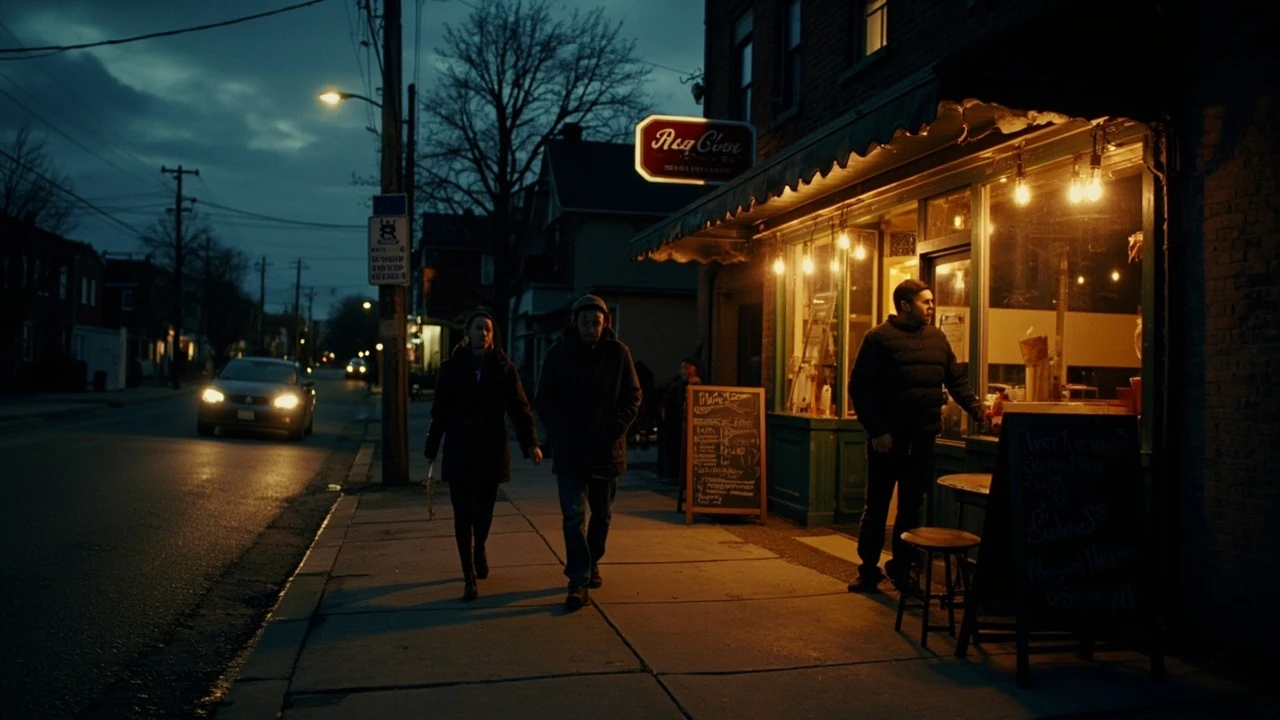
Local visibility for restaurants: how to be found by the people who live closest
A guest standing six blocks from your door is worth more than a thousand strangers on the other side of the country. Yet most restaurant marketing still chases the broad audience first and treats the neighborhood as an afterthought. The result is a Google Business Profile with a missing address, inconsistent opening hours on three directories, and a website that never mentions the cross street. None of that is loud. It is just quietly invisible.
Local visibility is the unglamorous work of making your restaurant legible to the people who could actually walk in this week. It is map pack rankings, neighborhood search behavior, review velocity, and the small details that tell a search engine or a new resident that your place is real, open, and worth a stop. This guide walks through what that work looks like in practice, why it matters more than ever, and how to prioritize the moves that pay back fastest.
What local visibility actually means in 2026
Local visibility is not a single ranking factor. It is the combined effect of how clearly your restaurant shows up across the surfaces where nearby guests make decisions. Those surfaces include the Google Maps pack, Apple Maps, voice assistants, neighborhood directories, “near me” searches, and the conversational answers served by AI-driven search summaries. When a resident types “brunch near me” or asks a phone, “where can I get a good sandwich in this neighborhood,” your restaurant either appears in that answer or it does not.
Three things have shifted since the early days of local SEO. First, proximity and relevance now dominate over distance-only signals, so a perfectly optimized listing in the wrong neighborhood will still lose to a slightly messier listing that is genuinely closer. Second, reviews carry more weight than ever, both for ranking and for the click-through decision, because a five-star map pin with twenty recent reviews reads as a safer bet than an unmarked dot. Third, the rise of AI-generated answers in search means structured, consistent data and clearly written pages about your specific neighborhood, your hours, and your food help machines cite you correctly.
For a small operator, the practical takeaway is that local visibility is a craft, not a checkbox. You do not need a national brand to win it. You need accurate information, steady proof that real people eat there, and a few targeted pages that answer the questions neighbors actually ask.
Why the neighborhood matters more than the city
Search engines increasingly assume intent. A query from a phone within a two-mile radius is treated differently from the same words typed on a desktop in another state. The mobile, location-aware query is the one that produces table bookings, walk-ins, and delivery orders. According to Google’s own documentation on how local results rank, distance, relevance, and prominence all factor in, but distance is the one you cannot edit. You can only earn the other two.
This is good news for independent restaurants. You cannot out-budget a chain, but you can out-detail them. You can describe your exact corner, name the cross streets, mention the transit stop, and write a paragraph about why a regular walks over on a Wednesday. None of that scales nationally, and none of it needs to. It is meant for the three thousand people who could realistically reach you on foot or by a short drive.
Think of local visibility as a layered asset. The base layer is correct data: name, address, hours, phone, menu link. The next layer is proof: reviews, photos, and mentions from credible local sources. The top layer is storytelling: content that says, in a human voice, why this place belongs in this neighborhood. Each layer compounds the others.
The core signals that drive local visibility
Search engines weigh dozens of signals, but the bulk of local restaurant visibility comes from a predictable set. Treat these as a working checklist rather than a secret list.
- Consistent NAP data across your own site and every directory where you appear. NAP means name, address, and phone number, written exactly the same way every time, including suite numbers and abbreviations.
- Google Business Profile completeness, including primary and secondary categories, accurate hours including holiday hours, attributes such as outdoor seating or wheelchair access, and a description that uses the words neighbors actually search.
- Review velocity and diversity, which means a steady flow of new reviews, replies from the owner, and reviews that mention specific dishes and the neighborhood by name.
- On-page local signals on your own site, such as a clearly stated address, an embedded map, schema markup for restaurants, and neighborhood-specific copy.
- Behavioral signals, which include clicks, calls, direction requests, and bookings initiated from your listing. Stronger listings earn more of these, which feeds the ranking loop.
- Local citations and links from neighborhood blogs, food guides, local news, chambers of commerce, and community organizations.
- Photos that look current, geotagged when possible, and refreshed often enough that the listing does not look abandoned.
You will not master all of these at once. The next sections show which ones to fix first, and how.
A practical 90-day plan for local visibility
Local visibility is built in layers, and the order matters. The plan below is written for a single-location independent restaurant that has the basics online but has not invested in local search. It assumes one person can spend a few hours a week on it, and that the restaurant is willing to change a few habits, like asking for reviews and photographing new menu items, on an ongoing basis.
Days 1 to 14: clean up the data
Start with the foundation. Audit your name, address, and phone number on your own website and on the major data aggregators that feed Apple Maps, Yelp, Tripadvisor, Bing Places, and the smaller directories that neighborhood apps pull from. The two aggregators that matter most in the United States are Data Axle and Foursquare, and many of the other listings inherit data from them. If you correct your NAP there first, the rest of the web tends to follow.
On your own site, make sure the address is in plain text on the footer, on a contact page, and inside a LocalBusiness or Restaurant schema block. If you have multiple locations, give each one its own page with its own schema. Do not bury the address inside an image. Search engines can read images, but they read text more reliably, and your own visitors can copy and paste a text address into a maps app.
Days 15 to 30: rebuild the Google Business Profile
Treat the Google Business Profile as a second homepage. Pick the most specific primary category, usually something like “Italian restaurant” or “Coffee shop” rather than the generic “Restaurant.” Add a secondary category only if you genuinely serve a distinct second use case, such as “Caterer” or “Bakery.” Fill in attributes that match your actual operation, including dine-in, takeout, curbside pickup, reservations, outdoor seating, and accessibility features. Inaccurate attributes erode trust and can hurt you in the long run.
Write the business description as if a new neighbor were reading it. Mention the cross streets, the closest transit stop, and the type of food in plain language. Do not stuff keywords. The description does not directly drive rankings the way a page title does, but it influences click-through and gives Google a clearer sense of relevance.
Upload a fresh batch of photos. Aim for a balanced set: storefront, interior, food, and team. Avoid stock-style images and avoid text overlays. Geotagged photos from a phone, taken at the restaurant, are fine. Refresh the set every few weeks so the listing does not feel frozen in time.
Days 31 to 60: build a review engine
Reviews are the most leveraged local signal you do not control directly, and they reward steady habits more than bursts. The single best predictor of long-term review volume is a simple, repeatable ask. Train your hosts to mention it at the right moment, usually after a guest thanks them for the meal, and to point them at a specific QR code on the receipt or the table tent. Make the QR code lead directly to your Google review form, not to a generic homepage.
Reply to every review, including the negative ones, within a few days. Short, specific replies outperform generic apologies. If a guest complains about a long wait, acknowledge the experience, mention what changed, and invite them back. If a guest raves about a dish, thank them by name and reference that dish. These replies are read by future guests and they signal to Google that the listing is actively managed.
For a sense of what good review responses look like in practice, see the menu engineering guide at David’s World Famous, which walks through how to treat diner feedback as operational data, not just marketing copy.
Days 61 to 90: earn local links and mentions
Local links are the slow-burning fuel of local visibility. They do not need to come from big publications. A neighborhood newsletter, a local food blogger, a community organization, a chamber of commerce directory, and a local news roundup can each move the needle. The pattern is the same: identify the sources your neighbors actually read, then give them a reason to mention you.
That reason is usually a story. It might be a new menu item tied to a local farm, a fundraiser for a nearby school, or a long-form profile of a chef who grew up in the neighborhood. Pitches work better when they are tied to a date on the calendar and a clear human angle, rather than a generic “we just opened” press release.
On-page local signals that travel with your site
Your own website is the only surface you fully control, and it sets the floor for everything else. The map pack decides which three restaurants show up first on a given search, but the rest of the page one results are still your chance to win the click. A guest who lands on your site should be able to confirm, in under five seconds, that you are open, close to them, and serving what they want.
Two patterns consistently help. First, place a small, persistent information bar at the top of the homepage and on every page that includes the address in plain text, today’s hours, and a tap-to-call phone number. Second, write a single paragraph on the homepage that names your neighborhood, your nearest cross streets, and a recognizable landmark. This paragraph is also where you describe what kind of food you serve in a way that a neighbor would describe it, not in marketing language.
Schema markup is worth doing once, even if you never touch it again. A simple Restaurant schema block with your name, address, phone, hours, menu URL, and a list of served cuisines is enough. It does not guarantee rich results, but it gives search engines a clean second source of truth alongside your Google Business Profile. If you use a website builder, look for a local business or restaurant plugin that emits this markup automatically and verify it with Google’s Rich Results Test.
Tables that organize the work
Two tables are useful here. The first compares the surfaces where local visibility lives, so it is clear which work belongs where. The second translates reviewer behavior into operational habits, because review velocity is the signal most often neglected in practice.
| Surface | What you control | What neighbors see | How to prioritize |
|---|---|---|---|
| Google Business Profile | Categories, hours, description, photos, posts, Q&A | Map pin, photos, hours, review snippet, directions button | Fix NAP, set accurate hours, refresh photos monthly |
| Apple Maps and Yelp | Listing details, photos, special hours, attributes | Pin, photos, reviews, call button | Claim the listing, match NAP exactly to Google |
| Your own website | Pages, schema, content, internal links | Address, hours, menu, story, booking widget | Add neighborhood-specific copy and a clean contact page |
| Neighborhood directories and blogs | Pitches, partnerships, events | Mentions, photos, links back to your site | Build a quarterly outreach list, not a one-time push |
| Social profiles | Posts, location tags, captions | Recent photos, location, neighborhood hashtags | Use location tags consistently, post weekly at minimum |
Review velocity, the pace at which new reviews arrive, tends to follow operational habits more than marketing campaigns. The mapping below shows which habit moves which part of the funnel.
| Operational habit | What it produces | Effect on local visibility |
|---|---|---|
| Train hosts to ask for a review at the right moment | Steady stream of new Google reviews | Higher review velocity, fresher signals to the map pack |
| Reply to every review within three business days | Visible, on-brand owner responses | Higher click-through, stronger trust for future guests |
| Photograph each new menu item on day one | A small library of fresh food photos | Stronger listing photos, better social proof |
| Post a weekly update to the Google Business Profile | Active listing with timely offers or news | Subtle ranking boost, stronger first impression |
| Track and respond to negative reviews privately first | Resolved issues and visible follow-ups | Lower churn, fewer unanswered complaints on the listing |
Common local visibility mistakes that hold restaurants back
Most of the local visibility problems I see in restaurant audits are not exotic. They are the same handful of small errors, repeated across hundreds of listings. The good news is that small errors are also cheap to fix.
- Address drift. The address on the website says “123 Main St” while the Google Business Profile says “123 Main Street, Suite 100” and Yelp says “123 S Main St.” Consolidate to one canonical version and use it everywhere.
- Stale hours. Hours were set during the soft opening and never updated for seasonal changes or holidays. Guests arrive to a locked door and leave a one-star review. Keep a calendar and update listings at least a week ahead.
- Wrong primary category. A breakfast spot is filed under “Restaurant” instead of “Breakfast restaurant” and never shows up for “breakfast near me” queries. Pick the most specific accurate category.
- Photos that lie. Stock images or pictures from a different location. Guests can tell, and reviews will mention it. Real photos, even from a phone, are always better.
- A website with no neighborhood. The homepage describes the food in the abstract but never says where the restaurant is, who walks over, or what is nearby. Add one paragraph that names the place.
- Review ask in the wrong place. A QR code on a billboard two miles away that links to a generic homepage. The ask has to be on the table, on the receipt, or in the follow-up email.
How to measure local visibility without losing a week to dashboards
Local visibility can be measured in three layers. The first is rank: where do you show up for the queries that matter, and on which surface. The second is action: how many calls, direction requests, website clicks, and bookings come from each surface. The third is outcome: how many of those actions become covers, takeout orders, or catering leads.
You do not need a heavy tool to start. A simple spreadsheet with a date column, a surface column, a query column, and a rank column is enough for the first layer. Check the same five to ten queries from the same device, at the same time of day, once a week. Note the surface: map pack, organic, AI overview, or a directory. Over two months, the trend is what matters more than any single reading.
For action, lean on what each surface already gives you. Google Business Profile call tracking and direction request counts, website click counts from UTM-tagged links, and the booking platform’s source attribution are usually enough. The temptation is to over-measure. Resist it. A weekly check that you actually do is worth more than a daily dashboard you stop opening.
Outcome is the part most restaurants skip, and it is the part that tells you whether local visibility is paying for itself. Tag a column in your reservation or POS system for “found us via map” or “found us via search,” and have hosts ask gently when a guest books or arrives. The data will be imperfect, but a few weeks of it will tell you whether the work is converting into covers.
Local visibility for restaurants with more than one location
Multi-location restaurants have a different problem. The brand can be well known, but each individual location has to earn its own map pack position, its own review profile, and its own neighborhood story. The work is the same in shape, but you have to avoid the temptation to write one page and reuse it across every city.
Each location needs its own Google Business Profile, its own page on the website, its own schema block, and its own set of local links. A common mistake is to set the service area for one location to cover the entire metro area, which suppresses the others in the map pack. Set tight, honest service areas instead, and accept that some guests will see the wrong location at the edge of the radius. A better fix is a clear store locator page that links to each location’s own page, with the address, hours, and a tap-to-call number for that specific address.
Reviews should be steered to the right location. A QR code at the entrance of location A should not lead to the brand-level review form. It should lead to the Google review form for location A. This sounds obvious and yet is rarely done correctly, because the table tent gets printed once for the whole brand.
The role of content in local visibility
Content is the underrated half of local visibility. A well-written neighborhood page, a guide to the block, or a profile of a local supplier can rank for queries that the map pack will not touch. It can also earn links from neighborhood blogs, which is one of the strongest local signals. For an independent restaurant, the most useful content is almost always the most specific. A post about the five best walks from your door after dinner will outperform a generic post about the city’s food scene every time, because it answers a question only your neighborhood can answer.
Two patterns work well. The first is the supplier story. A 600-word profile of the farm that supplies your tomatoes, with a photo and a price, will get cited by neighborhood blogs and local press in a way that a press release never will. The second is the seasonal guide. A short, honest guide to what to order this month, with the dish, the price, and a line about why, gives neighbors a reason to come back and gives search engines fresh content to index. If you want a practical example of how a single well-photographed dish can fuel a month of social posts, see how to turn one signature dish into a month of content.
Where AI search fits into the local picture
AI-generated search summaries change local visibility in two ways. They compress the answer a guest sees, which means the listing or page that gets cited is even more valuable than the listing that ranks third. And they lean more heavily on structured, well-written sources, because the model has to pick something to quote.
The practical implication is that the most useful local content is the kind a model can lift cleanly: a paragraph that names the neighborhood, the food, the hours, and a phone number, written in plain English, with a clear schema block underneath. Restaurants that already have a tidy Google Business Profile, a clean contact page, and a few neighborhood-focused posts are well positioned. Restaurants that have a thin homepage, a PDF menu, and no schema will see less of that new traffic, even if their map pack rank is unchanged.
A short local visibility checklist you can run this week
Use this as a starting point. None of the items are difficult, and most take less than an hour once you have done them once.
- Search your restaurant’s name and your restaurant’s address in an incognito window. The information shown should match your website exactly.
- Open your Google Business Profile, confirm hours for the next two weeks, and add any holiday or special hours.
- Reply to the three most recent reviews, including any unanswered negative ones.
- Upload three new photos: one of the storefront in current daylight, one of the dining room, and one of a dish from the current menu.
- Check that your address appears in plain text on your website’s footer and on a dedicated contact page.
- Verify that your website emits Restaurant schema with accurate hours and menu URL using Google’s Rich Results Test.
- Identify two neighborhood sources worth pitching this quarter, such as a local newsletter or a community blog.
Local visibility is one of the few marketing investments where a small, consistent effort compounds quietly for years. The first month is mostly cleanup. The second month is review habits. The third month is local links. By the end of a quarter, your listing is more accurate, your reviews are moving, and your site is more honest about where you are. None of that will trend on social media. It will show up in covers on a Tuesday, in takeout orders on a rainy Thursday, and in the small, steady stream of new guests who found you by typing a neighborhood into a phone.
Frequently asked questions
How long does it take to improve local visibility?
Most restaurants see meaningful movement in the map pack within six to twelve weeks of fixing NAP data, completing their Google Business Profile, and starting a steady review habit. Larger jumps, especially for competitive queries like “best Italian restaurant,” can take six months because they depend on review volume and local links you cannot rush.
Do I still need a website if my Google Business Profile is strong?
Yes. The map pack decides whether you appear, but your website decides whether the guest trusts you enough to act. A clean, fast page with your address, today’s hours, and a clear menu turns a curious click into a cover. The Google Business Profile and your site work as a pair, not as alternatives.
How many reviews do I need to rank in the map pack?
There is no magic number. The signal is relative. In a quiet neighborhood, twenty recent reviews with an average above 4.4 can be enough to hold the top three. In a competitive district, you may need several hundred. The more useful target is review velocity, the pace of new reviews, rather than a static total.
Should I pay for local visibility?
Organic local visibility is the foundation. Paid placements on the map and in the local pack can be worth testing once the organic profile is clean, especially for promotions, new menu launches, and slow weekday shifts. Paid does not fix a broken profile. It amplifies a healthy one.
What is the single most important local signal?
Consistency. The same name, address, and phone number across every surface, supported by accurate hours and a real flow of reviews, will outperform any single clever tactic. Inconsistency confuses search engines and guests in equal measure.
Does posting on the Google Business Profile actually help?
It helps more for click-through than for raw rank. A weekly post about a new dish or a seasonal event gives the listing a reason to feel current, and it gives a guest scanning the map a reason to choose you over the pin next door. Treat it as a small habit rather than a campaign.
How do I handle negative reviews without losing rankings?
Reply, do not argue. Acknowledge the experience, name what you will do differently, and invite the guest to continue the conversation by email or phone. A calm, specific reply reads well to future guests and signals to the platform that the listing is actively managed.
What role do photos play in local visibility?
Photos influence both ranking and click-through. Listings with fresh, real photos earn more clicks from the map pack, and the click-through rate itself feeds back into the ranking loop. Aim for a rolling set of about twenty to thirty current images, refreshed monthly.
Is local visibility different for delivery-only or virtual brands?
Yes. Virtual brands compete almost entirely on the delivery platform’s search, which is a different algorithm. The principles still apply, including clean data, steady reviews, and accurate photos, but the surfaces are the delivery apps rather than the map pack. Local SEO and delivery SEO are related but not interchangeable.
What is the cheapest way to test whether local visibility is working?
Track a small set of branded and non-branded queries for a month using a free rank tracker or a spreadsheet, then compare the call and direction request counts in your Google Business Profile to the previous month. If both are moving up, the work is paying off. If rank is up but calls are flat, the listing needs a better description or photos.