Slow weekday restaurant promotion ideas without discounts
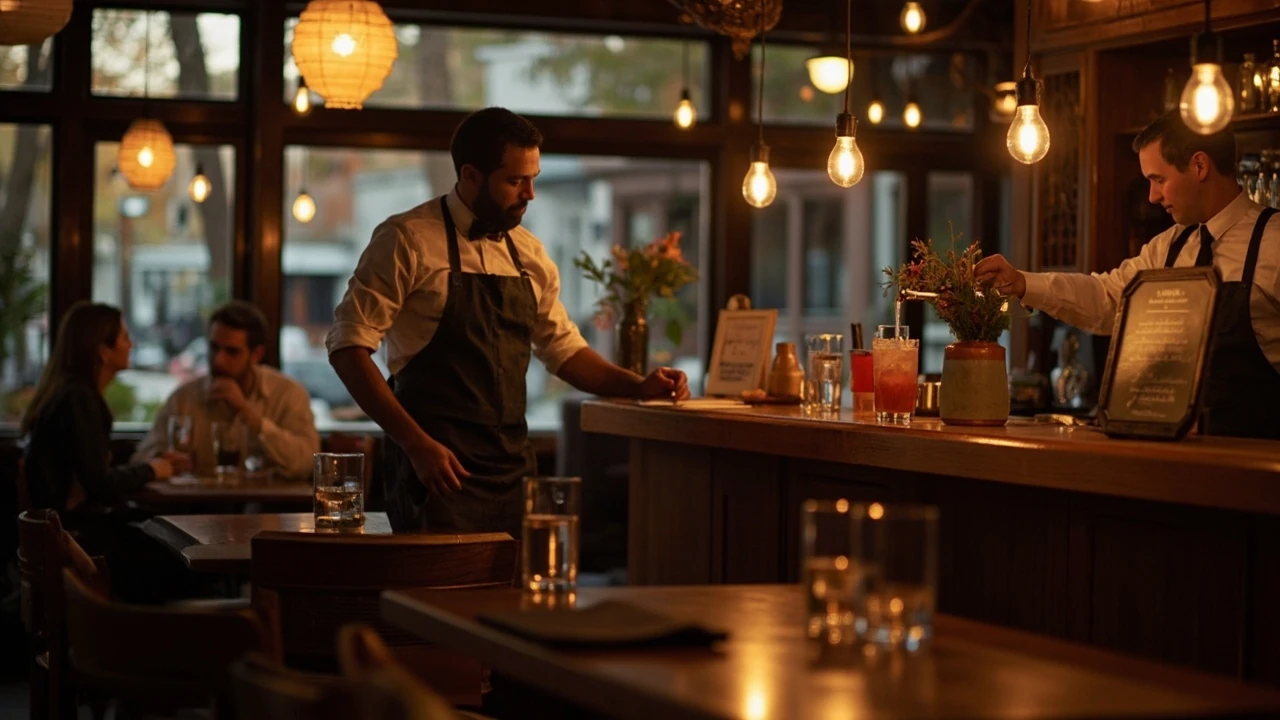
Tuesday at 7:15 p.m. The dining room holds forty covers. Twelve are seated. The chef has prepped for sixty, the hostess is apologizing for the empty patio, and the manager is quietly wondering whether the slow weekday is now a permanent fixture of the calendar. If that scene sounds familiar, you already know why restaurant owners keep asking for slow weekday restaurant promotion ideas without discounts, because cutting price is rarely the answer and almost always trains the wrong guests to wait for the next deal.
This guide focuses on the lever most operators underuse: the guest experience, the menu, the calendar, and the small operational choices that move covers on a quiet night. The ideas below are designed for a small, owner-operated restaurant that cannot afford to give margin away on Monday or Wednesday, and that wants to build a steady, non-promotional reason for guests to walk in on the nights the rest of the industry ignores.
Why slow weekdays punish restaurants more than they used to
Pre-2020, a slow Monday or Wednesday was absorbed by weekend volume, by banquet contracts, and by the natural rhythm of a neighborhood. That buffer is thinner now. Labor costs are higher, menu prices have climbed, and diners compare restaurants online within seconds. A half-empty dining room on a Wednesday is no longer hidden; it shows up in fewer reservations, fewer walk-ins, and slower table turns the next day. The economic problem is not just the lost covers that night. It is the spoilage, the morale hit on the line, and the slow bleed of staff hours you cannot bill back to anyone.
Discounts are the most common response because they are easy to type into a point-of-sale and easy to advertise. They are also the most expensive response, because they pull from the margin you worked hard to protect. The most durable alternative is to redesign what guests get on a slow weekday so that the night feels intentional rather than desperate, and to align the promotion with the kind of guest you actually want to return on a Saturday.
The starting point: define what a slow weekday actually is
Before picking a promotion, you need a working definition of “slow.” Operators often argue about whether Tuesday is a problem because they have not isolated the variables that actually drive the answer.
- Daypart: The slow period is often a specific window, such as 4 to 7 p.m. or 8 to 9:30 p.m., not the entire evening. A targeted promotion should target that window, not the whole night.
- Section: Bar seats, patio, and the back banquette may move independently. Check which section is consistently soft before designing a campaign.
- Channel mix: Compare dine-in, delivery, and pickup covers by day. A “slow” Tuesday with strong pickup is a different problem than a slow Tuesday where every channel is down.
- Seasonality: Mondays in February are not the same as Mondays in October. Define a baseline by quarter so you can see whether a promotion is actually moving the line.
With that definition in hand, the promotion has something to fix and a way to be measured. A vague “Tuesday is slow, let us do something” almost always ends in a discount that the operator cannot measure and cannot stop.
Core principle: sell the experience, not the price
Every idea in this guide respects one rule: the value the guest perceives on a slow weekday must come from the experience, the menu, or the timing, not from a percentage off the check. When the value comes from experience, the guest remembers the night and is willing to pay full price next time. When the value comes from a discount, the guest remembers the discount and the next visit has to compete with whatever else is on offer in the neighborhood.
That principle sounds obvious. In practice it is hard to hold the line on, because a discount is fast and an experience change requires training, signage, and small operational fixes. The trade-off is worth it. A restaurant that builds a reputation for interesting Mondays will attract a specific kind of guest, often the local regular who spends more per visit than a deal-chaser ever will.
Idea 1: Build a small, intentional “weekday only” menu
A second, smaller menu that appears only on slow nights creates the feeling of a special occasion without changing your price point. It also gives the kitchen a focused execution list, which usually improves consistency and reduces waste.
The structure that works best in most independent restaurants is three to five items, two of which can be built from ingredients already prepped for the regular menu, plus one or two new items that give the night a reason to be talked about. A bowl, a small plate, a vegetable-driven main, and a dessert designed for one person tend to cover most price points without overlapping your weekend menu.
| Component | What it does | Example | Operational note |
|---|---|---|---|
| Anchor main | Carries the average check | Roasted chicken with seasonal grains | Built from existing prep |
| Vegetable-led dish | Attracts flexitarian guests | Charred cabbage, miso butter, rice | Low waste, high margin |
| Bar-friendly plate | Pulls lounge guests into food | Burrata, preserved lemon, flatbread | Plates in under 8 minutes |
| Dessert for one | Lifts average check by $4 to $6 | Olive oil cake, single serve | Pre-portion in service pans |
Name the menu clearly and price it like the rest of the house. Avoid the word “special,” which signals leftover or last-minute. A name tied to the night, such as “Monday at the Bar” or “Wednesday Suppers,” reads as a deliberate choice and gives staff a single phrase to use all shift.
Idea 2: Re-engineer the hour, not the price
On a slow weekday, the problem is often the hour, not the menu. A 5:30 p.m. seat is the most expensive real estate in the restaurant, and it sits empty for a reason: guests do not want to commit to a full dinner that early. A non-discount lever is to redesign the early hour so the commitment is smaller.
- Walk-in only window from 5 to 6:30 p.m. A short, clearly communicated window reduces the perceived risk for the guest and the planning risk for the kitchen. It also lets you hold prime tables for guests who arrive at 7:15.
- Set the bar as a separate “house.” A bar menu that overlaps the kitchen menu but is shorter, faster, and slightly more casual pulls the early guest without forcing them to choose between a table they are not ready for and a full dinner they did not plan.
- Time-bound chef’s plate. A single, daily-changing plate at a set price for the first hour signals the kitchen is cooking and gives the hostess something concrete to offer walk-ins. It is not a discount. It is a smaller commitment.
Idea 3: Run a “second seating” story
Independent restaurants used to survive on two seatings: a 6 p.m. and an 8 p.m. Many have lost the second seating because late-night demand softened. The non-discount response is to rebuild the second seating as a deliberate event rather than hoping it returns on its own.
The most reliable format is a single, simple hook that signals a later, more relaxed meal. A late-night pasta kitchen, a “no menu after 9 p.m.” chef’s choice, or a “the bar is open, the kitchen is small” card on the table are all small, repeatable hooks. The point is not the food. The point is to give the late guest a reason to arrive at 9 p.m. knowing what they will get, instead of feeling like an afterthought in a winding-down dining room.
Idea 4: Treat the bar as a separate marketing channel
On a slow weekday, the bar is usually the section that holds up. The mistake is to treat the bar as overflow for the dining room. The better move is to treat the bar as a distinct experience with its own calendar, its own menu, and its own host.
| Bar lever | What it changes for the guest | What it changes for the operator |
|---|---|---|
| Signature cocktail of the night | Creates a small ritual, encourages photos | Standardizes prep, controls pour cost |
| Two-bite pairing | Lifts bar check by $6 to $10 | Uses existing prep, low labor |
| First-come, first-served bar seats | Removes the friction of a reservation | Spreads arrival times, reduces no-shows |
| Bar-only wine list | Makes the bar feel curated, not reduced | Closes slow-movers, increases turns on hero bottles |
The bar should never be marketed as “the place to sit when the dining room is full.” It should be marketed as a specific experience with its own reason to be chosen. When the bar is positioned this way, it pulls covers from the dining room on slow nights in a way that feels natural rather than engineered.
Idea 5: Use partnerships instead of discounts
A discount reduces your price. A partnership adds value without changing your price. On a slow weekday, a partnership with a nearby business can do the same job as a 15 percent off coupon and leave your margin intact.
- Theater or movie nights: A nearby cinema, theater, or concert venue will often promote a “dinner and a show” feature if you promote them in return. Neither side gives a discount. Both sides fill a calendar slot that was empty.
- Hotel concierge relationships: Front-desk staff at small hotels need a reliable, walkable recommendation for guests who arrived late. A direct relationship with the concierge is more valuable than a listing on a third-party app and never costs margin.
- Local gyms and studios: A 6 a.m. yoga class followed by a 7:30 a.m. breakfast or a post-workout dinner on a Wednesday gives a small business a recurring group booking without changing the menu.
- Office buildings: A standing lunch pickup arrangement with a small business next door can quietly add 15 to 30 covers on a Tuesday without any promotional spend at all.
Idea 6: Make the night about a story, not a sale
Promotions built around a person, a place, or a moment tend to last longer than promotions built around a price. The reason is simple. A guest will repeat a story to a friend. A guest will not repeat “20 percent off.”
A story can be as small as a single producer whose cheese you serve on Wednesdays, a bartender who built the cocktail list, or a farmer who supplies the kitchen. The point is not the size of the story. The point is that the night has a reason to exist beyond the fact that the dining room is slow. Story-led nights also tend to be easier for staff to talk about, which is the real marketing engine of an independent restaurant.
Idea 7: Shift the social contract with regulars
Most independent restaurants have a small group of regulars who already know the place. On a slow weekday, the highest-leverage move is often to design a small, recurring moment for those regulars, not to advertise to strangers.
A reserved two-top on the slowest night, a standing invitation to a regular’s birthday, or a quiet “we keep the corner for you on Wednesdays” message are all forms of value that cost nothing and convert reliably. Regulars also bring friends, which is how a quiet Wednesday becomes a slightly less quiet Wednesday without a single ad being run.
Idea 8: Reset the reservation system, not the price
Reservation platforms quietly shape the night. A platform that holds large parties until 7 p.m. will leave early tables empty. A platform that allows last-minute bookings can fill a 6:15 p.m. cancellation. On a slow weekday, the reservation system is often a more useful lever than the menu.
- Open the early window to walk-ins only. Holding 5 to 6:30 p.m. for walk-ins keeps the floor from looking empty and gives the hostess a story to tell arriving guests.
- Confirm by text at 3 p.m. A short, polite confirmation text reduces no-shows, which are the most expensive form of a slow night.
- Use a waitlist, not a queue. A digital waitlist lets the hostess text the next party without a guest standing in the doorway, which improves the room and the booking rate at the same time.
Idea 9: Make the small operational fixes that compound
Most slow-weekday problems are not solved by a single big idea. They are solved by a dozen small operational choices repeated over weeks. The table below lists the changes that cost almost nothing and that operators most often skip.
| Operational change | Why it matters on a slow weekday | How to measure it |
|---|---|---|
| Pre-shift lineup at 4:45 p.m. | Aligns the team on the soft night, not just the busy one | Staff feedback after 30 days |
| One printed card per table | Gives the server a single, rehearsed line to deliver | Track check average by shift |
| Lighting warmed by 30 minutes before service | Signals the room is open and ready | Walk-in count at 5:30 p.m. |
| Music volume raised at 7 p.m. | Makes a half-full room feel intentional | Guest dwell time on bar seats |
| Closing time moved 30 minutes later | Holds the second seating past the slow window | Covers between 8 and 9 p.m. |
None of these changes is a promotion. Together they are the difference between a slow night that feels slow and a slow night that feels like a place worth coming back to.
Idea 10: Add a non-food reason to show up
A restaurant does not have to be a restaurant for one night a week. A small, recurring non-food event on a slow weekday can fill seats and build community without touching the menu at all.
- Reading night. A local bookstore or author hosts a small reading. Guests buy one drink minimum. No ticket, no discount, no fuss.
- Run club or walk club. A 6 p.m. meet, a 7 p.m. dinner. Run clubs have grown steadily and they need a place to gather after.
- Quiz night or game night. Trivia has a long history of filling Tuesday and Wednesday nights. A small prize, a reserved section, and a clear start time are enough.
- Listening night. A local DJ or a small record label curates the soundtrack for the night. It is a small thing, but it gives the room an identity that does not depend on a discount.
Each of these is a reason to walk in that has nothing to do with price. That is the test for any slow-weekday idea: would the guest still show up if you charged full price, or are they only coming because the check is smaller? The ideas above pass that test.
How to choose the right idea for your restaurant
Not every idea in this guide belongs in every restaurant. The right one is the one that fits the team, the room, and the guest. The questions below are a quick way to narrow the list.
- Where is the slow window? A 4 to 6 p.m. slow window wants a partnership or a bar-led fix. A 8 to 9:30 p.m. slow window wants a second-seating story or a late-night plate.
- Who is the slow-night guest? Locals, tourists, regulars, or office workers each respond to a different lever. A partnership with a hotel is wasted on a residential block. A run club is wasted in a hotel district.
- What can the kitchen execute consistently? A two-item weekday menu is a strong idea only if the kitchen can deliver it on the slowest night, when the team is smallest and the line is most tired.
- What does the team want to talk about? A promotion the staff does not believe in will fail quietly. A promotion the team is proud of will be sold by the team, which is the only marketing that matters for a small restaurant.
Measuring whether a non-discount idea is working
Discounts have an easy measure: the number of redemptions. Non-discount ideas need a more careful measure, because the value is spread across guest behavior, not captured in a single line on the check.
- Cover count by daypart, not by day. Track the 5 to 7 p.m. window and the 8 to 9:30 p.m. window separately, week over week. A non-discount idea should move one of those windows within four weeks.
- Average check on the new menu or the new section. The bar check average and the late-seating check average are the two numbers that tell you whether the experience is converting.
- Repeat guest share on the targeted night. A successful non-discount idea usually shows up as a rising share of returning guests on the slow night, not as a flood of new guests.
- Staff-reported mood. A team that feels the night is going well will keep the room going well. A team that is bracing for a slow shift will quietly deliver a slow shift.
What to avoid when running non-discount promotions
The risk of a non-discount promotion is that it becomes a discount in disguise. A few patterns to watch for.
- Free anything. A free amuse-bouche on a slow night is a discount. A small chef’s plate built into the menu is an experience. The first trains guests to wait for free things. The second trains them to order the plate.
- Unnamed “specials.” Daily specials without a name signal leftover or last-minute. A named weekday menu reads as intentional.
- Stacking. A late-night menu plus a happy hour plus a partnership plus a quiz night on the same evening is not a strategy. It is a discount by another name, because the guest is paying for the bundle, not the food.
- Marketing that names the slowness. “Half-empty on Wednesdays” is not a marketing message. A specific hook tied to a specific experience is. Guests will not choose your restaurant because it is usually empty. They will choose it because the night is interesting.
How this connects to the rest of the restaurant’s strategy
Slow weekday ideas work best when they sit inside a broader operating strategy, not when they are treated as a patch for a slow shift. A restaurant that has its brand, menu, and content working together can turn a slow weekday into a regular, identity-driven night. A restaurant that does not have those pieces in place will struggle to make a non-discount promotion stick, because the promotion has nothing to hang on.
Two pieces of the broader strategy matter most. The first is the menu, because a weekday menu that is not built from the kitchen’s strengths will fail in execution before it has a chance to be noticed. A practical look at how to keep the menu coherent while still adding weekday-specific items is in Menu Engineering Without Killing the Soul of the Menu. The second is the brand, because a promotion that does not sound like the rest of the restaurant will be ignored by the regulars who are most likely to fill a slow seat. A working approach to building that identity is in Restaurant branding: how to build an identity guests remember.
A simple rollout plan for a slow weekday
Below is a 30-day plan an independent operator can run without outside help. The plan assumes one slow weekday, one small team, and a tight budget.
| Week | Action | Output |
|---|---|---|
| Week 1 | Define the slow window and the section. Confirm the team is aligned. | Written definition of the problem |
| Week 2 | Build a 3 to 5 item weekday menu from existing prep. Name the night. | Printed one-page menu, staff script |
| Week 3 | Soft launch to regulars. Walk the floor. Adjust the menu. | Refined menu, two or three signature items |
| Week 4 | Public launch with one partnership and one story-driven hook. | Calendar entry, social posts, partner mention |
At the end of 30 days, you should be able to answer three questions. Which window moved. Which item sold. Which regular returned on the slow night. If you can answer those, the promotion is working. If you cannot, the next iteration is a smaller change in the same direction, not a discount.
Frequently asked questions
What are the best slow weekday restaurant promotion ideas without discounts?
The most reliable ideas are a small named weekday menu, a redesigned early-hour experience, a bar-led calendar, a partnership with a nearby business, a story-led night, and a reservation-system reset. Each one adds value without changing the price on the menu, which protects margin and trains the right kind of guest to return.
How do I fill a slow weekday without lowering my prices?
Start by defining the slow window precisely, then pick one lever from the guest experience, the menu, the calendar, or the bar. Measure covers and check average week over week. Most restaurants see a measurable change within four weeks if the team is aligned and the new idea is consistent across the night.
Are non-discount promotions actually effective for slow nights?
Yes, when they target a specific guest behavior rather than a price. Discounts pull in deal-chasers who leave as soon as a better deal appears. Experience-led promotions build a recurring guest base, which is what actually fills a slow night over the course of a quarter, not a single shift.
How long should a slow weekday promotion run before I judge it?
Give any new idea at least four full weeks on the same night, with the same menu, the same staff script, and the same partner mentions. Shorter trials usually reflect noise from weather, holidays, or one-off events rather than the promotion itself.
Can a small restaurant run a weekday-specific menu without more staff?
Yes, if the weekday menu is built from ingredients already prepped for the regular menu. A 3 to 5 item menu that overlaps existing prep keeps labor flat and usually reduces waste, because the kitchen is cooking the same ingredients in a more focused way.
What is the cheapest non-discount idea for a slow weekday?
Reservation-system fixes are the cheapest. A confirmation text at 3 p.m., a digital waitlist, and a walk-in-only early window cost nothing and often move more covers than a printed promotion. The next cheapest is a story-led night built around a producer, a bartender, or a farmer the kitchen already works with.
Should I run a partnership or build my own event for a slow weekday?
Run a partnership first if the partner is genuine and local. A partnership is faster to set up, costs less in marketing, and gives the night a reason to exist that does not depend on your team alone. Build your own event once the partnership is in place and you want a second hook for the same night.
How do I know if a non-discount idea is just a hidden discount?
Ask whether the guest would still show up if you charged full price. If the answer is no, the idea is a discount in disguise. Free items, unnamed specials, and stacked offers are the most common forms of hidden discounts. Replace them with named menus, intentional experiences, and single hooks.
What metrics matter most when measuring a slow weekday promotion?
Cover count by daypart, average check on the new section, share of repeat guests on the targeted night, and the team’s read on the room. Margin and total revenue matter, but on a slow weekday the early signal is the daypart and the repeat guest share, not the day’s total.
Can I use social media to support a non-discount weekday promotion?
Yes, but the social content should describe the experience, not the price. Posts that name the chef, the producer, the cocktail, or the partner will travel further than posts that name a percentage. A weekly post tied to the same weekday, with the same hook, will outperform an occasional push almost every time.