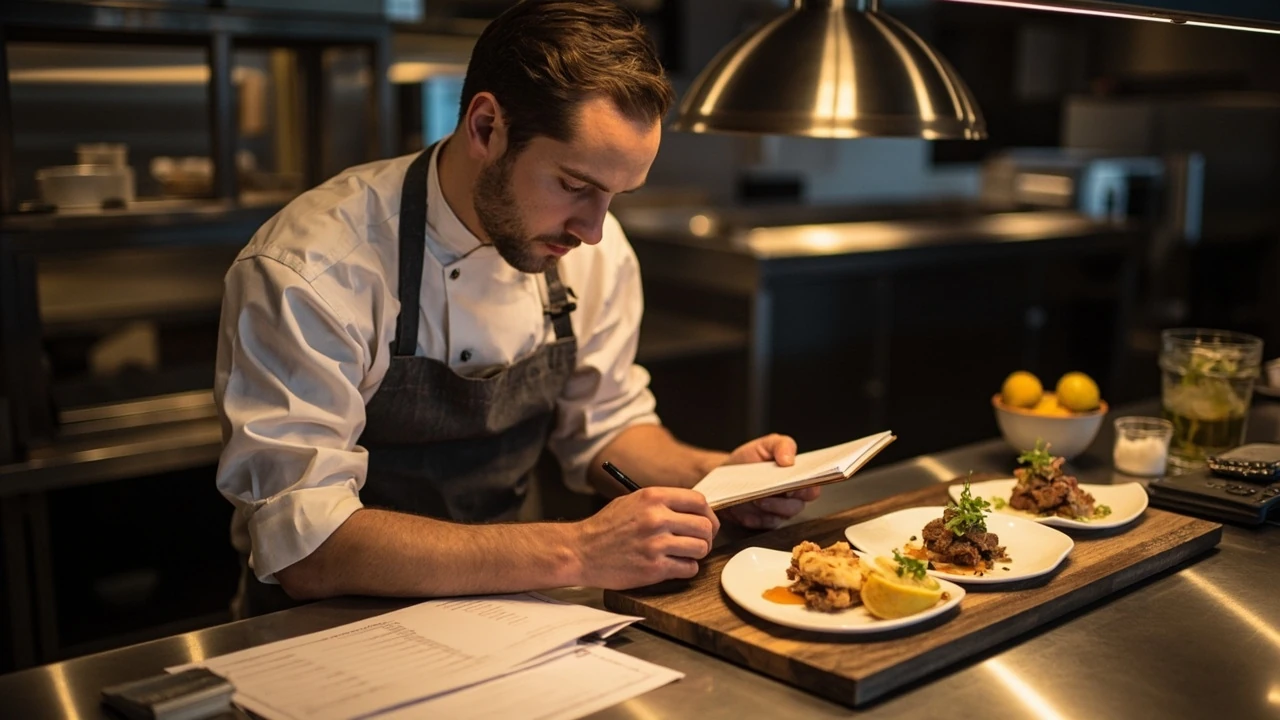
How to price add ons and side dishes without losing margin
A small plate of charred broccolini, a truffle dip, a six-shuck oyster upgrade, a side of house-cut fries. These line items decide whether a kitchen makes the night or subsidizes the guest. Entrées carry the menu, but side dishes and add-ons often carry the contribution margin. Learning how to price add ons and side dishes is one of the faster ways to lift check average and contribution without changing the headline dishes people already order.
The work is mechanical: pull a real plate cost, set a tier target, run the right formula, then pressure-test the number against perceived value and the speed of the line. Below is a method built from operating reviews and P&L line items, with worked numbers and a rollout plan you can repeat every quarter.
Why side dishes and add-ons deserve their own pricing method
Most operators price entrées against a target food cost, then leave sides, sauces, and add-ons at the bottom of the recipe sheet to be set by feel. The P&L usually reflects that habit. A side priced as a small fraction of an entrée can carry the same plating, ticket handling, and trim cost as a much larger plate in the back of house. Treat add-ons as their own small menu, with their own targets, and the average check often moves without raising a single entrée price.
There are three reasons to price these items separately:
- Portion economics differ. A side dish plate uses a fraction of the entrée’s ingredient spend but a similar share of plating, ticket handling, and labor touch time.
- Add-ons are emotional purchases. Guests decide on a truffle butter or a bacon upgrade after they have already chosen the entrée, so the price has to feel right at the moment, not after a calculator comes out.
- Waste is concentrated in sides. Trim from a steak becomes a side. A little of this and a little of that becomes a garnish. Sides absorb the prep loss that would otherwise hit entrée cost.
Once sides and add-ons live in their own economic zone, the rest of the work is a series of inputs and checks.
The three numbers you need before you touch a price
Before setting a single side price, pull three figures for each candidate item. These are not theoretical targets; they are the inputs that decide whether a side pays its own way.
- Full plate cost. Every ingredient that lands on the plate, including seasoning, oil, the slice of lemon, and a fair share of trim and waste. The same discipline that goes into menu pricing strategies for the main menu applies, just at a smaller scale.
- Touch time and overhead allocation. A rough count of minutes from the pass call to plating, plus a share of utilities, dishwashing, and packaging if the item is on delivery.
- Target contribution margin. The percentage of each side dollar that should drop to the bottom line after food cost. Most independents set this between 70 and 80 percent for sides, slightly higher than for entrées.
With those three numbers, you can convert cost into price using either a food cost percentage or a contribution margin formula. The two methods should land within a small range of each other. When they do not, one of the inputs is wrong.
Two formulas that should agree
Run both formulas on every side dish. If they disagree by more than a few percentage points, something in the plate cost is missing, usually waste or a garnish line the team has been treating as free.
| Method | Formula | What it controls for | When it fits best |
|---|---|---|---|
| Target food cost | Price = Plate cost ÷ Target food cost % | Raw ingredient cost only | High-volume sides with low labor touch |
| Target contribution margin | Price = Plate cost ÷ (1 − Target contribution margin %) | Raw cost plus a margin target after waste and labor | Premium add-ons and labor-heavy sides |
| Flat dollar uplift | Add a fixed dollar amount to a base price | Perception and simplicity on the menu | Sub-$3 garnishes, sauces, small upgrades |
| Multiplier on entrée | Price = Entrée price × Multiplier (often 0.20 to 0.35) | Perceived value relative to the main | Composed side plates that visually match the entrée |
The food cost method is the cleanest starting point. The contribution margin method forces you to acknowledge that some sides are cheap in food but expensive in labor, and that an item like a hand-cut, twice-cooked, plated side is not the same economic object as a scoop of coleslaw.
Worked example: pricing a single side dish
Take a smoked chili-lime corn side, the kind of plate that costs a few bites of plate space but takes ten minutes of prep and a precise plating. The kitchen has worked out these numbers:
- Ingredient plate cost, including seasoning, lime, and a share of trim: $1.20
- Touch time including prep, plate, and pass: 8 minutes
- Loaded labor and overhead for the station: about $0.70 per portion at current sales volume
- Target food cost: 28 percent
- Target contribution margin: 72 percent
Running the two formulas:
- Food cost method: $1.20 ÷ 0.28 = $4.29, which the menu rounds to $4.50.
- Contribution margin method: $1.20 ÷ (1 − 0.72) = $4.28, rounded to $4.50.
Both land on the same number, which is a good sign that the plate cost is realistic. The menu price is $4.50. Contribution per plate after food cost is roughly $3.30, before the small overhead allocation. Compare that to a scoop of plain butter that costs $0.30 and the team will recognize why a flat dollar pricing pattern for tiny add-ons is worth treating as a separate category.
Where flat dollar pricing actually makes sense
Not every add-on should run through a percentage formula. Some items are too cheap, too small, or too expected to carry a calculated price without feeling inflated. A flat dollar pricing approach is appropriate when:
- The item is a garnish, sauce, or finishing touch that guests expect with the dish.
- The plate cost is under about $0.40 and the team is paying more in ticket handling than in food.
- Adding the item to the menu has to be frictionless for the guest, the cashier, and the kitchen.
- You want to nudge behavior, such as a $2 add-on for a second protein that moves the check average without a heavy lifting decision.
The classic examples are sub-$3 add-ons: a side of gravy, a poached egg, a small cheese upgrade, an extra dipping sauce, a swap from fries to a premium side. For these, the question is less about cost recovery and more about anchoring the guest’s perception of value on the rest of the menu. A $2 add-on can quietly fund a discount on a daily special that would otherwise look expensive.
How to set a target food cost for sides specifically
Most operators anchor on a single food cost target for the whole menu, often around 30 percent. For sides, that single number is usually too loose. Sides have lower ingredient cost per plate but a heavier share of plating and waste, so a flat 30 percent can hide weak contribution.
Use a tiered approach:
- Bulk simple sides such as fries, rice, or a green salad: target food cost 25 to 30 percent because labor is shared with the main line.
- Composed side plates such as charred vegetables, a small grain bowl, or a composed slaw: target food cost 28 to 32 percent because of higher labor and garnish cost.
- Premium add-ons such as a protein upgrade, truffle butter, or a hand-shucked oyster: target contribution margin 75 to 80 percent because the perceived value is high and the kitchen is doing real work.
These targets are starting points, not rules. If the dining room is willing to pay $9 for a side of mushrooms, the contribution margin will beat the target food cost, and that is fine. The real risk is the opposite: pricing a premium add-on like a bulk side because nobody ever updated the formula when the dish changed.
The role of perceived value in side dish pricing
Cost is one side of the price. The other is what the guest believes the side is worth. This is where menu engineering, not math, sets the ceiling. A side priced purely from cost will sometimes feel cheap, and a side priced purely from value will sometimes feel like a rip-off. The job is to align the two.
Three signals drive perceived value on a side dish:
- Plate size and shape. A small cast-iron crock of mac and cheese looks more expensive than a ramekin of the same portion. Plating is part of the price.
- Position on the menu. Sides listed in a dedicated Sides column read as a deliberate choice. Sides buried in a long list of entrées read as an afterthought.
- Language and description. “Charred broccolini, chili crisp, lemon” reads differently from “steamed broccoli.” Menu language is part of pricing, which is why menu descriptions that actually sell matter just as much for sides as for entrées.
A useful exercise is to ask the front-of-house team which sides guests ask about most. Those are the items where perceived value is already high and a slightly bolder price will hold. The sides that nobody mentions are the ones that need either a price reset or a description refresh before any number change will work.
A simple test for any new add-on price
Before a new add-on hits the menu, run it through a four-step check. This is the same filter used in broader menu pricing work, applied at the line-item level.
- Cost floor. Confirm the price covers full plate cost including a fair share of waste and trim.
- Margin floor. Confirm the price meets the contribution margin target for the side’s tier.
- Perception ceiling. Confirm the price does not feel punitive against the cheapest entrée on the same menu page.
- Operational test. Confirm the kitchen can deliver the side at the listed price during a Friday rush without a ticket-time penalty.
If any of these four fails, the price is wrong. A new add-on that fails the cost floor will quietly bleed margin. One that fails the perception ceiling will not sell. One that fails the operational test will slow down the line and damage the whole ticket.
Common mistakes when pricing add ons and side dishes
Side and add-on pricing is where a few well-known habits erase margin. These are the patterns that show up most often in operator reviews.
- Ignoring trim and prep waste. Sides absorb the trim from other dishes. If that trim is not valued, the side looks cheaper to make than it really is.
- Using the entrée’s food cost target. Sides can usually support a tighter target because the cost per plate is small, but a 30 percent target borrowed from the entrées can leave money on the table.
- Pricing by the entrée ratio without checking the cost. A 25 percent rule of thumb on the entrée price is fine as a ceiling, but a side dish with a $0.40 plate cost should not be priced at 25 percent of a $32 entrée just because the math lands there.
- Letting “free” items stay free. A side of bread, a small palate cleanser, a complimentary sauce. These are part of the check, even if there is no line item. A free item still costs labor, ingredients, and waste.
- Forgetting delivery and packaging. Sides that travel on delivery absorb a heavier share of packaging cost per dollar of price than the entrées do. Build that in or the delivery channel will quietly subsidize the dining room.
Most of these mistakes share a single root cause: sides and add-ons are treated as a residual of the menu instead of a deliberate part of the business.
How to roll out new side and add-on prices
Even a well-priced add-on can fall flat if the rollout is sloppy. Servers need to know the price, the kitchen needs to know the portion, and the menu needs to read cleanly. Three small steps tend to make the difference:
- Train servers on the why, not just the what. A side priced at $6 instead of $4 will sell better if the team can explain the upgrade in a sentence. “It’s hand-cut and double-cooked” beats “it’s the new price.”
- Update the menu and the POS at the same time. A disconnect between the printed menu and the till is a trust problem and a margin problem at the same time.
- Watch the first two weeks of data. Track attach rate, average check, and kitchen ticket time. If attach rate falls sharply, the price likely overshot perceived value. If the kitchen slows down, the operational test has failed.
This kind of follow-through is part of the broader discipline of running a small-format menu that actually pays, the same discipline that underpins thoughtful restaurant growth.
When to revisit a side dish price
Side prices are not a set-and-forget project. Re-check them when any of the following changes:
- Ingredient cost moves by more than about 8 to 10 percent.
- Portion size shifts, even quietly, because a kitchen wants to reduce waste.
- A new main dish changes the anchor price on the menu page.
- The side is attached to less than 10 percent of tickets, which usually signals a price or description problem.
- The kitchen starts to see the side as a punishment station during service, which is a labor and morale signal before it is a cost signal.
For most independents, a quarterly review of the side and add-on list is enough. For high-volume operations or menus with heavy protein exposure, a monthly check on the top 10 sides is worth the time.
Putting it all together: a simple side pricing workflow
Pulled into a single repeatable flow, the process for how to price add ons and side dishes looks like this:
- List every side and add-on currently on the menu.
- Recalculate full plate cost for each, including trim, waste, and garnish.
- Assign each item to a tier: bulk, composed, or premium.
- Apply the right formula to each tier.
- Cross-check the result against perceived value using menu position, description, and plate presentation.
- Pass the four-step test: cost floor, margin floor, perception ceiling, operational test.
- Roll out the new price with menu, POS, and server training aligned.
- Review attach rate and contribution after two to four weeks.
That loop is the working answer to how to price add ons and side dishes. It is not a single formula or a fixed multiplier. It is a habit of treating the side list like a small, deliberate menu that earns its own place on the page and on the P&L.
| Tier | Example sides | Main pricing lever | Target band | Common pitfalls |
|---|---|---|---|---|
| Bulk simple | Fries, rice, house salad | Food cost % | 25 to 30% food cost | Underpricing because the plate cost looks tiny |
| Composed | Charred vegetables, grain bowl, composed slaw | Food cost % with labor factored in | 28 to 32% food cost | Ignoring garnish and plating labor |
| Premium add-on | Protein upgrade, truffle butter, hand-shucked oyster | Contribution margin % | 75 to 80% contribution margin | Pricing like a bulk side, or close to an entrée price |
| Flat dollar | Gravy, poached egg, extra sauce, premium side swap | Fixed dollar amount | Typically $1 to $3 | Charging a calculated price for a garnish that guests expect |
For the underlying economics behind the contribution margin formula, the contribution margin entry on Wikipedia is a clean reference. For practical overhead allocation, the SCORE small business budgeting guide on overhead allocation walks through how to assign shared costs to individual menu items without double-counting.
Frequently asked questions
What food cost percentage should I use for side dishes?
Most independent restaurants price bulk sides at a 25 to 30 percent food cost, composed sides at 28 to 32 percent, and premium add-ons at a 75 to 80 percent contribution margin target. Sides usually support a tighter food cost target than entrées because their plate cost is low and their labor and waste share is high, so borrowing the entrée’s food cost target often leaves margin on the table.
Is it better to price add-ons as a percentage of the entrée or as a flat dollar amount?
Percentage pricing is useful as a ceiling check, because no guest wants to pay more for a side than for the main. Flat dollar pricing is useful for very small add-ons, where the labor of charging a calculated price outweighs the cost being recovered. In practice, the strongest menus use both: a calculated price for sides and composed add-ons, and a clean flat dollar price for garnishes, sauces, and small upgrades.
How do I know if a side dish is priced too low?
Three signals suggest a side is underpriced: contribution per plate is well below the rest of the menu, attach rate is unusually high with no clear reason, and the kitchen is happy to push the side because it is easy money. If a side is selling at every table and the kitchen never complains, the price is almost certainly too low.
How do I know if a side dish is priced too high?
The clearest signal is a low attach rate against a main that guests normally pair with a side. A second signal is servers warning guests off the item when they talk through the menu. A third signal is a side that has been on the menu for several weeks with no change in the cost inputs and no movement in sales, which usually means the price is the problem, not the description.
Should the same side cost the same in the dining room and on delivery?
Often no. Delivery sides absorb packaging and a heavier share of overhead per dollar of price, so many operators add a small delivery-only surcharge, usually $1 to $2, to recover that cost. Keeping the in-house price lower and the delivery price higher also helps the in-house guest feel that the dining room is the better deal, which is a quiet but useful way to protect on-premise traffic.
How often should I review side dish and add-on prices?
A quarterly review is a reasonable baseline for most independents. Restaurants with high protein exposure, heavy delivery volume, or fast-changing ingredient costs should review monthly. The point of the review is not to raise every price. It is to catch the few items that have quietly drifted out of line with their cost or their perceived value.
What is the difference between food cost and contribution margin for sides?
Food cost is the ratio of ingredient cost to menu price, ignoring labor and overhead. Contribution margin is the share of each side dollar that remains after ingredient cost, and is the better number to watch for labor-heavy sides and premium add-ons. For simple bulk sides, the two methods usually agree. For composed and premium sides, contribution margin is the number that reflects the real economics.
Do “free” sides really cost the restaurant money?
Yes. A free side still uses ingredients, prep time, plating time, and ticket handling. It also uses plate space and storage. The cost is small per cover, but across a busy service it adds up. A free side is only a smart move when it changes a guest’s behavior in a way that pays back, such as a small palate cleanser that encourages a second drink or a dessert purchase. Otherwise, the side should either be priced or removed.
How do I price a premium add-on like a protein upgrade?
Start with the full plate cost of the added protein, including trim and a share of waste. Apply a contribution margin target of 75 to 80 percent, which gives the kitchen a fair return on the extra labor. Then test the price against the cheapest entrée on the menu. A premium add-on should never be priced within a small margin of an entrée, because that breaks the guest’s sense of the menu’s structure.
Can menu engineering change what a side is worth?
Yes, and it usually should. A side that is moved into a dedicated Sides section, given its own descriptive line, and plated on distinctive dishware can support a meaningfully higher price than the same side listed as a footnote on the entrée. The cost has not changed. The perceived value has, and perceived value is part of pricing in the same way that plate cost is.