Brazilian food: what operators actually need to know
A guest asks for a Brazilian menu item you have not thought about since culinary school. The question is not whether brazilian food is interesting, it clearly is, but whether your kitchen, supply chain, and price structure can carry a real version of it. The same problem shows up when a chef wants to run a churrasco night, a café wants to add a pão de queijo case, or a regional concept considers whether a feijoada on Sundays can become a steady revenue line.
This guide is written for operators and food professionals who want to understand brazilian food well enough to decide what to add, what to skip, and what to charge. It is not a tourist roundup. The goal is to give you the regional logic, the ingredient realities, the menu math, and the execution risks that determine whether a Brazilian dish on your menu is a signature or a liability.
What makes brazilian food a distinct category
Brazil is a continent-sized country, and its food reflects that. The cuisine blends indigenous techniques, Portuguese colonial cooking, West African ingredients and methods, and a long list of later migrations from Germany, Italy, Japan, the Middle East, and the Andean region. Treating brazilian food as one style misses the point. It is a federation of regional cuisines, and the differences between them are large enough to matter on a menu.
From an operator’s perspective, three structural traits define brazilian food more than any single dish:
- It is built on a small set of shared foundations (beans, cassava, rice, corn, tropical fruits) that repeat across regions in different forms.
- It is heavily influenced by preservation methods developed before refrigeration, which is why so many iconic dishes center on dried, salted, cured, or slow-cooked ingredients.
- It treats meals as social events, especially long lunches and weekend gatherings, which shapes portion size, plating, and pacing.
Those traits are also why brazilian food travels well into restaurant formats. The foundations are forgiving on cost, the preservation logic is friendly to modern kitchen schedules, and the social aspect gives operators a reason to design experiences rather than just sell plates.
Regional map of brazilian food
If you are evaluating brazilian food for a concept, the region matters more than the country label. The table below summarizes the dominant regional cuisines, the dishes most often associated with them, and the ingredient signatures that define each one.
| Region | Culinary identity | Representative dishes | Signature ingredients |
|---|---|---|---|
| Bahia (Northeast) | African and indigenous roots, strong seafood, fiery stews | Acarajé, moqueca, vatapá, caruru | Dendê (palm) oil, coconut milk, dried shrimp, malagueta pepper |
| Minas Gerais (Southeast) | Portuguese-influenced comfort cooking, wood-fired traditions | Pão de queijo, feijão tropeiro, tutu de feijão, frango com quiabo | Cheese bread, cassava flour, pork, collard greens |
| São Paulo and the South | Cosmopolitan, immigrant-heavy, pizza and churrasco culture | Churrasco, virado à paulista, pizza estilo São Paulo | Beef, chicken hearts, polenta, Italian-style pastas |
| Rio Grande do Sul and the gaucho south | Meat-centric, open-fire cooking, mate culture | Churrasco de costela, chimichurri-style sauces, arroz carreteiro | Beef cuts cooked over wood, herbs, rice |
| Amazon and North | River and forest ingredients, lighter than the rest of the country | Tacacá, pato no tucupi, pirarucu dishes | Cassava root, tucupi sauce, açaí, tropical fish |
For most operators outside Brazil, the practical decision is which of these five patterns fits your kitchen. Bahia and Minas Gerais have produced the highest number of dishes that have crossed borders because their core ingredients and techniques map to most Western kitchens. The gaucho south dominates the churrasco category globally, and the Amazon region still has more cultural than commercial reach abroad.
Core ingredients you will actually source
The honest version of brazilian food depends on a small list of ingredients that are not always easy to find. Some have clean substitutes, others do not. Before you add a dish to your menu, run the ingredient list against what your suppliers can deliver without a three-week lead time.
- Cassava (mandioca): Used as flour (farinha), starch (polvilho), and a cooked side. Farinha and polvilho are widely available through Latin American suppliers and online. Whole cassava is a different problem depending on your region.
- Dendê (palm) oil: The flavor anchor of Bahian cooking. It is distinctive and hard to fake. Many operators use a controlled amount because the color and aroma carry into the dish, and it oxidizes quickly once opened.
- Pão de queijo mix or fresh cassava starch: Pão de queijo is one of the easiest Brazilian items to execute. You can buy premix from importers, or work from sour cassava starch (polvilho azedo) if your supplier carries it.
- Cachaça: The base of a caipirinha and the cooking alcohol of choice in many savory dishes. A mid-tier cachaça from a Brazilian producer is enough for the bar program; cooking applications are forgiving.
- Black beans (carioca and preto): The carioca bean is the everyday bean across much of Brazil, while preto is more associated with feijoada. Both are widely available in food service packs.
- Malagueta pepper: Smaller and sharper than a typical Thai chili. If you cannot source it, serrano or bird’s eye chilies work, though the heat curve differs.
- Cured pork products: Linguiça, paio, and bacon cuts with curing salt are central to feijoada and many Minas Gerais dishes. Domestic cured pork can substitute in taste, but the fat profile and saltiness often read slightly different.
- Tropical fruit purées: Açaí, cupuaçu, passion fruit, and guava are common in desserts and drinks. Frozen purées are realistic for most operators.
Two of these deserve more attention because they are the most common points of failure in non-Brazilian kitchens: dendê oil and polvilho azedo. Dendê can overpower a dish if used the way a Brazilian home cook uses it, so start with roughly half the volume you would use in Bahia and adjust. Polvilho azedo is the difference between pão de queijo that snaps and pão de queijo that puffs like a roll. Most importers stock both, but a fresh batch every few weeks keeps results consistent.
The menu math: cost, portion, and price logic
Brazilian food sits in an unusual position on a menu. Many iconic dishes are inexpensive in their home context, which sets a customer expectation you may not want to honor. At the same time, the dishes rely on imported ingredients, slow cook times, or both, which pushes real cost up. You can either accept a lower margin on a hero dish or rebuild the dish into a version that supports a higher price.
| Dish | Primary cost driver | Typical portion strategy | Pricing posture |
|---|---|---|---|
| Feijoada | Cured meats and long cook time | Shareable main for two, or a hearty single portion | Anchor dish, priced as a destination item |
| Pão de queijo | Polvilho azedo and good cheese | Three to five pieces per order, add-on snack | Low price point, high margin on volume |
| Churrasco (rodízio) | Beef cuts, skewers, service time | Per-person pricing with all-you-can-eat pacing | Priced as experience, not à la carte |
| Moqueca | Seafood, dendê oil, coconut milk | Main for one or two with sides | Premium positioning, especially outside coastal markets |
| Açaí bowl or dessert | Imported purée, toppings | Single-portion snack or dessert | Mid-range, sold on quality of fruit |
The pricing decisions for brazilian food follow the same logic used in any menu engineering exercise. The anchor dish (usually feijoada, moqueca, or a churrasco experience) should be priced to cover a meaningful share of the day’s food cost, while the snack items (pão de queijo, coxinha, small pastéis) should be priced to move volume and to bring in guests who may not order a main. If you want a deeper method for balancing those roles, the journal’s menu engineering approach explains how to keep that work honest without flattening the menu into a margin spreadsheet.
How to decide what to put on the menu
Adding brazilian food to a menu without a clear reason usually ends in a token dish that nobody orders. Operators who do this well usually start with a concept question, not a recipe question. The list below walks through the decision points in the order that matters for revenue.
- Anchor or accent: Decide if brazilian food is the concept or a section. A churrasco concept has different cost, labor, and equipment implications than a café that adds pão de queijo and a guava pastry.
- Region over country: Pick a region, not “Brazil.” Bahia, Minas, and the gaucho south each imply different ingredient lists, equipment, and trained labor.
- Equipment audit: Churrasco requires real fire or a quality grill setup. Moqueca is best in a clay pot, which most kitchens do not own. Pão de queijo needs a reliable oven and a consistent batter process.
- Labor skills: Brazilian food is forgiving on technique, but it is unforgiving on seasoning. Staff need to taste as they go, especially with dishes that use dendê, malagueta, or fresh herbs.
- Sourcing realism: Map every imported ingredient to a primary and backup supplier before you print the menu. A single supplier failure on dendê or polvilho can sink a Brazilian section.
- Price architecture: Decide which dish carries margin and which carries traffic. Most operators underestimate the traffic role of pão de queijo, which often pulls in a guest who would otherwise pass the restaurant.
- Storytelling payload: Brazilian food has unusually strong regional stories. Operators who use that storytelling well, especially in menu copy and front-of-house talk, usually see a higher attach rate on Brazilian dishes than operators who treat them as ethnic side notes.
If you want a structured way to translate these decisions into a specific marketing message, the journal’s piece on specificity in food marketing covers how to turn a regional choice like “Bahian” or “Minas Gerais” into a coherent brand promise.
Execution risks and how to manage them
The most common reasons a Brazilian menu item underperforms are not flavor problems, they are operational problems. The list below covers the issues that show up again and again, with practical responses for each.
- Ingredient drift: Suppliers swap brands or origins quietly. Lock in specifications, especially for dendê, cachaça, and cured pork, and re-taste every new batch.
- Heat inconsistency: Brazilian food uses chilies in layers, not as a single blowout. Train cooks to build heat gradually, and taste the dish at each stage rather than adjusting only at the end.
- Cassava texture problems: Farinha and polvilho behave differently at different humidities. Store both in sealed containers and recalibrate recipes seasonally if you are in a humid climate.
- Long cook times: Feijoada, moqueca, and several Minas Gerais stews do not compress well. Build prep schedules that respect the cook, or accept that the dish will only run certain days of the week.
- Service pace: Brazilian meals are social. If your front-of-house tries to turn a feijoada table in 45 minutes, the experience breaks. Train servers to pace the meal and to talk about the components on the plate.
- Visual misreading: Some Brazilian dishes look plain in photos, especially bean-based ones. The visual gap between the plate and the actual flavor is one of the bigger marketing problems for the cuisine, and food photography has to close it.
That last point is worth a paragraph. Guests who do not know brazilian food often see a bowl of beans and assume it is a side dish. The photography in your menu, on your site, and on your delivery listings has to do the work of telling the story before the guest walks in. The journal’s food photography guide walks through how to make those decisions for dishes that do not photograph themselves.
Building a small Brazilian section that actually works
For most operators, the right move is not to go full concept. A small, focused section of three to five items that share a regional logic will outperform a scattered list of Brazilian dishes with no internal coherence. The structure below is a starting point you can adjust to your kitchen.
- One signature main: Choose one dish that anchors the section, such as feijoada, moqueca, or a regional stew, and commit to making it well. Do not split attention across three competing mains.
- One shareable snack: Pão de queijo, coxinha, or pastel fits the role of a shareable, low-cost item that gets the cuisine onto more tables. Pão de queijo is usually the lowest-risk choice because the format is familiar to most guests.
- One side or vegetable dish: Farofa, tutu de feijão, or vinagrete are common and inexpensive sides. They also help with visual variety on the plate.
- One drink item: A caipirinha or a guava-based mocktail rounds out the section without requiring a full Brazilian bar program. Cachaça is the only hard-to-source ingredient you need.
- One dessert: Brigadeiro, beijinho, or a tropical fruit dessert closes the meal. Brigadeiro in particular travels well and is forgiving on portioning.
If you build the section this way, you have a coherent story, a realistic ingredient list, and a price architecture that does not depend on every dish hitting a margin target. You can also expand or contract the section based on how guests respond without redesigning the whole menu.
How brazilian food fits into delivery, catering, and fast casual
Format changes the math. A feijoada that works in a dining room may not survive a 30-minute delivery window. A pão de queijo that works as a table snack may not survive as a delivery item because it loses its pull. Operators who treat brazilian food as one menu, regardless of channel, usually struggle with at least one channel.
For delivery, the safer items are pão de queijo (reheats well), coxinha (holds crispness in a proper box), brigadeiro (transport-stable), and açaí bowls if you have a reliable purée source. Moist stews like feijoada and moqueca can work, but the container, the temperature, and the timing all have to be tuned. A 10-minute late delivery on a feijoada is a different experience than a 10-minute late delivery on a sandwich.
For catering, brazilian food is unusually well-suited. The cuisine is built around large-format dishes, shareable plates, and long meals, which is exactly how catering events are structured. A churrasco-style carving station or a feijoada buffet for 40 people is a more natural fit than a per-plate plated dinner, and the price-per-head math often works in your favor because the format is meant to feed a crowd.
For fast casual, pão de queijo and açaí bowls are the two most tested Brazilian fast casual concepts globally. A Brazilian-leaning fast casual built around pão de queijo, savory snacks, and brigadeiro for dessert is a realistic concept in cities with enough Brazilian diaspora or enough food-curious guests to support it. A pure churrasco fast casual has a higher equipment cost and a steeper service model, so it usually shows up as a hybrid with a grill counter and a smaller menu.
How to talk about brazilian food without sounding generic
Menu copy is where most operators waste the storytelling power of brazilian food. Phrases like “authentic Brazilian flavors” and “traditional Brazilian recipe” are filler. Guests who know brazilian food will not trust them, and guests who do not will not be moved by them. The most useful copy is specific.
- Name the region, not just the country. “Bahian seafood stew” is more useful than “Brazilian stew.”
- Name the technique when it matters. “Slow-simmered black beans” is more honest than “house-made beans.”
- Name the ingredient that makes the dish different. “Acarajé is a black-eyed pea fritter fried in dendê oil” tells a guest more in a single sentence than a paragraph of adjectives.
- Connect the dish to the social context. “Feijoada is traditionally served on Saturdays with rice, farofa, and orange slices” sets expectations and explains the components on the plate.
The same logic applies to the way servers describe the food at the table. The operators who do this well treat brazilian food as a story worth telling, not a cuisine to be explained. If you want a more developed way to translate that into your brand language, the journal’s restaurant branding piece covers how to build an identity that guests remember, and the post on signature dishes shows how to turn one Brazilian anchor into a month of social and site content.
Common mistakes operators make with brazilian food
These are the patterns I see most often, and most of them are avoidable with a small amount of planning. If you are early in the process, use this list as a pre-launch checklist.
- Treating brazilian food as one thing. If you are adding a Brazilian section, pick a region and stand behind it. Mixed-region menus without a clear story usually confuse guests and frustrate cooks.
- Underestimating dendê and cachaça. These are the two ingredients most likely to be missing or under-used. Get them right and the rest of the menu is much easier.
- Pricing the anchor dish like a side. Feijoada and moqueca are not sides. If you price them like sides, you will eventually drop them because the margin will not justify the labor.
- Ignoring delivery math. The dishes that work in the dining room are not always the dishes that work in a delivery bag. Build the delivery menu with the format in mind, not as an afterthought.
- Skipping the story in the menu. Brazilian food sells well when it is explained well, and it dies quietly when it is not. Spend the time on the menu copy.
- Forgetting the bar. Cachaça, guava, passion fruit, and açaí are all natural fits for a small Brazilian-leaning bar program. A good drink program doubles the visibility of the food program without doubling the kitchen cost.
How to test brazilian food before you commit
If you are not sure whether brazilian food belongs in your concept, run a small, honest test. The steps below are designed to give you real signal without committing to a permanent menu change.
- Run a single Brazilian dish as a weekly special for six to eight weeks. Pick a dish that fits your kitchen, not the most ambitious one on your list.
- Track attachment, not just orders. What percentage of guests who order the special also order a Brazilian drink or a Brazilian dessert?
- Talk to guests. Ask which dish they ordered and what they thought. The qualitative answers are usually more useful than the sales numbers in the early weeks.
- Watch your food cost, but also watch your labor cost. Some Brazilian dishes cost less in ingredients but more in time. Build the full cost picture before you decide.
- Promote the test. A Brazilian special that nobody hears about is not a useful test. Use the test to learn what kind of promotion gets the dish in front of new guests.
If the special moves well, expand the section. If it does not, you have lost a small amount of revenue and a few weeks of prep time, and you have learned something real about your market.
Final practical notes for operators
Brazillian food is a useful addition to a menu when the addition is intentional. It rewards operators who pick a region, learn the foundations, and commit to a small set of dishes done well. It punishes operators who treat it as a novelty. The most common success pattern I see is a three- to five-item section anchored by one signature dish, supported by a snack, a side, a drink, and a dessert, with menu copy that actually explains what the guest is about to eat.
If you are starting from a blank page, the shortest path is: pick the region, lock the suppliers, run one dish as a special, and build the section around the dish that performs. If you are adding to an existing menu, start with pão de queijo and a caipirinha. Both teach you a lot about your guests’ interest in brazilian food without requiring a major menu change, and both can become permanent items on their own.
The deeper point is that brazilian food gives you a structure, not just a recipe list. The regional logic, the preservation methods, the social pacing, and the ingredient foundations are tools you can use to build a coherent section rather than a scattered set of dishes. Operators who use those tools well end up with a menu that is harder to copy than a typical ethnic add-on, and that is the real commercial argument for taking the cuisine seriously.
Frequently asked questions
What is the most iconic brazilian food dish?
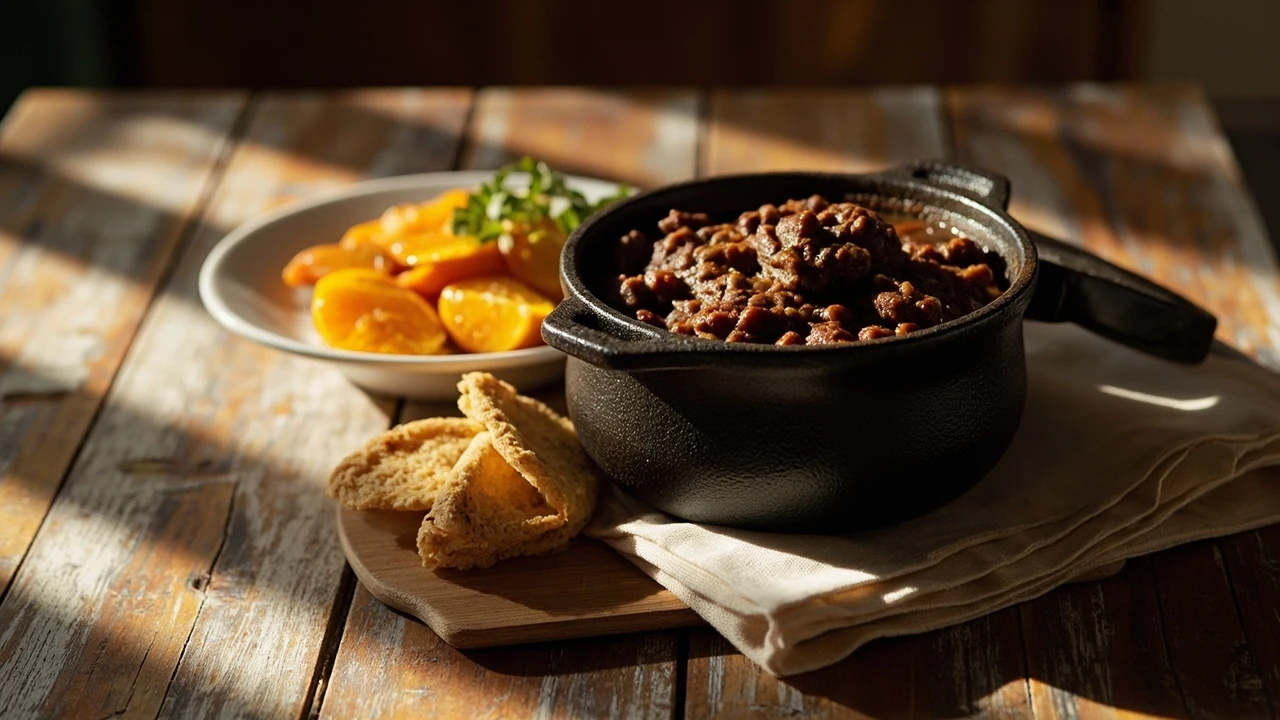
Feijoada is the most recognized national dish. It is a slow-simmered black bean stew with cured pork parts, traditionally served with rice, farofa, collard greens, orange slices, and a hot sauce. The dish is associated with Saturday lunches and is treated as a social event as much as a meal.
Is brazilian food spicy?
Some regional cuisines are, but the country as a whole is not a high-heat cuisine. Bahian food, especially around Salvador, uses malagueta chilies and can be quite spicy. Minas Gerais cooking is generally mild, and gaucho churrasco focuses on meat and salt. The heat in brazilian food is usually a layer in a dish, not the dominant flavor.
What is the difference between brazilian food and portuguese food?
Brazilian food is built on Portuguese foundations but with significant African, indigenous, and later immigrant influence. Portuguese cooking tends to be lighter and more Mediterranean, while Brazilian cooking uses more cassava, beans, tropical fruits, and slow-cooked stews. The preservation techniques (farinha, cured pork, dendê) are largely Brazilian adaptations rather than Portuguese originals.
What is pão de queijo and why is it popular outside Brazil?
Pão de queijo is a small, chewy cheese bread made from cassava starch and cheese. It is naturally gluten-free, which has driven part of its international growth, but its real appeal is the texture: a crisp outside with a stretchy, cheesy interior. It is forgiving to produce in batches, holds well, and is easy to portion, which is why operators outside Brazil use it as a signature snack.
Is brazilian food affordable to add to a menu?
It depends on the dish. Pão de queijo, brigadeiro, and most snacks are inexpensive. Feijoada, moqueca, and churrasco require more expensive proteins and longer cook times, so the food cost is higher and the labor cost is also higher. The cost of adding brazilian food is usually about supplier setup and labor training, not about the ingredients themselves.
What brazilian food is easiest to make at restaurant scale?
Pão de queijo is the easiest to scale because the batter can be portioned and frozen before baking, and the cook time is short. Brigadeiro and beijinho are also easy at scale. Feijoada and moqueca scale well if your kitchen is set up for long, low-temperature cooking. Churrasco scales as a service model rather than a kitchen process.
What drinks are part of brazilian food culture?
Cachaça, the base of the caipirinha, is the most important. Guava, passion fruit, açaí, and coconut are common in juices and non-alcoholic drinks. Guaraná Antarctica is a soft drink with a long history in Brazil. Wine is less central than in European cuisines, but beer and batidas (cachaça-based fruit drinks) are common at meals.
Can brazilian food work in a vegetarian menu?
Yes, more easily than its reputation suggests. Several signature dishes are naturally meatless or can be made so: pão de queijo, tutu de feijão (without the pork), moqueca vegetariana, farofa, and most açaí-based items. The Bahian acarajé is also traditionally vegetarian in its base form before fillings are added, depending on the vendor.
How do I source brazilian food ingredients in a non-Brazilian market?
Start with Latin American importers who carry farinha, polvilho, dendê oil, cachaça, and cured Brazilian pork. Frozen açaí and tropical fruit purées are usually available from broader food service distributors. Talk to a local Brazilian community group if one exists in your city; they often know which suppliers are reliable.
Is brazilian food a good concept for a new restaurant?
It can be, but the concept needs a clear regional focus. A churrasco concept has a strong track record in markets with enough beef culture to support it. A pão de queijo and snack concept works in a café or fast casual format. A broader Brazilian concept without a regional anchor is harder to market and harder to operate. If you are starting a new concept, the strongest move is usually to commit to one region and one service model rather than trying to cover the whole country.