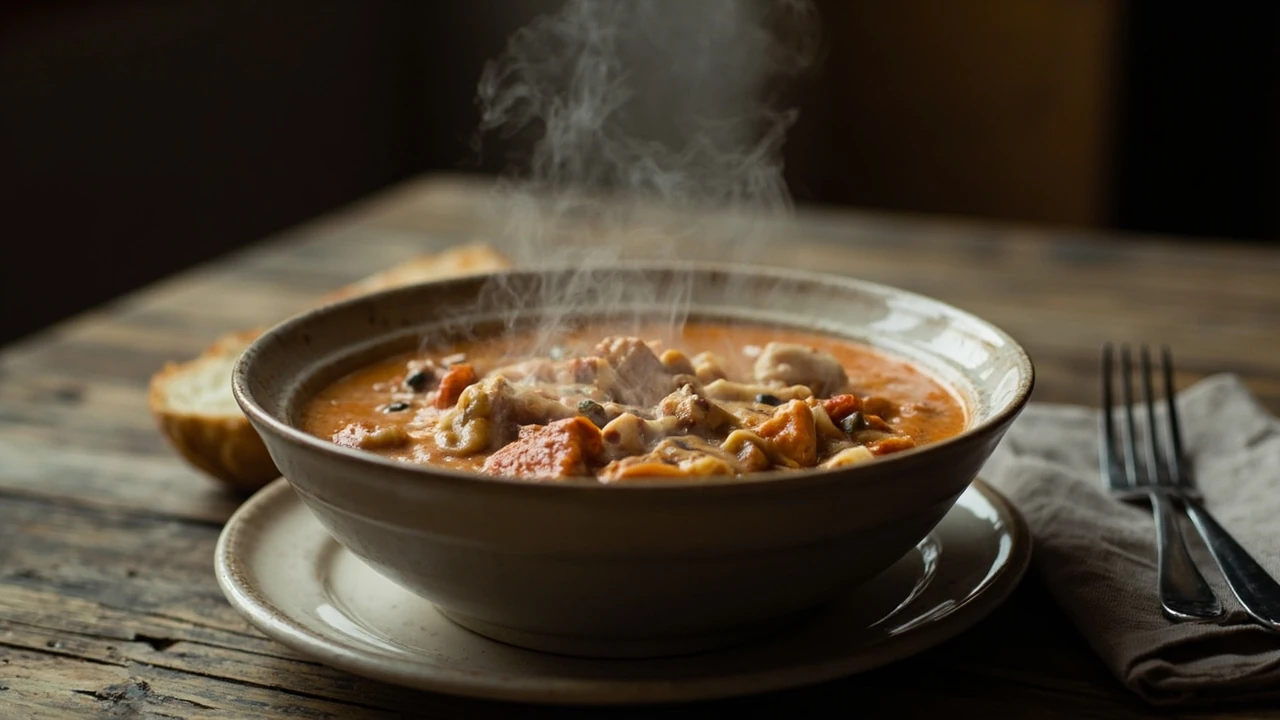
Comfort food: what actually makes a dish comforting
Pull a tray of roast chicken from the oven on a cold Sunday, and the house changes before anyone takes a bite. Doors close softer, voices lower, and the conversation drifts toward family. That reaction is not nostalgia acting alone. Comfort food sits at the intersection of flavor, texture, memory, and the body, which is why a bowl of noodles can steady a rough afternoon as effectively as a phone call home. For chefs, brand builders, and home cooks, the term gets thrown around loosely, yet the dishes that genuinely comfort share a few specific traits worth examining.
This article looks at comfort food as a working concept rather than a mood. It covers the sensory and cultural mechanics that make these dishes work, the practical choices behind a good comfort menu, and the line between true comfort and food that is merely heavy. Restaurants and food brands that understand this difference tend to build menus with stronger pull, while home cooks who learn the principles can rescue weeknight cooking from repetition.
What comfort food actually is
Comfort food is usually defined as familiar, home-style dishes that provide a sense of well-being, often through nostalgic or emotionally meaningful associations. Academic work on the subject, including a frequently cited review published in the journal Appetite on the psychological drivers of comfort food, treats the category as much about identity and memory as about flavor. Researchers have linked comfort food choices to attachment styles, stress, and even homesickness, but the most useful definition for cooks and operators is simpler: comfort food is what a person reaches for when they want steadiness, not novelty.
That steadiness usually arrives through a recognizable combination of starch, fat, salt, and warmth. Mashed potatoes, ramen, dumplings, macaroni and cheese, and chicken soup all share that backbone, which is why they appear across cultures that otherwise eat very differently. Comfort food is rarely about the rarest ingredient. It is about the right combination, prepared in a way that feels honest.
The sensory mechanics behind a comforting bite
Flavor, texture, and temperature each play a distinct role in how comforting a dish feels. A dish that nails one but ignores the others usually registers as satisfying but not truly calming.
- Fat and salt together. Fat carries flavor and slows eating, while salt amplifies savoriness. Dishes that lean on both, like a gratin or a braise, feel more complete than dishes built on one or the other.
- Soft textures that still have resistance. A bite that dissolves immediately feels thin, while a bite that fights the teeth feels tiring. The middle ground, like al dente pasta, tender stewed meat, or rice that holds its shape, tends to feel most comforting.
- Heat that arrives in the mouth, not on the tongue. Warm food comforts; food that scalds the lips and tongue triggers caution instead. Most successful comfort dishes land in the 55 to 65°C range at service.
- Aromas that build before the first bite. Scent carries anticipation. A pot of soup that has been on the stove for an hour will comfort a room before it comforts a stomach.
Restaurants that plate comfort food cold, or serve it in portions too small to deliver warmth, lose most of what the category offers. This is one reason comfort menus rarely travel well as grab-and-go items, no matter how skilled the kitchen.
Why the same dish comforts some guests and not others
The same bowl of macaroni and cheese can feel like a hug to a Midwestern regular and like heavy weeknight food to a guest who grew up eating lighter Mediterranean home cooking. That is not a flaw in the dish. It is a reminder that comfort food is personal, and it draws heavily on memory.
Three forces shape the gap:
- Cultural familiarity. A diner who grew up with pho, dal, or pierogi tends to find those dishes more comforting than imported substitutes, even when the substitutes are technically excellent.
- Family rituals. Specific dishes get tied to birthdays, recoveries, and quiet evenings. The dish and the ritual fuse over time, so the food alone is rarely the whole story.
- Individual physiology. Hunger, sleep, and stress change what feels comforting. A sick day calls for broth; a long week at work calls for something sturdier.
For a restaurant, this means the comfort menu should reflect the guests it actually serves, not the comfort canon of a different city or country. Operators who copy a national comfort list without checking their own room tend to underperform against simpler, locally familiar choices.
Comfort food and the body: a careful view
Comfort food is often discussed as if it were healthy by default, which it is not. Many classic comfort dishes are calorie-dense and high in sodium, which is part of why they satisfy but also why they need thoughtful portioning. The psychological comfort from a familiar meal is real, but the body’s nutritional needs are not suspended during a hard day.
Two practical habits keep the category honest:
- Treat the dish as an experience, not a side effect. Smaller portions served hot and well seasoned often satisfy more than large portions eaten quickly.
- Pair heavy comfort with lighter companions. A rich braise with a sharp green salad, or a creamy pasta with a bright tomato starter, balances the meal without diluting the comfort.
For chefs, this is also a place to be careful with claims. Phrases like “healing” or “restorative” applied to a specific dish should be backed by nutrition expertise rather than used as marketing copy. Comfort and health are related but not interchangeable.
How to build a comfort menu that holds up
A comfort menu is one of the hardest things to get right because the dishes have to feel familiar without feeling tired. The strongest comfort menus tend to share a few working principles.
| Principle | What it means in practice | What to watch for |
|---|---|---|
| Anchor in a familiar core | Choose a base dish guests already recognize: a braise, a soup, a baked pasta, a dumpling. | Do not over-modernize the core, or the comfort signal gets lost. |
| Add one clean upgrade | Improve one element, such as a better stock, a longer braise, or a finishing herb. | Limit upgrades to one or two per dish to keep the dish readable. |
| Portion for warmth | Size the portion so it can be eaten hot and unhurried. | Avoid oversized plates that cool before the guest finishes. |
| Match the room | Align the menu with the guests’ cultural frame of reference. | Borrowed national dishes need a clear story or they confuse the signal. |
| Hold a true classic | Keep at least one untouchable item that the regulars order without reading the menu. | Do not let seasonal reinvention reach the anchor dish. |
This kind of structure is similar to the work described in Menu engineering without killing the soul of the menu, where classic dishes carry identity and the engineered items carry margin. Comfort food is usually the identity layer, which is why it deserves a real seat at the menu table, not a token mention in the side list.
Common mistakes when adding comfort dishes to a menu
Comfort food is forgiving to cook and punishing to commercialize. The mistakes below show up often, and most of them are about misreading what the category actually does.
- Treating comfort as a synonym for heavy. A dish can be heavy without being comforting. Comfort comes from a recognizable profile, not from sheer size.
- Skipping the temperature control. Comfort food that arrives lukewarm loses most of its effect. Holding equipment and ticket timing matter more here than for most other menu categories.
- Borrowing too many cuisines at once. A comfort menu that lists chicken pot pie, Korean stew, and ramen tends to feel scattered, because it is asking the guest to switch emotional frames between bites.
- Pairing comfort with overly formal service. Heavy linen and tiny spoons fight the category. Comfort menus usually work best with service that feels grounded.
A focused comfort section, even with only three or four dishes, almost always performs better than a long one that tries to cover every nostalgic angle. A useful parallel is the discipline behind food photography that actually sells the dish: clarity beats abundance when the goal is to make a specific feeling land.
Comfort food across cultures
Comfort food is often treated as an American or Northern European idea, but the patterns show up in nearly every cuisine. The local ingredients change, the shape of the dish changes, and the emotional register changes, yet the underlying logic stays surprisingly steady.
| Region | Representative comfort dishes | Shared traits |
|---|---|---|
| Italy | Risotto, lasagna, pasta e fagioli | Starch-rich, gently cooked, often finished with cheese or olive oil. |
| Japan | Ramen, oyakodon, curry rice | Warm broth or sauce, soft protein, and a carbohydrate anchor. |
| Mexico | Mole, pozole, rice and beans | Slow-cooked, often shared, balanced with heat and acid. |
| India | Dal, khichdi, biryani | Spiced but not aggressive, often eaten at family meals. |
| United States | Fried chicken, meatloaf, chicken soup | Generous portions, familiar seasoning, often tied to family rituals. |
| West Africa | Jollof rice, groundnut stew, fufu with soup | Bold aromatics, slow-cooked bases, communal serving style. |
Looking across these lists, the shared traits are clearer than the differences. Starch, warmth, recognizable seasoning, and a sense of being shared all appear, which is why a thoughtful restaurant can borrow from any of these traditions without losing the comfort signal, as long as the dish is cooked with care and served at temperature.
How restaurants can charge fairly for comfort food
Comfort food carries a perception problem on the price side. Guests expect a bowl of soup to cost less than a steak, even when the labor and ingredient cost behind a well-made soup is high. Pricing comfort food well is partly arithmetic and partly expectation management.
- Price the bowl, not the weight. A 300 ml bowl of properly reduced broth with slow-cooked meat can justify the same price as a smaller portion of a fancier main, because the work behind it is real.
- Offer an anchor dish at a clear, simple price. One transparent price point helps guests relax into the menu.
- Use sides to balance the check. A simple, well-made side at a fair margin often carries the average ticket more cleanly than a price increase on the anchor.
The pricing logic here lines up with the guidance in menu pricing strategies that protect margin without losing guests. Comfort dishes can support a real margin when the rest of the menu is engineered to carry weight elsewhere.
A simple framework for testing a comfort dish
Before adding a new comfort item to a menu, it helps to test it against a fixed set of questions. The framework below is the same one many operators use quietly, written down so the kitchen and the front of house can share the language.
- Does the dish read as familiar within the first three seconds on the table?
- Is at least one element clearly better than the home version a guest would expect?
- Will the dish hold its warmth from pass to final bite under realistic service times?
- Does the dish photograph well, and does the photo still match what arrives?
- Can the kitchen execute it consistently during a full rush without a dedicated cook?
- Does the price match the perceived value for the guests who already order comfort food?
If a dish fails on two or more of these, it usually needs another round of development before it earns a place on the comfort section of the menu.
Comfort food at home, without repeating yourself
Home cooks run into a different version of the same problem: a short list of comfort dishes that gets rotated until everyone is slightly tired of them. The fix is rarely a new recipe. It is usually a small set of changes to the existing ones.
- Change the finishing, not the base. Keep the stew, but change the herb, the acid, or the finishing oil. The dish reads as new without losing its anchor.
- Vary the starch. The same stew over rice, over polenta, and over bread feels like three different meals.
- Rotate the cooking method. A braise that becomes a hand pie, or a soup that becomes a baked pasta, breaks the visual repetition without changing the underlying comfort.
- Match the weather and the week. Light comfort dishes on warmer days, heavier ones on cold ones. Comfort menus should not be seasonal just because of marketing; the body actually asks for different things across the year.
This kind of small variation is one of the easiest ways to keep home cooking from feeling like a loop, and it mirrors the same logic restaurants use to keep a comfort section fresh without losing its identity.
Comfort food, branding, and storytelling
Comfort food is one of the strongest storytelling tools a food brand has, because the customer is usually already carrying a story about the dish. The job of the brand is to add a layer, not replace the guest’s memory.
Useful approaches tend to share three traits. They keep the dish recognizable. They tell a specific story about the kitchen, the family, or the technique, rather than a generic one. And they let the food do the work in the photo, instead of relying on heavy graphics. Operators who want a deeper read on the storytelling side can look at work like restaurant branding: how to build an identity guests remember for a fuller framework.
Comfort food also rewards patience in marketing. A single, well-told story about a signature braise usually outperforms a month of generic comfort-food posts, which is the same lesson behind the approach in turning one signature dish into a month of content. The dish is the asset; the content is the framing.
When comfort food is not the right answer
There are moments when leaning on comfort food hurts more than it helps. A new opening trying to establish a clear identity may dilute the brand by leaning too hard on familiar dishes. A menu that is already heavy in rich items can be unbalanced by adding more. A concept built on lightness, like a salad bar or a juice concept, would confuse its guests by adding a heavy stew.
The honest question to ask is whether the dish supports the rest of the menu or pulls against it. Comfort food is most powerful when the rest of the room is set up to receive it, and weakest when it is added because the operator felt they should have it.
Quick checklist for a comfort dish that actually works
- Recognizable core that guests already understand
- At least one element that is clearly better than the home version
- Service temperature that holds from pass to last bite
- Portion sized for warmth, not just for value
- Price that respects the work behind the dish
- Photograph that matches what actually arrives
- Story the kitchen can tell without rehearsing it
Frequently asked questions
What is the simplest definition of comfort food?
Comfort food is a familiar, often home-style dish that provides a sense of emotional or physical steadiness, usually through a recognizable combination of starch, fat, salt, and warmth, rather than through novelty or luxury.
Is comfort food always unhealthy?
No. Comfort food tends to be calorie-dense and rich, but it can fit into a balanced diet when portions are sensible and the meal includes lighter elements like salads, vegetables, or brothy soups. The category is defined by familiarity and emotional response, not by nutritional profile.
Why does comfort food work during stress or illness?
Familiar flavors and soft textures are easier to eat when someone is tired or under the weather, and the memory attached to the dish tends to lower stress. Research on comfort food links it to attachment and emotional regulation, though the effect is individual rather than universal.
What is the difference between comfort food and indulgent food?
Comfort food is built around familiarity and emotional steadiness, while indulgent food is built around luxury or excess without the same emotional anchor. A rich dessert can be indulgent without being comforting, and a simple bowl of rice can be comforting without being indulgent.
Can a restaurant build a whole menu around comfort food?
Yes, but it works best when the comfort menu is focused on a clear cultural or regional frame, with consistent seasoning, service style, and pricing. A scattershot comfort list usually confuses the guest and weakens the category.
How do you price comfort food fairly?
Price the bowl or plate based on the labor and ingredient quality, not on the perceived weight of the category. Smaller portions of well-made comfort dishes often perform better than large portions of average ones, and a well-priced side can help carry the average ticket.
What are the most common mistakes with comfort food menus?
The most common mistakes are serving comfort dishes lukewarm, over-modernizing classic dishes until they lose their anchor, mixing too many cuisines in one comfort section, and pricing comfort food as if it were a side dish rather than a main.
How do I make a comfort dish at home feel new again?
Keep the base and change the finishing, vary the starch, or rotate the cooking method. A braise served over polenta one week and over rice the next feels like a different meal, even though the kitchen work is similar.
Does comfort food have to be warm?
Most comfort food is served warm or hot, which is part of how it comforts. Some cold dishes, like certain noodle salads or chilled soups, can still register as comfort food when they carry familiar flavors and textures, but the effect is usually weaker than with warm dishes.
Can comfort food work for a brand that is not a traditional restaurant?
Yes. Food brands, packaged goods, and even non-food brands can borrow comfort food cues through familiar flavors, warm photography, and grounded storytelling. The key is to keep the cues honest, because the category depends on real familiarity rather than styling.