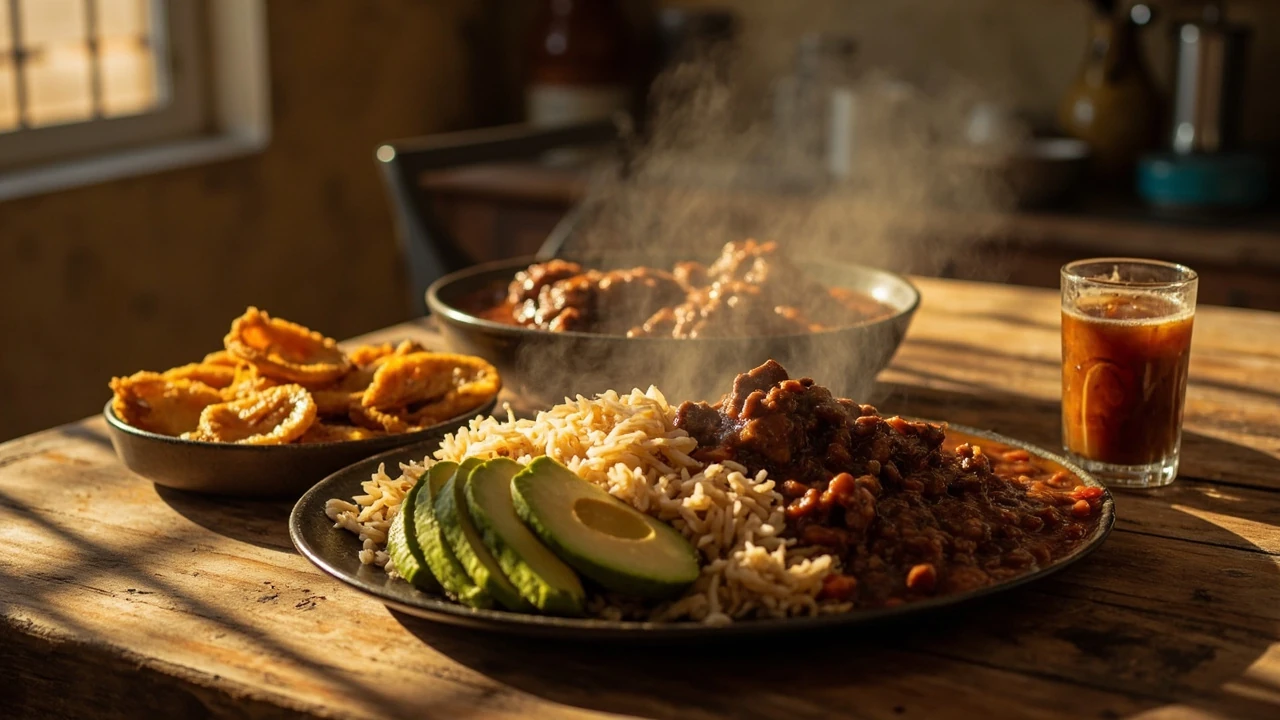
Dominican food: a practical guide to the dishes, flavors, and traditions
A long lunch in Santo Domingo usually starts with a plate of la bandera — white rice, red beans, stewed meat, salad, and fried plantains — and ends with a small cup of sweet habichuelas con dulce if it is Lent. That single meal captures more about Dominican food than any list of national dishes can: it is hearty, it is built on a short list of affordable ingredients, and it reflects a layered history shaped by the Taíno, Spain, West Africa, and the Caribbean trade routes. For travelers, home cooks, and food business operators, understanding the structure behind the plate is more useful than memorizing recipes.
This guide walks through the ingredients, techniques, signature dishes, and dining customs that define Dominican food. It also covers how regional differences, seasonality, and modern restaurant presentation shape what reaches the table today. The goal is practical understanding: enough context to order with confidence, cook with purpose, or adapt flavors without losing the soul of the cuisine.
What defines Dominican food at a structural level
Before diving into individual dishes, it helps to separate the cuisine from its neighbors. Dominican food shares ingredients with Cuba, Puerto Rico, and parts of coastal Colombia, yet it has its own rhythm shaped by island agriculture, migration, and a long lunch culture.
- Short pantry, deep technique. Rice, beans, plantains, cassava, beef, chicken, salted cod, eggs, and root vegetables appear in most meals. Technique — sofrito, braising, twice-fried plantains — does the heavy lifting.
- One plate, many components. Lunch (called almuerzo) typically combines a starch, a protein, beans, a salad, and a side. The combination is the meal; a single protein is rarely the whole dish.
- Sweet-savory overlap. Dulce de leche-style flavors, raisin-stuffed meats, and sweet plantains (or plátano maduro) appear across savory courses, not only in dessert.
- Lunch is the anchor. Dinner tends to be lighter, and breakfast often overlaps with dinner foods. Restaurants price lunch heavily because that is when families eat together.
For more on how kitchens turn simple pantries into a coherent menu, the article on menu engineering without killing the soul of the menu explores the same principle from an operator’s perspective.
Core ingredients you will meet again and again
If you cook Dominican food at home or order it abroad, these ingredients will appear so often that learning them is more efficient than memorizing recipes. Most are widely available in Caribbean, Latin, or international grocery stores.
| Ingredient | Form used | Typical role | Substitution notes |
|---|---|---|---|
| Rice | Long-grain white | Side starch, base of la bandera | Medium-grain rice cooks softer; jasmine changes aroma |
| Red beans (habichuelas) | Dried or canned | Stewed side, breakfast with eggs | Pinto beans are the closest substitute |
| Plantain | Green, ripe, sweet | Fried, mashed, baked | Green banana is the closest substitute when plantain is unavailable |
| Cassava (yuca) | Boiled, fried | Side starch, snack | Boiled potato is not a true substitute; texture differs |
| Salted cod (bacalao) | Rehydrated, shredded | Pastelón, Easter dishes, breakfast | Salt content varies; soak thoroughly |
| Beef and chicken | Stewed, braised, ground | Main protein, carne guisada, pollo guisado | Bone-in cuts add more flavor than lean trim |
| Eggs | Whole | Breakfast, mangú topping | No substitute in classic preparations |
| A sofrito base | Onion, garlic, bell pepper, cilantro, tomato | Foundation of most stews | Skip dried herbs; the fresh aromatics matter |
The combination of rice, beans, and plantains — the “three sisters” of the Dominican plate — is so consistent that operators and home cooks plan grocery runs around them. A useful companion read is the piece on menu pricing strategies that protect margin without losing guests, which explains why a short, reliable pantry is also a margin strategy.
The signature dishes most readers will encounter first
If you eat Dominican food in a restaurant for the first time, the menu will probably look unfamiliar. The dishes below account for the majority of first-time experiences, both at home and abroad.
La bandera dominicana
Literally “the Dominican flag,” la bandera is rice, stewed beans, and a protein (usually braised beef or stewed chicken), served with a small salad of tomato, lettuce, and avocado, plus a side of plátano maduro or tostones. The order is the point: the components are plated separately so each keeps its texture. Restaurants that compress it into a single bowl usually lose the visual cue that signals authenticity.
Mangú con los tres golpes
Plain mashed plantains (green, not sweet) served with fried cheese, fried salami, and fried eggs. The “three knocks” are the three fried items. It is the most common breakfast in Dominican homes and a common hangover plate. Texture contrast — soft mash, crisp cheese, runny yolk — is the point.
Sancocho de siete carnes
A thick, slow-simmered stew made with a mix of meats — often including goat, beef shank, pork feet, and smoked sausage — plus root vegetables and corn on the cob. Sancocho is reserved for family gatherings, holidays, and Sunday lunches. The longer it simmers, the deeper the flavor. Portions are large; leftovers are expected.
Pollo guisado and carne guisada
Stewed chicken and stewed beef are the everyday proteins. The base is sofrito, with tomato paste, olives, and a small amount of sugar or raisins in some regional versions. The sauce is the point: it soaks into the rice. Olive pits in the sauce are traditional and intentional.
Tostones and plátano maduro
Twice-fried green plantain slices (tostones) and once-fried ripe plantains are present at nearly every meal. They are not garnishes; they are a starch course in their own right. The twice-fry gives tostones a crisp exterior and a soft center that holds up to sauces.
Habichuelas con dulce
A sweet bean dessert made with red beans, coconut milk, sweet potato, evaporated milk, sugar, and spices, served cold with milk cookies. It is a Lenten and Holy Week dish. Outside of Lent it is rare; assuming it is on a regular menu would be a mistake.
Mofongo
Mashed fried plantains seasoned with garlic and pork cracklings, shaped into a mound. Mofongo is shared with Puerto Rico and is often served with a brothy stew or a seafood sauce. It is denser than mangú and is usually a side, not a main.
Regional and seasonal differences worth knowing
Dominican food is not uniform across the country. The same dish can taste different depending on the region, the season, and whether it is being prepared for a weekday or a holiday. Operators designing a menu abroad should be aware of these variations, because customers who travel tend to be the most opinionated about them.
| Region | Distinctive traits | Dishes most associated |
|---|---|---|
| Santo Domingo (urban) | Wider use of olives, capers, and tomato paste; restaurant-driven presentation | Pollo guisado, la bandera, pastelón |
| Santiago and the Cibao | Heavier meat dishes, more garlic, frequent use of longaniza | Longaniza, chicharrón, sancocho |
| South and Southwest (Barahona, Pedernales) | Plantain-heavy, more seafood, stronger use of chivo (goat) | Chivo guisado, pescado frito, tostones |
| North coast (Puerto Plata, Samaná) | Coconut milk appears in savory dishes; seafood dominant | Locrio de mariscos, pescado con coco |
| Border regions | Cross-pollination with Haitian cuisine: more use of pikliz and griot-style preparations | Picadillo, griot (border context) |
Seasonality matters too. Habichuelas con dulce and salted cod dishes spike during Lent, sancocho appears at every family gathering, and fresh fish is more available on coastal menus during the dry season. A fixed menu that ignores these cycles will feel out of step to Dominican customers.
How Dominican food is actually eaten
Recipes explain what is on the plate, but customs explain why a meal feels the way it does. A few habits show up almost everywhere.
- Lunch is the main meal. Restaurants price lunch aggressively and serve it in larger portions. Dinner tends to be lighter, sometimes just coffee and bread (merienda or la cena).
- Plates are shared. Several people order different proteins and trade. The plate boundary is more flexible than in North American or northern European dining.
- Rice and beans are not side dishes. They are the structural foundation; a meal without them feels incomplete.
- Plantains at every meal. Either sweet or fried, plantains are expected at breakfast, lunch, and dinner. A meal without them is unusual.
- Drinks are sweet and fresh. Jugo de chinola (passion fruit), mamajuana (a spiced rum infusion), morir soñando (orange juice and milk), and cold presidente beer are the common pairings.
Understanding these patterns helps operators design menus that feel familiar. The article on food photography that actually sells the dish makes a related point: how a dish is framed visually affects whether the diner sees it as a complete meal or an incomplete plate.
Dominican food in the modern restaurant and retail landscape
Outside the Dominican Republic, Dominican food shows up in three main contexts: family-run restaurants, modern chef-driven openings, and packaged or frozen retail. Each has different constraints, and each rewards a slightly different reading of the cuisine.
Family-run Dominican restaurants
These are the most common format. Menus tend to be long, the décor is minimal, and the food is priced for repeat customers rather than tourists. The plate composition is strict: rice, beans, protein, salad, plantain. Deviating from that structure often confuses the regulars.
Modern chef-driven concepts
A small number of restaurants in New York, Miami, Madrid, and Santo Domingo itself are reframing Dominican food for a finer-dining audience. The chefs are usually Dominican or Dominican-American and tend to keep the structure of la bandera while refining techniques: longer-braised meats, single-origin coffee pairings, modern pastry versions of habichuelas con dulce. The risk is over-elevation: customers who want comfort food will read the price tag and leave.
Packaged and grocery products
Tostones, frozen pastelón, and bottled sofrito have made Dominican food easier to prepare at home abroad. Quality varies. Pre-fried tostones are convenient but lack the contrast of twice-frying at home; bottled sofrito is consistent but loses the brightness of fresh cilantro. For operators, the lesson is that the shortcut is real, but the gap between shortcut and scratch is large enough to justify a scratch version on the menu.
Common misconceptions about Dominican food
Several patterns repeat in outsider coverage and casual menus. Clearing them up makes it easier to evaluate what is actually on the plate.
- “It’s just rice and beans.” True for the base, but the sofrito, the protein preparation, and the plantain technique are where the cuisine lives. A simplified plate can still be technically correct, but the contrast between the components is the point.
- “It’s the same as Cuban food.” They share a pantry, but the spice level, use of olives, and the role of plantain differ. Cuban cuisine leans slightly more toward citrus and pork; Dominican cuisine leans more toward tomato paste, olives, and beef.
- “It’s always spicy.” Dominican food is generally not spicy-hot. Heat comes from pickled onion or pimienta on the side, not from the cooking itself.
- “Mofongo is Dominican.” Mofongo is shared with Puerto Rico and has roots across the Caribbean. It is part of Dominican food, but it is not unique to it.
How to read a Dominican menu without guessing
Whether you are traveling or opening a restaurant that serves Dominican food, the same framework helps. The table below translates common menu terms and the structural role of each dish.
| Menu term | What it usually means | Course role |
|---|---|---|
| La bandera | Rice, beans, meat, salad, plantain | Lunch main |
| Mangú | Mashed green plantain | Breakfast or side |
| Sancocho | Multi-meat stew with root vegetables | Sunday or holiday main |
| Pollo / carne guisada | Stewed chicken or beef in sofrito | Protein, paired with rice |
| Pastelón | Sweet plantain “lasagna” with meat or cheese | Main or shareable |
| Tostones | Twice-fried green plantain slices | Side or snack |
| Habichuelas con dulce | Sweet bean dessert with coconut | Dessert, Lenten |
| Mofongo | Garlic mashed fried plantain with pork cracklings | Side or light main |
If a menu only lists a single protein, ask how it is served. Dominican food without rice, beans, and plantain on the plate is unusual; if those are missing, the kitchen is either doing a fine-dining reinterpretation or has simplified the menu to the point that it no longer represents the cuisine.
Building a Dominican-influenced menu that respects the cuisine
For chefs and operators who want to incorporate Dominican food into their own menus without oversimplifying it, a few rules tend to hold up. These are not strict requirements, but they are the patterns that successful restaurants tend to follow.
- Keep the structure of la bandera. Even if the proteins change, the plate should still include a starch, a bean preparation, a plantain element, and a fresh component.
- Source the sofrito fresh. Bottled sofrito is fine for a quick cook, but a Dominican customer will notice. Keep the aromatics fresh and adjust the salt to taste.
- Use olive pits intentionally. Whole olives in stews are a signature detail. Removing them is fine for some dishes, but at least one stew on the menu should keep them.
- Price lunch as the anchor. Dinner will be lighter; do not expect the same margin at dinner that lunch delivers.
- Plantain is a skill, not a garnish. A kitchen that cannot fry plantain twice will struggle with tostones. Train or outsource rather than skipping.
The article on why specificity wins food marketing makes a related point: customers respond when a restaurant can name the dish precisely, explain the regional influence, and stay consistent. A menu that flattens Dominican food into generic “Latin” fare loses that specificity.
Dominican food at home: a practical shopping and cooking order
Cooking Dominican food at home is more accessible than most North American and European kitchens assume. The list below is a starting point rather than a complete inventory, and it focuses on the dishes most likely to succeed for a first attempt.
- Buy the pantry first. Long-grain rice, dried red beans, plantains (green and ripe), cassava, sofrito ingredients, and one protein (chicken thighs or beef chuck).
- Start with arroz blanco and habichuelas guisadas. These are the two components of la bandera. Master them before tackling the protein.
- Add a protein. Pollo guisado is forgiving and feeds a family. Carne guisada rewards longer braises.
- Master tostones. Twice-frying plantains is a technique, not a recipe. Expect the first batch to be greasier than the second.
- Plate as separate components. The visual separation of rice, beans, protein, salad, and plantain is part of the experience. A single-bowl version is fine for weeknight cooking but loses the cultural cue.
The same logic applies to restaurants: a kitchen that can produce these five elements well is most of the way to a credible Dominican menu. A broader look at how a single signature dish can carry a content and marketing plan appears in how to turn one signature dish into a month of content.
Frequently asked questions
What is the national dish of the Dominican Republic?
There is no single official national dish, but la bandera dominicana (rice, beans, meat, salad, plantain) is the meal most often called the national plate. Sancocho is the celebratory answer, served at family gatherings and holidays.
Is Dominican food spicy?
Generally no. Most Dominican food is savory rather than hot. When heat is present, it comes from pickled onion or a small amount of pimienta served on the side, not from the cooking itself.
What is the difference between tostones and plátano maduro?
Tostones are made from green plantains, twice-fried, and served salty. Plátano maduro is made from ripe plantains, fried once, and served sweet. Both are common sides, and many meals include both.
Is mofongo a Dominican dish?
Mofongo is shared across the Caribbean, with strong roots in both the Dominican Republic and Puerto Rico. It is part of Dominican food, but it is not unique to it.
What is a typical Dominican breakfast?
Many Dominicans start the day with mangú con los tres golpes — mashed plantain served with fried cheese, fried salami, and fried eggs. Coffee or hot chocolate is the standard drink.
Is Dominican food the same as Cuban food?
The two cuisines share a base pantry of rice, beans, and plantains, but they differ in technique and seasoning. Dominican food tends to use more tomato paste, olives, and raisins in savory dishes, and plantain appears more often as a side.
What dessert is most associated with Dominican food?
During Lent, habichuelas con dulce is the most distinctive dessert. Year-round, flan, arroz con leche, and fresh tropical fruit are common. Habichuelas con dulce is not typically on menus outside of its season.
What is mamajuana?
Mamajuana is a spiced infusion made by steeping tree bark, herbs, and honey rum or red wine in a bottle that often contains the empty shell of a previous batch. It is drunk as a digestif and is more associated with social drinking than with meals.
Can Dominican food be made vegetarian?
Yes, though the cuisine is heavily meat-based. Rice, beans, plantain, and a vegetable stew can form a credible vegetarian plate. The challenge is that many classic dishes rely on sofrito cooked with meat, so the sofrito base needs to be more developed when meat is removed.
What should a first-time visitor order?
For a single meal, la bandera with stewed beef or chicken is the most representative choice. For breakfast, mangú con los tres golpes. For a special occasion, sancocho.