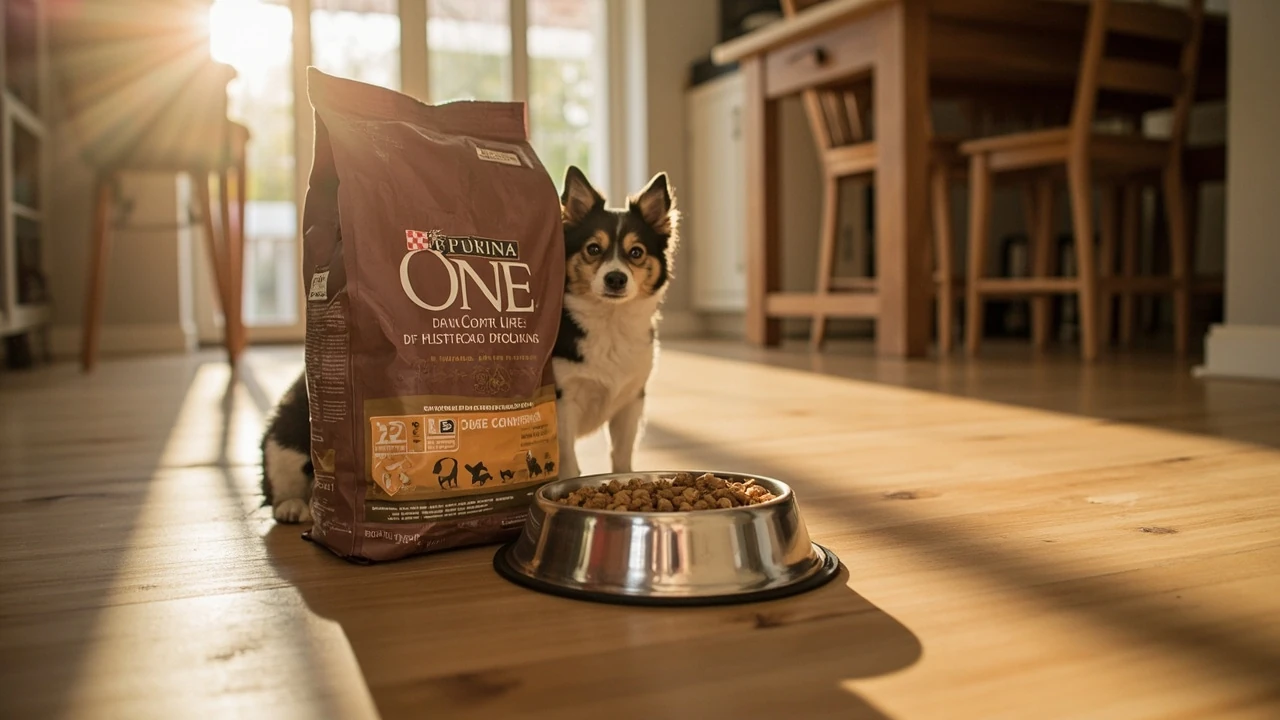
You stand in the pet aisle with a half-empty bag in one hand and a new bag in the other, reading the same brand name twice and still not sure whether the small-breed formula is a marketing trick or a real difference. Purina One dog food has been on shelves for years, the range has quietly grown, and the labels often look almost identical at a glance, which is exactly when a hurried swap can go wrong. This piece treats that bag as a decision instead of a default: how the Purina One line is structured, what each formula is actually designed to do, and how to read the label so the choice matches the dog in front of you rather than the dog on the front of the pack.
The goal is not to declare a single best product, because the right answer depends on age, size, body condition, sensitivities, and budget. The goal is to give a working method for comparing any two Purina One formulas, and to flag the questions worth asking before changing bags. By the end you should be able to walk into any store, read the back of any Purina One dog food bag, and decide in a few minutes whether that specific formula fits your dog.
Purina One dog food: what the range actually is
Purina One dog food is the mass-market dry and wet line sold by Purina, sitting between the value-tier brands and the veterinary or prescription ranges in both price and formulation. It is positioned as a complete, everyday diet for healthy adult dogs and, within that frame, for life-stage and size variations such as puppies, small breeds, large breeds, and dogs described as sensitive. Understanding where Purina One sits in the wider market is the first step, because the rest of the label only makes sense against that backdrop. The parent company, Nestlé Purina PetCare, operates several different pet food brands globally, and Purina One is one of its larger-volume offerings.
Within the Purina One range you will generally find a small number of recurring design choices that show up across most formulas:
- Chicken, or another named animal protein, is listed first in the ingredient list for most dry recipes, with rice or wholegrain wheat as a common carbohydrate base.
- The line is built around the idea of SmartBlend kibble, with some formulas including added pieces, a softer tender texture, or a dual-texture design aimed at palatability.
- Most bags carry functional claims about coat, digestion, immune support, or joint care, backed by named added nutrients rather than whole-food sources.
- There is a recognisable colour and layout system on the front of the bag, so the life-stage and size cue is usually communicated by a band or panel rather than only by the product name.
That consistency is useful, because once you can read one Purina One dog food bag, you can read all of them. The differences between formulas are usually smaller than the differences between Purina One and other brands, and most of those differences sit in a handful of places on the back panel.
How to read a Purina One dog food label without getting lost
The label is split into three parts, and each part answers a different question. The front tells you the marketing promise, the ingredient list tells you what is actually in the bag in order of weight, and the guaranteed analysis plus feeding guide tell you what nutrients are present and how much to feed. Learning to read them in that order prevents you from being swayed by the strongest claim on the bag.
The ingredient list, read top to bottom
Ingredients are listed in descending order by weight before cooking, which is why a fresh meat like chicken often appears first even when the finished protein percentage is more modest. For Purina One dog food, the first three to five ingredients usually tell you almost everything you need to know about the formula’s structure. If you see a named animal protein first, a clear carbohydrate source second, and a named fat source third, the base of the food is conventional and predictable. If a recipe starts with a meat meal such as chicken meal or salmon meal, the protein is more concentrated but has lost some of the fresh-meat appeal, which is a trade-off rather than a red flag.
Pay particular attention to the order of the cereals and grains. A recipe built on rice and wholegrain wheat behaves differently in the bowl and in the dog than one built on maize or barley, especially for dogs that have done better on rice-based diets in the past. The Purina One sensitive skin and stomach formulas in particular tend to use a narrower grain set, often with added prebiotics, to lean into that positioning.
The guaranteed analysis
The guaranteed analysis is a minimum or maximum statement of certain nutrients, not a complete nutritional picture, and it is the section people misread most often. For a typical adult Purina One dry formula you can expect a crude protein figure in the mid-twenties as a percentage of the bag, a fat figure in the low-to-mid teens, and fibre and moisture figures that vary with the recipe. The percentages are not directly comparable to the percentages on a wet food can, because dry food and wet food are counted on different bases.
Two practical rules help:
- Compare the same life stage and product type against itself. A Purina One adult chicken and rice bag should be compared to another Purina One adult dry recipe, not to a wet loaf or to a puppy formula.
- Treat named functional additives, such as omega-3 sources, glucosamine, and specific vitamins, as the differentiator, not the crude protein number. Two bags with the same protein can deliver very different long-term results if their fatty acid and mineral balances differ.
The feeding guide and calorie density
The feeding guide on a Purina One dog food bag is a starting point, not a verdict. It usually gives a range of grams per day for a given target body weight, and that range assumes average activity and body condition. Active working dogs, sedentary apartment dogs, intact dogs, and neutered dogs often need different amounts at the same body weight. Use the guide to set a number, weigh the food for a week, and then adjust based on body condition score rather than on the bag alone.
Matching a Purina One formula to your dog
The range is built around a small number of decision points, and walking through them in order usually narrows the choice quickly. The same logic works for most Purina One dog food formulas, and it is the approach a careful store assistant or a vet nurse will use when helping a customer narrow down.
Step 1: choose the right life stage
Life stage matters more than breed or brand prestige, because the nutrient ratios that a growing puppy, an adult, and a senior need are genuinely different. Purina One puppy formulas are designed to support growth with higher protein, higher calories per gram, and added DHA in many recipes, while the adult maintenance formulas are calibrated to avoid overfeeding energy to a mature dog. Senior formulas usually have adjusted mineral levels and joint-focused additives such as glucosamine.
If your dog is at a transitional age, the safer choice is usually the formula for the stage they are fully entering, not the one they are leaving. A ten-month-old large-breed dog is still building, while a seven-year-old small-breed dog is already moving into the slower-metabolism phase of life.
Step 2: pick the size variant if there is one
Small-breed Purina One dog food formulas use a smaller kibble shape and a slightly higher calorie density per cup, because smaller dogs eat smaller mouthfuls and benefit from a kibble they can actually chew. Large-breed formulas use a larger kibble to encourage chewing, and they are usually balanced with calcium and phosphorus ratios that suit slower-growing large-breed skeletons.
Size variants are not just a marketing split. For a five-kilogram dog, the small-breed kibble is genuinely easier to eat, and for a forty-kilogram dog, the large-breed kibble is genuinely better at slowing the pace of a meal. If your dog sits in between, either the standard adult or the size that is closer in weight usually works, and the bigger deciding factor is body condition rather than the label.
Step 3: decide whether a sensitive formula fits
Purina One sensitive skin and stomach recipes are built around a narrower ingredient list, a rice-forward carbohydrate base in many cases, and added prebiotic fibre. They are designed for dogs that show signs of food sensitivity such as soft stool, intermittent itching without a clear seasonal pattern, or flatulence. They are not a substitute for a true elimination diet under veterinary guidance if a specific ingredient allergy is suspected.
If your dog has been stable on a standard Purina One formula for years with no issues, switching to a sensitive recipe rarely helps and can sometimes introduce a new ingredient your dog has not been exposed to before. The change is only worth making when there is a real reason to make it.
Step 4: check the functional claims against your priorities
Most Purina One dog food bags carry one or two functional claims on the front, and the back of the bag will tell you which additive is doing the work. Coat and skin claims are usually tied to omega-3 and omega-6 fatty acid levels, joint claims are usually tied to glucosamine and chondroitin, and immune or digestive claims are usually tied to specific fibres, antioxidants, or prebiotics. Match the claim to the problem you actually want to address, and ignore the rest.
Comparing Purina One formulas at a glance
The table below is a generic framework for reading any two Purina One dog food bags side by side. Specific product names and percentages change over time, so use the columns as a checklist and fill in the actual numbers from the bag you are holding.
| Decision point | Formula A | Formula B | What to look for |
|---|---|---|---|
| Life stage on pack | Puppy / adult / senior | Puppy / adult / senior | Should match the dog’s actual stage, not the age in years alone |
| Size variant | Small / medium / large / standard | Small / medium / large / standard | Kibble size and calorie density per cup should suit the dog’s mouth and weight |
| First named protein | Chicken, lamb, salmon, etc. | Chicken, lamb, salmon, etc. | A named animal source, not a generic meat or animal derivative |
| Main carbohydrate | Rice / wheat / maize / barley | Rice / wheat / maize / barley | Matches the dog’s tolerance; rice-based for sensitive stomachs is common |
| Crude protein (as fed) | ~21-28 percent for most dry recipes | ~21-28 percent for most dry recipes | Compare like for like, not dry against wet |
| Added functional ingredients | Omega-3, glucosamine, prebiotic fibre, antioxidants | Omega-3, glucosamine, prebiotic fibre, antioxidants | Match the additive to the specific problem you are trying to solve |
| Feeding guide at target weight | Grams per day range | Grams per day range | Use as a starting point, then adjust by body condition |
A second comparison that often matters more than the label is the practical one. A bag that your dog eats reliably, digests cleanly, and that fits your monthly budget is a better diet on paper than a “better” bag that causes stomach upsets or gets picked at. The table above only becomes useful if you also track how the dog actually does on the food for a few weeks.
Transitioning onto or between Purina One formulas
Sudden food switches are one of the most common causes of short-term digestive upset in dogs, even when both the old and new food are good quality. The Purina One dog food transition is the same shape as for any other brand: a slow mix over seven to ten days, watching stool quality and appetite as the leading indicators.
A simple schedule that works for most adult dogs without a history of sensitivity is:
- Days 1-2: roughly 75 percent current food, 25 percent new Purina One formula.
- Days 3-4: roughly 50 percent of each.
- Days 5-6: roughly 25 percent current food, 75 percent new formula.
- Day 7 onward: full new formula, with stool and appetite checked daily for the first week.
For dogs with a known sensitive stomach, a slower two-week transition with smaller step changes is often worth the patience. If stool becomes very loose or the dog stops eating for more than a day, step back to the previous mix for a couple of days before trying to move forward again, and talk to your vet if the problem persists.
How Purina One dog food compares to other Purina lines
Within Purina’s own portfolio, the differences between Purina One and the lines above and below it are mostly about ingredient quality, protein sources, and price. Purina One sits in the middle: complete and balanced for everyday feeding, but using commodity ingredients and conventional processing rather than the named-meat-first approach of the higher-tier ranges or the veterinary formulations sold under other Purina sub-brands.
| Factor | Value-tier brands | Purina One dog food | Higher-tier Purina ranges |
|---|---|---|---|
| Typical price per kilogram | Lowest | Mid-range | Higher |
| Named protein source at top of ingredient list | Sometimes, often a meat meal | Yes, in most recipes | Yes, often with named fresh meat as a percentage of the recipe |
| Life-stage and size variants | Limited | Wide | Wide, often with more specific breed or condition formulas |
| Functional additive focus | Basic | Coat, digestion, joint, immune | Often more targeted, including breed-specific blends |
| Typical use case | Budget feeding for healthy adults | Everyday feeding for most healthy dogs at any life stage | Owners prioritising named fresh ingredients or specific functional goals |
For a household with one or two healthy dogs, no specific medical condition, and a normal budget, Purina One dog food is usually a reasonable middle choice. It is not the cheapest option per kilogram and it is not the most premium option on the shelf, but it does cover most life stages and sizes within a recognisable formulation style, which makes it easier to stay consistent over a dog’s lifetime.
Feeding Purina One dog food well in real life
The label tells you what is in the bag, but daily feeding is shaped by a small number of habits that determine whether the food actually works for your dog. The most common reasons a good food looks like the wrong food in practice are usually about how it is fed, not what is in it.
- Weigh the daily amount rather than scooping it. A kitchen cup of kibble can vary by 20-30 percent depending on how it is scooped, and that is the difference between a stable weight and a slow creep upward.
- Split the daily amount into at least two meals for adults and three or four for puppies. Smaller meals are easier to digest and reduce the risk of bloat in larger breeds.
- Treats count. If you are using 15-20 percent of the daily calories in treats, the bag is no longer the complete diet it was designed to be, even if the bag itself has not changed.
- Keep a simple log of body weight and body condition for the first eight weeks on a new Purina One formula. Adjust the amount by 5-10 percent at a time rather than guessing.
- Store the bag somewhere cool, dry, and sealed. The fats in dry kibble go off faster in warm kitchens, and stale fat is one of the most common reasons a dog loses interest in a food that has not actually changed.
These habits are not specific to Purina One, but they are the reason the same bag can produce very different results in two different households. The dog whose owner weighs the food, sticks to the daily total, and keeps the bag sealed will almost always do better than the dog whose owner free-feeds a “premium” formula from a perpetually open bin.
Frequently asked questions about Purina One dog food
Is Purina One a complete food on its own?
Yes, the dry and wet Purina One dog food formulas are formulated to be complete and balanced for the life stage stated on the pack, which means they contain the protein, fat, vitamins, and minerals a healthy dog of that stage needs. They are designed to be fed as the main diet, with treats limited to a small share of the total daily calories.
How much Purina One should I feed my dog per day?
The exact amount depends on the formula, the dog’s target weight, and activity level, and the bag’s feeding guide is the best starting point. Weigh your dog, follow the guide for the nearest body weight, and then adjust by 5-10 percent based on whether the dog is losing or gaining condition over a few weeks.
Can I mix Purina One dry and wet together?
Yes, mixing dry kibble with a Purina One wet formula is a common way to increase palatability and add moisture to the diet, and the nutrient profiles are designed to be combined. The simplest approach is to reduce the dry amount by roughly the calorie value of the wet food you add, so the total daily calories stay in the right range.
Is Purina One suitable for puppies?
There are specific Purina One puppy formulas, and those are the right choice for growing dogs rather than the adult maintenance recipes. For very small or very large breed puppies, the size-specific puppy variants are usually a better fit than a generic puppy formula.
What is the difference between Purina One and Purina Pro Plan?
Purina Pro Plan is the higher-tier range within the same parent company, usually with more named fresh ingredients, more targeted functional additives, and a higher price per kilogram. Purina One dog food covers the everyday feeding case at a more moderate price point, with a simpler formulation style.
Do I need to add anything to Purina One dog food?
For most healthy dogs, no. The formulas are designed to be complete, so adding a vitamin or mineral supplement on top can overshoot safe levels for some nutrients. If you want to add fresh food, the safer pattern is to keep the Purina One as the base and add small amounts of plain cooked vegetables or lean protein as extras, while reducing the kibble amount to keep calories steady.
How long does a bag of Purina One stay fresh?
Once opened, most dry Purina One dog food bags are best used within four to six weeks for peak freshness, especially in warm kitchens. Keep the bag sealed, store it in a cool dry place, and consider pouring the contents into a sealed container rather than leaving it in a partially open bag. Check the best-before date on the bag for the hard upper limit.
My dog has a sensitive stomach. Which Purina One should I pick?
Start with the Purina One sensitive skin and stomach formula, transition onto it slowly over seven to fourteen days, and watch stool quality as the main signal. If symptoms do not improve after a full bag, or if they get worse at any point, a vet visit is the right next step, because some “sensitive stomach” signs are actually early signs of a different problem.
Can I feed Purina One to a senior dog?
Yes, and there is a Purina One senior formula in most markets that is designed for the slower metabolism and joint support needs of older dogs. If your senior dog is doing well on an adult formula, there is no need to change, but if weight is creeping up or movement is getting stiffer, the senior recipe is a sensible option to try.
Where can I check the most current Purina One ingredient list?
The current ingredient list and guaranteed analysis for any Purina One dog food formula is on the back or side panel of the bag, and Purina maintains a product page for each formula on its own website, which is the most reliable place to check the latest recipe. Formulations do change occasionally, so it is worth a quick look before you switch between bags, even within the same range. For background on how complete and balanced pet foods are regulated in the United States, the Association of American Feed Control Officials publishes an overview of its model feed regulations and nutrient profiles that explains what a “complete and balanced” claim actually has to meet.
A final practical note. The most useful thing you can do with a Purina One dog food bag is to read it once, slowly, and then feed the same formula consistently for long enough to judge it. Bag-hopping every few weeks makes it almost impossible to tell which food is helping and which one is causing a problem, and most of the visible benefits of a good diet show up over months, not days. Pick the formula that matches your dog’s stage, size, and any real sensitivity, weigh the daily amount, and give the bag a fair run before deciding whether it is the right one.