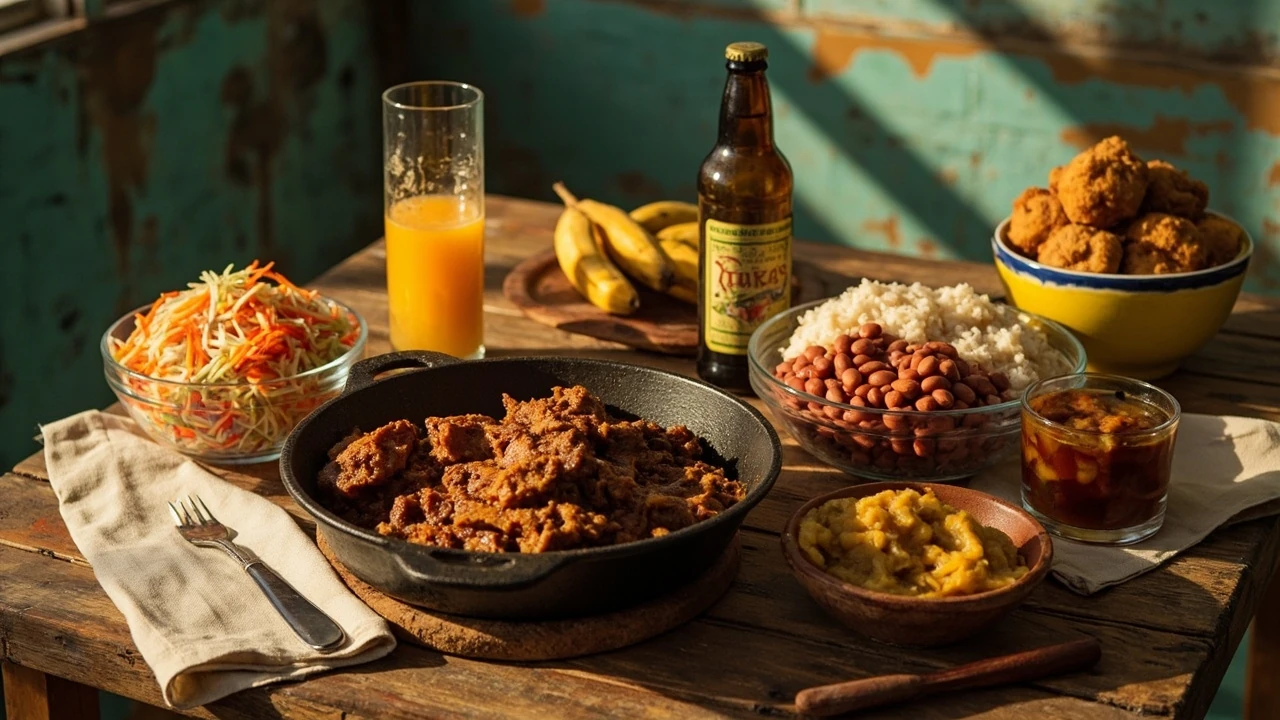
A plate of griot, a side of pikliz, and a wedge of pikliz-soaked bread does more than feed someone; it tells the story of a country that learned to cook with what it had, and to make those limits taste deliberate. Haitian food grew out of West African, French, Taíno, and Spanish traditions, layered with the pantry of a Caribbean island and the resourcefulness of cooks working without waste. For a chef writing a menu, a buyer sourcing ingredients, or a curious diner standing in front of a steam table, understanding that mix is the difference between a generic “Caribbean” plate and something that actually tastes like Haiti.
What haitian food actually is
Haitian food is the everyday cooking of Haiti, the country that occupies the western third of the island of Hispaniola. It is sometimes lumped in with broader Caribbean cuisine, but the flavor base, the starch choices, and the role of marinades set it apart. The national dish, diri ak djon djon (rice with black mushrooms) and griot (fried pork shoulder), is a useful starting point because it shows the two structural habits that run through the whole cuisine: long, layered marinades, and rice or root starches as the center of the plate.
What makes the cuisine distinctive is not a single spice or technique, but a few recurring patterns:
- A wet seasoning base called epis is built before most savory dishes start. It is a blended mix of scallions, garlic, thyme, parsley, bell pepper, onion, and habanero or scotch bonnet, often with a splash of lime or sour orange.
- Rice, beans, plantain, and root vegetables carry most meals. Meat and seafood are usually treated as accents rather than the main event.
- Pickled and marinated condiments, especially pikliz, sit on the table the way salsa or hot sauce does in other cuisines.
- French technique sits underneath a lot of home cooking: braises, stews, and reductions are common, but the portions and the starch-heavy plating are distinctly Haitian.
For a food business audience, the practical takeaway is that haitian food is structured around a small set of familiar ingredients, a single seasoning base, and a clear starch-to-protein ratio. Once those building blocks are understood, the menu starts to look like a set of variations rather than dozens of unrelated dishes.
The flavor foundations every cook should know
If you strip haitian food back to its working parts, the same five or six flavor moves appear over and over. They are worth learning in order, because most regional and family recipes are built on top of them.
Epis: the seasoning base that does the work
Epis is less a recipe than a method. The exact list varies by cook, but the standard version blends aromatics and herbs into a coarse paste that is then used to marinate meat, season rice, and start stews. It is the Haitian answer to a sofrito, a green seasoning, or a mirepoix with attitude. The blend is also the easiest entry point for a chef who wants to add a recognizable Haitian note to an existing menu without rebuilding a dish from scratch.
Pikliz: the table condiment that defines the meal
Pikliz is a pickled slaw of cabbage, carrot, bell pepper, onion, and scotch bonnet steeped in vinegar. It is sharp, salty, and hot, and it is served with almost every plate that includes fried or braised meat. The practical role of pikliz is similar to a chutney or a chili-lime relish: it cuts richness, adds acid, and gives the diner a way to adjust every bite.
Bouillon: the one-pot backbone
Haitian bouillon is a thick, hearty soup-stew that can be made with beef, goat, chicken, seafood, or a combination. Each version starts with epis, adds a starchy element like yam, plantain, or dumplings, and simmers long enough to develop a deep, slightly sweet, savory broth. Bouillon is the most forgiving place to learn the cuisine because the ratios are flexible and the result tastes complete even when the ingredient list is short.
Rice and beans as a daily default
Rice and beans in Haiti are not a side dish; they are a structural element. Diri kole ak pwa (rice and beans cooked together) and diri ak djon djon (rice cooked with black mushrooms that turn the grains a deep gray-black) show up at home, at events, and on restaurant menus. For a chef, the takeaway is that the rice on a Haitian plate is rarely plain, and the visual color of the rice is part of how the dish is recognized.
Citrus, sour orange, and acid
Haitian cooking uses acid aggressively. Sour orange juice, lime, and vinegar appear in marinades, finishing sauces, and pikliz. The result is a cuisine that tastes bright even when it is heavy, and that balances fried foods without depending on fresh herbs at the table.
| Foundation | What it is | Where it shows up | What it adds to the plate |
|---|---|---|---|
| Epis | Blended herb and aromatic paste | Marinades, rice, stews, sautés | Savory depth, herbal backbone |
| Pikliz | Pickled cabbage slaw with scotch bonnet | Served on the side of nearly every savory plate | Heat, acid, crunch |
| Bouillon | Thick one-pot stew with meat and starch | Saturday lunch, family gatherings, casual menus | Heartiness, comfort, flexibility |
| Diri ak pwa / diri ak djon djon | Rice cooked with beans or black mushrooms | Daily meals, events, restaurant staples | Color, starch, identity |
| Sour orange and lime | Citrus juice used in marinades and finishing | Meat marinades, pikliz, seafood dishes | Brightness, balance |
The dishes that define haitian food
Walking through the standard menu is the most useful way to understand how the flavor foundations come together. The list below covers the dishes that appear in most home kitchens and Haitian restaurants in the diaspora, and that travel best as menu items if you are thinking about opening or expanding a concept.
Griot
Griot is pork shoulder, first marinated in epis and sour orange, then braised, then fried until the edges caramelize. It is the Haitian cousin of carnitas, but with a different seasoning profile and a more aggressive final sear. On the plate it usually sits next to rice and beans, fried plantains, and a generous spoonful of pikliz. It is also one of the easiest Haitian dishes to scale, because the braise-and-fry method works in batches and holds well in a holding cabinet before the final fry.
Poulet creole
Poulet creole is chicken braised in a tomato-based sauce with epis, thyme, and a small amount of sugar or pepper. It is less spicy than griot and acts as a bridge dish for diners who want Haitian flavor without intense heat. The sauce is the point: it soaks into the rice and gives the plate its color.
Tasso
Tasso is goat, marinated in citrus and epis, then stewed slowly until the meat slips off the bone. It has a strong game flavor, and it is the dish most often skipped by diners who are new to the cuisine. For a chef, it is also a useful menu item because goat is a cost-effective protein and the long braise makes it forgiving on the line.
Poisson gros sel
Poisson gros sel is a whole or filleted fish rubbed with salt and sour orange, then grilled or pan-fried until the skin crisps. It is the seafood showpiece of the cuisine and the most seasonal dish on the standard list, because the choice of fish depends on what the local market has that day.
Accra and marinad
Accra are deep-fried fritters, often made with malanga or a mix of root vegetables and salted cod. Marinad uses the same base of root vegetables with salted beef, shaped into small patties and fried. For additional context, Both are street foods and appetizer items, and both depend on the epis-driven seasoning base that runs through the whole cuisine.
Lambi
Lambi is conch, usually stewed or grilled, and it is one of the signature uses of seafood in haitian food. The texture is chewy, the flavor is mild, and the cooking is usually aggressive: long stew with tomato, pepper, and herbs, or a quick grill over high heat. Like poisson gros sel, the quality of the final plate depends on the freshness of the raw material.
| Dish | Protein | Cooking method | Typical plate partners | Best use in a restaurant context |
|---|---|---|---|---|
| Griot | Pork shoulder | Marinate, braise, fry | Rice and beans, plantains, pikliz | Signature main, scales well for catering |
| Poulet creole | Chicken | Braise in tomato and epis | Rice, plantains, pikliz | Bridge dish for new diners |
| Tasso | Goat | Long stew | Rice, pikliz, avocado | Specialty main, weekend feature |
| Poisson gros sel | Whole or filleted fish | Grill or pan-fry | Rice, pikliz, salad | Seasonal main, depends on catch |
| Accra | Malanga or root veg with cod | Deep fry | Pikliz, hot sauce | Appetizer, bar snack |
| Lambi | Conch | Stew or grill | Rice, pikliz, citrus | Specialty main, limited by supply |
How the cuisine is structured on the plate
One of the most consistent things about haitian food is the way a plate is built. The starch comes first, the protein second, the pickle third, and the drink last. This structure is not a restaurant invention; it is what shows up on a kitchen table in Port-au-Prince, in a takeout counter in Brooklyn, and on a catering line for a Haitian wedding. Recognizing the structure makes it easier to build a menu that reads as Haitian without leaning on stereotypes.
- Starch center: rice and beans, diri ak djon djon, boiled plantain, or a root vegetable like yam or malanga.
- Protein accent: a small portion of griot, tasso, or poisson, usually about three to four ounces rather than the eight to ten ounces common in American mains.
- Condiment layer: pikliz on top, with a wedge of lime and a small side of avocado when available.
- Drink: a fresh juice, a soda, or a small homemade lemonade. Alcohol is less central to a daily plate than in some neighboring cuisines.
The starch-heavy, protein-light structure is part of why the cuisine travels well on a menu. The cost per plate is manageable, the portions feel generous, and the condiments do the work of making the plate feel complete without adding labor at the pass.
Regional and household variation
Like most national cuisines, haitian food is not uniform across the country. The standard dishes are recognizable everywhere, but the daily plate shifts with geography, season, and household.
Coastal and island areas
Coastal households eat more seafood and less braised meat. Lambi, grilled fish, and lobster appear more often, and the bouillon of the coast is closer to a fish stew than a beef or goat version. In the diaspora, this is the version of the cuisine that maps most easily onto contemporary restaurant menus, because the seafood-led plates feel familiar to diners who are not used to eating goat on a Tuesday.
Inland and mountainous areas
Inland cooking leans on pork, goat, and root starches. The bouillon of the interior is heavier, and the use of pikliz tends to be more aggressive, both because cabbage and root vegetables are easier to grow at altitude and because the braised dishes need more acid to stay bright. The meat-forward plates of the interior are also where the strongest link to West African cooking shows up, particularly in the long marinades and the use of every part of the animal.
Holiday and family-event cooking
Haitian food is not a festival cuisine. The everyday plate is the standard reference point, and most special-occasion meals are larger, more elaborate versions of daily cooking rather than a separate set of dishes. Soup joumou, the pumpkin soup served on New Year’s Day, is the main exception. It is a specific holiday dish with a long symbolic history, and it is worth understanding as a stand-alone item rather than a variation of bouillon.
For a chef, the practical lesson is that a menu built on the standard daily plates will look and taste Haitian to diners who know the cuisine. Trying to invent a “Haitian fine dining” vocabulary by reaching for unfamiliar cuts or unusual techniques is usually less effective than simply executing the standard dishes with care.
How haitian food shows up in restaurants today
The Haitian restaurant scene in North America has grown steadily over the last two decades, especially in cities with large Haitian communities like Montreal, Brooklyn, Miami, and Boston. The structure of those restaurants is worth studying, because it is the most reliable guide to what diners expect and what the cuisine supports.
The plate lunch model
Most successful Haitian restaurants outside Haiti run on a plate-lunch model: one or two hot proteins, a starch, a vegetable, and pikliz, with the day’s plate written on a board or printed on a small menu. This is the most efficient way to deliver the cuisine, and it is also the format that feels most familiar to first-time diners. For a new concept, the plate-lunch model is usually a better starting point than a build-your-own-bowl or a tasting-menu structure.
Appetizers and small plates
Appetizers are usually accra, marinad, or a pikliz-forward snack. They are easy to scale, they use the same seasoning base as the main plates, and they give a new diner a way to try the flavor profile before committing to griot or tasso. For a chef, the appetizer list is also the easiest place to introduce haitian food to a menu that is not exclusively Haitian.
Drinks and dessert
Drinks are an underused lever. Fresh juices, sugarcane juice, and a strong coffee culture sit alongside the standard plates, and the dessert list is short, often just fresh fruit, a sweet potato pudding, or a simple cake. A menu that pays attention to the drink list tends to feel more complete without adding new savory items.
If you are working on the brand or marketing side of a Haitian concept, the same lessons apply as for any other small-format restaurant. The way the menu is photographed, the way the names are presented, and the way the story of the cuisine is told on the site all change how diners approach the plate. Two of the most useful references for that work are our food photography guide and the broader menu engineering without killing the soul of the menu, both of which apply cleanly to a Haitian concept.
Working with haitian food in a commercial kitchen
For chefs and operators, the practical question is how to cook this food at scale without losing what makes it recognizable. A few operational notes are worth keeping in mind.
Marination time is non-negotiable
The long epis-and-citrus marination that defines griot, tasso, and most braised meat dishes is not optional. A two-hour rest will not produce the flavor the dish is known for, and a 24-hour rest will. For high-volume service, the easiest pattern is to marinate in batches, hold under refrigeration, and cook the protein to order or in scheduled batches.
Pikliz holds for weeks
Pikliz is one of the most operationally friendly condiments in any cuisine. It keeps for weeks in a covered container in the cooler, it gets better as it sits, and it is served in small portions, so the yield per jar is high. Building pikliz into the daily prep list is one of the easiest ways to make a kitchen feel Haitian without adding a new line cook.
Starches can be made in bulk
Rice and beans, diri ak djon djon, and boiled plantain all hold well in a steam table and reheat cleanly. They are the right place to invest in batch cooking, because the flavor does not degrade the way it does with a more delicate protein.
Sourcing is the hardest part
The single most common operational problem for a Haitian kitchen outside Haiti is sourcing. Epis depends on fresh thyme, scotch bonnet peppers, and the right kind of small shallot-like onion. Pikliz depends on a good cabbage and a vinegar with the right sharpness. Diri ak djon djon depends on the actual djon djon mushrooms, which are not always available in the diaspora. Building a reliable supplier list for these items is the most important pre-opening task and the one most often underestimated.
| Operational area | What to plan for | Common mistake |
|---|---|---|
| Marination | 24-hour marination for griot, tasso, and most braised meats | Rushing the marination and ending up with flat, sour meat |
| Pikliz prep | Weekly batch in bulk, hold under refrigeration | Making it to order and slowing down the line |
| Starch cookery | Batch rice and beans, hold in steam table | Treating the rice as an afterthought rather than the center of the plate |
| Sourcing | Build a supplier list for scotch bonnet, thyme, djon djon, and pikliz-ready cabbage | Substituting generic “habanero” or “creole seasoning” and losing the identity of the dish |
Common misconceptions about haitian food
A few persistent myths show up in menus and food writing that are worth correcting early, because they shape the way the cuisine is described and plated.
- It is not the same as Jamaican food. Both are Caribbean, both use scotch bonnet, and both serve fried meat with a starch, but the seasoning base, the pickles, and the structure of the plate are different. Lumping them together loses what makes haitian food recognizable.
- It is not all about heat. The scotch bonnet is real, but most daily plates are moderate in spice. The heat comes from pikliz, which the diner controls. A plate that is forced to be hot for an outside audience is a plate that is no longer standard.
- It is not “peasant food” in the way the phrase is sometimes used. The cuisine is resourceful, but it is also deliberately flavored, and the long marination, the pickled condiments, and the careful plating are signs of a developed kitchen tradition, not a lack of one.
- It is not a festival cuisine. Soup joumou is the famous exception, but the standard dishes are daily food, and the everyday plate is the right reference for a restaurant or a food writer.
How to describe haitian food in your own menu or marketing
For chefs and operators writing menu copy, photography briefs, or website pages, the most useful move is to describe the cuisine the way the standard daily plate actually looks and tastes. The list below is a working checklist for the kind of language that lands.
- Name the dish with the Haitian word first, then the English clarification in parentheses. “Griot (fried marinated pork)” is more useful than “Haitian-style pork bites.”
- Describe the seasoning base, not the heat level. “Marinated in epis, a traditional Haitian blend of herbs and aromatics” tells the diner more than “spicy.”
- Mention the plate partners. “Served with rice and beans and pikliz” gives a new diner a clear picture of the plate before the food arrives.
- Use the structure of the plate as the explanation. The starch-protein-pickle rhythm is the easiest way to introduce the cuisine to someone who has never eaten it.
These patterns matter because the alternative is a generic “Caribbean” description that loses the identity of the cuisine and gives the diner no reason to choose a Haitian dish over a Jamaican, Trinidadian, or Puerto Rican one. The same logic applies to how the dish is photographed: a clear shot of the rice, the protein, and the pikliz, in that order, reads as haitian food in a way that a bowl of pulled pork with a chili drizzle does not.
What to cook first if you are learning the cuisine
If the goal is to learn the cuisine in a working kitchen, the most efficient path is to start with the recipes that teach the most other recipes. A short progression works better than a long list.
- Build a reliable epis. The blend is the base for almost every savory dish, and getting the ratio right unlocks the rest of the cuisine.
- Make pikliz. It is fast, it is forgiving, and it will sit on your prep table for weeks, improving every dish it touches.
- Cook diri ak pwa or diri ak djon djon. Either version teaches you how the rice in this cuisine is built, not just steamed.
- Run a small griot service. It is the most recognizable dish on the menu, and the marination-braise-fry method transfers to other proteins.
- Add a single seafood dish, usually poisson gros sel or a simple lambi stew, to round out the menu and balance the heavier meat plates.
At that point, the daily plate is recognizable, the line is manageable, and the flavor profile is consistent. Most of the rest of the cuisine is a variation on the same base, and adding new dishes becomes a question of regional and seasonal interest rather than a learning curve.
Where haitian food fits in a broader food business
Haitian food is one of the most under-represented national cuisines in the North American restaurant market, and the gap is not because the food is hard to cook. It is mostly a function of marketing, sourcing, and the absence of a familiar reference point for diners who have not grown up with the cuisine. For a food business owner, that gap is a real opportunity, but it also means the work of introducing the food is real. The cuisine rewards operators who take the time to teach the diner what is on the plate, rather than trying to flatten it into something more familiar.
For a content or marketing team, the same lesson applies. A website, a menu, a social account, or a press kit that describes haitian food on its own terms, with its own names, its own condiments, and its own plate structure, will do more for the concept than one that reaches for shortcuts. The food is specific enough to stand on its own, and the audience is large enough to support a concept that takes the specificity seriously.
Frequently asked questions
What is haitian food known for?
Haitian food is known for its seasoning base called epis, its pickled cabbage slaw called pikliz, and its starch-centered plates that combine rice, beans, plantains, and root vegetables with a small portion of meat or seafood. The cuisine combines West African, French, and Caribbean influences, and the everyday plate is built around long marination, slow braising, and a final hit of acid and heat at the table.
What is the national dish of Haiti?
The two national dishes are diri ak djon djon (rice cooked with black mushrooms) and griot (fried marinated pork). They are often served together with pikliz and fried plantains, and the combination is the most recognized plate in the cuisine.
Is haitian food spicy?
Most daily plates are moderate in heat, and the spice is controlled at the table through pikliz and a wedge of lime. The scotch bonnet pepper is the source of most of the heat, and it appears in the epis, the pikliz, and a few specialty dishes, but a diner can usually adjust the spice level of any plate by the amount of pikliz they add.
What is the difference between haitian food and Jamaican food?
The two cuisines share a Caribbean base and a use of scotch bonnet peppers, but the seasoning bases, the condiments, and the plate structure are different. Haitian food uses epis and pikliz, and the plate is built around rice, beans, and a small portion of protein. Jamaican food leans on jerk seasoning, allspice, and a different set of side dishes, and the protein often plays a larger role on the plate.
What is pikliz?
Pikliz is a pickled slaw made from cabbage, carrot, bell pepper, onion, and scotch bonnet, steeped in vinegar. It is the standard table condiment for savory plates in haitian food, and it adds heat, acid, and crunch to fried and braised dishes.
What is epis in haitian cooking?
Epis is a blended seasoning paste made from scallions, garlic, thyme, parsley, bell pepper, onion, and scotch bonnet, often with lime or sour orange juice. It is the base for most marinades, rice dishes, and stews in haitian food, and it does the same job as a sofrito, a green seasoning, or a mirepoix with herbs in other cuisines.
What is soup joumou?
Soup joumou is a pumpkin-based beef soup that is traditionally served on New Year’s Day in Haiti. It has a long symbolic history tied to independence, and it is one of the few dishes in haitian food that is specifically a holiday dish rather than a daily plate.
Can haitian food be made vegetarian?
Yes. The epis base, the rice and bean dishes, the pikliz, and the root vegetable plates are all naturally vegetarian, and most Haitian cooks adjust the bouillon by replacing the meat with additional vegetables, mushrooms, or a smoked root vegetable for depth. The structure of the plate does not change.
Where can I find haitian food in the United States?
Most large Haitian communities in the U.S. support at least a few plate-lunch style Haitian restaurants, and the strongest concentrations are in New York, Miami, Boston, and Philadelphia. In Canada, Montreal has a large and well-known Haitian restaurant scene. Outside those cities, Haitian food is often found at Caribbean restaurants that include it on a broader menu, and at pop-ups and catering operations run by Haitian cooks.
What should I try first if I am new to haitian food?
The standard introduction is griot with rice and beans, fried plantains, and a side of pikliz. It shows the seasoning base, the starch structure, the protein accent, and the table condiment in a single plate, and it is the most widely available Haitian dish in the diaspora.