Fast food restaurants: how the model works and how to judge one
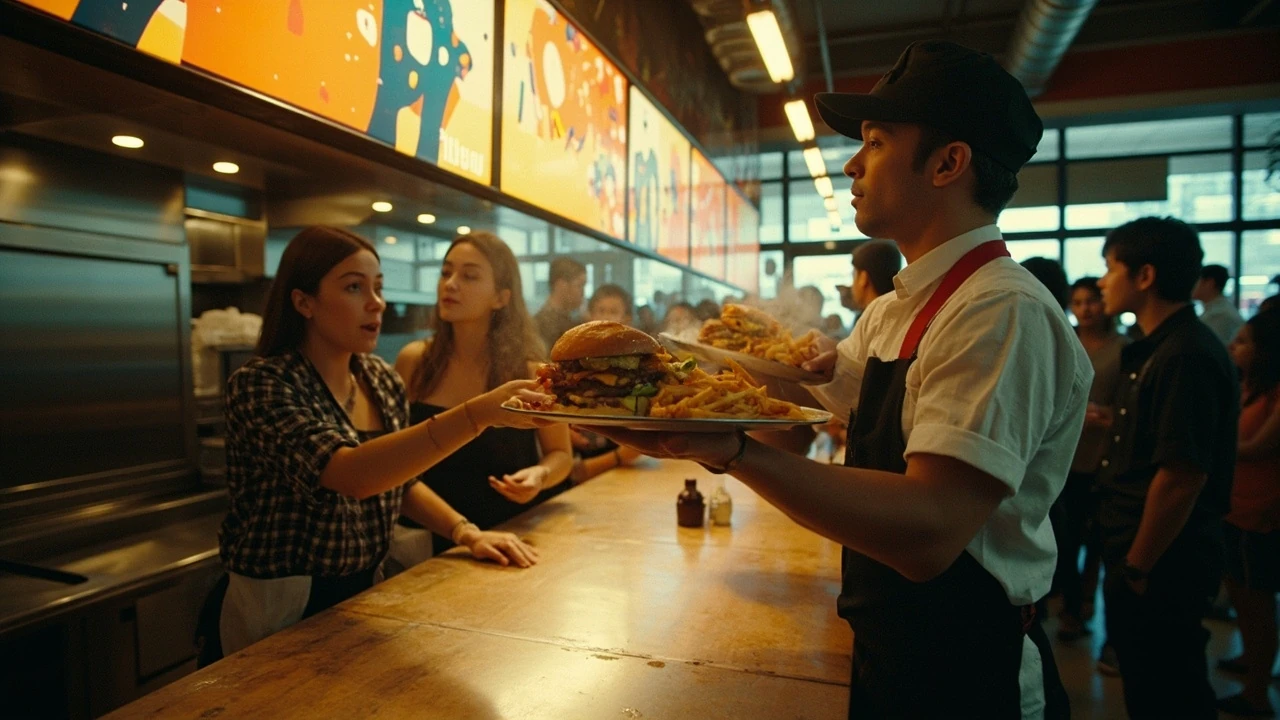
Walk into any busy strip mall at lunchtime and you will see the same scene: a line moving in roughly three minutes, trays on a rail, a small kitchen visible through a service window, and a menu that fits on a single board above the register. That choreography is the point of a fast food restaurant. The category is defined less by what is on the tray and more by the system that gets the tray to a customer quickly, cheaply, and at a consistent quality from one location to the next.
For a diner, that system matters because it sets expectations on speed, price, and consistency. For an operator or a curious food business owner, it matters even more, because the system is what makes the model profitable. This guide breaks down what fast food restaurants are, how they are built, how they differ from neighboring formats, and what to look at when you are choosing where to eat, where to invest, or where to compete.
What counts as a fast food restaurant
The phrase “fast food restaurants” gets used loosely. In everyday speech it covers drive-throughs, counter-service burger shops, fried chicken chains, taquerias, pizza-by-the-slice counters, and some bakery-cafes. In the trade, the term is narrower. It describes a small set of operating choices that together produce a specific result.
A restaurant earns the fast food label when several of these traits apply:
- The menu is intentionally limited. Items share ingredients, equipment, and prep steps so the kitchen can run a tight routine.
- Orders are placed and paid for at a counter, a kiosk, a window, or an app. There is no full table service from a server.
- Food is typically packaged for takeaway, even when guests stay to eat, and is designed to travel without falling apart.
- Speed of service is a measurable target, often under three to four minutes from order to handoff at the counter.
- Portions and recipes are standardized across locations so a burger in one city should taste roughly like the same burger in another city.
- Price points are accessible, often built around a combo meal that bundles an entrée, a side, and a drink.
None of these traits on its own is enough. A bakery with twenty croissants on a counter is not necessarily a fast food restaurant, and a full-service diner with a counter for takeout orders is not fast food either. The label describes a whole operating model, not a single feature.
Fast food vs. quick service vs. fast casual
Operators and trade publications often draw finer lines. If you are comparing brands, reading a franchise disclosure, or auditing your own concept, these distinctions matter more than the casual label “fast food.”
| Format | Service style | Typical ticket | Food prep style | Dining expectation |
|---|---|---|---|---|
| Fast food | Counter, drive-through, kiosk | Low | Pre-portioned, heat-and-hold friendly, designed for speed | Eat with hands at a tray, under 20 minutes |
| Quick service restaurant (QSR) | Counter, drive-through, kiosk, sometimes mobile order | Low to mid | Pre-portioned, with some made-to-order assembly | Eat at a counter or table, under 25 minutes |
| Fast casual | Counter ordering, food delivered to table or called by number | Mid | Made to order with fresher ingredients, often cooked in view | Sit-down style dining in 30 to 45 minutes |
| Casual dining | Full table service, multiple courses | Mid to high | Cooked to order with a wider menu | 45 to 90 minute meals |
The boundary between fast food and QSR is the softest. For additional context, Many chains that people call “fast food” describe themselves as QSRs in investor materials because the term sounds more grown up. The technical difference is that QSR is the broader umbrella that includes any limited-service restaurant that emphasizes speed, while fast food is the specific subset that leans hardest on pre-portioning, low price, and drive-through volume.
How a fast food kitchen is actually built
Walk behind the counter of a well-run fast food restaurant and the layout looks almost diagrammatic. That is not an accident. The kitchen is engineered so the same motions happen in the same order hundreds of times a day, and the equipment sits where the motions expect it to be.
A typical back-of-house line includes:
- A bun station with toaster, sauce pump, and topping trays within arm’s reach.
- A hot line with a clamshell grill, flat top, or fryer, calibrated so the same timer produces the same color every time.
- A fry station, often placed near the assembly line so a basket can drop and meet the protein as it finishes.
- An assembly line or pass where a worker puts a finished sandwich on a wrapper, adds a side, and slides the tray forward.
- A drink station with a multi-flavor dispenser and ice machine positioned to fill a cup in one motion.
- A bagging or handoff area facing the counter, with a screen showing the order as it is being built.
The arrangement is about throughput. A line is only as fast as its slowest station, so the layout is designed so that no worker has to walk more than a step or two to reach the next ingredient. The first few weeks after a new store opens are usually spent tuning those distances.
The economics behind a $7 combo meal
Fast food restaurants survive on thin margins, which is why every step in the kitchen is engineered. A typical fast food operator targets food cost between 25 and 35 percent of revenue, labor cost between 25 and 30 percent, and the rest absorbed by rent, utilities, marketing, royalties where applicable, and a small profit. A two percentage point swing in food cost can move a location from profitable to losing money in a single quarter.
That sensitivity explains several decisions that look strange to outsiders:
- Portion sizes are set by weight to the gram, not by feel, and tracked with daily waste sheets.
- LTOs, or limited-time offers, are designed to use ingredients already on the supply chain rather than introduce new SKUs.
- Drive-throughs get extra lanes, dual menu boards, and order-confirmation screens because a few extra cars per hour is a meaningful revenue lift.
- Combo meals are priced so the average ticket climbs even though the per-item discount looks generous, because the side and drink carry a high contribution margin.
This is also why menu changes at large fast food chains take months. A new item has to be tested in a few locations, modeled for ingredient supply, priced for the existing combo structure, and then rolled out to every store with new training. A restaurant cannot improvise the way a chef-driven independent can.
What a diner should actually evaluate
Most diners pick a fast food restaurant by habit, proximity, or a craving. That works fine most of the time. When you are in an unfamiliar city, traveling with dietary needs, or trying to decide where to stop on a long drive, a few checks make the choice easier.
| What to check | Why it matters | What to look for in the moment |
|---|---|---|
| Cleanliness of the dining area and restroom | Clean front of house is usually a proxy for clean back of house | Tables wiped, floors without trash, restrooms stocked and odor-free |
| Speed of the line at that hour | Reveals staffing and training health | Compare posted wait time on the menu board to actual time at the counter |
| Freshness of fried items | Fast food taste collapses when fryers are not rotated on schedule | Listen for active fryer drops, check the holding time on a basket if visible |
| Drive-through flow | Useful proxy for kitchen discipline | Backed-up drive-through with cars spilling into the street suggests a strained kitchen |
| Allergen and ingredient information | Critical for anyone managing an allergy or a restricted diet | Posted tray liners, allergen guides on the website, willingness of staff to check labels |
| Customization options | Signals how the kitchen is wired | Easy no-onion or swap-bun changes suggest a flexible assembly line |
Two more signals are worth mentioning because they are easy to miss. First, look at the staff turnover. A fast food restaurant that has kept its crew through a busy season usually has better trainers, better shift leads, and a calmer line, which shows up in the food. Second, look at how the restaurant handles a mistake. A quick, calm correction at the counter is a much better sign than a defensive response.
Health, nutrition, and how to read a fast food menu
Fast food restaurants are sometimes treated as a single dietary category, which is not accurate. A grilled chicken wrap and a large sugary frozen drink are sold by the same company, and they have very different nutritional footprints. The most useful thing a diner can do is read the menu as a set of choices rather than as a single decision.
A few practical habits help:
- Default to grilled proteins when they are available, since fried proteins in fast food kitchens are typically cooked in shared oil and run higher in calories.
- Watch the drink. Sweetened soft drinks and frozen beverages often carry more calories than the entrée.
- Use the side as a lever. Substituting a salad, a fruit cup, or even just a smaller fry changes the meal more than swapping the main.
- Check sodium if you are tracking it. Sodium in fast food tends to come from bread, sauce, and cheese more than from the protein.
- Treat sauces as a separate item. A single sauce packet can carry a meaningful share of the meal’s calories, sugar, or salt.
For anyone with a serious allergy, the safest fast food restaurants are the ones that publish full ingredient lists for every menu item, train staff to handle allergen questions, and keep a clean separation between prep stations. The presence of a printed allergen guide, or a public commitment to one, is more useful than any claim of being “allergy friendly.”
The role of technology in modern fast food restaurants
Technology used to be a side conversation in the fast food world. It is now central. The same counter that used to have a register and a clipboard has a kitchen display system, a customer-facing screen, and often a self-order kiosk. The reason is simple: the bottleneck in a fast food restaurant is no longer the kitchen. It is the order-taking and payment step, especially at peak hours.
The pieces that show up most often:
- Kitchen display systems that replace printed tickets and route items to the right station.
- Self-order kiosks that reduce lines and lift average ticket through better visual upsells.
- Mobile ordering apps that pull demand out of the lobby and into the drive-through pickup lane.
- Delivery platform integration, which adds volume but also exposes the kitchen to the volatility of third-party demand.
- Inventory and labor software that watches waste, prep counts, and scheduled demand in close to real time.
For diners, the visible effect is more choice about how to order. For operators, the less visible effect is a need for cleaner data, because a kitchen display system only helps if the items, modifiers, and recipes behind it are kept accurate.
How fast food restaurants choose their locations
Site selection in this category is a discipline of its own. A great menu in the wrong intersection will fail, and a mediocre menu in the right intersection can do well for years. The variables a real estate team weighs include:
- Daily traffic counts at the access points, especially during morning and lunch peaks.
- Visibility from the road, including sight lines for the menu board and signage.
- Drive-through stacking distance, since a lane that holds only six cars will back up at lunch.
- Proximity to complementary tenants such as big-box retail, schools, or gas stations.
- Competitor overlap, which is a balance: too close means share-of-stomach fights, too far means the trade area is too small.
- Utility capacity, because a kitchen built around fryers, grills, and ice machines needs serious electrical and gas service.
The same logic is why fast food restaurants cluster near highway exits, in front of big-box stores, and inside dense retail nodes. The model is volume-driven, and volume is a function of how many people pass the building in a car each day.
What fast food restaurants get right, and where they struggle
It is easy to frame fast food as either the villain of modern diets or the miracle that fed a generation. Neither frame is useful. The honest picture is that the model is very good at a few things and structurally weak at others.
It is genuinely good at:
- Predictable, low-friction meals that fit a tight schedule.
- Consistent quality across many locations, which is rare in the restaurant world.
- Affordable entry points for families, travelers, and shift workers.
- Employing a large entry-level workforce with relatively short training cycles.
It tends to struggle with:
- Freshness. Holding time and the need for speed work against crisp produce and just-cooked proteins.
- Customization. The assembly line is tuned for the common order, not the unusual one.
- Ambience. A dining room is often a pass-through rather than a destination.
- Menu innovation. A meaningful menu change is a months-long project rather than a one-week experiment.
Understanding those strengths and limits is the most useful thing a diner or a competing operator can take from a guide like this. The format is not a failure of cooking. It is a different answer to a different question, and the question is how to feed a lot of people quickly and affordably with a system that scales.
Frequently asked questions
What is the difference between fast food and quick service restaurants?
Fast food is a specific subset of the broader quick service category. Both rely on counter service and speed, but fast food leans hardest on pre-portioning, low price points, and drive-through volume, while quick service can include more made-to-order concepts with slightly higher tickets.
Are fast food restaurants considered restaurants?
Yes. They are a recognized restaurant format, distinguished by limited menus, counter or drive-through service, and standardized operations. Industry trade groups and government labor statistics count them as part of the restaurant industry rather than as retail or grocery.
What is the average ticket size at a fast food restaurant?
It varies by market and by year, but the typical per-visit ticket at a US fast food restaurant clusters in the single-digit to low-teens dollar range, with combo meals forming the median order. Prices shift with ingredient costs and labor rates, so a current local check is more reliable than any single national figure.
How do fast food restaurants keep prices so low?
They rely on standardized menus, shared supply chains, tight kitchen layouts, and high unit volume. Ingredient costs are negotiated at scale, labor is scheduled by the half hour against forecasted demand, and the menu is engineered so that most orders can be built from a small set of pre-portioned ingredients.
What is fast casual, and how is it different from fast food?
Fast casual is the format between fast food and casual dining. Orders are placed at a counter, but food is usually cooked to order with fresher ingredients, portions are larger, and the average ticket is higher. The dining room is designed to feel closer to a sit-down experience, even though there is no table service.
Can fast food restaurants be healthy?
They can be a reasonable part of a balanced diet when menu choices are made with awareness. Grilled proteins, water or unsweetened drinks, and produce-forward sides are widely available. The format is best treated as a flexible set of choices rather than a single nutritional category.
How do fast food restaurants handle food allergies?
Larger chains publish detailed allergen guides and train staff to look up ingredients, but cross-contact risk is real in shared kitchens. Diners with serious allergies should review the most recent allergen guide, speak directly with a manager, and choose simpler items prepared on a clean line whenever possible.
Why do fast food restaurants use so much packaging?
Packaging is built for the model’s core promise: food that travels. The wrappers, bags, and containers are designed to keep heat, moisture, and portion integrity stable during a drive home or a delivery. Reducing that packaging is an active industry challenge that depends on the available recycling and composting infrastructure in each market.
What is the busiest day for fast food restaurants?
Sales are spread across the week, but Saturdays and the days around major holidays tend to be the strongest in many markets. Lunch hours between roughly 11 a.m. and 1 p.m. remain the single heaviest sales window for most locations.
How are fast food restaurants responding to labor shortages?
Operators are raising starting wages in many markets, investing in scheduling software to reduce burnout, simplifying menus so fewer staff are needed during a shift, and adding self-order kiosks and mobile order pickup to reduce pressure on the front counter. The mix of responses varies by region and by brand.
Practical next steps
If you are a diner, the easiest habit to build is a two-question check at the counter: how fresh is the fried item, and how long is the actual wait. Those two signals tell you almost everything you need to know about the operating health of a fast food restaurant in that moment. If you are an operator or a brand strategist, the more useful next move is to compare your concept against the format table in this article and decide deliberately whether you are competing in fast food, in QSR, or in fast casual, because the real estate, the equipment, and the labor model all change at that line. For a deeper read on how menus are priced inside this kind of system, the article on menu pricing strategies that protect margin without losing guests is a useful companion, and for the visual side of how these meals are sold, food photography that actually sells the dish is worth a read.