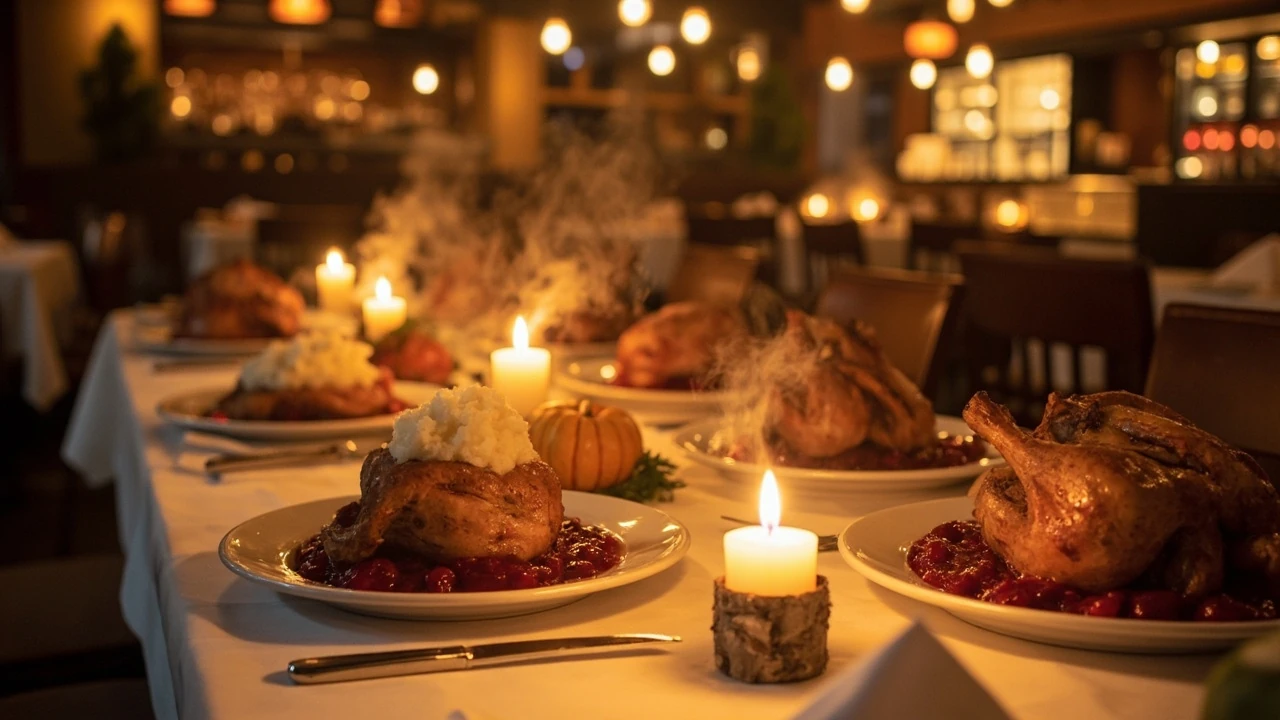
Restaurants open on Thanksgiving: a practical guide for operators and guests
Around the third Thursday of November, the same question lands on kitchen whiteboards, host stands, and family group chats: which restaurants open on Thanksgiving will actually cook tonight, and which ones are quietly closed for the holiday? For a guest, the answer shapes a travel day, a budget, and the mood of a long weekend. For an operator, that same answer shapes labor schedules, supplier orders, the menu, and the line between a profitable service and a thin-margin grind.
This guide looks at both sides of that question. It is written for independent restaurant owners, general managers, and chefs who are weighing whether to open, as well as for hosts and travelers trying to plan a meal when the home kitchen is closed. You will find how demand actually behaves on the day, what staff and suppliers require, the menu and pricing decisions that matter, and a realistic look at the trade-offs that come with serving a holiday that is, at its core, a family meal at home.
Why Thanksgiving is different from every other U.S. dining holiday
Thanksgiving sits in an unusual place on the restaurant calendar. Unlike Valentine’s Day or Mother’s Day, where going out is the point of the holiday, Thanksgiving is a meal that most Americans are conditioned to eat at home. A roasted turkey, a table that fits the whole family, and a kitchen that smells like sage and onion are not just traditions; they are the texture of the day. Restaurants open on Thanksgiving, then, are not really competing with each other in the way they compete on a Friday night. They are competing with the dining room table.
That dynamic shows up in the data. Industry trade groups have historically estimated that the majority of U.S. restaurants close on Thanksgiving, and that the ones that do open typically see lower covers than a comparable weekday, with a meaningfully higher check average. The day is short, intense, and very front-loaded. Lunch usually runs from about 11:30 a.m. to 2:30 p.m., and most guests are gone by 5 p.m. After that, a long, quiet stretch of cleanup takes over. The economics work only if the operator plans for that shape, rather than borrowing a normal Friday template.
There is also a cultural expectation baked in. Guests who do come out are often marking a specific occasion: a recent move, an empty chair at the family table, a long-haul travel day, a workplace gathering, or a deliberately chosen break from cooking for a year. The emotional register is different, and so is the tolerance for the kind of friction that a normal service can absorb.
The real demand picture for restaurants open on Thanksgiving
Demand on Thanksgiving is unusual in three ways. It is shorter than a typical service, more concentrated in the early afternoon, and more dependent on whether the guest’s home is “set up” for a meal. Operators who have tracked the day over several years often describe the same pattern: a brisk first seating, a long lull in the late afternoon, and a quieter bar or carryout trade in the evening for guests who want leftovers, a nightcap, or a smaller bite.
For the guest side, the search interest is also concentrated. People start typing variations of “restaurants open on Thanksgiving” into search engines roughly two to three weeks before the holiday, with a sharp spike in the final forty-eight hours. That timing matters because most holiday reservations open in the same window. The guests who end up at a table are the ones who planned a little earlier than the rest of the calendar.
Two practical implications follow. First, a restaurant that waits until the week of Thanksgiving to decide will be reacting, not planning. Second, the demand that does arrive is highly qualified: the guest has already decided to go out, has a budget in mind, and is comparing options in a small, well-defined pool. In that small pool, the listings that win are the ones that are clear, specific, and honest about what the day will look like.
Operator decision: should you open at all?
Opening on Thanksgiving is a strategic choice, not a default. The right answer depends on the concept, the neighborhood, the labor pool, and the operator’s appetite for a high-friction service. The table below compares the most common positions an operator takes and what each one tends to require.
| Approach | Best fit for | What it requires | Main risk |
|---|---|---|---|
| Full dine-in with a prix fixe | Full-service, destination restaurants in dense or tourist-heavy markets | Special menu, set seating times, deposits or card guarantees, locked-in team | Empty tables if pricing or menu misses the local mood |
| Limited dine-in plus a carryout package | Neighborhood spots with a loyal regular base and a strong catering arm | Advance ordering cutoff, packaging plan, pickup window discipline | Kitchen congestion between dine-in and pickup orders |
| Day-of counter or bakery only | Cafes, bakeries, and counters with a low-friction menu | Reduced menu, grab-and-go flow, clear signage | Confusion if guests expect full service |
| Closed for the holiday | Small teams, family-style concepts, operators protecting staff time | Clear communication, a posted closure, alternative hours posted early | Lost revenue on a high-traffic day |
The most common reason operators regret opening is a mismatch between the format and the team. A full dining room with a six-course prix fixe, run by a skeleton crew and a few borrowed line cooks, is a different animal from a counter service that hands out turkey sandwiches from a chalkboard menu. If the team size only supports the second, the menu, the reservation policy, and the marketing should all reflect that.
Building a Thanksgiving menu that respects the day
The menu is the most visible decision and the one that sets expectations. The clearest pattern in successful holiday menus is restraint. Guests are not coming in for novelty; they are coming in for the feeling of a holiday meal, and they want familiar anchors: turkey, stuffing, gravy, mashed potatoes, something green, and dessert. A restaurant that reinvents every element often confuses the room.
That said, the menu can still reflect the concept. A coastal seafood restaurant can offer a roast turkey with a shellfish stuffing, a steakhouse can lean into a heavier plate with a richer gravy, and a vegetarian-leaning concept can keep the table tradition without centering a bird. The point is to keep at least two or three anchors that read as Thanksgiving on a menu, then let the concept shape what surrounds them.
Pricing is its own decision. A prix fixe simplifies service, sets a clear value anchor for the guest, and gives the kitchen a tighter production plan. A la carte preserves flexibility but spreads the kitchen across more tickets, which is harder on a short-handed holiday team. For most operators who open with a full dining room, a single prix fixe with a small upgrade path (wine pairing, premium dessert, an extra side) is the cleanest compromise between revenue and operational sanity.
Staffing on Thanksgiving: the constraint that decides everything else
Thanksgiving is, first, a labor problem. Most line cooks, servers, and dishwashers have their own family meal to attend, and many will reasonably ask for the day off. The operator who opens without an honest read of who is actually available is setting up a service that will run on goodwill, and goodwill runs out by the second rush of mashed potatoes.
A workable staffing plan usually involves three elements. First, a survey of the team in early October, with a hard commitment deadline and a clear premium structure for those who work. Second, a small list of experienced part-time or freelance line and dish professionals who are used to one-off services and can be booked in advance. Third, a tight prep schedule that pushes as much work as possible into the two days before the holiday, so the day-of team is finishing and plating rather than cooking from scratch.
Premium pay is the norm, not the exception. A holiday differential of time-and-a-half or double-time for hourly staff, paired with a guaranteed minimum, is the most common structure in the U.S. restaurant industry for major holidays. Without it, the service tends to run short-handed, and short-handed holiday services are how small mistakes become reviews that follow a restaurant for years.
Suppliers, prep, and the week before
Thanksgiving falls on a Thursday, which means the production week is compressed. Suppliers are also dealing with higher volumes, and many close or reduce deliveries on the day before and the day of the holiday. The week-of timeline below reflects what most full-service operators in the U.S. follow when they plan to serve.
| Day | Production focus | Supplier and staffing notes |
|---|---|---|
| Monday | Final menu confirmation, prep lists, station assignments | Confirm delivery windows and any last vendor changes |
| Tuesday | Brines, stocks, soups, sauces, and base components | Main protein delivery, early call-in for missing items |
| Wednesday | Final prep, dessert production, station setup, family meal for the team | Many suppliers closed or on reduced schedules |
| Thursday morning | Reheat, plate setup, line briefing, reservation review | Trimmed crew, simplified menu, leadership on the floor |
| Thursday service | Two seatings, controlled pacing, dessert and check flow | Designated closer, clear end-of-night plan |
The Wednesday family meal is worth singling out. Operators who feed the team a proper meal the day before the service tend to see a different energy on the line the next day. It is a small operational habit, not a sentimental gesture, and it shows up in execution.
Reservations, deposits, and the no-show problem
Holiday no-shows are the single most expensive part of opening on Thanksgiving. A 70-top dining room with ten no-shows is not a soft problem; it is a P&L problem. Two policies tend to do the most to prevent it: a credit card guarantee for each reservation, and a strict cancellation window of 24 to 48 hours. Some operators go further and require a small deposit per person, refunded only with timely cancellation.
Reservation design matters as well. A two-seating model, with a fixed first seating around 12:00 to 12:30 p.m. and a second seating at 2:30 to 3:00 p.m., gives the kitchen a clean turnover and a real break between waves. It also sets a clear expectation for the guest: arrive on time, the meal is structured, and the table is yours for about ninety minutes. This is closer to how destination restaurants handle the night, and it tends to work because it matches how the day actually feels.
Carryout and catering as a second revenue line
For many operators, the dine-in service is only half the plan. A carryout package, sold in the two weeks before the holiday, can produce meaningful additional revenue without adding much strain to the dining room, because the bulk of the work is done in the same prep week and the pickups are spread out over a longer window. A simple structure for a carryout program includes:
- A small number of package sizes (for example, a “small gathering” package for four, a “family” package for eight, and an “add-on” set of sides and dessert).
- A single order cutoff, usually two to three days before Thanksgiving, with no exceptions.
- A defined pickup window, with the longest pickup time on Wednesday afternoon or the morning of Thanksgiving.
- Clear reheat instructions printed on each box, including internal temperatures and timing.
- A refund or modification policy that protects the kitchen’s prep against late changes.
Operators who try to build a full catering program on top of a holiday dine-in service often find that the two workforces compete for the same oven space. Keeping carryout simple, predictable, and tightly scheduled is what keeps it profitable.
Pricing and check economics on Thanksgiving
Check averages on Thanksgiving tend to run higher than a normal weekday, but the cost structure is also different. Higher labor costs, higher waste risk, and a compressed revenue window mean the margin on a holiday cover is not automatically better than a regular night, even at a higher price point. The economic targets below are typical starting points, not guarantees; operators should adjust them to their own market, concept, and cost base.
| Cost line | Normal Friday benchmark | Typical Thanksgiving adjustment |
|---|---|---|
| Hourly labor | Base rate | 1.5x to 2x with a guaranteed minimum |
| Food cost | 28 to 32 percent of revenue | Slightly higher, given shrink and special ingredients |
| Waste risk | Moderate | Higher, because unused holiday prep cannot be reused easily |
| Check average | Market dependent | Usually 15 to 30 percent above a regular dinner |
| Service window | Five to six hours | Three to four hours of real revenue |
Two pricing patterns show up most often. The first is a flat prix fixe with optional upgrades, which protects kitchen throughput and simplifies the ticket. The second is a higher a la carte price on the same core dishes the restaurant already serves, with a short add-on list. The first works best when the team is small and the day is structured. The second works when the concept is already premium and the regular menu carries the holiday weight.
Marketing restaurants open on Thanksgiving without sounding transactional
Holiday marketing is its own craft, and the tone matters more than usual. The guests who are choosing to eat out on Thanksgiving are often doing so because something about the year made a home meal harder or less appealing. Marketing that leads with “skip the stress” can read as dismissive of the tradition the guest is, in a small way, setting aside. Marketing that leads with a clear menu, a clear price, and a clear reservation policy tends to land better.
For most operators, a short, specific announcement is the right format. The most useful elements are a sentence about the menu, a single price, a reservation link, and the cutoff date for carryout orders if applicable. Long storytelling posts about gratitude or family often underperform a clean, factual listing, because the searcher is comparing options, not reading essays. A short post also ages well; the same structure can be reused year after year with a small refresh.
It is also worth planning the search-friendly phrasing carefully. Guests use a range of variations, including “Thanksgiving dinner near me,” “Thanksgiving to go,” “open on Thanksgiving,” and “restaurants serving Thanksgiving dinner.” The same page can serve more than one of these if it answers the underlying question clearly, with headings and FAQ entries that match how the question is actually asked.
What guests should plan when eating out on Thanksgiving
For guests, the day works better with a few small habits. Reserving early is the most important. A small deposit is worth paying for the certainty of a table on a day when walk-ins are often turned away. Confirming the menu, the price, and the seating time the day before is the next step. And, for those ordering carryout, picking up as early in the day as the restaurant allows is the easiest way to avoid the late-afternoon rush.
A short guest-side checklist looks like this:
- Reserve in the first half of November, not the first half of Thanksgiving week.
- Confirm the price, the menu, and the seating window in writing.
- Ask about the cancellation policy and the deposit before paying it.
- Plan transit times, because traffic and parking patterns are unusual on the holiday.
- For carryout, ask about the pickup window and any reheating instructions in advance.
- Tip the holiday team at the same level as a normal visit; the holiday premium is built into the operation, not into gratuity.
These steps are small, but they make the difference between a relaxed holiday meal and a stressful one.
Common operational mistakes on Thanksgiving
Most Thanksgiving service problems fall into a small set of patterns. The table below lists the ones that show up most often, along with the simplest way to prevent each.
| Frequent mistake | What it looks like on the day | How to prevent it |
|---|---|---|
| Underestimating prep time | Long ticket times, incomplete dishes at the pass | Front-load prep on Tuesday and Wednesday |
| No clear seating plan | Walk-ins arriving during seatings, uneven pacing | Two seatings with a hard cutover time |
| Skipping the team meal | Low morale, slower service late in the day | Plan a proper family meal for Wednesday |
| Loose reservation policy | Empty tables at peak, full tables at the wrong time | Card guarantees and a clear cancellation window |
| No carryout cutoff | Kitchen overrun, late pickups, refund requests | Single cutoff date, no exceptions |
| Overcomplicating the menu | Confused guests, ticket errors, longer cook times | Two or three anchors, the rest in the concept’s voice |
None of these are exotic problems. They are the same issues that surface whenever a high-volume, time-bound service is run by a smaller-than-usual team. The good news is that each one is preventable with a decision made well in advance.
How to think about closing for Thanksgiving instead
For some operators, the right answer is to close. A small team, a family-style concept, or a neighborhood built around the holiday table is often better served by giving the day back to the staff and reopening the next morning with a normal Friday service. Closing is also a brand decision. Restaurants that close consistently for the major family holidays can build a quiet loyalty with their team and with regulars who respect the choice, especially when the closure is communicated clearly and early.
The cost of closing is real but bounded. The main loss is one dinner service in a year that already has many of them, plus the carryout revenue that an open kitchen could have generated. The benefit is a rested team, a clean Friday opening, and a year-round signal that the restaurant treats the holiday with the seriousness it asks of its guests. For some concepts, that trade is the right one.
Cross-link to the operator’s broader playbook
Most of the decisions above are versions of decisions a restaurant makes all year: pricing, menu engineering, marketing, and team management. The pieces below are useful for operators who want to put Thanksgiving in the context of the rest of the calendar.
Those two pieces sit alongside this guide: pricing strategy sets the economics of the holiday ticket, and menu engineering shapes how a small holiday menu still feels like the restaurant that serves it.
A short checklist for the week of Thanksgiving
If a restaurant decides to open, the final week is mostly about execution discipline. The list below is a working checklist that can be printed and posted in the office. It is not exhaustive, and it assumes the bigger decisions (menu, price, reservation policy) have already been made.
- Confirm the team roster, premium pay, and any freelance or part-time support.
- Lock the carryout cutoff and post it on every channel.
- Walk the dining room and confirm the seating plan, including any table combinations.
- Finalize the prep list by station and confirm the walk-in and dry-storage levels.
- Schedule a Wednesday family meal for the team and a Thursday morning briefing.
- Confirm the reservation platform and the deposit or guarantee policy.
- Brief the front of house on the menu, allergens, and pacing expectations.
- Plan a clear end-of-night for the team, including closing duties and a real wrap time.
Frequently asked questions
Do most restaurants open on Thanksgiving in the U.S.?
The majority of full-service, independently owned U.S. restaurants close for Thanksgiving, and the ones that do open usually run a single holiday service with a limited menu. National chains, hotel restaurants, and counters in high-traffic areas are more likely to be open than neighborhood dining rooms.
What time do restaurants open for Thanksgiving dinner?
Most restaurants that serve Thanksgiving dinner open for a midday seating, typically starting around 11:30 a.m. to 12:00 p.m., with a second seating in the mid-afternoon. Evening service on Thanksgiving is uncommon, and the kitchen usually closes by 7:00 p.m. at the latest.
Do I need a reservation for Thanksgiving dinner at a restaurant?
Yes, in nearly every case. Thanksgiving is one of the few nights of the year when a reservation is effectively required, and most restaurants require a credit card guarantee or a small deposit to hold the table. Walk-ins are usually turned away once the seating plan is full.
How much does Thanksgiving dinner at a restaurant usually cost?
Prices vary widely by market and concept, but a Thanksgiving prix fixe in a full-service restaurant commonly lands between roughly $45 and $95 per person before drinks, tax, and gratuity, with higher-end restaurants charging more. Carryout packages are typically priced per person or per package size, with a set number of sides and a main.
Can I order Thanksgiving dinner to go from a restaurant?
Many restaurants that are otherwise closed for the holiday still offer a carryout package, with a defined cutoff date, a set menu, and a specific pickup window. Carryout is usually ordered one to two weeks in advance, with the pickup on Wednesday or on Thanksgiving morning.
Are fast food and counter restaurants open on Thanksgiving?
Some are, and some are not. Hours vary by location and operator, and the most reliable way to check is the specific restaurant’s posted hours for the holiday. Counter concepts with reduced hours are more common in urban, transit-adjacent, or tourist-heavy areas.
Should I tip more on Thanksgiving?
Tipping at the same percentage as a normal visit is the standard practice. The holiday premium is typically built into the operation through higher hourly wages, not through gratuity. A small extra gesture, like a clear thank-you to the team at the end of the meal, is welcome but not expected.
What should restaurant owners do if they cannot staff Thanksgiving?
Close the dining room, communicate the closure clearly and early, and offer a carryout option only if the kitchen team can realistically support it. Reopening the next day with a normal Friday service is often the right move, and posting the closure across the website, social channels, and reservation platform is what protects the brand from confusion.
How far in advance should restaurants open Thanksgiving reservations?
Two to three weeks is the most common window, with a few destination restaurants opening earlier. Reserving as soon as the link goes live is the safest move for guests, because the best seatings tend to fill within the first few days.
Is it profitable for a restaurant to open on Thanksgiving?
It can be, but only when the format matches the team. A short, structured service with a prix fixe, a confirmed reservation base, and tight prep can produce a meaningful day of revenue. A loose, a la carte service run by a tired team usually does not, and the reviews it produces can follow the restaurant long past the holiday.