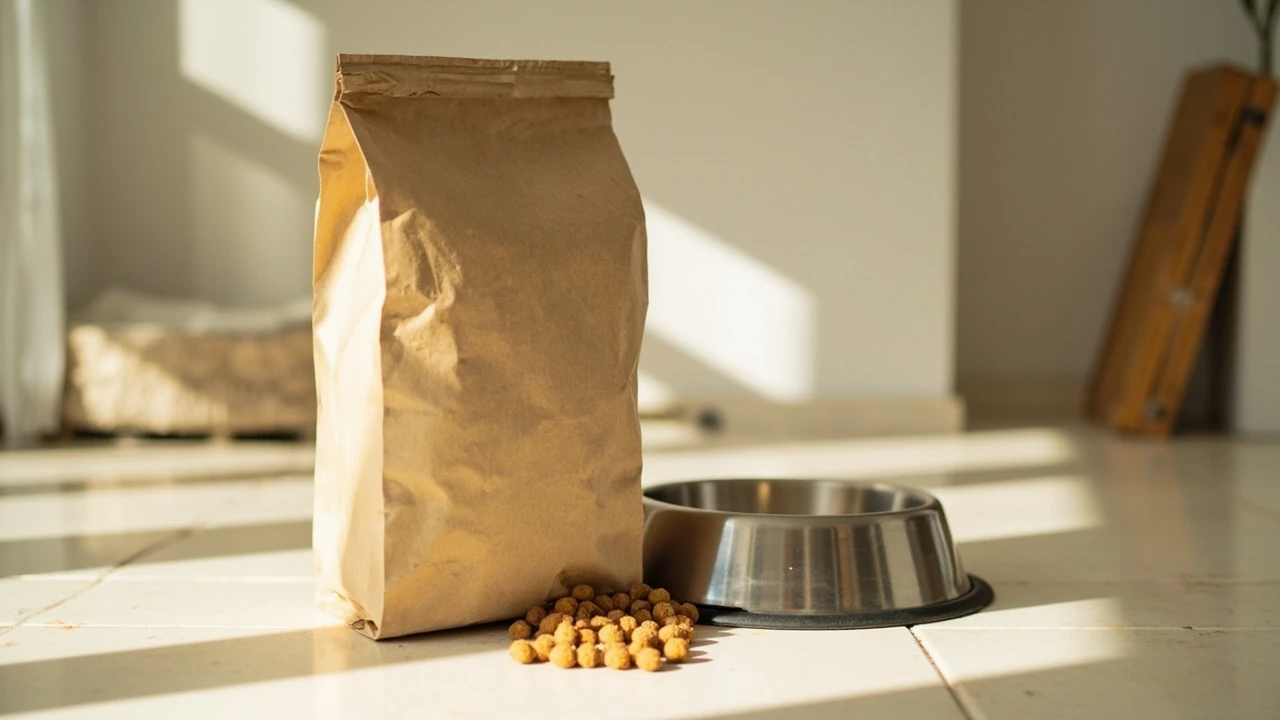
A shopper standing in the pet food aisle will see the words “Science Diet” on dozens of bags, cans, and pouches, often next to pictures of glossy-coated dogs and claims about vet recommendation. The phrase is so familiar that many people assume it is a generic description of “healthy” dog food, when it is actually a brand name owned by a single company. That single misunderstanding drives most of the bad decisions people make in the dog food aisle, because once a shopper knows what the brand is, who makes it, and what the product line actually contains, the rest of the label becomes much easier to evaluate.
This guide is written for dog owners who want a clear, practical read on science diet dog food without marketing fog. It explains who makes the line, what the recipes are built around, how the dry and wet ranges are organized, how to read a Hill’s Science Diet label, and which life stage or condition a given formula is designed to support. It also covers what the food does not claim, what to ask a veterinarian before switching, and how the brand compares to common alternatives. None of this is a substitute for a clinical exam, and any dog with a medical condition should be fed on the advice of the treating vet.
Science diet dog food: what the brand actually is
The phrase “science diet dog food” almost always refers to Hill’s Science Diet, a line of dry kibble, wet cans, pouches, and treats made by Hill’s Pet Nutrition. The company is owned by Colgate-Palmolive and operates as a dedicated pet nutrition business with its own research center in Topeka, Kansas. The brand has been on the market since the 1960s, when a blind American veterinarian named Mark Morris Sr. helped develop a canned food for guide dogs with kidney problems. That clinical origin is the reason the line still leans heavily on the language of “science,” “biology,” and “prescription” rather than the language of “natural” or “ancestral” feeding.
Hill’s breaks its dog food range into two main families that are easy to confuse:
- Hill’s Science Diet: the over-the-counter life-stage and breed-size line, sold in pet stores, vet clinics, and online retailers without a prescription.
- Hill’s Prescription Diet: the therapeutic line sold through vet clinics, designed for specific clinical conditions such as urinary, kidney, gastrointestinal, weight, skin, or joint issues.
Both families share the same nutritional research base. The difference is regulatory and practical: Science Diet products are formulated to meet the Association of American Feed Control Officials (AAFCO) nutrient profiles for a given life stage, while Prescription Diet products are marketed for the dietary management of specific diseases and usually require a vet’s recommendation.
What the recipes are built around
Every bag or can of science diet dog food carries a guaranteed analysis panel and, in the United States, an AAFCO nutritional adequacy statement. The AAFCO statement is the single most important line on the label, because it tells you whether the food is “complete and balanced” for a given life stage. Hill’s Science Diet products are typically labeled for one of three stages:
- Growth and reproduction (puppy, pregnant or nursing): higher in calories, protein, calcium, and DHA for developing brains and skeletons.
- Adult maintenance: the bulk of the line, balanced for everyday feeding of healthy adult dogs.
- Senior or mature adult: a sub-line aimed at older dogs, usually lower in calories and adjusted for joint and kidney support.
Beyond life stage, Hill’s groups its formulas by what the company calls “biology” or “needs.” Common adult recipes include:
- Adult sensitive stomach and skin: with chicken, prebiotic fiber, and omega-6 fatty acids for dogs that scratch or have loose stools.
- Adult perfect weight and weight management: lower in fat and calories for dogs that need to lose or maintain weight.
- Adult oral care: a larger kibble shape designed to scrub the tooth as the dog chews.
- Adult 7+ active longevity: a senior recipe with targeted minerals and antioxidants.
- Small, medium, and large breed variants: same core recipe, with kibble size, calorie density, and mineral levels tuned to size.
The exact recipes change over time, so the bag in front of you may be labelled differently from one a friend used five years ago. The structure, however, stays the same: a complete dry or wet food balanced for a stage, often with a single named “benefit” on the front of the bag.
How to read a Hill’s Science Diet label
Reading any bag of science diet dog food well comes down to a few specific sections of the label. Most owners stop at the front panel, which is the part of the packaging designed to sell, and miss the back, which is the part that actually describes the food.
Front of bag claims
The front panel usually carries a stage label (Adult, Puppy, Senior), a benefit callout (Sensitive Stomach, Perfect Weight, Oral Care), a named protein (Chicken and Barley, Lamb and Rice), and a marketing phrase about clinical nutrition. Treat these as a pointer to a specific formula, not as a nutritional verdict.
Ingredient list
Ingredients are listed in descending order by weight before cooking. For a chicken and barley recipe, the top of the list usually reads chicken, whole grain wheat, cracked pearled barley, whole grain sorghum, soybean meal, animal fat, and so on. Two practical points matter here:
- The first named protein is usually a real animal ingredient, but the bag also contains a meat meal (for example, chicken meal or pork meal), which is a more concentrated protein source and not the same as fresh meat.
- Grains such as wheat, barley, rice, and sorghum are common in the Science Diet line. If a dog has a confirmed grain allergy, the owner should look at the maize- and wheat-free recipes in the line, or talk to a vet about a true elimination diet.
Guaranteed analysis
The guaranteed analysis lists minimum crude protein, minimum crude fat, maximum crude fiber, and maximum moisture. For a typical adult dry formula, the panel looks roughly like crude protein 20% min, crude fat 12% min, crude fiber 4% max, moisture 10% max. A higher-protein or weight-management recipe will sit above or below those numbers. This panel is useful for comparing one Science Diet recipe against another, but it is not a complete nutrient profile, because minerals, vitamins, and amino acids are listed separately.
AAFCO statement
The AAFCO statement, usually near the ingredient list, will say something like: “[Product] is formulated to meet the nutritional levels established by the AAFCO Dog Food Nutrient Profiles for the maintenance of adult dogs.” That single line is what allows the bag to be sold as a complete food. A bag that only says “for intermittent or supplemental feeding only” is not a complete diet, even if it looks like one.
Feeding guide and calorie content
The feeding guide is a table by body weight. It is a starting point, not a prescription. Active dogs, neutered dogs, indoor dogs, and overweight dogs all need different amounts, and the guide cannot know which one your dog is. The calorie content, listed in kilocalories per kilogram or per cup, lets you match the bag to a specific weight-loss or weight-maintenance plan if your vet has set a target intake.
Dry versus wet: the practical trade-offs
Hill’s sells both dry kibble and wet cans, pouches, and trays under the Science Diet name. The choice between them is less about which is “better” and more about which fits the dog and the household.
| Factor | Dry science diet dog food (kibble) | Wet science diet dog food (cans and pouches) |
|---|---|---|
| Typical moisture | Around 8 to 10 percent | Around 70 to 80 percent |
| Calorie density | Higher per cup, so smaller portions | Lower per gram, so larger portions by weight |
| Dental effect | Crunchy texture can help reduce tartar, especially the Oral Care shape | No mechanical cleaning effect |
| Storage and cost | Easier to store, lower cost per day for most dogs | Heavier, more expensive per day, needs refrigeration after opening |
| Best fit | Healthy adult dogs, multi-dog homes, weight management plans | Picky eaters, dogs recovering from illness, dogs that need extra hydration |
Many owners feed a mix, using dry kibble as the base and adding a small amount of wet food for palatability or hydration. That mixed feeding is fine as long as the total daily calories and the AAFCO stage still match the dog.
Life stage matching: a quick framework
Before looking at brand names, a useful exercise is to write down the dog’s life stage, body condition, and any known sensitivities. The recipe then picks itself.
| Dog situation | Typical Science Diet recipe direction | Why it tends to fit |
|---|---|---|
| Puppy, especially large breed | Puppy or Puppy Large Breed dry | Higher DHA, controlled calcium for steady growth, kibble sized for the mouth |
| Healthy adult, normal body condition | Adult chicken or lamb recipe | Balanced maintenance calories, no targeted “extra” ingredients the dog does not need |
| Adult with soft stools or itchy skin | Adult Sensitive Stomach and Skin | Single-protein focus, added prebiotic fiber, omega-6 fatty acids |
| Overweight adult | Perfect Weight or Weight Management | Lower fat, higher fiber, fixed calorie plan that fits a measured cup |
| Senior with stiff joints or slower activity | Adult 7+ or Healthy Advantage Senior | Lower calories, joint-supportive nutrients, controlled phosphorus |
| Dental tartar build-up | Oral Care dry | Larger, fiber-encased kibble that the dog has to bite through |
| Dog with a diagnosed medical condition | Prescription Diet, not Science Diet | Therapeutic nutrient levels that should be supervised by a vet |
The framework is not a clinical tool, but it stops the common mistake of feeding a senior dog a puppy recipe just because the puppy formula is more flavorful, or of feeding a clinical-condition dog an over-the-counter food that does not address the actual problem.
How science diet dog food is positioned in the wider market
The premium and super-premium dog food market in North America is dominated by a small number of companies, and Hill’s sits in a specific slot within that group. The brand is most often compared to Purina Pro Plan, Royal Canin, Iams, and Eukanuba. Each of those lines has its own logic.
| Brand | Core positioning | Typical buyer | Overlap with Science Diet |
|---|---|---|---|
| Hill’s Science Diet | Clinic-backed life-stage and breed-size formulas | Owners who follow vet recommendations and want a single, simple choice | Direct competitor to Pro Plan and Royal Canin for the same shopper |
| Purina Pro Plan | Performance and life-stage formulas with strong marketing around sport dogs | Active and working dog owners, performance households | Similar AAFCO structure, broader shelf presence, more flavor options |
| Royal Canin | Breed-specific and size-specific formulas with very narrow nutrient targets | Owners of purebred dogs who want a breed-shaped kibble and a tailored recipe | Overlaps on life stage, splits on breed and coat customization |
| Iams and Eukanuba | Mass-market and performance segments, similar nutrient philosophy | Owners who want a science-led recipe at a lower price point than Science Diet | Closest mass-market alternative, usually lower in price per kilogram |
Owners who want a grain-free, raw, or fresh-food approach will be looking at a different market entirely, since the Hill’s line is built on cooked kibble and canned food with grains as a normal part of most recipes. That is a value and feeding-philosophy choice, not a nutritional ranking.
How much to feed, and how to tell if it is working
Choosing the right bag of science diet dog food is only half of the decision. The other half is feeding the right amount and watching the dog’s body condition over the following weeks. A useful routine looks like this:
- Weigh the dog and the food. Body weight guides printed on bags assume you actually know the number, and kitchen scales are more reliable than the “one cup” measure on the bag.
- Start at the lower end of the feeding guide for the dog’s target weight, not the current weight, if the dog is overweight. Adjust up only if the dog is losing weight too fast or seems hungry.
- Re-check body condition every two to four weeks. A dog at a healthy weight has a visible waist when viewed from above, and you can feel the ribs without pressing hard.
- Track stool quality, coat shine, and energy. Most adult dogs settle into a stable pattern within four weeks of a diet change if the recipe actually fits.
- Keep treats and table food inside the daily calorie budget. Even a “perfect” formula is undone by a steady stream of extras.
If a dog loses or gains weight outside the plan, refuses food for more than a day or two, or develops new skin, stool, or urinary symptoms, the right next step is a vet visit, not a bag swap. Diet fixes some problems and hides others, and a clinical exam is the only way to tell which is happening.
Common mistakes owners make with science diet dog food
Most problems with the line are not about the food itself, but about how it is used. A short list of recurring mistakes is worth keeping in mind.
- Feeding a puppy recipe to an adult dog: higher in calories and minerals than an adult needs, which can push weight up and stress kidneys over time.
- Feeding a senior recipe to a young adult: lower in calories and protein than a working dog needs, which can lead to muscle loss and a dull coat.
- Mixing two life-stage recipes at random: the AAFCO statement is built around a single bag, and mixing life stages makes it impossible to know which stage the dog is actually being fed for.
- Treating Sensitive Stomach as a cure for a clinical issue: the recipe is for occasional loose stool and mild sensitivity. Chronic vomiting, blood in stool, or weight loss need a vet, not a bag change.
- Overfeeding “light” or “weight management” recipes: they are still calorie-containing foods, and a doubled portion is still a doubled portion.
- Assuming Science Diet is prescription food: it is over the counter. Real clinical conditions need Hill’s Prescription Diet or a competing therapeutic line, under vet supervision.
When to step up to Prescription Diet instead
Hill’s Prescription Diet shares the brand name but is a different class of food. The most common reasons a vet will move a dog off Science Diet and onto a Prescription Diet recipe include:
- Struvite or calcium oxalate bladder stones, where urine pH and mineral targets need to be tightly controlled.
- Chronic kidney disease, where phosphorus, sodium, and protein targets have to be reduced in a specific pattern.
- Severe skin or food allergies, where a hydrolyzed protein recipe removes the trigger entirely.
- Obesity with a related joint or metabolic issue, where a more aggressive weight-loss formula is needed than the over-the-counter Perfect Weight line.
- Acute or chronic gastrointestinal disease, where a low-fat, highly digestible recipe is required for a defined period.
These decisions belong with the treating vet, because the wrong therapeutic diet can make some of these conditions worse, not better. Science Diet and Prescription Diet are best understood as two layers of the same nutrition platform, with the over-the-counter layer for healthy dogs and the prescription layer for dogs whose nutrition has become part of their medical care.
What science diet dog food does not claim
It is just as useful to know what the line does not promise, because marketing language around dog food tends to crowd out the actual claims. Reading the back of the bag carefully will show that a typical Science Diet bag does not claim to:
- Cure any disease on its own, including the conditions listed on the front of the bag.
- Replace a veterinary exam or diagnostic work for a sick dog.
- Be a raw or fresh diet, or to contain only human-grade ingredients.
- Be grain-free, unless the specific recipe is labelled grain-free.
- Be hypoallergenic; the Sensitive Stomach and Skin recipe is for mild sensitivity, not for true food allergies.
Keeping that list in mind is one of the fastest ways to filter marketing claims from nutritional reality when reading any dog food label, not just Hill’s.
Buying, storing, and using the food well
A few practical habits make any bag of science diet dog food last longer, taste better, and feed more safely.
- Buy the bag size the dog will finish in 4 to 6 weeks: dry kibble loses aroma and palatability once the bag has been open for a long time, even in a sealed container.
- Keep dry food in a cool, dry place in its original bag inside a bin: the original bag has a barrier layer that a plain plastic container does not always match, and pests can get into open bins.
- Refrigerate opened cans or pouches and use them within 3 to 5 days: covered, in a clean container, not in the open can in the fridge.
- Wash bowls daily: biofilm builds up on plastic and metal bowls, and that biofilm can affect both palatability and skin around the mouth.
- Watch the “best by” date: dry kibble past its date is not dangerous in most cases, but fats can oxidize and reduce palatability and nutrient quality.
A short reading list for owners who want to go deeper
Owners who want to understand the science side of canine nutrition without becoming veterinary nutritionists have a small, dependable set of places to start. For orientation on pet food regulation in the United States, the Wikipedia article on pet food is a useful entry point, because it explains how AAFCO, the FDA, and the NRC interact. For a brand-side view of the clinical research Hill’s points to, the company’s published nutrition library is the relevant non-Wikipedia reference and is regularly updated by their veterinary team. The wider point is that any single brand’s research should be read alongside independent veterinary nutrition guidance, especially for dogs with medical conditions, since brand research has a built-in commercial angle.
Frequently asked questions
Is science diet dog food the same as Hill’s Science Diet?
In common usage in the United States and Canada, yes. The phrase refers to the Hill’s Science Diet line made by Hill’s Pet Nutrition. If a dog food label says “Science Diet” but is not made by Hill’s, it is a different product and should be read as such.
Is science diet dog food good for puppies?
It can be. The Puppy and Puppy Large Breed recipes are formulated to AAFCO profiles for growth and reproduction, with the higher calories, calcium, and DHA that growing dogs need. Owners should match the recipe to expected adult size, since large-breed puppies do best on a large-breed puppy recipe that controls calcium.
Do I need a prescription to buy science diet dog food?
No. Science Diet is the over-the-counter line and is sold in pet stores, vet clinics, and online without a prescription. Hill’s Prescription Diet is the line that requires a vet’s recommendation, and it is sold primarily through vet clinics.
Can science diet dog food help with itchy skin?
The Sensitive Stomach and Skin recipe is built for dogs with mild, non-clinical skin and stool sensitivity, and many owners see a difference within four to eight weeks. It is not a treatment for true food allergies, mange, bacterial skin infection, or chronic dermatitis, all of which need a vet’s diagnosis.
Is science diet dog food grain-free?
Most recipes in the line include grains such as wheat, barley, rice, or sorghum. A small number of recipes are grain-free, and the bag will say so on the front. If a dog has a confirmed grain allergy, the bag and the AAFCO statement should be checked before feeding.
How long does it take to switch a dog to science diet dog food?
Most adult dogs tolerate a 7-day transition: about 25 percent new food on day one, moving to 50/50 around day three or four, then 75/25, then 100 percent new food by day seven. Dogs with sensitive stomachs often do better on a 10 to 14 day transition, and puppies can usually move faster if the new recipe is also a puppy recipe.
Can science diet dog food be mixed with other brands?
It can, and many owners mix dry and wet, or rotate between two complete foods to reduce pickiness. The catch is that the mix has to still meet AAFCO for the dog’s life stage, and total daily calories have to be measured. Mixing a complete food with a topper that is not complete is fine if the topper is treated as an extra.
Is science diet dog food better than raw or fresh diets?
That depends on what “better” means for a given dog and household. Science Diet is a cooked, shelf-stable, AAFCO-complete food with a long safety record. Raw and fresh diets can also be complete, but require careful handling, balanced recipes, and veterinary supervision. Neither category is automatically better, and the right choice is the one that keeps the dog healthy and the household able to feed safely and consistently.
What is the difference between Science Diet and Prescription Diet for dogs?
Science Diet is the everyday, over-the-counter line balanced for healthy dogs at different life stages. Prescription Diet is the therapeutic line balanced to help manage specific medical conditions, and it is sold through vet clinics with vet guidance. The two share the same research base but target different jobs.
How do I know if the food is actually working for my dog?
Look at body condition, stool quality, coat shine, energy, and weight trend over four to eight weeks. A dog that is at a healthy weight, has firm stools, a glossy coat, and steady energy is usually on a good fit. If any of those go in the wrong direction, the right next step is a vet visit, not a bag change, because the problem may not be the food at all.