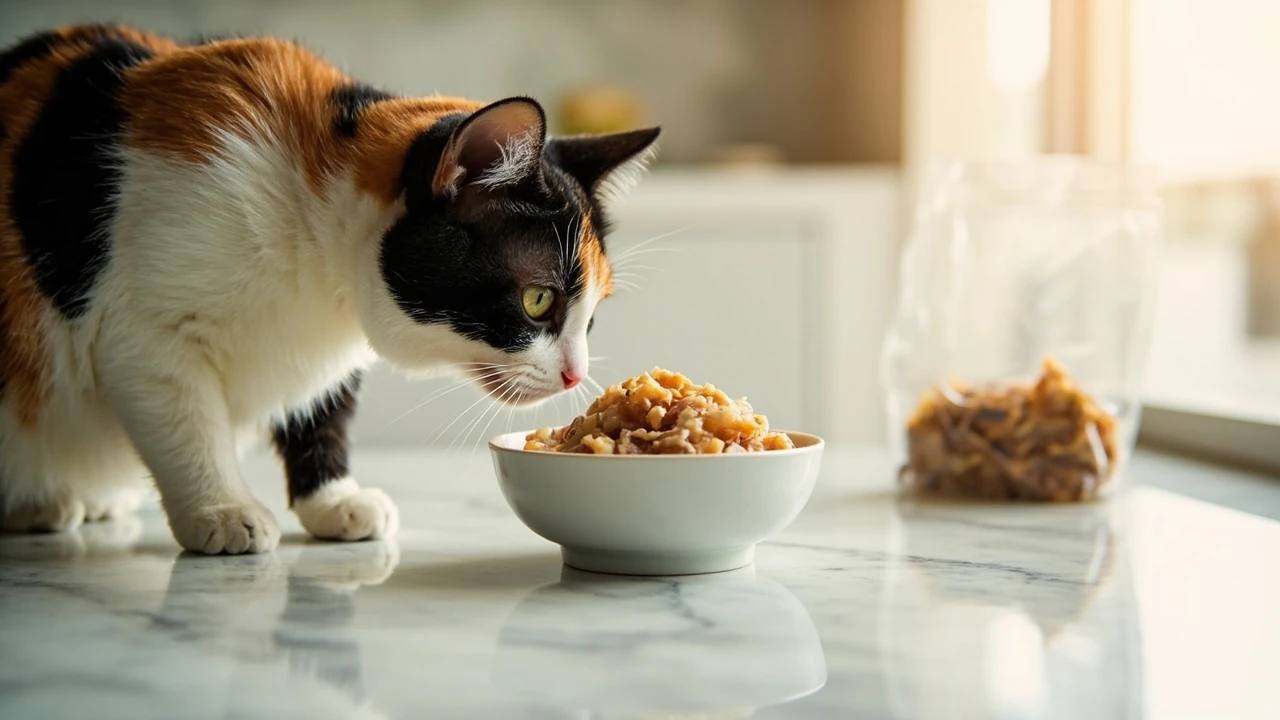
A calico cat leans toward a small white bowl on a kitchen counter, sniffs once, and walks away. The owner scrapes the untouched kibble and starts looking for a different answer. That is the moment a lot of people land on the name cat food brands like Smalls, which built its reputation on a fairly stubborn idea: cats are obligate carnivores, and their food should look, smell, and read like real meat instead of cereal shaped into fish.
This article walks through what smalls cat food actually is, how the recipes are built, where the company sits in the broader fresh and human-grade market, and what a new customer should weigh before subscribing. It is written for owners who care about ingredient quality, are curious about the subscription model, and want a candid read on the strengths and trade-offs of the brand rather than a sales pitch.
What smalls cat food actually is
Smalls is a direct-to-consumer cat food company founded in 2017 in New York. The company sells two main product lines: fresh, refrigerated recipes in single-serve pouches, and a smaller dry kibble line called Smalls Bird. All fresh recipes are formulated to meet the Association of American Feed Control Officials (AAFCO) standards for complete and balanced nutrition for adult cats, and the company states that its recipes are made in human-grade facilities using human-grade ingredients.
Three signature proteins anchor the fresh range: chicken, turkey, and beef. Each is offered in two textures, a smooth pate and a chunkier ground option, so owners can pick the form their cat actually eats. Recipes are gently cooked, then flash-chilled and shipped in insulated boxes with dry ice. Because the food is wet, fresh, and unprocessed by high-heat extrusion, the smell is closer to cooked chicken than to typical canned cat food, which is usually a strong selling point for people who are picky about the aroma in their kitchen.
Smalls positions itself at the premium end of the fresh cat food market. Pricing, ingredient sourcing, and the human-grade facility claim are all designed to justify a higher monthly cost than mass-market dry or canned diets, and the brand is open about that positioning rather than hiding it.
How smalls cat food is formulated for obligate carnivores
Cats have a specific biology. They require pre-formed arachidonic acid, taurine, vitamin A, and niacin from animal tissue because they cannot synthesize these nutrients efficiently from plant matter. Any cat food, fresh or otherwise, has to deliver those nutrients in the right ratios or the cat will slowly develop deficiency-related disease. Smalls builds its recipes around whole animal protein for exactly this reason.
The protein sources listed on the label are recognizable foods: chicken thigh, chicken liver, chicken heart, turkey thigh, beef, and similar cuts. Organ meats are deliberately included because they carry taurine, vitamin A, and B vitamins in dense forms. Instead of using synthetic vitamin and mineral premixes as the only source of micronutrients, the formulation leans on the natural nutrient density of muscle and organ tissue, then tops up with a small premix to ensure AAFCO compliance.
Carbohydrate content in the fresh recipes is very low. There is no corn, wheat, soy, or rice filler. The moisture content is high, typically around 70 to 75 percent, which mirrors the water content of a cat’s natural prey and supports hydration, especially in cats that drink little water on their own. The kibble line uses a different formulation with more carbohydrate to hold the extruded shape, but it still uses animal protein as the first ingredient.
Ingredient breakdown of the three fresh recipes
The ingredient list is the single most important document on any cat food label. The table below summarizes what the three core fresh recipes actually contain, in descending order of label prominence. The exact percentages shift slightly with each recipe batch, and Smalls updates its ingredient panel on the product page, so treat this as a structural overview rather than a current specification.
| Recipe | Primary protein source | Organ inclusion | Added supplements | Notable exclusions |
|---|---|---|---|---|
| Fresh Chicken (Smooth) | Chicken thigh, chicken breast | Chicken liver, chicken heart | Taurine, vitamin E, iron, zinc, copper | Grain, potato, pea, carrageenan, artificial flavors |
| Fresh Turkey (Smooth) | Turkey thigh, turkey breast | Turkey liver, turkey heart | Taurine, vitamin E, iron, zinc, copper | Grain, potato, pea, carrageenan, artificial flavors |
| Fresh Beef (Ground) | Ground beef, beef round | Beef liver, beef heart | Taurine, vitamin E, iron, zinc, copper | Grain, potato, pea, carrageenan, artificial flavors |
Two things stand out. First, the protein sources are named in plain language, not as generic “meat by-product” or “animal digest.” Second, the supplement list is short. Smalls is not trying to fortify a cereal base with a long list of synthetic vitamins; it is using nutrient-dense whole foods and then filling small gaps.
The Smalls subscription and delivery model
Smalls is built around a recurring delivery rather than a one-time bag purchase. New customers start with a quiz on the website that asks about the cat’s age, weight, activity level, current food, and any health issues. The system then proposes a starter box of two or three recipes, usually with a mix of textures, and a portion plan sized to the cat’s daily calorie needs.
After the starter box, customers move into a regular cadence of weekly, biweekly, or monthly shipments. Each shipment is a flat-rate insulated box with dry ice. The food is portioned into 1.5 ounce or 3 ounce pouches, which means there is no scooping, no measuring, and no half-used can going back into the fridge.
The economic logic is straightforward. For additional context, Fresh food costs more per calorie than dry kibble, and portion-controlled pouches cost more per ounce than a 5.5 ounce can, but the trade-off is that owners do not overfeed, do not waste food, and do not have to remember when something was opened. For households with one or two indoor cats, the system tends to be tidy and easy to manage.
How a typical Smalls order arrives
- A recyclable cardboard box, sized to the plan, with an insulated liner.
- Dry ice or gel packs, depending on the season and shipping zone.
- A stack of sealed single-serve pouches, labeled with the recipe and the use-by date.
- A small printed feeding guide and a QR code linking to the brand’s customer portal.
- A note explaining how to handle the dry ice safely, especially in homes with children.
What the food costs in real terms
Smalls does not publish a flat retail price because the plan is built around each cat’s calorie needs. As a rough benchmark for a healthy 10 pound adult cat eating roughly 200 calories a day, the monthly cost typically lands in a range that is several times the cost of a mid-range dry food and noticeably higher than a quality canned food. The actual number depends on the recipe mix, the shipping zone, and the current promotions, and it can shift over time.
The table below compares the rough monthly cost for a 10 pound adult cat across three common feeding strategies. The numbers are illustrative, not a quote, and they assume a 200 calorie per day intake at the time of writing. Owners with multiple cats, kittens, or senior cats with reduced appetite will see different totals.
| Feeding style | Typical daily calories | Approximate monthly cost (USD) | Convenience | Storage requirement |
|---|---|---|---|---|
| Premium dry kibble | 200 | Lower range | Pour and go | Sealed container at room temperature |
| Quality canned food | 200 | Middle range | Scoop from can, refrigerate remainder | Refrigerator, used within 3 to 5 days |
| Smalls fresh subscription | 200 | Upper range | Tear open a pouch, no measuring | Refrigerator, used within 7 days of opening pouch |
For owners who already feed fresh food and are deciding between Smalls and a competitor, the comparison is rarely about absolute price. It is about portion control, recipe variety, and whether the brand’s ingredient philosophy matches the household’s standards.
How smalls cat food compares to other fresh and human-grade options
The fresh cat food category has grown quickly since 2017, and Smalls is no longer the only credible brand. A few well-known competitors include Nom Nom (now owned by a larger pet food group), Open Farm, Raised Right, and Spot & Tango. Each has a slightly different approach, and the differences matter to different owners.
Smalls’ signature is its focus on cats. It does not make dog food, it does not sell a vast menu of recipes, and it does not try to be a one-stop shop for every pet in the household. That focus shows up in the recipes, which are tightly tuned to feline nutritional needs, and in the customer support team, which is staffed by people who talk about cats all day. For a multi-pet household that wants a single subscription for a dog and a cat, that focus can be a limitation rather than a benefit.
Where Smalls tends to win
- Ingredient transparency: named muscle meats, named organ meats, and a short supplement list.
- Texture choice: smooth pate and ground options for picky eaters.
- Portion accuracy: single-serve pouches remove the guesswork.
- Customer experience: the quiz and the on-time insulated shipping are well executed.
Where competitors sometimes pull ahead
- Recipe variety: some brands offer fish-based or novel protein recipes, which Smalls has historically avoided because of mercury and sourcing concerns.
- Multi-pet bundles: owners with both dogs and cats can consolidate orders with a brand that serves both species.
- Add-on raw or gently cooked lines: a few competitors offer a raw option in addition to cooked fresh, which appeals to raw-feeding households.
- Price sensitivity: store-brand and mass-market fresh lines have entered the market at lower price points, even if their ingredient sourcing is less strict.
What veterinarians generally say about fresh cat food
The veterinary community has shifted noticeably on the question of fresh, human-grade cat food over the last decade. The mainstream view used to be that any AAFCO-compliant diet was acceptable as long as the cat was healthy and the food was complete and balanced. The newer view is more nuanced: high moisture, high animal protein, low carbohydrate diets are biologically appropriate for cats, and ingredient quality does have an effect on long-term outcomes such as muscle maintenance, kidney function, and skin health.
Veterinarians who recommend fresh diets typically stress three checks. First, the diet must be complete and balanced for the cat’s life stage, demonstrated through AAFCO feeding trials or a formal nutrient analysis. Second, the owner must commit to safe food handling, because fresh cooked food is more hospitable to bacterial growth than extruded kibble. Third, the diet has to be sustainable for the household, because the best food in the world does not help if the owner cannot keep up with the cost and the routine.
Smalls checks the first box on its product page by stating AAFCO compliance, the second by shipping in insulated boxes with clear handling instructions, and the third by making portioning and storage as simple as possible. None of that is unique, but it is a solid baseline for the category.
Transitioning a cat to smalls cat food
The most common reason a cat refuses a new food is not the brand. It is the speed of the transition. A cat’s gut microbiome and digestive enzyme profile are tuned to the diet it has been eating, and a sudden switch can cause loose stool, vomiting, or flat refusal. Smalls itself recommends a 7 to 10 day transition, and that pace is consistent with what most veterinary nutritionists suggest.
A practical transition looks like this. Days one and two are mostly the old food with a small amount of Smalls mixed in, often around 25 percent new and 75 percent old. Days three to five shift toward a half and half split. Days six to eight move to 75 percent Smalls and 25 percent old. By day ten, the cat should be fully on the new food. If at any point the cat shows persistent digestive upset, the right move is to drop back a step, hold there for two or three days, and then try again.
For extremely stubborn cats, warming the food slightly in the microwave for a few seconds, mixing in a teaspoon of warm water, or topping with a small amount of a familiar treat can help. The goal is to make the new food smell like a meal rather than an experiment.
Food safety and storage
Fresh, cooked, moisture-rich cat food is more demanding than dry kibble. Smalls addresses this with a few concrete practices. The pouches are sealed in a clean facility, shipped in insulated boxes with dry ice, and labeled with a use-by date that assumes the food is refrigerated on arrival. Once a pouch is opened, it should be used within roughly a week, and any unused portion should be covered and refrigerated immediately.
Owners who batch portions in advance often freeze pouches in a single layer and then move them to the fridge the day before they are needed. The food thaws overnight into a soft, scoopable texture, and the flavor holds well. The main thing to avoid is leaving fresh food at room temperature for more than a couple of hours, especially in warm kitchens or in homes where the cat grazes slowly over the day.
Who smalls cat food is a good fit for
Not every cat or every household needs a fresh subscription. The cases where Smalls tends to make the most sense are pretty specific.
- Owners of indoor cats that drink very little water, because the high moisture content of fresh food supports hydration.
- Owners of overweight cats on a calorie-controlled plan, because the portioned pouches remove overfeeding risk.
- Owners of cats with ingredient sensitivities to common fillers like corn, wheat, or pea protein.
- Owners who want to feed a biologically appropriate, protein-first diet and are willing to pay a premium for it.
- Single-cat or small multi-cat households that can use a full subscription before the food reaches its use-by date.
Who might want to look at alternatives
Equally, there are real cases where Smalls is not the right answer. A household with several cats, especially if some are grazers, may burn through pouches too quickly for the subscription to be economical. A household on a tight food budget will find the monthly cost hard to sustain, and a kibble-plus-topper routine can deliver most of the same benefits at a lower cost. A cat with a confirmed medical condition such as late-stage kidney disease needs a therapeutic diet prescribed by a veterinarian, and a fresh maintenance formula is not a substitute for that prescription.
It is also worth being honest about novelty protein needs. Some cats develop allergies to common proteins, and owners in that situation often look for brands with rabbit, venison, or duck recipes. Smalls’ core range is chicken, turkey, and beef, so an allergy-driven household may need to look elsewhere or use Smalls alongside a rotation plan that includes a different brand for the protein they need to avoid.
Common mistakes to avoid when starting a Smalls subscription
The subscription model is convenient, but it does have a few sharp edges. Owners who sign up without thinking through the portion plan sometimes end up with too much food or not enough, and either problem is annoying to fix. A few practical habits help.
- Measure the cat’s weight and body condition score before starting, and re-check at the four-week mark.
- Start with a smaller starter box and a single recipe, so the cat can vote on whether the flavor and texture work before a large order ships.
- Set a calendar reminder to confirm or adjust the next delivery, because the default cadence is easy to forget.
- Keep at least a few days of the previous food on hand during the transition, in case the new food arrives late or the cat needs a slower switch.
- Store pouches flat in the fridge and label them by recipe if the household uses more than one at a time.
How smalls cat food fits into a broader fresh-feeding strategy
Some owners use Smalls as a complete diet, while others use it as part of a rotation. A rotation approach can be useful for two reasons. First, it reduces the risk that a future supply chain issue with a single brand will leave the cat with nothing to eat. Second, it exposes the cat to a slightly wider range of proteins and micronutrients, which can support a more resilient appetite over time.
A simple rotation might pair Smalls fresh chicken and turkey with a quality canned food from a different brand, or alternate weeks between Smalls fresh and a small portion of a high-meat dry kibble. The exact split is less important than the overall pattern: high moisture, high animal protein, low filler, and a consistent feeding routine.
Quick checks before you commit to a subscription
Before clicking subscribe, a short checklist can save a lot of friction later. The list below is the kind of mental pass that experienced fresh-food owners run through on a first order.
- Confirm the AAFCO statement for the cat’s life stage on the current product page.
- Calculate the real monthly cost at the cat’s actual weight, not the weight you wish the cat had.
- Check the delivery area and the expected transit time, especially in warm months.
- Read the cancellation and pause policy, and screenshot it for reference.
- Plan a 7 to 10 day transition with the previous food still in the pantry.
- Set up a fridge shelf for the pouches and a freezer space for any backup stock.
Smalls cat food is not a magic answer to every feeding problem. What it offers is a tightly designed, protein-first fresh diet with a delivery model that removes the most common excuses for not feeding fresh. For owners who have decided that fresh is the right direction and want a brand that focuses on cats without distraction, it is a credible, well-executed choice.
Frequently asked questions
Is smalls cat food actually human grade?
Smalls states that its fresh recipes are made in a human-grade facility using human-grade ingredients and that the final product is suitable for human consumption, although it is formulated for cats. The company provides documentation on its website that supports this claim, and the claim is one of the brand’s central marketing points. Owners who want to verify the statement can request the documentation directly from customer support.
Do I need a veterinarian’s approval to switch my cat to smalls?
For healthy adult cats, no formal approval is required to start a complete and balanced fresh food like Smalls. For kittens, senior cats, or cats with a diagnosed medical condition, a quick conversation with a veterinarian is a sensible step, because the calorie and nutrient profile of a fresh diet is different from a dry food and the cat may need a recheck of weight, kidney values, or urine concentration.
How long does a box of smalls cat food stay fresh in the fridge?
Unopened pouches are typically good for several days past the arrival date if the box is opened and the pouches are immediately refrigerated. Once a pouch is opened, the food should be used within about a week, and any unused portion should be covered and refrigerated. Many owners freeze pouches they will not use within that window and thaw them in the fridge a day ahead.
Can I mix smalls with my cat’s current dry food?
Yes. Many owners use Smalls as a topper on dry food, especially during the transition period. A common pattern is to feed a small portion of Smalls as a flavor and moisture boost while keeping dry food as the calorie base. The only thing to watch is total daily calories, because adding a topper on top of a full portion of kibble can push the cat into a weight gain curve.
What if my cat refuses to eat smalls at first?
Refusal at first is common and not a sign that the food is wrong. The right response is to slow the transition, warm the food slightly to release aroma, and avoid leaving it down for more than 20 to 30 minutes at a time. If the cat still refuses after a full two-week transition, a different recipe, a different texture, or a conversation with the brand’s customer support team is the next step.
Does smalls offer recipes for cats with allergies?
The core fresh range is built around three proteins: chicken, turkey, and beef. For a cat with a confirmed allergy to one of those proteins, the right move is to choose a recipe that uses a different protein from the three. For allergies to all three, or for novel protein needs such as rabbit or venison, owners typically look at specialty brands alongside or instead of Smalls.
How is smalls different from a high-end canned cat food?
The main differences are ingredient sourcing, processing, and moisture content. Smalls uses named muscle and organ meats, is gently cooked rather than pressure-processed, and has a moisture content similar to the cat’s natural prey. A quality canned food is also a strong option and is more convenient in some households, but the ingredient panels, especially the share of named meats, tend to be less detailed at the same price point.
Can kittens eat smalls cat food?
Smalls offers formulations intended for kittens, with calorie and nutrient density adjusted for growth. Kittens have very high energy needs and small stomachs, so the portion plan and the feeding frequency look different from an adult cat plan. A short check-in with a veterinarian is a useful step before switching a kitten to any new diet.
Is the subscription easy to pause or cancel?
Smalls runs on a self-serve customer portal where the subscription can be paused, skipped, or canceled without a phone call. The default cadence is set at checkout, and a calendar reminder a day or two before each ship date is a useful habit to avoid auto-shipped boxes the household does not need.
Where is smalls cat food shipped from?
Smalls currently ships within the contiguous United States from its fulfillment network. Shipping to Hawaii, Alaska, or international destinations may be limited or unavailable depending on the season and the current policy, so it is worth checking the brand’s current shipping page before committing to a plan.