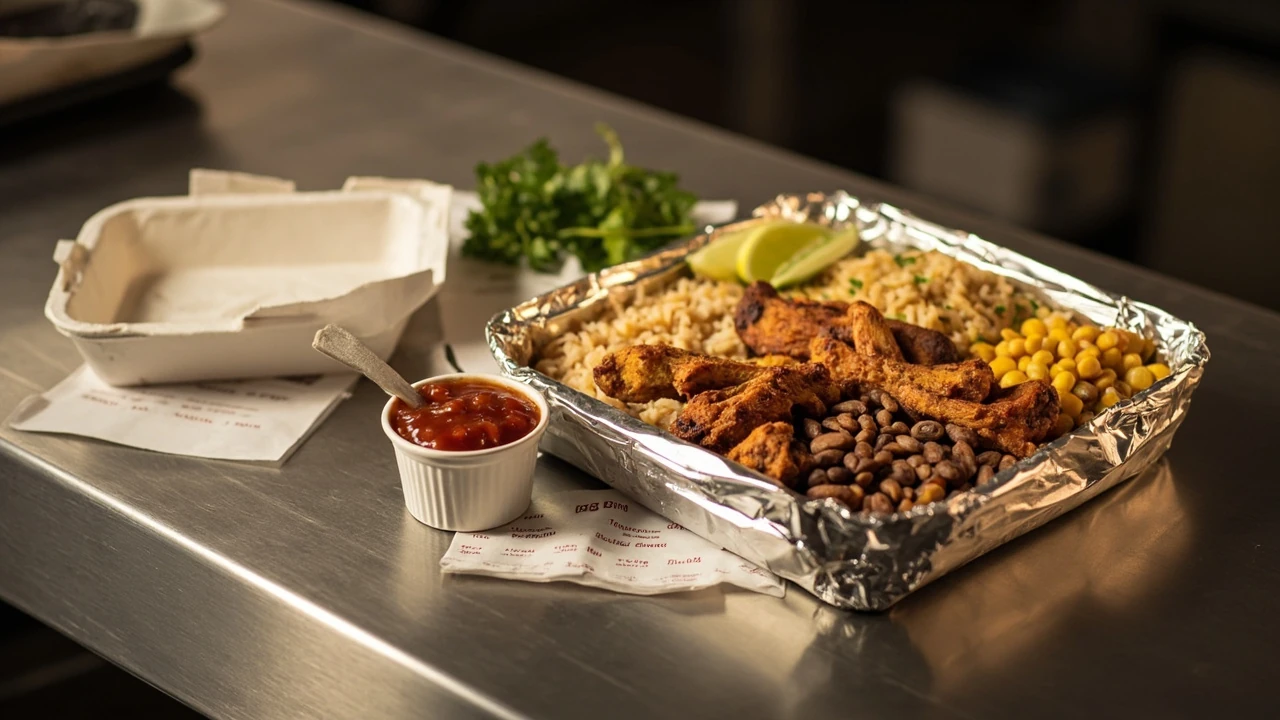
Mexican food delivery starts with a menu that travels
A burrito that tastes excellent at the pass rarely tastes the same by the time it reaches a customer’s door. Steam from the rice condenses inside a closed clamshell, the tortilla softens, the crema weeps, and the guacamole browns within twenty minutes. Mexican food delivery is less a logistics problem and more a menu-design problem: the dishes that survive transit are the ones the kitchen engineered for it in the first place.
This guide is written for operators and brand leads who already run, or want to run, a Mexican concept through delivery. It covers how to choose which dishes belong on the delivery menu, how to price them so the contribution margin stays intact after packaging, platform fees, and refunds, and how to keep the food honest between the kitchen and the front door. It is also useful for ghost kitchens and virtual brands that test a Mexican lineup as a second revenue stream.
Decide which dishes belong on a delivery menu
The fastest way to damage a Mexican concept’s delivery reputation is to publish the entire dine-in menu and let the kitchen improvise. Dishes that look beautiful on a plate can be a liability once they sit in a bag for thirty minutes. A short, deliberate delivery menu almost always outperforms a long one copied from the dining room.
Use a simple three-question test for every item before it goes online:
- Does the dish hold its structure, temperature, and visual appeal after at least twenty-five minutes in a closed container?
- Can the customer reheat or finish it at home with clear, simple steps?
- Is the food safe to eat after the typical delivery window, including the time the courier waits and the time food sits on a counter or table?
If the answer to any of those is no, the dish should either be re-engineered for delivery or left off the channel. Sauces that weep, fragile garnishes, and assembled wet dishes are the usual casualties.
Match each dish to a delivery format
Different Mexican formats tolerate delivery very differently. Knowing where a dish sits on the spectrum is the single biggest lever an operator has.
| Format | Travels well | Needs work for delivery | Avoid for delivery |
|---|---|---|---|
| Birria, carnitas, al pastor | Yes — reheat, dip, or crisp at home | Crisp tortillas on the side, sauce in a sealed cup | — |
| Burritos | Yes when wrapped tightly | Wrap in foil first, then paper, to keep exterior texture | Wet burritos with soupy fillings |
| Tacos (street style) | Limited | Send tortillas and fillings separately, or use a taco kit | Pre-assembled soft tacos with raw onion and cilantro |
| Enchiladas | Yes in a covered tray | Sauce poured just before the courier arrives, cheese on top | — |
| Quesadillas | Yes | Pack salsa and crema in cups, cut in half at the kitchen | Overstuffed quesadillas that fall apart on cut |
| Soups and stews (pozole, caldo tlalpeño) | Yes in a sealed, leak-proof container | Send garnishes separately | Anything that depends on a fresh-made tortilla at the moment of service |
| Ceviche and raw seafood | Risky | Limit delivery radius, prioritize fast couriers, add ice pack | Long-distance delivery without temperature control |
| Desserts (tres leches, flan) | Mostly no | Use a stable base, like chocolate-dipped churros or cookies | Soggy tres leches that collapse in transit |
Re-engineering a dish for delivery is rarely about a new recipe. It is usually about the order in which components are packed, the vessel they travel in, and the instructions the customer gets when they open the bag.
Price the delivery menu so the channel actually pays
Delivery is a separate P&L line. The same enchilada plate sold at the counter has a different cost structure when it goes out through an app. Platform commissions, packaging, courier markups where applicable, and refund exposure all sit on top of food cost. Operators who refuse to recalculate end up discounting their own dining room without realizing it.
A useful exercise is to compute the channel contribution margin for each dish. The math does not need to be elaborate, but it has to be honest.
| Line item | How to estimate | Why it matters |
|---|---|---|
| Food cost per dish | Recipe card cost, including delivery-only garnishes and cup sauces | Direct hit to gross margin |
| Packaging cost | Per-order variable cost of clamshells, cups, foil, labels, bag | Often hidden until someone tallies the month’s worth of stock |
| Platform commission | Percentage of the menu price, set by the channel | Major marketplaces commonly take 15 to 30 percent |
| Payment processing | Percentage of the order plus a small fixed fee | Small per order but compounds with volume |
| Refund and remake rate | Historical rate, applied as a cost per order | The single biggest silent margin leak in delivery |
| Labor for packing | Seconds per order converted to a labor rate | Complex packaging and finishing work takes real minutes |
Once those numbers are visible, a few decisions get easier. A dish with thin food cost and minimal packaging can absorb a higher commission. A dish that needs three containers and a custom insert probably needs a small delivery-only upcharge, or it gets pulled. A menu that is mostly mid-margin, mid-complexity items can stay roughly at the same price as dine-in, with a small delivery fee or minimum order to protect the average ticket.
Operators who want a deeper framework on protecting margin without scaring guests off can rework the menu alongside the pricing pass, the same logic that drives effective menu pricing strategies that protect margin without losing guests.
Packaging is part of the recipe
Packaging for Mexican food delivery has to solve three problems at once: keep heat in, keep liquid in, and let the customer finish the dish at home without a fight. A clamshell that looks great in a flat-lay photograph is not necessarily the right tool.
The basics that hold up across most concepts:
- Hot proteins, rice, and beans go in rigid, vented or sealed containers, depending on whether the customer is meant to reheat in the oven or the microwave.
- Wet components (salsa, crema, guacamole, consomé) go in lidded cups, packed on the side, never poured on top.
- Tortillas and tostadas go in paper sleeves or between two pieces of parchment so steam does not turn them into a soft disc.
- Citrus, herbs, and other fresh garnishes go in small vented cups with a dry paper towel to absorb condensation.
- Cutlery, napkins, and reheating instructions go in a separate paper sleeve so they do not get damp.
One underestimated detail is the bag. A simple paper bag with a sturdy base and a fold-top closure keeps the order upright and gives the courier one handle. Tall bags that force containers to lie on their side are a common cause of spilled consomé and rearranged plates. A flat, labeled sticker on top of each container with the dish name and any reheat instructions also reduces the support load from “I don’t know how to finish this” messages.
Write reheating and finishing instructions that customers will actually follow
Most delivery complaints are not about the food. They are about a gap between the cook’s expectation and the customer’s experience of finishing the dish at home. A small printed or in-app card can close that gap without changing the recipe. Readers who want more background can use the XLNT Foods as a reference while reviewing this point.
The card should not be a marketing piece. It should be a short set of practical lines for each dish, written the way a line cook would speak to a friend. For a typical birria order, the instructions might be: “Open the consomé cup carefully, pour the birria into a hot pan for 2 minutes, dip the taco, add onion, cilantro, lime.” For a tray of enchiladas: “Cover with foil, 375°F for 12 minutes. Finish with crema and onion from the cups.”
Where a dish requires a specific last-minute step, that step should be visible on the container label as well, because the printed card is the first thing a customer throws away. Visual cues — small icons, color dots for “this goes in the oven” — also help when a household is sharing food and not everyone reads the card.
Choose the right delivery channels without losing your brand
Most Mexican concepts will end up using a mix of channels: a direct ordering site or app, the major third-party marketplaces, and possibly a ghost-kitchen or virtual-brand partner. Each one has tradeoffs in margin, customer data, and brand control.
| Channel | Margin impact | Customer relationship | Best fit |
|---|---|---|---|
| Direct (own site, own app, in-house couriers) | Highest margin once volume supports fixed costs | Owned, with email and order history | Established concepts with repeat customers |
| Major third-party marketplace | Lower margin due to commission | Rented, mediated through the platform | Acquisition, new neighborhoods, off-peak hours |
| Hybrid (own site for regulars, marketplace for new orders) | Blended | Strong on regulars, rented on new | Most growing concepts |
| Ghost kitchen or virtual brand partner | Variable; depends on rent and rev share | Often belongs to the partner | Testing a new cuisine or neighborhood with low capex |
Two principles tend to hold. First, never let the marketplace be the only place a customer can find you; the cost of a relationship rented forever is too high. Second, do not run a separate, weaker menu on your own site just because you can charge slightly more — the brand damage is bigger than the small margin gain. The same logic that supports a memorable restaurant identity applies to the digital menu, not just the dining room.
Photography that sells the order before the bag opens
Delivery customers do not see the restaurant. They see a thumbnail, a name, a price, and an estimated time. Photography is the deciding factor for a large share of orders, and the standard across marketplaces is high.
For Mexican food, the photos that convert tend to share a few traits. They show the finished, plated dish the way a customer would serve it at home — not a tray of foil. They show textures that imply freshness: a glossy char on the carne asada, beads of crema, a scatter of cilantro. They keep the composition simple, because the thumbnail is small and a busy plate disappears at that size.
A useful test is to look at each marketplace thumbnail on a phone, not on a laptop monitor, and ask whether the dish is recognizable at that size. If the answer is no, the photo is doing less work than it should. A closer look at the production side is worth it; the same visual logic that drives photography that actually sells the dish applies even more in delivery, where there is no server to fill the gap.
Run the kitchen like a fulfillment line, not a dining room
Delivery throughput looks very different from dining-room service. A line that produces a beautiful plate for a server at the pass can be slow when the same dish has to be packed into three containers, sealed, labeled, and matched with sides. The order ticket that an expo reads has to change.
Useful adjustments:
- Set a “delivery pack” station next to the hot line, with cups, lids, labels, bags, and a small scale for soupy items.
- Time every menu item for both dine-in and delivery, then tune prep so the dish can hit the bag by a defined internal deadline — usually inside ten minutes of the order firing.
- Move sauces, garnishes, and finishing components out of the cook’s hands and into the pack station, so the line is not bottlenecked by small assembly work.
- Pre-portion high-volume sides (rice, beans, fajita veggies) into delivery-sized containers during prep, so the line is not scooping at peak.
- Use a label printer at the pack station to reduce errors in long or modified orders.
Where the concept runs multiple channels, a small change in process can free up real capacity. A good example is the same principle behind turning one signature product into a month of content: pick the work that produces the most value, standardize it, and stop reinventing it every shift.
Food safety, allergens, and the temperature problem
Delivery adds time and uncontrolled environments to a chain that the dining room manages tightly. Hot food cools in the bag, cold food warms up, and the window where a dish is at its best narrows. The kitchen has to extend that window on both ends. As a separate reference, the beach-based freezer staple xlnt foods now adds source-specific context to this discussion.
For hot dishes, the practical tools are insulated bags, a pack that holds air space around the hot container, and packaging that traps steam. For cold dishes — ceviche, cold soups, aguachiles, room-temperature salads — a frozen gel pack in a separate sleeve is cheap insurance. The pack station should also have a probe thermometer so the team can spot-check that hot items are leaving above 140°F and that the cold line is staying below 41°F before sealing.
Allergens and dietary notes deserve a real policy, not a checkbox. Common items in a Mexican kitchen — dairy in crema and queso, gluten in flour tortillas, nuts in mole and pipian — need to be tracked from prep to pack. A small printed card on the bag listing the major allergens present, especially for modified dishes, is a small change that pays off when a customer with a serious allergy orders.
Track the metrics that actually move delivery
Most of the dashboards that come with delivery platforms are too broad. The numbers that change behavior are usually a smaller set, and the operator should set their own targets against them.
- On-time prep rate: percent of orders handed off inside the platform’s expected window.
- Pack accuracy: percent of orders with the right items, sides, and modifications.
- Refund and remake rate: percent of orders that produce a complaint or a remake.
- Average ticket by channel, and contribution margin per ticket after fees and packaging.
- Repeat-order rate: percent of customers who order a second time within 60 days.
- Time-in-bag: the actual elapsed time between seal and courier pickup, where the platform exposes it.
The right place to start is the one with the biggest gap. A kitchen with a strong on-time prep rate but a high remake rate is leaving money in packaging and instructions. A kitchen with low remake rate but long prep times is leaving money on the table during peak hours. The metrics give the team a way to argue about priorities without opinion taking the place of evidence.
Build a delivery feedback loop with the front line
Delivery is unusual in that the customer never tells the chef what they thought. The complaint goes to the platform, the refund happens automatically, and the kitchen never sees the meal that came back. Closing that loop is one of the most useful things a small operator can do.
A weekly fifteen-minute review of the past seven days of orders, complaints, and remakes, with the line cooks, expo, and pack lead in the room, tends to surface the same handful of fixes over and over: a sauce that leaks, a container that is too small, a dish that needs a different finishing step at home. Most of those fixes are cheap, and a few of them will show up in the metrics within a week.
Turn delivery data into a content engine
Delivery also generates a steady stream of useful signals. The top sellers, the modifier patterns, the zip codes that order most often, the dishes that get reordered within thirty days — all of that is content raw material. A dish that has a high reorder rate is a candidate for a blog post, a short video, a chef story, a bundle promotion. A modifier that customers keep adding (extra guacamole, double cheese, mild salsa on the side) is a chance to either formalize it as a menu item or surface it in the description.
The trick is to make the loop a habit, not a project. A short monthly review of delivery data, paired with one piece of content per month on what the numbers are saying, is enough to keep the brand fresh without overwhelming the team.
Plan for the platform tradeoffs before you sign
Most delivery platforms offer reach, marketing spend, and operational tools in exchange for commission, data, and pricing rules. Reading the commercial terms before the launch rush is worth the time, because the terms shape the menu and the brand more than the operator expects.
Three clauses tend to matter most. First, the commission structure: is it a flat percentage, or are there marketing or priority fees layered on top. Second, the price-parity clause: whether the menu price on the platform has to match the price on the operator’s own site, and whether the operator can run promos on one channel and not another. Third, the data clause: whether the operator receives the customer’s email or only the order record, and whether the operator can contact the customer outside the platform.
None of these are dealbreakers on their own, but they change the math, and they should be set on purpose, not discovered after the first month of statements.
Common mistakes that quietly drain delivery margins
Most Mexican concepts that struggle with delivery do so for the same handful of reasons. They are easy to fix once they are named.
- Publishing the full dine-in menu without a delivery-engineering pass.
- Underestimating packaging cost, especially when custom or branded containers are introduced.
- Letting the marketplace menu price drift below the in-house price without adjusting portions or components.
- Treating every third-party complaint as a one-off, instead of looking for the pattern.
- Adding more menu items to chase algorithmic promotion, instead of tightening the existing lineup.
- Ignoring the courier handoff: a kitchen that hands orders over a crowded bar, in a confusing order, in mismatched bags, adds time to every delivery and refund risk to every order.
Each one of these is small in isolation. Together, they are the difference between a delivery channel that funds growth and a delivery channel that quietly subsidizes a marketing bill.
A short checklist before launch
Before a Mexican concept goes live on delivery, a few items are worth working through, in order. They are not optional, and skipping any of them tends to show up in the first month’s refund numbers.
- Decide which dishes make the cut, using the travel-and-finishing test.
- Re-cost each dish for delivery, including packaging and channel fees.
- Set up the pack station with every container, cup, label, and bag pre-positioned for the top ten items.
- Write reheating and finishing instructions for every dish, and print them in a small card or include them in the order screen.
- Photograph each dish for marketplace and in-house use, with a focus on thumbnail readability.
- Set internal targets for prep time, pack accuracy, remake rate, and average ticket.
- Schedule the first weekly review before launch, with the team that will run it.
Frequently asked questions
What is the best Mexican food for delivery?
Burritos, enchiladas, quesadillas, birria with consomé on the side, and grilled meat trays travel well because they reheat cleanly and the components can be packed separately. Soups, rice, and beans hold heat in sealed containers. Pre-assembled soft tacos, raw seafood ceviche, and tres leches cake are the dishes that usually need rework before they go on a delivery menu.
How do you keep Mexican food hot during delivery?
Use rigid, sealed containers, pack hot food last so it sits in the bag the shortest time, and use an insulated delivery bag with little air space. Keep wet components in separate cups so steam does not soak the rest of the meal. Aim to hand off to the courier inside ten minutes of the order firing, and avoid leaving the bag on a cold surface while the courier is en route.
How should a Mexican restaurant price its delivery menu?
Start with the food cost, then add packaging, platform commission, payment processing, and a small reserve for remakes. Compare the contribution margin to the dine-in equivalent and decide whether the dish needs a small upcharge, a portion adjustment, or to be pulled from the channel. A channel-level P&L is more useful than per-item pricing in isolation.
What packaging is best for Mexican food delivery?
Use rigid clamshells for burritos, enchiladas, and rice bowls; lidded cups for salsas, crema, guacamole, and consomé; paper sleeves for tortillas and tostadas; and a flat-bottom paper bag with a sturdy handle. Avoid tall, narrow bags that force containers on their side, and keep cutlery, napkins, and reheating cards in a separate dry sleeve.
How do you stop tortillas from getting soggy in delivery?
Pack tortillas in paper sleeves or between sheets of parchment so steam can escape, and keep wet fillings in sealed cups on the side. For burritos, wrap tightly in foil first to hold the shape, then in a paper sleeve to keep the outside dry. For street-style tacos, ship the components separately and let the customer assemble at home.
Should a Mexican restaurant use third-party delivery or its own drivers?
Most growing Mexican concepts use both. Third-party marketplaces are useful for acquisition, off-peak hours, and reaching new neighborhoods, while an in-house or direct channel usually carries the best margin on regulars. The right balance depends on order volume, courier availability, and how much control the operator wants over the customer relationship.
How do you reduce delivery refunds for Mexican food?
Track remake reasons weekly, not monthly, and look for the same patterns. The most common causes are missing items, wrong modifications, sauce spills, and dishes that do not reheat well at home. Tighten the pack checklist, ship wet components in cups, and add a short reheating card; the refund rate usually drops within a couple of weeks.
Can a ghost kitchen run a Mexican delivery concept?
Yes, and Mexican formats are well suited to ghost kitchens because the dishes travel well, the menu is easy to engineer for delivery, and the equipment footprint is moderate. The tradeoffs are brand control and customer data, which usually sit with the platform partner. A ghost kitchen is a strong way to test a new neighborhood or a second cuisine before committing to a full restaurant build.
How long should a Mexican delivery order take from order to door?
Most cities target between 30 and 45 minutes total, with the kitchen responsible for the first ten minutes. Anything beyond about 50 minutes is when refund risk starts to climb, especially for hot dishes and anything that depends on a finishing step at home. Set the prep target inside ten minutes and treat the rest of the window as a courier and routing problem.
What menu items should be avoided entirely on Mexican food delivery?
Dishes that depend on a last-minute, made-to-order finish, fragile garnishes, raw seafood for long-distance orders, and any item that does not reheat or re-assemble cleanly at home. Pre-assembled soft tacos, fresh ceviche shipped across town, tres leches cake in a tall container, and wet burritos with soupy fillings are the usual candidates for removal or rework.
Useful next steps for a Mexican food delivery program
A delivery program improves fastest when it is treated as a small operating system with its own menu, its own pricing, its own pack station, and its own review cadence. Start with the short delivery menu, the recalculated contribution margin, and the pack station; everything else — photography, content, courier handoff, the weekly review — gets easier once those three are in place. If the operation is just getting started, a useful first move is a short audit of the existing site and the existing menu to see what can be repurposed and what has to be built; a focused restaurant website audit covers most of that in one sitting. A second useful move is to pick a single, well-engineered dish as the anchor and build outward from there, the same way an operator would build a content program around a specific, narrow point of view rather than a generic Mexican menu. The discipline that produces a strong delivery channel is the same discipline that produces a strong brand: choose carefully, price honestly, ship the food in the condition you would want to receive it, and let the numbers tell you what to change next.