Weleda Skin Food: what it is, who it suits, and how to use it
A gardener in Devon rubs a pea of yellow cream into cracked knuckles before heading back outside. A makeup artist in Seoul presses the same product under a model’s cheekbones to get a lit-from-within glow under hot studio lights. A new parent in Berlin smooths a thin layer onto a toddler’s wind-chapped cheeks in February. Weleda’s Skin Food sits in all three of those bathrooms, and it has done a version of that job since 1926.
This article is a practical, evidence-aware guide to one specific product: the original weleda skin food in its small gold tin. The aim is to help you decide whether it belongs in your routine, how to apply it so it earns its reputation, and what to do if your skin type is the one it does not love.
You will find sections on the formulation, the texture, the people who tend to love it, the people who tend to find it too much, and a set of practical routines for face, lips, hands, body, and even hair. There is a comparison table against its lighter sibling Skin Food Light, a breakdown of the key plant ingredients, and a frequently asked questions section at the end.
The one-sentence answer
Weleda Skin Food is a rich, water-light, plant-based balm designed to protect, soften, and support very dry, rough, or weather-stressed skin, and it works best when you use a small amount on targeted areas rather than as a broad daily moisturiser for everyone.
What weleda skin food actually is
Skin Food is a multipurpose skin balm sold by the Swiss-German natural cosmetics company Weleda, founded in 1921 and closely associated with anthroposophic medicine and biodynamic ingredient sourcing. The original Skin Food formula was created in 1926, which makes it one of the longest-running face and body products in the natural cosmetics market. The product is sold in several sizes and formats, but the most recognisable version is the 30 ml and 75 ml gold tin with the green leaf logo.
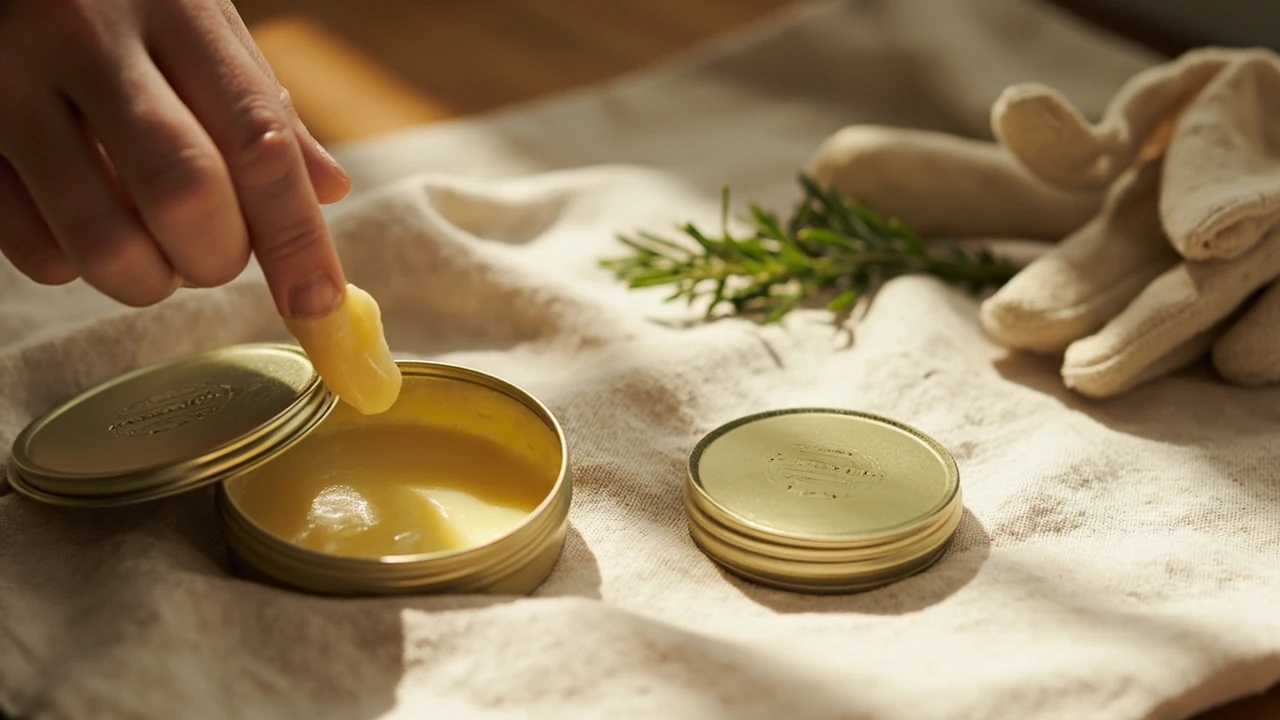
The texture is closer to a soft balm than a lotion. A finger pressed into the surface leaves a small well. The colour is a soft mustard yellow from sunflower oil and the calendula, chamomile, and pansy extracts in the formula. The scent is herbal and slightly sweet, with the warm grain note of sunflower and a touch of citrus from the essential oils. It is not fragrance-free in the clinical sense, but it is not heavily perfumed either.
Weleda also produces a lighter product called Skin Food Light, which is an emulsion rather than a balm. Where the original is roughly 80 percent lipids and has a water-light internal phase, the Light version uses water and lighter plant oils so it absorbs more quickly. The two are not interchangeable, and the differences are laid out in the comparison table further down.
The product family at a glance
- Skin Food original (gold tin): rich balm for very dry, rough, or weather-stressed skin, used on face, lips, hands, feet, elbows, and anywhere that needs an occlusive layer.
- Skin Food Light (tube): lighter emulsion for normal to dry skin that wants the plant actives of Skin Food without the heavier feel.
- Skin Food Lip Butter (tin): a softer, more occlusive version in a small round tin, designed specifically for lips.
- Skin Food Body Butter (tube): a body lotion version with a thinner texture, intended for full-body use after a shower.
Inside the tin: the key ingredients
The ingredient list is a useful document in itself. Reading it is the fastest way to understand what you are putting on your skin and what the product is actually doing. The current formulation, listed in INCI on the pack, places a small number of plant ingredients high in the list, which matters because cosmetics ingredients are listed in descending order of weight.
The plant extracts
- Helianthus annuus (sunflower) seed oil: a base oil rich in linoleic acid and vitamin E. It forms the main lipid phase and gives the balm its softening, conditioning feel.
- Calendula officinalis (marigold) extract: calendula has a long history of use in skin care for its soothing, calming properties on irritated or chapped skin.
- Chamomilla recutita (matricaria) flower extract: chamomile is widely used to support sensitive, reactive, or mildly inflamed skin.
- Viola tricolor (pansy) extract: traditionally used in European herbal skin care for its association with dry, flaky, or easily irritated skin.
- Rosmarinus officinalis (rosemary) leaf extract: functions partly as an antioxidant in the oil phase and contributes to the herbal scent.
The supporting ingredients
- Lanolin: a waxy substance derived from sheep’s wool, used for its emollient and skin-softening effect and partly responsible for the rich, occlusive feel of the balm.
- Beeswax (Cera alba): gives the balm its structure and creates a light protective film on the skin.
- Glyceryl stearate and other mild emulsifiers: help the balm blend with the small amount of water present in the formula and the water on the skin’s surface.
- A blend of natural essential oils for fragrance: including sweet orange and other citrus notes, contributing to the characteristic scent.
What the ingredient list does not contain
Weleda Skin Food does not list synthetic fragrance, parabens, silicones, mineral oil, or polyethylene glycols (PEGs) on its current ingredient declaration. It is certified as a natural cosmetic by Natrue, a European standard that restricts the use of certain synthetic ingredients and requires transparent labelling. The balm is also vegetarian in most markets, though the lanolin and beeswax mean it is not vegan.
How the formulation works on your skin
Three things happen when you apply a thin layer of weleda skin food to clean, slightly damp skin. First, the sunflower and lanolin lipids fill in rough patches and soften the upper layer of the stratum corneum, the dead cell layer that gives dry skin its rough feel. Second, the beeswax and lanolin form a light occlusive film that reduces transepidermal water loss, which is the technical way of saying that moisture already in the skin is less likely to evaporate in cold or dry air. Third, the calendula, chamomile, and pansy extracts sit on the surface and, according to Weleda’s own literature, support the skin’s own regenerative processes.
The result is not a quick-absorbing water-based moisturiser. It is a barrier-supporting balm that does its best work overnight, in cold weather, on the worst-behaved patches of skin, or as a targeted layer under or over other products.
Why texture matters more than the ingredient list
A lot of disappointment with Skin Food comes from treating it as a day cream. The product is not engineered to sink into combination or oily skin without a trace. The ointment-style feel is the point. If you want something that vanishes, the Light version or a regular face cream is a better match. If you want something that softens cracked heels in three nights or shields hands from dishwater, the original is exactly the right tool.
Who weleda skin food suits, and who should be cautious
Every cosmetic product has a target user. Skin Food’s target user is on the dry, dehydrated, or environmentally stressed end of the spectrum. Used as intended, it tends to work well for the following groups, and less well for others.
| Skin type or concern | How Skin Food usually performs | Practical guidance |
|---|---|---|
| Very dry or dehydrated face | Excellent as a targeted night balm or 20-minute mask | Apply a thin layer on damp skin two or three nights a week |
| Mature skin in cold climates | Excellent for softening and protecting against wind chill | Use around the eyes, mouth, and neck in winter |
| Cracked hands, heels, elbows | Excellent as an overnight occlusive treatment | Apply generously under cotton gloves or socks |
| Lips in dry or cold weather | Very good, though the original tin can feel heavy | Consider Skin Food Lip Butter for daily carry |
| Combination or oily face skin | Often too rich; can feel greasy or trigger breakouts | Use only on dry patches, or switch to Skin Food Light |
| Acne-prone or congestion-prone skin | Use with care; lanolin and beeswax can be comedogenic for some | Patch test on the jawline for a week before broader use |
| Sensitive skin, including some eczema | Often well tolerated, but not a treatment for active flares | Avoid applying to broken, weeping, or infected skin |
| Fragrance-sensitive skin | Contains natural essential oils for scent | Patch test on the inner arm for 24 hours first |
Specific situations where it shines
- Winter commuting: a thin layer on the cheeks, nose, and chin before going out in cold, windy weather.
- Post-flight skin: the dry cabin air of long flights strips moisture from the face and hands. A small tin in your carry-on is light and effective.
- After manual work: gardening, dishwashing, cleaning, or any activity that punishes the hands.
- Makeup base: some makeup artists use a tiny amount of Skin Food under foundation on dry patches to create a dewy finish. It is too rich for full-face use as a primer in most cases.
How to use weleda skin food without overdoing it
The most common mistake with Skin Food is using too much of it, too often, in the wrong place. The product is concentrated and a little goes a long way. The second most common mistake is applying it to dry skin rather than slightly damp skin, which means you are not sealing in any water and the balm can sit on the surface.
On the face
- Cleanse and tone as usual.
- Leave the skin damp. Do not pat fully dry.
- Warm a tiny amount (about a third of a pea) between clean fingertips until it softens.
- Press, do not rub, into the areas that feel tight: cheeks, around the eyes, mouth, and forehead.
- Wait three to five minutes before applying sunscreen or makeup on top.
For an at-home mask, apply a thin visible layer to clean, slightly damp skin, leave it for fifteen to twenty minutes, then tissue off the excess. The skin underneath should feel soft, not greasy.
On the lips
Press a fingertip into the surface to lift a tiny amount, warm it between two fingers, then press it onto the lips. The original tin is safe for lips but tastes strongly of the herbal scent. If that bothers you, the dedicated Skin Food Lip Butter is the same idea in a softer, more lip-friendly format.
On the hands
Use a small amount after every wash and a generous layer at night under cotton gloves if your hands are cracked or working hard. The balm is also popular as a cuticle softener; a small dab massaged into the nail bed at night keeps the cuticles smooth.
On the body, feet, and elbows
Skin Food behaves like a rich body balm. Use it on rough spots rather than all over, because most bodies do not need an 80 percent lipid product from the neck down. After a shower on damp skin is the most efficient moment. For cracked heels, apply a generous layer, cover with cotton socks, and leave overnight.
On the hair
A small amount worked through the ends of very dry, coarse, or curly hair can smooth frizz and add shine. The texture is heavy, so a fingertip’s worth is usually enough. Avoid the roots unless your scalp is genuinely very dry.
Weleda Skin Food vs Skin Food Light: which one to choose
The original and the Light are often confused because they share branding and most of the key plant ingredients. They are different enough that the choice between them is one of the most common practical decisions a buyer makes. The table below sets out the differences in plain terms.
| Attribute | Skin Food original (gold tin) | Skin Food Light (tube) |
|---|---|---|
| Format | Soft balm in a tin | Lightweight emulsion in a tube |
| Texture | Rich, dense, slow to absorb | Light, smooth, absorbs quickly |
| Best for | Very dry, rough, or weather-stressed skin | Normal to dry skin that wants daily hydration |
| Common uses | Night balm, lip balm, hand treatment, targeted dry patches | Day cream, light face moisturiser, post-cleansing layer |
| Finish on skin | Visible, slightly dewy, sits on the surface | Matte to natural, sinks in |
| Travel-friendly | Yes, in a small 30 ml tin; not the largest size | Yes, the tube format is leak-resistant |
| Feels on oily or acne-prone skin | Often too heavy | Usually tolerated in normal use |
If you are unsure which to buy, a useful rule is to start with Skin Food Light for daily face use, and add the original tin as a targeted treatment for very dry patches, lips, hands, and night-time protection in winter. Many long-term users keep both.
Texture, scent, and packaging in real life
The 30 ml tin is roughly the size of a small matchbox and weighs about 60 g filled. It fits easily in a jacket pocket, a handbag, or a carry-on liquids bag if the airport is in a generous mood, though the gold tin and its oily contents do not technically fall under the standard liquids rule. The lid is screw-on, which makes it more secure than a snap-on pot but also slightly fiddly to open one-handed.
The 75 ml tin is the same product in a larger format and is better value per gram if you know you will use it. Both tins are made of metal and are fully recyclable, which is one of the more practical environmental wins of the product. The downside is that you have to dip clean fingers into the tin each time, which is less hygienic than a pump or tube for shared use.
The scent divides people. Lovers describe it as warm, herbal, and comforting, the way a real pharmacy smells. Sensitive users sometimes find the citrus and herbal notes too strong, particularly on the face. There is no fragrance-free version of the original tin. If scent is a deal-breaker, the Light version is slightly milder, and the Lip Butter is the most neutral of the family.
How weleda skin food fits into a small, realistic routine
The biggest advantage of a multipurpose product like Skin Food is that it can replace three or four single-purpose items in a bag or on a bathroom shelf. The most common mistake is to keep adding it on top of an existing full routine, which is too much for most faces. The routine below assumes you want to use Skin Food as a real part of your day, not as a curiosity.
Morning routine for dry or mature skin in winter
- Cleanse with a gentle, low-foam cleanser.
- Spritz a hydrating toner or simply leave the skin damp.
- Apply a serum if you use one (vitamin C, peptide, or hyaluronic acid are all common).
- Take a third of a pea of Skin Food, warm between fingertips, and press into the cheeks, eye area, and mouth.
- Wait three minutes, then apply sunscreen on top.
Night routine for very dry or weather-stressed skin
- Cleanse thoroughly, including any sunscreen and makeup from the day.
- Leave the skin damp.
- Apply actives if you use them (retinoids, exfoliating acids), and wait ten minutes.
- Apply a thin layer of Skin Food over the face, or only over the dry areas if you have combination skin.
- Sleep on a cotton pillowcase; the balm can transfer onto synthetics.
Hand and foot reset once a week
- Wash hands or soak feet in warm water for a few minutes.
- Pat dry, leaving the skin slightly damp.
- Apply a generous layer of Skin Food to the hands or feet.
- Cover with cotton gloves or socks.
- Leave on overnight; wash off any heavy residue in the morning.
Common mistakes when using weleda skin food
- Using it as a broad day cream on oily skin. The lipids and beeswax can sit on top of the skin and contribute to congestion in the T-zone.
- Applying it to completely dry skin. Balms seal whatever is on the surface. If the surface is dry, you seal in dryness.
- Using too much. A standard face application is a third of a pea, not a scoop. The product is concentrated.
- Skipping a patch test on sensitive or reactive skin. Plant extracts and essential oils are gentle for most people, but not all.
- Storing the tin in a hot bathroom. The balm softens further in heat and the texture can become messy. A cool, dry shelf is better.
- Expecting a matte finish. The product is designed to leave a light sheen. That is part of how it works.
Side effects, allergies, and what to watch for
Weleda Skin Food is a cosmetic, not a medicine, and is not licensed to treat skin conditions such as eczema, psoriasis, or dermatitis. For most users with healthy skin it is well tolerated, but there are a few situations in which caution is warranted.
- Lanolin sensitivity: lanolin is a known contact allergen for a small percentage of people. If you have reacted to wool-based products in the past, patch test before broader use.
- Essential oil sensitivity: the formula is scented with natural essential oils including citrus notes. If you react to those, the Light version or an unscented alternative is a better fit.
- Active skin conditions: do not apply to broken, infected, or actively flaring skin. Use the appropriate medicated treatment first and Skin Food only on healed or surrounding skin.
- Eye area: the original tin is safe around the eyes for most users, but keep it out of the eyes themselves. If the product stings on application, rinse with water and avoid the area.
If you have a known allergy to any of the ingredients listed on the pack, do not use the product. The current ingredient declaration on the actual packaging is the authoritative version of the formula, because formulations can change over time.
Price, value, and what to expect in real terms
Skin Food is positioned as a mid-market natural cosmetic. The 30 ml tin is the entry point, the 75 ml tin offers better value for regular users, and the 150 ml size is the most economical if you also use it on hands and feet. As with any product, prices vary by retailer, market, and promotional cycle, so a current local price check is more useful than a specific number here.
Value depends on how you use it. A pea-sized amount for the face means a 30 ml tin lasts many weeks even with daily use. If you use it for hands, lips, and targeted body patches as well, the larger sizes pay off quickly. The gold tin is also refillable in some markets, which reduces packaging waste and the per-use cost.
Where weleda skin food fits in a food business and hospitality context
This site is built around food, hospitality, and brand storytelling rather than personal skin care, and that matters for the angle of this article. Weleda Skin Food appears in restaurant and cafe life in a few predictable places, and the same habits that make a hospitality business work apply when you bring the product into your daily routine.
First, the people who work in kitchens and front-of-house roles put their hands through more punishment than almost any other profession. Hot water, citrus, detergents, paper towel, and cold walk-ins strip the skin. A small tin of Skin Food kept by the pass or the espresso machine is a low-cost way to support hands that work hard all day. Chefs who use it tend to apply a thin layer at the start of a break, not at the end of a shift, because that is when the skin can still absorb the balm before the next round of abrasion.
Second, the same specificity that makes a restaurant brand memorable is what makes a personal routine stick. Skin Food is not the only multipurpose balm on the market, but its plant-led ingredient list, its 1926 origin, and its recognisable gold tin give it a specific identity. People who choose it tend to choose it on purpose, not by accident.
Third, the product shows up in the kind of food and lifestyle photography that hospitality brands now rely on. A small open tin, a sprig of rosemary, a linen cloth, and a hand that has clearly been working is a familiar editorial image, and the same kind of intentional, specific visual storytelling that makes food marketing work applies to a personal care product on a chef’s shelf. The discipline is the same: name the thing, photograph it well, use it in the right place.
If you work in hospitality and want a single recommendation, keep a 30 ml tin by the kitchen door for hands and a separate small tin for lips. That is enough for most weeks and avoids overusing the product in places where a lighter hand cream would do.
Frequently asked questions
Is weleda skin food non-comedogenic?
Weleda does not market Skin Food as non-comedogenic, and the lanolin and beeswax in the formula can be comedogenic for some users, particularly on the face. If you are acne-prone, patch test on the jawline for a week before broader use, and consider the Light version for the face.
Can I use weleda skin food every day?
Many people do, but daily use is most appropriate for very dry, mature, or weather-stressed skin. For combination, oily, or acne-prone skin, daily all-over use is usually too much. Targeted daily use on dry patches, lips, or hands is a better pattern for most users.
Is weleda skin food safe during pregnancy?
The product is a cosmetic and does not contain ingredients that are restricted in pregnancy under most national guidelines. If you have specific concerns, your midwife or doctor is the right person to ask, especially if you have a history of skin reactions.
Is weleda skin food vegan?
The original Skin Food contains lanolin from sheep’s wool and beeswax, so it is not vegan. Some ranges in the wider Weleda catalogue are vegan, and the company marks those products clearly on the packaging.
What is the difference between Skin Food and Skin Food Light?
Skin Food is a rich balm in a gold tin, designed for very dry, rough, or weather-stressed skin and for targeted use. Skin Food Light is a lighter emulsion in a tube, designed as a daily face moisturiser for normal to dry skin. The plant ingredients are similar, but the textures and intended uses are different.
Can I use weleda skin food as a primer under makeup?
A tiny amount, pressed into very dry patches, can help foundation sit more smoothly on those areas. Using it as a full-face primer is usually too much for most skin types, and the dewy finish can interfere with the longevity of matte foundations. The Light version is a better daily option under makeup.
Does weleda skin food treat eczema or dermatitis?
No. Skin Food is a cosmetic moisturiser, not a treatment for skin conditions. It can support the comfort of dry, healed skin around an eczema flare, but active flares need appropriate medicated treatment from a healthcare professional.
How should I store the tin?
Keep the lid screwed on, in a cool, dry place, and out of direct sunlight. The balm softens in heat, so a bathroom shelf above a radiator is not ideal. A bedside table or a kitchen shelf away from the stove works well.
How long does a 30 ml tin last?
For face use only, with a third of a pea per application twice a day, a 30 ml tin usually lasts around two to three months. For multi-use on face, lips, and hands, expect closer to six to ten weeks.
Is weleda skin food worth the price compared with a regular hand cream?
If you only need a basic hand cream for everyday use, a cheaper product is a reasonable choice. If you want a multipurpose balm that also works on lips, face, feet, and elbows, Skin Food tends to earn its price over time, particularly in the larger tin sizes.