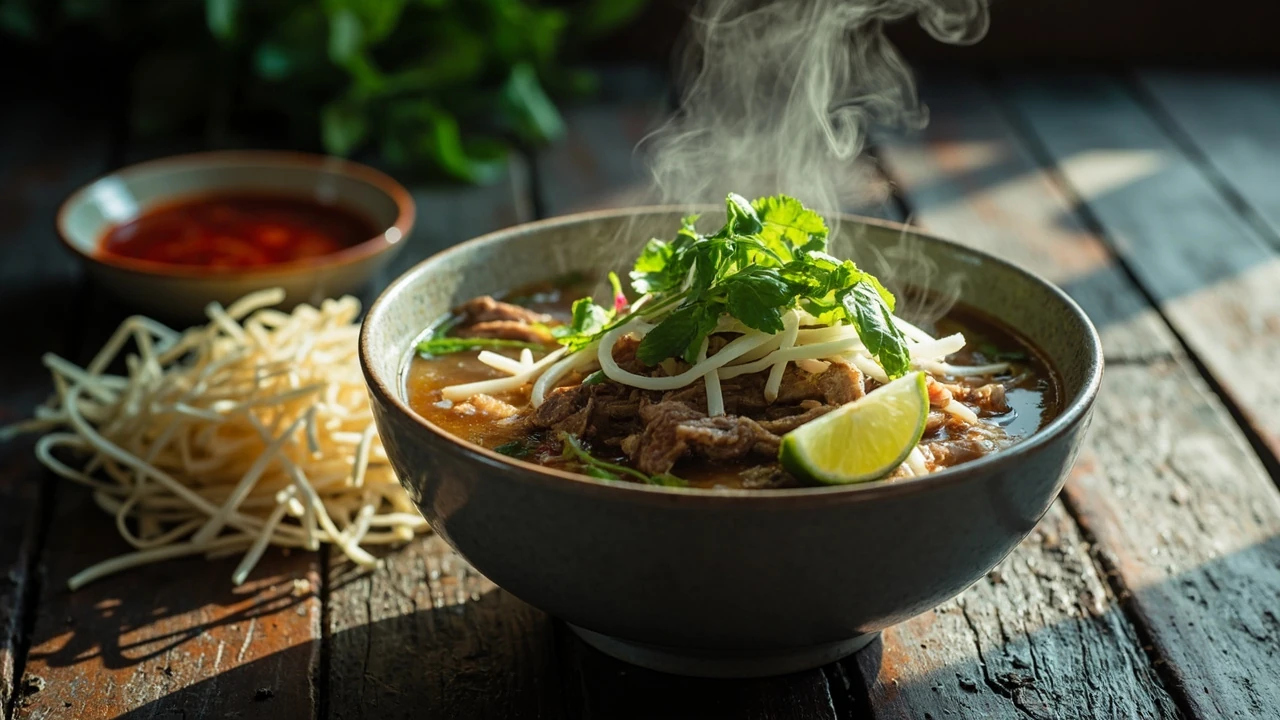
Vietnamese food: a practical guide to the dishes, flavors, and regions behind the cuisine
A bowl of pho, a crusty banh mi, a plate of com tam with grilled pork, and a small dish of nuoc cham can sit on the same table without competing for attention. That balance is the clearest way to understand Vietnamese food: a cuisine built on contrast, on broth against herb, on crisp bread against pickle, on rice against fish sauce. It is one of the most widely exported food traditions in Asia, yet it often gets flattened abroad into a few recognizable items. The reality on the ground is more textured, more regional, and more useful to know whether you are eating it, cooking it, or trying to describe it on a menu.
This guide walks through what actually defines the cuisine, which dishes and ingredients a reader should recognize first, how the three main regions shape flavor, and where the category fits in a broader Asian food context. The goal is practical: by the end, you should be able to read a Vietnamese menu, taste a dish with more context, and explain the cuisine to a guest without leaning on clichés.
What defines Vietnamese food at a structural level
Vietnamese cooking is usually described in five flavor notes: salty, sweet, sour, spicy, and bitter. In practice, the cuisine leans hardest on three of them: salty, sweet, and sour, with chili heat added at the table rather than cooked into the base. The salty note comes from nuoc mam (fish sauce) and shrimp paste. The sweet note is usually palm sugar, not refined white sugar. The sour note is built from lime, tamarind, green mango, or rice vinegar. This balance is the structural backbone of the cuisine, and it shows up in broth, dipping sauces, marinades, and pickles in roughly the same proportions.
Three structural habits run through most meals:
- Rice in some form anchors the meal. It appears as steamed rice, rice noodles (bun, pho, banh pho), rice paper (used for fresh rolls), rice flour crepes (banh xeo), or broken rice (com tam).
- Fresh herbs and raw vegetables are treated as part of the dish, not garnish. Common additions include Thai basil, Vietnamese mint (rau ram), perilla, cilantro, sawtooth herb, lettuce, cucumber, and bean sprouts.
- A condiment tray sits on the table. Nuoc cham (fish sauce, lime, sugar, garlic, chili) is the most common, but soy sauce, chili sauce, and hoisin are also standard, depending on the dish.
These habits mean the diner is part of the cooking process. You tear herbs into broth, you pour sauce over grilled meat, you wrap rolls in lettuce with mint. The dish is not finished when it leaves the kitchen.
The five flavor elements and how they show up in a real meal
Vietnamese cooks rarely rely on one dominant note. A typical plate of bun cha, for example, combines grilled pork (sweet, savory), rice noodles (neutral), pickled carrot and daikon (sour, sweet), fresh herbs (bitter, aromatic), and a dipping bowl of nuoc cham (salty, sour, sweet, spicy). The diner adjusts the balance by tearing more herb into the bowl or adding chili. That interactive structure is one reason the cuisine travels well: even when the kitchen is unfamiliar, the table can be set up so the dish still works.
| Flavor element | Common source | Where it appears in a meal |
|---|---|---|
| Salty | Fish sauce (nuoc mam), shrimp paste (mam tom), soy sauce, fermented bean | Broths, marinades, dipping sauces, stir-fries |
| Sweet | Palm sugar, rock sugar, coconut water, ripe fruit | Caramelized braises, dipping sauces, desserts |
| Sour | Lime, tamarind, green mango, rice vinegar, pickled vegetables | Dipping sauces, soups, pickles served with rich dishes |
| Spicy | Fresh chili, chili paste (tuong ot), black pepper | Added at the table, in southern versions of pho, in bun bo Hue |
| Bitter and aromatic | Fresh herbs, bitter melon, star anise, cinnamon, charred ginger | Garnishes, broth aromatics, balancing rich proteins |
Reading a Vietnamese menu becomes easier once the flavor balance is familiar. If a dish is heavy and grilled, look for a pickle or herb on the plate. If a dish is light and brothy, expect a chili sauce or lime on the side. The balance is engineered, not accidental.
The ingredients that carry the cuisine
A short list of ingredients explains most of the food. None of these are exotic by Vietnamese standards, but the combination is what gives the cuisine its profile.
- Fish sauce (nuoc mam): The single most important seasoning, made from fermented anchovies. Brands like Phu Quoc and Viet Huong are widely used, and a good sauce should smell savory, not harsh.
- Rice: Eaten at almost every meal, and ground into flour for noodles, paper, and crepes. The range of rice-based products is one reason rice allergy is a serious constraint in Vietnam.
- Fresh herbs: Often served whole on the plate rather than chopped. Perilla, fish mint, Vietnamese coriander, and Thai basil are not interchangeable with Italian or Mediterranean herbs.
- Lemongrass, galangal, and kaffir lime: The aromatic base of many curries and stir-fries, especially in the south.
- Star anise, cinnamon, and cloves: Used carefully in broths, especially pho, to give a slow, sweet warmth without sweetness.
- Shrimp paste (mam tom): A strong, fermented seasoning used in northern dishes such as bun dau and some dipping sauces.
- Palm sugar: Less sweet than white sugar, with a caramel edge that holds up in dipping sauces and braises.
When you taste a dish and try to place the region, scanning for these ingredients is a fast shortcut. Star anise and charred ginger point north. Coconut and lemongrass point south. Chili and shrimp paste signal a more aggressive flavor profile.
The regional map: north, central, and south
Vietnam stretches more than 1,600 kilometers from north to south, and the climate and history changed the food along the way. Three broad regional kitchens are the standard way to frame the cuisine, and while they blur at the borders, they are useful for understanding a menu.
Northern Vietnam: lighter, less sweet, more restraint
The north is colder, uses less sugar, and leans on broth-based dishes with restrained seasoning. Pho originated here, and the Hanoi version is typically clearer, with a narrower herb plate (mainly scallion, cilantro, and raw onion) compared to the south. Other northern signatures include bun cha (grilled pork with rice noodles and dipping sauce), banh cuon (steamed rice rolls), and cha ca (turmeric-dill fish cooked at the table). Northern food tends to be less spicy and more texturally subtle. Readers who want more background can use the Food overview as a reference while reviewing this point.
Central Vietnam: bolder, spicier, smaller portions
Central Vietnam, especially the former imperial capital of Hue, produces the country’s most aggressive flavors. Hue’s royal kitchen left a legacy of small, intricate dishes with strong chili, lemongrass, and fermented shrimp. Bun bo Hue is the region’s signature noodle soup, with a thicker, spicier broth than pho. Other central staples include banh khoai (crispy turmeric crepe), mi Quang (turmeric noodles with shrimp and pork), and com hen (clam rice). Central portions are smaller, and the food is usually served with more chili on the side.
Southern Vietnam: sweeter, more herbs, more tropical fruit
The south has more sugar, more coconut, and a longer growing season, so the herb plate is the largest of the three regions. Southern pho is sweeter, often served with a wider herb basket and a side of hoisin and chili sauce. Saigon-style banh mi, broken rice dishes (com tam), and fresh spring rolls (goi cuon) come from this region. Tropical fruits such as mango, dragon fruit, and rambutan are common in everyday meals and desserts.
| Region | Flavor profile | Signature dishes | Typical table setup |
|---|---|---|---|
| North (Hanoi, Red River Delta) | Light, savory, less sweet, restrained chili | Pho Hanoi, bun cha, banh cuon, cha ca | Small herb plate, fish sauce, fresh chili on the side |
| Central (Hue, Da Nang, Hoi An) | Bold, spicy, often fermented | Bun bo Hue, mi Quang, banh khoai, com hen | Multiple small dishes, chili-heavy condiments, fermented shrimp sauce |
| South (Saigon, Mekong Delta) | Sweet, herbal, tropical | Saigon pho, com tam, goi cuon, banh mi | Large herb basket, hoisin-chili sauce, sliced vegetables, lime |
A useful mental model: as you move south, the broth gets sweeter, the herb plate gets bigger, and the chili moves from cooked into the dish to served on the side.
The dishes most people will recognize first
Vietnamese food has a wider range than global menus usually suggest, but a few dishes appear so often that they are the practical entry points.
- Pho: Rice noodle soup with beef or chicken, slow-simmered broth flavored with charred ginger, star anise, cinnamon, and cloves. Served with bean sprouts, lime, fresh herbs, and chili.
- Banh mi: A short baguette of French colonial origin, split and filled with protein (grilled pork, pâté, cold cuts, tofu), pickled carrot and daikon, cilantro, cucumber, and chili. The Saigon version is the most common export.
- Bun cha: Grilled pork patties and slices served over rice noodles with a bowl of nuoc cham for dipping. A Hanoi lunchtime staple.
- Goi cuon (fresh spring rolls): Rice paper rolls with shrimp, pork, vermicelli, and herbs. Served cold with hoisin-peanut or nuoc cham.
- Cha gio (fried spring rolls):
Crispy rolls with pork, mushroom, and vermicelli. Served with nuoc cham and lettuce for wrapping.
- Bun bo Hue: Spicy beef and pork noodle soup with lemongrass and chili oil. The central region’s defining bowl.
- Com tam: Broken rice with grilled pork, a fried egg, pickled vegetables, and nuoc cham. A southern breakfast and lunch staple.
- Banh xeo: A sizzling turmeric rice crepe filled with shrimp, pork, and bean sprouts, wrapped in lettuce and herbs.
- Cao lau: A Hoi An specialty: thick rice noodles with pork, greens, and crispy rice crackers, in a broth that is partly from local well water.
These are not the only dishes worth knowing, but they are the ones that show up most often in Vietnamese restaurants abroad and that anchor most travelers’ first impression of the cuisine.
How Vietnamese food compares to its neighbors
Vietnam shares ingredients and techniques with Chinese, Thai, and Cambodian cooking, but the balance is distinct. A quick comparison helps explain what makes Vietnamese food taste like Vietnamese food, especially for readers who are already familiar with other Asian cuisines.
| Dimension | Vietnamese food | Thai food | Chinese (Cantonese, southern) |
|---|---|---|---|
| Heat source | Fresh chili, often added at the table | Chili and aromatic herbs cooked into the dish | Less chili, more Sichuan or white pepper depending on region |
| Sweetener | Palm sugar, in moderate amounts | Palm sugar, often more generous | Rock sugar, often used in braises and Cantonese sauces |
| Core sauce | Fish sauce (nuoc mam) in nearly every meal | Fish sauce plus soy sauce and oyster sauce | Soy sauce, oyster sauce, hoisin, with less fish sauce |
| Herbs and raw vegetables | Central, served whole and fresh | Chopped into curries and stir-fries | Cooked, with raw herbs as garnish only |
| Texture habit | Crisp pickles and raw herbs balance rich protein | Crunch from peanuts, fresh vegetables in larb and som tam | Crisp roast and char dominate, with sauce for balance |
| Typical rice form | Long-grain steamed rice, noodles, rice paper | Steamed jasmine rice, sticky rice in the north | Steamed jasmine or long-grain rice, fried rice |
The biggest tell is the herb plate and the pickle. If a meal comes with a basket of raw herbs, lettuce cups, and a small bowl of clear fish sauce dip, the table is set for Vietnamese food even if the menu does not say so. The full regional context, including how Vietnamese food fits into a wider Asian map, is covered in the English Wikipedia entry on Vietnamese cuisine.
How a typical meal is structured at the table
A Vietnamese meal at home or in a casual restaurant usually involves several shared dishes rather than a single entrée per person. Rice is served in a communal bowl. Soups and broth-based dishes are placed in the center along with one or two main protein dishes, a vegetable or pickle plate, and the condiment tray. As a separate reference, the vietnam vi health topics food safety adds source-specific context to this discussion.
At a more formal setting, the structure expands into a multi-course meal:
- Khai vi (appetizer): Fresh spring rolls, fried spring rolls, or a small salad such as goi du du (green papaya salad).
- Mon chinh (main course): A grilled or braised protein with rice, plus a stir-fried vegetable dish.
- Canh (soup): A clear broth with vegetables, often served alongside the main course rather than before it.
- Trang mieng (dessert): Sweet soups (che), fresh fruit, or a small sticky-rice cake. Vietnamese desserts are usually not very sweet.
- Tra (tea): Served hot, often jasmine or lotus, and offered throughout the meal and after.
This structure is part of why the cuisine is comfortable for groups: each person can take a little of everything, and the meal is paced by the table rather than the kitchen.
What to expect when you eat at a Vietnamese restaurant outside Vietnam
Vietnamese restaurants outside Vietnam tend to focus on a narrow part of the cuisine, usually pho, banh mi, fresh rolls, and a few rice or noodle dishes. The condensed menu is a function of supply chains and customer familiarity, not the cuisine’s real range. A few things tend to differ from the in-country experience:
- The herb plate is usually smaller, and the herbs may be limited to cilantro, mint, and Thai basil.
- Pho broth can be heavier, saltier, or sweeter than the original, depending on the chef.
- Banh mi fillings lean toward cold cuts and pâté in the French style, less toward grilled pork or lemongrass chicken.
- Regional dishes such as bun bo Hue, mi Quang, and banh xeo are often absent or under-represented.
- Some condiments, including fermented shrimp paste and certain chili sauces, are hard to import and may be replaced with substitutes.
None of this is a problem on its own. The most useful way to read an international Vietnamese menu is to look for the structural markers: the herb plate, the pickle, the dipping sauce, the fish sauce, and the rice base. If those are present, the kitchen is at least working in the right frame.
Cooking Vietnamese food at home: what to start with
Vietnamese cooking at home does not require a long list of specialty tools. A heavy pot, a sharp knife, and a wok are enough to start. The first practical step is building a small pantry:
- One good fish sauce, such as Phu Quoc or Viet Huong.
- Palm sugar in block or granular form.
- Rice noodles in at least two widths: thin for pho, medium for bun.
- Rice paper for fresh rolls.
- Dried shiitake, shallot, garlic, and lemongrass.
- A neutral oil for high-heat cooking and a small bottle of sesame oil for finishing.
- Lime, fresh chili, and a supply of fresh herbs.
From there, three dishes cover most of the cuisine’s basic moves: a simple pho ga (chicken pho), a bowl of bun cha, and a plate of fresh spring rolls. Each one exercises a different technique: broth, grill, and assembly. Once those are comfortable, the rest of the cuisine is mostly variation on the same five flavor elements.
Common mistakes when reading or ordering Vietnamese food
A few patterns come up often enough to be worth flagging, especially for readers who are new to the cuisine.
- Assuming pho is the whole cuisine. It is the most famous dish, but it represents a narrow slice of a much wider food tradition.
- Treating banh mi as a sandwich in the European sense. It is closer to a Vietnamese baguette built around pickled vegetables and a thin layer of protein, not a thick filling between two slices.
- Ordering every dish spicy by default. Northern and central cooking is spicier than the average international restaurant suggests, but most Vietnamese dishes are adjustable, not pre-spiked.
- Skipping the herb plate. The herbs are part of the meal, not decoration. Tearing them into broth or wrapping them around grilled meat is the intended use.
- Confusing fish sauce with soy sauce. The two are not interchangeable. Nuoc cham, built on fish sauce, lime, sugar, and chili, is the dish’s own condiment system.
How the cuisine is built for takeout, delivery, and menu design
Vietnamese food has quietly become one of the most resilient categories in food service. Several structural reasons explain why it travels well as a takeout or delivery product, and these are useful for restaurant operators and brand strategists looking at the category.
- Modular construction. Most dishes are assembled at the table, which means a delivery order can be packed in components and reassembled by the customer without losing quality.
- Broth and grill as anchors. Two reliable production methods, broth and grill, cover most of the menu. Both scale well in small kitchens.
- Built-in condiments. A small set of fish sauces, chili sauces, and pickles covers the entire menu. This keeps inventory lean and operations simple.
- Healthy halo. The emphasis on herbs, rice, lean protein, and broth has helped position Vietnamese food as a lighter alternative in markets where health framing drives choice.
- Visual flexibility. Dishes are colorful and customizable, which works well for social media and food photography. Restaurants building a visual identity around the cuisine can lean into that without overdesigning the menu.
For restaurants, that last point is where food storytelling overlaps with food business. A well-photographed banh mi or bowl of pho can carry the same weight in marketing that a high-cost protein dish does in a Western kitchen, often at a lower ingredient cost. Operators looking to improve how their existing menu reads on screen can work through a menu engineering exercise that protects margin without flattening the food, and a quick food photography review tends to lift Vietnamese dishes because the natural color contrast is already strong.
What to taste next if you are working through the cuisine
Once the standard dishes are familiar, the next layer is regional and seasonal. A few under-ordered dishes reward a second or third visit to a Vietnamese kitchen:
- Bun bo Hue, for a spicier, more aromatic take on noodle soup.
- Mi Quang, for the central turmeric noodle style that sits between pho and a stir-fry.
- Banh xeo, for the sizzling crepe-and-herb assembly that is more interactive than it looks.
- Canh chua, a sour southern soup with tamarind, pineapple, and fish.
- Che, the family of sweet soups made with mung bean, black bean, or taro, served warm or cold depending on the season.
Each of these dishes uses the same five flavor elements but in a different ratio, which is the most useful way to deepen an understanding of the cuisine without memorizing every recipe.
Frequently asked questions
What is Vietnamese food known for?
Vietnamese food is known for its balance of salty, sweet, sour, and spicy flavors, the use of fresh herbs at the table, rice in many forms as a base, and dishes such as pho, banh mi, fresh spring rolls, and bun bo Hue. The cuisine is also known for using fish sauce as its primary seasoning and for keeping meals interactive through condiments, herbs, and dipping sauces.
Is Vietnamese food healthy?
Most Vietnamese dishes are built on rice, lean protein, fresh herbs, and broth, with a relatively low use of oil and dairy compared with many Western cuisines. That structure tends to make the cuisine lighter, though healthfulness depends on the specific dish. Fried spring rolls, coconut-rich curries, and sugary dipping sauces are higher in calories than brothy soups or grilled meat dishes.
What is the difference between Vietnamese food and Thai food?
Vietnamese food uses less sugar and less chili in cooked dishes, leans more on fish sauce than soy sauce, and serves fresh herbs whole on the plate. Thai food tends to be sweeter, more aromatic, and uses chili and herbs cooked directly into curries, stir-fries, and salads. Both cuisines share rice as a base and use fish sauce, but the balance of flavors and the role of raw vegetables differ.
What is the most popular Vietnamese dish?
Pho, a beef or chicken noodle soup with star anise and ginger broth, is the most recognized Vietnamese dish internationally. Banh mi, a baguette sandwich with pickled vegetables and protein, is a close second and is the most common street-food export. Within Vietnam, regional staples such as bun cha in Hanoi, bun bo Hue in Hue, and com tam in Saigon are equally important.
What are the main ingredients in Vietnamese cooking?
The main ingredients are fish sauce, rice (in many forms), fresh herbs such as Thai basil and cilantro, lemongrass, galangal, lime, chili, palm sugar, and shrimp paste. These few ingredients combine to produce most of the flavor profile across the cuisine, and a small pantry is enough to start cooking at home.
Is Vietnamese food spicy?
Some Vietnamese food is spicy, especially central Vietnamese dishes such as bun bo Hue and mi Quang. Northern food tends to be mild, and southern food usually puts chili on the side rather than cooking it into the dish. The cuisine is generally easier to adjust for heat tolerance than Thai or Sichuan Chinese cooking.
What is nuoc cham and what is it used for?
Nuoc cham is a dipping sauce made from fish sauce, lime juice, palm sugar, garlic, and fresh chili. It is served with grilled meat, spring rolls, and rice dishes, and it acts as the main seasoning for many meals. The balance of salty, sour, sweet, and spicy is adjusted to taste, and most tables provide a small bowl of it with every meal.
Can Vietnamese food be made vegetarian or vegan?
Many Vietnamese dishes are naturally close to vegetarian, especially noodle soups, fresh spring rolls, and rice dishes, though they usually use fish sauce as seasoning. Replacing fish sauce with soy sauce or a vegan fish sauce substitute, and using tofu or mushrooms as protein, produces a workable vegetarian version. A fully vegan Vietnamese menu is possible but requires careful sourcing of condiments.
What is the difference between pho and bun bo Hue?
Pho is a northern-style rice noodle soup with a clear, star anise and ginger broth, usually served with beef or chicken and a small herb plate. Bun bo Hue is a central-style noodle soup with a thicker, spicier broth flavored with lemongrass and chili oil, often containing beef shank, pork hock, and congealed pork blood. Both are noodle soups, but the flavor profile and ingredient set are different.
What dessert is typical in Vietnamese food?
Vietnamese desserts are usually not very sweet and often feature mung bean, black bean, taro, sticky rice, or tropical fruit. Common options include che (sweet soups served warm or cold), banh flan (a caramel flan influenced by French cooking), and fresh fruit such as mango, dragon fruit, and rambutan. Tea, often lotus or jasmine, is the standard finish to a meal.