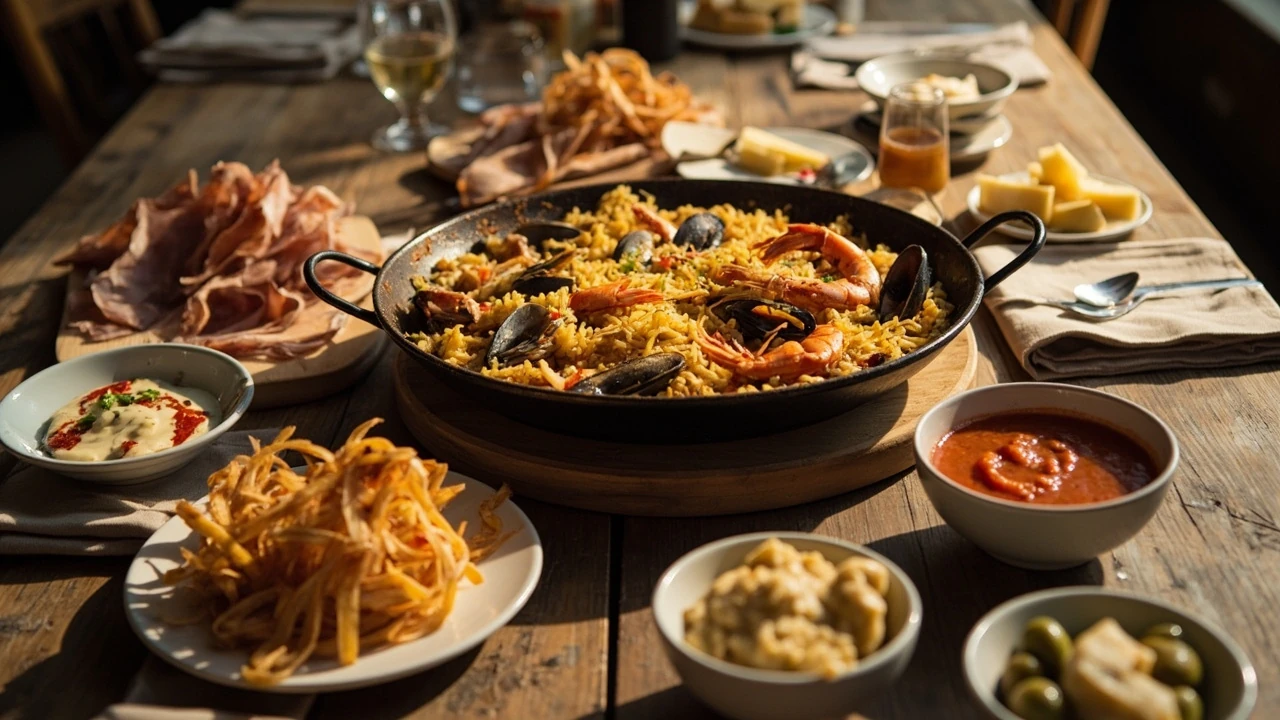
Spanish food as a working reference for restaurants
A new tapas bar opens on a block that already has a wine bar, a burger joint, and a sushi counter, and the operator wants one honest page on the staff printer that explains what spanish food actually is. The question sounds simple, yet it is harder to answer than it looks, because the label covers at least seventeen autonomous communities, several distinct culinary traditions, and a global diaspora of restaurants that range from neighborhood taverns to Michelin-listed dining rooms. This guide is built for that operator. It treats spanish food as a working reference: the regional logic behind the menu, the dishes a guest is most likely to ask about, the pantry items a kitchen has to keep on hand, and the practical decisions a restaurant faces when it borrows from the tradition.
What spanish food actually means
Spanish food is the set of cooking traditions that developed across the Iberian Peninsula, shaped by climate, agriculture, trade routes, and several centuries of contact with the wider Mediterranean and Atlantic worlds. The phrase is not a single cuisine in the way that a small national tradition might be. It is a family of regional cuisines that share a few common techniques, ingredients, and serving styles, while disagreeing about almost everything else. A cook in Galicia uses a different fat, a different starch, and a different seafood vocabulary than a cook in Andalusia, and both will defend their version with some heat.
For a restaurant team, that means spanish food is best understood as a framework, not a fixed menu. The framework includes a small set of shared habits: olive oil as the default fat, bread as a constant companion, the division of dishes into shared plates, a strong relationship between what is grown nearby and what is cooked daily, and a deep respect for cured meats, preserved fish, legumes, and rice. The disagreements inside the framework are where the identity of any individual restaurant comes from.
The regional map that runs the menu
Spain is administratively divided into autonomous communities, and almost every one of them has a cuisine with its own protected dishes, dominant ingredients, and serving style. A short tour makes the map easier to carry around during a pre-shift briefing.
| Region | Dominant ingredients and techniques | Dishes guests are most likely to recognize |
|---|---|---|
| Andalusia | Cold soups, olive oil, fried fish, sherry, citrus | Gazpacho, salmorejo, pescaíto frito, flamenquines |
| Basque Country | Salt-cured cod, pintxos, grilled meats, txangurro | Pintxos, bacalao al pil pil, txangurro a la donostiarra |
| Galicia | Atlantic seafood, wet-grind corn, dairy, stockfish | Empanada gallega, pulpo a la gallega, lacón con grelos, tarta de Santiago |
| Catalonia | Mar i muntanya combinations, romesco, calcots, suquet | Escalivada, pa amb tomàquet, suquet de peix, crema catalana |
| Valencia | Short-grain rice, saffron, beans, rabbit, seafood | Paella valenciana, arròs a banda, all i pebre, agua de Valencia |
| Castile and León | Suckling lamb, roasts, legumes, sheep cheese | Lechazo asado, sopa de ajo, judías del Barco, morcilla de Burgos |
| Madrid | Offal, cocido, bar snacks, deep-fried bites | Cocido madrileño, callos a la madrileña, bocadillo de calamares |
| Navarra and La Rioja | Peppers, lamb, game, wines, asparagus | Pimientos del piquillo, cordero al chilindrón, espárragos a la navarra |
| Murcia and Alicante | Rice dishes, stews, garden produce, paprika | Caldero del Mar Menor, arroz con conejo, tarta de almendra |
| Canary Islands | Bananas, mojo sauces, wrinkly potatoes, local cheeses | Papas arrugadas, mojo picón, sancocho canario, bienmesabe |
The takeaway for a restaurant is simple: when a guest asks for spanish food, they are usually asking for a small cluster of familiar dishes from this map, not the whole table. The most useful service move is to be honest about the corner of the country the kitchen actually cooks from.
The signature dishes that travel well
Some dishes have crossed borders and become the calling cards of spanish food almost everywhere it is served. A line cook who has never worked in Spain still has to know what these are, because guests will order them, photograph them, and compare them to the version they had in Madrid, Buenos Aires, or a holiday in Seville.
- Paella. A shallow rice dish from Valencia cooked in a wide pan over an open fire or high heat. The rice should sit in a single layer, develop a toasted bottom called socarrat, and rest briefly before serving. Seafood paella, mixed paella, and vegetable paella are the common variants.
- Gazpacho. A cold blended soup from Andalusia built on ripe tomatoes, cucumber, green pepper, garlic, olive oil, vinegar, and bread. It should taste like a salad in liquid form, not like a thin tomato juice.
- Tortilla española. A thick omelet of eggs and slowly cooked onions, sometimes with potato, served at room temperature in thick wedges. The texture debate, runny center versus set center, is genuine and worth discussing openly with guests.
- Jamón ibérico. Cured ham from acorn-fed black Iberian pigs, sliced thin and served at room temperature. It is the single most expensive item on many spanish food menus and the most common starting plate.
- Patatas bravas. Fried potato cubes served with a spicy tomato sauce and garlic aioli. The dish has no single canonical version and varies from Madrid to Barcelona.
- Croquetas. Thick béchamel-based fritters, often filled with jamón, chicken, or salt cod. The shell should crack on contact and the interior should stay soft.
- Pan con tomate. Toasted bread rubbed with garlic, ripe tomato, and olive oil, served as a breakfast, snack, or tapa depending on the region.
- Albóndigas. Meatballs cooked in sauce, served as a tapa in most bars, and a main course in some homes.
A practical rule: if a restaurant has fewer than ten spanish dishes on the menu, it should pick these first, because they are the ones guests are most likely to recognize and most likely to judge.
Pantry logic for a spanish food kitchen
A working spanish food kitchen is not exotic at the supply level, but it does lean hard on a few specific items. Buying decisions should follow the menu rather than the romance of the cuisine.
| Staple | What it is used for | Buying notes for a restaurant |
|---|---|---|
| Extra-virgin olive oil | Cooking, finishing, dressing | Keep two oils: an everyday Arbequina or Hojiblanca for cooking, and a more fragrant Picual or arbequina for finishing. Buy in dark containers and rotate often. |
| Smoked Spanish paprika | Sofrito, sauces, rice, potatoes | Use pimentón de la Vera, labeled dulce, agridulce, or picante. Store away from light to protect the color. |
| Saffron | Rice dishes, stews, sauces | Buy threads, not powder, in small amounts. Bloom in warm liquid before adding to rice. |
| Sherry vinegar | Dressings, braises, sauces | Use a sherry vinegar with acidity above 7 percent for cooking and finishing. |
| Manchego cheese | Tapas, cheese boards, sandwiches | Choose between fresco, semicurado, and curado depending on how the dish is served. Slice to order. |
| Jamón serrano and jamón ibérico | Tapas, sandwiches, salads | Store whole legs in a cool dry room; once sliced, cover with a thin film of neutral oil and use within days. |
| Conservas | Tapas, salads, on bread | Stock anchovies, tuna, mussels, sardines, and cockles in olive oil. Quality varies a lot by brand. |
| Bomba and calasparra rice | Paella, arroz a banda, rice salads | Bomba absorbs flavor without turning mushy. Calasparra is the heritage variety from Murcia. |
| Garlic and onions | Sofrito, sauces, condiments | Buy in volumes the kitchen can use in a week. Old garlic turns bitter and ruins a sofrito. |
| Sherry and wine | Cooking, drinking, sauces | Keep a dry fino or manzanilla for cooking, and a separate lineup of sherry, Rioja, and Ribera del Duero for service. |
Most of the rest of the pantry reads like any Mediterranean kitchen: dried legumes, good tinned tomatoes, almonds, hazelnuts, sherry, and a working selection of dry herbs. Spanish food is closer to a French or Italian kitchen in cost structure than it is to a sushi or steakhouse kitchen, which is one reason the format travels well into small independent restaurants.
Cooking techniques worth training on
Spanish food has a small number of techniques that show up across regional borders. Training the line on these pays back across the entire menu because the same skills show up in very different dishes.
- Sofrito. A slow-cooked base of olive oil, onion, garlic, and often tomato or pepper. It is the foundation for rice dishes, stews, bean pots, and many sauces. Rushed sofrito is a frequent cause of weak spanish food.
- Escabeche. A vinegar-based pickling liquid used to preserve fish, game, and vegetables. The modern version is a cold or warm marinade that brightens oily fish and rich meats.
- Asado a la leña. Wood-fired roasting, used for lamb in Castile, fish on the coast, and vegetables in Catalonia. The technique is about heat source as much as temperature.
- Salazón. Salt curing of fish and meat, including the bacalao and the jamón that anchor so many menus. The process concentrates flavor and changes texture, and it is what makes spanish food workable in inland regions without refrigeration.
- Plancha cooking. A flat steel griddle used for seafood, vegetables, and thin cuts of meat. The surface sears without drying, and it is the workhorse of modern spanish food kitchens.
- Fritura. Deep frying in olive oil, especially common for small fish, croquetas, and buñuelos. The oil has to be clean and the temperature controlled, or the food carries a heavy taste.
A new line cook can learn spanish food reasonably quickly if they master the sofrito, the paella technique, and the handling of cured ham. Those three skills cover more than half of any standard menu.
How spanish food lands on a modern menu
Restaurants that serve spanish food in 2026 sit in three rough categories, and the menu should be designed for the one the kitchen actually is. Picking the wrong format is the most common reason a spanish food project underperforms.
| Format | Service style | Menu logic | Watch points |
|---|---|---|---|
| Tapas bar | All-day small plates, casual service | Twelve to twenty plates designed to be shared, with three to five rotating specials | Portion cost needs tight control. Pace of service has to match guest drinking rhythm |
| Paella house | Sit-down dinners, group bookings | Three to four rice dishes as the anchor, supported by starters, salads, and a small dessert list | Rice cook time and table turnover must be choreographed carefully. Paella for two takes thirty minutes, not five |
| Modern spanish dining room | Tasting menu, à la carte, or mixed | Regional narrative with a few refined signatures, paired with Spanish wines and sherry | Cost of jamón and saffron can dominate. Wine list needs depth in Rioja, Ribera, and sherry |
Whatever the format, the menu reads better when the kitchen chooses a region and stays honest about it. A menu that swings between gazpacho, paella, and fabada in the same sitting can feel like a tour bus rather than a kitchen with a point of view.
Pairing spanish food with drink
Drink is part of the cuisine in a way that surprises operators who are used to building a wine list from the ground up. Sherry, in particular, is the single most useful category in any spanish food program, because it covers aperitif, food pairing, and cooking without taking up a large shelf.
- Fino and manzanilla. Dry, pale sherries that act as aperitifs and pair with fried fish, jamón, olives, and almond-heavy tapas. Serve cold.
- Amontillado. A nuttier, slightly darker sherry that bridges rich soups, rice dishes, and aged cheese. Serve slightly cool.
- Oloroso. A deeper, oxidized sherry that holds up to red meat, game, and stews. Room temperature works.
- Rioja and Ribera del Duero. Tempranillo-based reds that pair with roast lamb, braised beef, and aged sheep cheese. Crianza, Reserva, and Gran Reserva tiers give a real range.
- Albariño and verdejo.
- Vermut. Spanish vermouth on tap with a twist of orange and an olive is a daily ritual in many bars and a strong low-cost pairing.
- Cava. Sparkling wine from Penedès, useful for celebrations, fried snacks, and lighter rice dishes.
White wines from Galicia and Rueda that handle seafood, rice, and a wide range of vegetable dishes.
Sherry is also the easiest way to give a spanish food menu a different texture from the Italian or French restaurants on the same block. Most guests have not had a serious glass of fino, and a few sentences of explanation sell a lot of pours.
Common mistakes when running a spanish food menu
Most of the operational pain in a spanish food program is predictable, and most of it comes from underestimating a few specific habits of the cuisine.
- Undercooking the sofrito. A sofrito that has not had time to concentrate will leave every dish that uses it tasting flat. The fix is to slow the base down and treat it as a featured prep.
- Serving paella to the table in under twenty minutes. A real paella needs heat, time, and a short rest. Fast paella disappoints.
- Cutting jamón in advance. Pre-sliced jamón loses aroma and dries out. Slice to order if at all possible, and slice against the grain.
- Treating gazpacho as a summer-only dish. In its home region, gazpacho is on the bar year-round, and the demand curve is often flatter than the kitchen expects.
- Overcomplicating the menu. A small list of well-executed plates outperforms a long list of regional references. Quality of execution is the differentiator in spanish food, not breadth.
- Ignoring sherry. Skipping sherry on the list is leaving both margin and identity on the table.
How to talk to guests about spanish food
Servers should be able to describe a dish in a sentence and a region in a few words. The following lines are short, accurate, and easy to remember during a busy shift.
- Paella. “A saffron rice dish from Valencia, cooked in a wide pan so the bottom gets a little toasted.”
- Gazpacho. “A cold tomato soup from southern Spain, blended with cucumber, pepper, garlic, and olive oil.”
- Tortilla. “A thick Spanish omelet with potato and onion, served at room temperature.”
- Pintxos. “Small bites from the Basque Country, often served on bread and eaten standing at the bar.”
- Jamón ibérico. “Cured ham from acorn-fed black pigs, the most prized version of Spanish cured ham.”
If a guest asks for something that is not on the menu, the right move is to point them toward the closest dish in the same region, not to invent a substitution. A house that is honest about what it does not do earns more trust than a house that fudges.
Internal links for further reading
Two deeper reads from the David’s World Famous journal that line up well with this reference:
Frequently asked questions
What defines spanish food as a cuisine?
Spanish food is defined by olive oil as the default fat, bread at almost every meal, a strong relationship between regional agriculture and what is cooked, cured meats and preserved fish, and a serving style that favors shared small plates. The label covers many regional cuisines that share these habits while disagreeing about most of the details.
What are the most recognized spanish dishes?
The most recognized dishes are paella, gazpacho, tortilla española, jamón ibérico, patatas bravas, croquetas, pan con tomate, and albóndigas. These are the dishes guests are most likely to order, photograph, and compare to a previous experience, so they belong on most spanish food menus even at small restaurants.
Is paella a national dish of Spain?
Paella is a regional dish from Valencia, not a national dish in the legal or culinary sense. Many Spaniards from outside Valencia eat it, but it is one of several rice dishes and is not eaten everywhere in the same form. A spanish food menu should be honest about whether it is offering a Valencian paella, a mixed paella, or a seafood rice.
What is the difference between tapas and pintxos?
Tapas are small shared plates served across most of Spain, often in bars, with portions that can range from a single olive to a full small plate. Pintxos are a Basque Country tradition, usually served on a small slice of bread held together with a skewer and ordered standing at the bar. The serving style, portion size, and pacing are different.
What is the most important pantry item for spanish food?
Extra-virgin olive oil is the single most important pantry item, followed by smoked Spanish paprika, saffron, sherry vinegar, and a good selection of conservas. These five items cover most of the flavor base of a spanish food kitchen and can be sourced in most wholesale markets.
What drinks pair best with spanish food?
Sherry, particularly fino and manzanilla, is the most versatile pairing. Tempranillo-based reds from Rioja and Ribera del Duero handle roasted and braised dishes, while Albariño and verdejo work with seafood and rice. Spanish vermouth is a strong low-cost pairing for tapas service.
How hard is spanish food to run in a small restaurant?
Spanish food is one of the easier Mediterranean cuisines to operate at small scale. The pantry is affordable, the equipment is standard, the techniques are teachable, and the menu can be built around eight to twelve well-executed dishes rather than a long list. The main risks are undercooking the sofrito, mishandling the rice, and pre-slicing the jamón.
What are common mistakes when opening a spanish restaurant?
The most common mistakes are copying a long list of regional dishes without choosing a focus, underestimating the time needed to cook a proper paella, skipping sherry on the drink list, and cutting corners on the cured ham. A clear regional focus, honest execution, and a serious drink program carry most spanish food projects.
Is spanish food the same as mexican food?
Spanish food and mexican food share a few ingredients, including olive oil, rice, beans, paprika relatives, and a few preserved fish, but they are distinct cuisines with different techniques, flavor profiles, and serving styles. A guest who confuses the two is a useful teaching moment, and a server should be ready to explain the difference briefly.
How can a restaurant add spanish food to an existing menu?
The lowest-friction approach is to add a small section of three to five spanish dishes built on pantry items the kitchen already buys, such as olive oil, paprika, and sherry vinegar. Croquetas, pan con tomate, patatas bravas, albóndigas, and a single rice dish are the most reliable starting points, and they can be tested before committing to a larger program.