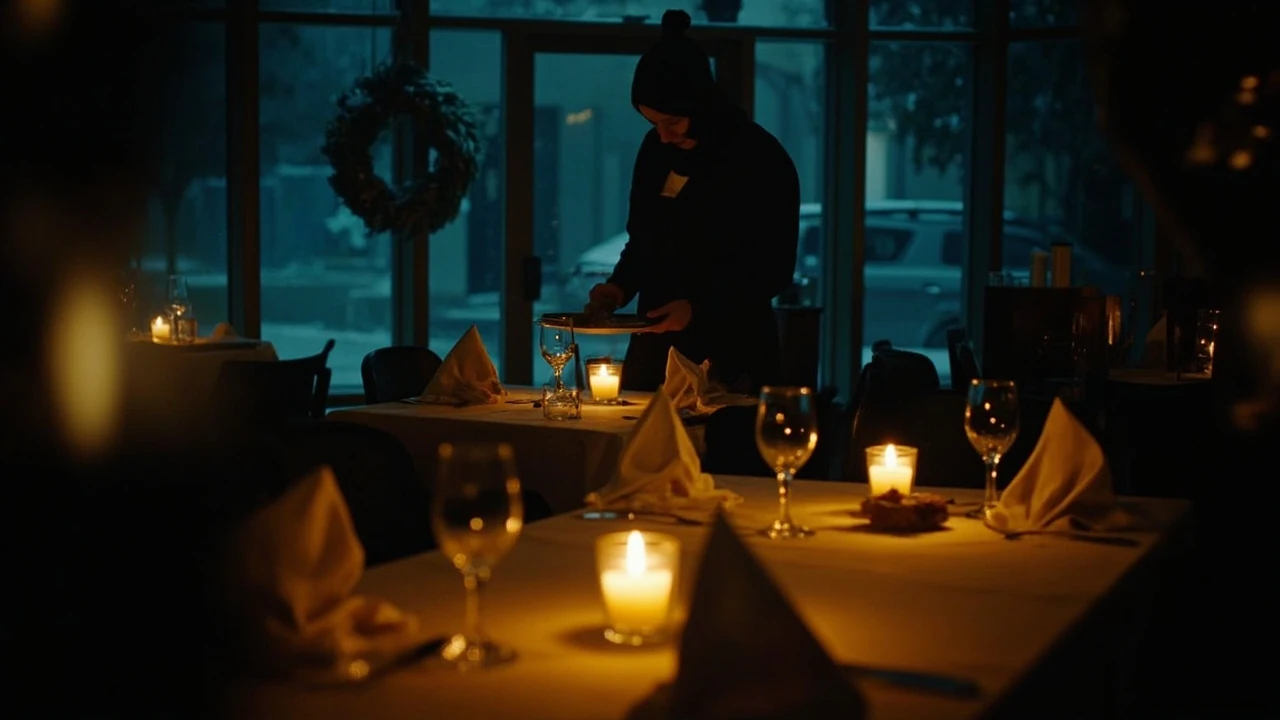
Every December, the same question lands on a restaurant manager’s desk: do we open on Christmas, and if we do, who actually shows up? The honest answer is that the math, the staffing reality, and the guest experience each pull in different directions, and the operators who do Christmas well are the ones who decide on purpose rather than by default.
This guide is for independent owners, chefs, and managers weighing whether to run service on December 25, and for the guests trying to find a place that fits their day. It covers how to forecast demand, set a realistic menu, price a holiday shift, communicate clearly with staff, and handle the operational friction that comes with running a kitchen on a day most suppliers and employees treat as sacred. The aim is to help you decide based on your room, your team, and your local market, not on a generic “open or close” debate.
Restaurants open on Christmas: what really drives the decision
Whether restaurants open on Christmas comes down to three hard questions: who is in the room, what does the local market expect, and can the team handle the day without burning out. The temptation is to treat it as a marketing question, but the operational question is the one that decides the answer.
Demand on December 25 is unusually clustered. You see strong bookings from travelers, shift workers, people whose families live far away, and guests who simply do not want to cook. You also see a meaningful share of the population staying home. In the United States, the National Restaurant Association tracks holiday dining behavior, and a recurring finding is that a large minority of adults would prefer to dine out on Christmas if a trustworthy option existed, particularly in markets with high tourism or significant distance between adult children and their parents.
The operator’s job is to read the local signal correctly. A small neighborhood bistro in a residential district where most families host at home will have a different demand curve than a hotel-adjacent restaurant in a city that draws tourists, or a diner near a hospital that runs a full trauma and ER schedule. The category of restaurant, the density of the local market, and the type of nearby guest all matter more than national averages.
Once the demand signal is read, the next filter is staffing. Christmas is the one service day where labor is hardest to assemble and easiest to over-rely on. Servers and cooks who have young children want the day off, and team members who do work often expect holiday pay, time-and-a-half, or a share of revenue. Building a workable schedule in October is a completely different problem than building it in mid-December. Operators who decide late typically end up with a thinner, more tired crew on the floor and a higher chance of a service breakdown.
Finally, the food cost calculation deserves a separate look. A shorter, premium menu is not just easier to execute on a holiday; it is usually the only sensible way to control waste when regular produce and protein deliveries are not running. The menu decision and the open-or-close decision are linked, and the operators who handle them together tend to land on a cleaner answer.
Forecasting demand for a Christmas service
Forecasting on a day like December 25 is not a question of running the same model you use for a Saturday night. The guest mix is different, the booking window is longer, and the cost of being wrong is higher because you cannot call in extra help at 4 p.m. The most reliable approach is to combine three inputs: prior year data, a reservation lead-time chart, and a sense of who actually lives near you.
If you have been open on Christmas before, the most useful number is the year-over-year change in covers, not the absolute count. A 15% swing in either direction is common, and it is usually driven by something local, like a new hotel opening, a change in the hospital shift schedule, or a competing restaurant closing for the day. Looking at three years of history, if you have it, will help you separate a one-off spike from a real trend.
For operators running a Christmas service for the first time, the lead-time chart is the cleanest signal. Open reservations 60 to 90 days out and watch the curve. A Christmas Day that fills steadily in October with steady weekday pace is a different kind of booking than one that fills in a single burst the week before. Steady early bookings usually represent committed local guests, while a late burst often means travelers and last-minute planners, who are a different service profile.
Local market context is the third input. A useful exercise is to map your address against the nearest 10 places that generate foot traffic on holidays: hotels, hospitals, transportation hubs, convention centers, and major attractions. The density of those anchors is a strong proxy for how much “non-family” demand you can expect. A restaurant near two major hotels and a hospital in a city that draws visitors can reasonably plan for a different night than a freestanding restaurant in a quiet suburb.
| Demand signal | What it tells you | How to use it |
|---|---|---|
| Year-over-year cover change | Whether your existing market is growing, steady, or shrinking for the holiday | Apply the percentage change to last year’s plan as a starting point, then sanity-check against current booking pace |
| Lead-time booking curve | How committed your guests are and what kind of guest you are attracting | Steady early bookings = confident capacity plan; late bursts = build in more flexibility for walk-ins and larger parties |
| Local anchor density | How much non-resident demand exists within walking or short-driving distance | Use the count of hotels, hospitals, and transit nodes within 10 to 15 minutes to estimate traveler and shift-worker share |
| Competing operator behavior | Whether other restaurants in your segment are opening, and how they are positioning the day | Look at direct competitors and one tier up or down; a clustered closure is good news, a clustered opening is a pricing signal |
Designing a Christmas menu that holds up under pressure
The menu you run on Christmas is, in many ways, the menu you wish you could run all year: short, confident, and built around dishes your team can produce repeatedly without losing quality. The constraint is not creativity; it is the supply chain, the smaller crew, and the higher expectations from guests who are paying a premium to be there.
Start with the proteins. Holiday meat and seafood suppliers run on a compressed schedule, and prime cuts get expensive fast. Building a menu around two or three proteins that you can source reliably is more important than offering twelve options. A short list also lets you taste every plate that leaves the kitchen, which is harder on a normal night and almost impossible on a holiday with a lean crew.
Vegetables and sides are the second decision. Pre-portioned, par-cooked sides that hold well during a long family-style service will save your cooks. Hand-cut, last-minute sides will save your ego on a Saturday in March and break your kitchen on December 25. A useful pattern is to build three or four “anchor” sides that can be plated at any pace and reserve one or two “live” sides for showpiece dishes.
For desserts, a pre-built plate that travels from walk-in to table in under a minute is worth more than a made-to-order pastry that requires a dedicated station. Christmas is not the night to test a new dessert program. Use what your team already does well, ideally with a small holiday flourish that makes the plate feel intentional without adding labor.
| Menu layer | What to prioritize | What to avoid |
|---|---|---|
| Proteins | Two or three reliable options, one premium, one accessible | Long lists of special cuts, last-minute seafood, anything requiring long braises with high failure cost |
| Sides | Pre-portioned, par-cooked, holdable plates | Hand-cut vegetables, last-minute composed salads, anything that needs a separate station |
| Desserts | Pre-plated or pre-portioned, fast to deliver | Made-to-order pastry, table-side service, anything requiring a dedicated dessert cook |
| Beverages | Set wine pairings, a short cocktail list, predictable mocktails | Custom-built cocktails, espresso-heavy programs, anything that strains the bar during a turn |
Staffing a Christmas service without burning the team out
The single biggest predictor of whether a Christmas service feels professional or chaotic is whether you staffed it on purpose in October, not whether you posted a schedule in December. The labor market for front and back of house is tight in most cities, and the people who do work holidays are the people who will also be asked to work New Year’s Eve, so the choices you make on December 25 echo into the rest of the quarter.
Start with a written holiday policy. Even a short document that says who works, who gets time and a half, and who gets a share of holiday revenue prevents a dozen ad hoc conversations. Many independent operators split the difference by offering a base hourly premium plus a small percentage of the night’s service revenue, distributed by hours worked. That structure keeps everyone aligned on the same math, and it lets you tell a server in early November, “Here is the deal, here is the premium, here is the pool, and here is what we did last year.”
Build the schedule with redundancy, not optimism. A common failure mode is to staff the floor for the covers you hope to do with the team you hope to get. The honest approach is to staff for the covers you reasonably expect, with one extra body in each role, and to identify a single on-call person who can come in if a scheduled team member is sick. That on-call person should know by the start of December that they may be called.
For the back of house, the rule of thumb is that a Christmas menu that is roughly a third the size of your regular menu still needs about 70% of your normal line staff. A smaller menu does not save as much labor as it saves food cost, because each remaining dish still has to be cooked to the same standard. Plan for that.
- Confirm holiday pay structure in writing at least eight weeks before the service.
- Schedule one extra body in every front-of-house role and identify a true on-call backup.
- Keep the menu short enough that a slightly smaller line can still produce every plate confidently.
- Give the team a realistic start and end time. A defined close matters more on a holiday than on a regular Saturday.
- Plan a small gesture, like a family meal before service or a brief toast after the last ticket. The cost is small, the goodwill is large.
Pricing a Christmas service without losing the room
Pricing on Christmas is a delicate balance. Guests expect to pay more, and they will, but they are also more willing to forgive a premium price when the value is visible. The mistake is to either underprice out of guilt, which strains the kitchen and trains the market to expect a deal, or to overprice into a tier that only the most committed bookers will accept.
A useful framework is to set a per-person minimum that covers your holiday labor and food cost premium, and then build a menu around that floor. If your normal food cost runs around 30% and your holiday food cost runs closer to 32% because of smaller-batch purchasing, and your labor runs 10 points higher because of premiums and a smaller crew, your break-even number moves. Build the menu and the price together rather than picking a price and reverse-engineering a menu to fit.
Beverage programs are where the most pricing flexibility tends to live. A short, premium wine list with a clear markup, a couple of well-built signature cocktails, and a small mocktail selection will produce a higher per-cover average than a sprawling list with mid-tier pricing. The constraint is the bar team’s capacity, so the list should be small enough that each drink is something they can build repeatedly without slowing the service.
- Set a per-person minimum that covers the holiday cost structure rather than copying last year’s price.
- Build a short premium beverage list that produces a healthy per-cover average without straining the bar.
- Consider a small, optional add-on, like a wine pairing or a chef’s amuse, to lift the average without changing the menu.
- Avoid surprise charges. Any premium should be visible in the price the guest sees when they book.
Communicating clearly with guests before and during service
Communication is the cheapest operational improvement on a holiday. Most guest complaints on Christmas are not about the food; they are about a detail that was never set in advance. Did the party know there was a prix fixe? Did they understand the time window? Did they know parking would be harder? Did they know gift cards were not accepted on the holiday? Each of these is a small clarification that, made in advance, prevents a larger problem in the room.
The booking confirmation is the most underused piece of communication in most restaurants. A short paragraph at the bottom of the confirmation email, repeated as a printed note on the table, will answer more questions than a perfectly trained host. Keep it specific to the day, not generic holiday language.
On the floor, the host and the servers are the primary communication layer. A two-minute team huddle before doors, focused on the timing of the seating, the menu, and any known VIPs, will produce a more confident service than any script. Servers on a holiday also need permission to slow down and acknowledge the day. A brief “Merry Christmas, we are glad you are here” before the first course lands as warmth, not as filler, when it is genuine.
| Touchpoint | What to communicate | Format |
|---|---|---|
| Booking page | Menu format, price per person, seating windows, cancellation policy | Visible on the booking flow, not buried in a terms link |
| Confirmation email | Time, party size, what to expect on arrival, parking and transit notes | Short paragraph plus a one-line link to the full holiday details |
| Day-of reminder | Any last changes, weather-related notes, gift card policy | Short SMS or email 24 to 48 hours before |
| Host stand | Time-stamped table notes, allergen flags, occasion markers | Printed or visible in the reservation system, not in someone’s head |
| Table-side | Welcome, format of the meal, when to expect the check, the day’s signature touches | A brief server script and freedom to make it human |
The supplier and logistics reality of a December 25 service
It is easy to focus on the front of house and forget that the supply chain around a Christmas service is its own project. Most broadline distributors do not run normal routes on December 25, and the ones that do charge premiums or impose minimum orders. Produce, dairy, and bread suppliers are particularly likely to be on holiday schedules, with limited or no delivery windows.
The honest move is to assume that anything you have not ordered by mid-December may not arrive. Build the final menu and the final prep list against the deliveries you have already received, not the ones you are hoping to get. That single decision prevents the most common Christmas service failure: running out of a key ingredient at 7 p.m. and improvising in front of a full room.
For the small details, the same logic applies. Confirm linen, floral, and any specialty rentals well in advance, with a clear understanding of pickup times on December 26. A small thing like a missing tablecloth is the kind of problem that quietly degrades a holiday experience more than guests will say out loud.
- Lock final orders with every supplier by mid-December with explicit delivery or pickup times.
- Assume anything not already in-house may not arrive and plan the menu around confirmed inventory.
- Pre-portion and label anything that can be prepped in the days before, including sauces, sides, and desserts.
- Have a printed plan for power or equipment failure, including a backup for any single point of failure on the line.
- Brief the team on the cleanup and breakdown plan, including who is responsible for what after the last ticket.
When it makes sense to close on Christmas
There is a version of this decision where the right answer is to close, and operators who treat closing as a strategic choice rather than a default usually do better on the days around the holiday. Closing makes sense when the local demand signal is weak, when the team cannot be staffed responsibly, when the food cost structure makes the math unworkable, or when the brand identity is built around family and home, and forcing service on December 25 would feel off-brand.
For For additional context, some restaurants, closing on Christmas is a form of brand expression, and the guests respect it. A neighborhood trattoria that prides itself on feeding families at home has a legitimate reason to close. A diner near a hospital has a legitimate reason to open. The wrong answer is to make the decision out of habit or guilt rather than on the basis of who you are and who you serve.
If you close, a few small moves can keep the brand visible and the team aligned. A short note to guests about the closure, a posted holiday message, a small gesture to the team, and a clear plan for the days around the holiday, including December 24 and 26, will keep the brand present without diluting the close.
For guests: how to find restaurants open on Christmas
If you are the guest, the practical question is simpler: how do you find a place that is genuinely open, with the kind of food and atmosphere you want, on a night when most kitchens are dark. A few habits will save you time and disappointment.
Start with the operator’s own site or reservation system, not a third-party listing. Third-party holiday hours are often stale, especially in the final week of December. A quick visit to the restaurant’s homepage, a glance at the most recent social post, or a short call to confirm will tell you more in two minutes than a search result will in twenty.
Book early. The places that do open on Christmas tend to fill by mid-December, and the most desirable slots (earlier seatings, larger tables, and rooms with a view) go first. If you have a preferred restaurant, putting a deposit down in early December is the most reliable way to lock in a real table rather than a waitlist spot.
Read the fine print on the booking. Many Christmas services run a single prix fixe, a single seating, or a limited menu. Knowing that in advance means you arrive ready, you are not surprised by a different price than the one you expected, and you can plan the rest of the day around the meal rather than around uncertainty.
Be kind to the team. The people serving you on Christmas chose to be there, often at a premium, often in place of a holiday with their own family. A short thank-you at the end of the meal lands harder on a holiday than on a normal night, and the small acts of patience during a long meal matter more than they do on a Saturday.
Marketing restaurants open on Christmas without overpromising
Marketing the day has its own set of rules. The point is to make sure the right guests find you and arrive with the right expectations, not to manufacture demand that the kitchen and the floor cannot handle.
Lead with clarity, not cleverness. “Open Christmas Day, 2 to 8 p.m., four-course prix fixe at $95 per person” is a better headline than “A holiday feast to remember.” The first version sets expectations, the second sets the kitchen up to disappoint. Guests will read either, but only the first one converts into a real booking.
Email is the highest-leverage channel for a holiday push. Your existing list is the most likely group to fill the first seating, and a clear, well-timed email beats a social post in almost every independent operator’s data. Send a save-the-date in late October, a full announcement in mid-November, and a final reminder in early December with a clear deadline for the last bookings.
For operators working on a longer content calendar, the holiday guide is also a place to point readers toward the rest of your brand. A clear reference to your approach to menu design, your supply chain, and your hospitality values will do more for retention than a one-off promotion. The article on menu engineering without killing the soul of the menu is a useful companion read, and the broader piece on how to build a brand guests remember gives a fuller frame for the kind of choices that show up on a day like December 25.
A short checklist for operators running a Christmas service
- Decide open or close by mid-October, based on local demand and team capacity, not on national patterns.
- Lock the menu, the price, and the seating windows before opening reservations.
- Set a written holiday pay structure and confirm the schedule with the team before November ends.
- Place final supplier orders by mid-December and build the final menu around confirmed inventory.
- Send a save-the-date in October, a full announcement in November, and a final reminder in early December.
- Brief the team in the days before the service on the menu, the timing, and the tone of the day.
- Plan the close. The last ticket of the night deserves the same care as the first.
Frequently asked questions
How do I decide if my restaurant should be open on Christmas?
Look at three things: the local demand signal near your address, your ability to staff the day responsibly, and whether the math works at a realistic per-cover price. If all three line up, opening makes sense. If any one of them is weak, closing is a legitimate strategic choice.
What kind of menu works best for a Christmas service?
A short, premium menu built around two or three reliable proteins, a few pre-portioned sides, and a confident dessert. The aim is to give the kitchen fewer dishes to execute at a higher standard, not to test new ideas in front of a paying room.
How much should I pay staff who work on Christmas?
There is no single right number, but the structure should be written down and shared in advance. A common model is a base hourly premium plus a small share of the night’s service revenue, distributed by hours worked. The point is that the team sees the same math and trusts it.
How far in advance should I open reservations for Christmas?
For most independent operators, opening 60 to 90 days out gives you a clean read on the lead-time curve and enough time to adjust. The earliest bookings tend to be the most committed, and a steady pace through November is a good sign that the plan is on track.
Should I run a prix fixe or an à la carte menu on Christmas?
Most successful Christmas services run a prix fixe, because it controls the kitchen’s workload, sets a clear price point, and produces a smoother experience for guests. À la carte works in high-volume or tourist-driven markets, but it requires a larger line and a tighter system to execute well.
What are the biggest risks of opening on Christmas?
The three biggest risks are a thin or exhausted team, a supplier failure on a critical item, and a mispriced menu that produces a busy room at a loss. Each of these is solvable with planning, but only if the planning happens in October rather than in the week of the service.
How do I handle gift cards and loyalty programs on Christmas?
Set the policy in advance and put it in the confirmation email. Many operators either restrict redemptions to the day after the holiday or accept them with a small surcharge. The wrong answer is to make the decision at the host stand on December 25.
What should I do if a major supplier cancels on me the week of Christmas?
Substitute early, communicate clearly, and adjust the menu in writing. Most guests will accept a small change to a side or a protein if it is handled with confidence. The failure mode is to improvise on the plate without telling anyone, which produces a worse experience than the substitution itself.
Is it worth opening on Christmas if I am a small, independent restaurant?
It can be, particularly if your market has a clear demand signal and your team is genuinely willing. The math usually works best when the room is full and the menu is short. If either condition is uncertain, a strong December 23 and 26 service can be a better use of the same labor.
How do guests find restaurants that are actually open on Christmas?
Check the restaurant’s own site or reservation system rather than a third-party listing, and book as early as you can. The places that genuinely open tend to fill by mid-December, and a deposit placed in early December is the most reliable way to secure a real table.