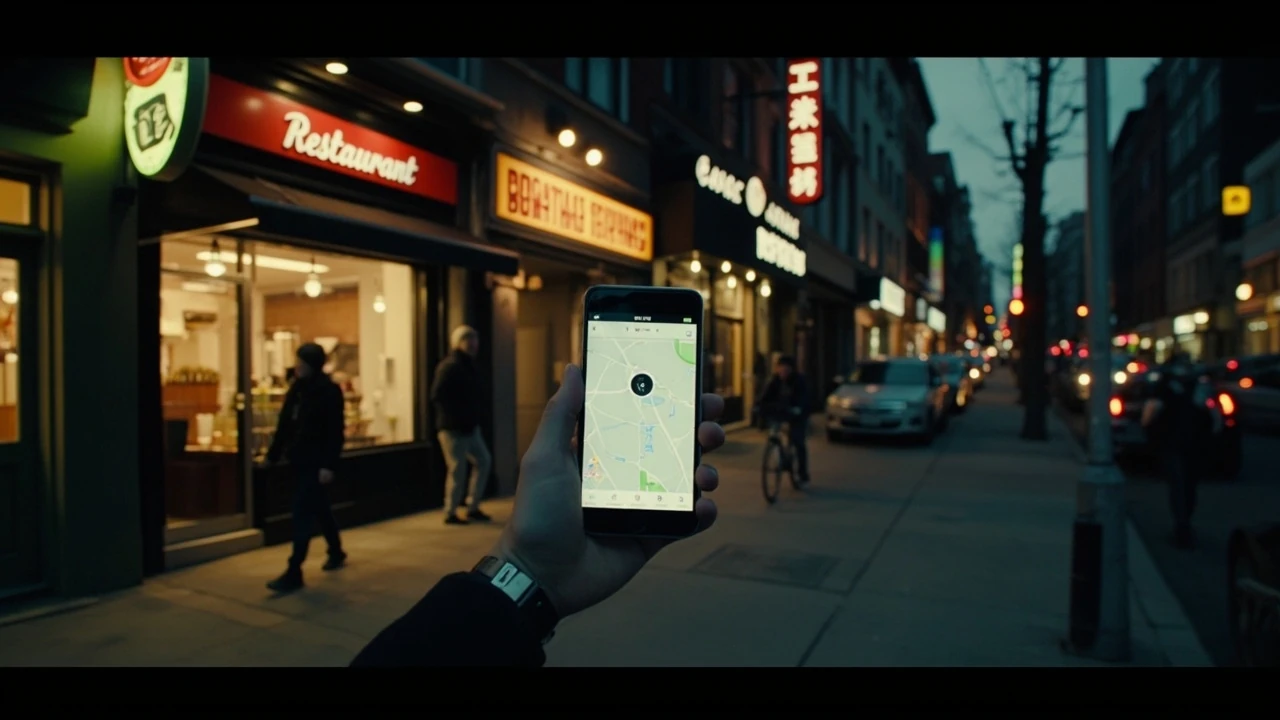
You are hungry, it is 9:40 p.m. on a Wednesday, and the first three places you tried are already dark. The lights are off, the chairs are stacked on the tables, and a hand-written sign on one door says “Closed — back at 11.” This is the most common reason people search for restaurants open now: they have already wasted time on guesses and they want a faster way to confirm which spots near them are actually serving food right now, in the next few minutes, or late into the night.
The good news is that finding restaurants open now has become dramatically easier in the last few years, as long as you know which tools to trust, which signals to look for, and which details to double-check before you get in the car. This guide walks through the practical mechanics of finding a place to eat at any hour, what the major apps and map services actually do with their hours data, how to read the clues on a storefront and a website, and how to avoid the three mistakes that turn a quick dinner into a forty-minute detour.
Restaurants open now: how to find one near you in minutes
The fastest path to restaurants open now is a layered search, not a single tap. Start with a map app that pulls live hours, filter by the time you want to eat, then verify with one or two additional signals: the restaurant’s own website, a recent social post, or a phone call. The reason for the layers is simple. Map databases are usually accurate within a day or two, but they can be wrong for a few hours around holidays, soft openings, staff shortages, and private events. A second signal catches those gaps.
Here is the order that works best in practice:
- Open a map app with current-traffic data and search for the cuisine you want.
- Apply the “Open now” filter and a radius that matches how far you are willing to drive.
- Check each top result for cuisine match, distance, recent reviews, and price.
- Tap into the restaurant’s own website or social profile to confirm kitchen hours, not just door hours.
- If you are searching after 10 p.m. or on a major holiday, place a quick call before you leave.
Step four is the one most people skip, and it is the step that decides whether you eat tonight or end up with a closed door and an empty stomach.
Why “open now” results are sometimes wrong
Map services like Google Maps, Apple Maps, and others do not magically know whether a kitchen is on the line. They aggregate hours from several sources, compare those hours to the current time in the restaurant’s local time zone, and display a result. The chain breaks in three predictable places.
First, the hours were never entered correctly. Many small restaurants publish hours on a printed menu, a chalkboard, or a Facebook page, but never bother to update a map listing. When the listing finally gets created, the owner may enter Monday through Thursday 11 to 9 as a guess and forget to mention that the kitchen closes at 8:30 or that the restaurant stops seating at 8.
Second, the hours were right and the situation changed. A staffing shortage, a broken piece of equipment, a private buyout, a slow Tuesday, a power outage, or a regional holiday can all flip a place from “open” to “closed” without the map knowing. The more local and independent the restaurant, the more likely this is to happen on any given night.
Third, the place is technically open but the kitchen is paused. Some restaurants close the kitchen between lunch and dinner service. A few close the kitchen for a staff meal in the middle of the afternoon. Bars that serve food may keep the bar open but turn off the griddle for an hour. The map sees “open” because the door is unlocked; you arrive to a closed kitchen.
Understanding these failure modes is the reason experienced locals do not stop at the map result. They layer in at least one human signal before they drive.
The four sources that reliably answer “is this place open right now”
Each source has strengths and weaknesses. Combining the right two or three for your situation is what gets you a confident answer.
1. Live map apps with business hours
Map apps are the starting point for most people, and for good reason. They are fast, they sort by distance, and they usually show a small “Open now” or “Closed” badge under each result. Google Maps, Apple Maps, and Waze all carry business hours. The freshness of those hours varies, and that is the catch.
A few habits make map results more reliable:
- Filter by “Open now” rather than reading hours as text. The filter uses the current time and the local time zone automatically.
- Read the “Hours” section carefully. Some restaurants post split hours, like 11:00 a.m.–2:30 p.m. and 5:00 p.m.–10:00 p.m., that a single line on the listing may not show clearly.
- Check the “Updated” timestamp if the app shows one. A listing updated last week is more trustworthy than one updated two years ago.
- Look at the most recent reviews. A reviewer who visited last Friday and complained that the doors were locked at 8 p.m. is a strong signal that something is off.
Map apps are also the best tool for measuring how far each option actually is. A “10-minute drive” on a map at 6 p.m. is rarely a 10-minute drive at 6 p.m. on a Saturday. Use the live traffic layer to recalibrate.
2. The restaurant’s own website
The restaurant’s own site is the only source that is fully under the owner’s control. If a place cares enough to maintain a website, that site is the most accurate place to find hours for the specific day you want to dine.
What to look for on a restaurant site:
- A dedicated “Hours” or “Visit” page, ideally with separate lines for the dining room, the bar, and the kitchen.
- A header or footer with current hours that includes the date, for example “Today, Wednesday: 5 p.m. to 10 p.m.”
- A banner or alert about holiday hours, weather closures, or temporary schedule changes.
- A reservation widget that blocks off days the restaurant is closed, which doubles as a quiet signal of true hours.
If the website has a reservation form and shows no availability tonight, the place may be fully booked but still open for walk-ins. The opposite is also possible: the form may say open while the kitchen closed early. Treat the website as accurate, but not as the final word.
3. Social profiles
Instagram, Facebook, and to a lesser extent X and TikTok are where independent restaurants broadcast last-minute changes. A posted story that says “Closing early tonight for a staff party — last seating 7 p.m.” is a more current signal than any map listing. The reverse is also useful. A story posted from the kitchen an hour ago with a photo of tonight’s special is a strong hint that the line is still on.
Social is also the place where pop-ups, food trucks, and supper clubs tend to publish. These are rarely on map apps at all, so for late-night or unusual cuisines, scrolling the local food hashtag for your city can be the only way to find restaurants open now.
4. A phone call
It feels old-fashioned, but a fifteen-second call still beats every app when the situation is unusual. Late night, major holiday, snowstorm, small town, brand-new spot, recently changed ownership — any of these is a good reason to call. If the line rings out, the restaurant is probably closed. If someone picks up, you can ask the question that no map can answer: how late is the kitchen open, and is there a wait?
What to filter on once you have a shortlist
A list of nearby open restaurants is only useful if it lines up with what you actually want. The filters that matter most depend on the time and your situation.
Late-night diners
If you are searching after 10 p.m., your list will be small and you will need to be flexible. Filter by:
- Cuisine type that is naturally late: diners, pizzerias, kebab shops, ramen counters, taco windows, burger bars, and bars that serve food.
- Distance under 10 minutes by car, because the available options will be sparse and you do not want to burn twenty minutes on the wrong guess.
- Recent reviews that mention “late night” or a specific closing time. Reviews written within the last 60 days are more reliable than older ones.
Families with kids
If children are involved, the filter set is different. Look for places that seat families comfortably, take reservations, and keep a kids’ menu. A late-night bar with great food may be open but is rarely the right answer for a 7-year-old.
Solo diners and business meals
Solo and business diners usually want a quiet bar, fast counter service, or a known chain with predictable hours. Chains tend to have the cleanest, most accurate hour data because their hours are standardized across locations.
Reading a map result the way a local reads it
Once you have a list of candidates, a few extra signals inside the map listing itself can tell you whether the place is worth the drive.
| Signal in the map listing | What it usually means |
|---|---|
| Star rating above 4.3 with 200+ reviews | Consistent quality, less likely to have a service collapse tonight |
| Photo of the dining room taken in the last 90 days | Owner is active; hours are more likely to be current |
| Photo of a hand-written “Back in 20” sign on the door | The kitchen paused briefly; this is normal and worth a wait |
| Last review posted today or yesterday | Other diners are there right now, a strong live signal |
| Last review more than 6 months ago | Hours may be stale; verify with a second source |
| “Permanently closed” warning on the listing | Skip this one, even if the hours look right |
None of these signals is a guarantee. They are probabilities, and they stack. A 4.6-star restaurant with a fresh photo and a same-day review is a much better bet than a 3.8-star place with a five-year-old photo and no recent activity, even if both technically say “Open now.”
How to read a restaurant’s own website like a pro
Restaurants that take their hours seriously tend to design their site to make hours easy to find. Restaurants that do not take their hours seriously tend to bury them in a footer or skip them entirely. The presence and clarity of hours on a site is itself a useful signal.
A site that posts hours in the header as a one-liner like “Open today, 5 to 10” is a sign of an operation that updates the page daily. A site that says “Hours: 11–10” with no day-by-day detail is a sign that the hours are copy-pasted and may not match reality. A site with no hours at all is a small red flag, especially for an independent restaurant.
Two extra details are worth a closer look:
- Last seating. Many restaurants stop taking new tables 30 to 60 minutes before the listed closing time. If the website says the dining room is open until 10, the last reservation may be at 9 and the kitchen may stop at 9:30. The phrase “last seating” is the one to look for.
- Service style at the end of the night. Some places switch from full service to bar-only or counter-only in the final hour. A bar menu may still be available even when the dining room is closed. If you only need a snack and a drink, this is good news.
How to confirm hours on a holiday or local event day
Holiday hours are where the standard search for restaurants open now breaks down the most. The map may say open, the website may say open, and the door may be locked because every member of the front-of-house staff is at home with family. Plan for a different rhythm around the following days:
| Day or window | What changes for restaurants |
|---|---|
| New Year’s Eve | Many restaurants close early or run a prix fixe with a hard cutoff at 9 or 10 p.m. |
| New Year’s Day | Most independent restaurants closed; chains and diners are the safe bets |
| Thanksgiving evening | Almost all independents closed; bars and hotel restaurants often open |
| Christmas Eve | Many close at 3 p.m.; a few run a special dinner that requires a ticket |
| Christmas Day | Sparse options; Chinese restaurants, diners, and some hotel kitchens |
| Memorial Day, July 4, Labor Day | Mostly open, but with reduced hours and a busy dining room by 7 p.m. |
| Local festival or game day | Downtown restaurants may close streets; suburban and airport-area spots stay open |
Around any of these days, the right move is to plan earlier in the day. A quick scan of local food media or the city’s newspaper site will usually publish a “what’s open” or “where to eat on [holiday]” guide two or three days in advance. Those guides are written by people who have actually called the restaurants, which is more reliable than a map.
The role of cuisine and kitchen type in late hours
Not every type of restaurant stays open late. Knowing which cuisines tend to run longer hours saves time when you are searching for restaurants open now after 10 p.m.
- Pizzerias and kebab shops are the most consistent late-night options, partly because dough and grilled meat are forgiving on a thin night and partly because delivery demand peaks late.
- Chinese restaurants have a long tradition of being open on holidays and late at night, especially in larger cities.
- 24-hour diners are reliable, though less common than they were twenty years ago. When you find one, it is a treasure.
- Hotel restaurants are often open to non-guests and tend to keep predictable hours, including holidays.
- Fine dining rooms rarely run past 10 or 11 p.m. and almost never open on major holidays.
- Pop-ups and food halls keep irregular hours, sometimes only two nights a week. Their Instagram is the only reliable source.
For more on how restaurants think about which dishes to keep on the late-night menu and how to plan content around a signature item, this piece on turning one signature dish into a month of content is a useful read.
When the map is empty: how to find restaurants open now in a small town
In a small town or a rural area, the map app may return a single diner and a gas station. The workarounds are different.
- Check the town’s newspaper website or Facebook group. Locals post fast when a restaurant closes unexpectedly.
- Call the motel or hotel front desk. Staff know which kitchens are still serving because their guests ask all evening.
- Look at the local chamber of commerce or tourism site. They usually list “open late” or “open daily” options for visitors.
- Drive toward the highway. Highways reliably cluster 24-hour options because truckers need to eat at 3 a.m.
None of these are as convenient as a city map, but they are reliable in places where the map itself is thin.
How to read a restaurant’s exterior for live signals
Once you arrive, a few quick visual checks tell you whether the place is genuinely open. These cues are old, but they still work.
- Lights on inside. If the front of house is dark, the kitchen probably is too.
- An “Open” sign in the window, especially one that is hand-lettered or chalk-written. This is updated more often than any map.
- Staff visible through the window. A host at the stand, a server wiping a table, a bartender pouring a drink. All of these mean service is live.
- Other diners. An empty dining room at 7 p.m. on a Saturday is a different signal from an empty dining room at 3 p.m. on a Tuesday.
- Doors unlocked from the outside. A locked door with a posted number means call, do not knock.
Independent restaurants that depend on walk-in traffic tend to be very good about keeping their “Open” sign honest. Chains sometimes forget. Trust the local sign.
How restaurants publish their hours, and why the data drifts
Behind every map listing is a database row with a few fields: opening time, closing time, days of the week, special hours, and a “last updated” timestamp. The data drifts because maintaining it is a manual chore and most owners have a hundred other things to do.
The path of drift usually looks like this. A restaurant opens. The owner enters hours on Google. Six months later, summer hours are different. The owner forgets to update Google. Two years later, the kitchen is now open Tuesdays but the listing still says closed Tuesdays. A diner drives over and finds the place is, in fact, open. The map was wrong.
Restaurants that fight this drift tend to follow a few practices worth noticing as a diner:
- Posting hours on the front door every morning, even if the door is closed.
- Updating the website header with a daily line, not a generic block.
- Replying to Google map reviews with the actual hours when someone flags an issue.
- Posting a story on social media whenever the schedule changes for a week or a month.
From the operator side, building a small routine around hours accuracy is part of a larger discipline of running a consistent business. Articles like the 15-minute restaurant website audit and the guide to restaurant branding and identity touch on how hours, contact details, and brand signals work together to set expectations for guests.
Three mistakes that turn a quick search into a wasted trip
Mistake 1: trusting a single source. The map said open. The map was wrong. This is the most common reason for a closed door and a frustrated diner. Always confirm with at least one second source, and the second source is more useful when it is operated by a human who is at the restaurant today.
Mistake 2: ignoring the last seating. A place can be open and still turn you away. Last seating is often 30 to 60 minutes before the posted close. If you arrive 20 minutes before close, the host may politely say no, and you will be hungry and embarrassed.
Mistake 3: searching too late and too broadly. Searching “restaurants” at 11:45 p.m. in a residential neighborhood is a recipe for a closed door. Narrow the cuisine, narrow the radius, and accept the smaller list. Three good options within five minutes beat ten mediocre options scattered across the city.
A practical checklist for the next time you search restaurants open now
- Open your map app and apply the “Open now” filter.
- Sort by distance, not by rating, when the time is short.
- Read the hours block carefully. Look for split shifts and last seating notes.
- Tap into the website for any top candidate and check the day’s hours, not just the default block.
- Skim the most recent three reviews for any mention of closed doors, early kitchen closure, or last-minute changes.
- Glance at the restaurant’s social profile if it is past 10 p.m. or near a holiday.
- Place a short call if the result is from an unfamiliar place, a new ownership, or an unusual situation.
- Drive to the closest reliable option, not the most exciting one, when you are very hungry.
The whole routine takes about two minutes. Two minutes is almost always less than the time you would waste on a closed door.
How to keep this useful for the long term
Every city has a handful of restaurants open now in a literal sense, and a smaller handful of places you would happily return to. The long-term move is to build a quiet mental list of your own reliable late-night spots, the kind of place where the host recognizes you, the kitchen is open until midnight, and the menu does not pretend to be something it is not. A good restaurant is open when it says it is, and that is rarer than it sounds.
If you run a restaurant and want to be on the other end of this search, the work is the same in reverse: post hours honestly, keep the website header fresh, post on social when something changes, and answer the phone. Diners will find you, and they will come back.
Frequently asked questions
What is the fastest way to find restaurants open now?
Open a map app with live hours, apply the “Open now” filter, sort by distance, then verify the top one or two results with the restaurant’s own website or a quick phone call. The whole process usually takes under two minutes.
Are Google Maps hours for restaurants accurate?
Usually, but not always. Hours are entered by the restaurant owner and may not be updated for holidays, staffing changes, or private events. Treat the map as a starting point, not the final word, especially late at night or around a major holiday.
How do I find restaurants open now past midnight?
Look for cuisines that traditionally run late: pizzerias, kebab shops, Chinese restaurants, diners, and bars that serve food. Filter the map to within a short driving radius and read the most recent reviews for any mention of late-night service.
Why does a restaurant say “open until 10” but stop seating at 8:30?
The posted closing time is usually when the building locks up, not when the kitchen takes its last order. Most restaurants stop seating new tables 30 to 60 minutes before closing, and the kitchen may stop cooking 15 to 30 minutes after that. Look for the phrase “last seating” on the website or menu.
What is the best day to find a restaurant open late?
Friday and Saturday nights are the easiest days to find restaurants open now because most kitchens run extended hours on weekends. The hardest days to find late options are usually Monday, Tuesday, and the day after a major holiday.
How can I tell if a small restaurant is actually open before I drive over?
Check three signals: the hours on the restaurant’s own website, the most recent social media post, and the most recent Google review. If all three suggest the place is open, it almost certainly is. If the website and social are both quiet for over a week, call before you leave.
Are restaurant hours on Apple Maps different from Google Maps?
They are usually close, but not identical. Each platform pulls from its own database, and the owner may have updated one and not the other. If the two maps disagree, the restaurant’s own website is the tiebreaker.
Do 24-hour restaurants still exist?
Yes, but they are rarer than they used to be. Look for classic diners, hotel restaurants attached to large airport or convention hotels, and a few family-run spots in dense neighborhoods. Calling ahead still helps, because some 24-hour listings quietly drop to 22 hours a day during the week.
How do I find restaurants open now on a holiday like Christmas or Thanksgiving?
Look for a “what’s open on [holiday]” guide from your local newspaper or food media. Hotel restaurants, Chinese restaurants, and diners are the most reliable categories on those days. Avoid relying on standard map hours, because holiday schedules are the most common source of stale data.
Is it rude to call a restaurant just to ask if it is open?
Not at all. Most front-of-house staff would rather take a thirty-second call than lose a guest who gave up. Calling is especially appreciated during unusual hours, weather events, or around holidays, when the schedule is most likely to be different from the listing.