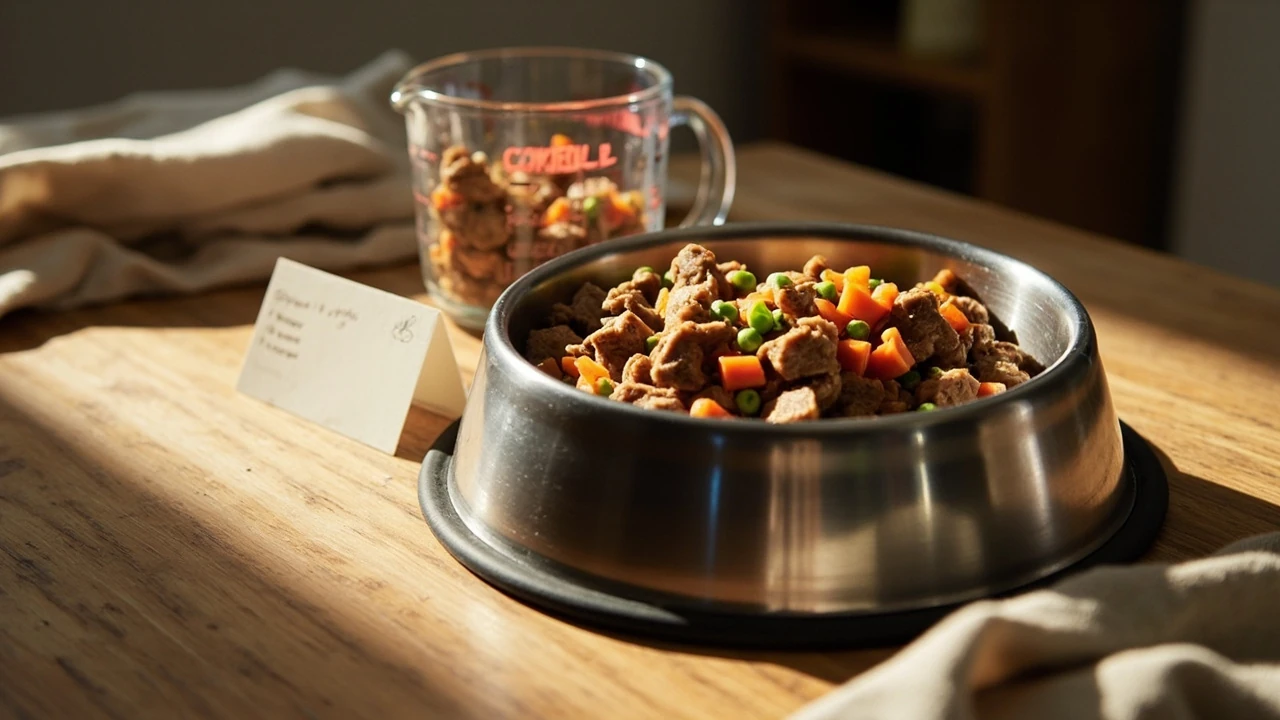
A fresh tray of portioned, gently cooked meat, vegetables, and rice arrives at your door, and your dog inhales it in about ninety seconds. That single scene is the entire reason Ollie dog food exists, and it is also the reason people searching for the brand usually have a stack of follow-up questions that go well past the homepage: what is actually in the recipe, who formulated it, how the subscription works, whether a fresh diet really beats a good kibble, and whether the price makes sense for the dog in front of you.
This guide walks through Ollie as a product, a service, and a feeding decision. The goal is not to sell you a subscription. It is to give you the same working knowledge a thoughtful pet store manager, a veterinary technician, or a regular user would have after a few months with the brand, so you can decide whether the model fits your dog and your routine.
Ollie dog food at a glance
Ollie is a direct-to-consumer fresh dog food company that cooks small batches of human-grade ingredients, portions them to a specific dog’s calorie target, and ships them frozen on a recurring schedule. The brand was launched in 2016 by Alex Douzet and Randy Jimenez, and its pitch is built on three ideas: feed dogs the way humans feed themselves, control portions for bodyweight, and remove the guesswork from switching foods.
The product is sold only through the Ollie website. There is no retail shelf presence, no Amazon storefront, and no veterinary channel. Everything from the intake questionnaire to the subscription pause button lives inside the customer dashboard. That structure shapes almost every other decision the company makes, from packaging size to recipe design, so it is worth understanding before looking at the recipes themselves.
For most readers comparing the brand to kibble, canned food, or other fresh competitors, the useful questions fall into a few buckets:
- What the recipes contain and how they are cooked
- How the brand calculates portions for an individual dog
- What the subscription looks like in practice, including price and shipping
- How it compares nutritionally to a premium kibble and to other fresh services
- Which dogs and owners are a poor fit, despite the marketing
Those five areas cover roughly ninety percent of the decision. The rest of this article expands on each one and ends with a practical checklist for anyone sitting on the checkout page.
What is actually in an Ollie recipe
Ollie’s core lineup is four fresh recipes and one baked dry option, all formulated to meet AAFCO nutrient profiles for adult dogs or for all life stages depending on the recipe. The fresh recipes are chicken, beef, turkey, and lamb, and the dry product is a baked kibble-style recipe sold as Ollie Baked.
The ingredient lists are short, which is a deliberate choice. For example, the chicken recipe is built around chicken, rice, carrots, peas, spinach, and a vitamin and mineral premix, with a named source for each supplement such as taurine, vitamin E, and zinc. The beef version uses beef, sweet potatoes, lentils, kale, and a similar supplement blend. The protein source is named at the species level, and the carbohydrate sources are recognizable whole foods rather than generic grain fractions.
Cooking happens at a single co-manufacturing facility in the United States that the brand describes as human-grade, which is a regulated term tied to USDA standards for human food production facilities rather than to the final ingredient list. The food is gently cooked in small batches, not retorted at the high temperatures used for many canned products, and it is then portioned, vacuum-sealed, and flash-frozen for shipping.
There is no artificial preservative, no added color, and no rendered fat in the recipes. The fat comes from the named protein, from oils such as sunflower oil, and from whole-food sources like sweet potato. Because the food is shipped frozen and thawed in the refrigerator, shelf life is days, not months, and that single fact rules the entire user experience.
| Recipe | Primary protein | Primary carbohydrate | Texture | Typical use |
|---|---|---|---|---|
| Chicken | Chicken | Rice | Soft, chunky | Standard starter recipe for most adult dogs |
| Beef | Beef | Sweet potato | Soft, dense | Dogs that prefer red meat flavor |
| Turkey | Turkey | Rice | Soft, moist | Common alternative for chicken-sensitive dogs |
| Lamb | Lamb | Rice | Soft, aromatic | Dogs with multiple protein sensitivities |
| Ollie Baked | Chicken or beef | Oats, brown rice | Dry, biscuit-like | Backup kibble for travel, topper, or mixed feeding |
The recipes are designed to be nutritionally complete on their own. You do not need to add a vitamin powder or rotate proteins to meet AAFCO standards, although many users do rotate between recipes for variety or to test tolerance.
How the portion calculation actually works
Ollie’s onboarding quiz is the part of the brand that gets the most attention, and it is also the part that creates the most surprise. The quiz asks for breed, age, current weight, target weight, body condition, activity level, and any health notes such as allergies or sensitive stomach. The result is a daily calorie number and a per-meal gram amount for the specific recipe the dog is matched to.
Internally, the company describes the calculation as a maintenance energy estimate adjusted for target body weight, then converted into grams using the recipe’s measured calorie density. The math is not unusual. What is unusual is that the gram count is printed on every single tray, so the user does not have to weigh food or remember a number across orders. The packaging is the prescription.
That said, the brand recommends a real-world check after the first two to four weeks. If a dog is losing weight faster than the plan anticipates, the daily portion is increased slightly. If a dog is holding weight above target, the portion is reduced. The dashboard has a built-in weight tracking tool, and customer support can adjust the recipe in either direction without restarting the subscription.
One practical note: the brand rounds portions to the nearest tray size, and tray sizes are designed to keep daily waste within roughly half a portion. For most medium and large dogs this is invisible. For very small dogs, the thawing rhythm becomes a real consideration because a partially used tray is good in the refrigerator for three to four days.
What the subscription looks like in practice
Every order ships in an insulated box with dry ice or gel packs, depending on the destination and the season. The brand publishes a shipping map and adjusts insulation levels for warmer regions. Delivery is on a fixed cadence that the customer chooses at checkout, usually every two, four, six, or eight weeks, and the cadence is locked to the dog’s portion size.
Inside the box, each meal is in its own vacuum-sealed tray with a printed label that includes the recipe, the portion in grams, and the dog’s name. A printed quick-start card explains how to thaw, how long thawed food keeps, and how to transition from a previous food. A larger recipe card lists ingredients and a feeding guide.
Skipping, pausing, and canceling are handled inside the dashboard. There is no phone queue, no email back-and-forth, and no cancellation fee. Skips are useful for households that mix fresh food with another diet, and they are the most common way people manage price without leaving the subscription entirely.
The plan auto-renews before each ship date, and a reminder email goes out a few days before. Customers can change recipe, change portion, change cadence, or change address up to a cut-off window that is clearly marked in the account page. The cut-off window is the single most common source of customer service tickets, so it is worth noting at signup.
How Ollie dog food compares to premium kibble
Comparing a fresh, refrigerated product to a shelf-stable kibble is a little like comparing a chef’s plate to a packaged lunch. They both feed a dog, and they both meet AAFCO, but the cost structure, the storage model, and the feeding ritual are different. A useful comparison looks at four attributes at once: ingredient quality as the customer can verify it, calorie density, price per day, and convenience.
| Attribute | Ollie fresh | Premium kibble |
|---|---|---|
| Primary protein source | Named whole meat, USDA human-grade | Named meat meal or fresh meat first, depending on brand |
| Moisture content | Around 70 percent, similar to homemade | Under 12 percent, shelf-stable |
| Calorie density (kcal per cup or per 100 g) | Lower per gram, so portions are larger by weight | Higher per gram, so portions are smaller by weight |
| Price per day for a 30 lb adult | Higher, in the range most owners expect from fresh | Lower, often by a factor of three to five |
| Storage | Frozen or refrigerated | Pantry |
| Prep time per meal | Thaw, portion, scoop | Scoop |
Three practical takeaways from that table:
- Per cup, fresh food looks more expensive. Per day, the gap is smaller than the price per pound suggests, because the moisture content means a dog eats more grams of fresh food to hit the same calorie target.
- Convenience differences are real. A kibble bowl is ninety seconds of work per meal. A fresh bowl is a few minutes of thawing and scooping, plus a sink full of trays to wash or recycle.
- Ingredient transparency is the strongest reason owners switch to fresh, and it is also the most subjective. If your current kibble already uses named proteins and a clean supplement list, the difference in finished bowl may be smaller than the marketing suggests.
For a deeper look at the food marketing side of fresh, cooked, and human-grade claims, the Wikipedia overview of pet food is a useful orientation point for what these terms legally mean in the United States.
How Ollie compares to other fresh dog food services
The fresh dog food category has matured quickly, and Ollie is one of three or four brands that consistently come up in the conversation. The honest comparison is not “which is best” but “which is best for this dog and this routine.” The table below lines up the practical differences most owners care about.
| Service | Product style | How portions are set | Typical price band | Storage model |
|---|---|---|---|---|
| Ollie | Gently cooked, frozen, portioned trays | Quiz plus a printed portion on each tray | Mid to upper for fresh | Frozen, thaw in fridge |
| Competitor A (chef-cooked, refrigerated) | Cooked, refrigerated rolls or cups | Calculator at checkout, scoop to weight | Similar to Ollie | Refrigerated, faster turnover |
| Competitor B (custom dry blend) | Custom kibble blend, dry shipped | Quiz plus a printed cup amount | Lower than most fresh | Pantry |
| Competitor C (vet-formulated fresh) | Cooked, prescription-style fresh | Veterinarian involvement required | Higher, especially for therapeutic diets | Refrigerated or frozen |
For readers who want a sense of how brands like Ollie present their food brand positioning, the article on food photography that actually sells the dish gives a useful sense of how the visual identity of a fresh, portioned product shapes buyer expectation.
Who Ollie dog food is genuinely for
After a few years of customer reviews, veterinary write-ups, and word-of-mouth patterns, the households that tend to stay on Ollie look a lot like each other. The brand is a strong fit when several of these are true:
- You have a single dog or a small number of dogs, and you can keep straight trays in a freezer.
- Your dog is at a healthy adult weight and you want portion control that is printed on the package.
- You are willing to plan thawing on a weekly rhythm and accept that one meal a day may come from the fridge rather than the freezer.
- You have a budget that comfortably supports a premium fresh food without trading off veterinary care or other essentials.
- You want to feed a named-protein, supplement-transparent diet and you value ingredient lists you can read in plain language.
The brand is a weaker fit in other situations, and the website does not lean hard enough into those cases to be useful. Ollie is a poor fit if any of the following applies:
- Your dog requires a prescription or therapeutic diet for a specific medical condition. Ollie’s recipes are complete and balanced for healthy dogs, but they are not a substitute for a prescription renal, urinary, or hepatic formula.
- You share custody, board the dog frequently, or rely on multiple family members to feed on a strict schedule. Fresh food complicates handoffs.
- You live in a small space without a freezer, or you travel with your dog and need a pantry-stable option.
- You are feeding multiple dogs of very different sizes. The portion algorithm is set per dog, and per-tray pricing tends to push larger dogs onto kibble toppers and smaller dogs onto multi-pack trays.
- Your dog is a notoriously picky eater who has refused every previous food. Fresh food helps, but it does not solve preference problems by itself, and the subscription makes trial and error expensive.
Price, value, and the real cost per day
Ollie publishes prices on its website, and they shift by recipe, by dog size, and by shipping zone. The useful comparison is not the price per box but the price per day for the specific dog you actually have. Two households on the same plan can spend meaningfully different amounts.
For a 25 to 30 pound adult dog, a typical plan lands somewhere in the mid-range of fresh food pricing, and a 50 to 70 pound adult can roughly double that. The price per day falls as portion sizes rise because the brand does not scale linearly with bag size, and the cheapest gram of fresh food on the menu is usually in the largest plan for a medium or large dog.
A simple way to sanity-check the price is to divide the plan total by the number of days it covers, then compare that daily number to the cost of a high-quality kibble at the same maintenance calorie target. If the fresh plan costs three to four times as much per day, you are looking at the typical spread for a brand of this kind. If it costs less than twice as much, the brand has likely discounted the introductory order, which is common and worth knowing before you set expectations for renewal pricing.
For readers who think about food pricing professionally, the patterns in menu pricing strategies that protect margin without losing guests are an interesting parallel. Fresh dog food and small-plate restaurant pricing share the same arithmetic: ingredient cost, portion control, and the premium that comes with naming what is actually in the dish.
Switching a dog to Ollie without an upset stomach
Any diet change carries some risk of loose stool or a skipped meal, and a fresh food switch is no exception. The brand publishes a transition schedule that runs over seven to ten days, and that window is the most common place for a smooth handoff to go wrong because owners move too fast.
- Days one and two: roughly seventy-five percent of the previous food, twenty-five percent of the new Ollie recipe, mixed into one meal.
- Days three and four: fifty-fifty split, watching stool and appetite.
- Days five and six: twenty-five percent previous food, seventy-five percent Ollie.
- Day seven onward: full Ollie portions at the gram amount printed on the tray.
A few practical notes that the printed card does not always spell out:
- If stool softens, hold the current ratio for an extra two days before moving forward. Do not push through loose stool to finish the schedule.
- If a dog refuses a meal, warm the food slightly. Refrigerator-thawed Ollie is closer to room temperature than most owners expect, and a few seconds in warm water releases more aroma than a full microwave.
- Do not mix in toppers, treats, or table food during the transition. The point is to give the gut one new variable to adapt to, not five.
- If your dog has a history of food sensitivities, run the transition with a single recipe for at least three weeks before rotating. The lamb recipe is the most common starting point for sensitive dogs because it avoids the two most common proteins.
- Always wash hands and bowls after handling raw or fresh-cooked pet food, the same way you would for raw chicken in your own kitchen.
- If your dog has a known medical condition, ask your veterinarian to review the nutrient analysis on the brand’s website before switching. Fresh diets can be higher or lower in protein, fat, and phosphorus than kibble in ways that matter for kidney, liver, and cardiac patients.
- Watch bodyweight in the first eight weeks. The portion algorithm is a starting point, not a guarantee, and a five percent shift in adult weight in either direction is a reason to adjust the daily gram count.
- Skipping the transition. The seven-day schedule exists for a reason, and a fast switch is the single most common cause of a bad first impression.
- Over-ordering at signup. The introductory plan is sized to last longer than most owners expect, and a too-large first box is harder to pause than a smaller one.
- Feeding by eye instead of by gram. The portion is printed for a reason, and free-feeding a fresh food plan is a fast path to a weight problem.
- Mixing recipes too early. Rotation is fine once a dog is stable, but switching recipes inside the first month makes it impossible to tell which one caused a reaction.
- Treating the dashboard as set-and-forget. The weight, activity, and life-stage questions that drive portions change over time, and a yearly update keeps the plan aligned with the dog in front of you.
- Freezer and refrigerator space: do you have room for two to four weeks of trays at a time, and a clean shelf for thawing?
- Daily routine: is the same person feeding the dog most days, and can that person commit to thawing on a schedule?
- Budget: does the daily cost fit comfortably for at least three months, including the renewal price after any introductory discount?
- Health status: is your dog healthy, or is there a condition that needs a prescription or veterinary diet instead?
Storage, thawing, and the daily routine
The daily rhythm is what determines whether a fresh food subscription becomes a quiet habit or a source of friction. The system Ollie ships assumes a working freezer, a working refrigerator, and roughly the same feeding time every day.
A common pattern is to move a stack of trays from the freezer to the fridge two days before they are needed. Each tray thaws over about twenty-four hours and is good in the refrigerator for three to four days once thawed. Some owners portion at thaw time into a sealed container and leave the rest of the tray sealed, which extends usable time slightly.
Leftover food should be discarded after the printed window. Fresh food has no chemical preservative, so it spoils the way human leftovers do, and a dog with a sensitive stomach will find the difference before an owner does. The packaging is recyclable in many curbside programs, and the brand lists local guidance on its site by zip code.
Veterinary, nutritional, and safety considerations
Fresh, human-grade dog food has been studied more in the last five years than in the previous two decades combined, and the general findings are consistent: dogs fed complete and balanced fresh diets show similar or better coat and stool scores than dogs fed premium kibble, and they show no consistent disadvantage in blood markers. The honest summary is that the difference is real but modest for most healthy adult dogs, and that fresh food is not a treatment for any specific disease.
The cautious framing matters. Ollie recipes are formulated to meet AAFCO nutrient profiles for adult maintenance or for all life stages, depending on the recipe. The brand works with veterinary nutritionists, and the formulations are reviewed for nutrient completeness. None of that replaces a conversation with your own veterinarian, especially for puppies, seniors, or dogs on medication.
For readers who want a wider grounding in how complete and balanced pet food is regulated, the Association of American Feed Control Officials publishes the official nutrient profiles that brands reference on their labels. It is the most authoritative non-Wikipedia source for understanding what “complete and balanced” actually means on a dog food package.
Three safety notes worth keeping in mind regardless of the brand:
Common mistakes owners make with Ollie dog food
After a few months of customer patterns, a small list of mistakes shows up again and again. None of them are deal-breakers, but each one is worth avoiding.
How Ollie fits into a broader feeding strategy
Most long-term users do not feed Ollie exclusively. They mix it. A fresh meal at breakfast, a measured portion of a high-quality kibble at dinner. A few tablespoons of fresh food on top of kibble to entice a reluctant eater. A fresh food base for most of the week and a baked kibble backup for travel days. The brand supports this by offering Ollie Baked as a compatible dry product, which keeps the rotation inside one nutritional philosophy.
If you are running a mixed feeding strategy, the most useful thing to do is split the daily calorie target between the two foods rather than feeding each at full portion. A 50-50 split by calorie is the easiest place to start, and most dogs settle into it within a couple of weeks. The cost per day falls, the storage pressure eases, and the diet is still anchored by the fresh recipe you actually want to be feeding.
For readers who build menus and product lines around exactly this kind of mix, the piece on turning one signature product into a month of content translates the same idea into a restaurant context, and it is a useful frame for thinking about how a single hero product can carry a broader lineup.
Frequently asked questions
Is Ollie dog food worth the price compared to premium kibble?
For most healthy adult dogs, the difference in day-to-day outcome between a high-quality kibble and a fresh, human-grade food is modest. Ollie is worth the price if you specifically value named proteins, a short ingredient list, and portion control that is printed on every tray. It is harder to justify if the cost forces trade-offs in other parts of your dog’s care.
Does Ollie dog food need to be refrigerated?
Yes. Trays ship frozen and should go straight into the freezer. Move what you will use in the next two to three days into the refrigerator to thaw. Once thawed, a tray is good in the refrigerator for about three to four days. Do not refreeze a thawed tray.
Can puppies eat Ollie dog food?
The recipes formulated to AAFCO all life stages profiles are appropriate for puppies at the printed portions. Because puppies grow fast, the portion needs to be revisited every few weeks, and your veterinarian should be part of that conversation. The brand also publishes a puppy-specific intake path inside the quiz.
How long does an Ollie box last in the freezer?
Sealed trays are best used within the printed window on the box, which is set conservatively for safety. Stored at standard freezer temperatures, the unopened box is good for the full window on the label. Once a tray is opened or thawed, the refrigerator clock starts.
What is the best Ollie recipe for dogs with sensitive stomachs?
The lamb recipe is the most common starting point for sensitive dogs because it uses a single novel protein and a simple carbohydrate base. Many owners stay on a single recipe for at least three weeks before rotating, which gives the gut time to settle and makes any reaction easier to attribute.
Can I mix Ollie with kibble?
Yes, and many owners do. The cleanest approach is to split the daily calorie target between the two foods rather than feeding each at full portion, which keeps bodyweight stable and gives the gut a single, predictable feeding pattern to adapt to.
Is Ollie dog food AAFCO approved?
Ollie’s recipes are formulated to meet AAFCO nutrient profiles for adult maintenance or for all life stages, depending on the recipe. AAFCO does not “approve” finished pet foods in the same way it approves drugs, but a complete and balanced claim backed by an AAFCO profile is the standard reference for nutritional adequacy in the United States.
How does Ollie handle returns or refunds?
The brand stands behind a first-box satisfaction promise for new customers, and the dashboard has a clear path for skips, pauses, and cancellations. Refund handling for damaged shipments is handled by customer support and is typically resolved by replacing the affected trays rather than crediting the account.
Does Ollie use veterinary nutritionists?
Yes. The brand works with veterinary nutritionists to formulate and review its recipes, and the team includes individuals with board certification in veterinary nutrition. The full roster is published on the brand’s website.
How do I know which portion size to order?
The intake quiz returns a daily gram amount and a recommended cadence. Start with the printed portion for the first two to four weeks, track bodyweight, and adjust up or down in small steps if weight drifts away from the target. Customer support can also adjust the plan based on what you see at home.
A practical way to decide whether Ollie is right for your dog
Before you click subscribe, run your dog’s situation through four short checks. They take about five minutes and they are the most reliable way to know whether Ollie is a good fit or whether a different feeding model will serve you better.
If three of those four answers are clearly yes, Ollie dog food is a reasonable subscription to try. If two or more are uncertain, start with a smaller plan, run it for one billing cycle, and use the dashboard to decide whether the model is one you want to keep. The brand is built for that kind of trial, and the pause button is there for exactly the households that need it.