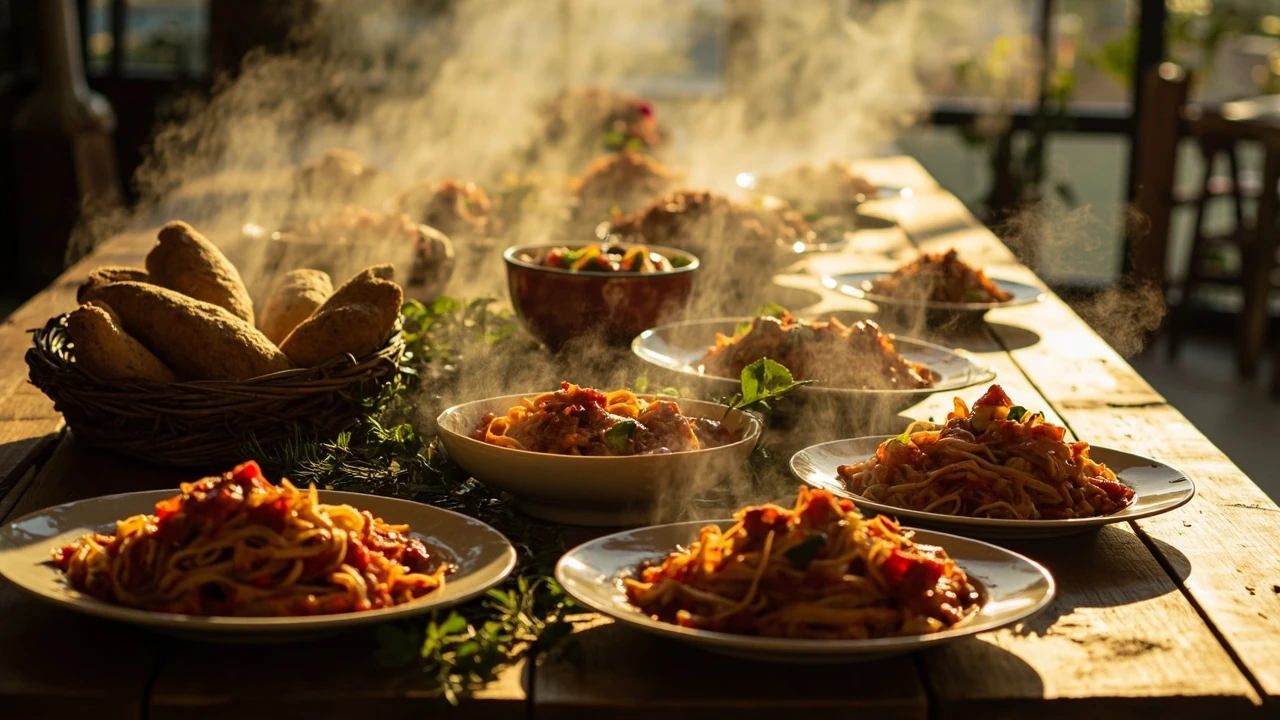
Olive garden catering: a complete guide to feeding a crowd the Italian-American way
The first time a host runs the numbers on feeding thirty, fifty, or a hundred guests, plain restaurant trays stop looking like a deal. The math quietly shifts toward family-style catering, and the phrase olive garden catering tends to surface the same evening. People are not really asking for a literal corporate catering program from the chain restaurant. They are asking a broader question: how do we put a generous, dependable Italian-American spread on a table without anyone spending the whole party in the kitchen?
This guide treats that question seriously. It walks through what “olive garden catering” usually means in practice, how to plan a menu, how to scale portions for real crowds, what the realistic cost per guest looks like, and where the gaps usually appear. It also covers setup, timing, delivery, and a few common mistakes that turn a celebratory meal into a logistical headache. The aim is to leave a host with a working plan, not a fantasy menu.
What “olive garden catering” usually means in 2026
Search results for this phrase split into three different intents, and the differences matter because the planning work is not the same.
- Carry-out and delivery trays from a local Olive Garden location for a small home gathering. Olive Garden does offer ToGo catering trays in many U.S. markets, and the menu centers on pasta, salad, and breadstick family trays.
- Family-style Italian-American catering in the style Olive Garden is associated with: big bowls of pasta, simple green salad, warm bread, red sauce, and a few chicken or seafood proteins. Independent Italian restaurants and catering kitchens fill this role in most cities.
- DIY olive garden catering, where the host cooks the spread themselves using Olive Garden-style recipes, scaled to a headcount, and serves it on long platters to recreate the feeling at home.
All three are valid. Which one is right depends on budget, headcount, kitchen capacity, and how much the host wants to actually be a guest at the party. The rest of this guide covers the practical questions each path raises.
Olive Garden catering trays: what the chain actually offers
Olive Garden’s catering program is built around a small set of family trays designed to feed groups, not a fully custom event menu. Understanding the structure helps when the host is comparing it to other options.
According to the Olive Garden catering and ToGo pages, the chain offers trays in the following general categories:
- Create Your Own Pasta trays in small, medium, and large sizes, typically described as feeding roughly 8 to 12 guests per large tray depending on appetite and sides.
- Entrée trays featuring pre-set options such as Chicken Alfredo, Five Cheese Ziti al Forno, Chicken Parmigiana, and Shrimp Scampi.
- Salad and breadstick trays that can be added as sides, with unlimited breadsticks available in catering bundles at many locations.
Trays are usually priced per tray rather than per guest, which is helpful for budgeting. The catch is that headcount math gets fuzzy when pasta is the only entrée. A good rule of thumb is to plan for about one pound of cooked pasta per three adults as a main course, or one pound per four to five adults when several sides and proteins are on the table. A large pasta tray in the Olive Garden catering lineup lands in a similar zone, but appetite varies, so hosts ordering for mixed groups are wise to round up.
Ordering is typically done through the Olive Garden website or the Olive Garden app, with a lead time of at least 24 hours. Same-day availability is possible at busy locations but should not be assumed. Payment is per order, and most locations handle pickup or scheduled delivery through a third-party service for an added fee.
Family-style Italian-American catering from an independent caterer
When “olive garden catering” is really a request for an Italian-American family-style spread, an independent caterer is usually the better fit. The format is what most people picture when they imagine the experience: large bowls of pasta, platters of proteins, baskets of bread, pitchers of sauce, and a salad big enough to feed a choir.
How a family-style Italian menu is typically built
A well-balanced family-style menu leans on a small number of components, each prepared in volume. Overloading the menu is the most common planning mistake, because every extra dish multiplies the kitchen work and the buffet line slows down.
| Course | Typical components | Why it works for groups |
|---|---|---|
| Antipasto or salad | Caesar or mixed greens, sometimes antipasto skewers or caprese | Sets a fresh tone, fills the plate before hot food arrives |
| Pasta | One baked pasta (ziti, lasagna) plus one sauced pasta (penne vodka, rigatoni) | Two styles cover vegetarians and meat eaters without ballooning the menu |
| Protein | Chicken parm, chicken piccata, sausage and peppers, or salmon | Adds variety and perceived value without doubling kitchen work |
| Side | Roasted vegetables, garlic mashed potatoes, or seasonal greens | Balances richness, gives a non-pasta option |
| Bread | Warm breadsticks, focaccia, or sliced Italian bread | Cheap, crowd-pleasing, fills unexpected hunger |
| Dessert | Tiramisu, cannoli, cookies, or a sheet cake | Pre-ordered tray desserts travel well and serve many |
Two pasta choices, one protein, one vegetable side, salad, and bread is a comfortable template for a party of 20 to 60. For a 100-person event, the same template still works, but quantities scale up, the kitchen needs more burners, and holding temperatures become a real concern.
Portion planning that does not fall apart at the table
Bad portion planning is the single most common reason a catered Italian meal disappoints. Guests remember being hungry far more vividly than they remember being over-served. The table below gives a realistic working baseline for a family-style Italian spread, not a banquet plated dinner. Readers who want more background can use the Olive overview as a reference while reviewing this point.
| Item | Per-guest baseline | Notes for 2026 planning |
|---|---|---|
| Salad (mixed greens or Caesar) | 1.5 to 2 oz dressed greens | Plan 25 percent more for hearty appetites and outdoor events |
| Cooked pasta | 5 to 6 oz per guest as a main | Dried pasta roughly doubles in weight when cooked, so order by dry weight when self-cooking |
| Protein | 5 to 7 oz cooked per guest | Bone-in proteins require more raw weight; budget 25 percent over |
| Bread | 1.5 to 2 pieces per guest | Always round up; leftover bread is rarely a problem |
| Sauce | 4 to 6 oz per guest | Cooks in large pots travel well and reheat at holding temp |
| Dessert | 1.5 portions per guest | Cutting dessert into small slices reduces over-ordering |
| Beverages (non-alcoholic) | 2 to 3 drinks in the first hour, 1 per hour after | Water and a single signature drink beats a full bar for most Italian meals |
Hosts frequently over-buy proteins and under-buy bread. Both are easy fixes at the planning stage. Confirming the guest count a week out, and again 48 hours before, also reduces the risk of cooking for ghosts or running out of the chicken parm.
Realistic cost ranges for an Italian-American family-style event
Published catering prices shift by region, season, and minimums, so a single national number is misleading. The ranges below reflect typical 2026 pricing for full-service Italian-American catering in mid- and large-sized U.S. markets. They should be treated as planning estimates, not quotes.
| Service level | Typical per-guest cost | What is usually included |
|---|---|---|
| Drop-off catering (trays delivered hot, no staff) | $18 to $32 per guest | Food in foil pans or chafer trays, disposable serving gear, no on-site staff |
| Buffet-style with servers | $32 to $55 per guest | Servers set, replenish, and break down; rentals often included |
| Plated family-style service | $55 to $95 per guest | Servers portion at the table, often includes place settings, linens, and beverages |
| DIY home cooking (ingredients only) | $9 to $18 per guest | Groceries, wine, disposables, and basic equipment |
| Olive Garden tray pickup | $10 to $20 per guest equivalent | Trays picked up or delivered, host handles setup, serving, and cleanup |
Drop-off catering is usually the best value when the host has helpers, a long table, and a way to keep food warm. Plated service is worth the premium when the host does not want to think about logistics at all, or when the venue is unfamiliar. DIY makes sense for tight budgets and small crews, but the host effectively becomes head cook for the day.
Setting up the buffet so the line actually moves
Food quality is only half the problem at a large Italian-American meal. A slow buffet line, cold pasta, or a stack of dirty plates at the wrong moment can undo a careful menu. The layout decisions below are the ones that show up in the after-action review.
- Two-sided buffet when possible. A single-sided line of forty guests takes roughly fifteen minutes to clear, and the pasta is cold by the end. A U-shape or two parallel tables halves the wait.
- Stack plates, then napkin and utensils, at the start. Guests should not be juggling forks while reaching for pasta. Pre-stacked plates near the entrance keep hands free.
- Hot food first, then salad and bread. Putting salad at the front of the line saves the delicate greens from sitting under hot chafing dishes.
- Chafing dishes with real fuel. Sterno-style cans run about ninety minutes. Plan a swap or a backup at the two-hour mark for long events.
- Label the major allergens. Gluten, dairy, nuts, and shellfish come up in a large group. Small printed cards on the table handle most questions without slowing anyone down.
For more on visual merchandising at the table, a restaurant’s approach to food photography that actually sells the dish translates surprisingly well. The same lighting, color contrast, and prop choices that make a menu image appealing help a buffet look abundant rather than institutional.
Timing the kitchen on the day of the event
A reliable schedule is more valuable than any recipe. The most common failure mode is finishing everything at once and then waiting twenty minutes for the last guests to arrive while the food cools. The fix is to time each dish so it hits the line within a ten-minute window of guest seating.
| Time before guests sit | Task | Notes |
|---|---|---|
| 4 to 6 hours | Prep vegetables, cook sauces, marinate proteins | Sauces deepen in flavor when held; chill proteins fast after marinating |
| 2 to 3 hours | Cook baked pastas, assemble lasagnas and ziti | Hold at 140°F or above; reheat small batches for second service |
| 1 to 2 hours | Set the table, light candles, set up chafing dishes | Cold drinks and ice should already be in place |
| 45 to 60 minutes | Drop breadsticks or focaccia in the oven, finish sautéed sauces | Bread goes in last so it arrives warm |
| 15 to 20 minutes | Dress salad, plate desserts, refill water | Salad wilts quickly; dress at the last practical moment |
| 0 to 5 minutes | Light the chafing fuel, cue proteins for final sauté | Proteins like chicken piccata suffer from long holds; cook in waves |
A short printed schedule taped to the inside of the kitchen door prevents the day-of brain fog that comes with hosting and cooking at the same time.
Delivery, pickup, and holding temperatures
Hot Italian food is unforgiving of cold spots. Holding temperature for hot food is generally 140°F (60°C) or above, and cold food should be held at 40°F (4°C) or below. These are the standard food-safety thresholds used across the U.S. catering industry, summarized in guidance published by the U.S. Food and Drug Administration in its Retail Food Protection resources.
For drop-off catering, ask the caterer how food will be transported. Insulated carriers, hot boxes, and pre-heated chafing dishes are normal. If a caterer shows up with loose foil pans on a sheet tray, that is a yellow flag. For pickup at a chain restaurant like Olive Garden, the host should plan to drive straight home and begin holding the food within thirty minutes. Pasta in a closed bag on a counter loses heat faster than most people expect. Readers can also consult the garden is not funding donald trump's for an independent source related to this section.
DIY olive garden catering: when cooking it yourself makes sense
Cooking the spread at home is the right call when the budget is tight, the guest list is small enough to fit in a residential kitchen, and the host genuinely enjoys cooking. It is the wrong call for a first-time host feeding eighty people on a tight timeline.
A realistic DIY menu for 24 guests
- One large Caesar salad, dressed at the last minute
- Three pounds of dried penne tossed with vodka sauce, kept warm in a slow cooker on warm setting
- One 9×13 baked ziti, finished in the oven 30 minutes before service
- 24 pieces of breaded chicken parm, baked on sheet pans, finished in a hot oven before plating
- Two dozen warm breadsticks, brushed with garlic butter
- One tiramisu from a local bakery plus a cookie tray
The equipment list is the part people underestimate. For this menu, the host needs at least two oven racks going simultaneously, a six- to eight-quart pot for pasta, a slow cooker for the vodka sauce, and a place to keep chicken parm warm. A host without that infrastructure should not promise to cook the meal from scratch.
For hosts looking at the bigger picture of building a food business around this kind of menu, the framing in From Scratch: Why Specificity Wins Food Marketing applies. A generic “Italian catering” pitch gets lost. A specific “Sunday-family-style Sicilian dinner for groups of 20 to 40” pitch wins the room.
Vegetarian, vegan, and gluten-free adjustments
Italian-American catering handles dietary restrictions better than most cuisines, but only if the host plans for them in advance.
- Vegetarians are easy. A baked pasta with cheese, a tomato-based pasta with vegetables, and a non-meat antipasto cover most guests.
- Vegans need a pasta with no egg noodles and no cheese, plus olive oil instead of butter on the bread. Marinara, arrabbiata, or a simple garlic-and-oil penne work well.
- Gluten-free guests can be served most proteins, salad (without croutons), and a gluten-free pasta. The Olive Garden chain itself has offered gluten-free rotini in many locations for years, which is one reason the phrase “olive garden catering” is sometimes shorthand for an allergy-friendly Italian meal.
Cooking gluten-free pasta in the same water as wheat pasta is the most common cross-contamination error. A separate pot and a clean colander take less than a minute and prevent a medical problem.
Beverages that pair with a heavy Italian meal
Beverage planning is often treated as an afterthought, and the meal suffers for it. A heavy Italian-American spread pairs best with beverages that cut richness rather than add to it.
- Sparkling water with lemon is the single most useful drink on the table. It resets the palate between bites and is what most people actually drink at a long Italian meal.
- A light red wine such as a Chianti, Sangiovese, or Montepulciano pairs with tomato-based pasta without overpowering it. For a crowd, two reds and one white is usually enough variety.
- A single signature cocktail such as a limoncello spritz or an Aperol spritz serves a wide range of tastes. A full bar at an Italian dinner usually results in half-drunk mixed drinks on the counter.
- Coffee and dessert wine close the meal well. Espresso after dinner is a tradition worth keeping, especially when tiramisu or cannoli is on the table.
Wine education for groups is unnecessary. Most guests want one or two reliable options, not a tasting flight. The host who plans two reds, one white, sparkling water, and one signature drink rarely runs out.
Common mistakes that ruin an otherwise good Italian catering plan
These are the issues that come up again and again in post-event debriefs. None of them are about the food itself.
- Over-ordering proteins and under-ordering bread, salad, and sauce. Pasta-heavy menus feel generous when bread and salad are abundant.
- Cooking everything at once so half the meal is cold by the time the last guests arrive. Stagger finish times by dish.
- Ignoring the table size. A six-foot table cannot hold a family-style meal for thirty. Either add a second table or reduce the menu to what physically fits.
- Skipping the headcount confirmation. A guest list that shrinks from 60 to 45 changes the entire buy. Confirming 48 hours out saves real money.
- Underestimating cleanup. Foil pans, chafing fuel cans, and rented linens pile up fast. Plan for a 90-minute breakdown, not 30 minutes.
The most underrated fix is to hire a single helper for the day. A friend or family member who handles plates, refills, and trash lets the host actually attend the party. It is the highest-leverage hour of labor available.
Working with a caterer: questions to ask before signing
Caterer quality varies more than menu quality. The same menu at two different caterers can produce wildly different outcomes because of process. The questions below separate the professionals from the improvisers.
| Topic | Useful question | What a strong answer sounds like |
|---|---|---|
| Experience | How many family-style Italian events have you done in the last year? | Specific number, names of venues, and a few menu examples |
| Staffing | Who will be on-site, and for how long? | A clear schedule with arrival, service window, and breakdown time |
| Food safety | How do you hold hot and cold food during service? | Specific temperatures, equipment, and any third-party inspection |
| Substitutions | What happens if a key ingredient is unavailable the day of? | A pre-agreed substitute list, not a “we will figure it out” |
| Pricing structure | What is included and what is billed separately? | A line-item quote covering staff, rentals, fuel, tax, and tip |
| Cancellation | What is the cancellation policy and the deposit structure? | A written schedule with refund milestones |
If a caterer cannot answer these clearly in writing, the day-of service is unlikely to be clear either. A restaurant that treats catering as a side offering, rather than a core service, often shows it. For hosts thinking about the long-term business angle of a catering program, the framing in menu pricing strategies that protect margin without losing guests applies in reverse: a clear price list signals a professional operation, and that signal wins larger bookings.
Frequently asked questions
Does Olive Garden actually offer catering?
Yes. Most U.S. Olive Garden locations offer catering trays through the ToGo catering menu, including pasta trays, entrée trays, salad, and breadsticks. The program is built around pickup or third-party delivery rather than full-service on-site catering, and the trays are designed for groups in the rough range of 8 to 12 guests each.
How much does Olive Garden catering cost per person?
Cost per person depends on how many trays are ordered and what is included. As a planning estimate, a simple pickup catering order from Olive Garden tends to land in the $10 to $20 per guest range, with drop-off delivery adding a delivery fee. Full-service Italian-American catering from an independent caterer typically costs more, but also includes staff, setup, and rentals.
How far in advance should olive garden catering be ordered?
For chain trays, 24 hours is the standard lead time, and longer is safer for large orders or weekend events. Independent caterers usually ask for a 7- to 14-day lead time for family-style events, and a written proposal and deposit are normal.
How much pasta do I need per person for a family-style Italian meal?
A good baseline is about 5 to 6 ounces of cooked pasta per guest as a main course, which translates to roughly 2.5 to 3 ounces of dried pasta per guest. Round up for hearty eaters, outdoor events, or menus with fewer sides, and round down when there are multiple proteins and breads.
Can olive garden catering accommodate gluten-free guests?
Yes, in most locations. Olive Garden has historically offered gluten-free rotini on its menu, and many catering trays can be customized with a gluten-free pasta substitute. The bigger risk is cross-contamination in the kitchen, so guests with celiac disease should confirm the caterer’s preparation process in advance.
What is the best menu for a 50-person Italian family-style event?
A two-pasta, one-protein, one-vegetable, plus salad and bread menu is a dependable template at that size. For 50 guests, that often means about 12 to 15 pounds of cooked pasta, 18 to 22 pounds of protein, two large salad platters, and 75 to 100 breadsticks. Confirming the headcount 48 hours before finalizing quantities is the single most useful step.
What is the difference between drop-off and full-service Italian catering?
Drop-off catering means the food arrives hot in disposable or rental pans and the host handles setup, serving, and cleanup. Full-service catering adds staff who set the buffet, replenish pans, plate desserts, and break down the event afterward. Drop-off is the better value when the host has help. Full-service is worth the premium when the host wants to be a guest.
Is olive garden catering a good option for a wedding rehearsal dinner?
For a casual rehearsal dinner at home or in a small venue, Olive Garden tray pickup is workable and budget-friendly. For a formal rehearsal dinner, a full-service Italian caterer is usually the better fit, because staffing, timing, and presentation matter more at that scale. Many hosts blend the two: catering trays for a casual welcome night, then a full-service Italian dinner the night before the wedding.
How long can Italian food safely sit on a buffet?
Hot Italian food should be held at 140°F (60°C) or above, and cold food at 40°F (4°C) or below, for the duration of service. The U.S. Food and Drug Administration summarizes these thresholds in its food safety guidance. As a practical rule, do not let hot food sit out for more than two hours total, and reduce that to one hour if the room is above 90°F.
What should I look for when comparing Italian catering menus?
Look for clarity on what is included, the size of each tray, the staffing model, and how the caterer handles allergies and substitutions. A vague “Italian feast” line item is a red flag. A specific menu with portion sizes, service window, and a clear pricing structure is the sign of a professional operation.