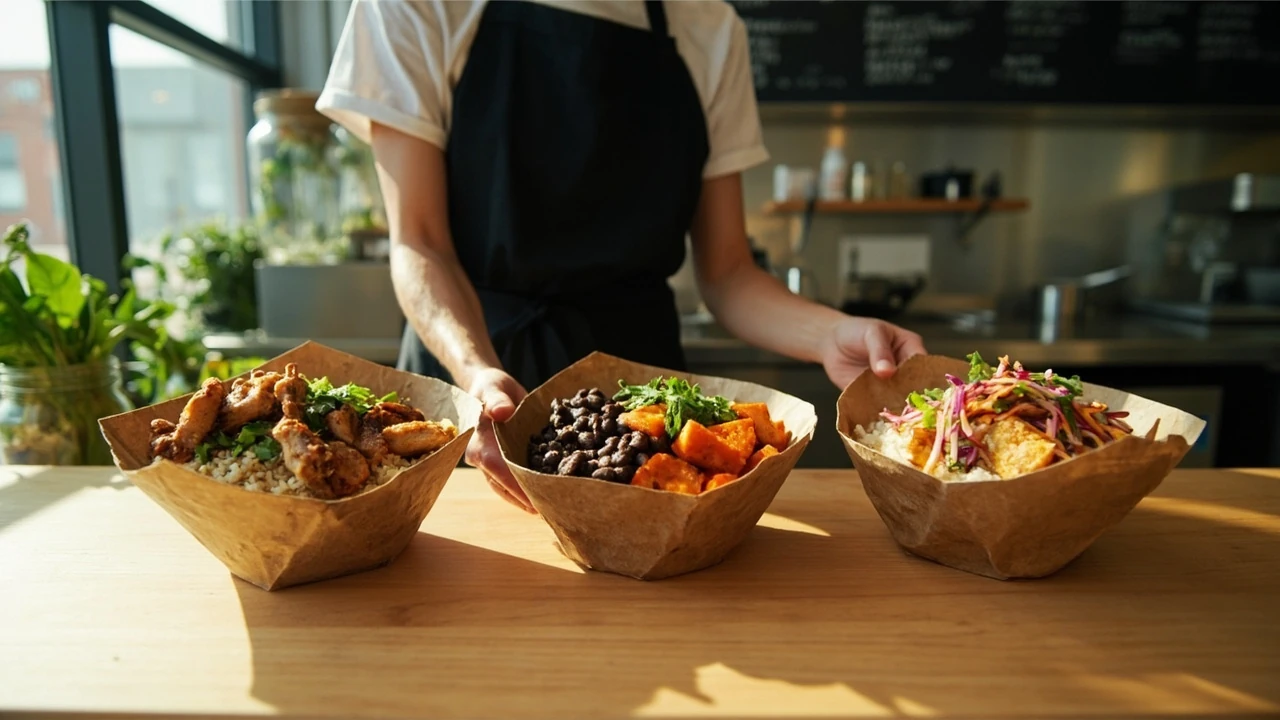
A line of guests is staring at the overhead menu, two are comparing phones, and one is quietly asking the cashier which bowl has the most protein. The question behind every order is the same: are there healthy fast food options here that I can actually feel good about, or am I settling for salad again. For restaurant operators, that moment decides whether the lunch rush turns into repeat visits or a slow drift toward the chain down the block.
This guide is written for owners, chefs, and operators who already run a fast-casual or quick-service concept and want to add or strengthen a healthier side of the menu without losing speed, flavor, or margin. It is a working playbook: what “healthy” actually means on a menu, how to design dishes that hold up under service pressure, how to price them so the food cost still works, and how to talk about the food so guests trust the claim.
Healthy fast food options that work in a real service line
Most operators do not have a health problem. They have a definition problem. “Healthy” gets used as a single word when it is really a stack of decisions: calories, protein, sodium, fiber, fat quality, processing level, and ingredient sourcing. A bowl can be high in fiber and still loaded with sodium. A wrap can be low calorie and still be mostly refined starch. A smoothie can look virtuous and quietly carry fifty grams of sugar.
The first move is to write a working definition that your kitchen can actually execute. A useful one looks like this: a healthy fast food option is a menu item that is built around a recognizable whole-food base, contains a meaningful amount of protein or fiber, keeps added sodium and refined sugar at a level that a dietitian would not flag, and can be served in under five minutes during a rush without losing its core appeal. If an item cannot clear all four of those bars, it is not a healthy option yet, it is a candidate.
From there, the work is less about adding “a healthy section” and more about rebalancing the menu so the healthier items are the easiest, not the hardest, thing to order.
What guests actually mean when they ask for healthy
Operators often overthink this. The recurring requests behind “do you have anything healthy” are surprisingly consistent across markets:
- Something that will not leave them sluggish an hour after eating
- A recognizable source of protein, not a mystery patty
- Vegetables that are treated like the main ingredient, not a sad leaf on the side
- A price that does not punish them for ordering well
- Food that still tastes like a treat, not a punishment
When a menu answers those five needs without making the guest ask, the word “healthy” almost stops mattering. People do not come in to buy a health claim. They come in to buy a meal that fits the rest of their day.
The four pillars of a healthy fast food option
It helps to have a short internal checklist that every candidate dish must clear before it goes on the board. The four pillars below are the one we use when reviewing menu additions for clients.
| Pillar | What it means in practice | What it rules out |
|---|---|---|
| Whole-food base | The core of the dish is a recognizable ingredient, not a processed blend | Items built primarily on refined starch, sugar, or industrial fillers |
| Protein or fiber anchor | Each option provides at least 20 g of protein or 7 g of fiber per serving | Side-grade salads, plain rice bowls, and sauce-heavy wraps with no real anchor |
| Honest sodium and sugar | Added sodium and sugar stay at a level that does not require a footnote | Sauces, dressings, and marinades that carry most of the sodium load |
| Service-ready | Can be assembled in 3 to 5 minutes during peak service without quality loss | Dishes that need last-minute cooking, delicate plating, or special handling |
These four pillars are the spine of the rest of the article. Every section that follows comes back to one or more of them.
Designing the menu around health, not as a corner of it
Most failed healthy menus fail the same way. The team adds two grilled chicken items, a quinoa bowl, and a “lite” version of a popular dish, then tucks them into a corner of the menu board labeled with a small green leaf icon. Sales stay flat. Six months later, the leaf section quietly disappears.
The reason is structural. Health, handled as a side category, fights the rest of the menu for attention. Health, treated as a design principle for the whole menu, changes what the rest of the menu looks like.
Start with the base, not the protein
Fast food menus tend to be organized around protein: chicken, beef, fish, plant-based. That structure pushes operators toward a default of starch and sauce. Reorganizing around the base changes the math. A base-first menu asks: what is the carbohydrate or grain foundation of this dish, and what does it carry.
Practical base options that hold up in a fast-casual line:
- Brown rice, farro, or barley, cooked in batches and held hot
- Roasted vegetables, prepped in the morning and held in a steam table
- Greens blends that include something structural, like chopped kale or shredded cabbage, not just spring mix
- Whole-grain tortillas, wraps, or pita that survive a heat lamp
- Sweet potato wedges or roasted potatoes with the skin on
Once the base is decided, the protein becomes a topping with a price tier, and the menu starts to feel modular. The same brown rice base can carry a grilled chicken, a tofu, a black bean, or a fish option, which means one prep supports four menu items.
Build two or three signature bowls, not twelve salads
Variety feels like a virtue until you watch a line back up because the kitchen is trying to build twelve different salads to order. The cleaner path is to build two or three signature bowls that capture most of the demand, then offer a small “build your own” lane for the rest.
For a 40 to 60 seat quick-service concept, a workable structure looks like this:
| Lane | Number of items | Role on the menu |
|---|---|---|
| Signature bowls | 2 to 3 | Carry the menu, train the team, anchor the brand |
| Build-your-own | 1 lane with 3 bases, 4 proteins, 6 toppings, 3 sauces | Catch the guest who wants control without exploding the prep list |
| Snack and side | 2 to 3 | Add-ons that increase average ticket without slowing the line |
| Sweet finish | 1 to 2 | Yogurt, fruit, or a small treat so guests do not feel denied |
This shape is one of the things we look for during a menu and operations audit. When the menu is structured this way, the kitchen can usually run a similar lunch volume with fewer tickets and less waste.
Sourcing and ingredient quality for healthy fast food
Health on the menu is a downstream effect of what shows up at the back door. A bowl built on commodity iceberg lettuce, industrial rice, and a frozen vegetable blend can technically hit the protein and fiber numbers, but it will not taste like a bowl worth photographing. Conversely, a beautiful heirloom grain and a gorgeous local carrot cannot save a sauce that is mostly sugar and salt.
Two sourcing decisions do most of the work.
Pick three or four ingredients you will not compromise on
Every operator has a list. The list usually starts with the protein and ends with the bun. The healthier the menu wants to be, the more important it is to be ruthless about a short list of non-negotiables. Common ones we see in well-run healthy concepts:
- Chicken that is raised without routine antibiotics and air-chilled, not water-added
- Plant proteins, especially tofu and tempeh, that are non-GMO and minimally processed
- Cooking fats that are stable at high heat, such as olive oil, avocado oil, or a high-oleic sunflower
- Grains that are whole, not refined, and cooked in-house or by a real supplier, not a powder
The list does not need to be long. It needs to be enforced. When the cost of chicken goes up, the temptation is to swap to a cheaper supplier. For a menu that promises healthier options, that is the moment to either hold the line or quietly drop the claim from the menu.
Audit the sauce shelf
Most of the sodium and hidden sugar on a “healthy” menu lives in the sauce. A clean, simple sauce program is one of the highest-leverage moves an operator can make, because the same sauce can rescue a boring grain bowl or sink a beautiful piece of fish.
A practical sauce audit looks like this:
- Pull every bottle and bag on the line, including house-made and branded
- Read the nutrition panel for sodium and added sugar per 100 g
- Rank them from cleanest to heaviest
- Replace or reformulate anything in the bottom third
- Standardize portion size with a squeeze bottle or a measured ladle
This is also where the menu’s health claim lives or dies. A bowl with 600 mg of sodium from the sauce and another 600 from the protein is not a healthy option, no matter how pretty the base is.
Cooking methods that protect nutrition and flavor
How food is cooked matters as much as what is cooked. A grilled chicken breast is a different nutritional object than a breaded and deep-fried one, even before the breading enters the picture. The same is true of vegetables: a roasted vegetable is a different ingredient than the same vegetable boiled and held for two hours.
For a fast-casual line, the methods that consistently work are the ones that are forgiving at scale.
| Method | Best use on a healthy menu | Watch out for |
|---|---|---|
| Flat-top grilling | Lean proteins, vegetable planks, halloumi | Overcooking, especially on chicken breast |
| High-heat roasting | Sheet-pan vegetables, tofu, sweet potato | Overcrowding the pan, which steams instead of roasts |
| Sous vide and sear | Lean proteins where consistency matters | Equipment cost and food safety holding time |
| Steaming | Greens, broccoli, dense grains | Overcooking and a “school cafeteria” feel |
| Pickling | Toppings, slaws, and condiments that add brightness without sodium |
Deep-frying is not off the table. A lightly breaded, quickly fried piece of protein, served on a whole-grain base with a vegetable-forward topping, can absolutely be a healthy option if the rest of the bowl does its job. The rule is not “no fryer.” The rule is “no fryer as the only technique on the menu.”
Hold and recovery rules
Health claims and food safety live next door. A grilled chicken breast held hot for two hours is a different food than one held for thirty minutes, both nutritionally and microbiologically. Operators running a healthy menu need a written hold policy that covers:
- Maximum hold time for each protein, by temperature
- Visual cues for when an item has passed its window
- What happens to the item next: discount, donation, or discard
- How the team records actual hold time during a rush
This kind of operational detail is one of the small things that separates a healthy concept that lasts from one that quietly drifts back into commodity food after a hard summer.
Building the build-your-own lane so it does not become chaos
A build-your-own bowl lane is the most flexible part of a healthy fast food menu and the easiest to get wrong. Done well, it gives every guest a path to a healthy option. Done poorly, it produces a line of bowls covered in ranch and crispy noodles, and a kitchen that cannot keep up with topping prep.
The structure that works in most kitchens has four layers, each with a short list.
| Layer | Recommended number of options | Example for a Mediterranean-leaning menu |
|---|---|---|
| Base | 3 | Brown rice, mixed greens, warm farro |
| Protein | 4 | Grilled chicken, salmon, falafel, roasted tofu |
| Toppings | 6 | Cucumber, tomato, pickled onion, olives, roasted pepper, herbs |
| Sauce | 3 | Yogurt herb, lemon tahini, green chili |
Three plus four plus six plus three is sixteen combinations before the guest starts to mix, and the prep list is small enough to run on a single steam table. If the kitchen is larger, the layer counts can stretch, but the ratio tends to hold: more toppings, fewer bases, never more than four proteins.
Two guardrails keep the lane from drifting off-message:
- Cap the number of indulgent toppings. Crispy noodles, croutons, bacon bits, and cheese can all live on the line, but they should not dominate the visual layout. Put vegetables in the most accessible position, and put the indulgent toppings last so the bowl builds up with greens first.
- Use portion-controlled sauce. A heavy-handed sauce can undo a carefully built bowl in three seconds. Either pre-portion the sauce in the back or use a controlled pour spout that the team cannot override.
Pricing healthy fast food options without losing margin
Healthy fast food has a reputation for being expensive to produce. Some of that is real, and some of it is a margin problem disguised as a food cost problem. A bowl with grilled salmon, organic greens, and a pile of toppings is genuinely a more expensive build than a fried chicken sandwich on a commodity bun. The question is whether the menu reflects that cost in a way the guest will accept.
A simple test is to take the menu item apart by layer and price each layer honestly, then assemble the bowl back to a target food cost.
The layer-cost method
For a build-your-own menu, layer costing is the cleanest way to keep the lane profitable without giving up on health.
| Layer | Cost range as a share of bowl price | How to keep it in line |
|---|---|---|
| Base | 8 to 12 percent | Cook in-house from dry grains; avoid pre-portioned single-serve packs |
| Protein | 25 to 40 percent | Tier proteins by cost: a plant option, a poultry option, a premium option |
| Toppings | 8 to 15 percent | Standardize portions with a small scoop, not a hand |
| Sauce | 2 to 5 percent | Pre-portion in the back or use a measured pour |
| Packaging | 3 to 6 percent | Choose one bowl size and one lid; do not customize per bowl |
When the protein layer is the only one over 25 percent, the bowl has room to breathe. When multiple layers are over, the price either climbs to a point the guest will not accept, or the food cost slips into the red and the dish quietly disappears from the menu after a bad month.
For concepts that want to keep the entry price below a certain threshold, a “build your own” lane with a default base and a default protein is usually the cleanest way to do it. Premium proteins become upcharges, not separate menu items, which keeps the menu short and the price visible. This is one of the patterns we use when we rebuild a menu’s pricing structure with a client.
Marketing and language: how to describe healthy options without overclaiming
Most healthy menu language fails in one of two directions. Either it leans on the same generic words every other concept uses, or it makes a specific claim that the kitchen cannot always back up. Both are fixable.
Words that have lost most of their meaning on a quick-service menu include “fresh,” “light,” “fit,” “wholesome,” and “clean.” They are not wrong, but they are not different. A guest scanning a board has no way to tell which concept is using the word more honestly.
Words that still work tend to be specific and observable:
- The actual cooking method: grilled, roasted, slow-cooked
- The actual ingredient claim: “house-cooked grains,” “no sugar added marinades,” “rotisserie chicken with the skin on”
- The actual portion: “a full 5 ounces of protein,” “a base of two vegetables and a grain”
- What is not in the dish, when it matters: “no added sugar,” “no fryer on this side of the menu”
Specificity is also what protects the brand from a guest who feels the food did not live up to the language. “Grilled chicken on a bed of farro with roasted vegetables and lemon-tahini sauce” is a promise the kitchen can keep. “Wholesome power bowl” is a promise the kitchen cannot.
For a deeper look at how language choice affects a food brand, the piece on specificity winning in restaurant marketing covers the same idea from a positioning angle.
Photos and descriptions that match the food
One of the fastest ways to break trust on a healthy menu is to photograph a bowl with toppings that are not actually on the build-your-own line, or to show a portion size that is bigger than what gets served. Guests notice, even when they cannot articulate what is off. The food photography should match the portion, the toppings, and the lighting the kitchen can actually deliver at noon on a Tuesday.
Photographing every menu item in the same bowl, on the same background, with the same garnish, does more for trust than a stylized shoot. This is part of why a photography style that matches the real dish tends to outperform a high-end one in a quick-service context.
Operating rhythm: training, par levels, and waste
Healthy fast food is more sensitive to operational drift than a conventional menu. A burger can survive a tired line. A bowl with limp greens, a dry piece of protein, and a sauce that has been sitting out for an hour tells a different story, and guests read it as “the healthy food here is not good,” which is harder to recover from than “the burger was fine.”
Training the line on the new items
Adding a healthier lane without retraining the line is one of the most common reasons a healthy concept quietly gives up. The team needs to know the new items as well as they know the old ones, which means:
- A short written description of each bowl, including the protein portion, the base, and the sauce pairings
- Tasting time on the line before each shift for the first two weeks
- A clear recipe for the build-your-own lane, including the order of layers and the scoop size for each topping
- A simple rule for what to do when a guest asks for a substitution that breaks the dish
Substitutions are where the menu’s health story can quietly unravel. “Can I get double ranch” is fine. “Can I get a bowl with the rice, no greens, double cheese, and the crispy onions on top” turns the healthy bowl into something else. The team needs a script that says yes to the guest without losing the menu’s logic.
Par levels and waste
Healthy bowls tend to be more produce-heavy than a conventional menu, which means produce waste is the first place to look when food cost drifts. A workable par system has three parts:
- A morning prep sheet that lists the exact weight of each topping, by item, for the expected day part
- A mid-day check at the busiest point to see what is running low and what is running over
- An end-of-day waste log that captures both prepped and unsold food, by weight and reason
Most concepts that run a healthy menu for a quarter or more find that two or three toppings consistently overprep, and one or two consistently run short. That pattern is the starting point for tightening the par sheet and protecting margin without shrinking the menu.
Measuring whether the healthy options are actually working
Adding healthy fast food options is not a one-time project. It is a recurring part of menu engineering, and it needs to be measured like one. Three numbers tell most of the story.
| Metric | What it tells you | Where to find it |
|---|---|---|
| Share of check that includes a signature bowl | Whether guests are choosing the healthy items or only the sides | POS mix report, filtered by item |
| Average ticket on a bowl vs. a sandwich | Whether the bowl is carrying its weight on revenue, not just on philosophy | POS report, average by item category |
| Waste as a share of produce purchases | Whether the prep system is keeping up with actual demand | Inventory log plus waste log |
If the bowl share is low after two full months on the menu, the problem is usually one of three things: placement on the board, price relative to the rest of the menu, or a description that does not make the dish sound appealing. Each of those has a different fix, and the fix is rarely “add more bowls.”
For a fuller view of how these numbers fit into the rest of a menu, the menu engineering approach used at this site is a useful next read.
Common mistakes when adding healthy fast food options
Most of the failures we see in this space come from a small number of recurring mistakes. They are worth naming directly, because they are easy to fall into and hard to see from inside the kitchen.
- Treating healthy as a side category. A small “healthy” corner of the menu gets less traffic, which makes the items harder to keep fresh, which makes them worse, which makes the section smaller. The fix is to design the whole menu around the four pillars, not to add a corner.
- Hiding the best items in the middle of the board. Eye-tracking on menu boards consistently shows that the top left and the center of the board do the heavy lifting. A bowl that lives in the bottom right will underperform the same bowl placed at the top.
- Letting the sauce shelf drift. Sauces are where the menu’s health story lives, and they are also the easiest thing to let slide when the team is busy. A monthly sauce audit is non-negotiable for a healthy concept.
- Skipping the photography refresh. When the photo on the board shows a bowl with toppings that are no longer on the line, the menu stops being a promise and starts being a suggestion.
- Pricing the bowl like a side dish. A bowl built on a real protein, a real grain, and a real portion of vegetables cannot be priced like a side. If the math does not work, the answer is usually to drop a topping, change the protein tier, or raise the price by a dollar. It is rarely to shrink the portion into something that does not satisfy.
Frequently asked questions
What counts as a healthy fast food option in a commercial kitchen?
For a working definition, a healthy fast food option is a menu item built around a whole-food base, anchored by at least 20 g of protein or 7 g of fiber per serving, with added sodium and sugar at a level that does not require a footnote, and that can be assembled in three to five minutes during a rush without losing its quality. If an item cannot clear all four of those bars, it is a candidate, not yet a healthy option.
How many healthy items should a quick-service menu carry?
Most operators do not need a large healthy section. Two or three signature bowls, supported by a build-your-own lane with a short topping list, will cover most of the demand without exploding the prep list. The healthy share of the menu is usually 30 to 50 percent of items, but a larger share of the food cost and prep time, which is why the design matters more than the count.
Is it cheaper to build a healthy bowl than a sandwich?
It depends on the protein. A bowl built on beans, rice, and vegetables is usually cheaper to produce than a sandwich built on a branded bun, a branded sauce, and a branded protein. A bowl built on grilled salmon, organic greens, and specialty grains can be the most expensive item on the menu. The honest move is to price each bowl by its actual food cost and then decide which protein tiers are worth the margin.
How do I talk about healthy options without making claims the kitchen cannot keep?
Use specific, observable language. “Grilled chicken on farro with roasted vegetables and lemon-tahini sauce” is a promise the kitchen can keep. “Wholesome power bowl” is not. The strongest healthy menus are the ones that describe what is actually in the dish, in the order the guest will eat it.
What is the biggest mistake operators make when adding healthy items?
Treating healthy as a side category. A small “healthy” corner of the menu gets less traffic, which makes the items harder to keep fresh, which makes them worse, which makes the section shrink. The fix is to design the whole menu around the same four pillars, not to add a corner.
How do I keep a build-your-own bowl from becoming a mess of toppings and ranch?
Cap the number of indulgent toppings, put vegetables in the most accessible position, and use portion-controlled sauce. Three to four proteins, three bases, six toppings, and three sauces is enough to give the guest real choice without giving up control of the bowl.
Do I need a separate fryer for the healthy side of the menu?
No. Frying is a method, not a verdict. A lightly breaded and quickly fried protein, served on a whole-grain base with a vegetable-forward topping, can be a healthy option if the rest of the bowl does its job. The rule is not “no fryer.” The rule is “no fryer as the only technique on the menu.”
How long does it take for a new healthy menu to find its audience?
Most concepts need at least two full menu cycles, often closer to 90 days, before the share of check that includes a healthy item settles into a stable number. The first month is mostly a learning period for the team and a discovery period for the guest. Pulling the items because the first month was slow is one of the more common ways a healthier menu fails.
How do I measure whether the healthy options are working?
Three numbers tell most of the story: the share of checks that include a signature bowl, the average ticket on a bowl compared to a sandwich, and produce waste as a share of produce purchases. If the bowl share is low after two full months, the problem is usually placement, price, or description, not the food itself.
Can a small operator run a healthy menu without raising prices?
Sometimes, but not always. The cleanest path is to keep a build-your-own lane with a default base and a default protein at an accessible price, then charge upcharges for premium proteins and add-ons. That keeps the entry price honest and lets the kitchen recover margin on the upgrades, which is where most of the willingness to pay actually lives.
What to do next with your healthy fast food options
The fastest way to start is to put the four-pillar test in front of every item on the current menu. The ones that already pass are the foundation. The ones that almost pass are the next round of menu development, and the ones that fail are either going to be quietly cut or quietly rebuilt. From there, the work is to pick two or three signature bowls, design a build-your-own lane with a short topping list, and run the kitchen and the marketing on the same definition of “healthy” for at least one full quarter before changing anything.
One useful next step: pull the last four weeks of POS data and look at the share of check that includes a vegetable-forward or protein-bowl item. That number is the baseline. Whatever the next menu change does to that number is the truest measure of whether the healthier options are actually working, or just sitting on the board.