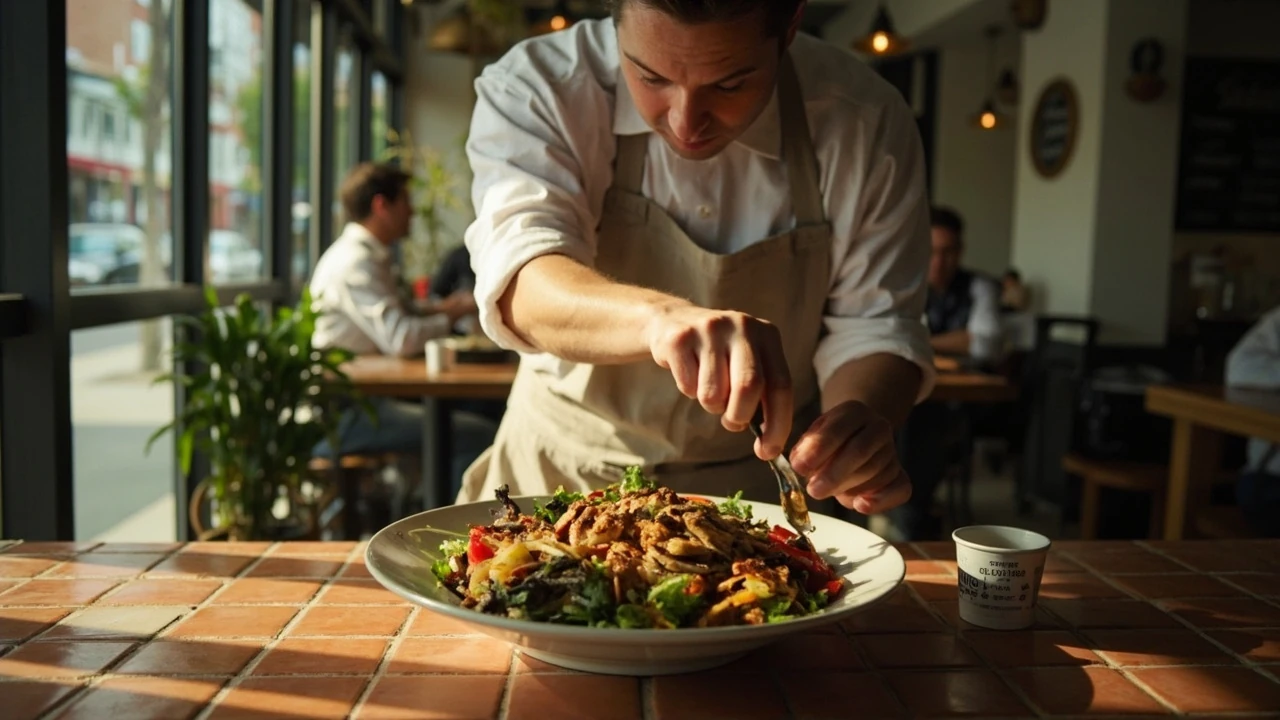
Gluten free restaurants: a practical guide for operators and guests
A diner with celiac disease sits down at a busy restaurant on a Saturday night, asks about gluten free options, and waits to see how the server reacts. That reaction is the entire business. Whether the front-of-house team pauses, smiles, and explains what is safe, or shrugs and says “we have salad,” is the line between a restaurant that quietly wins loyal regulars and one that loses them to the place down the street. Gluten free restaurants are not defined by a single substitute ingredient. They are defined by repeatable habits in the kitchen, the front of house, and the supply chain that turn a dietary need into a normal part of how a restaurant runs.
This guide is written for two readers at the same time. Operators running independent restaurants, cafés, food trucks, and small chains who want to add or improve gluten free service without rebuilding the menu. And guests who want to know what separates a serious gluten free operation from a kitchen that simply stocks one bag of rice flour. Both sides need the same language: clear ingredients, honest limits, consistent execution, and a kitchen that takes cross-contact seriously.
What “gluten free” actually means in a restaurant context
Gluten is a group of storage proteins found in wheat, rye, barley, and their close relatives such as spelt, farro, kamut, triticale, and certain ancient wheats. Oats are naturally gluten free but are usually contaminated with wheat in the field or during transport, which is why a kitchen that claims to be gluten free usually uses only certified gluten free oats. The term “gluten free restaurants” covers a wide spectrum, from places that simply label a few menu items as gluten friendly, to operations that run a fully separate prep line and train every cook on cross-contact.
For a guest with celiac disease, gluten is not a preference. Ingestion of even small amounts triggers an immune response that damages the lining of the small intestine over time. For someone with a wheat allergy, gluten is a histamine reaction trigger. For a person with non-celiac gluten sensitivity, symptoms are real but the mechanism is less well defined. These groups have different tolerances and different risks, which is why the strongest gluten free restaurants speak in terms of ingredients and process rather than vibes.
Regulators in many markets now treat “gluten free” as a defined labeling term. In the United States, the FDA sets a threshold of less than 20 parts per million of gluten for a product labeled gluten free. The European Union, Canada, Australia, and several other regions use similar thresholds. Restaurants are not always required to follow the same labeling rules as packaged food, but a serious operator treats the same threshold as a working standard for their kitchen.
The trust stack: how guests evaluate a gluten free restaurant
Most diners with a real need do not pick a restaurant because the website says “gluten free friendly.” They build a small mental checklist and look for signals. Operators who understand the order of those signals can design their communication accordingly.
| Signal a guest looks for | What it actually tells them | Where it usually appears |
|---|---|---|
| Clear menu icons or sections | The kitchen has thought about gluten as a category, not a side note | Print menu, online menu, QR code menu |
| Direct, specific staff answers | Front-of-house training has happened recently | Phone call, reservation chat, in-person questions |
| Visible kitchen hygiene | Cross-contact controls are real, not just a policy on paper | Open kitchen, chef’s counter, pass window |
| Ingredient transparency | The kitchen can trace what is in each dish | Allergen sheet, supplier list, prep notes |
| Honest limits | The restaurant will not bluff through a hard question | Server response, chef’s note, social replies |
| Repeat guest relationships | The system holds up over time, not just on launch day | Reviews, regulars, community groups |
The order matters. A stylish menu icon does not save a kitchen that cannot answer where the tamari is sourced. An open kitchen does not help if the line cook drops croutons on the gluten free plate during plating. The signals have to line up.
Designing a gluten free menu that does not punish the chef
The most common mistake when a restaurant adds gluten free options is to convert one signature dish and stop. The result is a menu that offers a tired chicken breast with steamed vegetables while the regulars order the real cooking. A better approach is to start with the menu the kitchen already loves and ask three questions for each dish.
- Is the core protein, produce, or technique naturally free of gluten, or is the gluten load coming from one swap-able component such as soy sauce, a thickener, or a breading?
- What is the minimum change required to make this dish safe, and does that change also keep the dish appealing to guests who are not avoiding gluten?
- What is the cross-contact risk at each station, and can the dish be finished on a clean surface with clean tools?
Dishes built on rice, corn, potatoes, legumes, eggs, dairy, meat, fish, vegetables, and fruit are usually easy wins. A rice bowl with grilled fish, a corn tortilla taco, a steak with roasted potatoes, or a polenta cake with roasted mushrooms are all naturally gluten free or near-gluten free by construction. The work is in the finishing touches. Soy sauce becomes tamari or coconut aminos. Wheat-based pasta becomes rice, corn, legume, or gluten free wheat pasta produced in a dedicated facility. A flour dredge becomes rice flour, cornstarch, or a gluten free blend.
| Menu category | Common gluten source | Low-friction gluten free swap | Watch-out |
|---|---|---|---|
| Asian sauces | Regular soy sauce, oyster sauce, hoisin | Certified gluten free tamari, coconut aminos, rice-based equivalents | Hidden wheat in premade stocks and marinades |
| Pasta and noodles | Wheat pasta, egg noodles, ramen | Rice noodles, rice pasta, chickpea pasta, gluten free wheat pasta | Shared boiling water and strainers |
| Breaded and fried items | Wheat flour dredge, panko, tempura batter | Rice flour, cornstarch, gluten free panko, dedicated fryer | Shared fryer oil with wheat-battered items |
| Salads and bowls | Croutons, crispy noodles, wheat-based dressings | Toasted seeds, rice noodles, cornstarch-thickened dressings | Bulk dressings made in shared prep space |
| Desserts | Wheat flour, pastry, cookies | Flourless chocolate cake, meringue, rice pudding, almond-based bakes | Cross-contact with regular bakeware and shared ovens |
| Breakfast items | Pancake batter, waffles, toast, English muffins | Buckwheat or rice flour pancakes, dedicated gluten free toast | Shared toaster, shared batter bowls |
The swap list is the easy part. The hard part is making sure those swaps survive a Saturday night rush when a cook is juggling ten tickets. That is where process design comes in.
Cross-contact control: the real difference between safe and sorry
Cross-contact is the transfer of gluten from one food, surface, or tool to another. It is not the same as cross-contamination with bacteria, because gluten is a protein that does not multiply, but the harm to a guest with celiac disease is just as real. A cutting board wiped down after slicing bread, a fryer that cooked wheat-battered fish an hour ago, a shared ice cream scoop, a cutting wheel dragged through a flour-dusted pizza and then through a gluten free crust, all of these are common failure points.
A solid gluten free program usually includes the following controls. Operators do not need every one of them on day one, but the program should be honest about which controls are in place.
- Dedicated gluten free prep surfaces or strict color-coded boards and tools stored separately.
- A separate fryer, or at minimum a documented filtration cycle and a known last-use time for shared oil.
- Single-use gloves changed between tasks, especially after handling bread, regular pasta, or wheat-based batters.
- Stored flour, wheat-based batters, and breading kept on lower shelves so crumbs do not fall into gluten free pans.
- Gluten free items finished and plated last, or finished in a clearly separate area with clean tools.
- Ingredients with hidden gluten, such as soy sauce, malt vinegar, certain spice blends, and processed meats, sourced as certified gluten free versions and labeled in the kitchen.
None of this is exotic. The cost is mostly in training and discipline, not in equipment. The return is a small but extremely loyal segment of guests who will drive past three other restaurants to eat at yours.
Front-of-house training that actually works
Servers are the front line of any gluten free program. A line cook can run a perfect plate, and a server can still undo that work in thirty seconds by telling a guest, “the kitchen says it should be fine.” Training has to cover three layers.
- Knowledge. Staff should know what gluten is, the difference between celiac disease, allergy, and preference, and which menu items are safe by design versus safe with a modification.
- Process. Staff should know exactly what to do when a guest declares a gluten free need: who to flag on the ticket, which menu items to steer toward, which questions to ask the kitchen, and how to handle a dish that comes back wrong.
- Language. Staff should use calm, specific words. “That dish is built on tamari and a dedicated rice noodle, and we keep it on a separate board,” is much more reassuring than “I think we can do that.”
Role-play is more effective than a slide deck here. Once a quarter, run a short scenario in pre-shift where one person plays a guest with celiac disease asking about a specific dish and another answers. The goal is to build muscle memory, not to grade people.
Communicating gluten free options without overpromising
Trust collapses the first time a guest with celiac disease gets sick after eating at a restaurant that promised to be safe. Overpromising is the most common form of self-sabotage. A menu should never say “100 percent gluten free” unless the entire operation, including prep, storage, and service, can back that claim. A more accurate framing is “gluten free friendly” with a clear list of items that are designed to be safe and a clear invitation to ask the kitchen about modifications.
Useful communication tools include a small allergen key on the menu, a separate gluten free menu insert that lists the safe items, an online filter that hides dishes that are not safe, and a short note on the website describing how the kitchen handles cross-contact. Guests read these. A page that quietly says “we have a dedicated prep area and our team is trained on celiac safety” carries more weight than a banner that says “gluten free paradise.”
Pricing and margin: protecting the bottom line
Gluten free ingredients, especially pasta, bread, and baked goods, often cost more than their wheat-based counterparts. A box of gluten free pasta can run two to three times the price of standard pasta, and a dedicated gluten free loaf of bread can cost three to four times more. Operators can absorb that, share it, or charge for it, but they should do it deliberately.
| Approach | What it looks like | Margin impact | Guest perception |
|---|---|---|---|
| Absorb the cost | Same menu price, slightly higher food cost on modified dishes | Small ongoing drag on food cost percentage | Most welcome, but unsustainable at scale without volume |
| Modest upcharge on specific items | Gluten free pasta at a clearly labeled surcharge | Recovers ingredient cost, can be communicated transparently | Generally accepted when explained as a real cost difference |
| Premium gluten free section | A small selection of higher-margin gluten free dishes priced like specials | Recovers cost and adds margin | Works when the section is genuinely well designed, not an afterthought |
| Build gluten free into menu engineering | Use naturally gluten free ingredients as the default in several dishes | Neutral to slightly positive, since the base ingredients are often affordable | Best long-term play, because the menu is honest by construction |
The most resilient approach is the last one. A menu that uses rice, potatoes, legumes, eggs, vegetables, and naturally gluten free grains as the default for many dishes is easier to run, easier to explain, and more forgiving of ingredient price swings. The kitchen still needs a few specialty substitutes, but it is not depending on them for every plate.
Sourcing, suppliers, and paperwork
For a small operator, the supplier side of a gluten free program is mostly about avoiding surprises. The most common surprise is a hidden source of gluten in a product that has always seemed safe. Regular soy sauce contains wheat. Some chicken broths contain wheat. Certain spice blends use wheat as a filler. Malt vinegar starts with barley. A few mustards are stabilized with wheat. Even some blue cheeses are made with bread-based cultures.
A useful habit is to keep a current ingredient reference for every item on the menu, noting the brand, the product, and whether it is certified gluten free. The list does not need to be elaborate. A shared spreadsheet with the menu item, the main ingredients, the supplier, and a yes or no on gluten free status is enough. When a supplier reformulates, the kitchen finds out before the guest does.
For larger operations or any restaurant that wants to make strong public claims, third-party certification through a recognized gluten free certification body is worth considering. The cost and audit effort are real, but certification provides a paper trail that some guests and corporate clients actively look for.
Marketing gluten free service without looking opportunistic
The fastest way to lose credibility with the gluten free community is to treat it as a marketing line. A restaurant that runs “gluten free” across every social post while serving cross-contact-heavy food in the kitchen will be named in a bad review within a month. Better marketing is quiet, specific, and grounded in what the kitchen actually does.
- Photograph real gluten free dishes, not a stock image of a salad, and post them on the same cadence as the rest of the menu.
- Use a small allergen filter on the online ordering page so guests can see at a glance what is safe.
- Train front-of-house to mention gluten free options naturally when a guest asks about dietary needs, without leading with it as a sales pitch.
- Share the story behind the program in a short note: why the kitchen decided to take it seriously, which suppliers are used, and what guests can expect.
- Engage with local celiac and gluten sensitivity groups, who tend to share well-run restaurants more than poorly run ones.
Good food photography that actually sells the dish matters here. A flat, dim photo of a sad chicken breast with rice telegraphs carelessness. A bright, honest photo of a rice bowl with grilled fish, herbs, and a clean plate telegraphs care, which is the entire product.
Common failure modes and how to avoid them
Most gluten free problems in restaurants come from the same handful of root causes. A short list is useful because it doubles as a checklist.
- Same fryer, different menu. A fryer used for wheat-battered items is the single most common cross-contact source. Either dedicate a fryer or document and audit a filtration routine that guests can be told about honestly.
- Shared board, same knife. A board wiped down after slicing bread is not a clean surface. Color-coded boards stored in separate places, or dedicated gluten free boards, are a small fix that prevents big incidents.
- Hidden wheat in sauces. A house teriyaki or a “special” chili crisp made with regular soy sauce will quietly undo a careful menu. Audit the pantry, not just the printed recipes.
- Untrained substitutions. A cook who hears “gluten free” and swaps a wheat-based bun for a gluten free bun while the same grill still has bun crumbs is a predictable failure point. Train on the full chain, not just the ingredient.
- Server improvisation. A server who says “I’m sure it’s fine” without checking is the most expensive person in the building. Empower them to ask, and reward them for pausing to check.
Each of these is a system problem, not a character problem. Fixing them means changing the system, not blaming a line cook who was never trained on the new bun.
How guests can vet a gluten free restaurant before booking
For diners doing the work of choosing where to eat, the same trust stack applies in reverse. A quick set of checks before walking in can save a wasted trip and a real health risk.
- Read the menu online. Look for clear icons or a separate gluten free section. If the menu has no gluten markers at all, call ahead.
- Call at an off-peak time and ask a specific question, such as “how is your gluten free pasta cooked, and is it the same water as your regular pasta?” The quality of the answer matters more than the specific words.
- Check reviews from guests with celiac disease, not just generic “lots of options” reviews. Local celiac support groups and apps are often more reliable than general review platforms.
- Look for an allergen guide or an ingredient list on the website. A restaurant that publishes its ingredients is usually more serious than one that does not.
- Visit early in the service when the kitchen is calm, for the first time. A test meal on a quiet Tuesday is more useful than a stressful Friday trial.
None of these are foolproof, but together they are a strong filter. A restaurant that clears all five is doing real work, not just window dressing.
Building the program over time
A serious gluten free program is not a launch event. It is a rolling set of small improvements. A simple rollout that many operators find workable looks like this.
| Phase | Focus | Concrete outputs |
|---|---|---|
| Month 1 | Audit and training | Ingredient reference list, staff training session, menu icons or section, online allergen filter |
| Month 2 | Cross-contact controls | Color-coded boards, dedicated fryer or documented routine, pantry audit of hidden gluten sources |
| Month 3 | Communication | Updated website copy, server scripts, social posts featuring real gluten free dishes, outreach to local celiac groups |
| Month 4 and beyond | Iteration | Quarterly review of incidents and near-misses, menu tweaks based on guest feedback, supplier reviews and reformulation watch |
Operators who treat this as an ongoing discipline, not a one-time project, end up with a quiet, durable advantage. The gluten free segment of a restaurant’s guest base is small in percentage terms but high in frequency and loyalty, and it tends to refer heavily to friends and family who also have dietary needs.
Where the broader strategy connects
Gluten free service is rarely a standalone strategy. It sits inside a larger set of decisions about menu design, supplier relationships, and brand positioning. The same kitchen that takes gluten seriously is usually the kind of kitchen that handles other allergens and dietary needs with the same discipline. That discipline shows up in other parts of the business. Menu pricing strategies that protect margin and the careful engineering of a menu that keeps its soul are the same conversation viewed from different angles. A gluten free program that is bolted on tends to be expensive and fragile. A gluten free program that is woven into how the menu is built, priced, and communicated tends to be both profitable and durable.
Frequently asked questions
What is the difference between “gluten free” and “gluten friendly” on a menu?
Gluten free typically means a dish is designed to be safe for people with celiac disease and is prepared with ingredients and processes that keep gluten below defined thresholds, often less than 20 parts per million. Gluten friendly usually means the dish can be modified to be gluten free, but it is not guaranteed by default. Restaurants should be honest about which is which and how the kitchen handles cross-contact in either case.
Can a restaurant claim to be entirely gluten free?
Yes, some restaurants do, and they usually back the claim with strict cross-contact controls, separate prep areas, and often third-party certification. The operational bar is high. The kitchen has to manage shared air flow, shared ventilation, shared storage rooms, and shared cookware, which is harder than it sounds. A restaurant that makes this claim should be ready to show its work.
Is a shared fryer safe for gluten free items if it is filtered?
A shared fryer is risky. Wheat proteins do not break down in oil, and crumbs from wheat-battered items can survive multiple filtration cycles. The safest path is a dedicated gluten free fryer. If a dedicated fryer is not possible, a restaurant should be honest about the risk, document its process, and be ready to tell guests exactly what is being done and why.
Are oats safe in a gluten free restaurant?
Only if the oats are certified gluten free. Oats are often grown in rotation with wheat and processed on shared equipment, which leads to cross-contact. Certified gluten free oats come from growers and processors that keep the chain separate and test for gluten levels.
How should a restaurant handle a guest who says the food made them sick?
Take the report seriously, document what the guest ate, when, and after what timeline of symptoms, and pull the kitchen together to reconstruct the dish. Check ingredient labels, supplier records, and the prep routine that day. A single incident is a system signal, not a complaint to be managed. Respond to the guest with specifics, not apologies in the abstract, and share the changes that will be made.
Do gluten free menus need to be priced higher?
Not necessarily. Some gluten free ingredients cost more, especially pasta, bread, and specialty flours, but a menu that uses naturally gluten free grains, proteins, and produce as the base does not have to charge more. A small upcharge on specific high-cost items, explained honestly, is generally accepted by guests who understand the actual ingredient cost difference.
How can a small operator start a gluten free program without a big budget?
Start with an audit of what is already safe, train the front of house on how to talk about it, and rework two or three existing dishes so they are safe by design rather than by modification. Add color-coded boards and tighten the pantry. A modest, honest program that holds up over time is more valuable than a flashy launch that the kitchen cannot sustain.
What certifications or labels should a guest look for?
For packaged goods, look for a recognized gluten free certification mark. For restaurants, look for a posted allergen guide, a visible kitchen that is willing to answer questions, and a willingness to say “I do not know” rather than guess. A serious operation will often have a printed or online allergen reference. A vague promise of safety is not a substitute.
How does a gluten free program interact with other allergen programs?
Many of the same controls apply. Dedicated prep surfaces, separate utensils, careful ingredient sourcing, and well-trained staff all support gluten free, dairy free, nut free, and other allergen-aware service. A kitchen that builds these habits together usually ends up with cleaner systems than a kitchen that runs each allergen program as a separate project.
What is the most common mistake restaurants make with gluten free service?
Overpromising. The biggest reputational risk in gluten free service is a claim that the kitchen cannot back up. Honest limits, clear language, and a system that is actually followed are the foundation. A restaurant that says “we can do most of it, but here is what we cannot do and why” builds more trust than one that says “yes to everything” and then has an incident.