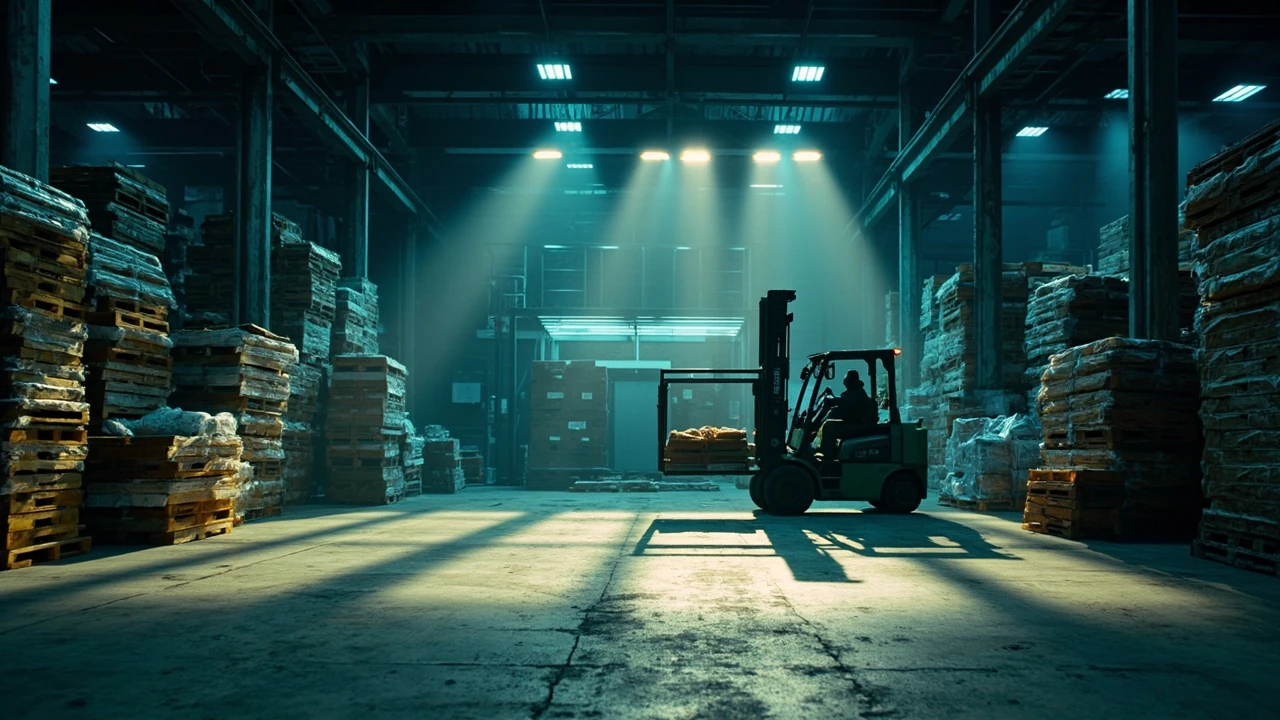
Food depot: what the term really means for restaurant buyers and operators
A food depot is a wholesale supply hub where restaurants, cafés, caterers, and small grocery operators buy ingredients, dry goods, beverages, and consumables in case quantities rather than retail packs. The phrase covers everything from a single warehouse feeding a regional group of restaurants to a multi-temperature distribution centre serving several hundred buyers each week. What separates a depot from a regular cash-and-carry is the way it is organised: bulk SKUs, account pricing, scheduled delivery windows, and buyers who arrive with a routed pick list instead of a shopping basket.
For a restaurant operator, the depot is also a working decision. The choice of which depot to use shapes food cost, menu consistency, and how resilient the kitchen is when a single supplier misses a delivery. This guide walks through how a real depot operates, how to choose one, and how to get the most out of the relationship once you are inside it.
How a food depot actually runs on a normal day
Most operators imagine a depot as a scaled-up grocery aisle. In practice the working rhythm is closer to a logistics node. Inbound trucks arrive in the early morning, pallet tags are scanned against the day’s expected purchase orders, and pickers build customer orders onto route-loaded trolleys before the first buyer walks in. The shape of that day changes a depot’s value, because every step that a depot handles well removes a task from your kitchen or back office.
A well-run depot treats receiving, slotting, picking, and outbound loading as separate functions with their own quality controls. Receiving checks count, temperature, and damage against the bill of lading. Slotting places the fastest-moving SKUs near the pick face so order assembly is fast. Picking happens in waves keyed to delivery routes. Outbound staging confirms that refrigerated, frozen, and ambient orders stay separated on the truck.
That structure matters to a restaurant buyer for a concrete reason: the depot’s discipline shows up in your invoice. If a pallet is miscounted at receiving, the shortage usually shows up in your case count, not theirs. If the pick face is poorly organised, the picker reaches for the wrong SKU and you receive the wrong item. If outbound staging is sloppy, ambient chocolate ends up next to raw chicken and the damage is on you. Picking a depot is partly a bet on how they run those four hours between four in the morning and the first delivery van leaving the bay.
The four formats a food depot can take
Not every depot looks the same. The four common formats are independent cash-and-carry outlets, member-owned buying groups, operator-owned co-ops, and third-party logistics depots that serve multiple distributors under one roof. Each format has a different cost curve and a different set of trade-offs, and a restaurant buyer usually ends up working with two of them at once.
| Format | Typical buyer | Strength | Main limitation |
|---|---|---|---|
| Independent cash-and-carry depot | Independent restaurants, small chains | Walk-in access, no membership fee, broad assortment | Less price leverage than group formats, variable quality control |
| Member-owned buying group | Multi-unit operators willing to commit volume | Lower per-case cost through pooled volume | Annual membership, minimum purchase rules, less flexibility on SKUs |
| Operator-owned co-op depot | Restaurant groups that buy and warehouse together | Direct supplier relationships, custom specs, shared margin | High governance overhead, capital tied up in inventory |
| Third-party logistics depot | Distributors and broadline suppliers | Shared infrastructure, multi-temperature handling | Indirect relationship with the depot, contract-driven access |
Choosing between these formats is rarely either-or. Many operators use an independent depot for last-minute fills and a buying group for the heavy staples. The mistake is treating the depot like a single vendor when it is really a category of supply relationships with different economics behind each one.
What a food depot sells that a regular supplier does not
The interesting question for a restaurant operator is not “what does the depot carry” but “what does the depot carry that I cannot get anywhere else.” Three things tend to differentiate a working depot from a generic broadline distributor.
- Case-break flexibility: a depot will split cases for regular buyers so you can order a half case of herbs or a third of a case of specialty cheese without paying retail.
- Off-catalogue sourcing: depot buyers often have direct relationships with regional producers and can chase down a one-off ingredient that is not on the standard price list.
- Back-of-house consumables: from cling film to sanitiser, the depot consolidates non-food supplies so the operator does not run a second vendor relationship for every roll of film.
These services are easy to underestimate until you try to operate without them. A chef who cannot break a case is forced to over-order or under-use. A manager who cannot source a one-off ingredient loses menu flexibility. A back-of-house team that orders from twelve different consumables suppliers wastes hours on purchasing each week. The depot’s job is to compress all of that into one delivery on one invoice.
How depot pricing actually works
Depot pricing looks simple from the outside: a list price per case, often with a tiered discount for volume. In practice there are four layers that an operator should understand before judging whether the price is fair.
- List price: the published per-case price, usually set weekly for produce and monthly for shelf-stable goods.
- Volume rebate: a retrospective discount that returns a percentage of spend once monthly or quarterly thresholds are hit.
- Promo allowance: a temporary reduction on specific SKUs, often funded by the manufacturer through the depot rather than by the depot itself.
- Service fee: delivery, fuel surcharge, small-order fee, and any route premium for distant drops.
| Pricing layer | How it shows up on the invoice | What to track |
|---|---|---|
| List price | Per case or per unit | Week-over-week change on your top 20 SKUs |
| Volume rebate | Credit note at month end | Whether the rebate tier actually matches your committed volume |
| Promo allowance | Reduced price on the line item | Whether the promo is on a SKU you would buy anyway |
| Service fee | Separate line: delivery, fuel, small order | Total fee as a percentage of invoice, not the absolute number |
The trap is to compare two depots on list price alone. A depot with a slightly higher list price but a generous rebate and lower service fees can easily outperform one with sharper list prices and a long tail of fees. Treat the invoice the way you treat food cost: a percentage you measure, not a number you glance at.
Choosing a food depot: a practical shortlist
Most operators choose a depot the wrong way: they walk into the closest one, take the first card the cashier offers, and never benchmark again. A useful shortlist starts with the four questions below and ends with a one-week trial.
- Assortment fit: does the depot actually stock the ingredients that drive your menu, or will you need a parallel supplier for your top ten SKUs?
- Case-break policy: will they split a case on regular items, and at what minimum quantity?
- Delivery discipline: what is their on-time rate over a month, and what happens when they miss?
- Service recovery: when a delivery is wrong, who do you call, and how fast do they resolve it?
After the shortlist, the most useful step is a paid trial: run a single week of real orders through the depot and measure fill rate, on-time delivery, invoice accuracy, and the time your team spent resolving problems. A depot that looks cheap on paper can quietly absorb hours of back-office time through credit notes, short shipments, and order corrections. The trial converts that hidden cost into a number you can compare.
Food depot vs broadline distributor: a clear-eyed comparison
Operators often use the terms depot and broadline distributor interchangeably, but the two models are organised around different promises. A broadline distributor sells a full weekly order delivered to your back door. A depot sells a walk-in or scheduled pickup with lower per-case pricing in exchange for the operator doing the transport and some of the picking.
| Dimension | Food depot | Broadline distributor |
|---|---|---|
| Pickup model | Walk-in or scheduled route pickup, buyer assembles or supervises | Delivered to the restaurant, driver assembles the load |
| Per-case price | Usually lower, especially for staples and case-break items | Higher list price, offset by delivered convenience |
| Assortment depth | Wide, including off-catalogue and regional items | Curated catalogue, designed around average operator needs |
| Order minimum | Often lower, can suit small operators | Higher minimum, sized for weekly route economics |
| Best fit for | Operators with transport, warehouse space, and menu breadth | Operators who value time over margin and want a single weekly delivery |
The honest answer for most independent restaurants is that they end up using both: a depot for staples, case-break ingredients, and consumables; a broadline for the perishable items that need cold-chain handling on a regular route. The trap is to treat one of them as the primary relationship and the other as backup, when the better mental model is two complementary channels that you tune independently.
How to set up a depot account that actually works
Once you choose a depot, the first thirty days decide whether the relationship will save you time or quietly add to it. Three setup steps matter more than anything else.
- Build a clean SKU map: align the depot’s product codes to your own recipe and inventory codes so order reconciliation and food cost reporting stay accurate.
- Set order templates by day: pre-build the order templates for each delivery day so the person placing the order is making a few targeted edits, not rebuilding the list from scratch.
- Define the credit-note workflow in writing: agree on the process for short shipments, wrong items, and quality issues, including the time window for raising a credit and the evidence the depot needs.
Most depot problems show up because the operator never wrote these three things down. A depot will tell you their terms; the value is in turning those terms into a one-page playbook that your team can follow without thinking.
Operational risks inside a food depot relationship
Depots are useful, but they are not risk-free. Four risks show up often enough to be worth naming in advance.
- Concentration risk: if 60% of your food spend sits with one depot, a single labour dispute, fire, or distribution breakdown can close half your kitchen overnight.
- Quality drift: a depot that switches your flour brand without telling you can change a dough recipe in ways the kitchen does not notice until customers do.
- Hidden fees: small-order fees, fuel surcharges, and route premiums can quietly inflate the invoice if no one tracks the total cost as a percentage of spend.
- Promo dependency: a menu priced around a temporary promo can become unprofitable when the promo ends, and the depot has no obligation to flag that to you.
None of these risks are reasons to leave a depot. They are reasons to write down the mitigations. Concentration risk is solved with a parallel supplier. Quality drift is solved with a receiving checklist. Hidden fees are solved with a monthly review. Promo dependency is solved with food cost engineering that holds a margin band regardless of the supplier’s promotional calendar.
Building a depot-friendly kitchen back office
A depot returns more value when the operator’s back office is set up to use it. Three operational habits make the difference.
- Weekly ordering rhythm: pick a fixed ordering window each week and stick to it. Depots reward predictable orders with better fill rates and fewer substitutions.
- Receiving discipline: count cases, check temperatures, and log credits on the same day the order arrives. A depot that sees consistent receiving behaviour usually reciprocates with cleaner invoices.
- Menu-cost loop: every quarter, re-cost the menu using the depot’s current prices. A depot that has crept up 3% on a staple should be visible in the food cost before it shows up in the P&L.
These three habits are unglamorous, but they are the difference between a depot relationship that quietly protects margin and one that quietly erodes it. The depot is a tool, and like any tool, it performs in line with the discipline of the person using it.
When a food depot stops being the right answer
Depots are not always the right channel. Three situations suggest that the operator should look elsewhere for a portion of their supply.
- Volume is too small to clear the depot’s minimum order or membership threshold, and the fees start to dominate the savings.
- Menu has become so specialised that the depot cannot stock the long tail of ingredients, forcing parallel suppliers and eroding the consolidation benefit.
- Geography has changed: a new location outside the depot’s route map turns the per-delivery fee into a meaningful share of food cost.
In each case, the right move is usually a partial exit, not a full one. Keep the depot for the categories where it earns its keep, and route the rest to a specialist supplier, a local producer, or a direct farm relationship. A depot is a channel, not a strategy, and channels should be reviewed the same way a menu is reviewed: by what they do for the kitchen this quarter, not what they did two years ago.
How a depot fits into broader food brand strategy
The operational question of which depot to use is really a strategic question about where the operator wants to spend time. A depot concentrates purchasing power and removes back-office work, which frees the operator to invest in the parts of the business that actually drive growth: the menu, the brand, and the guest experience. A useful way to think about it is that the depot handles the predictable, repeatable parts of supply so that the operator can focus on the parts that should not be predictable at all.
This is also why depot choice tends to matter more for independent restaurants and small groups than for large chains. A chain with a central purchasing team can run a private depot or a national contract. An independent operator has to choose between public depots, and the choice is one of the few levers they can pull that directly affects food cost without hiring another person.
Internal links from David’s World Famous
External resources
For a broader view of how wholesale food distribution shapes restaurant supply chains, the foodservice distributor entry on English Wikipedia gives a useful orientation. For a more current take on the pressures facing independent operators when they negotiate supply, the National Restaurant Association’s industry research provides regular data on operator economics and supply conditions.
Frequently asked questions
What is a food depot in plain terms?
A food depot is a wholesale supply point where restaurant and foodservice buyers purchase ingredients and consumables in case quantities. It combines a warehouse, a pickup or delivery operation, and account pricing for regular buyers.
How is a food depot different from a supermarket?
A depot sells in case quantities to account holders at trade prices and usually does not serve walk-in retail customers. A supermarket sells individual units to the public at retail prices and is not set up to break cases for regular foodservice buyers.
Do I need a business account to shop at a food depot?
Most depots require proof of a foodservice or retail business, such as a trade licence or resale certificate, before opening an account. Some cash-and-carry depots allow walk-in buyers for a small surcharge per visit, but account holders get trade pricing and delivery access.
How do food depots set their prices?
Depot prices are built from a list price per case, plus volume rebates, manufacturer-funded promos, and service fees such as delivery or fuel. Operators should track the all-in cost as a percentage of invoice rather than the headline list price.
Is a food depot cheaper than a broadline distributor?
Depots usually have lower per-case prices, especially for staples and case-break items. Broadline distributors charge more per case but include delivery, credit handling, and route-based convenience. Many operators use both side by side.
What is the minimum order size at a typical food depot?
Minimum order sizes vary by depot, but most independents set a case-count or dollar-value floor that covers the cost of picking and routing an order. Small operators should ask about the minimum before opening an account.
How do I switch food depots without disrupting my kitchen?
Run a one-week parallel trial with the new depot alongside the current one, build a clean SKU map, and only cut over the categories where the new depot has matched or beaten fill rate, price, and service. Avoid switching all categories at once.
Can a small restaurant benefit from a food depot?
Yes, particularly on staples, case-break ingredients, and consumables where the depot’s per-case price beats retail. Small operators should weigh the value of transport time and any minimum order rules against the savings.
What should I do if a depot delivery is wrong?
Log the issue on the day of delivery with photos, item codes, and quantities, and raise a credit through the depot’s service recovery process within the agreed window. A written credit-note workflow makes the difference between a quick resolution and a recurring dispute.
How often should I review my food depot relationship?
Review the relationship quarterly, looking at fill rate, on-time delivery, invoice accuracy, total fees as a percentage of spend, and food cost on the top 20 SKUs. A formal review catches drift before it shows up in the P&L.