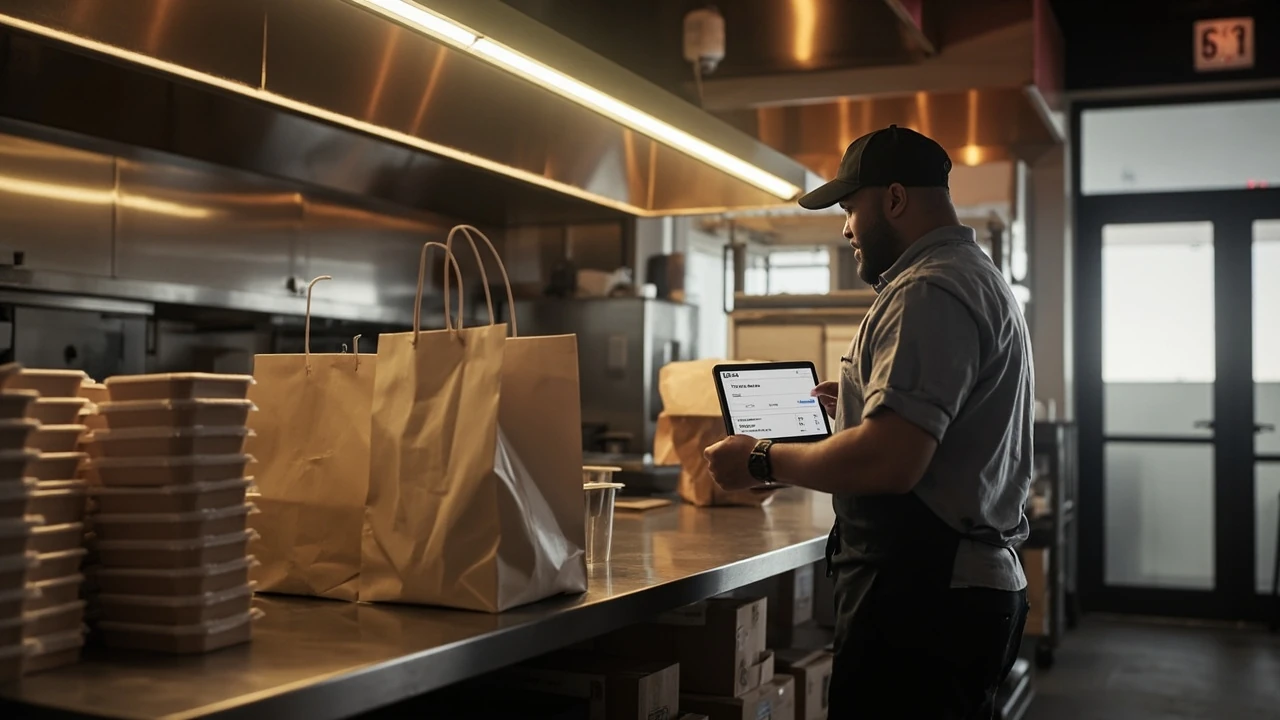
Food delivery: how restaurants can set it up to actually grow the business
Most restaurants do not lose money on food delivery because the platform fee is too high. They lose money because the menu, the packaging, and the workflow were never redesigned for off-premise eating. A kitchen that plates a $22 ribeye in eight minutes cannot deliver that ribeye in 25 minutes and expect the guest to come back. The economics of delivery are different from the economics of dining in, and the operators who treat them as the same business are the ones who complain that the third-party apps are killing their margin.
This guide is for independent restaurants, small groups, and chef-driven concepts that want to take food delivery seriously without turning the dining room into a ghost kitchen. It covers the operational decisions, the menu engineering, the packaging, the platform math, and the marketing that actually moves the needle. It is written for a working operator, not a tech investor, and it assumes you already care about your food and your guests.
Why most restaurant delivery programs quietly lose money
The conversation about food delivery usually starts with commission rates, and it usually ends there. The 25 to 30 percent that the major platforms take is real, but it is only one line on a much longer page. Before a single order is placed, a restaurant has already made several decisions that determine whether delivery will be profitable or whether it will slowly drain the dining room’s profit.
The first decision is whether delivery is a marketing expense or a profit center. Many operators treat the third-party platforms as a top-of-funnel marketing tool, accepting thin margins in exchange for new guests. That framing is fine, but it only works if the restaurant tracks the conversion from first-time app guest to repeat direct guest, and it only works if the kitchen is structured to absorb delivery volume without slowing dine-in service.
The second decision is menu design. A menu that is a carbon copy of the dining-room menu is almost always a mistake. Delivery menus need to be engineered around travel time, temperature stability, and packaging cost, and they need to be priced high enough to cover the real cost of doing business off-premise.
The third decision is operational. Delivery orders arrive in bursts, they need to be packed quickly, and they need to leave the building at a specific time. None of that happens by accident. It requires a separate packing station, a clear handoff process, and a runner who is not also serving tables.
Build a delivery menu that survives the trip, not the dining room
The single biggest mistake operators make with food delivery is sending the same food out the door that they send to a table 12 feet away. The conditions are not the same. A dish that arrives in 90 seconds at table 4 will arrive in 25 to 45 minutes at a front door across town. Sauces break, fries go soggy, steak overcooks, and garnishes wilt. The guest does not know why the food is worse. They just know it is.
Designing a delivery menu means going through every dish and asking four questions. Does the dish hold heat or temperature for 30 minutes? Does the sauce separate, soak, or become unpleasant in a closed container? Does the dish need to be assembled or finished at home? Does the dish travel flat and pack efficiently? Dishes that fail more than one of those questions are candidates to be reworked, replaced, or removed from the delivery menu entirely.
Dishes that tend to travel well
- Curries, stews, and braises in lidded containers
- Pasta baked in a tray, such as lasagna or baked ziti
- Fried chicken wrapped in a paper-lined box to vent steam
- Bowls with grain, protein, and sauce packed separately
- Pizza, especially styles that are designed to reheat at home
- Handheld items like bao, tacos packed in clamshells, or sliders
Dishes that rarely survive delivery
- Delicate fish with a crispy skin, especially salmon and branzino
- Steaks ordered medium-rare or rarer
- Salads with delicate greens dressed in advance
- Items built on textural contrast, such as crisp tortillas under wet fillings
- Dishes plated with fragile microgreens or edible flowers
The point is not that a restaurant should never serve a steak. The point is that a medium-rare ribeye ordered through an app at 7:10 pm is not the same product as the one served in the dining room. Either the menu reflects that reality with different cuts, different temperatures, or different preparations, or the restaurant is setting a guest up to be disappointed.
Price the delivery menu like a separate business
If the delivery menu is not priced differently from the dining-room menu, the restaurant is subsidizing the platform with its own profit. The math is straightforward once you write it down. Start with the food cost of the dish. Add the cost of packaging, which is usually 40 to 90 cents per order and can climb past two dollars for multi-container meals. Add the labor cost of packing the order, which is a few minutes of a dedicated role, not a side task. Then add the platform commission, the payment processing fee, and the marketing or promotion cost, if any.
For a $20 menu item on a major platform, the all-in cost can easily reach $12 to $14 before a single cent of profit is counted. That means a restaurant needs to either price the dish at $24 to $28 on the app, accept that the dish is a loss leader, or remove the dish from the platform and replace it with something more efficient.
Three pricing approaches that work in practice
- Raise prices 15 to 25 percent on the platform menu and keep the dining room menu unchanged, with a clear note that delivery prices reflect packaging and service fees.
- Bundle items into a smaller delivery menu with fewer SKUs, each priced at a level that produces a target margin after commission.
- Run a limited-time delivery-only menu with high-margin items designed specifically for the channel, and use the dining room menu for brand storytelling.
Whichever path a restaurant chooses, the discipline is the same. The delivery menu price must be set after the commission, not before. If the platform takes 30 percent, the menu price is not the same as the menu price for a guest who walks in the door.
Set up the back of house for delivery, not just for dining in
Delivery volume has a rhythm that is different from dine-in volume. A restaurant that averages 80 covers between 6 and 9 pm might get 20, 35, then 18 delivery orders in the same window, often stacked on top of the dining rush. Without a dedicated workflow, the kitchen ends up holding food while runners search for the right bag, or expediting dine-in tickets while delivery orders cool under a heat lamp. A useful background reference is the Food overview, which places this part of the discussion in context.
The fix is structural. A separate packing station near the expediter, stocked with containers, labels, and bags, removes most of the friction. A printed ticket system that shows the promised delivery time, not just the order time, gives the kitchen a clear target. And a runner whose only job during the rush is to hand off orders to drivers keeps the front of house from getting tangled in platform logistics.
Equipment and supplies worth investing in
- Insulated bags sized to the menu, not one generic bag for everything
- Vented clamshells for fried food and rigid containers for saucy dishes
- Label printers that print the order number, the guest name, and any modifiers
- A small heat lamp or warming cabinet dedicated to delivery handoff
- A dedicated tablet or terminal for the platform, kept at the packing station
None of this is expensive relative to the labor it saves. The bigger investment is the discipline of running the packing station as its own station, not as an afterthought for whoever has a free minute.
Pick the right platform mix for your concept
There is no universal answer to which delivery platforms a restaurant should use. The right mix depends on the concept, the neighborhood, the labor model, and the budget for marketing. A busy urban restaurant will get a different answer than a suburban family spot, and a chef-driven tasting-menu concept will get a different answer than a pizza counter.
How the major options compare
| Channel | Typical commission | Best fit | Main trade-off |
|---|---|---|---|
| Major third-party apps | 25 to 30 percent | Restaurants that need immediate volume and brand exposure | Highest fee, least guest data, price pressure |
| Aggregators and mid-tier apps | 15 to 22 percent | Independent restaurants in suburban or secondary urban markets | Smaller audience, less predictable volume |
| Direct ordering on the restaurant’s own site | Payment processing only, usually under 4 percent | Established restaurants with a loyal guest base and an email list | Requires marketing to drive traffic, no built-in audience |
| Phone-in delivery with a driver the restaurant employs | Labor and vehicle cost only | Concepts with a strong neighborhood following | Limited reach, no app-driven discovery |
The most resilient programs use at least two of these channels. A restaurant that relies on a single major app is one algorithm change away from a quiet Tuesday. A restaurant that runs its own ordering site and uses one or two apps for discovery tends to be more stable over the long term, because the cost of acquiring a guest on the platform can be amortized against a future direct order.
Build a direct ordering channel that actually converts
Owning the guest relationship is the only real defense against rising commission rates. Every order that comes through the restaurant’s own site, app, or phone line keeps the margin, the data, and the guest. The challenge is that there is no algorithm sending those orders in. The restaurant has to build the funnel itself.
The first piece is a clean ordering page on the website. It should load fast, show the menu without a forced sign-up, and accept the payment methods the neighborhood actually uses. Tools like the one described in The 15-Minute Food Business Website Audit are useful here, because the audit flags the kind of small friction that quietly costs a restaurant orders every week.
The second piece is a list. A simple email or SMS list, collected at the door and at checkout, is the engine of direct delivery. A monthly message with a limited-time dish, a neighborhood special, or a re-engagement offer is more valuable than any paid ad campaign, because it goes to guests who already know the food.
The third piece is packaging the offer so the guest has a reason to order direct. That can be a small discount, a complimentary item, free delivery over a threshold, or a loyalty perk. The point is that the guest should feel that ordering direct is not just a slightly cheaper version of the app. It should feel like a different relationship.
Reduce friction in the last mile
The food leaves the restaurant, and then a lot of things can go wrong. The driver takes a wrong turn. The food sits on a porch in the sun. The bag was not sealed properly. The guest cannot find the door. None of these problems are the restaurant’s fault, but all of them feel like the restaurant’s fault to the guest.
The last mile is where a lot of delivery programs quietly fail. Improving it does not require owning a fleet of cars. It requires thinking about what happens between the packing station and the front door where the guest is standing.
Practical ways to improve the last mile
- Use tamper-evident bag seals so the guest knows the order has not been opened.
- Print the order with a clear pickup window and a phone number for the driver if they cannot find the address.
- Add a single printed card in the bag with reheating or finishing instructions for items that need it.
- Photograph the packed order at the station and store the image for 24 hours in case of a dispute.
- Track which drivers and which platforms are most often associated with late or damaged orders, and route around the worst offenders.
None of these steps are dramatic on their own. Together, they are the difference between a guest who reorders next week and a guest who quietly switches to a different restaurant. For an independent reference, the china box office hit rmb20b in2020 provides additional context for this point.
Use food delivery as a marketing channel, not just a sales channel
Restaurants that treat delivery as a pure sales channel usually end up disappointed. The commission is too high, the data is too thin, and the guest loyalty is too low. Restaurants that treat delivery as a marketing channel tend to do better, because they use the platform order to introduce a guest to the rest of the brand.
The shift in thinking is simple. The first order is allowed to be break-even. The second order, the one that comes from the restaurant’s own site or from a return visit to the platform, is where the program starts to pay back. That means every delivery bag is a marketing surface, every receipt is a piece of direct mail, and every order is a chance to earn a future reservation.
What to put in the bag to bring the guest back
- A short, well-designed card with a discount on the next direct order, with a QR code that opens the ordering page.
- A small, genuine thank-you from the chef or the front of house, not a corporate marketing script.
- A note about an upcoming special, a tasting menu, or a seasonal menu that the guest might want to experience in the dining room.
- A reason to follow the restaurant on one social channel, chosen for the guest demographic, not for the restaurant’s preference.
None of this works if the food is bad or the experience is careless. A beautiful card does not rescue a cold, soggy dish. But a well-executed delivery order, finished with a small personal touch, is often the first step in turning an app guest into a regular at the door.
Measure the program with the right numbers
Most restaurants track the wrong delivery metrics. Total revenue from delivery and total number of orders are not the right numbers, because they hide the cost of the program. A more useful set of numbers treats delivery as its own P&L.
Delivery metrics worth tracking every week
| Metric | What it tells you | Where the warning line sits |
|---|---|---|
| Net margin per delivery order | Whether the program is profitable after fees and packaging | Below 8 to 10 percent, the program is fragile |
| Repeat guest rate from delivery orders | Whether delivery is producing loyal guests or one-time transactions | Below 20 percent, the program is a leaky bucket |
| Conversion from app order to direct order | Whether the marketing framing is working | Below 5 percent, the channel is not earning its place |
| On-time pickup rate | Whether the kitchen and runner are meeting the promised time | Below 90 percent, the guest experience is at risk |
| Refund and credit rate | Whether the food is surviving the trip and the menu is realistic | Over 3 percent, the menu or packaging needs work |
These numbers do not need a sophisticated dashboard. A spreadsheet updated weekly, with a single line of notes about what changed, is enough. The point is to look at delivery as a system, not as a stream of revenue.
Common mistakes when scaling a delivery program
Once a delivery program starts working, the temptation is to scale it. Volume goes up, the kitchen gets busier, and the dining room starts to feel the pressure. This is where a lot of programs quietly break. The mistakes are predictable and avoidable.
The five mistakes that come up most often
- Letting the delivery menu grow into a copy of the dining room menu, which undoes the work of engineering it for travel.
- Using the dine-in kitchen as the delivery kitchen, which slows service for both channels and burns out the line.
- Ignoring the labor cost of packing, which is real even when a single employee is doing it between other tasks.
- Optimizing for ratings instead of margin, which leads to discounting and free items that the program cannot afford.
- Failing to plan for the dead hours, when the platforms charge the same commission on three orders as they do on thirty.
None of these mistakes are exotic. They are the ordinary consequences of growing a new sales channel on top of an existing operation without changing the operation. The restaurants that handle growth well are the ones that treat delivery as a separate workflow, even when it shares a building with the dining room.
How delivery fits into a wider food brand strategy
Food delivery is a channel, not a brand. It is one of the ways a guest encounters a restaurant, and it is rarely the most important one. The strongest programs are the ones where the delivery experience feels like the same restaurant the guest would walk into, even though it is a different product in a different setting.
That means the brand has to do the work before the order is ever placed. The restaurant needs a clear point of view, a recognizable voice, and a food story that the guest can absorb from a listing, a bag, and a single card. The work of building that kind of clarity is the same work described in From Scratch: Why Specificity Wins Food Marketing, and it is what makes a delivery program feel like an extension of the dining room rather than a separate, lower-quality business.
When the brand is specific, the delivery menu can be a small, honest version of the restaurant. When the brand is generic, the delivery menu becomes a list of items competing on price, and price is a game the independent restaurant does not win.
A practical first 30 days for a new delivery program
For a restaurant that is just starting or rebuilding a delivery program, the first month is about removing as much guesswork as possible. The plan below is a reasonable starting point for a small independent restaurant with one or two locations.
Week 1: define the program
- Decide whether delivery is a marketing channel, a profit center, or both.
- Choose one or two platforms and a direct ordering setup.
- Agree on a target margin for delivery orders and a target repeat rate.
Week 2: rebuild the delivery menu
- Walk every dish and decide what travels, what needs rework, and what to drop.
- Set new delivery-only prices that cover fees, packaging, and labor.
- Order packaging sized to the new menu, not to the old one.
Week 3: set up the back of house
- Build a packing station near the expediter with labels, bags, and a heat lamp.
- Train one or two runners on handoff and driver communication.
- Print order slips with promised delivery time, not just order time.
Week 4: launch and measure
- Soft-launch the new menu to a small group of regulars first.
- Track the five core delivery metrics weekly and adjust the menu.
- Add a card in the bag with a direct-ordering incentive and a way to follow the brand.
After 30 days, the program should have real data and a real margin profile. From there, the work is incremental: refining the menu, expanding the direct channel, and protecting the dining room from the pressure of a fast-growing delivery business.
Frequently asked questions
What is a realistic food delivery margin for an independent restaurant?
After platform commission, packaging, payment processing, and dedicated labor, a healthy delivery program usually runs between 8 and 15 percent net margin. Anything below 8 percent is fragile, because it cannot absorb a small rise in commission or a bad week of refunds. Restaurants that chase higher margins usually do so by shrinking the delivery menu, raising the prices, or routing more volume through a direct channel.
Should a restaurant use a third-party app or build its own ordering site?
Both, in most cases. Third-party apps bring immediate volume and discovery, but they charge a high fee and keep the guest data. A direct ordering site keeps the margin and the data, but it has to be marketed. The strongest programs use one or two apps for new guest acquisition and a direct site for repeat orders and higher-margin transactions.
How do you stop delivery food from arriving cold or damaged?
The biggest improvements come from redesigning the menu, not from better insulation. Choose dishes that hold temperature for 25 to 40 minutes, pack sauces and wet ingredients separately, use rigid containers for saucy food and vented clamshells for fried food, and seal the bag with a tamper-evident sticker. Track which items lead to the most complaints and adjust the menu or the packaging until those complaints drop.
How many items should a delivery menu have?
For most independent restaurants, 12 to 20 items is a good range. A small menu is easier to execute, easier to price, and easier to keep consistent. A long menu tends to produce more complaints, slower packing, and higher packaging waste. A useful test is whether the kitchen can produce every item on the delivery menu at peak volume without compromising the dining room.
What is the biggest cost most restaurants forget about in delivery?
Labor at the packing station. Many operators treat packing as a side task, but it is its own role during the rush. A dedicated packer saves time, reduces errors, and protects the quality of the handoff. Skipping that role is the single most common reason a delivery program starts to drag down the rest of the operation.
How do you get guests to order directly instead of through an app?
The honest answer is that the restaurant has to offer something the app does not. That can be a small discount, free delivery over a threshold, a loyalty perk, or a delivery-only item. The offer should be communicated in the bag, in a follow-up email, and on the restaurant’s own site. Building a direct channel is a long-term investment, not a one-time campaign.
Is a ghost kitchen a good way to start a delivery-only concept?
A ghost kitchen can work for a focused concept with a clear audience, but it is not a free option. The rent, the labor, the packaging, and the platform fees still apply, and the concept loses the dining room as a marketing channel. For most independent operators, building a strong delivery menu inside an existing restaurant is a lower-risk starting point than opening a separate ghost kitchen.
How often should a delivery menu be reviewed?
At minimum, once a month. Refund rates, repeat order data, and platform commission changes should all feed back into the menu. Items that travel poorly or that produce frequent complaints should be reworked or removed. New items should be tested on a small group of regulars before they go on the main menu.
Can delivery work for a fine-dining restaurant?
It can, but only if the concept is honest about what it can deliver. A tasting menu rarely survives a 35-minute trip. A bistro-style menu, a chef’s selected family meal, or a limited delivery-only menu designed around food that travels well is more realistic. Fine-dining delivery works best when it is a bridge to the dining room, not a replacement for it.
What is the first thing to fix if a delivery program is losing money?
Start with the menu. Most losing programs are losing because they are sending the wrong food out the door at the wrong price. Removing 20 to 30 percent of the menu, repricing the rest to reflect the real cost of delivery, and tightening the packaging is usually enough to flip the program from loss to break-even within a few weeks. After that, the work shifts to building the direct channel and reducing the dependence on the highest-cost platforms.