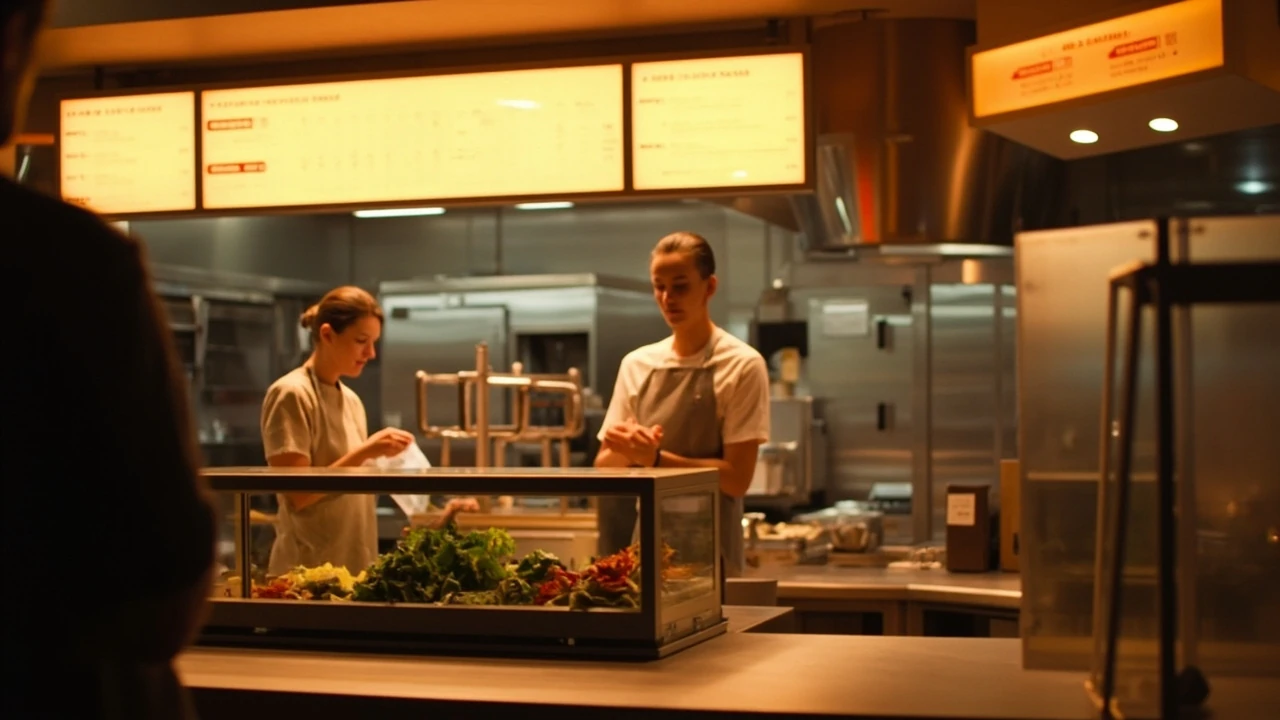
What makes a fast food restaurant work in 2026
A line of six people forms at 11:48 a.m., the grill sizzles in the back, and the register reads 142 tickets printed before noon. This is the daily reality of a working fast food restaurant, and it is the reason the format has survived every dining trend since the 1950s. The model is simple on the surface, but the operators who keep their units profitable spend more time on systems, cost lines, and small details than on the food itself.
This guide is for independent owners, franchisees, and managers who want a realistic view of what a fast food restaurant needs to do well. It focuses on the decisions that move revenue and protect margin: the menu, the speed of service, the kitchen layout, the labor model, the marketing, and the small operational habits that separate a steady store from a struggling one. Examples are drawn from common operator practice rather than from any single brand playbook.
The job a fast food restaurant is actually hired to do
Before menus, marketing, or real estate, a fast food restaurant is hired to do one thing faster than a sit-down restaurant: deliver a familiar, affordable meal to a guest who is in a hurry. The format succeeds when three promises hold at the same time: speed, consistency, and price. When any of those slips, the format loses its reason to exist.
Speed matters because the guest has a clock in their head. Most fast food guests decide their order in the lane, the line, or the app, and they expect their food within a few minutes of paying. Consistency matters because the guest who got a good burger on Monday wants the same burger on Friday at a different location. Price matters because the same guest is comparing your combo to the one across the street before they even park.
Every other choice in the operation supports one of those three promises. A complicated menu slows the line. A new kitchen gadget that the team has not been trained on slows tickets. A sign with the wrong price slows the register. When owners think about a fast food restaurant this way, the daily decisions line up around the same goal instead of competing with each other.
Choosing a format and a lane
The label “fast food” covers several distinct formats, and the format you pick will shape almost every other decision.
- Burgers and sandwiches. The classic lane. High ticket, broad appeal, heavy on protein cost. Works well in drive-thru and high-traffic urban sites.
- Chicken tenders and wings. Growing lane with strong daypart flexibility. Prep is more labor intensive but the cost of goods is often friendlier than beef.
- Pizza. Faster cook times and a delivery-friendly menu. Pairs naturally with a digital ordering stack and a tight geographic radius.
- Mexican-style. Assembly-based model that can keep a lean crew. Menu engineering matters because small add-ons change the ticket quickly.
- Breakfast and coffee. The early daypart, with its own labor and supply rhythm. Often combined with another format to fill the morning hours.
Format choice should follow your audience, your site, and your cost model, not a personal favorite. A drive-thru site without breakfast traffic rarely justifies a coffee-led menu, and a small urban store with no parking will not get the same value out of a family-bundle format as a suburban unit. The right lane is the one your actual guest can reach, afford, and return to.
Site and real estate basics for a fast food restaurant
Real estate is the largest fixed cost for most fast food restaurants, and it is the one decision that is hardest to undo. The right site does not guarantee success, but the wrong site will quietly bleed money for the entire lease.
What good sites share
Strong fast food sites tend to share a few traits that show up in the daily numbers:
- Visible signage from the road or street, including a clear pole sign if there is a drive-thru.
- Two access points where possible, so inbound and outbound traffic do not stack up.
- A drive-thru lane that can stack at least eight to ten cars without spilling into the public street.
- Daytime population nearby, from offices, schools, hospitals, or retail anchors.
- Enough parking turnover that a 30-minute meal can clear two or three cars per stall during peak.
Trade-offs to pressure-test
Every site has a trade-off, and the job is to know which one you are accepting. A high-rent corner near a college may produce strong traffic but attract a guest with a tight budget. A suburban pad site with a long drive-thru may have lower rent and a slower lunch but a much stronger dinner and family ticket. Run the site numbers at three volume scenarios before you sign, not just the one you hope will happen.
| Site type | Typical strengths | Common trade-offs | Best for |
|---|---|---|---|
| Urban in-line | Foot traffic, lower build cost, dense lunch | No drive-thru, limited parking, noise complaints | Sandwich, bowl, or pizza format |
| Suburban pad with drive-thru | High car counts, family tickets, dinner daypart | Higher rent, longer buildout, signage rules | Burgers, chicken, Mexican |
| Endcap with drive-thru | Two frontages, easier stacking, good visibility | Shared pylon rules, utility access | Multi-format with strong breakfast |
| Food hall or shared counter | Lower overhead, built-in foot traffic | Limited menu, shared kitchen, lower margin | Single-concept pilot or breakfast |
| Truck, kiosk, or non-traditional | Low entry cost, flexible locations | Weather, permits, limited storage | Specialty items and brand testing |
Designing the menu for speed and margin
Menu design in a fast food restaurant is a math problem disguised as a creative one. The menu is a margin tool, a training tool, and a speed tool at the same time. A menu that looks exciting but confuses the line slows the operation down. A menu that runs clean but starves the kitchen of margin will not survive a bad month.
How to think about menu size
Most successful fast food restaurants run tight menus. Burger chains historically thrive with a core of about ten to fifteen SKUs, and even large menus can usually be sorted into three buckets: anchors, attachments, and limited-time offers.
- Anchors are the items guests come in for. They are the reason the restaurant exists. The anchor needs to be excellent, consistent, and priced honestly.
- Attachments are the fries, drinks, sides, and add-ons that raise the average ticket. Attachments should be easy to upsell and cheap to produce.
- Limited-time offers rotate every few weeks to bring back lapsed guests and give regulars a reason to visit. They should be built from ingredients already on the line when possible.
Pricing the menu
Fast For additional context, food pricing sits in a tight band because guests compare constantly. The job of the menu is to make the anchor feel like a good value and the combo feel like a smarter choice than the individual items. Two habits help:
- Use price points that end in common digits, and avoid stacking modifiers that hide the real cost.
- Build the combo so the drink and side carry a meaningful margin while the anchor carries the value perception.
Owners who want a deeper look at how menu engineering affects profit without breaking the soul of the menu can revisit their menu engineering practice and pair it with a careful pass on menu pricing.
Kitchen and back-of-house layout
Layout decides how fast the line can move. In a fast food restaurant, the back of house is a flow problem, and small distances add up to minutes by the end of a rush. A good layout keeps the most-used items within a few steps of the line and groups the equipment by menu section, not by category.
Zones that work
- Receiving and storage. Close to the back door, away from the line, with clear FIFO rotation.
- Prep zone. Slicing, portioning, and batching for the day’s volume. Sized so two people can work side by side.
- Cook line. Fryer, grill, and assembly in one continuous run, with the pass visible from the front counter.
- Expediter station. Where the runner checks the bag against the ticket. This is also where mobile and delivery orders can be packed without crossing the counter flow.
Equipment choices that age well
Buy equipment for the volume you actually have, not the volume you want. A double-stack fryer that runs at 40 percent capacity wastes gas and fries inconsistently. A single fryer running near full load produces better product and a better utility bill. Hold off on specialty equipment until the menu item is proven at the volume it was designed for.
Speed of service: the system behind the clock
Speed is a system, not a sprint. The fastest fast food restaurants build their speed from a small number of repeatable habits rather than from pressure on individual workers.
- Pre-batch ingredients so the line is never waiting on prep.
- Stage the next order’s items before the current order leaves the pass.
- Run the drive-thru with a separate expo who can read the line and call out bottlenecks.
- Use a single order screen at the front so the cashier is not translating between devices.
- Track the order-to-handoff time, not just the time at the register.
A realistic target for a working fast food restaurant is around two to three minutes from order to handoff in the store and around four minutes for a drive-thru, with clear procedures for handling outliers. When the average drifts up, the cause is usually one of three things: equipment issues, a sudden change in the menu, or understaffing during a known peak.
Labor model and staffing
Labor is the second largest cost after food, and it is the cost that owners control most directly. The mistake is to staff to the calmest hour of the day. The right model staffs to the peak, then finds ways to use the slower hours productively.
| Daypart | Core roles needed | Common bottleneck | Where to focus training |
|---|---|---|---|
| Breakfast | Grill, register, runner | Speed of the first hour | Open routines and prep lists |
| Lunch | Full line, two registers, expo | Drive-thru stack | Order accuracy under pressure |
| Afternoon | Lean crew, prep-heavy | Slow drift on cleanliness | Reset and detail cleaning |
| Dinner | Front of house, kitchen, runner | Combo order mistakes | Upsell and cross-training |
| Late night | Two-person lean | Safety and food hold times | Closing routines and checks |
Cross-training matters as much as hiring. A crew that can move between register, grill, and prep absorbs sick days, weather shifts, and sudden rushes without panic. Owners who treat cross-training as a luxury usually end up overstaffed on their best days and understaffed on their worst.
Food cost, paper cost, and the real numbers
The food cost percentage in a fast food restaurant usually sits in the high twenties to low thirties, depending on the format. Paper and packaging often run another three to six percent. Together, those two lines decide whether the store can absorb rent, labor, and the occasional bad week.
A few habits keep the food cost honest without cutting corners that guests can taste:
- Weigh proteins and produce at receiving, not just count cases.
- Track theoretical food cost against actual food cost every week.
- Build a par sheet for prep so the line never overproduces.
- Treat waste logs as a working document, not a box to check.
- Review menu item profitability monthly, not annually.
The single most useful number is the gap between theoretical and actual food cost. A small gap means the recipes are being followed and the portioning is honest. A growing gap is a signal that something has slipped, and the smaller the store, the faster that slip becomes painful.
Marketing that fits the format
Fast food marketing works in short cycles. The guests you are trying to reach are not reading long blog posts or waiting for a brand campaign to land. They are scanning their phone in a parking lot and deciding what to eat. Marketing for a fast food restaurant should make that decision easier in the next sixty seconds.
Local marketing that pays back
- Clear, accurate signage that can be read from a moving car.
- A simple, fast-loading website or ordering page that works on a phone.
- Food photography that actually looks like the food in the bag, a topic covered in food photography that sells the dish.
- Active listings on the maps and delivery apps your guests actually use.
- A small, repeatable social presence instead of a sporadic big push.
Brand and storytelling
Independent fast food restaurants can compete with chains by leaning into the things chains cannot easily fake: the story behind the recipe, the regular who has been coming in for years, the way a particular sauce is made. Brand work in this format is not about polish. It is about giving the guest a reason to choose your store over a familiar one. A useful starting point is the reminder that specificity wins restaurant marketing, especially in a category full of generic menus.
Technology stack: keep it boring and reliable
Fast food operators benefit more from a reliable, boring technology stack than from a clever one. A point of sale that does not crash during the rush, an online ordering flow that does not drop orders, and a kitchen display system that always shows the next ticket are worth more than any new feature.
- POS hardware that can be swapped quickly when a station fails.
- An online ordering flow that mirrors the in-store menu, not a separate one.
- Payment terminals that support tap, swipe, and wallet without forcing the cashier to retry.
- Back-office reporting that exports to a spreadsheet the owner can actually read.
The rule of thumb is to add technology when it removes a known problem, not when it adds a new feature. Every new tool needs training time, support contacts, and a failure plan. If you cannot describe the problem the new tool solves in one sentence, it is probably not the right moment.
Health, safety, and the basics that protect the brand
Food safety in a fast food restaurant is not optional, and it is not a checkbox. A single failed inspection can undo years of marketing in a local market. Treat the basics as a daily discipline, not a quarterly project.
- Hot holding above 135°F and cold holding below 41°F, checked and logged at the right intervals.
- Handwashing stations stocked and visible at the line.
- Allergen information available at the counter and on the online menu.
- Worker safety habits, including guarded equipment and clear wet-floor routines.
- Vendor specs reviewed against the actual product delivered, not just the price.
Independent operators can borrow structure from chain playbooks, but they should also build their own. A simple weekly check that walks the store with a clipboard catches most of the small drifts that grow into bigger issues.
Working with delivery and third-party apps
Delivery has become a real sales channel for fast food, but it carries its own economics. Commission rates, packaging needs, and order accuracy requirements can quietly shrink a margin that looked healthy on the in-store menu.
Decide which delivery partners your restaurant can support well before turning them all on. Run the same menu at the same price when possible, and avoid platform-only items that add complexity without lifting volume. Packaging for delivery should protect the food, not just present it, because the guest who gets a cold, leaking order will not return through any channel.
Common mistakes that quietly hurt a fast food restaurant
Most underperforming fast food restaurants are not failing because of one big mistake. They are drifting because of a small list of habits that compound.
- Letting the menu grow by one item at a time until the line is slow.
- Ignoring the drive-thru because the dining room feels busy.
- Staffing to the average hour instead of the peak hour.
- Running a promotion without the staff to deliver it.
- Treating marketing as separate from operations instead of as a result of them.
Each of these feels small in isolation. Together, they explain the gap between a busy store and a profitable one.
A simple weekly check for owners
Owners who run a fast food restaurant well usually have a short, repeatable check that keeps the store honest. This one fits on a single page and can be walked in under an hour.
- Sales by daypart compared to the prior week.
- Top five and bottom five menu items by margin.
- Labor percentage against the sales plan.
- Food cost gap, theoretical versus actual.
- Speed of service samples from peak hours.
- Customer complaints and how each was resolved.
- Equipment issues that need follow-up before next week.
The check is not a report. It is a conversation with the manager, with numbers in hand, that ends with three or four concrete actions.
Frequently asked questions
What is the average profit margin for a fast food restaurant?
Profit margins for fast food restaurants vary widely by format, location, and operating model, but net margins in the single digits are common and high single digits to low teens are considered strong for an independent unit. Margins are highly sensitive to food cost, labor cost, and rent, so the same menu can produce very different numbers in two different sites.
How much does it cost to open a fast food restaurant?
Opening costs range from a low five-figure investment for a small kiosk or food truck to several hundred thousand dollars or more for a buildout with a drive-thru. The biggest variables are the lease terms, the equipment package, and the local buildout requirements. A realistic budget should include three to six months of operating reserves, not just the construction cost.
What is the best menu size for a fast food restaurant?
Most successful fast food restaurants run tight menus with a clear core of anchors, a small set of attachments, and a rotating limited-time item. A useful working range is around ten to twenty total active SKUs at any one time. The goal is to make the line fast, the training simple, and the food cost predictable.
How do fast food restaurants keep food costs low?
The strongest operators control portioning, track theoretical versus actual food cost weekly, build prep par sheets, and review menu item profitability monthly. Buying on price alone is rarely the winning move. Reliable vendors, consistent specs, and waste control usually protect margin better than chasing the cheapest case.
Is a drive-thru worth the extra cost?
A drive-thru can be worth the cost when the site has enough car traffic and the local market is comfortable ordering from a car. It is usually not worth the cost in dense urban locations where parking and walk-up traffic dominate. The decision should be based on the guest behavior around the site, not on a general rule.
How do I start a fast food restaurant with no experience?
Many owners start by working in a successful fast food restaurant for six to twelve months, then move into a manager role before opening their own store. Pairing that experience with a tight business plan, a realistic site, and a small menu gives a first-time owner a much better chance of surviving the first year than a big idea with thin operational knowledge.
What licenses and permits does a fast food restaurant need?
Permits vary by city and county, but most fast food restaurants need a business license, a food service permit, a health department inspection, and often a sign permit, a fire inspection, and a sales tax registration. Owners should confirm the specific list with their local health and licensing offices before signing a lease.
How important is the online ordering experience?
Online ordering is now a primary sales channel for many fast food restaurants, and a slow or confusing experience can lose a guest to a competitor in a single click. The menu should mirror the in-store menu, the page should load quickly on a phone, and the pickup process should be clearly marked. A reliable, simple flow almost always beats a clever one.
How can a small fast food restaurant compete with big chains?
Independent fast food restaurants can compete on speed of service at their specific site, on food quality for the price, and on the story behind the menu. Chains win on consistency and marketing reach, so independents win on the local details that chains cannot easily fake. The work is to be excellent at the basics and clear about the differences.
What is the biggest daily habit of a successful fast food restaurant?
Most successful fast food restaurants share one daily habit: a short, consistent pre-shift meeting that reviews the day’s goals, the expected peaks, and any changes to the menu or equipment. Five minutes of alignment at the start of the day prevents most of the small surprises that turn into long afternoons.
A practical next step
If a fast food restaurant is something you are running, the highest return on your time this week is probably not a new marketing idea. It is a careful walk of your menu, your labor model, and your speed of service numbers, with a short list of three changes you can make by next week. The format rewards operators who do the basics well, and the basics are within reach of any owner willing to look at their own store with a clear eye.