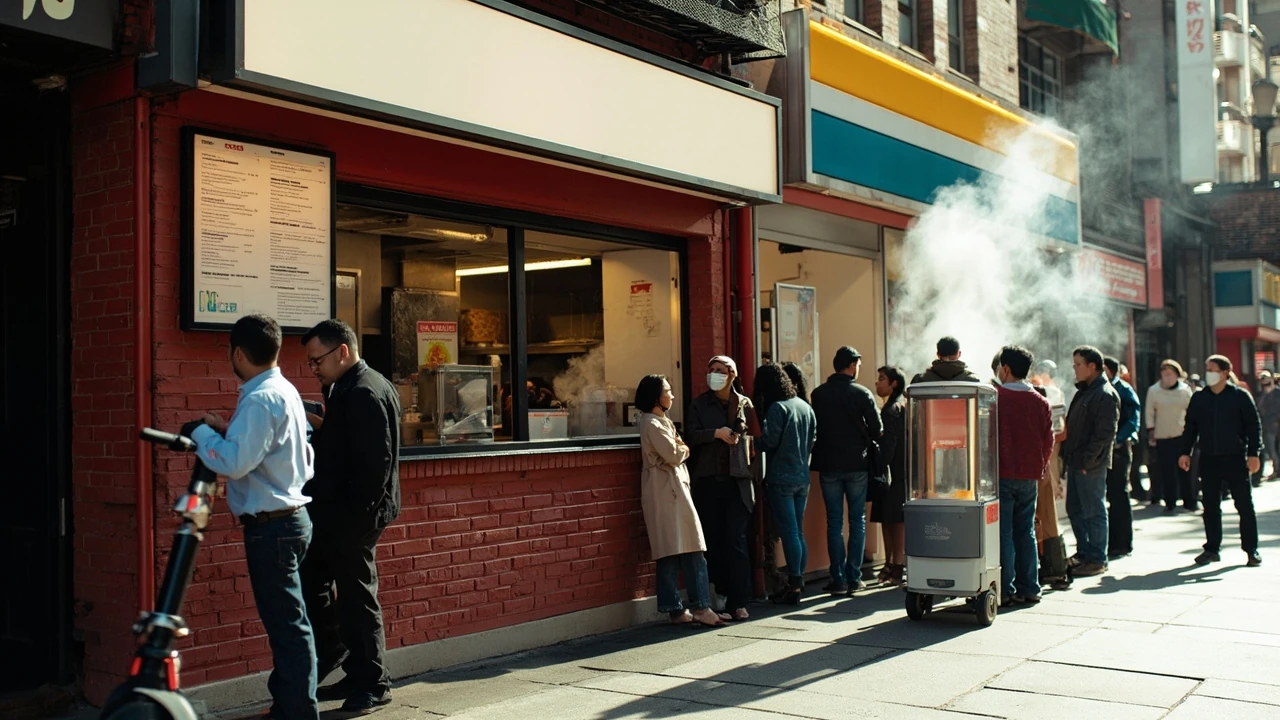
Two fast food places sat three doors apart on the same block, and only one of them had a line at 12:40 p.m. The menu boards looked similar, the prices were within a dollar of each other, and both kitchens were turning out burgers, fries, and drinks in under four minutes. What separated them was harder to see from the sidewalk: a clearer menu, a more confident signature item, a tighter pickup flow, and a price ladder that quietly pushed most guests toward the combo they actually wanted to sell. That is the part of the business most guests never think about, and it is the part that decides who wins the lunch rush.
Fast food places are usually discussed as a single category, but the operators who study the category know there are real layers inside it. There are chains with thousands of units, regional players that own a state or two, independent drive-thrus, food trucks with permanent spots, mall court counters, and hybrid concepts that blur into fast casual. The economics, the staffing model, and the day-to-day decisions look different in each. Comparing them like they are the same business is how owners set the wrong targets and how new entrants underestimate what they are walking into.
This guide is for people who want to understand how the strongest fast food places actually compete, whether they are planning a new opening, studying a market, or trying to push an existing operation to a higher tier. It is written from the operator’s side of the counter, with the same blunt questions a good consultant would ask on a first walkthrough. The goal is not to celebrate the category or to romanticize it, but to explain the mechanics that separate a busy corner from a struggling one.
Fast food places: what the category really includes
Most people use the term “fast food places” to mean any quick-service restaurant, but the operators inside the category draw sharper lines. A working definition of fast food places is counter-service restaurants that design every part of the operation around speed, price, and repeat visits. Guests typically order at a register or a kiosk, pay before the food is prepared, and either take the food away or eat it within a few minutes. The menu is usually narrow, the recipes are standardized, and the kitchen is built around a small set of tools that can produce large volumes in a short window.
Within that definition, fast food places break down into several overlapping models. Each model has a different cost structure, a different competitive set, and a different set of tradeoffs. New operators often pick a model based on what they like to cook, when the right starting point is the model that fits the real estate, the labor market, and the price point the neighborhood will support.
- Traditional quick-service chains. Large national or regional brands with standardized menus, marketing budgets, and supply chains. Examples include the legacy burger and chicken chains, plus newer entrants that have scaled to hundreds of units.
- Independent fast food places. Single-unit or small multi-unit operators that own a local brand. These often compete on a signature item, a specific cuisine, or a price point that the chains do not serve well in their market.
- Drive-thru-focused operations. Built almost entirely around car throughput. Real estate, building shape, and stack spacing matter more here than dining room design.
- Food trucks and permanent stands. Lower overhead, more flexible locations, and a strong reliance on a few high-volume spots. Many successful trucks eventually convert into brick-and-mortar fast food places.
- Fast casual. Sits on the edge of the category. Higher check averages, more table service or counter service with tray pickup, fresher ingredients, and longer build times. The lines blur when fast casual units add drive-thrus and mobile ordering.
Once the model is clear, almost every other decision follows. A drive-thru-first concept cannot afford the same dining room footprint as a fast casual unit. A truck cannot run a printed menu board with 60 items. A chain franchise inherits a labor model, a tech stack, and a marketing calendar that an independent does not have. Treating these as the same business is the most common strategic error new operators make.
The economics behind a busy fast food place
Fast food places run on small margins and high volume. A typical full-service restaurant might run a 6 to 10 percent net margin, while a well-run fast food place targets higher unit volume with margins that are usually thinner on a percentage basis but larger in absolute dollars. Rent, labor, food cost, and packaging are the four line items that decide whether a unit is healthy, and each one is sensitive to a small set of operational decisions.
Rent in fast food places is usually negotiated as a percentage of sales rather than a flat number, especially for new units. The landlord is betting on the brand and the operator’s track record, and the operator is buying flexibility during the ramp-up period. As sales grow, the rent ratio drops, and the operator captures more of each additional dollar. This is one reason a slow first year is survivable and a slow third year is usually fatal.
Labor is the most controllable cost in fast food places, and the most underestimated. Crew schedules have to match demand by 15-minute intervals, not by hour, because the difference between 18 percent labor and 22 percent labor on $2 million in sales is the difference between a profitable year and a break-even one. The strongest operators build labor budgets off forecasted transactions, not off the previous week’s schedule.
| Cost line | Typical share of sales | What the strongest operators do differently |
|---|---|---|
| Rent and occupancy | 6 to 10 percent | Negotiate percentage rent early; right-size the box; avoid second-generation spaces that force layout compromises. |
| Labor | 22 to 28 percent | Schedule to 15-minute demand curves; cross-train every role; pay shift leads enough to retain them. |
| Food and packaging | 28 to 32 percent | Build menus around a tight supplier list; standardize portioning; audit waste weekly, not monthly. |
| Marketing and tech | 3 to 6 percent | Treat loyalty and ordering apps as a margin lever, not a marketing expense; keep paid spend tied to a measurable offer. |
| Other operating costs | 5 to 8 percent | Track utilities, repairs, and supplies in the same dashboard; small leaks compound quickly at this volume. |
Food cost in fast food places is unusually sensitive to waste, because the absolute volume of product moving through the kitchen is high. A 2 percent waste rate on a thin-margin concept can wipe out a quarter’s profit. The operators who do this well measure waste by station, by shift, and by item, and they adjust pars every week based on the previous two weeks of data.
The menu is the real product
In fast food places, the menu is not a list of what the kitchen can make. It is the most important marketing surface the business owns. Guests decide what to order in roughly 12 to 20 seconds, and the menu board, the receipt, the app, and the packaging all shape that decision. A weak menu leaks margin, slows the line, and confuses guests. A strong menu quietly steers most orders toward the items the operator actually wants to sell.
The first job of a fast food menu is to reduce decision time. Guests should be able to scan the board and place an order without asking a question. The second job is to anchor value. One or two visible price points set the perceived range, and the rest of the menu is structured to push guests toward combinations that protect margin. The third job is to protect the kitchen. Every item on the menu has a real cost in speed, training, and ingredient complexity, and items that do not earn their place need to be cut.
| Menu role | What it does | Example on a typical board |
|---|---|---|
| Anchor | Sets the price expectation and draws the eye first | Signature burger at $5.99, placed top-left on the board |
| Combo builder | Pushes average ticket up and protects margin | “Make it a combo for $2.49” callout under the anchor |
| Trade-up item | Captures guests who want a bigger or premium option | Double or deluxe version of the anchor at $7.99 |
| High-margin filler | Drives incremental profit without slowing the line | Side, drink upgrade, or dessert placed at eye level |
| Limited-time offer | Creates urgency and tests new items before they go permanent | Seasonal sandwich or regional flavor for 6 to 8 weeks |
Menu engineering is a discipline on its own, and it is one of the few areas where a small change can move the entire P&L. Operators who treat the menu as a static document usually leave margin on the table. Operators who review the menu quarterly, study combo attachment rates, and retire the bottom 10 percent of items by sales volume almost always run cleaner operations. The site’s menu engineering without killing the soul of the menu guide is a useful starting point for that work.
Speed, throughput, and the pickup handoff
Speed in fast food places is not just a marketing promise. It is a measurable operational target, and it is the variable that ties almost every other decision together. Drive-thru times are tracked in seconds. Counter times are tracked in number of guests served per labor hour. Mobile orders are tracked by how long a bag sits on the shelf before it is picked up. Each of these clocks creates a different kind of pressure on the kitchen and the front counter.
The strongest fast food places design the building around speed before they design it around aesthetics. The kitchen line, the assembly station, the pickup point, and the drink station are placed to minimize steps. The drink station is usually near the register so that a single employee can run both during a rush. The pickup window in a drive-thru is separated from the order point so that two cars can be in the system at once. These choices are not visible to guests, but they show up in the speed of the line.
- Order point to pickup. Target under 4 minutes for a typical combo from the moment the order is placed, longer for fresh or build-to-order items.
- Drive-thru order accuracy. Aim for 98 percent or higher. Each remade order costs labor, food, and goodwill.
- Mobile pickup dwell time. Bags should not sit on the shelf longer than the promised window, or guests start to abandon the order channel.
- Peak vs. off-peak staffing. Build two schedule templates, not one. The 11:30 a.m. to 1:00 p.m. window deserves a different crew shape than the 3:00 p.m. lull.
Throughput also depends on the order mix. A simple burger-and-fries order moves through the kitchen differently than a fully customized bowl with multiple modifiers. Fast food places that allow too much customization end up paying for it in speed, even if the customization shows up in the average ticket. The best operators decide in advance how much complexity the kitchen can absorb, and they hold the line.
Branding, signage, and the seconds a guest sees you
Branding in fast food places is not about a logo. It is about recognition, trust, and the speed of a decision on a busy street. A driver has roughly three to five seconds to identify a fast food place, decide whether it fits what they want, and pull in or keep driving. That window is shorter than any other retail category except fuel stations, and it punishes weak signage harder than almost any other mistake.
The strongest fast food places treat the building as part of the menu board. The exterior tells a potential guest what kind of food is inside, what the price point is, and whether this is a quick stop or a place to sit. Color, materials, lighting, and the position of the menu board all do work. A clean, bright exterior with a readable menu above the door will almost always outperform a beautifully designed exterior that hides the menu behind a logo.
Brand identity also has to survive contact with the actual experience. A concept that brands itself as fresh and scratch-made but runs a kitchen that behaves like a chain will feel dishonest within a month. A concept that brands itself as a no-frills value play but tries to charge fast casual prices will feel confused. The brand and the operating model have to match, and the work of aligning them is ongoing rather than a one-time project. The site’s restaurant branding guide walks through how to think about that alignment in a food-specific context.
Location, real estate, and the geometry of a fast food place
Real estate is the single most expensive decision a new fast food place will make, and it is the one that is hardest to undo. A weak location can be saved by marketing for a while, but it cannot be saved forever. A strong location can absorb a mediocre concept for years. The math behind this is straightforward: traffic counts, daytime population, drive-thru stack length, and the quality of the trade area all feed into projected sales, and projected sales set the ceiling on what rent the operator can pay.
The strongest fast food places start with a real estate target rather than a concept. They decide what the sales volume needs to be to support a healthy P&L, then work backward to the trade area, the population density, the daytime employment, the household income, and the competing locations within a defined radius. If the numbers do not support the concept, the concept changes, not the location.
| Real estate factor | Why it matters | What to check before signing |
|---|---|---|
| Daily traffic count | Sets the top of the sales funnel | Counts at the access points, not the centerline, across multiple days and times |
| Daytime population | Drives lunch and mid-afternoon volume | Office, industrial, and school density within a 5-minute drive |
| Drive-thru stacking | Limits peak hour capacity | Number of cars that can queue without blocking the street or the lot |
| Visibility and signage | Decides whether the building is seen at driving speed | Line of sight from the main road, sign height restrictions, and foliage |
| Co-tenancy | Signals the trade area’s customer profile | Other fast food places, fuel, grocery, and quick-service retail nearby |
| Drive-thru proximity to residents | Creates friction at night and on weekends | Nearby housing, noise ordinances, and the operator’s evening hours |
New operators often overpay for real estate because they fall in love with a corner or a building. The strongest operators run a disciplined process: they define the trade area first, build a short list of sites, model the P&L for each one, and only then start serious conversations with a landlord. The process is slower, but it prevents the most expensive category of mistake.
Pricing strategy without losing the value customer
Pricing in fast food places is part math and part theater. The math is straightforward: each item has a target food cost percentage, and the menu is built so that the average ticket lands in a range that supports the rest of the P&L. The theater is everything else, from the way the combo is anchored to the way the price is displayed on the board.
Charm pricing still works, but its job has changed. A $5.99 anchor reads as a value option next to a $7.99 trade-up, and the gap between them does most of the work of moving the average ticket. Round pricing, like a $6 signature, signals confidence and a slightly higher position in the market. Fast food places that mix both styles without a clear logic tend to confuse the value story they are telling.
The other pricing lever is portion control. A smaller portion at a lower price can serve a guest who would otherwise not buy at all, and it can be sourced at a lower absolute cost. The strongest fast food places segment their portion sizes by use case: a snack size for between-meal visits, a regular size for the typical order, and a share size for groups. Each one has a clear food cost and a clear price ladder, and guests understand why the upgrade costs what it does.
Operators who want a deeper treatment of how pricing interacts with margin and guest perception can work through the site’s menu pricing strategies that protect margin without losing guests guide, which covers the math and the message together.
Marketing that fits the channel mix
Marketing for fast food places used to be radio, TV, and a coupon in the mailbox. That mix still exists, but it has been joined by a long list of digital channels that did not exist a decade and a half ago. The operators who do well in this category treat the marketing plan as an integrated system, not a list of tactics. Each channel has a job, and each one feeds the others.
Local store marketing matters more in fast food places than in almost any other restaurant format. A unit that runs clean local store marketing, partnering with schools, sports leagues, and nearby employers, almost always outperforms a unit that relies only on brand-level campaigns. The reason is simple: fast food purchases are decided at the moment of hunger, and the brand that is top of mind in that moment wins the visit.
- Loyalty and ordering apps. Capture guest data, push targeted offers, and reduce dependence on third-party marketplaces. The trade-off is that the operator now owns the guest relationship and the marketing spend.
- Third-party delivery. Expands reach without opening new units, but the fees compress margin. Treat marketplaces as a top-of-funnel channel and migrate repeat users to owned ordering.
- Local partnerships. Cross-promote with nearby employers, schools, and event venues. Often the highest-ROI marketing a fast food place can run.
- Social content. Best for limited-time offers, new items, and the kind of behind-the-counter detail that turns a guest into a regular.
- Outdoor and drive-thru signage. Still one of the highest-attention surfaces a fast food place controls. Treat it as part of the menu board, not a separate marketing asset.
The most common mistake is treating the app, the social channel, and the local store marketing as three separate plans run by three different people. The strongest fast food places run a single weekly marketing meeting where the calendar is reviewed in one place, the offer calendar is locked 4 to 6 weeks out, and the team’s metrics are tied to the same handful of numbers: transactions, average ticket, and re-order rate.
Labor, training, and the manager problem
Labor is the most under-managed cost in most fast food places, and the general manager is the single most important hire. A strong general manager can run a unit at 24 percent labor with a tight team. A weak one will run the same unit at 30 percent labor with the same sales, and the difference shows up in the operator’s bank account at the end of the year.
Training in fast food places is a continuous function, not a one-week onboarding. The best operators run a 30-day ramp for new crew, with clear milestones at day 7, day 14, and day 30. They run shift lead development as a separate program, because shift leads are the layer that actually runs the line. And they run manager development as a year-long program tied to the unit’s P&L, not a generic leadership curriculum.
Retention matters more than hiring in this category. Fast food places that lose 80 percent of their crew in a year spend the entire year understaffed and undertrained. Operators that hold turnover at 40 percent or below run cleaner operations, hit their speed targets, and recover the cost of higher wages through better execution. Paying $0.50 to $1.00 above the local market is often cheaper than the cost of constant churn.
Food safety, consistency, and the trust budget
Food safety is not a marketing category in fast food places. It is the license to operate. A single foodborne illness incident linked to a unit can close it, end a brand, and in some cases trigger personal liability for the operator. The strongest operators treat food safety as a daily discipline with the same attention they give to speed.
Consistency is the visible expression of that discipline. A guest who orders the same sandwich at the same fast food place in three different cities, or in three different visits, expects the same product. The expectation is reasonable, and meeting it is harder than it looks. Standardized recipes, calibrated equipment, and clear portioning tools are the basics. Above that, the strongest operators run a quality audit program that pulls finished product, weighs it, photographs it, and compares it to the standard on a defined schedule.
Trust is the most fragile asset a fast food place owns. A guest who is served a cold, slow, or wrong order does not usually complain. They simply do not return, and the operator never finds out why the line got shorter. The strongest operators invest in the small details that protect trust: a hot bag for delivery orders, a drink lid that does not leak, a receipt that does not print the wrong modifier, a dining room that is clean at 6:00 p.m. as well as at noon.
Tech stack, data, and what the numbers actually tell you
Fast food places were early adopters of point-of-sale and back-of-house technology, and the category now sits on top of a stack that includes ordering kiosks, mobile apps, kitchen display systems, loyalty platforms, labor schedulers, inventory tools, and a long tail of integrations. The risk is not a lack of tools. The risk is too many tools that do not talk to each other, and dashboards that surface numbers the operator does not actually use.
A useful tech stack for a fast food place usually has a small number of layers. The point of sale is the system of record for transactions. The kitchen display system is the operational brain. The labor and inventory tools feed the P&L. The loyalty and ordering platforms are the guest-facing surface. Everything else is a support layer that has to justify its cost in either saved labor, increased ticket, or improved guest retention.
The numbers that actually matter are also a small set. Transactions per day, average ticket, labor as a percentage of sales, food cost as a percentage of sales, drive-thru time, order accuracy, and a guest retention metric from the loyalty platform. Operators who build a weekly review around these seven numbers, and who make decisions tied to them, run tighter operations than those who track forty metrics in a dashboard no one opens.
How the strongest fast food places actually compete
After walking through the mechanics, it is worth stepping back and naming the patterns that show up in the strongest operators. They are not the operators with the biggest marketing budget or the most locations. They are the operators who do a small number of things unusually well, in the same direction, for a long time.
- They protect a clear point of view. A fast food place that is the cheapest in its trade area, the freshest in its trade area, or the fastest in its trade area is easier to run than one that tries to be all three.
- They run fewer items better. The strongest menus are usually shorter than the average menu in the same category, and each item has a clear job.
- They treat the building as a tool. Layout, signage, and pickup flow are designed for speed and clarity, not for a rendering on a mood board.
- They invest in the general manager role. The unit GM has real authority, a real bonus tied to the P&L, and a real development path.
- They measure a small set of numbers weekly. The same seven numbers, reviewed by the same team, in the same meeting, every week.
- They protect the trust budget. Hot food, correct orders, clean dining rooms, and a guest experience that matches the brand promise.
These are not the only patterns, but they are the ones that show up across chains, regional players, and independents. A new fast food place that builds itself around this list of habits is more likely to find traction in its first year than one that copies the surface details of a successful brand without copying the operating discipline behind it.
Common mistakes that take fast food places out
Most fast food places do not fail because of a single bad decision. They fail because several small decisions compound in the same direction, and the operator does not catch the trend until the unit is in trouble. The most common patterns are worth naming, because they show up across markets and across operators.
- Menu bloat. Adding items to please a small group of guests, until the kitchen cannot move, the line slows, and the average ticket drops because the new items were not anchored properly.
- Underfunded marketing at launch. Treating the opening as the marketing event, when in most markets the first 90 days are when the operator has to spend to teach the trade area that the unit exists.
- Hiring a general manager too late. Running the unit with a district manager or an owner-operator for too long, then handing it to a GM who has not built the team or the relationships in the local market.
- Skipping the loyalty build. Treating the app as a delivery tool, when the real value is the guest data and the re-order rate that the data enables.
- Letting speed drift. Speed is a daily discipline. Once a crew learns that the order can come out in 6 minutes instead of 4, the standard has changed, and it is very hard to reset.
- Confusing price cuts with value. Discounting the menu to chase traffic usually trades margin for the wrong guest and does not build a real value story.
None of these mistakes are exotic. They are the same mistakes that have closed fast food places for decades, and they still close them. The good news is that they are also the kind of mistakes a disciplined operating rhythm can catch early, before they become structural.
Frequently asked questions
What counts as a fast food place in the modern market?
A fast food place is a counter-service restaurant that designs its menu, kitchen, and pickup flow around speed, price, and repeat visits. Guests typically order and pay before the food is prepared, and the menu is narrow enough to be made consistently at high volume. Fast casual concepts sit at the edge of the category, with higher check averages and more table service or tray pickup.
How do fast food places make money on such thin margins?
They make money on volume. The unit economics are built around a target number of transactions per day, a target average ticket, and tight control of food cost, labor, and rent. A well-run fast food place that hits its transaction target can produce meaningful absolute profit even when the margin percentage looks small compared with a full-service restaurant.
What is the most important thing a new fast food place should get right?
Location and the menu, in that order. A weak location limits the sales ceiling regardless of how good the food is, and a weak menu leaks margin and slows the line regardless of how good the location is. Operators who get both right give themselves a real chance; operators who get one wrong usually cannot overcome it with marketing.
How do fast food places compete with chains if they are independent?
Independents usually cannot win on marketing budget or supply chain scale. They compete on a clearer point of view, a specific menu that the chains do not serve well in their market, a tighter local store marketing program, and an operating discipline that runs the unit leaner than the chain’s average. The independents that survive are usually the ones that pick a lane and hold it.
How long does it take a new fast food place to break even?
It depends on the format, the market, and the real estate, but most operators should plan for a 12 to 24 month ramp. Some fast food places hit steady state in their first year when the trade area is strong and the concept is well matched to the location. Others take longer, and the lease and the financing have to be structured to absorb that ramp.
What is the biggest operational mistake a new operator can make?
Trying to run a complex menu before the kitchen team is fully trained. Menu complexity in fast food places is paid for in speed, accuracy, and labor, and a new operator who tries to match a mature chain’s menu on day one usually ends up with cold food, slow lines, and a frustrated crew. A tighter menu that the team can execute cleanly is almost always the better starting point.
Do loyalty apps really matter for fast food places?
Yes, when they are used as a guest data platform rather than a discount tool. A loyalty app that captures order history, frequency, and average ticket allows the operator to send targeted offers, build a re-order habit, and reduce dependence on third-party marketplaces. A loyalty app that only sends a 10 percent off coupon every week is usually a cost center, not a margin lever.
How are fast food places using AI in their operations today?
The most common applications are demand forecasting for labor and inventory, automated drive-thru order taking, and computer vision in the kitchen for waste and portioning. AI is also being used in marketing for offer personalization and in the back office for invoice processing. The operators who get the most out of these tools usually start with a clean data foundation rather than buying the tool first.
What is the difference between a fast food place and a fast casual restaurant?
Fast casual restaurants usually have higher check averages, more fresh or scratch preparation, a stronger dining room experience, and a less transactional service model. Fast food places lean into speed, value, and convenience. The lines blur when fast casual units add drive-thrus and mobile ordering, and when fast food places add more premium items to the menu.
What metrics should a fast food place owner review every week?
A useful weekly review usually covers seven numbers: transactions per day, average ticket, labor as a percentage of sales, food cost as a percentage of sales, drive-thru or counter time, order accuracy, and a guest retention metric from the loyalty platform. Reviewing the same small set every week is more useful than tracking many metrics in a dashboard that no one opens.