The EPCOT Food and Wine Festival 2025 is one of the longest food events in the United States, and the length is precisely what makes planning hard. Guests arrive with the right idea: eat, walk, repeat. But the festival at EPCOT at Walt Disney World runs for several months, spreads across roughly a dozen outdoor Global Marketplaces, and rewards people who think in advance about which booths matter to them, which snacks to skip, and how to turn one visit into a real meal rather than a string of samples.
This guide is built for a guest who wants to make a smart, satisfying plan before stepping onto World Showcase Lagoon. It covers how the festival is structured, what the typical marketplace menu looks like, how pricing generally works, and the practical decisions that separate a pleasant day from an over-salted, over-priced regret. Because the festival changes year to year, the advice here is framed as planning logic: what to check, what to budget, what to skip, and what to do if you are visiting with people who have very different appetites.
How the EPCOT Food and Wine Festival 2025 is structured
The festival is essentially a long, rolling event layered on top of the regular EPCOT park day. Normal World Showcase pavilions stay open, and a ring of Global Marketplaces is added around the lagoon, in the entrance plaza, and in some transitional spaces between Future World and World Showcase. Each marketplace represents a region or a single culinary idea, and each runs a fixed mini-menu of small plates, often called tastings, alongside a small set of beverages.
The runtime is the single biggest planning fact. The festival typically begins in late summer and runs well into the fall, which means that an early August visit and a November visit can look very different in terms of crowd level, weather, and which seasonal items are still on the menu. The EPCOT Food and Wine Festival 2025 follows that same broad shape: a multi-month window rather than a single weekend, with a long runway for repeat visits.
Festival vs. regular park day
On a festival day, EPCOT still operates as a theme park. The Global Marketplaces are layered on top of the existing experience rather than replacing it, so guests can ride Soarin’, walk through the aquariums in The Seas pavilion, and watch evening fireworks without leaving the festival footprint. For planning purposes, the day is best treated as a normal park visit with food woven into the route, not as a food crawl that happens to be inside a park.
The trade-off is time. A guest who treats the festival as the main reason for the visit will spend long stretches standing in booth lines, while a guest who treats it as background will only hit a handful of marketplaces and may leave feeling like the trip was overpriced. The goal of good planning is to decide, before you arrive, which side of that line you want to stand on.
Global Marketplaces: how the menus work
Each Global Marketplace lists a small, fixed menu of tastings and a few drinks. The menus are designed so that two or three adults can share a booth and leave with a clear impression of that region, or so that one person can buy two or three tastings and treat them as a meal. Tastings are usually small, frequently 3 to 5 bites, and are intended to be sampled rather than eaten as a full entrée.
Menus typically cluster around a flavor profile rather than a single dish. A Brazil-inspired marketplace might offer a protein-based skewer, a starchy item, and a dessert. A dessert-heavy marketplace might offer three or four small sweets with no savory option at all. Reading a marketplace menu as a flavor category, rather than as a list of dishes, helps you assemble a balanced day.
| Marketplace type | What to expect on the menu | How to use it in a day |
|---|---|---|
| Regional pavilion (for example, Mexico, France, Italy) | Small plates that reference the country’s casual or street food | One booth, one to two tastings, paired with a walk into the pavilion itself |
| Cross-cultural concept (for example, a coastal or sweet-focused theme) | Three to four items around a single idea, often with one dessert | Best as a shared stop rather than a solo plate |
| Beverage-led booth | Mostly drinks, with one or two light food items | Skip if you are not drinking; treat as a checkpoint rather than a meal stop |
| Returning favorite | Past festival hits recycled from earlier years | Good for first-timers who want a known quality baseline |
| New for the year | Items that have not appeared at a previous festival | Worth prioritizing if you have already tried the recurring classics |
One useful trick is to walk the full loop once without buying anything, sketch a rough route on the festival map, and mark the two or three booths that look most interesting. Marketplace menus are usually posted on chalkboards or printed inserts near the register, and many guests post photos of every menu online in the days after a festival opens. A short pre-visit search saves time on the day.
Pricing, the dining credit, and how to budget
Festival pricing at the EPCOT Food and Wine Festival 2025 follows a pattern Disney has used for years. Each savory or sweet tasting sits in a price band that has been stable across the last several festivals, while beverages and specialty items carry their own pricing. Most food tastings fall into a small number of bands, and most drinks are priced individually. There is no all-you-can-eat option and no unlimited tasting pass; the festival is built around discrete purchases.
| Item type | Typical role in a day | How to think about the price |
|---|---|---|
| Savory tasting | A small plate designed to be shared or split | Compare to a comparable street-food portion in a major city, not to a sit-down restaurant entrée |
| Dessert tasting | A small sweet, often one or two bites | Treat as an occasional accent rather than a per-booth purchase |
| Non-alcoholic specialty drink | A themed lemonade, coffee, or similar item | A reasonable add if you want a souvenir cup; skip if you have a refillable bottle |
| Beer, wine, or cocktail flight | A small pour or set of pours | Flights are usually a better value per ounce than a single full pour |
| Souvenir cup or glass | Usually tied to a specific drink or flight | Only worth it if you actually want the cup afterward |
For a realistic budget, think in terms of how many stops you actually want to make, not in terms of how many booths exist. A guest who hits four or five marketplaces and treats each as one tasting plus a shared drink will leave fed and financially intact. A guest who tries to hit every booth will spend more, eat past the point of enjoyment, and spend a large share of the day in line.
The Disney dining credit and festival food
Many guests use a Disney dining credit or a dining plan that is tied to a specific number of “snack credits” or “quick-service credits.” Festival food at the EPCOT Food and Wine Festival 2025 is generally treated as snack-style or quick-service-style food, which means it can usually be purchased with the right kind of credit, but the exact mapping depends on the current plan. The two practical questions to answer before the visit are simple: which credit type is accepted at festival booths, and whether a tasting counts as one credit or more.
If you are using a credit-based plan, pick the highest-value tastings as your credit purchases and pay cash or card for the lower-value items. A multi-bite savory that you genuinely want to eat is a better credit use than a small dessert you bought out of momentum. This is the same logic a careful restaurant operator uses in menu pricing: protect margin by pricing the items that carry the most perceived value.
Building a realistic route around World Showcase
World Showcase is a loop, not a grid, and the loop tends to set the day. Most guests start near the entrance, walk counterclockwise past Canada and the United Kingdom, continue through France, Morocco, and Japan, cross the bridge to World Discovery and World Nature, and finish near the front of the park. Marketplace placement usually follows that flow, with new booths clustered near the front and established booths deeper into the showcase.
A practical plan respects the loop rather than fighting it. Pick a direction at the start, walk in that direction without doubling back, and decide in advance which two or three booths are “must hit” stops. Everything else becomes opportunistic: if the line is short and the menu looks good, stop. If the line is long or you are already full, keep walking.
- Start with hydration. Florida heat punishes people who treat tasting portions as a full meal, and most marketplace drinks are not a substitute for water.
- Eat a real breakfast before entering the park. A small, protein-forward breakfast reduces the urge to buy a savory tasting at the first booth you see.
- Choose a deliberate pace. A 20 to 30 minute per booth rhythm, with time to sit, will outlast a 10 minute per booth sprint.
- Build in one seated stop. A restaurant table in France, Japan, or Morocco gives you a place to slow down and reassess the rest of the day.
- Leave the loop at least once. Stepping into an attraction like Soarin’ or Living with the Land breaks the eating rhythm in a useful way.
What to skip when the lines get long
Line length is the single biggest factor that turns a festival day from pleasant to exhausting. The booths that draw the deepest lines are usually the ones with one or two items that have been hyped on social media, plus a small number of returning favorites that guests want to compare to earlier years. Standing 30 minutes for a three-bite sample is rarely a good trade, but standing 5 minutes for the same item is.
A useful rule of thumb is to set a personal line budget before the visit: the maximum number of minutes you are willing to wait at any one booth. Twenty minutes is a reasonable cap for a must-have item, ten minutes for a “if it is easy” choice, and zero minutes for anything you are only mildly curious about. Once the cap is set, the rest of the day becomes mechanical: check the line, check the menu, decide.
Skip decisions matter as much as hit decisions. Skipping a marketplace you are not excited about frees up time, money, and stomach space for one you are. Skipping the beverage-only booths you are not going to drink at is one of the easiest savings in the day. Skipping dessert at every dessert-heavy booth is the difference between finishing the day tired and finishing the day still able to enjoy a snack later.
Festival food photography: what actually sells the dish
Festival booths are designed to be photographed. The plates are small, the colors are concentrated, and the lighting is usually flattering. The challenge is not technical; it is editorial. A useful festival photo answers one specific question: would I, as a friend of the photographer, know what to order next year based on this picture?
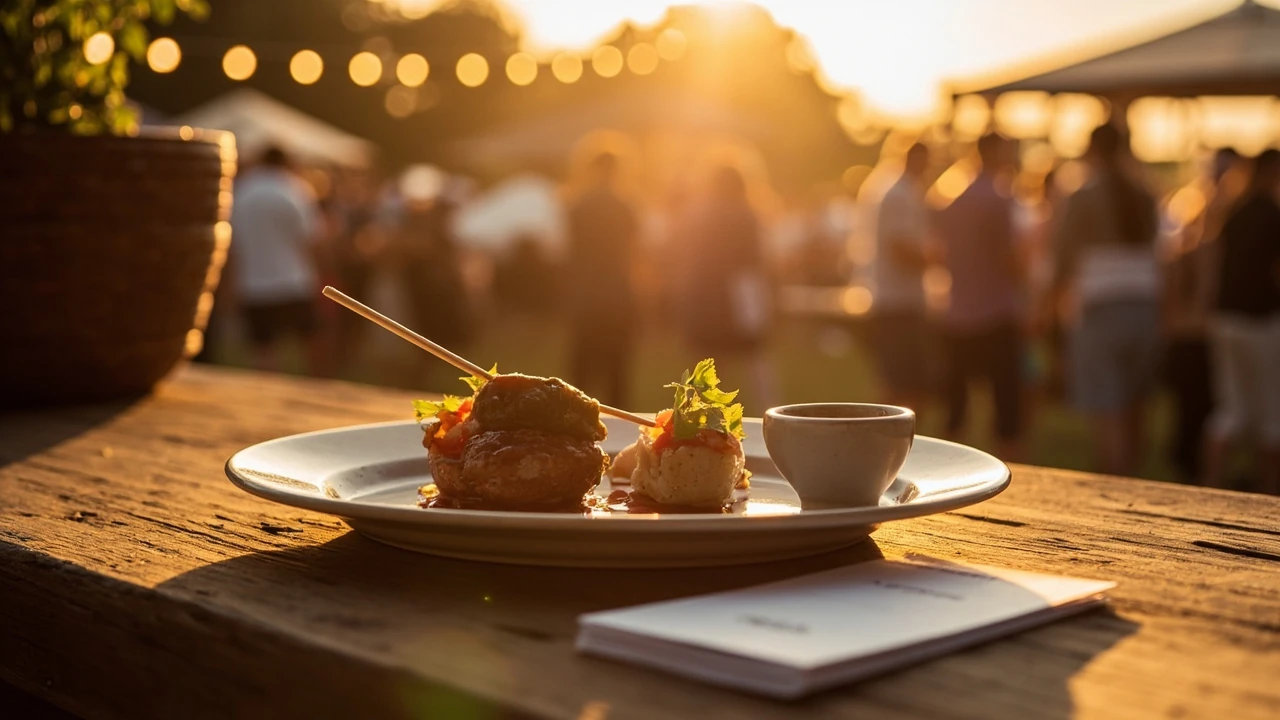
The strongest festival photos tend to do three things at once. They isolate one tasting on a clean surface, include a sense of scale, and avoid the busy backdrop. A passport-style festival booklet laid beside the plate is a useful reference object because it tells the viewer the year and the location without needing a caption. Most food photography fails in the opposite way: the subject is buried in a wide shot that looks exciting in the moment and forgettable a week later.
For guests who want to document the day without spending the day in the camera roll, the right move is to shoot one or two items at each favorite booth rather than every item at every booth. That same logic shows up in food photography that actually sells the dish: the photo is a record of the decision, not a record of the day.
Pairing tastings across booths without overeating
The single most common mistake at the EPCOT Food and Wine Festival 2025 is treating each booth as a separate small meal. The festival works much better as a sequence: one savory at booth A, one dessert at booth B, a drink at booth C, then a longer pause. Pacing is what makes the difference between finishing the day able to name favorite items and finishing the day with a list of things you sort of remember.
| Time block | Suggested action | What it prevents |
|---|---|---|
| First 90 minutes after entry | One water, one light savory, no drink purchase yet | Early over-ordering and the first long line |
| Midday (around 1 to 3 PM) | Two to three tastings spaced out, one drink, one seated break | The classic afternoon slump and a queue pileup |
| Late afternoon (around 4 to 6 PM) | One dessert or one signature savory, slow walk around the loop | Saturated palate and decision fatigue |
| Evening (after 7 PM) | One last light item or a sit-down dinner inside the park | Spending festival money on food you cannot enjoy |
Two practical rules help. First, alternate savory and sweet rather than stacking two of the same in a row. Second, treat drinks as a break, not as a goal. A beer or a wine flight is a useful way to mark a pause; a second drink at the next booth is a useful way to spend more than planned.
Special dietary needs and accessibility at the booths
The Global Marketplaces are designed to serve a wide range of guests, and most booths now mark menu items for common dietary patterns, including vegetarian, plant-based, gluten-friendly, and allergy-aware options. The exact symbol set can change year to year, and the EPCOT Food and Wine Festival 2025 follows the same broad approach: a printed insert, a printed marker at the register, or a flag on the menu board.
Guests with serious allergies or strict dietary needs should ask to speak with a chef or a manager at the booth rather than relying solely on the printed symbols. A quick conversation at the start of the day, asking which items can be modified and which cannot, is worth more than any amount of menu-board reading later on. The festival has become better at this over time, but the printed marker is only the first layer of information.
For guests who use mobility devices or who want to avoid long lines, the EPCOT Food and Wine Festival 2025 also runs a small set of accessibility services. These typically include a way to access marketplace menus without joining the main line and a process for handling service animals. Checking the official EPCOT accessibility page in advance, and calling the park’s main line if any detail is unclear, is the most reliable approach. Treat the festival’s accessibility services the same way you would treat a restaurant’s allergy policy: ask the question, get the answer, and confirm it again on the day.
How festival food relates to what restaurant operators do every day
The festival is, in some ways, a working exhibit of small-plate design. Each booth is a miniature version of a restaurant menu: a few tightly written items, a constrained kitchen footprint, a high throughput target, and a clear identity. Restaurants that run tasting menus use the same design logic at full scale, and the lessons transfer in both directions.
One of the most useful transfers is the idea of a “house flavor” for each booth. The best marketplaces commit to a single flavor point of view and run every item through it. The same idea shows up in restaurant branding: an identity guests remember is the difference between a place that competes on price and a place that competes on repeat visits. The festival’s strongest booths behave exactly like a restaurant brand that guests remember.
The other transfer is the writing of the menu. Festival menus are short, specific, and written in plain English. A typical item is described by protein, technique, and a single accent, rather than by a list of every ingredient on the plate. That same restraint is what separates a strong tasting menu from a generic one, and it is one of the clearer lessons the festival offers guests who also happen to run or work in food businesses.
Common mistakes guests make at the festival
Most festival problems are predictable. They come from arriving without a plan, treating the festival as the only reason to be in the park, and underestimating the time cost of the long loop. A short list of mistakes to avoid is worth more than a long list of places to try.
- Eating at the first three booths you see, in order, without checking the rest of the loop. The first marketplace is rarely the best one for your taste.
- Buying a full flight at every beverage booth. One flight, picked carefully, is more useful than three flights drunk because the line was short.
- Skipping water. The combination of Florida heat, walking, salt-heavy small plates, and standing in line is exactly the situation where dehydration sneaks up.
- Saving a sit-down meal for the end of the day. Most guests are full and tired by 6 PM, and the sit-down meal becomes an expensive bowl of soup rather than a real anchor.
- Conflating the festival with the park. A day at EPCOT is still a day at EPCOT. Skipping the rides, the aquariums, and the pavilions themselves leaves a lot of the value of the ticket on the table.
How to think about the festival as a content project
Some guests, especially food writers and operators, treat the festival as a working research trip. For those guests, the day is best approached as a structured project rather than a long meal. A simple project plan turns the festival into material you can use later, and it also helps the day feel less like a blur of tastings.
- Pick a research question before the visit. Examples include “which savory tasting is the best value this year,” “how do the dessert booths compare,” or “which beverage-led booth is worth a stop.”
- Choose five to seven booths in advance and rank them. Everything else is opportunistic.
- Take notes at each chosen booth, even short ones, rather than relying on photos alone. The next morning, you will not remember which savory was which.
- Photograph the menus, not only the plates. A photo of the menu board is the single most useful record when you are writing about the visit later.
- Build a short follow-up plan. The visit is the input; the writing, photos, or menu ideas are the output. Without the output, the visit is only memory.
This is the same logic that turns a single signature dish into a month of usable material, and it is why food businesses that treat content seriously tend to get more out of a festival than visitors who just want to eat. A practical version of this idea shows up in turning one signature product into a month of content, where the goal is to convert one good experience into a long stream of usable pieces.
Frequently asked questions
When does the EPCOT Food and Wine Festival 2025 run?
The EPCOT Food and Wine Festival 2025 is a multi-month event that typically opens in late summer and continues into the fall. Exact start and end dates shift year to year, so the most reliable answer is the official Walt Disney World calendar at the time of booking. Treat the festival as a season rather than a single weekend.
Do I need a separate ticket for the festival?
No. The Global Marketplaces are part of a normal EPCOT park day, and a standard park ticket is enough to enter the festival area. The cost of the event is in the food and drink you choose to buy once you are inside, not in a separate admission. The EPCOT park page on Wikipedia has a useful overview of how the park is organized and how the festival fits into it.
How much should I budget per person for a festival day?
It depends entirely on how many stops you make. A guest who hits four to six marketplaces and treats each as one to two tastings will spend a moderate amount. A guest who tries to hit every booth and adds a few drinks will spend significantly more. A common-sense approach is to set a per-person cap, decide it before the visit, and treat the cap as a real line in the sand.
Can I use Disney dining plan credits at the Global Marketplaces?
In most years, festival tastings are treated as snack-style or quick-service-style purchases, and the right type of credit can be used. The exact mapping depends on the current plan, and it can change, so check the official Disney site for the most recent details. The useful rule is to apply credits to the highest-value tastings and pay cash or card for the rest.
Is the festival worth a visit for a first-time EPCOT guest?
Yes, with a small caveat. The festival adds a layer of food and drink on top of a park that is already a full day on its own, and first-time guests sometimes over-prioritize the booths. A reasonable split is to spend the morning and early afternoon on rides, aquariums, and pavilion interiors, and to use the late afternoon and evening for a few marketplace stops.
How do I handle food allergies at the festival?
Speak to a chef or a manager at the booth before ordering, and explain the allergy or restriction clearly. Most marketplace items are made in shared kitchens, so cross-contamination is always a possibility. The festival publishes a list of items that meet common dietary patterns, but for severe allergies, a direct conversation is more reliable than any printed symbol.
What is the best time of day to visit the marketplaces?
Late morning, between the early park-entry rush and the lunch crowd, is usually the calmest. Late afternoon is the second-best window, especially for guests who want to photograph the booths in softer light. The hardest window is the first hour after park opening, when most guests are still in Future World and then hit the showcase in a single wave.
Are the Global Marketplace menus the same all season?
Mostly, but not entirely. Most items run for the full festival, but some items rotate, and a small number of special menus appear on weekends or holiday windows. The EPCOT Food and Wine Festival 2025 follows the same pattern: a stable core menu with a thin layer of rotating items. The official festival page is the only reliable source for what is on the menu on a given day.
Should I plan a sit-down meal inside the park on a festival day?
Yes, if the budget allows. A sit-down meal gives the day a real anchor and gives the stomach a break from marketplace portions. The best candidates are restaurants in France, Japan, or Morocco, where the menus complement the festival’s flavor set rather than duplicating it. Booking ahead, where possible, avoids the late-day queue.
What should I do if the lines are longer than I expected?
Reset. Walk to the back of the showcase, skip the most-hyped booths, and look for shorter lines at less-photographed marketplaces. The festival rewards flexibility, and a long line is almost never worth a 30 minute wait for a 3 bite sample. The festival’s official EPCOT International Food and Wine Festival page lists the current marketplace menus and is the right place to check the lineup before a visit.
Final planning checklist for the EPCOT Food and Wine Festival 2025
A short, practical checklist is the cleanest way to close a planning guide. It is the same shape a restaurant uses at the end of a long menu, and it works here for the same reason: a list of concrete reminders outlasts a paragraph of advice.
- Confirm the festival dates against the official Walt Disney World calendar before booking travel.
- Set a per-person cap for festival food and drink, and decide the cap before entering the park.
- Pick two or three must-hit marketplaces and treat the rest of the day as opportunistic.
- Eat a real breakfast, carry a refillable water bottle, and build in one seated meal inside the park.
- Set a personal line budget, and do not exceed it. A 10 to 20 minute cap is reasonable for most guests.
- Photograph the menus, not only the plates, and take short notes at each chosen booth.
- Reserve a small block of time for non-food experiences, because the festival is layered on top of a full park day.
The EPCOT Food and Wine Festival 2025 is at its best when it is treated as a long afternoon in a park, not as a one-day eating contest. Plan lightly, eat deliberately, leave room for surprises, and the festival will reward you with a memory that is more than a list of small plates.