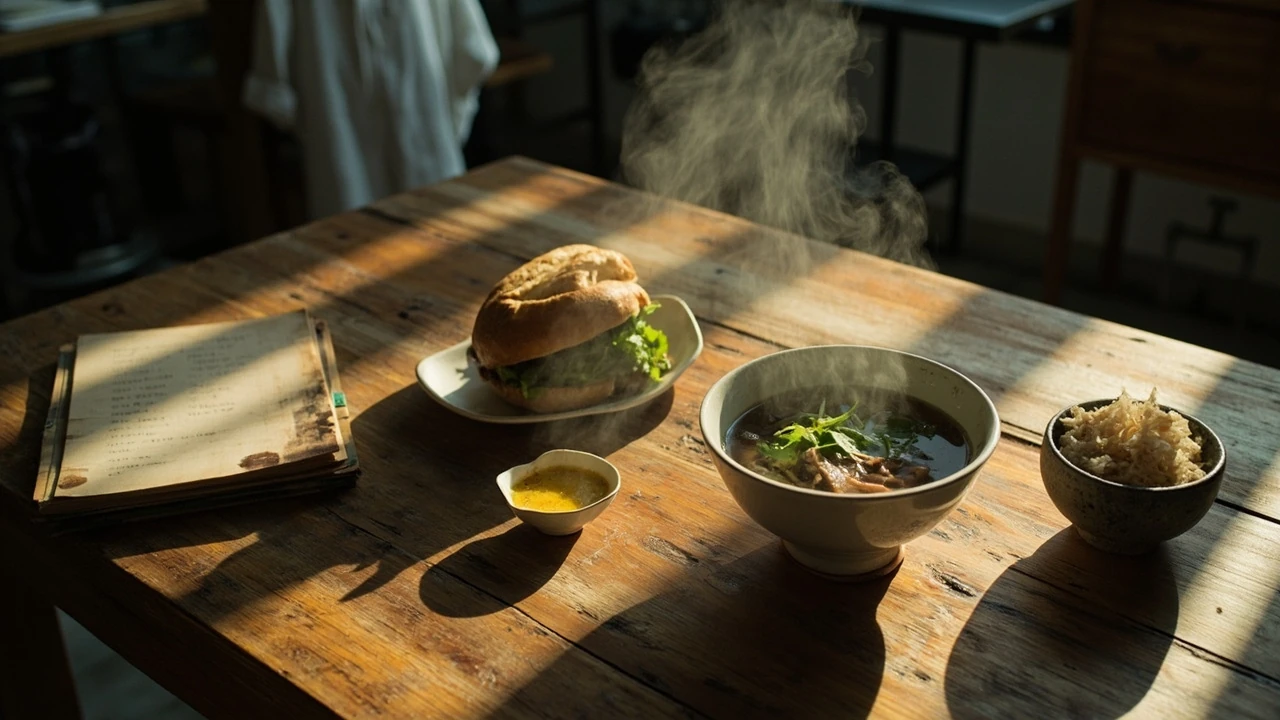
Best Vietnam food, translated into a menu that actually works
A line cook in Ohio asked me a simple question last winter: “If I only get one shot at a Vietnamese section, what are the best Vietnam food dishes to put on it, and what do I leave out?” The honest answer is that the best Vietnam food is not a single dish or a list of trendy bowls. It is a small, well-understood set of techniques and flavor habits that an operator can translate into a menu without faking a cuisine they do not yet know. This guide is built for that conversation: the operator who wants to serve credible Vietnamese dishes, the writer who has to describe them accurately, and the marketer who has to talk about them without sounding like a travel brochure.
Vietnamese cooking has a strong backbone. The broths are aromatic, the herbs are generous, the carbs are light, and the portions stay balanced. A few signature dishes carry most of the cultural weight, and a handful of supporting players fill the gaps. If the goal is to identify the best Vietnam food for a real menu rather than a top-ten list, the work is to separate the dishes that travel well from the ones that demand a specialist cook or a specific neighborhood supply chain.
What follows is a working list, not a ranking. Each entry explains what the dish is, why it matters, how it behaves on a menu, and where operators tend to go wrong. The same framework can be used to plan a single signature bowl or a full Vietnamese section.
What makes a dish count as the best Vietnam food on a menu
Before listing dishes, it helps to define the criteria. A listicle can rank any noodle soup it likes, but a menu has to satisfy customers, hold up on a line, and survive a cost review. The dishes below are the ones that tend to meet all three tests in Western kitchens.
- Flavor architecture is repeatable. A dish earns a spot when the core flavor can be built from a stable pantry, not one fragile fresh ingredient.
- Components can be prepped ahead. Broths, pickles, sauces, and proteins should be ready before service so tickets do not stall.
- The dish scales beyond the original region. A great Hanoi-only dish is not the right answer for a generalist kitchen. The best Vietnam food for most menus is the kind that travels.
- It can be explained in a short blurb. If staff cannot describe a dish in two sentences, guests will not order it.
- It earns its place next to non-Vietnamese dishes. A Vietnamese section has to compete for stomach share, not just look good on a page.
That last point matters. The best Vietnam food for a real menu is rarely the rarest dish on a Vietnamese food blog. It is the dish that fits how your guests already eat, with a clear bridge to a flavor they understand.
The signature dishes that anchor any serious Vietnamese menu
The dishes in this table are the ones most Vietnamese cooks and operators name when asked what a menu cannot do without. The point is not to declare a winner. The point is to show why each one earns its place.
| Dish | Core technique | Why it earns a place | Menu risk to manage |
|---|---|---|---|
| Pho (beef or chicken) | Long-simmered aromatic broth, flat rice noodles, fresh herbs | Recognizable, satisfying, holds its value as a signature bowl | Broth time and spice consistency; spice sachets must be controlled |
| Banh mi | Crusty baguette, savory protein, pickles, herbs, pate | Fast, profitable, easy to portion, works for lunch and grab-and-go | Bread freshness, filling balance, pâté quality |
| Bun (vermicelli bowls) | Room-temp rice vermicelli, grilled protein, nuoc cham, fresh veg | High margin, light, easy to prep, appeals to non-soup guests | Vegetable crunch, sauce-to-noodle ratio |
| Com tam (broken rice plates) | Broken rice, grilled pork, egg, pickles, nuoc cham | Comfort food, generous portions, strong lunch appeal | Rice texture, grill consistency on busy nights |
| Spring rolls (cha gio or fresh goi cuon) | Crispy fried or fresh rolled, dipping sauce | High-margin starter, pairs with beer and wine, easy to share | Fry-to-order time, freshness of rice paper |
| Bun bo Hue | Spicy beef and lemongrass broth, thick noodles | Distinct from pho, anchors a regional identity, rewards spice lovers | Heat level calibration, lemongrass supply |
| Banh xeo (sizzling crepe) | Rice flour crepe, shrimp and pork, mung bean, herbs | Theatrical, build-your-own, very photogenic | Pan skill, timing the roll at the table |
| Ca kho to (caramelized fish in clay pot) | Fish braised in caramel sauce, black pepper, chili | Strong home-cooking identity, good for family-style service | Sugar control, fish freshness, clay pot supply |
| Che (sweet soups and puddings) | Bean, mung, or fruit bases with coconut | Light dessert option, lower sugar than Western desserts | Allergen labeling, ingredient variety |
Notice the table is not ordered by popularity. It is ordered by what an operator can realistically do. Pho and banh mi are obvious anchors, but a strong bun cha or a controlled bun bo Hue can be the surprise sellers that differentiate a menu from the one down the street.
How to read the flavor logic behind the best Vietnam food
Vietnamese food is not built on heat or richness. It is built on a five-element balance that repeats across regions: salty, sweet, sour, spicy, and umami, with a strong layer of fresh herbs and aromatics. Understanding that pattern is what separates a menu that feels Vietnamese from a menu that just uses fish sauce.
Salt comes from fish sauce, soy, and salt-cured or fermented condiments. Sweet is often a touch of sugar, palm sugar, or hoisin used carefully so the dish does not read as dessert. Sour pulls from lime, tamarind, vinegar, or pickled vegetables. Spicy is calibrated, not always present, and usually comes from fresh chili or a chili oil the guest adds. Umami is built from broths, fish sauce, fermented shrimp paste, or mushrooms, and it is what makes a simple bowl taste layered.
Herbs are the signature. Vietnamese kitchens use mint, Thai basil, cilantro, perilla, Vietnamese coriander (rau ram), sawtooth herb, and lemongrass as structural ingredients, not garnishes. The visual generosity of a dish is a clue to its identity. A bowl of pho that arrives with a small fist of herbs on top is closer to the original than one with a lonely sprig of cilantro.
That matters for menu design. The best Vietnam food on a plate is the dish where the cook has handled the balance and then hands the diner the tools to finish it. Lime, fresh chili, hoisin, sriracha, and herbs sit on the table so the guest can tune the bowl to taste. This is not laziness. It is a deliberate part of how the cuisine is meant to be eaten.
Regional differences operators should know
Vietnam is long and thin, and the food shifts from north to south in ways a serious menu should respect. If a menu tries to do everything, it usually ends up doing nothing well. The most useful move is to pick a region or a set of regions and commit.
- North (Hanoi and around): restrained seasoning, clean broths, emphasis on balance. Pho ga, bun cha, banh cuon, and grilled fish with dill and turmeric are signature styles.
- Central (Hue, Da Nang, Hoi An): spicier, more chili and lemongrass, smaller portions, royal-court influence. Bun bo Hue, mi quang, cao lau, and banh xeo are signature dishes.
- South (Saigon and the Mekong Delta): sweeter, more herbs, more use of coconut and tropical ingredients. Com tam, hu tieu, and broken-rice plates are common.
For a Western menu, the southern style tends to be the most accessible because of its sweetness and the way it works with grilled meats. The northern style tends to be the most respected by Vietnamese diners because of its restraint. A menu that mixes both should do it on purpose. A mix that is accidental will look inconsistent.
The pantry that holds the menu together
The best Vietnam food depends on a relatively short list of ingredients, and most of them are stable and shelf-friendly once you find the right supplier. This table is a starting pantry, not a comprehensive one. Build it before you build the menu.
| Category | Core items | Why it matters | Storage note |
|---|---|---|---|
| Broth base | Beef and chicken bones, charred onion and ginger, whole spices (star anise, cinnamon, clove, coriander seed) | Pho and most noodle soups start here | Freeze bones in 2 kg portions; toast spices the day of service |
| Fish sauce | High-protein Vietnamese fish sauce (red label common, 40N is a typical range) | Salt and umami backbone of nearly every dish | Keep in a cool, dark cabinet; cap tight to avoid oxidation |
| Soy and related | Light soy, dark soy (for color), hoisin, oyster sauce (optional) | Color and depth for marinades and finishing sauces | Refrigerate after opening |
| Sauces and dips | Nuoc cham (lime, fish sauce, sugar, garlic, chili), sriracha, chili oil, satay | Most dishes rely on a finishing sauce | Build nuoc cham in small batches every 2 to 3 days |
| Rice and noodles | Jasmine rice, broken rice, rice vermicelli (bun), flat rice noodles (banh pho), egg noodles | Carb anchors for bowls, plates, and soups | Store dry noodles in airtight bins; cooked noodles refrigerated up to 2 days |
| Pickles | Do chua (carrot and daikon pickle), quick cucumber pickle | Acid, crunch, contrast in banh mi, bun, and com tam | Hold in brine up to 2 weeks; refresh texture with cold water before service |
| Herbs and aromatics | Cilantro, Thai basil, mint, perilla, rau ram (if available), sawtooth herb, lemongrass, garlic, shallot, Thai chili, lime | Defines the cuisine as much as any broth | Receive 2-3 times per week; store stems in water with a loose cover |
| Proteins | Beef chuck, shank, brisket, chicken thigh and wing, pork shoulder, pork belly, shrimp, firm white fish | Each bowl or plate is built around a specific protein | Brine or marinate the day before to lock in moisture |
| Bread | Vietnamese-style baguette (light crust, airy crumb) or a high-hydration French baguette | Banh mi lives or dies on the bread | Source from a Vietnamese bakery if possible; freeze sliced |
A pantry like this supports roughly 80 percent of the dishes most Western diners expect when they search for the best Vietnam food. The remaining 20 percent are usually regional specialties that depend on a specific protein or technique.
How each signature dish behaves on a real menu
It is one thing to list the best Vietnam food. It is another to know what happens when those dishes hit a line during a Friday rush. The notes below are practical rather than nostalgic.
Pho
Pho is the anchor of the cuisine, and it is also the dish most likely to disappoint if it is rushed. A 12-hour beef broth and a 4-hour chicken broth are realistic for most kitchens. The trick is to cook the broth in batches, chill it fast, and skim it so the cup of broth you ladle at 7:45 pm looks as clean as the one at 11:30 am. The noodles should be cooked to order in a small pot, not held in a hotel pan. The toppings can be prepped, but the herbs go on at the pass.
Menu description matters. A line that says “beef noodle soup” will underperform. A short note that names the broth, the cut, and the herb plate will lift sales. That is also where an editorial team earns its keep.
Banh mi
A banh mi sandwich is one of the highest-margin Vietnamese dishes on a Western menu. The cost is mostly in the protein and the bread, and the perceived value is high because the sandwich is dense and full of texture. The real failure mode is a soggy sandwich. Two rules hold: toast the bread until the crust cracks, and put the pickles and herbs between the protein and the bread, not directly on the bread, so the moisture does not travel.
For grab-and-go, banh mi can be wrapped in paper and held for 15 minutes without losing quality. Beyond that, the bread softens and the dish loses its identity. Train staff to time wraps to the order, not the ticket.
Bun (vermicelli bowls)
Bun is the most flexible category. Grilled pork, lemongrass chicken, beef with betel leaf, tofu with mushroom, and shrimp and pork are all common proteins. The base is cold rice vermicelli, the topping is a small mountain of lettuce, cucumber, bean sprouts, mint, and pickled carrots, and the sauce is nuoc cham. The dish eats well at room temperature, which is useful for delivery and catering.
The cost is friendly. A bun bowl can be built for a fraction of the price of a pho and priced only slightly lower. That margin is what makes the dish a steady seller.
Com tam (broken rice plates)
Com tam is the Vietnamese answer to a rice plate. The “broken rice” is a byproduct of milling that produces smaller grains, which hold sauce well and feel lighter on the palate. The classic version pairs grilled pork chop, a Vietnamese-style egg meatloaf (cha trung), pickled vegetables, and a fish sauce dressing.
On a menu, com tam works best as a lunch item or a family-style plate. The grill is the bottleneck. Plan par-cooked proteins and finish them on a flat top so the volume holds.
Spring rolls
Spring rolls come in two forms, and a menu can carry both. Fried spring rolls (cha gio) are crispy, savory, and built around a mince of pork, mushroom, taro or jicama, and noodles. Fresh spring rolls (goi cuon) are rice-paper rolls with shrimp, pork, vermicelli, and herbs, served with hoisin-peanut or nuoc cham. Fried rolls are easier for delivery and bar snacks. Fresh rolls are excellent for guests who want a lighter start.
The fryer is the only real equipment constraint for the fried version. Fresh rolls need a clean station, rice paper that is hydrated correctly, and a tight wrap. Both are worth doing if the kitchen can hold the discipline.
Bun bo Hue
Bun bo Hue is the spicier, more complex cousin of pho. The broth is built with lemongrass and shrimp paste, the noodles are thicker, and the meat often includes both beef shank and pork knuckle. It is a strong menu differentiator. The risk is that the heat level varies, and a guest who gets an unexpectedly spicy bowl will not come back. Calibrate the chili in the broth and offer a chili sidecar so the dish can be tuned.
Banh xeo
Banh xeo is a sizzling turmeric crepe filled with shrimp, pork, mung bean, and bean sprouts. The dish is dramatic, fragrant, and a little bit theatrical. The technique is a skill. The crepe is poured into a hot pan, the filling is added, the crepe is folded, and the whole thing is cut and served with a wrapping herb plate and nuoc cham. It is a great menu piece for a chef with the time to practice.
It is also a menu piece that is hard to scale. Plan one or two pans and limit the daily count. A great banh xeo is a marketing asset. A bad one is a problem on review sites.
Ca kho to
Ca kho to is a braise of fish (often catfish or salmon in Western kitchens) in a caramel sauce with fish sauce, sugar, garlic, black pepper, and chili. It is served in a clay pot, and the sauce is meant to be spooned over rice. The dish is homey, rich, and surprisingly accessible. It is a good choice for a family-style section or a tasting menu.
The technical risk is the sugar. A heavy hand produces a sweet, sticky glaze that overwhelms the fish. A light hand produces a glossy, balanced braise. Train by volume, not by feel.
Che (sweet soups and puddings)
Che is the dessert category most Western guests have not seen. It includes mung bean pudding, black bean soup, lotus seed sweet soup, and tropical fruit chews with coconut cream. The textures vary. Some are jelly-like, some are grainy, and some are smooth. The flavor is gentle and not too sweet, which makes it a useful counterpoint to a rich main.
The label risk is real. Many che recipes include beans, mung, peanuts, or coconut, which are common allergens. A clear menu note and a staff reminder are mandatory.
Where the best Vietnam food usually fails on a Western menu
Most failures are not about the cuisine. They are about execution. The same five problems show up over and over, and they are worth naming out loud.
- Rushed broths. Pho made in two hours tastes like a stock, not a broth. Build time into the prep schedule or buy a base from a reputable maker.
- Inconsistent heat. Chili levels drift between cooks. Standardize the chili in the sauce and the chili on the side.
- Wilting herbs. Herbs are the soul of the cuisine. They should arrive in small batches, be stored like flowers, and go on the dish at the last moment.
- Soft bread. Banh mi made with a wet baguette falls apart. Use a drier crumb, toast aggressively, and hold assembled sandwiches for as little time as possible.
- Flat descriptions. A menu that says “vermicelli bowl with pork” will underperform. A line that says “grilled lemongrass pork over rice vermicelli with mint, pickled carrot, and nuoc cham” will lift the dish.
Each of these failures is fixable, and each one is the kind of detail an editor or a chef can see. A consistent process is more important than a long list of dishes.
How to write menu copy that respects the cuisine
Menu writing is a craft, and Vietnamese food rewards the kind of detail that other cuisines take for granted. A few rules help.
- Name the protein and the cut. “Grilled pork” is weaker than “grilled lemongrass pork shoulder.”
- Name the herbs. A short list of two or three herbs is enough. The reader does not need a botanical inventory.
- Name the sauce. Nuoc cham, hoisin, fish sauce caramel, and chili oil each carry a specific flavor. Putting the name on the menu sets expectations and earns trust.
- Keep the description to one sentence. Vietnamese dishes are layered. A short, accurate sentence beats a long, vague one.
- Respect the original language. Use the Vietnamese name with an English gloss, not as a substitute for an English description. Guests are more confident ordering a dish they can read about in plain English.
Those rules are also how a brand sounds credible. A reader who has never had bun cha should be able to read the menu and understand what they are about to eat. That is the difference between a Vietnamese section and a section that just uses fish sauce.
How the best Vietnam food behaves on different formats
Not every menu channel is the same. The dishes that win on a sit-down menu are not always the same ones that win on delivery, catering, or retail. The table below is a quick reference.
| Format | Best Vietnam food choices | Why it fits |
|---|---|---|
| Full-service dinner | Pho, bun bo Hue, banh xeo, ca kho to, com tam | Bowls and plates photograph well, justify higher prices, allow family-style service |
| Fast-casual lunch | Banh mi, bun bowls, com tam, fresh spring rolls | Fast, portable, generous portions, easy to standardize |
| Delivery | Banh mi, bun bowls, com tam, spring rolls, pho (in insulated packaging) | Travel well in clamshells; broths need a separate container |
| Catering and events | Com tam, bun cha, grilled meat platters, fresh spring rolls, che desserts | Hold at room temperature for short windows; scale to large trays |
| Retail and grab-and-go | Banh mi, banh mi-inspired sandwiches, spring rolls, che cups | Packable, label-friendly, strong perceived value |
For an operator considering a Vietnamese section, the smart move is to choose one or two formats and design the menu around them. A full Vietnamese menu that tries to serve every channel usually ends up compromising on all of them.
How a marketing team should talk about the best Vietnam food
Marketing for Vietnamese food tends to swing between two bad tones. One is a travel-brochure tone that lists “ancient traditions” and “vibrant street food” without telling the reader what the dish actually is. The other is a minimal tone that names the dish and assumes the reader knows what pho or banh mi is. Both lose readers.
The middle tone is a working tone. It names the dish, names the technique, names the herbs, and tells the reader what to expect on the plate. It is also where an editor earns the description, because the words have to be specific without being a recipe.
A useful exercise is to take the top three dishes on a Vietnamese section and write three sentences about each. The first sentence is what the dish is. The second is what the guest will taste. The third is what makes the dish worth ordering. That format works for menu copy, for blog content, and for social captions. It also makes the difference between a real Vietnamese section and a fake one clear to a trained reader.
That kind of writing is also how a restaurant’s editorial voice builds trust. The first piece a customer reads about the cuisine shapes how they read the second piece. If the first piece sounds like a generic travel blog, the second piece will be read with the same suspicion. If the first piece sounds like a working chef or a working editor, the reader will read the next one with more confidence.
If a restaurant wants to write about a single signature dish for a week of content, the same framework applies. Each day can take a different angle: the broth, the herbs, the pickle, the bread, the protein, the history, the technique, and the menu. That kind of series is also how a small section becomes a known section, and how a menu becomes a brand. The article How to turn one signature product into a month of content walks through that exact approach.
How to brief a kitchen team on Vietnamese flavor
Most line cooks have eaten pho and banh mi. Far fewer have been trained on the flavor balance. A short briefing saves more mistakes than a long recipe.
- Fish sauce is the salt. A dish that tastes flat usually needs more fish sauce, not more salt. Use the Vietnamese brands a cook would recognize.
- Sugar is a support, not a feature. A pinch of sugar rounds the flavor. A spoon of sugar makes the dish a dessert.
- Lime is the brightener. A squeeze at the end wakes a heavy sauce. Add it last, not during the cook.
- Fresh herbs are structural. They go on the plate, not in a tray on the side. A bowl without herbs is not the dish.
- Chili is a guest control. Build the heat into the broth if the dish is meant to be spicy. Offer chili on the side if the dish is meant to be balanced.
Those five rules are enough to start a cook on most Vietnamese dishes. A recipe library can fill in the rest.
Common allergens and dietary notes
Vietnamese food is friendly to many diets. It is heavy on rice, vegetables, and lean proteins. It is light on dairy. It is also one of the easier cuisines to mark for gluten, soy, and shellfish, and harder to mark for fish sauce because fish sauce is in nearly every dish.
Useful notes for a menu:
- Most pho broth is gluten-free if the soy and hoisin are controlled.
- Banh mi is not gluten-free because of the baguette.
- Nuoc cham contains fish sauce and is not vegan; a soy-based substitute is workable but not authentic.
- Spring rolls can be made vegetarian by removing the meat and adding tofu or mushroom, but the dipping sauces still need to be checked.
- Che desserts often include coconut and beans, and sometimes peanuts. Label clearly.
These are the kinds of details that a server should be able to recite without checking. They are also the details a guest will remember, and a guest who feels informed is more likely to order with confidence.
What to skip on a first Vietnamese section
It is tempting to load a new section with every dish a chef can name. Resist that. A focused section that does five dishes well will out-perform a sprawling section that does fifteen dishes unevenly. The dishes to skip on a first section are the ones that depend on techniques the kitchen has not yet practiced.
Skip anything that requires a clay pot for every order. Skip a banh xeo unless the kitchen has a chef who has cooked fifty of them. Skip regional fish dishes that depend on a specific species you cannot source reliably. Skip elaborate che programs that need three different beans and three different jellies. Save those for year two, when the section has a steady base of regulars.
The first section should be small, accurate, and confident. The best Vietnam food for a new menu is the food the kitchen can repeat on a Tuesday in November without dropping a dish.
How to price a Vietnamese section without losing margin
Vietnamese food is friendly to margin because the proteins are flexible and the carbs are cheap. The risk is the opposite problem: pricing too low because the cuisine “feels” casual. Pho can hold a price that is close to other signature bowls on a menu, and a banh mi can hold a price that is close to other handhelds. The diner who is paying attention will pay for the broth time and the herb plate.
Useful pricing moves:
- Price a bun bowl within a dollar of a pho so the choice is about flavor, not cost.
- Bundle herbs and pickles into the price rather than charging extra. The dish needs them to be the dish.
- Offer a protein upcharge on banh mi (pate and cold cuts combo, grilled pork, lemongrass chicken) rather than rebuilding the sandwich.
- Add a Vietnamese iced coffee or a house limeade as a high-margin drink. Both cost very little to make and add to the section’s identity.
The framework in Menu pricing strategies that protect margin without losing guests goes deeper on that point. The short version is that a well-priced Vietnamese section can out-perform a casual American section on the same ticket because the protein cost is more flexible.
How Vietnamese food shows up in a brand story
If a restaurant is serious about a Vietnamese section, the section is part of the brand, not a side note. That means the photography, the menu design, and the editorial voice should all be aligned. A banh mi photographed under a heat lamp will look like a sandwich. A banh mi photographed on a wooden board with the cross-section visible, the pickles spilling, and the herbs in focus, will look like a dish.
That kind of photography is the work in Food photography that actually sells the dish. The same care applied to pho, bun bowls, and spring rolls will lift the section’s perceived value by more than any menu re-write. Vietnamese food photographs well because the colors are natural and the textures are strong. Use that.
The editorial voice should also match. A Vietnamese section on a menu that describes a pork belly banh mi as “a fun sandwich” is doing the dish a disservice. A line that says “crisp baguette, slow-braised pork belly, pickled carrot and daikon, cilantro, and chili mayo” is doing the dish a favor. The reader will see the difference, and so will the guest.
Putting it all together: a small Vietnamese section that actually works
A focused section that most kitchens can run is short, consistent, and easy to brief. A reasonable starting section is five dishes plus a small starter and a small dessert.
- One pho. Beef or chicken, with a clean broth and a tight herb plate.
- One bun bowl. Grilled lemongrass chicken, with nuoc cham and a vegetable mix.
- One banh mi. A signature protein with the standard build, on a toasted baguette.
- One rice plate. Com tam with grilled pork chop and pickled vegetables, or a vegetarian rice plate with grilled tofu and lemongrass.
- One starter. Fresh spring rolls or fried spring rolls, with a single dipping sauce.
- One dessert. Che of the week, or a coconut panna cotta with palm sugar as a bridge dessert.
That section is small enough to brief in a single kitchen meeting, broad enough to give a guest a real taste of the cuisine, and stable enough to run on a busy weekend. From there, the section can grow with a bun bo Hue, a banh xeo night, or a regional special.
Frequently asked questions
What is the single best Vietnam food to start a menu with?
Pho is the most recognizable dish in the cuisine and the safest signature. Banh mi is the strongest seller if the menu is fast-casual. Choose based on the format, not the trend.
Is pho the best Vietnam food for a delivery menu?
Pho travels well in a sealed, insulated container with broth packed separately. The noodles hold texture for about 20 minutes after a hot pour. A banh mi or a bun bowl is more forgiving for a 30-minute delivery window.
What herbs are essential for an authentic Vietnamese section?
Cilantro, Thai basil, and mint are the core. Perilla, Vietnamese coriander, and sawtooth herb are the next layer. Lemongrass is an aromatic, not a garnish, and should be cooked into broths and marinades.
How long should a pho broth simmer?
A traditional beef pho broth runs 8 to 12 hours. A chicken pho broth can be done in 3 to 4 hours. The longer simmer pulls more collagen and flavor from the bones, but a shorter simmer is workable for a busy kitchen.
What is the difference between nuoc cham and nuoc mam?
Nuoc cham is a dipping sauce made with fish sauce, lime, sugar, garlic, and chili. Nuoc mam is the Vietnamese name for fish sauce itself. They are related but not interchangeable.
Can a Vietnamese section work without a wok?
Yes. Most of the dishes above can be built with a stock pot, a flat top, and a fryer. A wok is useful for stir-fried dishes like pho xao or mi xao, but a pho-and-banh-mi section does not need one.
What is the best Vietnam food for a vegetarian diner?
Bun bowls with grilled tofu and mushroom, vegetable pho made with a mushroom-based broth, vegetarian spring rolls, and com chay (vegetarian broken rice) are reliable vegetarian options. A clear menu note is essential because fish sauce is in most sauces.
How spicy is Vietnamese food compared with Thai food?
Vietnamese food is generally less spicy than Thai food. The heat is built into specific dishes like bun bo Hue and some central Vietnamese plates, but most dishes balance other flavors first. Chili is often offered on the side.
What is the best Vietnam food for someone who has never tried the cuisine?
Banh mi is the easiest first dish because it is a sandwich with familiar ingredients. Pho is the most rewarding first dish because it shows the full flavor architecture. Either one is a fair entry point.
How do I describe a Vietnamese dish on a menu without sounding like a travel blog?
Name the protein, name the technique, name two or three herbs or sauces, and stop. A line like “grilled lemongrass pork over rice vermicelli with mint, pickled carrot, and nuoc cham” is more useful than a paragraph about street food tradition.