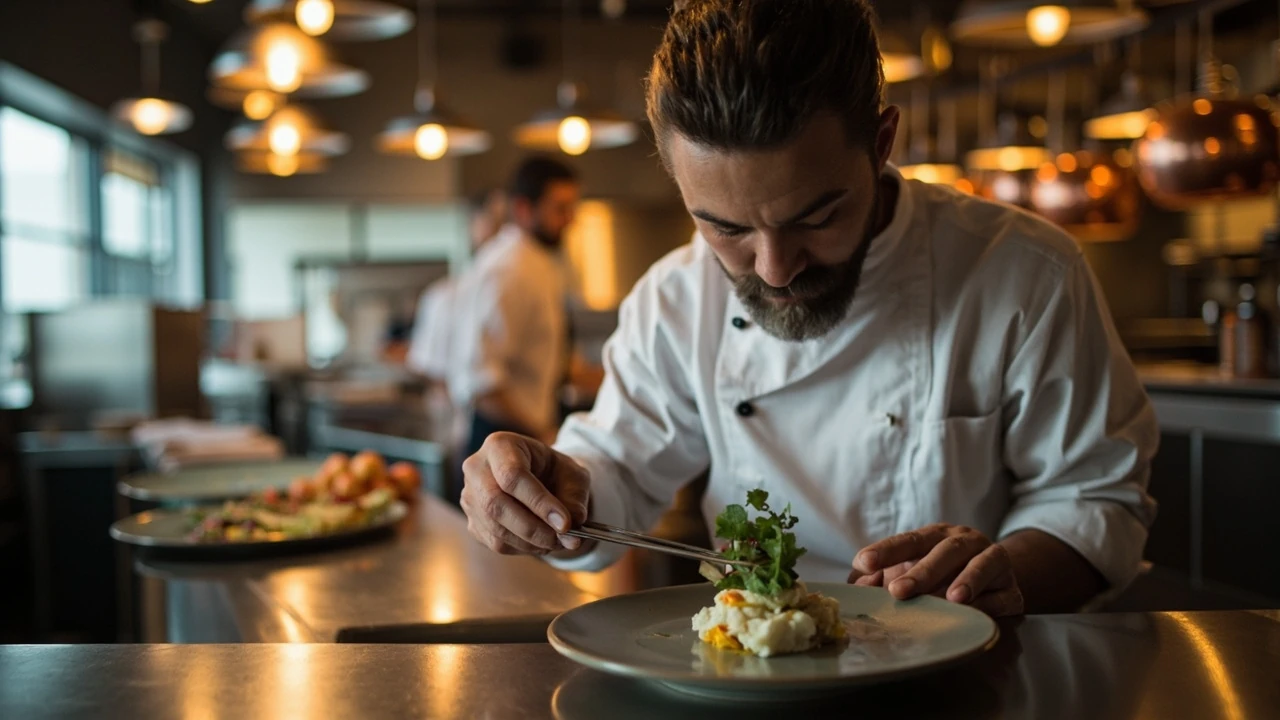
Two chefs can cook the same plate and only one of them can charge $34 for it. The difference is almost never the recipe. It is the discipline behind the choice. Owners who learn how to choose signature dishes for a restaurant stop asking “what is good on the menu” and start asking “which dish carries the brand, holds its cost, and is still worth making on a slammed Saturday.” That shift in question is what separates a menu from a reputation.
This guide walks through the framework an operator can actually use on a Tuesday afternoon, not a theory deck. It covers what makes a dish a signature in the first place, the five checks that filter the menu, how cost, story, and repeatability interact, and the common traps that turn a “house favorite” into a quiet money-loser. It also covers how the choice connects to restaurant marketing that actually fills seats and to menu design that protects your margins, because a signature dish only works if the rest of the menu helps it.
How to choose signature dishes for a restaurant: the operating framework
The phrase “signature dish” gets used loosely. A dish is not a signature because the chef likes it, or because it photographs well, or because one regular ordered it twice. A real signature dish is the item guests order first, the item you would still serve if the menu shrank to a single page, and the item that quietly pays for the rest of the kitchen. Choosing one is a filtering problem, not a brainstorming problem.
The framework below is the one most working operators use, even if they do not call it by name. It moves from identity to economics to storytelling, and each step removes candidates that fail on a specific test.
- Start from the restaurant’s identity, not from recipes.
- Filter for cost, yield, and prep time against your actual service style.
- Test repeatability across a normal week, not a calm Tuesday.
- Pressure-test the story: can a guest retell it in one sentence?
- Commit to a small portfolio of two to four signatures, not a single hero.
Each step matters on its own. Skip one and the dish tends to either fade quietly or burn out the kitchen.
What actually makes a dish a “signature”
Before filtering candidates, it helps to be honest about what a signature is supposed to do. The job of a signature dish is not to be the fanciest plate on the menu. Its job is to anchor the guest’s memory of the restaurant, so the rest of the menu can be more varied and a little more experimental.
Three roles are useful to name:
- The anchor. The dish guests order to understand what the restaurant is. It carries the brand identity and usually appears on every menu revision.
- The translator. The dish that explains the concept to a first-time guest. It is simpler than the anchor and often cheaper, but it still feels like the same kitchen made it.
- The souvenir. The dish that guests mention by name to friends. It is usually shareable, photographable, and slightly unexpected.
Most restaurants only need one anchor, one translator, and one or two souvenirs. Anything more dilutes the signal. The first step in learning how to choose signature dishes for a restaurant is deciding which role each candidate is meant to play.
Step 1: Start from the restaurant, not the dish
The single most common mistake is starting from a technique. A chef learns a new sous-vide method, files a beautiful plate, and tries to retrofit a concept around it. That almost always produces a dish that lives in the chef’s head rather than the restaurant’s identity.
Instead, write down three sentences that the rest of the team agrees on:
- Who is the guest we are actually built for? Not “everyone” — be specific.
- What kind of meal do we want them to remember? A quick weekday lunch, a long celebration, a neighborhood regular night?
- What is one flavor, technique, or ingredient we want to be known for? This is usually narrower than people think.
Once those sentences exist, candidate dishes are easy to reject. A wood-fired steak on a forty-dollar tasting menu is a mismatch. A delicate crudo in a family pizza joint is a mismatch. The dish has to fit the restaurant’s center of gravity, and the center of gravity comes first.
Step 2: Filter for cost, yield, and time
Identity gets the candidate on the shortlist. Economics decides whether it survives a real week of service. A dish that costs $22 in food to plate at $28 is a charity plate, not a signature. A dish that takes twenty minutes of prep and only sells six covers a night is a private special, not a signature.
The three filters below are the ones that quietly decide most menus.
Food cost as a percentage of menu price
Target food cost for a signature is usually in the 26 to 32 percent range, depending on the concept. A burger joint can run higher because volume and speed cover it. A small-plate restaurant has to run tighter because each dish carries its own service cost. The number itself matters less than the trend. If a candidate dish comes in at 38 percent and stays there after you rework the garnish, portion, and protein, it is telling you it is not your signature. It is a guest feature.
Prep and cook time
Signatures should be able to ride a normal ticket spike. If a candidate needs forty-five minutes of low-and-slow braising and then a final sear, the question is not “can we cook it” but “can we cook it on a Saturday at 7:45 when there are sixteen other tickets on the rail.” If the answer is “barely,” it is not a signature yet. It is a special that needs work.
Yield and trim loss
Some dishes look cheap on the invoice and bleed money in trim. A whole fish that yields 38 percent usable protein is not as affordable as the price per pound suggests. A signature should produce predictable yield with simple trim handling, because the line will be making it again and again at speed.
| Filter | Question it answers | Target for a healthy signature |
|---|---|---|
| Food cost percentage | Can we price this honestly and still make margin? | 26 to 32 percent, stable week to week |
| Active prep time | Can the line execute it during a rush? | Under 12 minutes of active work per plate |
| Yield | Does the trim justify the price? | Above 55 percent usable for proteins |
| Ingredient availability | Can we source it every week of the year? | Primary item available from at least two vendors |
Step 3: Test repeatability across a normal week
Most “favorite” dishes are chosen on a calm night with a happy team. That is the easiest possible test. A signature has to survive the average week, which includes a Wednesday with a missing line cook, a Friday when the produce delivery is late, and a Saturday with a private event in the back room.
Run the candidate as a special for at least three full services in different conditions. Track four numbers:
- Sales velocity, including how it performs when the host points guests toward it.
- Reorder rate, meaning how often the same table orders a second one or another item from the same flavor family.
- Waste, including trim, prep leftovers, and comps.
- Sentiment, captured in the simplest way that works: a quick note from servers at the end of the night.
If a candidate only works on the day it was created, it is not a signature. It is a pop-up special that belongs on a different menu.
Step 4: Pressure-test the story
Stories are not decoration. They are how a signature dish survives outside the restaurant. A guest will not retell a plate as “a pan-seared duck breast with a cherry gastrique and parsnip purée.” They will retell it as “the duck that the chef grew up eating at his grandmother’s table in Lyon” or “the dish with the smoked honey that surprised everyone.” The story is what the dish becomes in the guest’s memory, and that is what brings them back.
A useful pressure test: can a server explain the dish in one sentence, with one specific detail, in under ten seconds? If yes, the story is working. If the explanation needs two sentences and a gesture, the dish might be good but the story is not finished yet.
Three honest story sources tend to work better than invented ones:
- A genuine family or regional memory tied to a real ingredient or technique.
- A specific supplier, farm, or producer the kitchen has a real relationship with.
- A problem the kitchen solved in a way that left a recognizable mark on the plate.
What does not work is a story layered on after the fact, especially if it does not match how the dish actually tastes. Guests are not slow. They sense the difference between a story and a marketing line, and they tend to resent the second one.
Step 5: Commit to a small portfolio, not a single hero
A restaurant that has eleven signature dishes has no signature. The signal gets lost. The aim is usually two to four dishes that share a flavor thread and represent different price points, different moods, and different roles in the meal.
A working four-dish portfolio looks roughly like this:
| Role | Price tier | What it does for the guest |
|---|---|---|
| Anchor | High | Defines the kitchen’s voice and the brand’s ceiling |
| Translator | Mid | Explains the concept to a first-time guest without overwhelming |
| Souvenir | Mid to high | Gives guests something shareable and named to recall |
| Comfort bridge | Lower | Gives regulars a familiar anchor when they are not in the mood for the anchor |
Note that the table has four rows and four roles, not a list of every good plate on the menu. The portfolio is a frame. Everything else on the menu can rotate inside that frame.
How signature dishes connect to menu engineering
Once the signature portfolio exists, the rest of the menu has a job: to lead guests toward those dishes without forcing them. This is where menu design that protects your margins becomes the practical tool, not a theory. The signature should appear in the visual top-right of a printed menu, the first tab on a digital menu, and the second item servers mention when they describe the kitchen. It should not be hidden in a “chef’s selection” footer, and it should not be surrounded by ten louder items.
A common pattern that works for most concepts:
- Place the anchor in the top third of the menu, in the section most guests read first.
- Use one item on either side of it as a cheaper and a more expensive option, so the eye moves naturally toward it.
- Train servers to describe the anchor with a single sensory detail, not a paragraph.
- Rotate supporting items around the anchor, not the other way around.
The signature becomes the center of gravity. The rest of the menu becomes the conversation around it.
The role of food photography in choosing a signature
Photography is not a step in choosing a signature, but it is a serious test. If the dish does not look like the same dish when it is plated at the pass, the photograph is lying for the restaurant, and that lie will cost the kitchen credibility on the first bad plating. If the dish looks great every time a competent cook plates it, photography becomes one of the cheapest marketing assets in the restaurant.
The practical version of food photography that actually sells the dish is to plate ten versions in one session and pick the three that look most like the actual plate the line will produce on a busy night. The image should match the experience, not flatter it. That is also why the choice of signature and the choice of how to photograph it belong to the same conversation.
How signature dishes feed content and storytelling
A signature dish is content. It is the most natural unit a restaurant has for talking to guests beyond the four walls. One anchor dish can be turned into a short ingredient story, a supplier visit, a technique breakdown, a server’s perspective, and a guest reaction — without ever stretching the truth. The brand stays consistent because every story returns to the same plate.
For a content workflow, the approach in how to turn one signature product into a month of content maps directly: each piece of content is a different door into the same signature. A reel of the plating, a paragraph on the producer, a photo essay of the prep, a server’s note on how guests react — these are not separate campaigns. They are the same campaign told from different angles.
Common traps when choosing a signature
Most signature problems are not about taste. They are about judgment under pressure. A few patterns come up again and again in operator conversations.
Choosing a dish that flatters the chef, not the guest
The chef loves it, the chef’s friends love it, and ten percent of tables order it. That is a hobby dish, not a signature. The sign that this is happening is that the dish only sells when the chef is on the floor to talk about it. The fix is to step back and ask which dish actually moves when nobody is selling it.
Choosing a dish that only works on a calm night
If the dish requires perfect timing, perfect temperature, and a relaxed pace, it will not survive a normal week. The kitchen will start to dread it. Servers will stop recommending it. The dish will quietly disappear. The test is to run it during a weekend service before promoting it.
Choosing a dish with a fragile supply chain
A signature built on one specific mushroom, one specific farm, or one specific import is exposed. A single bad week of supply can take the signature off the menu on the day it was supposed to anchor. Either build a backup plan with the same flavor family, or pick a different anchor.
Choosing a dish that is too similar to the existing menu
If the new signature is essentially the same flavor and technique as an existing item, it does not anchor anything. It confuses the kitchen and the guest. The fix is to choose a dish that opens a flavor or technique the rest of the menu does not cover.
Choosing a dish the team cannot describe in one sentence
If servers cannot summarize the dish quickly, guests will not order it. The dish is doing the work of one plate and three sentences. Either simplify the dish, or build a tighter one-liner the whole team agrees on.
Working example: filtering a candidate
Imagine a small neighborhood restaurant with a wood-fired oven. The chef wants to add a new signature. The candidate is a wood-fired lamb shoulder with smoked yogurt, charred herbs, and a preserved lemon crumb. Run it through the framework:
- Identity fit: Wood-fired cooking is the restaurant’s center of gravity, and lamb shoulder fits the format. Strong fit.
- Food cost: Lamb shoulder at the current price lands at 31 percent, which is acceptable for a high-ticket anchor.
- Prep time: The shoulder needs six hours in the oven, but the line only finishes it in twelve minutes per plate. Acceptable.
- Repeatability: Tested on a Thursday and a Saturday. The Thursday service was smooth. The Saturday service needed two re-fires because of volume. Borderline.
- Story: Servers can describe it as “slow-fired lamb shoulder with smoked yogurt and preserved lemon” in one sentence. The chef can also tell the story of the farm that raises the lamb. Strong.
Because the Saturday result was borderline, the team adjusts the recipe: portion down slightly, pre-portion the yogurt in the morning, and add a second oven slot during peak hours. On the next Saturday, the dish clears comfortably. It gets promoted to anchor.
The example shows the framework in motion. Identity got the dish on the list. Economics narrowed it. Repeatability almost killed it. Story was already in place. A small operational change saved it.
How signature choices evolve over time
A signature is not a permanent marriage. The best ones evolve with the kitchen, the guests, and the suppliers. A common rhythm is to review the signature portfolio every six to nine months. The review is short and honest: which dishes still pull their weight, which dishes are surviving on nostalgia, and which new candidates have shown up in the special cycle.
Two signs that a signature needs to change:
- Sales of the signature have dropped more than 25 percent over three months without a price change or a menu reshuffle.
- The kitchen has started to dread the dish, or the team has stopped recommending it on the floor.
Two signs a new candidate is ready to graduate from special to signature:
- It has held a 15 percent or better attach rate as a special for at least a month.
- Guests can describe it by name without prompting, including new guests who heard about it from someone else.
Choosing signature dishes for a restaurant is not a one-time event. It is a habit of paying attention to what is working and what is not, and being willing to retire a favorite that has stopped earning its place.
A short checklist for the next menu revision
Before the next menu print or digital refresh, the kitchen and front-of-house teams can run through this list together. It is short on purpose.
- What is the restaurant’s identity in three sentences we all agree on?
- Which two to four dishes currently carry that identity?
- What role does each one play: anchor, translator, souvenir, or comfort bridge?
- Does each one clear the cost, time, and yield filters on a normal week?
- Can each one be described in one sentence by a new server after a single briefing?
- Which special has earned a permanent spot, and which current signature has run out of room?
If a candidate fails more than one of these, it stays a special. If it clears all of them, it is ready for the menu.
Frequently asked questions
How many signature dishes should a restaurant have?
Most restaurants do best with two to four signature dishes at any given time. One anchor, one translator, one or two souvenirs or comfort bridges. More than four usually dilutes the signal and makes the menu harder to describe to a first-time guest.
Should a signature dish be the most expensive item on the menu?
Not necessarily. The anchor is often the most expensive plate, but the translator and the comfort bridge usually sit at a lower price. The portfolio is meant to give different guests a different on-ramp into the same kitchen, which means the price points have to vary as well.
How do you know when a dish has become a real signature?
The clearest sign is that guests order it without prompting, and that new guests come in having heard about it by name. Another sign is that the kitchen can produce it at speed with a calm line, not just on quiet nights.
Can a signature dish change with the seasons?
It can, but the role should stay the same. A seasonal anchor that swaps every twelve weeks is fine if the flavor thread stays consistent. A signature that swings between completely different cuisines every season usually loses its anchoring effect and becomes a rotating special.
What if the chef’s favorite dish is not a good signature?
That is common and worth accepting. The chef’s favorite is often a teaching dish or a personal challenge. It can stay on the menu as a special or a weekly feature. A signature has to clear the operational and commercial filters as well, and those filters are usually stricter than taste alone.
How do you retire a signature without disappointing regulars?
Give the dish a real send-off. Run it as a featured special for a few weeks, explain on the menu why it is leaving, and if possible, transition the flavor or technique into a new signature so the regulars feel continuity rather than loss. Sudden removals without explanation tend to be remembered more than the dish itself.
Does a new restaurant need a signature right away?
Not on day one. The first few months are better spent learning what guests actually order, what the kitchen can execute consistently, and what the suppliers can reliably deliver. A signature chosen from real service data is almost always stronger than one chosen from the opening menu.
How do signature dishes affect the rest of the menu pricing?
The signature sets a reference price. The rest of the menu should be priced around it, with cheaper items that lead guests toward it and slightly more expensive items that extend the brand upward. A menu with a single high-priced signature and a cluster of low-priced items usually loses money on the signature and under-prices the rest.
What is the biggest mistake when choosing a signature dish?
Choosing based on what the chef wants to cook instead of what the kitchen can repeat, the floor can describe, and the guests will order without being sold to. Identity and economics filter out most candidates, and skipping either filter produces a dish that looks good on a tasting night and disappears within a quarter.
Choosing signature dishes for a restaurant is one of the few decisions that touches the kitchen, the floor, the marketing, and the brand at the same time. Treat it like the operating decision it is, not a creative one. Run the candidates through identity, economics, repeatability, and story. Keep the portfolio small. Retire what has stopped earning its place. The dish that survives all of that is the one worth printing on the menu, training the team around, and building content around for the next year.