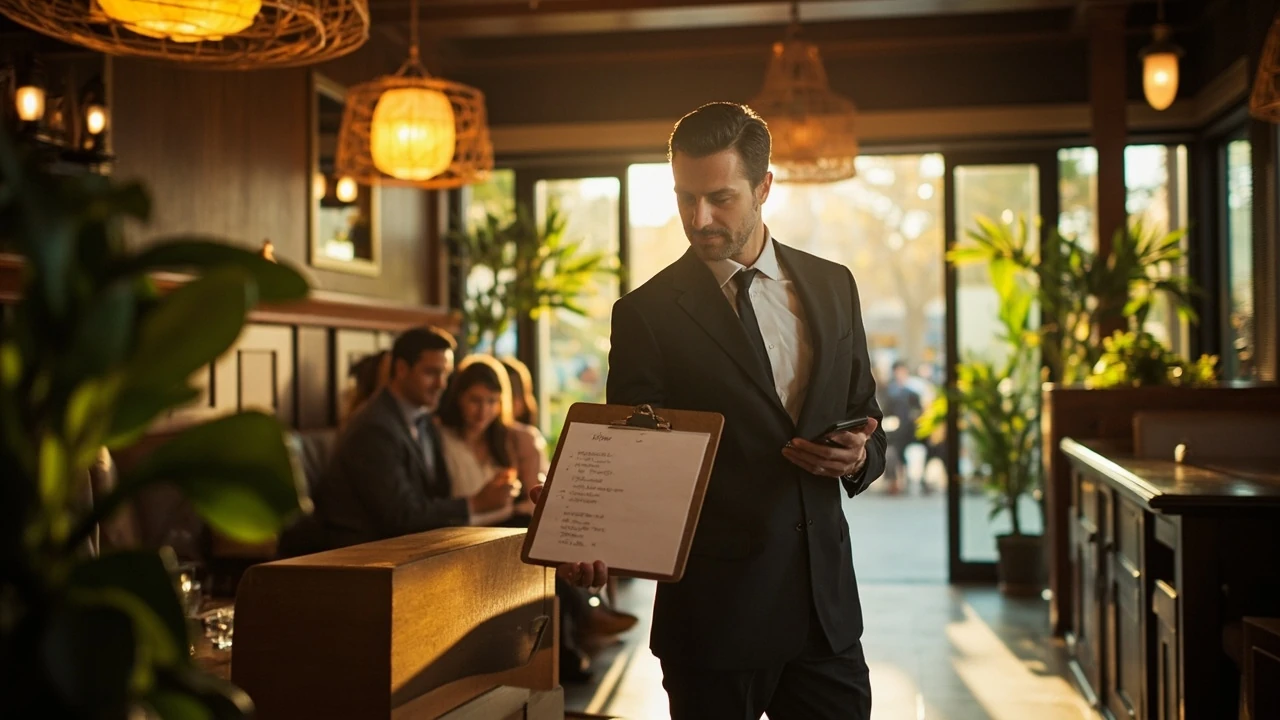
A host glances at the waitlist on a Friday night. Twelve parties deep, a no-show from the 7:15 reservation, and three guests in the lobby checking their phones. The right text at the wrong time can sour an entire evening; the wrong text can fill the dining room with the kind of stress that never shows up in the tip line. Restaurant waitlist text message etiquette is the small, repeatable craft of saying the right thing to a guest who is not yet seated, and saying it in a way that respects their time, their appetite, and your floor plan.
This playbook is for hosts, floor managers, and operators who want a waitlist that runs itself on a calm Tuesday and still holds up on a slammed Saturday. The advice below assumes a text-driven waitlist, not a buzzer, not a shout across the room, and not a clipboard with a carbon copy. The exact words matter, but the timing, the consent, and the recovery moves when something goes wrong matter more.
Restaurant waitlist text message etiquette
Restaurant waitlist text message etiquette is the shared set of expectations a restaurant and its guests agree to when the table is not ready yet. It covers what the host texts, when the host texts, what the guest is expected to do, and what happens when the plan falls apart. A clean system turns waiting from a complaint magnet into a small piece of the experience guests actually remember.
Most etiquette failures on a waitlist are not about bad manners. They come from skipping one of three steps: collecting the right contact info, sending the right message at the right moment, and giving the guest a clear way to respond. Walk through each of those with the discipline you would give to your opening side work, and the text thread becomes one of the calmest parts of the night.
What “etiquette” really means in a text-driven waitlist
Etiquette is not a script. A script is what you say. Etiquette is the underlying expectation that the message will be useful, honest, brief, and easy to act on. For guests, that means the text should tell them something they did not already know, ask only what is reasonable, and never put them in an awkward position. For the restaurant, it means the text should be sent by a person or a system that has the authority to back up the promise inside the message.
In practice, etiquette on a text waitlist has five working parts:
- Consent: the guest opted in, and the message stays inside what they agreed to.
- Accuracy: the quoted wait time is grounded in the floor, not in hope.
- Brevity: the message is short enough to read at a glance on a crowded sidewalk.
- Clarity: the next step is obvious, and the time to act is obvious.
- Recovery: when a promise breaks, the message that follows is faster and more human than the one that broke.
None of these are flashy. They are the same habits that make a good host stand out: read the room, say the true thing, do not waste anyone’s time, and fix it quickly when you are wrong.
Before the first text: the consent and intake step most restaurants skip
Every etiquette problem is easier to solve at the front door than by phone. Before the first text goes out, the host needs a small intake habit that protects the guest, the team, and the restaurant. The following three checks are the cheapest insurance on the waitlist.
Capture a real number with a quick confirm
Ask for a mobile number, then send a one-line confirmation the guest has to reply to. The first text is not a wait time. It is a handshake. Something as short as “Thanks for joining the waitlist at Davids. Reply Y to confirm you’re next in line” does three things: it proves the number is live, it filters the typos that always show up, and it sets the tone that this is a two-way conversation, not a broadcast.
Without a confirm, the host will eventually text a disconnected number, a wrong number, or a guest who walked away ten minutes ago. Each of those erodes trust in the system. A confirm turns the waitlist from a list of hopes into a list of people who are still in the building.
Name the wait honestly
“About 20 to 25 minutes” is the most useful sentence a host can say out loud, and the same honesty has to live in the first text. Do not promise 10 minutes when the bar is two-deep and the kitchen is in the weeds. A range is better than a single number because it survives the next ten minutes of reality. A name is better than a number because guests are people, not tickets.
The intake script can be as short as:
- “Hi, party of how many tonight?”
- “Roughly 20 to 25 minutes right now. Want a text when your table is close?”
- “What name should we use, and the best mobile for the text?”
That is the whole intake. It should take under a minute, and it sets every other part of the etiquette in motion.
Set the rules of the road before the wait begins
The first conversation is the cheapest place to explain what the text will and will not do. Mention the hold window, the seating order, and the policy for a no-show. Guests do not complain about rules they agreed to in advance. They complain about rules they learned about when the rule went against them.
Two sentences are usually enough: “We’ll text when your table is five minutes out, and we’ll hold the table for five minutes after that. If we don’t hear back, we’ll move to the next party.” Most guests nod, because that policy is exactly what they would want if they were the next party in line.
The core text message: what to send and when
The main event of restaurant waitlist text message etiquette is the moment a table is close. That single text decides whether the guest walks in relaxed or annoyed. It also decides whether the host will be doing recovery work in the next ten minutes or running a clean seating chart.
The structure that works for almost every restaurant
A good waitlist text has three parts, in this order: a confirmation that the guest is still expected, a realistic time, and a clear next step. Anything beyond those three parts is a tax on the guest’s attention. Anything short of those three parts is an invitation to confusion.
A reliable template looks like this, lightly customized for tone:
- Open with the guest’s name: “Hi, Sam, this is Davids on 5th.”
- State the status: “Your table is almost ready.”
- State the time window and the action: “About 5 minutes. Please check in with the host stand by 7:40.”
That is one short text message, not a paragraph. It reads in two seconds. The guest knows the restaurant, the status, the time, and the action. Nothing else belongs in the first text.
Timing: when the “your table is ready” text should fire
Send the “table is almost ready” text when the table is being bussed, not when it is clean, and definitely not when the previous guests are still sitting with the check. The kitchen, the busser, and the host have to be speaking the same language. If the host promises five minutes and the busser needs eight, the text just generated a complaint.
A practical rule of thumb: the text fires the moment the dishpit drops the bus tub. From that second, the host owns a five-minute clock. Anything beyond that is recovery, not routine.
| Trigger on the floor | Text to send | What the guest does |
|---|---|---|
| Party checks in and is added to the list | Confirmation handshake, no wait time yet | Replies Y to confirm the number |
| Front of the line, no quoted time yet | “Roughly 20 to 25 minutes, we’ll text again when your table is close.” | Returns to the bar or the bench |
| Table is being cleared and reset | “Your table is almost ready, about 5 minutes. Please check in with the host by 7:40.” | Walks back to the stand and waits inside the rope line |
| Guest has not appeared in the hold window | “We held your table until 7:45. We can keep you on the list or release the table, just let us know.” | Replies, or the host moves down the list |
The trigger column is the part the team has to own. Without a clear trigger, the text fires when someone remembers, and “someone remembered” is not a system.
Etiquette do’s and don’ts for the waitlist text
Once the structure is in place, etiquette becomes a list of small choices. The table below pairs the habits that build trust with the habits that quietly lose it. None of the don’ts are dramatic. They are the kind of small things that turn a regular guest into a one-time guest.
| Do | Why it works | Don’t | Why it backfires |
|---|---|---|---|
| Use the guest’s name in the text | It signals that the host is talking to a person, not a ticket | Send a generic “Your table is ready” with no name or context | It reads like a robocall and often gets ignored |
| Quote a short time range, not a single minute | It survives the next few minutes of reality | Promise a precise time, then blow past it | It forces a recovery text every time the floor shifts |
| Name the action the guest should take | “Check in with the host by 7:40” is unambiguous | Leave the next step open, like “come back soon” | Guests guess, and the wrong guess costs a table |
| Keep the message under three short sentences | It reads in two seconds on a crowded sidewalk | Add policy, upsells, or multiple questions in the same text | The important part gets buried under a wall of words |
| Match the tone of the restaurant’s voice | A neighborhood spot can be warmer; a steakhouse can be more formal | Use the same canned line for every concept | It breaks the illusion that the host knows the room |
| Let a real person send recovery messages | It shows the restaurant is paying attention | Send an automated apology for a problem only staff can solve | It sounds like a deflection and makes the guest angrier |
The don’ts are not personality flaws. They are the patterns that show up when a host is rushed. Build the do’s into the system, and the don’ts get harder to commit by accident.
What to do when the plan falls apart
Every waitlist breaks sometimes. A party is late, a reservation no-shows at the wrong moment, a guest walks in with a stroller the floor did not plan for. Etiquette does not mean a perfect night. It means a clean, honest response when the plan bends.
When the wait time gets longer
Send a single, proactive update before the guest has to ask. “Hi, Sam, quick update: your table is going to be about 10 more minutes. Sorry for the wait, the bar is open if you want a drink on us.” That text is doing four jobs at once: it gives the new time, it apologizes without drama, it offers a small gesture, and it gives the guest a way to spend the next ten minutes without resentment.
The mistake is silence. Silence turns a small delay into a complaint. A short, honest text turns the same delay into a story the guest tells later as “they were slammed but they kept us in the loop.”
When the guest does not respond
Send a single check-in near the end of the hold window. Keep the tone neutral: “Hi, Sam, just checking in. We can hold the table for another five minutes, or release it to the next party. Let us know.” That is the etiquette of the edge case. The guest has agency, the host has a next step, and the next party in line has not been punished for someone else’s silence.
If there is still no reply, the host moves down the list. That is not rude, it is the contract the guest agreed to at intake. The waitlist only works if the system actually moves.
When the wrong number or a third party replies
Keep one line ready for the wrong number: “Sorry, wrong number, have a good night.” Do not explain, do not apologize three times, do not ask the stranger to forward the message. A short reply is also the right move when a friend or partner replies on behalf of the guest. Confirm the party is still on the list, then direct any further contact to the original number. The point is to keep the thread easy to audit, not to win a politeness contest with a stranger.
When the guest is upset on arrival
The text thread is the host’s friend here, because it is a written record. Read the last two messages, acknowledge what was promised, and offer a concrete fix. A free appetizer, a drink at the bar, or a move to a different table in five minutes is usually enough. Avoid the temptation to argue about the quoted time. The guest is not wrong that they waited. The job is to make the next five minutes feel like the restaurant is on their side.
How the waitlist text fits into the rest of the front-of-house system
Etiquette lives in the seams between the host stand, the floor, the bar, and the kitchen. A text that fires at the wrong moment is a planning problem, not a manners problem. The best waitlists are quiet because the back of house is on the same page as the front of house.
Sync the seating chart with the text trigger
Pick one signal that means “the table is bussed.” It can be the busser dropping the bus tub, the lead server clearing the check, or the dishwasher returning the plates. Whichever signal you pick, the host hears it and the host sends the text. Two signals, two people, one message. If the signal is fuzzy, the text is fuzzy.
Let the bar carry the wait
A text waitlist works best when the bar is part of the plan, not a separate room. Train the bartenders to greet waiting guests by name after the first text. A first-name greeting is the cheapest hospitality upgrade in any restaurant. It also gives the host a partner on the floor: if a waiting guest looks impatient, the bartender can send a quiet word to the stand instead of the host having to patrol the room.
Use the waitlist text for the small operational lifts
The same channel that tells a guest their table is ready can do three other jobs well, as long as each one is opt-in and short:
- Walk-in party for a single bar seat: “Bar seat just opened, want us to seat you there while you wait for the dining room?”
- Dietary question on a long wait: “Anyone in your party have a dietary restriction we should flag for the kitchen?”
- Special occasion: “Is this a birthday or anniversary? We can have a candle or a card ready.”
These are polite, useful, and easy to ignore. The mistake is to use the same channel for marketing the next visit. The waitlist text is for tonight, not for the newsletter. The moment it carries a coupon for next week, the channel starts to feel like every other brand text the guest has been ignoring for years.
Frequently asked questions
How long should the waitlist text be?
A waitlist text should be under three short sentences. The guest is on a sidewalk, in a bar, or juggling a stroller. A long message is the same as no message at all, because the part that matters gets buried under the part that does not. Aim for the length of a normal SMS, not a paragraph.
When is the right time to send the “your table is ready” text?
Send the “your table is ready” text when the table is being cleared and reset, not when it is clean and not when the previous guests are still sitting. The text is the host’s promise that the next five minutes will deliver a table. If the team cannot back that promise in five minutes, the text should not go out yet.
Should the restaurant send a text if the wait is short, like under 10 minutes?
Yes, but keep it even shorter. For short waits, the message is essentially a heads-up. “Hi, Sam, your table is almost ready, about 3 minutes. Please head back to the host stand.” A short wait does not justify a long message, and it does not justify skipping the message either. The text is the contract.
What if the guest replies that they stepped outside or stepped away?
Reply once, briefly, and hold the table. “No problem, we’ll keep your table and text again in 5 minutes.” If the second window closes with no response, move down the list and do not chase the guest with a third message. The contract is two chances, not three.
Is it rude to text a guest that the table has been given away?
It is less rude than leaving the guest standing at the host stand with no answer. The text should be honest, short, and offer a path forward: “We had to release your table at 8:00. We can add you to the next seating or move you to the bar, your call.” That text costs the restaurant thirty seconds and saves the guest a much worse conversation in person.
Should the waitlist ask for a phone number or just an email?
For a text-driven waitlist, the phone number is the working tool. Email is a backup for the kind of follow-up that can wait until the next day, like a thank-you note or a survey. Most guests will not read an email while they are standing in your lobby, which is the entire reason the waitlist is a text channel in the first place.
What tone should the waitlist text use?
Match the tone of the dining room. A neighborhood spot can be warmer and looser. A fine dining room should be more formal and more reserved. Either way, the text should sound like a person at that restaurant wrote it, not a template shared by every software customer in the industry.
How do you handle a VIP or a regular on the waitlist?
Etiquette does not bend for VIPs. Use the same wait time honesty, the same confirmation handshake, the same five-minute hold window. The only difference is that a regular gets a name, a history, and the small touches a host remembers: the corner table, the high chair already in place, the drink order started at the bar. The text is the same. The experience around the text is the upgrade.
What is the biggest etiquette mistake restaurants make on the waitlist?
Treating the waitlist text like a broadcast instead of a conversation. One-way texts that never ask for a reply end up ignored, replied-to-too-late, or replied-to-by-the-wrong-person. The handshake at intake, and the two-way rhythm after, is what keeps the channel working through a Friday night.
Can the same etiquette rules apply to a buzzer or a paper list?
Most of them apply in spirit, not in form. A buzzer does not give the host a way to send a recovery message, and a paper list does not give the guest a way to say they stepped away. The deeper rules still hold: consent, accuracy, brevity, clarity, and recovery. The medium changes. The expectations do not.
A short host’s checklist for tonight
Before the first walk-in arrives, the host stand should be able to answer yes to each of these:
- The intake script asks for a name, a party size, a phone number, and consent in under a minute.
- The wait time the host says out loud is the same wait time the host would put in a text.
- The “table is almost ready” text fires on one clear signal from the floor.
- The text is short, uses the guest’s name, and names a specific next step with a specific time.
- There is one ready-made recovery text for a longer wait, and one for a no-response hold window.
- The bar knows the names on the list and treats waiting guests like guests, not furniture.
If even one of those is missing, that is the place to start. Restaurant waitlist text message etiquette is a craft of small, repeatable habits. The habits are not hard. The discipline to do them every shift, on a busy night and a slow one, is the whole job.