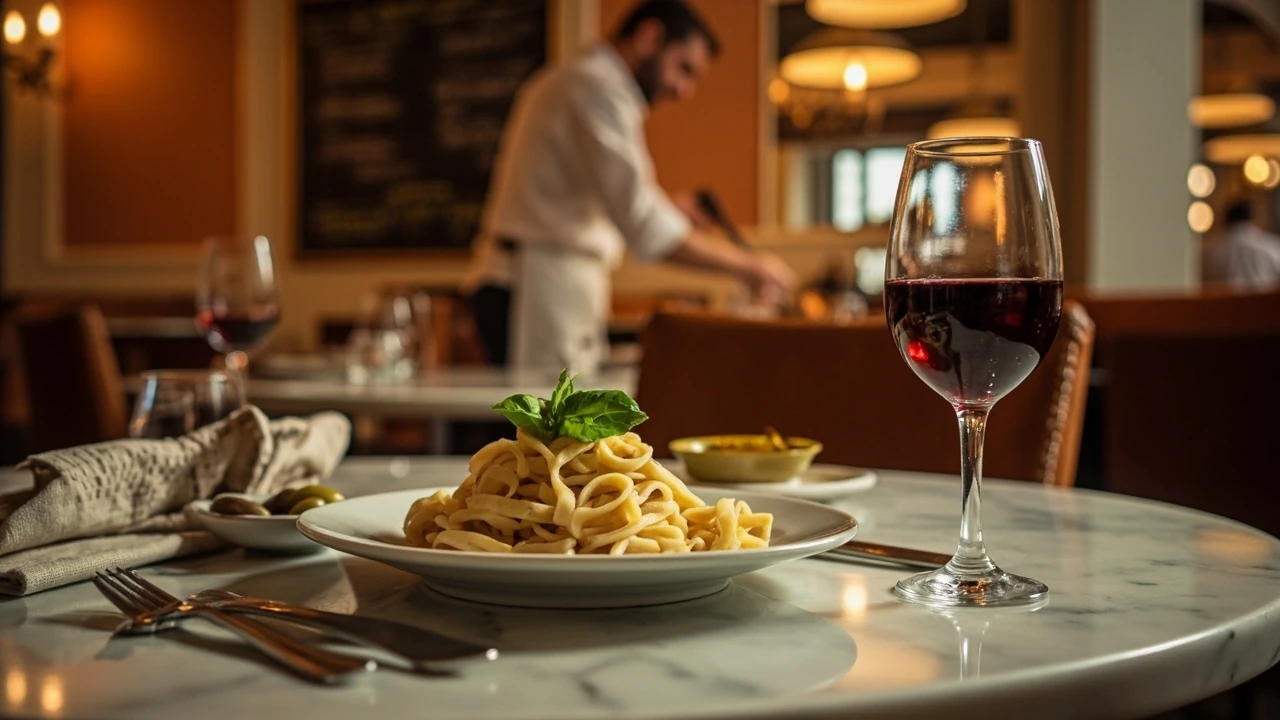
Italian restaurants: what actually defines one
A plate of cacio e pepe and a checked tablecloth do not, on their own, make an italian restaurant. Walk into a strong one and you notice quieter signals: a menu that refuses to list every dish a tourist might want, a server who knows which region the olive oil comes from, a kitchen that buys bread from a single baker. Those decisions are what separate a generic pasta house from a place that genuinely belongs to the long italian dining tradition.
This article looks at italian restaurants from the inside, drawing on the choices owners, chefs, and operators make every day. It is written for restaurant teams, hospitality students, and curious diners who want to understand what makes the format work, where it breaks, and how to evaluate a specific place before booking a table or copying its playbook.
The short history of the format
Italian restaurants outside Italy did not appear fully formed. The first wave in most English-speaking countries was a practical immigrant response: simple menus, affordable wine, and a dining room that doubled as a community center. The second wave leaned on the post-war boom in travel, when travelers returned from Rome and Florence with sharper expectations. The third wave, still underway, treats regional identity as a starting point rather than a costume.
That history matters because it explains the menu confusion diners still encounter. A single italian restaurant might serve both a Neapolitan pizza and a fettuccine Alfredo, two dishes that have almost no geographic overlap. The reason is historical: in many markets, italian restaurants were the only italian food anyone knew, so the menu became a catch-all. Strong operators now narrow that range on purpose.
What a regional italian restaurant actually means
Italy has twenty regions and a much larger number of local food cultures. A Tuscan trattoria, a Sicilian osteria, and a Roman hostaria are all italian restaurants in the loose sense, but they drink different wine, use different pasta shapes, and plate very differently. A guest who understands the difference will read a menu in seconds, while a confused guest orders defensively.
The practical takeaway is that “italian” is too broad a label to drive a menu, a wine list, or a marketing message. Operators who pick a region or two and commit to them tend to make clearer decisions, and guests tend to trust them more quickly.
Trattoria, osteria, and ristorante: how the room changes
Italian dining rooms are not interchangeable. The three traditional formats shape everything from service style to the way the bill arrives.
- Trattoria. A family-style room with a short menu, daily specials, casual service, and reasonable prices. The format rewards repeat guests who will be recognized by name.
- Osteria. Historically a wine-led room, often with a small kitchen and a heavy bar presence. In modern use it is closer to a casual neighborhood italian restaurant that takes its wine list seriously.
- Ristorante. The full-service room with a complete menu, formal service, and a more structured wine list. This is the format most english-speaking guests picture when they say “italian restaurant.”
Choosing one of these formats, or a deliberate hybrid, is a more useful decision than picking a generic “italian” identity. It tells the chef what to cook, tells the front of house how to talk, and tells the guest what kind of evening to expect.
Where italian restaurants usually succeed
Across markets, italian restaurants tend to outperform many other formats on a few specific measures. The format works because it solves real guest problems.
- Acquisition cost is low. Pasta, pizza, and simple antipasti photograph well, are widely understood, and need minimal explanation on a menu or a delivery app.
- Tables turn flexibly. The same room can handle a quick weeknight pasta and a three-hour celebration, which keeps weekly covers up.
- Private events are natural. A long table, a family-style menu, and a few bottles of wine cover most group bookings without special equipment.
- Margin levers exist. Pasta and pizza have a wide cost range, from commodity flour to imported semolina, which lets operators protect margin without rewriting the menu.
Where italian restaurants commonly break down
The same format also has predictable weak spots, and they tend to be the reason a strong opening year turns into a flat second year.
- Generic menus that try to please everyone. When a kitchen covers Naples, Bologna, and Milan in one menu, the dishes get pulled toward a bland average and suppliers multiply.
- Pasta cooked too early. Holding pasta in water and finishing it on demand is the most common kitchen mistake in casual italian restaurants. It is also the easiest to fix with a small change in ticket flow.
- Wine lists that ignore the food. A list built around distributor promotions rather than what the kitchen actually cooks leaves the server improvising pairings.
- Marketing that describes every dish the same way. A social feed full of “fresh pasta” and “wood-fired pizza” posts is forgettable because every competitor can claim the same words.
- Service scripts that read as scripts. Italian dining rewards conversation. A memorized line about the specials kills the warmth that draws guests back.
The decisions that quietly separate strong italian restaurants
Most of what makes one italian restaurant feel right and another feel off never makes it onto a website. The differences are operational, and they show up long before the food reaches the table.
How the kitchen sources its core ingredients
Strong italian restaurants can usually answer four questions without hesitation: who bakes the bread, who grinds the flour, where the tomatoes come from, and which farm the olive oil is pressed from. Weak ones treat these as marketing details. The difference shows up in the menu, in the cost of goods, and in the loyalty of the suppliers a kitchen can call on a busy Saturday night.
Importing every ingredient is not the point. A Brooklyn pasta room that works with a local mill and a California restaurant that uses domestic olive oil are both making a deliberate sourcing decision. What matters is that the decision is real, documented, and consistent across the menu.
How the menu is engineered, not just written
A menu in a working italian restaurant is a margin document first and a marketing document second. The way items are placed, the order of pasta courses, and the way specials are written all change what guests actually order. A practical breakdown of the levers and their effects is useful here.
| Menu lever | How it is usually applied | What it tends to change |
|---|---|---|
| Pasta course position | Placed early, often as the second section | Drives high-volume, lower-cost dishes and shortens table time |
| Daily special frequency | Two to three items, rotated by supplier availability | Reduces food cost on surplus ingredients and keeps regulars curious |
| Price anchoring | One premium protein above the average | Makes mid-range pasta look reasonable and lifts average check |
| Shared antipasti | Three or four vegetable-led plates | Raises average check without raising perceived complexity |
| Dessert push | Limoncello, tiramisu, and a small cheese list | Adds a meaningful second sale on the same table turn |
The point is not to follow the table as a rule. It is to make the same kind of deliberate choice the chef already makes about salt and acid. If a menu change is unannounced, it usually means a margin change nobody has measured yet.
How the dining room is run, minute by minute
Service in italian restaurants tends to be looser than in formal tasting rooms, which makes the operational details more important, not less. A few habits show up in rooms with high repeat-visit rates, and they are worth copying.
- A real host stand. Someone greets guests at the door, takes a name, and decides seating without leaving the guest watching an empty screen.
- A pre-shift briefing. A five-minute pass-through that covers reservations, allergies, and 86’d items, repeated by the chef and the floor lead.
- A small tableside moment. One sentence from the server or the chef that ties a dish to a person, a region, or a supplier, without turning into a speech.
These habits cost almost nothing and they change the way a guest remembers the room, which is the underlying input to almost every other metric a restaurant tracks.
Marketing italian restaurants without sounding like every other one
Most italian restaurant marketing starts with the same five words: fresh, authentic, family, traditional, and homemade. The problem is not that those words are wrong. It is that every competitor can use them, and a guest who has seen them fifty times stops registering them. Strong operators move past those words by being specific about the room, the maker, or the moment.
A few practical directions are worth testing.
- Lead with a supplier, not a dish. A short profile of the baker, the pasta maker, or the farmer is harder to copy than a recipe post, and it gives the marketing a recognizable recurring character.
- Show the kitchen in real time. A short video of the pass during a Saturday rush, the oven loaded, the pasta water at a rolling boil, is more persuasive than another flat lay of a finished plate.
- Build one signature moment per month. A truffle dinner, a regional wine pairing, a visiting chef, or a single Saturday-night special that the whole feed can plan around. Repeating a format is what turns a post into a memory.
Marketing that leans on specificity, on the choices the room has already made, ages much better than marketing that leans on adjectives. The same logic shows up in the way strong rooms talk about themselves in person, which is why the front-of-house and the marketing voice need to be written by the same people.
How to evaluate an italian restaurant before you book
Most guests decide on a restaurant in a few seconds, then spend the next two hours interpreting that decision. A short list of things to look at before booking makes the decision less random and the meal less surprising.
- Read the menu, not the photos. A menu that names a region, a supplier, or a style tells you more than a gallery of finished plates.
- Check the specials logic. A daily special that ties to a season or a supplier is a better signal than a permanent “chef’s special” that never changes.
- Look at the wine list, not the wine by the glass. A list that includes small producers and a few unusual regions is usually run by someone who cares about the room.
- Ask one question by phone. How a host answers a simple question about a reservation is the same way they will handle a real problem on a busy night.
None of this is a guarantee, but it shifts the decision from vibes to evidence, which is the only way to keep learning about which rooms are worth returning to.
A closer look at the numbers behind italian restaurants
Once the romantic picture of the dining room is set aside, italian restaurants are still businesses, and a few financial patterns show up across markets. Operators who understand them tend to plan more deliberately and survive slower seasons with less drama. The table below summarizes the levers that come up most often in operator interviews and in published industry benchmarks, including the National Restaurant Association’s annual operator reports and similar trade surveys.
| Operating lever | Typical range or target | Why it matters in an italian restaurant |
|---|---|---|
| Food cost as a share of revenue | 28 to 32 percent | Pasta and pizza keep ingredient cost low, giving more room for proteins and cheese in secondi |
| Pasta plate cost vs. menu price | 2.5 to 3.5 times plate cost | A standard rule that leaves room for labor, rent, and a small marketing line |
| Average check at dinner | 32 to 55 dollars per guest in mid-market US rooms | Drives labor scheduling and seating pacing, especially on weekend nights |
| Pasta to pizza mix on the menu | Eight to fourteen pasta dishes, two to four pizzas | A balanced mix keeps ticket averages stable without forcing a guest into a long decision |
| Wine revenue share | 22 to 30 percent of total beverage sales | Wine is the most italian part of the beverage program and the easiest margin lift |
| Private event share of weekly revenue | 10 to 20 percent in steady-state rooms | Long-table family-style menus fit the format and smooth out midweek dips |
These are working ranges, not targets to copy blindly. A room in a small college town and a room in a dense urban market will land on different numbers, and a room with a strong catering arm will run a different mix from a room that relies on walk-ins. The value of tracking them is the same as tracking any other set of inputs: the operator can see when something drifts and ask why before it shows up in the bank account.
Frequently asked questions
What makes a restaurant an italian restaurant?
The label is loose, but a working definition is a kitchen that builds its menu around italian regional cooking, uses italian pantry staples as the default, and serves pasta, pizza, or both as a central offer. The format can range from a casual trattoria to a formal ristorante without losing the label, as long as the menu logic stays consistent.
How is a trattoria different from a ristorante?
A trattoria is a casual, family-style room with a short menu, daily specials, and informal service, often at moderate prices. A ristorante is the full-service version, with a complete menu, a structured wine list, and more formal service. The two formats share italian roots but run different operations and price their menus very differently.
Why do italian restaurants often have long menus?
Long menus in italian restaurants usually reflect historical demand, not a culinary decision. Many of these rooms opened when italian food in their market was rare, so they absorbed every request from every guest. Modern operators are shortening menus on purpose to focus on a region, a supplier, or a style, which usually improves both food cost and consistency.
What is the most profitable menu item in an italian restaurant?
Margins shift by market, but pasta dishes and wood-fired pizza are almost always the most profitable categories because of their low ingredient cost and fast table turn. Premium proteins like veal, branzino, and bistecca can produce the highest ticket value but at a lower margin and a longer cook time, which is why most rooms balance the two.
How do italian restaurants handle food allergies?
Most italian restaurants handle gluten, dairy, and nut allergies well because pasta and pizza rooms work with these ingredients every day. A serious operator will train the front of house to ask about allergies before taking an order, mark tickets in the kitchen, and keep a small set of substitutes on hand, usually a gluten-free pasta, an olive oil drizzle instead of cream, and a tomato-only pizza base.
What wine list works best for an italian restaurant?
A list that covers two or three italian regions well, plus a small international section for guests who prefer it, usually outperforms a long, unfocused list. The right list matches the food on the menu, trains the servers to recommend confidently, and is built around a few producers the kitchen and the sommelier actually know, rather than around distributor promotions.
How should an italian restaurant price pasta?
Most working rooms target a pasta price that is roughly 2.5 to 3.5 times the plate cost, which leaves room for labor, overhead, and a stable margin. Premium rooms can push higher when the pasta is hand-rolled, the flour is unusual, or the sauce is built around a costly ingredient like seafood or truffles, but the relationship between plate cost and menu price should still be measured every quarter.
Do italian restaurants do well for private events?
Italian restaurants are well suited to private events because the format already supports long tables, family-style service, and a wine-friendly menu. A working approach is to offer two or three set menus at fixed prices rather than a custom quote, which protects the kitchen and makes the booking easier to confirm on a short timeline.
How do italian restaurants use social media effectively?
The most effective italian restaurant social feeds lean on the room, the makers, and the suppliers rather than on adjectives. Short videos of the pasta being rolled, a profile of the baker, a Saturday-night pass shot, and one monthly signature event will outperform a feed of polished finished plates. Consistency of voice matters more than volume of posts.
What is the biggest mistake new italian restaurants make?
The most common mistake is opening with a menu that tries to cover all of italy, a wine list that covers the whole world, and a marketing voice that sounds like every other italian restaurant. The fix is usually to pick a region, a few suppliers, and a recognizable point of view, and to make the rest of the room, including the service, the website, and the social feed, line up with that choice. Specificity is the leverage point the format gives an operator, and it is the one that is easiest to leave on the table.