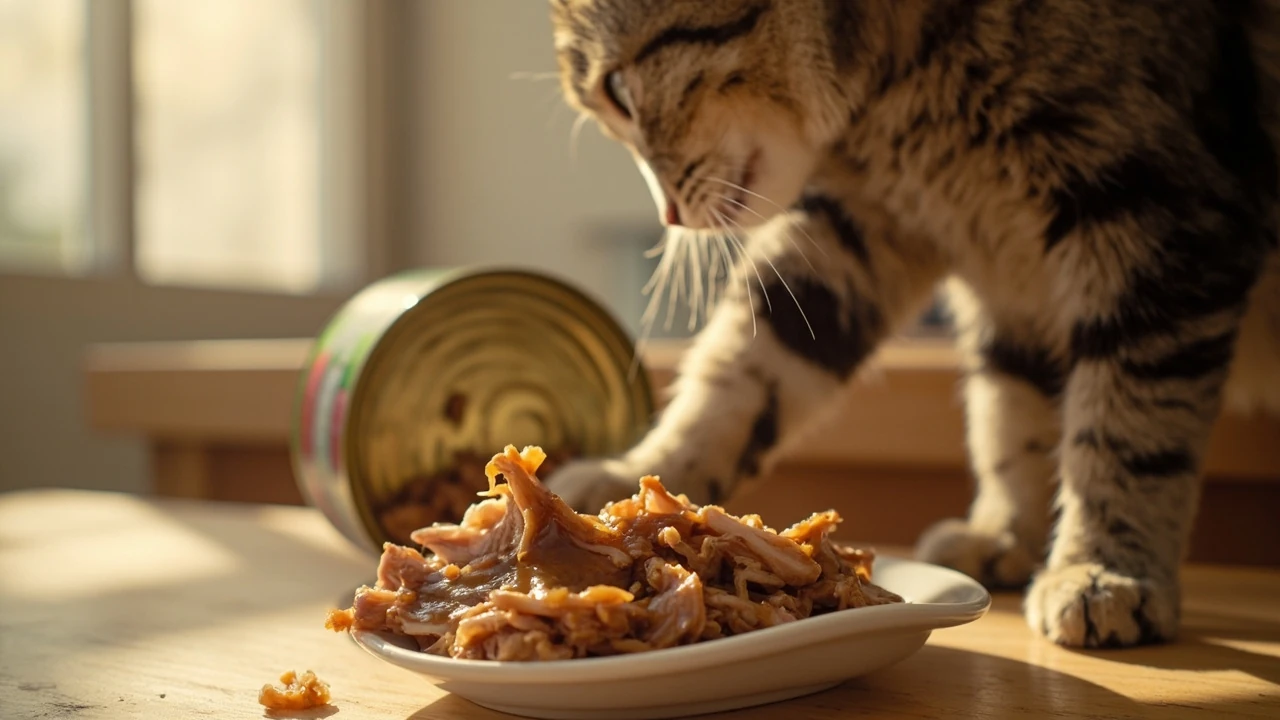
A cat owner stands in the pet food aisle holding a coupon and a tabby who has been turning up her nose at dinner for three nights. The shelf is a wall of color: foil pouches, pull-tab cans, paper cartons, and rows of kibble in every shape. Somewhere in the middle sits the familiar purple band of fancy feast cat food, a brand that has been in American kitchens since 1982 and now offers more than a hundred recipes. Choosing well is less about the brand and more about reading each recipe against the life stage, body condition, and taste preferences of the specific cat in front of you.
This guide is built for that moment. It walks through what fancy feast cat food actually contains, how the product lines differ, which life stages each formula targets, how the wet and dry ranges compare on cost and nutrition, and what to check on the label before a purchase. The goal is to leave you with a short, practical method for picking the right recipe rather than memorizing every SKU on the shelf.
Fancy feast cat food: how the brand is organized
Fancy feast is owned by Nestlé Purina PetCare and is one of the most widely distributed cat food lines in the United States. It is sold through grocery stores, mass merchandisers, club stores, and online retailers, and it is generally priced in the mass-market tier rather than the premium or veterinary tier. Despite the everyday positioning, the range is wide enough that two cans in the same store can have very different ingredient lists and intended uses.
The catalog breaks into three product families that are worth keeping separate in your head:
- Fancy Feast wet cat food. This is the core of the line and includes the classic pull-tab cans, the wider “Medleys” trays, the “Gravy Lovers” pouches, and the “Purely” natural recipes. Most recipes come in 3 oz cans, with some 2.6 oz and 5.5 oz options.
- Fancy Feast dry cat food. A smaller range of kibble sold in bags, typically layered alongside the wet line with coordinating flavors such as salmon, chicken, and beef.
- Fancy Feast treats and complements. Single-serve creamy treats, Broths, and the newer “Purely Natural” treats sit under the same brand umbrella.
Within the wet family, recipes are grouped by texture and presentation. The most common textures are pâté, flaked, shredded, chopped, and “in gravy.” Medleys use larger pieces in a sauce, while Gravy Lovers pour out as thin broth with small morsels. Each texture is marketed for a different feeding style, and many cats have a clear preference for one over another, so the texture you choose often matters as much as the flavor.
Reading a fancy feast label without getting misled
Cat food labels in the United States follow Association of American Feed Control Officials (AAFCO) rules, and fancy feast is no exception. Every can or pouch lists a guaranteed analysis, an ingredient list in descending order by weight, a feeding guide, and a nutritional adequacy statement. That last line is the one many owners skip, and it is the one that tells you whether the recipe is complete and balanced for a given life stage.
Look for the AAFCO statement, which will say something like “formulated to meet the nutritional levels established by the AAFCO Cat Food Nutrient Profiles for adult maintenance” or “for all life stages.” All life stage recipes are tested to meet the needs of kittens and adult cats, while adult maintenance recipes are tested only for adult cats. Kittens, pregnant queens, and lactating cats need the all-life-stages or growth formulas.
The guaranteed analysis shows the minimum percentages of crude protein and crude fat and the maximum percentages of crude fiber and moisture. On wet recipes, the moisture figure is usually 78 to 82 percent, which is why the protein percentage on a wet can looks lower than on a dry bag. If you compare recipes on a dry-matter basis, divide each nutrient by one minus the moisture figure. A wet recipe with 11 percent crude protein at 80 percent moisture is about 55 percent protein on a dry-matter basis, which is in a normal range for an adult cat food.
What to actually check on the ingredient list
- Named protein source first. Look for “chicken,” “salmon,” or “tuna” rather than generic “meat” or “fish” in the first slot. Fancy Feast lists named proteins at the top of nearly every recipe, but a few lower-cost pâtés lean on meat by-products, which is a legal and nutritionally complete category, not a red flag on its own.
- Texture words that mean something. “Pâté” is a smooth, loaf-style food. “Flaked” and “shredded” are visible pieces of muscle in light sauce. “In gravy” recipes are usually thin with smaller pieces. The texture word describes the mouthfeel, not the nutrition.
- Added vitamins and minerals. Most recipes are fortified with taurine, which is essential for cats, along with vitamin E, B vitamins, and chelated minerals. Fancy Feast’s standard wet line is fully fortified.
- Calorie count. Wet fancy feast typically runs about 70 to 100 kcal per 3 oz can. Useful when you are mixing wet and dry or trying to keep weight in check.
Life stage and body condition: which recipes fit which cats
Most of the fancy feast cat food range is formulated for adult maintenance. That covers the majority of household cats, which are between roughly one and ten years old and weigh somewhere in the eight to twelve pound range. Outside that window, the recipe choice shifts.
| Life stage or condition | Best fancy feast fit | Why it fits |
|---|---|---|
| Kittens (under 1 year) | Recipes labeled “for all life stages” or Kitten varieties when available | Higher calorie density and tested for growth, including calcium-to-phosphorus ratios for bone development |
| Healthy adults (1 to 10 years) | Any adult maintenance wet or dry recipe the cat accepts | Tested for the maintenance range, widest flavor variety, lowest cost per can |
| Senior cats (10+ years) | Wet pâté or shredded recipes; consider warming to release aroma | Wet food supports hydration in cats that drink less; softer textures are easier on older teeth |
| Overweight adults | Portion-controlled wet recipes, ideally pâté, with measured dry at meals | Wet food is lower in calories per gram of protein; pâté is denser so you can feed smaller volumes |
| Cats with sensitive stomachs | Single-protein recipes, ideally Purely or a single-flavor Medley | Limited ingredient lists reduce the chance of triggering a reaction; novel proteins like turkey or whitefish are options |
The chart is a starting point, not a prescription. If a cat has a diagnosed condition such as kidney disease, urinary crystals, or food allergies, a therapeutic veterinary diet is the right answer, and fancy feast is not designed to replace those formulas. For healthy cats, the practical question is which adult maintenance recipe a particular cat will eat consistently, in the right amount.
Wet versus dry: a side-by-side comparison
The choice between wet and dry fancy feast cat food is mostly about water, calories, cost, and convenience. Each has a real trade-off, and many owners end up feeding a mix.
| Attribute | Fancy Feast wet (canned, tray, pouch) | Fancy Feast dry (kibble) |
|---|---|---|
| Moisture | 78 to 82 percent, similar to prey | Around 10 percent, so cats must drink more |
| Typical protein (as fed) | 10 to 12 percent | 30 to 36 percent |
| Typical protein (dry matter) | 50 to 60 percent | 34 to 40 percent |
| Calories per oz | 23 to 32 kcal | 90 to 100 kcal |
| Average cost per oz (US, 2026 shelf pricing) | About $0.25 to $0.45 per oz on sale | About $0.20 to $0.30 per oz |
| Shelf life once opened | 3 to 5 days refrigerated, covered | Several weeks in a sealed container |
| Best for | Hydration, weight control, picky eaters | Free-choice feeders, dental engagement, budget stretches |
The dry-matter protein figures explain why wet recipes “look” low in protein on the can but are actually well within the range cats need. Cats are obligate carnivores, and a wet fancy feast recipe built around named meat at the top of the ingredient list provides that protein in a form cats evolved to digest.
A common feeding pattern is to use a measured amount of dry kibble in an automatic feeder for routine meals and a partial can of wet fancy feast as a topper or evening feeding. This is sometimes called a “combination feeding” approach and lets you balance hydration, cost, and convenience. The key is to keep total daily calories consistent so the cat does not gradually gain or lose weight.
Picking a flavor: a short, practical method
Flavor fatigue is real in cats, and many owners rotate through two or three recipes rather than locking in a single one. Fancy Feast makes rotation easy because each recipe is sold as a stand-alone SKU, and multi-pack cases let you buy small quantities of several flavors at once.
- Anchor on a protein. Decide whether the base protein is poultry, fish, or another meat. Most cats do well on chicken, turkey, or salmon. A small number are sensitive to fish-heavy diets because of the iodine and magnesium levels.
- Choose a texture. Offer one pâté and one shredded or flaked recipe for a week. If the cat finishes one and ignores the other, you have a free answer about texture preference.
- Check the calories. Multiply the kcal per can by the number of cans per day and compare that against the feeding guide on the dry food if you mix.
- Watch stool and coat. A new recipe should not produce loose stool, constipation, or a dull coat for more than a week or two. If it does, the protein or texture may not be a fit.
- Reassess every six months. As cats age, appetite and kidney function shift. A recipe that worked at age four may need to be swapped for a wet-only, lower-phosphorus pattern at age twelve, in consultation with a vet.
What fancy feast does not do, and when to step up
For most healthy adult cats, fancy feast cat food sits comfortably within nutritional guidelines set by AAFCO. There are a few limits worth knowing.
- It is not a prescription diet. Cats with chronic kidney disease, struvite or oxalate crystals, diabetes, or diagnosed food allergies need a therapeutic formula from a vet. Fancy Feast markets complete and balanced recipes, not disease management.
- It is not grain free across the board. Most recipes include rice, wheat, or corn as binders and energy sources. AAFCO does not require grain-free diets for healthy cats, and grains are not a known risk for most cats. If a vet has recommended a grain-free diet, stick to that advice.
- It is not a raw diet. All fancy feast products are cooked and shelf-stable in cans, pouches, or bags. The Purely line is positioned as a natural recipe but is still extruded or canned, not raw.
- It is not a substitute for fresh water. Even on a fully wet diet, cats benefit from a clean water source. Wet food covers a large share of daily water needs but does not replace a bowl.
For an idea of the broader role of complete and balanced pet food in the United States, the Wikipedia article on pet food gives a useful overview of how regulation, marketing, and nutrition have evolved. For the actual feeding rules that fancy feast follows, the AAFCO consumer guide on pet food is the most authoritative current reference on what the labels mean.
Cost, value, and how to stretch a case
Mass-market positioning is part of what makes fancy feast cat food widely available, but the price still adds up across a year for a multi-cat household. A single 3 oz can at full price in 2026 typically runs between $0.80 and $1.20, and a 24-can case between $19 and $26 depending on retailer and whether a coupon is applied. Dry food is cheaper per ounce but denser in calories, so a bag lasts longer than the equivalent calorie count in cans.
Three habits that protect value without sacrificing quality:
- Buy the multi-pack cases. The per-can cost drops by 15 to 30 percent compared with single cans at the grocery shelf.
- Stack coupons with store sales. Purina runs frequent promotions through retailer loyalty programs. A 24-can case during a $5 off sale is the same food at a noticeably lower unit price.
- Refrigerate and cover opened cans. Transfer unused portions to a sealed container rather than leaving them in the open can. A covered, refrigerated portion keeps for three to five days.
These are operational habits, not nutritional trade-offs. The can that gets eaten is always a better value than the can that gets tossed because it sat uncovered in the fridge for a week.
A quick pre-purchase checklist
Before any new fancy feast cat food goes into the cart, run through this short list. It takes about thirty seconds and prevents most of the common mistakes.
- AAFCO statement matches the cat’s life stage (adult maintenance versus all life stages)
- Named protein at the top of the ingredient list
- Texture matches the cat’s known preference
- Calories per can noted, so daily portion can be calculated
- Pack size matches the household’s ability to use it before opening
- No conflicting ingredients if the cat has known sensitivities
If all six are met, the recipe is a reasonable choice. If any one fails, swap recipes or check with a vet before feeding it as a main diet.
Frequently asked questions
Is fancy feast cat food nutritionally complete?
Most recipes in the wet and dry ranges are formulated to meet AAFCO nutrient profiles for adult maintenance. Recipes marked for all life stages also meet the growth profile, which covers kittens and pregnant or nursing queens. Always confirm by reading the nutritional adequacy statement on the specific can or bag.
How much fancy feast should I feed my cat per day?
Feeding amounts depend on the cat’s weight, body condition, and the recipe’s calorie density. A general starting point is roughly one 3 oz can per two to three pounds of ideal body weight, split into two or three meals, but the printed feeding guide on the package is the best reference for the specific recipe.
Can kittens eat fancy feast?
Kittens can eat the recipes labeled for all life stages, which are tested for growth. Some kittens transition to an adult maintenance recipe after spay or neuter around six months of age, with the calorie count adjusted to prevent early weight gain.
Which fancy feast recipe is best for picky cats?
Picky cats usually respond to strong aroma and a meaty texture, so Medleys recipes in gravy or shredded recipes with visible pieces are common winners. Warming the food for five to ten seconds in the microwave, then stirring to remove hot spots, also helps release aroma.
Is fancy feast good for cats with sensitive stomachs?
It depends on the trigger. Cats with grain or additive sensitivities often do well on the Purely line, which has shorter ingredient lists. Cats with protein allergies usually need a novel or hydrolyzed protein, which fancy feast does not produce, so a veterinary diet is the right answer for those cases.
Can I mix fancy feast wet and dry food?
Yes, mixing wet and dry is a common feeding pattern. Measure each component separately so the total daily calories stay on target, and use the wet portion as a topper or evening meal to support hydration.
How long does opened fancy feast last in the fridge?
Covered and refrigerated, an opened can or pouch keeps for three to five days. After that, the food should be discarded even if it looks and smells normal, because bacterial growth is not always visible.
Is fancy feast better than store brands?
Fancy Feast is a name-brand product made by a major manufacturer, which generally means tighter quality control and more rigorous feeding trials than small store brands. Some store brands are co-manufactured by the same large companies, so the actual recipe may be similar, but the formulation behind the label still varies.
Does fancy feast help with hairballs?
The standard wet and dry lines are not specifically formulated for hairball control, though the higher moisture in wet food can help move hair through the digestive tract. For cats with persistent hairball problems, a dedicated hairball formula or a vet-recommended fiber supplement is more effective.
Where can I buy fancy feast cat food in bulk?
Mass retailers, club stores, and online pet supply sites all carry multi-pack cases. Buying by the case typically lowers the per-can cost, but the price advantage is largest during retailer promotions and with digital coupons.
For more on how branded food businesses think about packaging, pricing, and shelf presence, two pieces on the site are worth reading next. Menu pricing strategies that protect margin without losing guests covers how value is communicated through price, and Food photography that actually sells the dish looks at how the same product reads very differently depending on how it is shown.