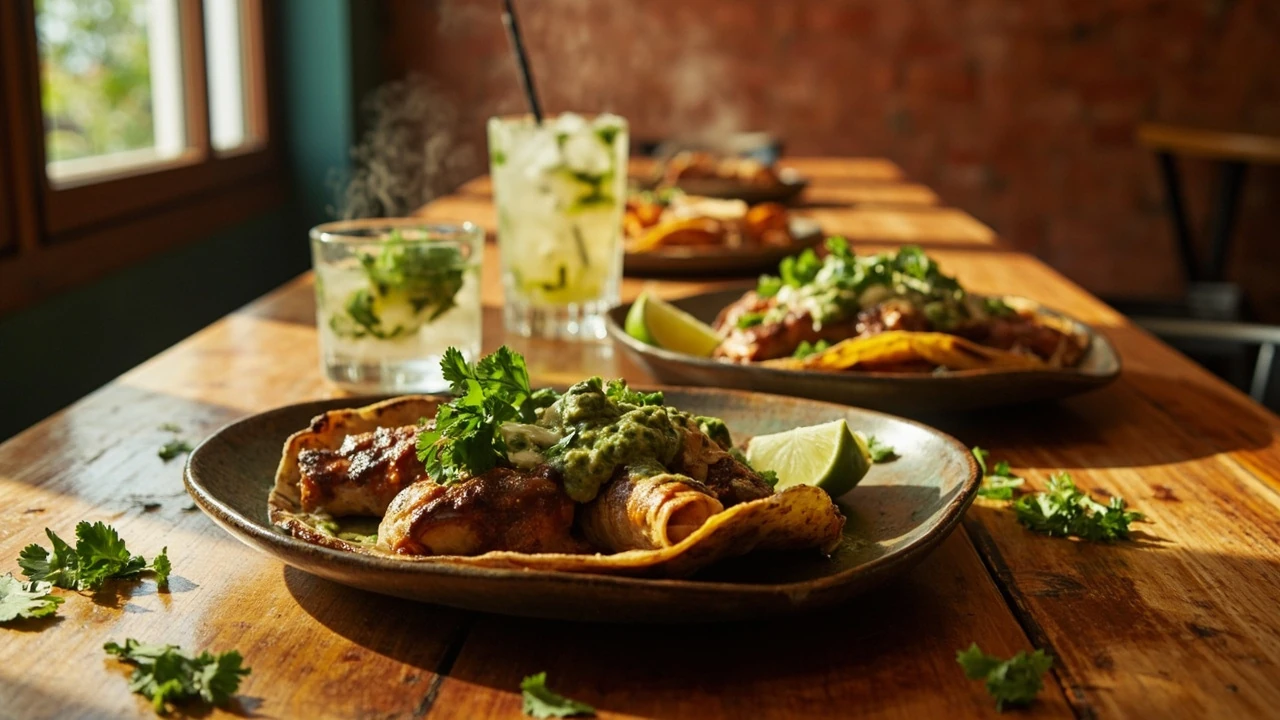
How to evaluate mexican restaurants before you book a table
The first thing most people do when they search for mexican restaurants is scan a map for the nearest cluster of red pins and pick the one with the highest star rating. That approach works until you sit down, wait twenty minutes for a table you did not reserve, and receive a plate of wet burritos drowning in melted cheese that tastes like nothing you have ever eaten in Mexico. The rating tells you whether the room felt nice. It does not tell you whether the kitchen respects the food.
Evaluating mexican restaurants well means asking sharper questions than the crowd does. You need to read a menu the way a cook would read it, watch the room the way a host would run it, and check a few signals that most reviews never mention. This guide walks through the practical checks that separate a serious mexican restaurant from a generic one, so the next time you book a table you can do it with a plan.
Start with the menu, not the photos
Menus are the most honest document a restaurant publishes, and most people misread them. A photo-heavy menu with a hundred items is usually a sign that the kitchen is reaching for everyone and committing to no one. A short, specific menu written in a real cook’s voice usually signals that someone in the building actually cares about what comes out of the pan.
When you read a mexican restaurant menu, look for three things first: regional specificity, ingredient specificity, and cooking method specificity.
- Regional specificity means the menu names a place, a state, a city, or a cooking tradition. Dishes labeled as Yucatecan, Oaxacan, Jaliscan, or northern tell you the cook is working from a particular pantry, not a generic idea of “mexican.” A menu that lumps everything under “Mexican favorites” usually means the cook has not chosen.
- Ingredient specificity means the menu names the actual product. Heirloom corn tortillas, nixtamalized masa, rajas, queso Oaxaca, carnitas de puerco, and chiles guajillo are useful signals. Cheese, meat, and sauce are not.
- Cooking method specificity means the menu describes how a dish is built. Slow-braised, wood-grilled, comal-seared, and stone-ground are working words. They tell you the cook is paying attention to texture, not only to plating.
If the menu passes these three checks, the kitchen has done its homework. You can still get a bad plate, but the odds move in your favor. The specificity argument that food writers keep returning to applies to guests as much as to operators. Vague menus produce vague food.
Authenticity is a direction, not a checkbox
The word “authentic” is the most overused and least useful word in restaurant reviews. A mexican restaurant does not need to be a copy of a specific grandmother’s kitchen in Puebla to be worth your money. Authenticity is more useful as a direction on a map. Ask whether the kitchen is moving toward a real regional tradition, away from generic tex-mex tropes, or stuck in the middle coasting on cheese.
A few reliable signals point in the right direction.
- Fresh tortillas, made on site. If the kitchen is making masa from nixtamalized corn or pressing tortillas to order, the cook is working from a Mexican foundation. A bag of commercial tortillas does not disqualify a place, but it usually caps the ceiling.
- Salsas that change. One house salsa is fine. Two or three fresh salsas with different chiles, textures, and heat levels is a sign the kitchen treats salsa as a craft, not a condiment.
- Less cheese, more chile. Many Americanized menus lean on cheese and sour cream because they photograph well. A serious kitchen usually builds flavor from dried and fresh chiles, then uses dairy as a balance, not a blanket.
- Drinks treated as food. A real agua fresca, a working espresso program, or a serious mezcal list are signs that the operator thinks about the whole table, not only the entrée.
These signals are not gatekeeping. They are simply the most reliable ways to tell whether the cook is doing the work or borrowing a costume. A growing number of independent brands use this kind of specificity as their identity, and guests who learn to read it stop wasting money on lookalike rooms.
What a clean kitchen pass looks like
You can learn a surprising amount from a ten-second look at a kitchen pass. When the door swings open, you are looking for three things: ticket time, plate temperature, and how the cook finishes the dish in front of the guest.
- Ticket time is the gap between a server picking up a plate and delivering it. Long gaps mean the food sat under a heat lamp, which dries out proteins and wilts herbs. A clean pass moves plates out within a minute.
- Plate temperature tells you whether the kitchen heats the plate or just stacks food on a cold one. Warmed plates keep salsas runny and proteins tender. Cold plates are a small but consistent tax on flavor.
- Finish in front of the guest is the final touch. A handful of cilantro, a pour of salsa verde, a wedge of lime, a sprinkle of queso fresco. If the cook assembles the dish in the window rather than plating it in the back, the food usually arrives looking and tasting like it was built for that table, not for a hundred tables before it.
You will not see the kitchen pass from the dining room, but you can ask to peek at it. Most serious operators are proud of their pass. A deflected request is, on its own, a small warning sign.
Service patterns that change the meal
Service is the second half of the food, and mexican restaurants vary widely on it. A small taquería with a counter and a few tables is a different kind of room than a sit-down restaurant with a full bar. Both can be excellent, but they reward different guest behaviors.
For a sit-down mexican restaurant, watch how the front-of-house team moves during your first ten minutes. The host should acknowledge you within a minute of arrival, even if there is a wait. The server should know what is on the menu and, more importantly, what is not on the menu tonight. When a server can describe a special in two sentences with one real ingredient, the kitchen is talking to the floor. When the special is described as “it’s good, you should try it,” the kitchen is not.
Water and chips arrive without you asking at most well-run mexican restaurants. Salsa arrives within a couple of minutes. Drinks arrive quickly and the server checks back once after the first sip, not five times. None of this is fancy. It is the baseline.
For a taquería or counter-service room, the service pattern is simpler and faster. Order at the counter, watch the cook build the plate, sit down, eat. If the counter is staffed by someone who can answer a question about a salsa or a filling, that is the equivalent of fine service in a fast-casual room.
Reading a room before you sit down
Walk past a mexican restaurant before you book. The room will tell you most of what you need to know in about thirty seconds.
| Signal | What to look for | What it usually means |
|---|---|---|
| Sound | Conversation is audible at normal volume | Tables are spaced for guests, not for maximum covers |
| Light | Warm, layered, not flat fluorescents | The operator thinks about mood and is willing to spend on it |
| Smell | Char, chile, fresh masa, herbs | The kitchen is working in real time, not reheating |
| Turnover | Tables refill, plates clear, no long dead spots | The pacing is right and the food is moving |
| Staff | Servers look unhurried, cooks look focused | The schedule is being respected and the room is not understaffed |
A loud, flat-lit, empty room with bored staff is not a secret gem. It is a room that is losing its guests. Trust your walk-by more than a five-year-old review.
The pricing test
Price is the most easily faked signal on a mexican restaurant menu. A $28 plate of enchiladas can be a fair price or a markup dressed up with a side of rice and beans. The real test is what you get for the money relative to nearby options.
Use the dish-per-dollar method. Pick two or three anchor dishes on the menu, add up the price, and divide by the number of distinct elements on the plate. An enchilada plate with two enchiladas, rice, beans, and a small salad at $18 is a denser plate than a single enchilada with microgreens at $22. Density, not photography, is what you are paying for.
| Menu position | What to compare | Reasonable range for 2026 |
|---|---|---|
| Street tacos (3 to 4) | Corn tortilla, filling, salsa, cilantro, onion, lime | $9 to $14 in most U.S. cities |
| Burrito or grande plate | Single protein, rice, beans, salsa, cheese or crema | $13 to $18 depending on protein |
| Enchilada plate (3) | Three rolled enchiladas, mole or salsa, side, garnish | $16 to $22 for a working kitchen |
| House specialty | Regional dish, often chef-driven, single plate | $18 to $28 depending on protein and complexity |
| Family-style or parrillada | Shared protein, multiple sides, designed for two to four | $28 to $55 per person |
These ranges move with city and neighborhood, so use them as a sanity check, not a rule. If a menu is dramatically above the range and the room is not delivering an experience that justifies it, ask yourself who is paying for the marble bar before you order the second round.
How to read online reviews without being misled
Reviews are a tool, not a verdict. The best use of review sites is to find patterns, not to count stars. A mexican restaurant with 4.6 stars and one hundred reviews is not automatically better than a mexican restaurant with 4.4 stars and three hundred reviews, because the second place has had more meals to fail at. Look for what people complain about, and look for whether the same complaint appears in many reviews.
The complaints that matter most are the ones that touch food, time, and accuracy. Cold food, slow food, wrong food, and missing items will sink a restaurant faster than a noisy room. A noisy room can be a sign of a popular place. A string of reviews that mention slow service at a half-empty restaurant is a structural problem.
Be cautious of reviews that praise only the chips and the parking. Chips and parking are not the meal. Reviews that describe a specific dish in detail, mention a server by name, or call out a small thing that was fixed gracefully are more useful than the ones that read like a marketing email. Reading reviews is one of the few food diagnostics you can run from your couch.
Specials, diet, and the menu’s quiet flex
A serious mexican restaurant handles dietary needs without drama. Vegetarian, vegan, gluten-free, dairy-free, and nut-free requests should be answered with specifics, not with apologies. A kitchen that can build a real vegan plate from the same pantry it uses for the rest of the menu, instead of a separate frozen block, is a kitchen that has thought about its food.
The daily special is another quiet flex. A special built around a seasonal chile, a specific cut, or a single fish is a sign that the kitchen is buying with intention. A special that is just a smaller portion of an existing menu item at a higher price is a margin tool, not a craft tool. You can usually tell which is which by how the server describes it.
If a member of your party has an allergy, ask one direct question. A good answer sounds like: “We use peanut oil only in the mole, and it is the only place it appears, so the rest of the menu is safe.” A bad answer sounds like: “I think we can probably work something out.” Trust the first answer.
Pairing drinks with the room
Drinks are half the meal at a mexican restaurant, and the best places treat them that way. A working bar program should have a real tequila and mezcal list, a small but considered wine list, and a non-alcoholic option that does not feel like an afterthought. If the only non-alcoholic option is a soft drink, the bar is underbuilt.
- Agua frescas should be made in-house, rotated with the season, and poured into a real glass. Hibiscus, tamarind, watermelon, cucumber-lime, and jamaica are common and worth trying.
- Margaritas should be made with a tequila you can name, fresh lime juice, and a sweetener you can taste. A sweet-and-sour mix is a tell.
- Mezcal and tequila flights are a sign the staff has been trained, not just stocked. A flight that walks you from a blanco to an añejo with brief notes is worth doing once.
- Beer programs in mexican restaurants range from a single Mexican lager to a deep list. A short list with two or three well-chosen Mexican beers is usually better than a long list of generic imports.
If the bar takes its time with the drinks, the kitchen usually takes its time with the food. The two halves of the room tend to be either good together or bad together, and a glance at the bar tells you which.
How to plan the meal around what mexican restaurants do best
Mexican restaurants are strongest when the table shares. A meal built around three or four shared plates, a single starch, and a salsa flight will show you more of the kitchen than a stack of individual entrées. If you are evaluating a new mexican restaurant, order like a table, not like a tourist.
- Order one or two salsas to start, plus chips if the kitchen makes its own.
- Pick one taco or antojito per person, ideally from different sections of the menu.
- Add one larger shared plate, such as a mole, a parrillada, or a cazuela.
- Order one side of rice or beans, not both, and only if they are made in-house.
- End with a single dessert, shared, often a flan, a tres leches, or a buñuelo.
This pattern gives the kitchen four or five chances to show you what it can do, instead of one or two. It also gives the room time to breathe, which is the only way to read a restaurant properly.
Red flags that should end the meal early
Most red flags appear in the first ten minutes, and most guests ignore them. A few are worth treating as dealbreakers rather than warnings.
- No prices on the menu. If you have to ask what a plate costs, the operator is not budgeting the room honestly.
- Server cannot describe a single dish in detail. The kitchen is not talking to the floor, and the food usually suffers.
- Long waits with no acknowledgment. A host who leaves a full lobby unattended is running a room that is understaffed or overbooked.
- Off-menu substitutions offered as a default. “We can do that without the chile” before you have even tasted the food is a kitchen that has given up on the recipe.
- Dusty, sticky, or visibly dirty tables or bar. Cleanliness at the table is a leading indicator of cleanliness in the kitchen you cannot see.
If you see two or more of these in the first ten minutes, pay the check for what you have ordered and try somewhere else. You will save an hour and probably a meal.
Quick checklist before you book
Use this short list the next time you are choosing between two or three mexican restaurants in the same area. It is the minimum you need to walk in with.
| Check | What to confirm | How to confirm it |
|---|---|---|
| Menu specificity | Regional, ingredient, and method details | Read the menu online before booking |
| Reservation policy | Available times, deposit, cancellation | Check the booking page or call |
| Recent reviews | Patterns around food, time, accuracy | Scan the last 30 to 60 reviews |
| Walk-by signal | Sound, light, smell, turnover | Walk past during a service window |
| Dietary fit | Real options for the table | Call ahead and ask one direct question |
| Drink program | Real non-alcoholic, real spirits, real wine | Skim the bar or drinks menu |
Frequently asked questions
How do I know if a mexican restaurant is authentic without traveling to Mexico?
Look at the menu first. A serious kitchen names regions, ingredients, and techniques rather than relying on generic “mexican favorites.” Walk past during service to see whether the room smells like chiles, masa, and fresh herbs rather than reheated sauce. Ask the server a specific question about a salsa or a filling. If the answers are specific, the kitchen is doing the work.
What is a fair price for a plate at a mexican restaurant in 2026?
Most working kitchens in U.S. cities charge between $13 and $22 for an entrée plate in 2026, with street tacos starting around $9 and house specialties reaching the high $20s. Use nearby restaurants as the comparison set rather than national averages, since rent and labor shift pricing sharply by neighborhood and city.
Are mexican restaurants that only serve counter food worth trying?
Often, yes. Counter-service and taquería-format mexican restaurants are where a lot of the most specific cooking happens, because the format lets the kitchen focus on a small number of dishes done well. Use the same menu, walk-by, and review checks you would use for a sit-down room.
How many dishes should I order to evaluate a new mexican restaurant?
At least three plates per table, ideally four, drawn from different sections of the menu. One taco, one larger shared plate, one side, and one dessert will tell you more about the kitchen than two of the same entrée. Sharing also gives the room time to breathe so you can watch the service.
What are the most common mistakes guests make at mexican restaurants?
The three most common mistakes are ordering the same dish as everyone else, skipping the salsa, and not asking about the daily special. A mexican restaurant table is built to share, the salsa is often the most honest dish in the room, and the special is where the kitchen shows what it just bought.
How do I handle a dietary restriction at a mexican restaurant?
Call ahead and ask one direct question about your specific need, then listen for a specific answer. A kitchen that handles restrictions well can usually describe which menu items are safe and which contain the ingredient you are avoiding. Avoid places that only offer to “make something work” after you arrive.
Should I trust star ratings when comparing mexican restaurants?
Use star ratings as a starting point, not a verdict. Ratings average across all visits, so a place with a smaller but more recent sample of strong reviews can outperform a place with a higher but older average. Read the most recent reviews, look for patterns around food, time, and accuracy, and walk past before you book.
Is a long menu a bad sign at a mexican restaurant?
Usually, yes. A long menu often signals that the kitchen is trying to be everything to everyone, which makes consistency harder. A short, specific menu is more often a sign that the cook has chosen a direction and is executing it. Some excellent regional restaurants have long menus because the region is broad, but those menus are still organized by tradition.
What should I do if a mexican restaurant looks great online but disappoints in person?
Pay for what you ordered, leave cleanly, and write an honest review that names what you saw. Restaurant operators read reviews, and a specific, dated review is one of the few signals that actually changes a room. Then try the next place on your list. The cost of a bad meal is a small price for a sharper eye next time.
How do mexican restaurants compare to tex-mex restaurants?
Tex-mex is a regional American tradition that grew out of northern Mexican cooking, with more cheese, more wheat tortillas, more cumin, and more portions per plate. Mexican restaurants, in the narrower sense, work from a wider range of regional traditions and lean on corn tortillas, chiles, and masa. Both can be excellent, and the choice is more about what you want to eat than about which is more legitimate.
Evaluating mexican restaurants well is a skill that compounds. The first time you apply these checks, you will save yourself one or two bad meals. After a few months, you will start walking into rooms and reading them the way cooks read menus, and the gap between a good mexican restaurant and a generic one will become obvious within a minute of sitting down. The room is talking the whole time. The only question is whether you are listening.