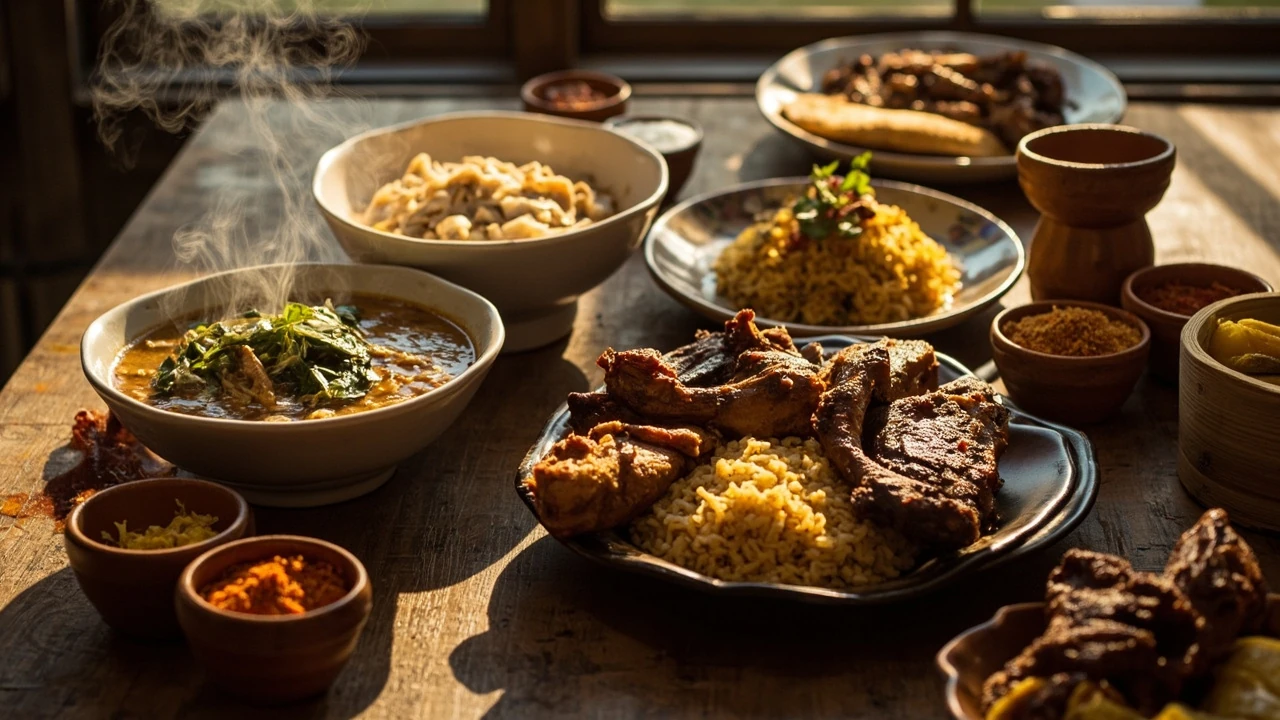
Nigerian food: a practical guide to the dishes, flavors, and meal structure
Walk into a buka in Lagos, a family kitchen in Enugu, or a small restaurant in Houston and the same logic usually greets you on the plate: a starchy anchor, a thick and deeply seasoned soup or stew, a piece of protein, and a small sharp accent on the side. That structural pattern is the easiest way into nigerian food, because the sheer number of regional dishes can feel overwhelming at first. Once the structure clicks, the individual recipes start to make sense as variations on a familiar template rather than a long list of disconnected names.
This guide is built for readers who want a clear working understanding of nigerian food: what the main categories of dishes are, how a typical meal is put together, which flavor profiles define each region, and how to navigate a menu or a recipe without guessing. It is also written for food business owners, menu writers, and hospitality teams who want to understand nigerian food well enough to describe it honestly, pair it correctly, or build a credible concept around it.
What defines nigerian food as a cuisine
Nigerian food is best understood as a family of regional cuisines that share a few core principles rather than a single uniform style. Six main ethnic groups, the Hausa, Yoruba, Igbo, Efik-Ibibio, Ijaw, and Tiv, each maintain distinct cooking traditions, and within those groups there are sub-regional variations that change ingredients, spice levels, and cooking techniques. What unifies them is the structural grammar of a meal and a preference for layered, slow-cooked flavor over quick pan sauces.
The shared elements that show up across most regional nigerian food traditions include:
- A starchy base, usually a swallow, that is used to scoop soup by hand
- A thick, oil-rich soup or stew built on a ground seed, leaf, or tomato base
- Proteins that are either grilled, smoked, or stewed directly into the soup until they flavor the liquid
- Fermented, dried, or smoked ingredients that add depth, especially in the south
- Heat that comes from fresh scotch bonnets or ata rodo rather than dried chili powder
That framework is what allows a diner in Abeokuta and a diner in Calabar to share a meal that feels recognizably nigerian even when the specific dishes are very different. Understanding the framework is more useful than memorizing individual recipes, because most nigerian food you encounter in restaurants and homes is a regional expression of this same structure.
The two pillars of a nigerian food meal: swallow and soup
If you only learn one concept about nigerian food, make it the pair of swallow and soup. A swallow is a starchy dough eaten by hand, used as both utensil and starch. A soup is the flavored liquid that the swallow is dipped into. Every regional tradition has its own versions of both, and the pairing is the heart of the meal.
Common swallows
Swallows are made from starchy flours or fresh tubers that are cooked into a smooth, stretchy dough. They are eaten warm and pulled off in small pieces between the fingers.
- Pounded yam (iyan): made from boiled yam pounded in a mortar until smooth and elastic, especially popular in the south and middle belt
- Amala: yam flour cooked into a dark, soft dough, central to Yoruba cooking in Oyo and surrounding states
- Eba (garri): cassava granules stirred into hot water, common across the south and easy to prepare at home
- Fufu (akpu): fermented cassava paste with a slightly sour aroma, widely eaten in the south-east and south-south
- Semovita, wheat, or oat swallow: lighter flour-based options popular in urban homes and restaurants
- Tuwo: northern rice or millet doughs that serve the same function in Hausa meals
Common soups and stews
The soup side of a nigerian food plate is where most of the cooking skill and regional identity shows up. Thickness, oil content, and base ingredient change dramatically by region.
- Egusi: melon seed soup thickened with ground egusi, leafy vegetables, and assorted meats, eaten across the country
- Ogbono: draw soup made from wild mango seed, with a slippery, slightly gelatinous texture
- Efo riro: a Yoruba spinach stew built on tomatoes, peppers, and palm oil
- Okra soup: sliced okra cooked into a draw soup, often combined with ogbono or egusi
- Banga: palm fruit soup, especially associated with Urhobo, Ijaw, and Edo cooking
- Edikang ikong: a vegetable-heavy soup from Cross River state built on ugu and waterleaf
- Miyan kuka: northern tamarind-based soup, thinner and more soured than southern soups
- Miyan taushe: a Hausa pumpkin or groundnut soup served with tuwo
How a traditional nigerian food plate is assembled
Understanding the parts is useful, but the way those parts are put together is what actually defines the experience. Most traditional nigerian food meals follow a similar sequence on the plate and in the mouth.
- The swallow is placed at the center or on a separate plate, kept warm
- The soup is served in a generous bowl, ideally with a layer of palm oil on top and visible pieces of protein and fish
- Protein is treated as part of the soup, not as a separate main, so a single bowl may contain beef, tripe, smoked fish, and stockfish
- A small amount of stew or sauce is set aside for dipping, especially with dishes like amala and ewedu
- A side protein such as grilled fish, suya, or peppered chicken is often added for texture contrast
This structure is one of the things that surprises first-time diners. A bowl of egusi is not an appetizer, it is the main event, and the swallow beside it is both the starch and the spoon. The portion size of soup relative to swallow is usually much larger than western diners expect, because the soup is doing the work of both sauce and protein carrier.
Rice and one-pot dishes in nigerian food culture
Not all nigerian food is built on the swallow and soup pattern. Rice dishes, beans, and one-pot meals form a second major category, often eaten at lunch, at celebrations, or as street food. These are the dishes most non-Nigerian readers recognize on a menu.
Rice dishes
Jollof rice is the most internationally recognized nigerian food item, and it is also the center of a long-running friendly rivalry with Ghanaian and Senegalese jollof. Nigerian jollof is typically tomato-heavy, cooked in a single pot with long-grain parboiled rice, peppers, onions, and a stock seasoned with bay leaves, thyme, and curry powder. The base is a fried pepper mix called the pottage or base, which gives the rice its red color and deep flavor. For broader context, the Federal Ministry of Agriculture and Food provides a concise reference for this section.
Other common rice preparations include:
- Fried rice: Nigerian party fried rice uses mixed vegetables, liver, and sometimes shrimp, and is a staple at celebrations
- Coconut rice: rice simmered in coconut milk with scotch bonnet and thyme, common in the south-south
- Ofada rice: local brown rice served with ofada sauce, a spicy pepper-based stew using locust beans
Beans and one-pot dishes
Beans play a major role in nigerian food, especially in home cooking. The most common preparations include:
- Ewa riro: stewed beans in a pepper and palm oil base, often served with bread or plantain
- Akara: deep-fried bean fritters sold by street vendors and at breakfast
- Moi moi: steamed bean pudding wrapped in leaves or foil, eaten as a side or snack
- Gbegiri: Yoruba bean soup that pairs with ewedu and amala in the classic abula set
Snacks, small plates, and street food in nigerian food
Nigerian street food is a category on its own, and many dishes that Nigerians think of as everyday food are sold by vendors, at bus stops, and outside offices. These snacks are a key entry point for anyone exploring nigerian food outside a home or sit-down restaurant setting.
Grilled and roasted snacks
- Suya: thinly sliced beef skewers coated in yaji, a peanut and spice rub, served with sliced onions and tomatoes
- Asun: spicy grilled goat meat, popular in the south-west as a bar snack
- Boli: roasted plantain sold on the street, often eaten with groundnut
- Isi ewu: goat head prepared in a spicy pepper sauce, a south-east bar staple
Fried and steamed snacks
- Puff-puff: deep-fried dough balls rolled in sugar, the most common nigerian food snack
- Buns: slightly sweet fried dough rings
- Akara: fried bean fritters, often paired with bread or pap for breakfast
- Moin moin: steamed bean pudding served in slices
These snacks often sit alongside fuller meals rather than replacing them, which is one reason nigerian food culture feels generous. A guest at a gathering is rarely offered just one dish.
Regional flavor profiles across nigerian food
Because nigeria spans multiple ecological zones, ingredients and flavor profiles shift significantly by region. A practical way to read a nigerian food menu is to know which region a dish is associated with and what the dominant seasoning style looks like there.
| Region | Staple pairings | Base ingredients | Flavor signature |
|---|---|---|---|
| Yoruba (south-west) | Amala with ewedu and gbegiri, or pounded yam with egusi | Palm oil, locust beans (iru), smoked fish, bitter leaf | Deeply savory, layered, with fermented and smoky notes |
| Igbo (south-east) | Fufu with ogbono, bitter leaf soup, or okra | Oil bean (ugba), uziza, njama njama, fresh fish | Fresh, herbal, with sharp pepper and slightly bitter greens |
| Efik-Ibibio (south-south) | Fufu with afang or edikang ikong | Waterleaf, ugu, periwinkle, palm wine, fresh fish | Green-forward, rich, with a strong fresh seafood base |
| Hausa (north) | Tuwo with miyan taushe or miyan kuka | Groundnut, tamarind, ginger, dried fish, beef | Sweeter, spiced, often thinner soups with warm aromatics |
| Middle Belt | Pounded yam or fufu with achara or egusi | Egusi, vegetables, bush meat, locust beans | Hearty, with mixed northern and southern influence |
This table is a starting map, not a fixed rule. Migration between regions has produced plenty of cross-pollination, and most urban nigerian food restaurants offer a pan-regional menu that borrows from all of these traditions.
Key ingredients that define nigerian food flavor
Several ingredients show up so often that they function almost as signature building blocks of nigerian food. A short glossary of the most important ones is useful for anyone reading menus, shopping, or developing recipes.
| Ingredient | What it is | How it is used | Flavor contribution |
|---|---|---|---|
| Palm oil | Red oil pressed from palm fruit | Base for soups, stews, and sauces | Earthy richness and signature red color |
| Egusi | Ground melon seed | Thickener and main flavor for egusi soup | Nutty, slightly bitter body |
| Locust beans (iru or dawadawa) | Fermented seed condiment | Added to soups and stews | Strong umami and fermented aroma |
| Scotch bonnet (ata rodo) | Hot pepper | Used fresh or in sauce bases | Sharp, fruity heat |
| Uziza leaves | Wild pepper leaves | Added near the end of soup cooking | Herbal, peppery note |
| Bitter leaf | Leafy green, often slightly bitter | Used in soups and stews | Mild bitterness that balances richness |
| Ugu (pumpkin leaves) | Young pumpkin leaves | Shredded into soups | Soft, green, slightly sweet |
| Smoked fish or stockfish | Dried, smoked fish | Rehydrated and added to soups | Deep smoky umami |
| Crayfish | Ground dried freshwater crustacean | Sprinkled into soups and stews | Briny, savory boost |
| Ogbono | Ground wild mango seed | Thickener for ogono soup | Slightly mucilaginous, mild, earthy |
For chefs and food business owners, this list is the practical ingredient checklist that defines a credible nigerian food offering. If a menu item relies on none of these, it is probably not traditional nigerian food, even if it is described with nigerian flavor in the marketing.
How nigerian food is typically eaten: structure and etiquette
Eating nigerian food in a home or buka setting follows patterns that may be unfamiliar to first-time diners. Knowing them in advance helps both guests and hospitality staff avoid awkward moments. For an independent reference, the nse partners agriculture ministry to boost provides additional context for this point.
- Hand eating is the norm with swallow and soup. The right hand is used, and the soup is scooped with small pinches of dough rather than cutlery
- Communal bowls are common, especially for soups. Diners eat from a shared pot by scooping carefully to their own side
- Rice and stew dishes are usually eaten with a fork or spoon, except in more traditional settings where the hand is used
- Meals are often served with water and a soft drink, not alcohol, and street food is usually eaten standing or on low stools
- Guests are often pressed to eat more, and refusing a second helping can require a polite but firm explanation
For restaurant operators, that communal and generous serving style has direct implications for portion design, plate layout, and service scripts. Reading about how specificity strengthens food marketing is useful here, because the specificity of nigerian food service rules is exactly what makes the experience feel authentic to nigerian diners.
What nigerian food tastes like to a first-time diner
For readers who have not yet tried nigerian food, it helps to set expectations honestly. The cuisine is rich, oily in a satisfying way, and often quite spicy, but it is rarely harsh. Flavors tend to be layered rather than sharp, and the combination of palm oil, fermented condiments, and slow-cooked proteins produces a savory depth that many diners find addictive once they adjust.
Useful starting points for someone exploring nigerian food for the first time include:
- Jollof rice with chicken as a familiar, low-commitment entry point
- Pounded yam with egusi soup to experience the classic swallow and soup structure
- Suya as a quick, snackable way to test nigerian food seasoning
- Plantain, either fried or roasted, as a gentle side that pairs with almost anything
Each of these gives a different angle on the cuisine without requiring a full commitment to unfamiliar ingredients. Diners who enjoy all four usually find that they can navigate most nigerian food menus comfortably from there.
Nigerian food in the diaspora and on restaurant menus
Nigerian food outside nigeria has grown significantly over the last decade, particularly in the united kingdom, the united states, and canada. Diaspora restaurants often run on tight margins and small teams, and the menus are usually compressed versions of what would be served in a home or buka. That compression creates real decisions for operators about which dishes to keep, which to simplify, and which to drop entirely.
Common patterns on diaspora nigerian food menus include:
- A short rice section anchored by jollof, often with fried rice as a weekend special
- Two to four soup options, usually egusi, ogbono, and one regional specialty
- One swallow option, frequently pounded yam or eba, because fufu and amala are harder to source consistently
- A small proteins section featuring peppered chicken or fish alongside the soups
- Snacks like puff-puff, suya, and small chops for events and weekend traffic
Menu design choices like these are similar to the structural decisions covered in menu engineering without losing the soul of the menu. The point is not to shrink the cuisine but to choose the dishes that carry the most identity per square inch of menu space.
Common mistakes when describing or cooking nigerian food
Because nigerian food has become more visible in international media, several recurring mistakes show up in menus, marketing, and home cooking. A short list is useful for anyone working with the cuisine professionally.
- Treating jollof as the only nigerian food dish and ignoring the soup and swallow structure
- Using dried chili powder instead of fresh scotch bonnet, which flattens the heat profile
- Skipping fermented ingredients like locust beans or ogiri, which removes much of the depth
- Cooking egusi without enough vegetables or protein, which turns it into a thick paste rather than a balanced soup
- Describing every nigerian food dish as spicy, when many soups are more savory and herbal than hot
Avoiding these mistakes is one of the easiest ways to make a nigerian food offering feel more credible, both to nigerian diners and to curious newcomers.
How to build a simple nigerian food meal at home
For readers who want to cook nigerian food outside a traditional setting, the most practical approach is to start with one soup, one swallow or rice option, and one protein. That keeps shopping manageable while still producing an authentic plate.
| Course | Beginner-friendly choice | Key ingredients to source | Common shortcuts |
|---|---|---|---|
| Soup | Egusi soup | Ground egusi, palm oil, bitter leaf or spinach, assorted meat, stockfish, crayfish | Use pre-ground egusi and frozen bitter leaf |
| Swallow | Pounded yam or eba | Yam flour or garri, water | Buy pounded yam pre-made from a nigerian grocer |
| Protein | Peppered chicken or grilled fish | Chicken, scotch bonnet, onions, bell pepper, thyme | Use a tabletop grill for char |
| Side | Fried plantain | Ripe plantain, oil, salt | Pan-fry instead of deep-frying for less oil |
This kind of compact plan is useful for menu developers too, because the same four-slot logic scales from a home kitchen to a small restaurant menu. Operators who want a deeper look at how a single signature dish can be expanded across an offer can study how to turn one signature product into a month of content for ideas.
Frequently asked questions
What is the most popular nigerian food dish?
Jollof rice is the most internationally recognized nigerian food dish, but within nigeria the swallow and soup combination, especially pounded yam with egusi, is the daily staple most people would name first.
Is nigerian food always spicy?
Not always. Heat level depends on the cook and the dish. Egusi and ogbono soups are usually moderately spicy, while dishes like jollof rice or fried plantain can be mild. Scotch bonnet is the most common source of heat, and the amount can be adjusted.
What is the difference between nigerian and west african food more broadly?
Nigerian food is a subset of west african food, but it is distinguished by a strong preference for very thick, oil-rich soups, palm oil as a base, and the swallow and soup plate structure. Other west african cuisines lean more toward grain-based one-pot meals or grilled protein plates.
What is pounded yam and how is it eaten?
Pounded yam is a smooth, stretchy dough made by pounding boiled yam in a mortar. It is eaten by pulling off a small piece, dipping it into soup, and swallowing it without chewing. It pairs especially well with egusi, ogbono, and okra soups.
What is egusi?
Egusi is the seed of a specific melon, ground into a flour and used as the base of egusi soup. It acts as both thickener and primary flavor, giving the soup a nutty, slightly bitter body.
What is suya?
Suya is a nigerian food street snack of thin beef skewers coated in a peanut and spice rub called yaji, then grilled and served with sliced onions and tomatoes. It is one of the most popular evening snacks in the north and across nigerian cities.
Can nigerian food be made vegetarian?
Yes. Many nigerian food soups can be made vegetarian by replacing the meat and fish with mushrooms, smoked tofu, or extra vegetables, and using vegetable stock instead of meat stock. The flavor will be lighter but still recognizable.
What drinks pair well with nigerian food?
Soft drinks, bottled water, and malt drinks are the most common pairings in everyday settings. Zobo, a cold hibiscus drink, and kunu, a ginger-based beverage, are traditional non-alcoholic options. Beer pairs well with spicy dishes like suya and peppered chicken.
Is nigerian food healthy?
Nigerian food can be part of a balanced diet, but many traditional soups are high in palm oil and sodium. Lean proteins, plenty of vegetables, and smaller portions of swallow are the easiest adjustments for diners watching fat or calorie intake.
Where should a newcomer start with nigerian food?
A good first order is jollof rice with chicken, followed by pounded yam with egusi soup on a second visit. Adding suya or puff-puff as a snack rounds out a broad first experience without overwhelming the palate.
A practical next step for working with nigerian food
Whether you are a diner, a cook, or a food business operator, the most useful next step is to experience one full nigerian food plate, swallow, soup, protein, and side, in a setting that takes the food seriously. A home-cooked meal, a well-run buka, or a diaspora restaurant with consistent reviews are all reasonable starting points. After that one meal, the structural logic described above will start to feel familiar, and every future nigerian food dish will be easier to read, order, or build. For hospitality teams, the next move after that experience is to decide which of the categories above deserves a permanent place on the menu and which should be reserved for specials, rather than trying to carry every regional tradition at once.