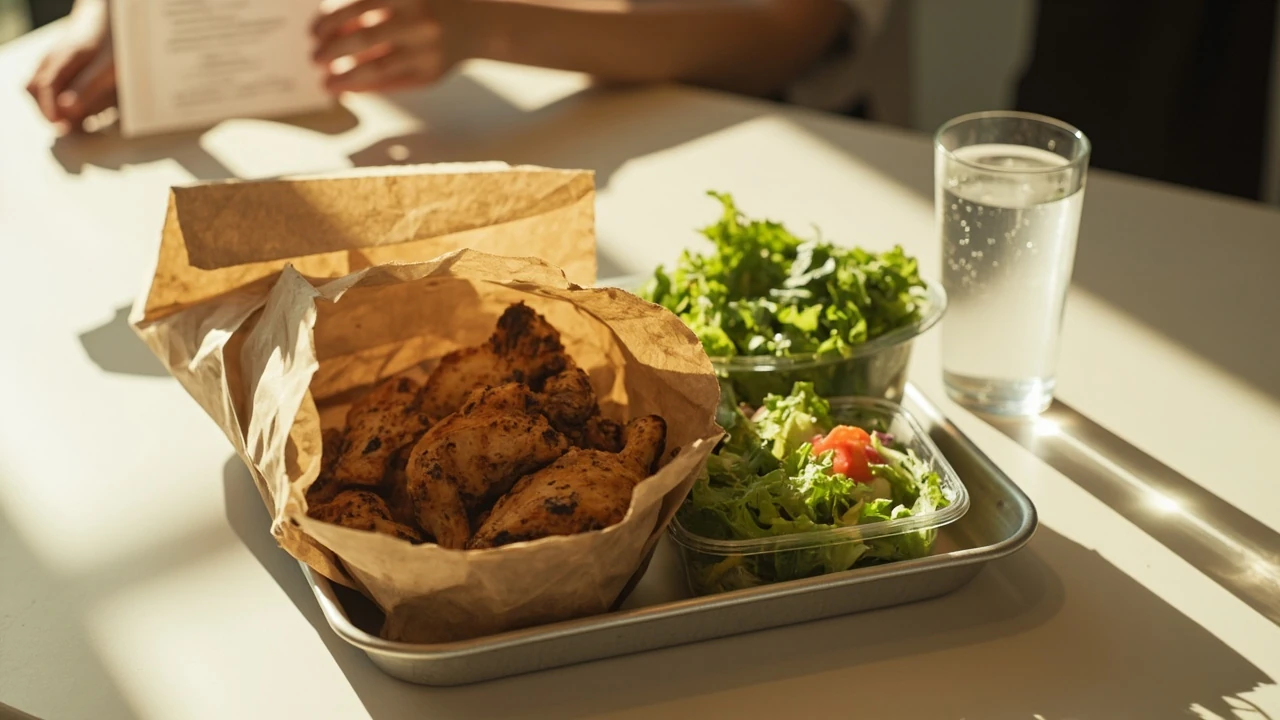
The drive-thru speaker crackles and you have about forty-five seconds to choose between a bacon double, a crispy chicken sandwich, a grilled wrap, or a bean burrito. Most people default to whatever they ordered last week. A small amount of label-reading skill turns that same moment into a deliberate choice, and the gap between the best and worst option on a typical fast food menu is wider than almost any other restaurant format. This guide is built for that decision. It explains what makes one fast food order measurably better than another, how chains position their menus to steer you, and which items hold up as the healthiest fast food choices when you compare protein, sodium, fiber, and cooking method side by side.
Throughout this guide, “healthy” is treated as a practical, multi-variable idea rather than a single number. A 400-calorie grilled bowl with 30 grams of protein, 8 grams of fiber, and modest sodium will usually serve you better than a 320-calorie fried snack with very little protein, even if the snack looks lighter on paper. The same logic works in reverse: a salad drowning in creamy dressing and fried toppings can quietly out-calorie a small burger. The goal is to leave with a working mental model, not a memorized list, so you can evaluate new menu items the chains roll out every season.
Healthiest fast food: what actually makes one order better than another
When nutritionists and dietitians rank the healthiest fast food items, they almost never rely on calories alone. A short, slightly calorie-dense order with strong protein and fiber is usually a smarter pick than a low-calorie order that is mostly refined starch. Five variables do most of the work: protein, fiber, sodium, added sugar, and cooking method. Once you learn to scan for them, you can read a menu board in seconds.
The five nutritional levers that matter most at a drive-thru
These are the variables that move the needle in real life, in the order most dietitians prioritize them.
- Protein per calorie. Satiety per bite is one of the best predictors of whether a fast food order keeps you full for two to four hours. Look for roughly 15 grams of protein or more per 400 calories when you can.
- Fiber from real ingredients. Fiber slows digestion and steadies blood sugar. Whole grains, beans, vegetables, and fruit all count. A bun made with refined white flour contributes almost none.
- Sodium load. Fast food menus are engineered for flavor, which usually means heavy salt. A single meal that pushes you past 1,500 milligrams of sodium is a red flag, especially if you eat restaurant food more than twice a week.
- Added sugar in drinks and sauces. Sweet tea, regular soda, and sweetened iced coffee can quietly add 30 to 60 grams of sugar to an otherwise balanced meal. Sauces like teriyaki, honey mustard, and barbecue often carry more sugar than the protein they coat.
- Cooking method. Grilled, roasted, steamed, and baked items are usually a step ahead of breaded and deep-fried items, even when portion size is the same.
Why chains add “healthy” items you should still be cautious about
Almost every major chain has added salads, wraps, and grain bowls in the last decade. The intent is partly real, because guests ask for lighter options, and partly strategic, because a “health halo” lifts the perception of the whole menu. A 2019 review in the Journal of the Academy of Nutrition and Dietetics found that restaurant items marketed as “lighter” or “better-for-you” still averaged more than 700 calories and 1,000 milligrams of sodium, so the halo often outruns the recipe. That is why scanning the label is more useful than trusting the menu name.
How fast food menus are designed to nudge your order
Before comparing items, it helps to understand the layout decisions that shape what you see first. Eye-tracking studies of drive-thru boards and in-store kiosks consistently find that the upper-right and center positions get the most attention, and those slots are reserved for the highest-margin items, not the leanest ones. Combo meals, which bundle a sandwich, side, and drink for a small discount, are profitable precisely because the side and drink inflate the check more than they fill you up.
Anchor pricing and combo psychology
Combo pricing makes the fries-and-soda default feel like a bargain. If the sandwich alone is $5.99 and the combo is $7.99, the $2.00 “savings” is really a $0.90 upcharge on a large fry and a $1.10 upcharge on a regular soda, paid for by the perceived deal on the sandwich. Building your own combo from the a-la-carte menu, or asking to swap the fry for a side salad or apple slices where the chain allows it, is one of the simplest ways to keep calories and sodium in check.
Limited-time items and seasonal buzz
Limited-time offers, or LTOs, often carry more sodium and sauce than core menu items because they are built to photograph well and trend on social media. When a new item drops, the safest move is to wait for the nutrition information to appear on the chain’s site or app before ordering, which usually takes one to two weeks. That single habit prevents most of the surprise-calorie moments that come from hyped launches.
Building a healthier fast food order: a step-by-step method
Rather than memorizing chains, learn the method below and apply it anywhere. It works at burger, chicken, sandwich, Mexican, and Asian-inspired counters with minor adjustments.
Step 1: Choose your protein anchor
Start with a single, recognizable protein. Grilled chicken, black or pinto beans, steak, fish, or eggs are all strong starting points. Breaded and fried proteins can still fit if the rest of the meal is built around vegetables and you keep the portion modest. Aim for at least 15 grams of protein for a snack-sized order and 25 grams or more for a meal-sized one.
Step 2: Pick a base that contributes fiber
Choose a base that adds fiber rather than stripping it. Whole-grain tortillas, brown rice, quinoa bowls, lettuce wraps, and whole-wheat buns all do more nutritional work than white-flour buns, flour tortillas, or plain white rice. If none of those are available, a bowl format with extra vegetables is usually a safer base than a sandwich.
Step 3: Load vegetables, skip heavy sauces
Ask for the vegetables the chain actually has: lettuce, tomato, onion, pickles, peppers, jalapeños, cucumber, cabbage, or spinach. Sauces are where most menus fall apart. A creamy dressing, aioli, or sweet-and-sour glaze can add 100 to 200 calories and 8 to 15 grams of added sugar in a single pump. Choose oil and vinegar, salsa, hot sauce, mustard, or a side of guacamole in small amounts.
Step 4: Rethink the side
The default side is almost always fries, and the default drink is almost always a regular soda. Both decisions are reversible. Apple slices, side salads, plain baked potatoes, corn, black beans, or yogurt parfaits are widely available now. For drinks, water, unsweetened tea, or black coffee are the cleanest picks. A diet soda is reasonable if you want the caffeine and mouthfeel without the sugar load.
Step 5: Watch portion size when sharing or saving
Many “healthier” bowls are similar in calories to a burger once portion size and toppings are factored in. If you are hungry, a single sandwich is rarely enough. If you are not that hungry, save half for later and stretch the order into two meals. Splitting an entree with a side salad is often the cheapest and lowest-calorie move on the entire menu.
Comparing the healthiest fast food options by category
The table below summarizes the order patterns that consistently rank well in registered-dietitian reviews of major US chains. Numbers are typical ranges rather than specific chain claims, because menus change and values vary by portion and customization. Use the table to choose an order pattern, then confirm the actual values on the chain’s published nutrition guide or app before you go.
| Order pattern | Typical calories | Protein | Fiber | Sodium watch-out | Best customization |
|---|---|---|---|---|---|
| Grilled chicken sandwich on a whole-grain bun, no mayo, side salad, water | 420-520 | 28-35 g | 5-8 g | Ask for light salt on the chicken; choose vinaigrette | Hold mayo, add tomato and lettuce, swap bun if available |
| Burrito bowl with brown rice, black beans, grilled protein, fajita veggies, salsa | 500-650 | 30-40 g | 10-14 g | Skip or halve the cheese; skip sour cream | Add extra veggies, choose salsa over creamy sauces |
| Grilled chicken wrap with whole-wheat tortilla, veggies, mustard | 350-450 | 22-28 g | 4-7 g | Hold cheese or use a single slice; skip creamy sauces | Add spinach or lettuce, choose mustard or hot sauce |
| Grilled fish taco plate, corn tortillas, slaw, lime | 400-500 | 22-30 g | 5-8 g | Watch the slaw dressing; ask for it on the side | Choose grilled over battered, double the slaw, skip crema |
| Salad with grilled protein, mixed greens, beans, light vinaigrette | 380-520 | 25-35 g | 6-10 g | Limit croutons, cheese, and creamy toppings | Choose vinaigrette, ask for dressing on the side, add beans |
| Egg-based breakfast sandwich on whole-grain English muffin, fruit | 350-450 | 18-24 g | 4-6 g | Skip bacon or sausage if a ham or egg-only option exists | Choose egg whites or one whole egg, add tomato and spinach |
| Veggie burger bowl with lettuce, tomato, beans, mustard, side of fruit | 380-480 | 18-25 g | 8-12 g | Watch the special sauce; skip cheese to reduce sodium | Choose a bean-based patty, add extra veggies |
Best order patterns by chain style
Different chains have different strengths, and a “healthy” order at a burger chain is rarely a “healthy” order at a taco chain. The patterns below are starting points, not rigid rules. The principles from the earlier section still apply: lean protein, fiber, light sauce, smart side, water or unsweetened drink.
Burger chains
Burger chains tend to do grilled chicken sandwiches, single-patty hamburgers with extra lettuce and tomato, and side salads better than the value menu. Most chains now publish full nutrition guides online, and the better-for-you options are usually grouped under “under 500 calories” or “lighter menu” labels. Skip the bacon, double cheese, and special sauce unless you are willing to give up the side salad to compensate. For chains that offer a lettuce wrap, it is a useful swap if you are watching refined carbohydrates but still want the burger flavor profile.
Chicken chains
Chicken chains have moved toward grilled and roasted options to compete with the perception of fried-only menus. Grilled chicken sandwiches and tenders are typically a clean starting point, especially when paired with a side of vegetables, corn, or a baked bean cup. Avoid the heavy dipping sauces; choose mustard, hot sauce, or a small portion of a vinaigrette-based sauce. If you want the original flavor of a fried item, order a small portion and add a vegetable side rather than a starchy one.
Mexican-inspired chains
Bowls are the easiest format to make healthier, because you can choose brown rice, beans, fajita vegetables, and a lean protein. Tacos on corn tortillas with grilled protein and salsa are also a strong pattern. Watch the cheese, sour cream, and creamy sauces, which can add 200 to 400 calories quickly. Chips are fine in small amounts, but a basket to yourself will often out-calorie the rest of the order.
Sandwich and sub chains
Sub chains with whole-wheat bread and a clear vegetable list are usually the easiest place to build a healthy fast food order, because every ingredient is visible and adjustable. Choose grilled chicken, turkey, or roast beef, load vegetables, choose oil and vinegar or a light mayo, and skip the cheese if you are watching sodium. Watch the bread size: a six-inch sub with a lean filling is usually a better pick than a footlong with the same filling, because most of the calories and sodium come from the bread.
Asian-inspired chains
Asian-inspired menus often include rice and noodle bowls with mixed vegetables and a lean protein. Choose brown rice when available, ask for the sauce on the side, and prefer teriyaki or soy-based glazes in small amounts over sweet chili or orange sauces. Be cautious with fried spring rolls and cream-cheese wontons as appetizers, which can add 300 to 500 calories before the entree arrives.
What to skip: the highest-risk items on a typical fast food menu
Not every item on a fast food menu is a useful option, even if the marketing suggests otherwise. The categories below consistently rank low in dietitian reviews, because they combine refined starch, heavy sauce, and a lot of sodium in a small package.
Items that look light but rarely are
- Fried snack wraps. A small fried wrap with sauce and cheese can easily hit 400 to 500 calories with 15 to 20 grams of fat and 800 milligrams of sodium in just four bites.
- Large breakfast biscuits with bacon and cheese. A typical double-bacon biscuit delivers 600 to 800 calories and 1,500 milligrams of sodium before the hash brown.
- Loaded fries or “street” fries with cheese and sauce. These items are essentially a fried starch delivery system for cheese, bacon, and creamy sauce, and routinely exceed 800 to 1,200 calories per order.
- Sweetened blended coffee drinks. A 16-ounce blended mocha can carry 300 to 500 calories and 40 to 60 grams of sugar, more than a full can of soda.
- Creamy salads with fried toppings. A fried-chicken Cobb or a Southwest salad with creamy dressing can exceed 900 calories despite the “salad” framing.
Times of day when the same chain is healthier
Breakfast menus tend to be smaller, which means a single egg-based sandwich is often the cleanest option. Lunch and dinner menus usually have the best grilled options and the widest vegetable variety, which gives you more room to customize. Late-night menus often lean toward indulgent and fried items, because chains assume late-night orders are treat-driven. If you eat fast food in the evening, the lunch items are often still available, and they are usually a smarter pick.
Using the nutrition calculator and app before you go
Every major US chain publishes a full nutrition guide online, and most have it built into their app. Spending two minutes looking at the values for a new item before you order is the single most useful habit for finding the healthiest fast food choices, and it is the only reliable way to keep up with seasonal changes and limited-time offers.
What to look at first in a nutrition panel
When you open a chain’s nutrition guide, do not start with calories. Start with protein, because that anchors the rest of the meal. Then check fiber, then sodium. A useful mental target for a single fast food meal is at least 20 grams of protein, at least 5 grams of fiber, and under 1,500 milligrams of sodium. If an item hits those three targets, the calories are usually within a reasonable range as well.
How to handle “under 600 calories” marketing labels
Some chains use a green or “lighter” label on items under 500 or 600 calories. These labels are useful as a starting point, but they do not account for sodium, fiber, or protein. A 500-calorie order that delivers 8 grams of protein and 1,800 milligrams of sodium is not the same nutritional value as a 500-calorie order with 30 grams of protein and 800 milligrams of sodium. Use the calorie label to narrow the menu, then apply the five-lever checklist to narrow further.
How to read the ingredient list for fast food quality
Ingredient lists are a useful second layer once you have narrowed the menu. Short lists with recognizable ingredients are usually a better sign than long lists with unfamiliar chemical names, even when the calorie and protein numbers look similar. Ingredient lists also reveal hidden sources of sugar, sodium, and saturated fat that do not show up in the headline numbers.
Common hidden sources of sodium and sugar
Buns, sauces, marinades, and cheese blends are the most common hidden sources of sodium. Sweet barbecue, teriyaki, honey mustard, and similar glazes are the most common hidden sources of added sugar. If an item is high in sodium or sugar but the headline number looks fine, it is usually because the marketing target is the protein or the “perceived” flavor, not the actual nutrient density.
When ingredient lists are not public
Some smaller regional chains and kiosks do not publish a full ingredient list. In those cases, the best signals are the visible parts of the order: the type of bun, the type of cheese, the color of the protein, and the amount of sauce. A pale, dry-looking grilled chicken with a thin layer of sauce is usually a safer bet than a glossy, dark item in a heavy glaze.
Special situations: kids, athletes, and shift workers
The “best” order depends on who is eating. The five-lever model still applies, but the weights shift depending on age, activity level, and timing of the meal.
Kids’ meals and family orders
Most chains now offer apple slices, milk, or juice as default sides and drinks. Choosing the default kids’ meal with a grilled protein and milk is usually a much better choice than substituting fries and soda. If your child will only eat certain items, the cleanest compromise is a smaller portion of the item they like plus a piece of fruit from the side menu, rather than an upsized version of the less-healthy item.
Athletes and physically active eaters
For athletes, the priority is protein and total calories, with fiber and sodium as secondary concerns. A grilled chicken sandwich with a small fries and a sports drink is often the best fast food order around a hard training session, because the carbohydrates and sodium are functional rather than incidental. The five-lever model still applies, but the targets shift: 30 to 40 grams of protein and a full meal’s worth of calories are more important than minimizing sodium in this context.
Late-shift and overnight workers
Shift workers often face the worst fast food menus, because late-night offerings tend to be heavy, fried, and sauce-driven. When possible, choose a breakfast item like an egg sandwich or a bowl format with extra protein, because these are usually the cleanest late-night options. If the only realistic options are fried, choose a smaller portion and add a vegetable side, fruit, or yogurt if available.
Common myths about the healthiest fast food
A few beliefs about fast food and health are common enough to be worth correcting, because they lead to worse orders when followed.
Myth 1: a salad is always healthier than a burger
Not always. A salad with fried chicken, bacon, cheese, croutons, and creamy dressing can carry more calories and sodium than a small grilled burger with a side salad. The format is not the deciding factor; the build is. A grilled chicken salad with light vinaigrette and beans is usually a better pick than a fried-chicken salad with ranch, even though both look like “salad” on the menu.
Myth 2: grilled always means low-calorie
Grilled proteins are usually lower in fat than their fried counterparts, but the rest of the build still matters. A grilled chicken sandwich with mayo, cheese, and a sweet sauce can match a fried chicken sandwich in calories and outpace it in sodium. “Grilled” is a useful starting signal, not a guarantee.
Myth 3: low-carb or keto-labeled items are the healthiest
Removing the bun reduces refined carbohydrates, but it does not change the sodium, saturated fat, or total calories of the filling. A bunless double-bacon burger with cheese and sauce can still exceed 900 calories and 1,500 milligrams of sodium. Low-carb is a tool, not a health label.
Myth 4: smaller portion sizes are always the answer
A too-small portion can leave you hungry an hour later, which often leads to a second snack that is worse than the meal you skipped. The right size is the one that satisfies you with the available ingredients. A medium grilled bowl with vegetables and protein will usually outperform two small fried items eaten back-to-back.
Healthiest fast food on a budget
Eating healthier at a fast food chain does not have to be more expensive. A few patterns tend to keep cost down without sacrificing the build.
- Order a-la-carte instead of combo. Skipping the default fries and soda often saves $1.50 to $2.50 per order, which funds a side salad, fruit, or bottle of water.
- Use value menus strategically. A grilled chicken wrap or a bean burrito from the value menu can be one of the cheapest and healthiest fast food options if it is built with vegetables and a light sauce.
- Share or split. Many entree portions are large enough to split between two people with a shared side. This is the lowest-cost way to control calories.
- Skip premium add-ons. Bacon, double cheese, and special sauces add $0.50 to $1.50 each and usually add more sodium than flavor. Build flavor with vegetables and spices instead.
- Use the app for rewards. Most chain apps offer free sides or discounted drinks for a small spend. Spending the reward on a side salad or fruit is the cleanest move.
Putting it together: a sample day of healthier fast food choices
To make the framework concrete, here is a sample day built around three fast food meals. It assumes a moderately active adult with a 2,000-calorie target and is meant to show how the levers compose across the day, not as a rigid plan.
| Meal | Order pattern | Approx. calories | Protein | Fiber | Why it works |
|---|---|---|---|---|---|
| Breakfast | Egg and cheese on whole-grain English muffin, apple slices, black coffee | 400-450 | 20-25 g | 5-7 g | Lean protein, fiber from the muffin and fruit, no added sugar in the drink |
| Lunch | Grilled chicken bowl with brown rice, black beans, fajita veggies, salsa, water | 550-650 | 32-40 g | 10-14 g | High protein and fiber, light sauce, water keeps sodium and sugar in check |
| Dinner | Grilled fish tacos on corn tortillas, side salad with vinaigrette, unsweetened iced tea | 500-600 | 25-32 g | 7-10 g | Lean protein, fiber from corn and salad, low added sugar |
Across the day, the totals land in the range of 1,500 to 1,700 calories, with roughly 80 to 100 grams of protein and 25 to 30 grams of fiber, and the sodium load stays moderate because no item depends on a sweet sauce or a heavy cheese blend. The exact same framework works with substitutions from any major chain, because the levers are the same: protein, fiber, sodium, added sugar, and cooking method.
Frequently asked questions
What is the single healthiest item at a typical fast food chain?
There is no universal answer, because menus change often and chains specialize. In most cases, a grilled chicken sandwich or a bowl with lean protein, brown rice or whole grains, beans, and vegetables, paired with water, is one of the strongest picks. Confirm the values on the chain’s nutrition guide, because portion sizes and sauces vary.
Is a grilled chicken sandwich actually healthier than a salad?
It depends on the salad. A grilled chicken sandwich on a whole-grain bun with vegetables and a light sauce is usually comparable to a grilled chicken salad with vinaigrette and beans. A salad with fried toppings, creamy dressing, and cheese can easily out-calorie the sandwich. The build matters more than the format.
Are fast food salads healthy?
Some are. The cleanest salads are built on mixed greens or spinach, with a grilled lean protein, beans or other vegetables, and a vinaigrette on the side. The riskier ones are built on fried proteins, heavy cheese, and creamy dressings. Look at the full nutrition panel, not just the menu name, before ordering.
How do I keep sodium under control at a fast food restaurant?
Limit cheese, bacon, cured meats, and creamy sauces, which are the most concentrated sodium sources. Choose a side that is not fried or heavily salted, and drink water or unsweetened tea. Aim for under 1,500 milligrams of sodium in a single fast food meal when you can, especially if you eat restaurant food often.
Are veggie burgers a healthier fast food option?
They can be. A veggie patty made from beans, grains, and vegetables usually delivers more fiber and less saturated fat than a beef patty of the same size, though sodium can be similar. A bean-based patty on a whole-grain bun with vegetables and mustard is one of the strongest picks. Be cautious with highly processed plant-based patties, which can have similar sodium and fat profiles to a beef burger.
What is the healthiest fast food breakfast?
An egg-based sandwich on a whole-grain English muffin or wrap, with vegetables, a side of fruit, and water or coffee, is usually the cleanest. Limit bacon, sausage, and hash browns if you can, because they add sodium and saturated fat quickly. Oatmeal with fruit and nuts, where available, is also a strong option.
Are kids’ meals a healthier fast food choice?
Often yes, because portion sizes are smaller and most chains now offer apple slices, milk, or juice as the default side and drink. Choosing the default kids’ meal with a grilled protein and milk is usually a better pick than substituting fries and soda. Skip the dessert or the cookie when possible, because it adds sugar without much nutritional value.
Is it okay to eat fast food every day if I pick healthy options?
It can be part of a balanced pattern, but it is not ideal. Fast food menus are designed around flavor and shelf stability, which means sodium, refined grains, and added sugars are higher than in home-cooked food, even on the better menu items. If you eat fast food daily, rotate chains, choose whole-food sides when possible, and counterbalance with vegetable-rich meals at other times of day.
How accurate are the calorie counts on fast food menus?
Published values are averages, and actual portions can vary by 10 to 20 percent from the listed number. Customization also shifts the totals. Use the published values as a guide, not a guarantee, and remember that protein, fiber, and sodium matter at least as much as calories.
What is the best drink at a fast food restaurant?
Water, unsweetened tea, and black coffee are the cleanest options. Diet soda is a reasonable compromise if you want the caffeine or the mouthfeel without the sugar. Sweetened iced tea, regular soda, and blended coffee drinks can add 30 to 60 grams of sugar per serving, so they are best treated as occasional picks rather than defaults.
A practical next step before your next drive-thru visit
Before your next fast food order, spend five minutes in the chain’s app or nutrition guide looking up the three items you usually order, and one new item you have not tried. Compare them on protein, fiber, sodium, and cooking method, and pick the one that best fits your goal for that meal. That small habit, repeated across a few chains, is the simplest way to make the healthiest fast food choices a routine rather than a one-time decision. If you want a deeper framework for designing menus that work for guests who think this way, the menu engineering notes on this site walk through how to balance better-for-you items with the rest of the menu, and the menu pricing guide shows how to protect margin while keeping lighter options attractive.