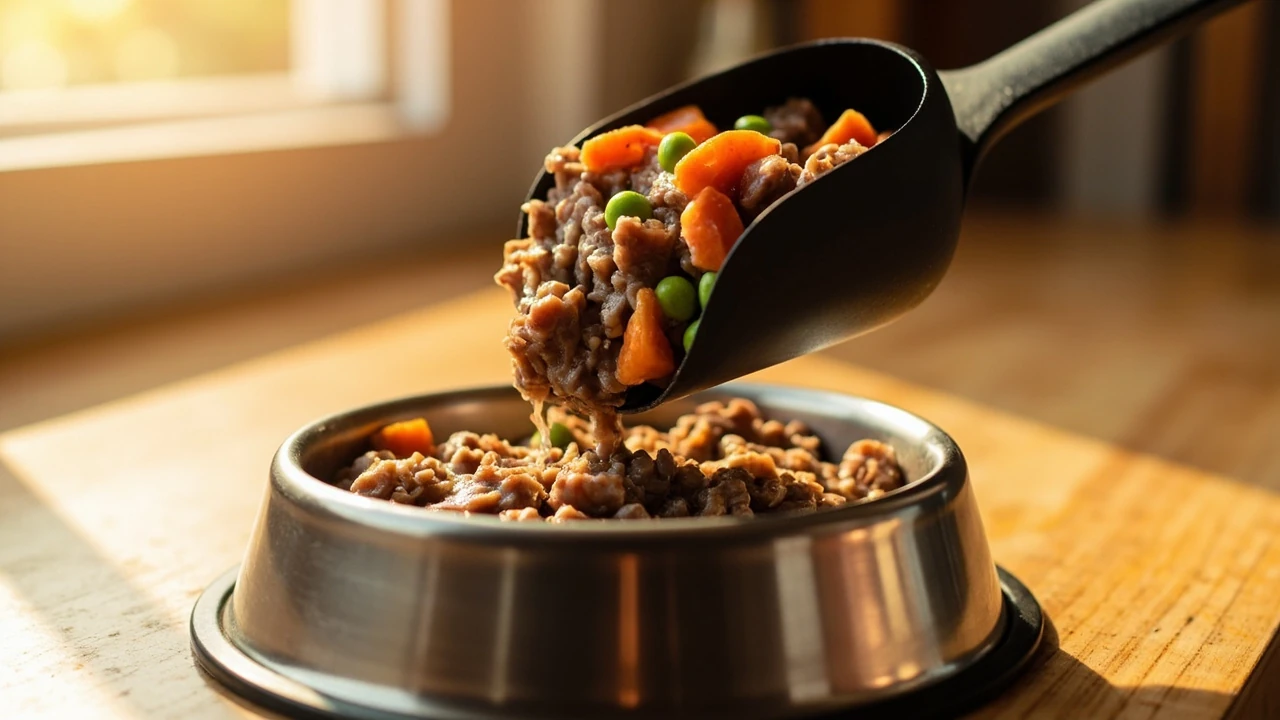
A bag of dry kibble has been the default for so long that the phrase “fresh dog food” still sounds new to many owners. Maev dog food sits inside that fresh category, which is why the questions it raises are different from the ones a regular kibble brand prompts. Owners want to know what is actually in the product, how it is prepared, whether a vet would sign off on it, and what it costs once the marketing copy is set aside. Those are the questions this article answers.
This guide works through Maev’s product line, ingredient sourcing, nutritional standards, feeding logistics, price per pound, and the practical decisions an owner faces before subscribing. It is written for someone evaluating the brand, not for someone who has already decided to buy it. Where claims need context, that context is provided. Where evidence is limited, the limits are stated.
What maev dog food actually is
Maev dog food is a line of refrigerated, minimally processed dog food sold through a direct-to-consumer subscription model. The company prepares recipes in human-grade USDA-inspected kitchens, then ships the food in vacuum-sealed rolls or single-serve containers that require refrigeration or freezing. Unlike extruded kibble, the product is not cooked at the high temperatures used to make shelf-stable dry food, which is the main reason its texture and ingredient list look different from anything sold in the pet aisle of a supermarket.
The brand positions itself around three ideas: whole-food ingredients, veterinary nutritionist formulation, and portion control based on a dog’s weight and activity level. Owners fill out a short questionnaire about their dog, receive a recommended daily portion, and get shipments on a schedule they can adjust. The food itself is one of several fresh and gently cooked options now on the market, a category that has grown steadily over the last decade as owners have begun questioning the long shelf life of conventional kibble.
For most readers, the practical starting point is not the brand story but the product itself: what the food is made from, what nutritional standards it meets, and how it compares with both fresh competitors and traditional kibble. Each of those is addressed in the sections that follow.
How maev dog food is made and shipped
The production process behind Maev matters because it directly affects shelf life, cost, and convenience. Owners who understand the process can make an informed choice about whether the trade-offs fit their routine.
| Step | What happens | Why it matters for owners |
|---|---|---|
| Formulation | Recipes are designed by veterinary nutritionists to meet AAFCO complete and balanced standards for adult dogs or for all life stages. | Provides a baseline assurance that the food covers recognized nutrient profiles rather than being a treat or topper. |
| Sourcing | Proteins and produce come from USDA-inspected suppliers; ingredients are specified by name on the label. | Name-the-source labeling is more transparent than generic “meat by-product” wording common in conventional kibble. |
| Cooking | Ingredients are gently cooked at lower temperatures than kibble, often in sous-vide or slow-cook style processes. | Preserves more heat-sensitive nutrients but reduces shelf life, so the product must be refrigerated. |
| Packaging | Portions are vacuum-sealed in rolls or trays and labeled with batch and date information. | Keeps the food safe during shipping and makes daily portioning easier. |
| Shipping | Orders ship in insulated boxes with cold packs, usually arriving within a few days of production. | Requires planning around delivery windows; leftover food must be frozen or used within a short window. |
| Storage at home | Refrigerator for opened portions, freezer for longer storage. | Adds a small amount of kitchen work compared with pouring kibble from a 30-pound bag. |
The cold-chain requirement is the single biggest lifestyle change for someone switching from kibble. Owners who already plan meals and have freezer space tend to adapt quickly. Owners who feed on the go, board their dogs frequently, or rely on auto-feeders may find the format harder to manage.
The product line at a glance
Maev has rotated its menu several times since launch, so owners should always check the current site for exact recipes. The categories below describe the typical structure and are useful when comparing options to other fresh and traditional brands.
| Product type | Typical protein base | Format | Best suited for |
|---|---|---|---|
| Beef and vegetable recipe | Beef muscle meat | Refrigerated roll, portioned and frozen | Adult dogs without specific protein sensitivities; a common starting point. |
| Chicken and rice recipe | Boneless chicken | Refrigerated roll, portioned and frozen | Adult dogs that do well on poultry and easily digested grains. |
| Turkey and vegetable recipe | Ground turkey | Refrigerated roll, portioned and frozen | Dogs that prefer lighter proteins or need a change from chicken or beef. |
| Topper or mix-in | Bone broth, vegetables, or small protein bits | Small cup or pouch | Owners who want to add moisture, flavor, or a fresh boost to a current kibble or fresh base. |
| Treats and chews | Single-ingredient animal parts or jerky-style items | Shelf-stable pouch | Use alongside the main food; not formulated as a complete meal. |
Owners of puppies, senior dogs, or dogs with diagnosed medical conditions should not rely on a general product table. Those situations call for a conversation with a veterinarian about specific protein, phosphorus, calorie, and fat targets before any food is chosen.
Ingredient quality and sourcing
Ingredient quality is the headline feature of any fresh dog food, and it is also the area where marketing language does the most work. A useful way to evaluate Maev is to look past the word “human-grade” and ask specific questions about the actual sources.
- Proteins are named on the label. Beef, chicken, and turkey appear as specific cuts rather than as generic “meat” or “meat by-product.” Named proteins make it easier to identify triggers if a dog develops a sensitivity.
- Produce is listed in plain terms. Sweet potatoes, carrots, spinach, and similar whole vegetables appear as themselves, not as a generic “vegetable fiber” line.
- No artificial preservatives are added. Because the food is refrigerated, the brand relies on cold-chain logistics and vacuum sealing rather than chemical preservatives for shelf life.
- Fortification is included. The recipes add vitamins and minerals at levels designed to meet AAFCO profiles, since gentle cooking does not allow the kind of nutrient destruction followed by re-fortification that extruded kibble requires.
- No vague filler ingredients. The label does not list generic grain fragments, sugar, or unnamed animal fat, which are common cost-saving ingredients in some lower-tier kibbles.
Two specific claims warrant close reading. “Human-grade” is a regulated term under FDA guidelines and means the food is produced in a facility that also meets standards for human food. It is a stronger claim than “human-quality” or “natural,” both of which are not formally defined. “Made in a USDA-inspected kitchen” is also a meaningful distinction because most conventional pet food is made in facilities inspected by state feed control officials, not by USDA. The combination of the two is one of the more transparent production claims a fresh brand can make.
That said, ingredient quality is only one part of nutrition. A perfectly sourced recipe that is not balanced for a dog’s life stage, weight, or activity level can still cause problems over time, which is why the next section looks at nutritional standards.
Nutritional standards and what they actually mean
Dog food in the United States is regulated by state feed control officials under model guidelines published by the Association of American Feed Control Officials. The two most common labels an owner will see are “complete and balanced for adult maintenance” and “complete and balanced for all life stages.” A third option, “intermittent or supplemental use only,” means the food is not meant to be the main diet.
- Adult maintenance means the food meets AAFCO profiles for an adult dog’s everyday needs, including protein, fat, vitamins, and minerals.
- All life stages means the food meets the higher nutrient levels required for growth and reproduction, including gestation and lactation, which are the most demanding phases in the AAFCO model.
- Feeding trial verification means the food was actually fed to dogs under controlled conditions, with bloodwork and health checks, rather than just being formulated on paper.
Maev’s recipes are formulated to meet AAFCO complete and balanced standards. Owners should still verify, on the current packaging or product page, whether each recipe is meant for adult maintenance or all life stages, because the wording can change as the line evolves. Puppies under one year, pregnant or nursing females, and dogs with kidney or heart disease need specifically tailored nutrient levels, and a general adult recipe is not automatically appropriate for them.
Energy density is the other practical number to check. Fresh food is typically more calorie-dense per pound than kibble, and per-cup comparisons can be misleading. The feeding calculator that ships with a Maev subscription is calibrated to weight and activity, but the underlying assumption is an average dog. A real-world active dog may need more, while a spayed or neutered adult with low activity often needs less. The first month on any new food is the right time to weigh the dog weekly and adjust.
How much maev dog food costs in real terms
Per-pound price on a fresh food is not the same as cost per day, because fresh food has more moisture and different calorie density than kibble. A useful comparison converts both into cost per 100 kcal, which is closer to what a dog actually eats.
| Food type | Typical price per pound | Approximate cost per 100 kcal | Notes for comparison |
|---|---|---|---|
| Maev fresh roll | Mid-to-upper price band for refrigerated fresh food | Moderate to high | Cost rises as the dog gets larger because portions scale with body weight. |
| Other fresh dog food brands | Similar band, with variance based on protein mix | Similar range | Owners comparing two fresh brands should compare the same weight band, not the headline price. |
| Premium dry kibble | Lower per pound but more calorie-dense | Generally lower | Lower sticker price, longer shelf life, and no cold-chain requirement. |
| Veterinary prescription diets | Premium pricing, often higher than fresh | Highest in many cases | Designed for specific conditions; not a direct alternative to a maintenance food. |
The honest summary is that Maev costs more per day than a typical premium kibble for most dogs, and a comparable amount to other fresh brands. The cost gap widens for large dogs, because portion size scales roughly with body weight. For a 10-pound dog, the daily cost may be modest. For a 70-pound dog, the daily cost is roughly seven times higher at the same per-pound rate. Owners who want the freshness benefit without the full cost can use Maev as a topper over a quality kibble, which is a legitimate approach for many dogs.
Switching a dog to maev dog food safely
Sudden diet changes are one of the more common causes of loose stool, gas, and short-term appetite loss in dogs. A gradual transition gives the gut microbiome time to adjust, which usually means a week of mixing old and new food in increasing proportions.
- Days 1 and 2: about 25 percent Maev mixed with 75 percent of the current food.
- Days 3 and 4: about 50 percent of each.
- Days 5 and 6: about 75 percent Maev with 25 percent of the current food.
- Day 7 onward: full Maev portions if stool and appetite look normal.
A few additional points make the transition smoother. Owners should weigh the dog at the start and again at the end of the transition, because weight change is a more reliable signal than the volume in the bowl. Stool quality is the second signal: soft stool during the transition is common, but persistent diarrhea is a reason to slow down or consult a vet. Finally, the portion calculator on the Maev site is a starting point, not a final answer. Adjust the amount by roughly 10 percent in either direction based on the dog’s body condition over the first month.
Who maev dog food is a good fit for
No single food is right for every dog. Maev tends to be a strong match for owners who fit a specific profile, and a weaker match for others. The list below is a practical way to think about fit without overselling or dismissing the brand.
- Owners who already meal prep and have freezer space: the cold-chain requirement slots easily into a routine that already handles fresh food.
- Dogs with ingredient sensitivities that have done well on a limited-ingredient fresh diet: named proteins and short ingredient lists make it easier to manage triggers.
- Picky eaters who reject kibble: the aroma and texture of gently cooked food often wins over reluctant dogs, which can matter for senior dogs or small breeds.
- Owners who want transparent sourcing: USDA-inspected production and named ingredients are easier to verify than the label claims of many kibble brands.
- Multi-dog households that can share the same recipe: ordering a larger pack size reduces the per-meal cost and simplifies logistics.
When maev dog food is the wrong choice
There are also situations where the format is a poor fit, and choosing Maev in those cases usually means the dog eats worse, not better.
- Owners who travel frequently and board their dogs: many boarding facilities expect owners to bring kibble because of storage and prep, so a fresh diet complicates boarding.
- Households without reliable freezer space: leftover portions must be frozen within a few days of thawing, and a small freezer can run out of room fast.
- Dogs on a prescription diet for kidney, heart, liver, or urinary disease: the recipes are not designed to hit the specific protein, phosphorus, or sodium targets those conditions require.
- Owners who need auto-feeders or measured daily pours: the format does not pour cleanly and may not dispense reliably through an automatic feeder.
- Very tight feeding budgets: a large dog on Maev full-time can cost several dollars a day, which is not workable for every household.
Maev dog food compared to kibble and to other fresh brands
Owners comparing options often try to set Maev against either the cheapest kibble or the most expensive fresh brand. The useful comparison is within the same category of decision: is the dog moving from kibble to fresh, or switching between two fresh brands? The two questions are different, and the table below separates them.
| Comparison | Kibble to Maev | Maev to another fresh brand |
|---|---|---|
| Ingredient transparency | Maev typically names more specific ingredients and uses fewer generic terms. | Both brands often name ingredients; the differences are in sourcing details, not in transparency claims. |
| Shelf life and storage | Big shift. Kibble is shelf-stable; Maev requires refrigeration and freezer space. | Similar format, similar cold-chain handling. Differences are in portion size and packaging. |
| Cost per day | Maev is meaningfully higher per day, especially for larger dogs. | Comparable. Look at cost per 100 kcal and any subscription discounts, not just the per-pound price. |
| Palatability | Most dogs prefer the fresh texture, especially picky eaters. | Varies by protein. Some dogs prefer one brand’s recipe over another’s for reasons that are hard to predict in advance. |
| Convenience | Kibble is easier on travel days, boarding, and auto-feeders. | Both fresh brands are similar in convenience. Subscription flexibility and pause policies differ more than the food itself. |
| Veterinary input | Either can meet AAFCO profiles; the difference is in the evidence behind the formulation. | Both should be formulated by a veterinary nutritionist. Ask for the credentials, not just the marketing language. |
The takeaway is that the jump from kibble to fresh is the bigger change, and the choice between two fresh brands is mostly about logistics, protein preference, and price. Owners who know they want to move to fresh should not overthink the brand decision; owners who are not sure about fresh should not commit before considering how the format fits into their week.
Subscription, packaging, and pause policies
Most owners do not realize how much the subscription experience affects satisfaction with a fresh food. The food itself is one part of it; the surrounding logistics are the other part. The questions below are the ones worth asking before the first order ships.
- How easy is it to change the delivery schedule, and how much notice is required?
- Can the order be paused for a week or two without canceling the account?
- What is the policy on a dog that refuses the food, or develops an issue that requires a switch?
- How is the food packaged for transit, and what is the plan if a box arrives warm?
- Is the per-meal price lower on a longer subscription, and is the discount worth the lock-in?
Owners should not assume that the welcome offer price is the long-term price. Most direct-to-consumer pet food brands use a discount on the first few boxes and then move to a higher steady-state price. Reading the renewal terms before the second shipment goes out avoids the most common billing surprise.
Common questions about maev dog food answered
The list below collects the most frequent questions owners ask before switching. None of them are reasons to choose or avoid the brand on their own, but together they paint a useful picture of how Maev fits into everyday feeding.
- Does Maev replace kibble completely, or can it be mixed in? It can be used either way. Many owners start with a mix and move to full portions over a week.
- Is the food safe for puppies? Some recipes are formulated for all life stages, but a puppy’s portion is much smaller and more frequent than an adult’s. Confirm the recipe label and check with a vet for large or fast-growing breeds.
- How long does an opened package last in the fridge? Typically a few days, depending on the recipe. Unused portions should be frozen promptly.
- Can the food be cooked or warmed? It is already gently cooked, so warming is optional. Owners who warm it should avoid high heat, which can degrade some of the added vitamins.
- Is the recipe grain-free? Recipes change over time. Owners who need or want grains should check the current label rather than assume from older reviews.
- What happens if a delivery is missed or arrives late? Most subscriptions will reship or credit, but the policy should be confirmed before the first order.
How to read the maev dog food label without being misled
Labels are written to market as much as to inform, and a fresh food label is no exception. The list below is a short checklist for reading the Maev label the way a careful owner would, regardless of brand.
- Look for the AAFCO statement, which is usually at the bottom of the ingredient list or on a separate panel. It should specify the life stage the food is meant for.
- Read the first five ingredients, which make up the bulk of the food by weight. These should be named proteins and recognizable whole foods, not vague terms.
- Check the calorie content, listed as kcal per kg or per cup. Compare this to the dog’s daily energy need rather than to the bag size.
- Confirm the presence of added vitamins and minerals, which is normal and necessary for any complete food.
- Note the batch or best-by date. Fresh food has a shorter window than kibble, and a recent date is part of what the owner is paying for.
What a vet is likely to focus on
Most veterinarians are not against fresh food and many recommend it for specific cases. The conversation usually centers on the same set of points, regardless of brand.
- Whether the food meets AAFCO profiles for the dog’s life stage, and whether that has been verified by feeding trial or only by formulation.
- Whether the dog has any condition that would change the protein, phosphorus, sodium, or fat targets beyond what a maintenance recipe provides.
- Whether the owner can reliably keep the food cold from delivery to bowl, including during travel or boarding.
- Whether the dog’s body condition, stool quality, and energy level are stable after the transition period.
- Whether the cost is sustainable over months and years, because switching foods every few months is harder on a dog than staying on a consistent, slightly imperfect diet.
Walking into a vet appointment with the current Maev recipe, the AAFCO statement, and a one-week stool and weight log is a more productive use of the visit than asking an open-ended question about whether the brand is “good.”
How long a bag, roll, or tray actually lasts
Owners often underestimate how quickly a fresh food disappears. A medium-sized dog may finish a multi-day pack in a little over a week, while a small dog can stretch the same pack over several weeks. Planning around freezer space is the practical way to avoid last-minute orders.
- Estimate the daily portion from the Maev calculator and multiply by 14 or 21 days to size the first order.
- Decide whether to freeze the unopened packs in flat layers, which makes them faster to thaw and easier to stack.
- Move one pack to the fridge at a time and use it within the printed window before opening the next.
- Label freezer packs with the date they arrived so older packs are used first.
Red flags to watch for during the first month
A small number of dogs do not do well on any given fresh food, and Maev is not exempt. The signs below are reasons to slow down, switch back, or call a vet, regardless of how the food is marketed.
- Persistent diarrhea beyond the transition week, especially with blood or mucus.
- Vomiting more than once after eating, which can indicate a sensitivity or a portion that is too large for one sitting.
- Sudden weight loss, which can mean the portions are too small or the dog is not eating enough.
- Sudden weight gain, which can mean the portions are too large or the dog is less active than the calculator assumes.
- New skin issues such as itching, ear infections, or hot spots, which can point to a protein trigger.
Frequently asked questions
Is maev dog food worth the higher price compared with kibble?
For owners who can afford the daily cost and have the storage to manage it, the higher price buys named ingredients, USDA-inspected production, and a fresh format that many dogs find more palatable. For owners on a tight budget, the same money can be put toward a higher-quality kibble with similar AAFCO standards, which is a reasonable trade-off.
Does maev dog food need to be refrigerated at all times?
Yes. The food is produced without the chemical preservatives that make kibble shelf-stable, so it must stay refrigerated or frozen from the moment it arrives. Leaving a thawed pack on the counter for more than a short window is not safe, especially in warm weather.
Can I mix maev dog food with my dog’s current kibble?
Yes, and many owners do this during the transition week and beyond. Mixing is a useful way to add fresh ingredients and flavor without committing to the full cost of an all-fresh diet. The mix ratio can be adjusted to whatever fits the budget and the dog.
Is maev dog food formulated by a veterinary nutritionist?
The brand states that its recipes are designed by veterinary nutritionists and meet AAFCO complete and balanced standards. Owners who want to verify this can ask customer support for the credentials of the formulators, which reputable brands provide.
What protein options does maev dog food offer?
The current line typically includes beef, chicken, and turkey recipes, with recipes rotating over time. Owners of dogs with protein allergies should check the most recent label and the brand’s allergen statement before ordering.
How long does a shipment of maev dog food last?
It depends on the dog’s weight and portion size. A small dog may take two to three weeks to finish a multi-pack shipment, while a large dog may finish a similar shipment in a week. The brand’s portion calculator is the best starting point for estimating order size.
Can puppies eat maev dog food?
Some recipes are formulated for all life stages, which makes them appropriate for puppies in principle. Puppies eat more relative to their body weight than adults, so the portion size and feeding frequency should be confirmed with a vet, especially for large breeds that grow slowly over a long period.
What should I do if my dog refuses to eat maev dog food?
A short hesitation during the transition is common. Warming the food slightly, mixing a small amount of the previous food, or trying a different protein often resolves the issue. Persistent refusal across multiple proteins is a signal to slow the transition and consult a vet, since appetite loss can have causes unrelated to the food.
Is maev dog food grain-free?
Recipes change, and the brand has offered both grain-inclusive and grain-light options. Owners with a specific preference should read the current ingredient list rather than rely on older descriptions, and owners concerned about the historical link between grain-free diets and cardiac issues in some dogs should talk to a vet before choosing a grain-free recipe.
How do I cancel or pause my maev dog food subscription?
Most subscriptions can be paused or canceled from the account page, with a cutoff date a few days before the next shipment. Owners who want flexibility should set a reminder a few days before each billing cycle, so they have time to adjust the order without losing the ability to skip that week.
Putting it all together
Maev dog food is a credible option in the fresh category, with named ingredients, USDA-inspected production, and recipes that meet AAFCO standards. The trade-offs are real: higher daily cost, a cold-chain requirement, and a format that does not fit every household. The decision is less about whether the brand is “good” and more about whether the format fits the owner’s routine, the dog’s health, and the household budget over months and years rather than weeks.
Before placing the first order, weigh the dog, measure the freezer space, and confirm the recipe label and the subscription terms. During the first month, track weight, stool, and energy. If those three signals hold steady, the brand is doing its job. If any of them moves in the wrong direction, the right next step is a conversation with a vet, not a switch to a different fresh brand on the assumption that the problem was the food.