Unreasonable hospitality: what the term means for restaurants
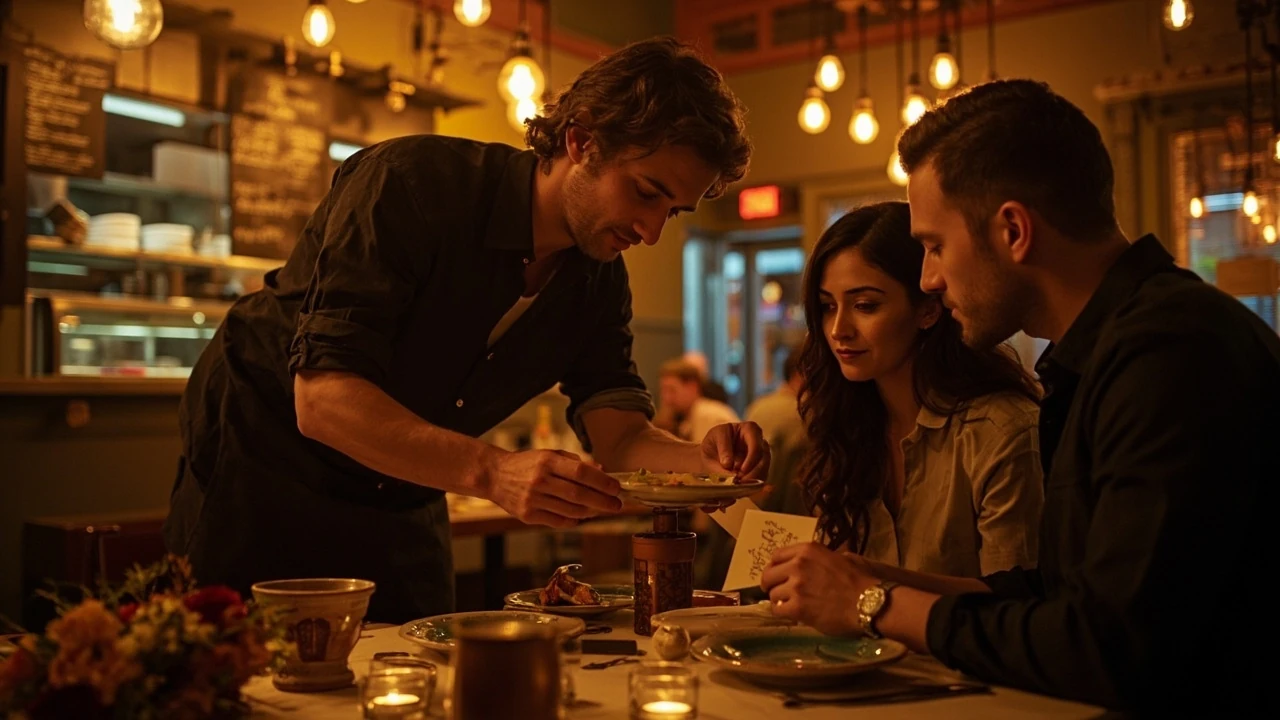
A first-time diner walks into a small neighborhood restaurant on a rainy Tuesday, mentions offhand that they used to live in Lisbon, and by the time the main course arrives the server has quietly slipped a single pastel de nata onto the table with a hand-written note. Nothing about that interaction was scripted, nothing was in the point-of-sale system, and the pastry cost the house less than two dollars. The guest posts about it that night, books a return visit for their birthday, and tells three friends. That is the kind of moment people mean when they use the phrase unreasonable hospitality, and it is the reason the term has moved from a single book title into everyday restaurant vocabulary.
The phrase has two layers. On the surface, it describes going further for a guest than a reasonable operator would be expected to. Underneath, it describes a management philosophy in which generosity, personalization, and small unexpected acts are treated as core operating decisions rather than as perks reserved for complaints or comped meals. The article below separates the marketing slogan from the operational reality, then shows how independent restaurant owners, front-of-house teams, and chefs can borrow the idea without destroying labor budgets, food cost, or their own sanity.
Where the term comes from and why it spread
The phrase “unreasonable hospitality” entered the wider food conversation through Will Guidara, the former co-owner of Eleven Madison Park in New York, whose 2022 book of the same name argued that restaurants should design every detail of a guest’s experience the way a great host designs a dinner party at home. The book spent months on industry bestseller lists, and the title itself became shorthand in podcasts, conference talks, and management meetings for a more generous, more deliberate approach to service.
For restaurant owners the appeal is obvious. Most operators already know that memorable service is the single most defensible advantage a small independent restaurant has against chains, delivery apps, and ghost kitchens. The phrase gives that instinct a name and a set of practices. For staff, it offers a frame for the kind of small creative gestures that experienced servers have always wanted to make but rarely felt authorized to perform. The risk, as with any idea that travels from a four-star tasting-menu restaurant to neighborhood cafes and food trucks, is that it gets confused with overspending, free food, and burnout. Used carefully, it is a service philosophy. Used carelessly, it becomes a labor cost no one can measure.
What unreasonable hospitality actually is in practice
At its core, unreasonable hospitality is the practice of treating every guest’s experience as something the team has the authority and the responsibility to improve on the spot, within limits the operator has already set. The “unreasonable” part is not about giving things away. It is about doing small, specific, attentive things that a strictly rule-bound service environment would consider out of scope, and doing them at a price the business can sustain.
Three habits define the practice in real restaurants:
- Reading the table in detail. Servers note who is celebrating what, who seems tired, who has dietary needs, who is on a first date, and who appears to be a regular even on a first visit. That information drives small next moves.
- Designing moments, not just meals. The team plans where surprise, generosity, or personalization can fit into a normal service without slowing the kitchen or the floor.
- Giving front-of-house staff real discretion. Servers and managers are trusted to make on-the-spot decisions up to a clear limit, such as a comped dessert, a handwritten note, a swap of tables, or a five-minute pause to listen to a problem.
The phrase works because it reframes service as a creative act. A server is no longer just following a script written by head office; they are a host with a budget. That reframe is what employees tend to remember, and it is the reason the idea has spread well beyond fine dining into coffee bars, bakeries, and casual neighborhood spots.
What unreasonable hospitality is not
Because the phrase is catchy, it is often misread as a license to comp everything, to be available 24 hours, or to treat hospitality as a substitute for operational discipline. None of those interpretations hold up in a real business. A clear-eyed read of the idea draws the following lines.
It is not free food for the sake of free food
Giving a dessert to every table does not create a memorable experience. It creates a line item. The gestures that travel through word of mouth are almost always specific to a guest, a moment, or a story, and they cost little in dollars but a great deal in attention.
It is not a substitute for training
Personalization at scale only works when a team knows the menu, the allergens, the reservation system, and the house style. Without that foundation, any attempt at unexpected hospitality collapses into inconsistency, and inconsistency is one of the fastest ways to lose guest trust.
It is not an excuse to ignore labor cost
If the only way to deliver the experience is to schedule one extra server on every shift, the model is not generous, it is expensive. The point of the philosophy is to use staff time and creativity more cleverly, not to add headcount until the labor budget breaks.
It is not the same as over-the-top luxury
Many of the strongest examples of the practice come from low- and mid-priced restaurants. A handwritten note, a remembered name, a chair pulled out for a parent with a stroller, or a server walking a guest to the door with an umbrella during a storm can land as strongly as any Krug poured tableside. The standard is attention, not price tag.
The economics behind the gestures
Operators often assume that better service means higher cost. In some cases that is true, but the core practice of unreasonable hospitality is usually designed to be either cost-neutral or revenue-positive over time. The economics work through three channels: retention, acquisition, and team performance.
Retention: the cheapest sale in the room
Replacing a lost regular is far more expensive than keeping one. Industry research on restaurant customer acquisition has repeatedly found that getting a new guest through the door and onto a return-visit path can cost many times more than the gross margin of a single visit from an existing regular. A regular who has experienced several small, personal moments is not just satisfied; they are emotionally invested. Their switching cost is higher, and they tend to order with more confidence, which raises average ticket size and lowers complaints.
Acquisition: guests who advertise for you
The acquisition value of a memorable experience is real, even if it does not show up cleanly in a marketing dashboard. A guest who posts a story, writes a review, or simply tells a friend is doing the kind of low-cost, high-trust marketing that paid ads struggle to match. The cost of that acquisition is the marginal food and labor of a single small gesture, often less than a few dollars per visit.
Team performance: lower turnover
Front-of-house turnover is one of the most expensive line items in any restaurant. A team that is given real discretion and a clear creative mandate tends to stay longer, perform better, and onboard new hires faster. Treating the role as a craft rather than a script changes who applies and who stays.
The table below sketches how a small gesture compares with common alternative investments a restaurant might make to grow guest loyalty. Numbers are illustrative ranges, not benchmarks, because every market and segment is different.
| Investment | Typical unit cost | Primary effect | Where it fits in the funnel |
|---|---|---|---|
| Handwritten note with the check | Less than 25 cents per table in materials and time | Emotional memory of the visit | Mid-visit, drives word of mouth and reviews |
| Personalized complimentary item tied to a guest detail | 1 to 4 dollars in food and labor | Conversation, social posting, return visit | Mid-visit, drives word of mouth |
| Birthday or anniversary note card and small dessert | 2 to 6 dollars per occasion | Celebration, group bookings | Across multiple visits, drives referrals |
| Targeted paid social ad to a lookalike audience | Often 8 to 30 dollars per acquired first-time guest | Awareness, first booking | Top of funnel, pre-visit |
| Third-party delivery app promotion or discount | 15 to 30 percent of order value in fees and discounts | Order volume, limited loyalty | Acquisition, mostly one-time |
A practical framework for small restaurants
The phrase is inspiring, but it needs a structure an independent operator can actually run on a Tuesday night with two servers and a line cook. The framework below compresses the idea into four repeatable steps that any size of restaurant can adopt without changing the menu or hiring new staff.
Step 1: Map the guest journey in detail
Write out, step by step, what a guest actually experiences from the first search result to the walk out the door. Look for the points where a small thoughtful gesture will be felt most strongly, and the points where the experience already has so much friction that no gesture will rescue it. Most restaurants discover that there are three to five high-leverage moments: arrival, ordering, a mid-meal pause, the check, and the departure. Investing attention in those moments produces a far bigger return than scattering gestures across the whole visit.
Step 2: Decide what the team is allowed to do without asking
The single biggest barrier to unreasonable hospitality is not training. It is the absence of clear authority. Servers hesitate because they do not know whether they are allowed to comp a dessert, move a guest to a different table, or send a small extra plate. Set a written limit for each role. A typical small-restaurant limit might be “any server may comp up to 8 dollars of food or drink per table per shift without manager approval.” The number matters less than the fact that it exists and is written down.
Step 3: Build a small library of repeatable gestures
The strongest programs have a short, written menu of gestures that any team member can reach for. They are not scripts, they are starting points. Examples include a handwritten birthday note, a remembered regular’s “usual” already poured on arrival, an allergy-safe swap offered without being asked, or a small plate of something seasonal sent out because the kitchen had a little extra. Pair each gesture with an estimated cost and a situation in which it fits. Over time, the library becomes the team’s shared language.
Step 4: Debrief and adjust every week
End each week with a ten-minute team huddle. Ask three questions: what did a guest mention that surprised us, what gesture landed well, and what was the cost? Keep a simple log, ideally in a shared note or a printed sheet. Within a month, the team will start to see which gestures return in reviews and which never get mentioned. The library is then refined, not abandoned.
Examples that translate the idea to everyday service
The phrase is easier to apply when the examples are concrete. The list below describes moments that real small and mid-sized restaurants have used, ordered roughly by cost and effort. None of them require a special event, a celebrity chef, or a marketing campaign.
- The greeting at the door uses the guest’s name when the reservation system allows it, and uses a friendly generic greeting when it does not, so the moment never feels forced.
- Allergen and dietary flags from the booking form are surfaced to the table with a quiet, specific offer rather than a flat “any allergies tonight.”
- When a guest says they are visiting from another city, the server notes the city and circles back once during the meal with one specific recommendation, such as a market, park, or museum within walking distance.
- The check is presented in a way that allows the team to add a small note card or a mints-and-thank-you moment without slowing the table turn.
- If a guest is celebrating quietly, the team notices without being told and offers to take a phone photo, a small extra candle, or a signed dessert plate.
- Regulars are recognized by a small detail the team has written down, such as a child’s nickname, a favorite corner table, or a previous order. Recognition, not a discount, is the gesture.
- When something goes wrong, the recovery is fast, specific, and personal. The team names what happened, fixes it, and follows up once to make sure the fix held. No vouchers for next time are required; the recovery itself is the gift.
How the practice changes a team
The most underappreciated effect of unreasonable hospitality is what it does to the people doing it. A team that is given real discretion and a clear creative mandate behaves differently on a shift. They listen more carefully, they read the room more attentively, and they speak up about small problems earlier because they know the answer will not be a lecture. Over time, the cumulative effect is a culture that the guests can feel even if they cannot name it.
The flip side is that managers have to do real work to support that culture. Discretion without coaching becomes inconsistency. A team that is told to be creative but is never shown what good looks like will drift toward either shyness or showboating. The habits below help keep the practice honest.
- Hold a short, recurring training touch. Fifteen minutes before service, walking through one gesture, one recent example, and one limit, will keep the philosophy alive without burning out the team.
- Reward the right behavior in public. When a server makes a small call that lands well, mention it in the next pre-shift meeting. The team learns what to repeat far faster from peer examples than from a manual.
- Track outcomes, not just gestures. A simple log of what was comped, what was sent out, and what the guest response was will quickly show whether the program is creating memory or just creating cost.
- Protect the team’s bandwidth. If a shift is already at the edge, the right answer is to do less but better, not to add one more thing. Unreasonable hospitality is a quality of attention, not a quantity of gestures.
Limits, risks, and what to watch for
Like any management idea, unreasonable hospitality can be implemented in ways that hurt a business. Honest operators should keep an eye on the risks below before rolling the philosophy out across the team.
Gift inflation
If every table gets something extra, the gesture stops being a gesture and becomes a discount. Train the team to aim for one specific, personal touch per visit rather than a constant stream of small free things. The compounding value of restraint is part of the practice.
Inconsistency between servers
A guest who gets a handwritten note from one server and a rushed goodbye from another will remember the gap. Use the weekly debrief to surface these mismatches and to coach the team toward a shared standard. Consistency across shifts matters more than the brilliance of any single moment.
Burnout
Service is emotional labor. Asking a team to be creative, attentive, and generous on every shift, every table, for six nights a week, is a path to exhaustion. Build in real breaks, rotate high-energy stations, and protect days off. The philosophy depends on a team that is rested enough to be present.
Cost creep
Track the total value of gestures given each week, even roughly, and compare it with the impact on tips, reviews, and repeat visits. If the numbers drift apart, the program is drifting away from its purpose. Pull the limit back, retrain, and try again.
Cultural fit
Not every market, concept, or guest segment responds to the same level of personal attention. A late-night bar, a quick-service counter, and a tasting-menu restaurant will express the practice differently. Use the same framework, but tune the gestures to the concept you actually run.
How unreasonable hospitality fits with other restaurant priorities
It is worth saying plainly that unreasonable hospitality is one tool among many, and it works best when it sits on top of solid fundamentals. The table below compares the practice with three adjacent priorities an operator is usually balancing at the same time.
| Priority | Core question it answers | Where it overlaps with unreasonable hospitality | Where it diverges |
|---|---|---|---|
| Service standards | Are we doing the basics correctly and consistently? | Both rely on trained, attentive staff. | Standards describe a floor; unreasonable hospitality describes what happens above the floor. |
| Menu engineering | Are we designing a menu that sells the right dishes at the right margin? | Both use guest behavior as a design input. | Menu engineering optimizes the offer; the hospitality practice optimizes the moment around the offer. |
| Restaurant branding | What do guests think of us before, during, and after the visit? | Both shape memory and word of mouth. | Branding is set by the operator; unreasonable hospitality is created live by the team. |
| Paid marketing | How do we reach new guests efficiently? | Both can drive acquisition. | Marketing runs outside the four walls; unreasonable hospitality runs inside them and is amplified by guests. |
The point of the comparison is not to rank these priorities but to show that unreasonable hospitality is a multiplier on the work an operator is already doing. A strong brand, a well-engineered menu, and clean service standards all give the team more room to be personal because the basics are not in the way. For owners building that foundation, the restaurant branding article on this site and the menu engineering guide are good companion reads.
A short rollout plan for the next 30 days
For an operator who wants to test the idea without overcommitting, the rollout below is enough to see whether the philosophy fits the team and the concept. It assumes a single independent restaurant with a small front-of-house team and a stable menu.
- Week 1: map the guest journey, pick three high-leverage moments, and write a one-page description of each moment in plain language.
- Week 2: set a written discretion limit for servers and a written menu of five to seven repeatable gestures, each with an estimated cost and a fitting situation.
- Week 3: run a short pre-shift training, debrief once at the end of the week, and adjust the gestures based on what the team saw in the room.
- Week 4: review the numbers, the reviews, and the team’s energy. Decide which gestures to keep, which to retire, and what to add for the next month.
At the end of the month, the operator will have a small, evidence-based library of gestures, a clear set of limits, and a team that has practiced the practice together. That is the realistic version of unreasonable hospitality, and it is the one that tends to last.
What the phrase is really pointing at
Step back from the operational details and the phrase starts to point at a deeper idea about what a restaurant is for. A restaurant is not only a place that sells food. It is a place that hosts people, and hosting well is a craft. The unreasonable part of unreasonable hospitality is the willingness to spend attention, imagination, and a small amount of money on that craft, even when a more cautious operator would not. For the diners who feel it, the gesture is rarely the pastry or the note card. It is the evidence that someone in the room actually thought about them for a moment. That feeling is what the phrase is reaching for, and it is also the part that does not show up on the profit and loss statement, which is why it has to be a deliberate choice rather than a side effect.
For independent owners, that choice is one of the few advantages a small business can still have over a large one. A chain can buy advertising, can centralize training, and can squeeze supplier costs. A small restaurant can decide, on a Tuesday night, to make a guest’s evening a little better than it had to be, and to be remembered for it. The economics of that decision are sound, the labor cost is real but manageable, and the cultural effect on the team is the kind of thing that keeps good people in a tough industry. That is the whole point of the phrase, and the reason it has stuck.
Frequently asked questions
What does unreasonable hospitality mean in a restaurant?
It means going further for a guest than a strictly rule-bound service environment would consider reasonable, in a way that is small, specific, and personal rather than expensive or scripted. The point is the quality of attention, not the size of the gesture.
Who coined the term unreasonable hospitality?
The phrase became widely known through Will Guidara’s 2022 book of the same name, which grew out of his work co-running Eleven Madison Park. The ideas draw on a long tradition of restaurant service and hostmanship, but the title itself is from that book.
Is unreasonable hospitality only for fine dining?
No. The practice is most often associated with high-end restaurants, but the underlying habits, such as reading the table, designing small moments, and giving staff real discretion, work just as well in casual concepts, bakeries, coffee bars, and food trucks, and often land more strongly because the gestures stand out against a simpler operation.
How much should a restaurant budget for gestures?
There is no universal figure, because the right number depends on the concept, the segment, and the average check. A useful starting point for many independent restaurants is to set a per-table cap that the team can act on without approval, often somewhere between 5 and 10 dollars, and to track the total monthly cost against changes in repeat visits and reviews.
How do you avoid comping too much?
Set a clear written limit, train the team on it, and review the numbers weekly. A gesture works because it is specific and personal, not because it is large or frequent. A small handwritten note almost always lands better than a routine comped dessert.
What is the difference between service standards and unreasonable hospitality?
Service standards describe the floor of the experience: how the basics are done and how consistently. Unreasonable hospitality describes what the team does above the floor, using judgment, attention, and creativity to make a particular visit feel personal. The two are complementary rather than alternatives.
How do you train a team to be more personal without losing consistency?
Start with a short, written library of gestures, set clear limits for discretion, and debrief weekly on what landed. Use peer examples in pre-shift meetings to spread the habits that work. Consistency comes from a shared language, not from a fixed script.
Can unreasonable hospitality work in a high-volume, quick-service setting?
Yes, though the gestures look different. In a quick-service context, the practice is more about speed, accuracy, eye contact, and small personal touches such as remembering a regular’s name or order, than about comped items. The principle is the same: pay attention to the specific person in front of you, within limits the business has set.
How do you measure whether unreasonable hospitality is working?
Watch a small set of signals: repeat-visit rate, online review language, average tip percentage, and what guests mention unprompted in conversation. Track the rough cost of gestures in the same period. If memory and return visits are rising faster than cost, the program is paying for itself.
Where should an owner start if the idea feels overwhelming?
Pick one moment in the guest journey, such as arrival or the check, design one or two specific gestures for that moment, and let the team run them for a month. A focused, well-executed first step will teach the operator and the team more about what works than a broad, unfocused rollout will.