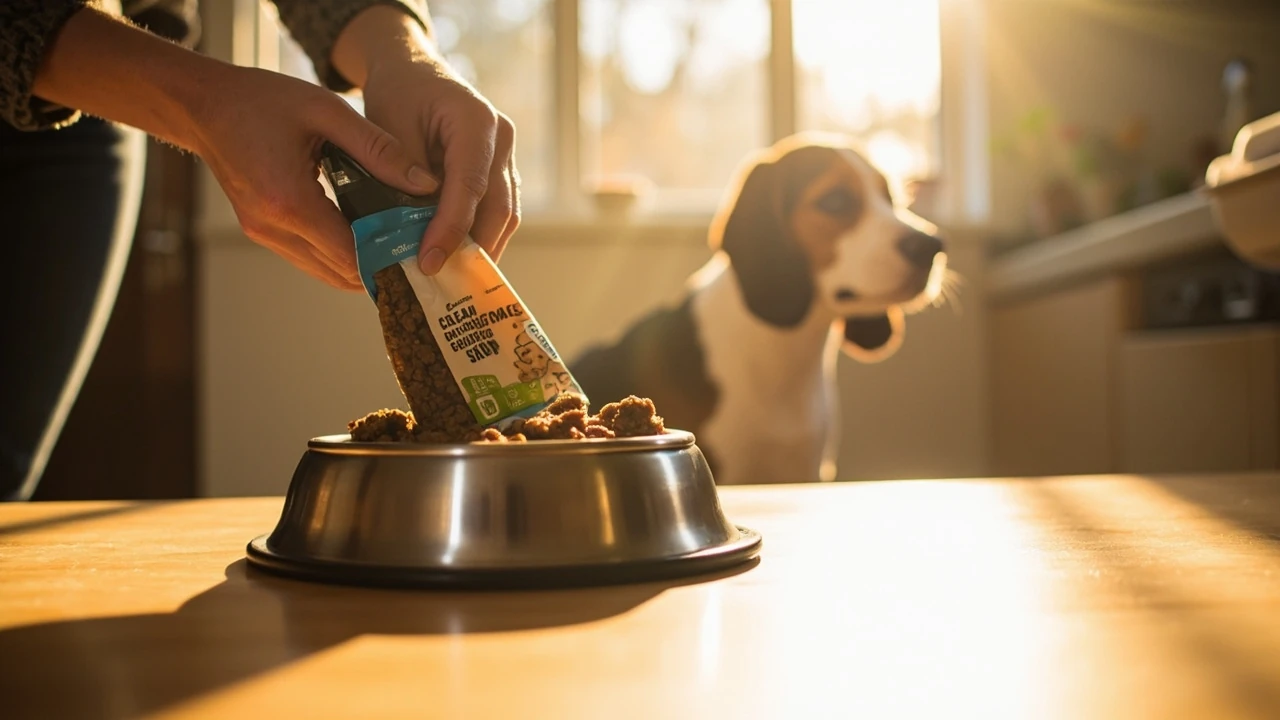
A dog owner stands in the kitchen, opens a flat refrigerated box, and scoops a soft, brown mixture into a bowl. The dog appears within seconds. For a growing number of households, that routine now starts with The Farmer’s Dog, a direct-to-home fresh dog food service that ships pre-portioned meals based on a dog’s profile. Before switching a dog to a fresh plan like this, most owners want the same practical information a careful shopper would want for any other food decision: how it works, what it actually contains, what it costs over time, who it is best suited for, and what trade-offs come with the format.
This guide focuses on Farmer’s Dog food as a category of fresh, human-grade dog food delivered to the home. It is written for owners who are evaluating the brand, comparing it to kibble or other fresh options, and trying to decide whether the format fits their dog’s needs and their own routine. The aim is to give a clear, decision-focused overview rather than a sales pitch.
What The Farmer’s Dog food actually is
The Farmer’s Dog is a subscription dog food brand that sells fresh, refrigerated meals formulated for individual dogs. Each delivery contains pre-portioned packs labeled for a specific dog, and each pack is sized to that dog’s calorie target. The meals are made from human-grade ingredients and are gently cooked before being sealed and shipped cold.
Rather than offering a one-size-fits-all recipe, the brand builds a feeding plan around information supplied by the owner. The owner enters the dog’s age, breed, weight, body condition, and activity level, and the company calculates how many calories the dog needs per day. That calorie number is then divided into the recommended number of packs per day.
The food itself is not a single product. The brand cycles through a small set of recipes, typically including beef, chicken, turkey, and pork, each built around a named protein, a named carbohydrate source, and a small list of vegetables. The recipes are designed by veterinary nutritionists and are formulated to meet the AAFCO nutrient profiles for the life stage indicated on the plan.
How the personalized plan works
The order process is structured around a profile, not a shopping cart. New customers enter a short set of details, and the system proposes a daily portion and a plan length. The first order is usually a two-week trial, sized so an owner can observe appetite, stool quality, and weight before committing to a longer subscription.
Three practical elements shape how the plan runs day to day:
- Portion control. Each pack is pre-measured to the dog’s calorie target, which removes the guesswork of scooping kibble. Overfeeding becomes a matter of ignoring the labeled pack size, which is easier to notice than an overfilled cup.
- Daily handling. The food is soft, lightly cooked, and stored in the refrigerator. Owners scoop, serve, and put the rest back. There is no scooping from a large bag, no measuring, and no leftover dry crumbs in the bowl.
- Subscription rhythm. Deliveries arrive on a recurring schedule, usually every two to four weeks, in an insulated box with food-safe cold packs. Owners can skip, pause, or adjust the plan as the dog’s weight or activity changes.
That combination is the core experience of Farmer’s Dog food. The brand is selling a routine, not a bag, and most of the satisfaction or frustration with the product comes from how that routine fits into a household.
What’s actually in the recipes
Recipes are short, named, and built on a small number of whole-food ingredients. While formulations can shift, the structure of a typical recipe is consistent: a single named animal protein, a single named starch, a small handful of vegetables, and a vitamin and mineral premix. The ingredients are listed in plain language rather than as a long technical block.
For a sense of what the format looks like in practice, here is how a typical recipe is structured:
| Recipe element | Typical role | Why it is included |
|---|---|---|
| Named animal protein | Primary calorie and amino acid source | Supplies the essential amino acids a dog cannot synthesize in adequate amounts |
| Named starch | Carbohydrate and fiber source | Provides energy, supports stool quality, and carries vitamins |
| Vegetables | Micronutrients and natural fiber | Contribute vitamins, minerals, and antioxidants in their whole-food form |
| Vitamin and mineral premix | Balanced micronutrient layer | Brings the recipe up to AAFCO complete and balanced levels for the life stage |
| Oil or fish oil | Fatty acids | Provides omega-3 and omega-6 fatty acids for skin, coat, and inflammation regulation |
That structure matters because it answers a common owner question: where do the vitamins and minerals come from. In a fresh formulation, the answer is usually a mix of whole foods and a measured premix, not a single synthetic kibble coating.
For context on the broader category of fresh and human-grade pet food, the Wikipedia overview of pet food is a useful starting point. It explains how complete-and-balanced pet foods are regulated and why the same nutritional goal can be reached through very different ingredient formats.
Who the format tends to suit well
Fresh, portion-controlled food is not the right answer for every dog or every household. The format tends to work especially well in a few common situations, and it tends to cause friction in others. Recognizing the fit early saves both money and a difficult transition.
The plan tends to be a strong fit when:
- The dog is healthy, lives indoors, and has a stable weight that the owner wants to maintain rather than lose or gain.
- The owner is comfortable with a refrigerated product and has the counter or fridge space to store a multi-pack box.
- The household has a predictable routine so that the food can be scooped twice a day and the empty packs thrown away.
- The owner wants portion control handed to them, rather than reading a kibble bag chart and guessing at scoops.
- There is a real reason to avoid ultra-processed dry food, such as a sensitive stomach, low appetite for kibble, or a coat that has dulled on dry diets.
The plan tends to be a weaker fit when:
- The dog grazes through the day rather than eating at set meals, because wet food left out spoils quickly.
- The household travels often and cannot guarantee refrigerator space at the destination.
- Multiple dogs share a bowl or a household feeds a mix of fresh and other foods without clear calorie math.
- The owner is on a very tight food budget, because fresh refrigerated food is meaningfully more expensive per calorie than mass-market kibble.
Fit is the single biggest predictor of whether a fresh plan will be a long-term part of a household’s routine, which is why it is worth thinking through honestly before the first order ships.
How the food compares to other formats
Owners evaluating Farmer’s Dog food usually compare it to three other formats: traditional kibble, gently cooked fresh food from local or regional kitchens, and raw diets. The comparison comes down to a handful of practical axes, not to a single right answer.
| Factor | Farmer’s Dog fresh plan | Standard kibble | Other fresh or gently cooked | Raw diet |
|---|---|---|---|---|
| Shelf life in the home | Days in the fridge, weeks frozen | Months at room temperature | Days in the fridge, weeks frozen | Days in the fridge or freezer |
| Portion control | Pre-portioned packs | Manual scooping from a bag | Usually pre-portioned | Usually weighed by the owner |
| Ingredient format | Whole-food, lightly cooked | Extruded and coated | Whole-food, lightly cooked | Uncooked animal products |
| Storage effort | Fridge space, insulated shipping | Pantry storage | Fridge or freezer space | Freezer space, careful thawing |
| Typical cost per day | Higher than kibble, often similar to other fresh | Lowest per calorie | Often similar to Farmer’s Dog | Variable, often similar to other fresh |
| Travel convenience | Lower, needs cold chain | Highest | Lower, needs cold chain | Lower, needs freezer or cooler |
Two takeaways stand out. First, fresh food formats are roughly similar to each other on the axes that matter most, so the decision between them usually comes down to brand trust, recipe variety, and customer experience rather than to nutrition. Second, the meaningful contrast is between fresh formats and kibble, where the trade-off is convenience and cost against ingredient format and portion control.
For owners who also run food businesses or restaurants, the comparison logic mirrors what they already know from menu engineering work: the highest-margin items are not always the ones that fit the customer, and the best format depends on the routine the customer already has.
What it typically costs to feed a dog this way
Fresh, human-grade dog food delivered to the home costs more per calorie than mass-market kibble. The exact number depends on the dog’s size, the recipes chosen, and any promotional pricing on the first order, but the structure of the cost is consistent.
Two cost dynamics are worth understanding before the first order:
- Cost scales with the dog, not the household. A 25-pound dog on a personalized plan will cost a fraction of what a 90-pound dog costs, because the daily calorie target is set by the dog’s profile. Owners with very large dogs should expect the bill to be visibly higher than for a small breed.
- Promotional pricing is common at sign-up. First-order discounts and trial pricing can make the first few weeks look meaningfully cheaper than steady-state. The honest cost comparison should use the regular plan price, not the introductory offer.
A reasonable way to evaluate cost is to divide the regular plan total by the number of days it covers, then compare that daily figure to the per-day cost of a quality kibble. That daily number is what an owner is actually committing to, and it is the figure that matters when comparing the format to alternatives.
How to evaluate a transition for a specific dog
Switching a dog from one food to another is a small project, and a fresh plan is no exception. The same evaluation logic that works for any diet change applies here, with a few adjustments for the fresh format.
Most owners can run a structured four-week check, focusing on the indicators that actually matter:
- Week 1: appetite and stool. Note how eagerly the dog eats at each meal, how long the meal lasts, and how stool looks over the first seven days. Loose stool or persistent refusal in this window is a signal to slow the transition.
- Week 2: energy and coat. By the second week, energy levels during walks and play are usually stable. Coat shine and itchiness often take longer to change, so use this week as a baseline rather than a verdict.
- Week 3: weight and body condition. Weigh the dog or have a vet weigh the dog, and compare to the starting weight. Adjust the plan up or down if the dog is trending the wrong way. The brand can usually adjust the portion on request.
- Week 4: long-term fit. By the end of a month, the household’s routine around the food should feel either normal or strained. If storing the packs, remembering the delivery, and scooping the meals all feel like second nature, the plan is likely to stick.
If any of those indicators move in the wrong direction, it is reasonable to pause the subscription, consult a vet, and revisit the plan rather than pushing through a problem. Fresh food formats are not a medical treatment, and they should not be defended against a real signal that the dog is not thriving on them.
Safety, handling, and storage basics
Fresh, refrigerated dog food follows the same food-safety logic as any other cooked protein in the home. The two habits that matter most are keeping the food cold between scoops and not leaving it in the bowl for long stretches.
Three storage rules cover most situations:
- Keep unopened packs in the refrigerator until the use-by date on the label. The packs are sealed in a way that preserves them at fridge temperature for the labeled window.
- Once a pack is opened, use it within the timeframe stated on the packaging, usually a few days. Cover the pack, return it to the fridge promptly, and do not leave it on the counter.
- For longer storage, freeze the packs and thaw them in the refrigerator rather than on the counter. Thawing at fridge temperature keeps the food in a safe range throughout.
For an evidence-based overview of safe handling practices for cooked protein at home, the United States Department of Agriculture’s safe food handling guidance is a useful reference, because the principles that protect a household from foodborne illness also protect a dog.
Common questions owners ask before subscribing
Most first-time buyers arrive with the same handful of practical questions. Answering them up front tends to remove most of the hesitation.
Is The Farmer’s Dog food actually complete and balanced?
The recipes are formulated to meet the AAFCO nutrient profiles for the life stage indicated on the plan, and the brand works with veterinary nutritionists. That means the food is intended to be the dog’s primary diet, not a topper. Owners who want a second opinion can ask their vet to review the guaranteed analysis and ingredient list on the packaging.
Can the food be mixed with kibble or other diets?
Many households mix fresh food with kibble, especially during a transition. The practical concern is calorie math: if kibble is added on top of the fresh plan, the total calories can exceed the dog’s target. A common approach is to replace a portion of the kibble with the fresh food, then adjust the kibble scoop down so the daily total stays consistent.
How long does a delivery stay fresh?
Unopened packs are labeled with a use-by date that assumes the food is kept refrigerated. Once opened, the use window shortens to a few days. Households that prefer to plan ahead often freeze a portion of each delivery and thaw packs as needed.
What if the dog refuses the food or has a sensitive stomach?
A short transition over a week or two, mixing the new food with the old, usually helps. If refusal or digestive upset continues beyond that, the plan can usually be adjusted, the recipe can be changed, or the subscription can be paused while the owner consults a vet.
Is this a good choice for puppies, seniors, or dogs with health conditions?
For healthy puppies and adults, the standard plan is designed to cover the life stage indicated in the profile. Senior dogs and dogs with specific health conditions need a vet’s input, because calorie needs, protein tolerance, and certain mineral restrictions can change with age and illness. The brand’s plan is a starting point, not a substitute for veterinary guidance.
How does the brand handle allergies or food sensitivities?
Recipes are built around a small number of named proteins and starches, and the brand offers rotation between recipes. Owners with a known allergy should review the ingredient list on the specific recipe rather than relying on the brand name alone, and should work with their vet on any elimination diet.
What happens if a delivery is delayed or arrives warm?
Shipments are packed with food-safe cold packs and insulation. If a box arrives warm or with damaged seals, the brand’s customer service typically replaces the affected packs rather than asking the owner to feed food that may have broken the cold chain. The practical step is to check the box and the pack temperature as soon as it arrives.
Can the subscription be paused or canceled?
The subscription model is designed to be flexible, with options to skip a delivery, change the plan size, or cancel. Owners who travel often or whose dog’s needs change seasonally can adjust the cadence without restarting the plan from scratch.
A short checklist before the first order
Before committing to a multi-week subscription, a short checklist helps separate a good fit from a hopeful guess. The aim is to make the decision before the first box arrives, not after.
- The dog’s weight and body condition are current, and the profile reflects them accurately.
- There is fridge space for a multi-pack delivery, and a plan for using or freezing the food before the use-by date.
- The household’s daily routine can absorb two scoops and a clean bowl without becoming a chore.
- The budget can carry the regular plan price, not just the introductory offer.
- The vet is aware of the switch, particularly for dogs with a health history.
If those five conditions are in place, the format is very likely to work as advertised. If one of them is shaky, it is worth fixing that condition first rather than blaming the food later.
How this decision fits the broader food business mindset
For owners who also run food businesses, the decision to buy Farmer’s Dog food is a useful mirror of decisions they make every day on the other side of the counter. The customer is buying a routine, a level of trust, and a portion-controlled experience, not just a recipe. The same logic that drives food photography that actually sells the dish drives the way a fresh dog food brand has to present its product: the photograph, the packaging, and the routine all have to earn the price.
That parallel is worth holding in mind. The owners most likely to be happy with a fresh plan are the ones who treat it as a small, well-engineered system rather than as a bag of food with a different label.
Frequently asked questions
What is The Farmer’s Dog food made from?
Recipes are built from named animal proteins, a single named starch, a small set of vegetables, and a vitamin and mineral premix. The brand describes the ingredients as human-grade and lightly cooked, and the recipes are formulated to meet AAFCO complete-and-balanced standards for the indicated life stage.
Is The Farmer’s Dog food better than kibble?
“Better” depends on what is being optimized. Fresh, portion-controlled plans tend to do well on ingredient format, palatability, and portion precision. Kibble tends to do well on cost, shelf life, and travel convenience. The right answer is the format that fits the dog’s needs and the household’s routine, not a single ranking.
How much does The Farmer’s Dog food cost per day?
Daily cost varies with the dog’s size, the recipes chosen, and any promotional pricing. The honest comparison is the regular plan price divided by the number of days it covers, then set against the daily cost of a quality kibble for the same dog.
Can puppies eat The Farmer’s Dog food?
Yes, for healthy puppies the plan can be set to a growth life stage. Owners of large-breed puppies, in particular, should confirm portion size with a vet, because large-breed growth is sensitive to both calorie excess and mineral balance.
Do I need a vet’s approval to switch my dog?
For a healthy adult dog, no formal approval is required, but a quick conversation with the vet is a sensible step. For dogs with kidney disease, pancreatitis, food allergies, or other chronic conditions, a vet’s guidance should drive the decision, because the right nutrient profile depends on the condition.
How is the food shipped and stored?
Boxes ship with food-safe cold packs and insulation, and the food should move into the refrigerator as soon as it arrives. Unopened packs keep until the use-by date. Once opened, packs should be covered, refrigerated, and used within the window on the label.
Can the food be frozen?
Yes. Freezing extends the usable life of unopened packs, and thawing in the refrigerator is the safe default. Avoid thawing on the counter, which can move the food through a temperature range that supports bacterial growth.
What if my dog has a sensitive stomach?
A gradual transition over a week or two is usually enough to settle a sensitive stomach. If symptoms persist beyond that window, the owner should pause the plan and consult a vet, because ongoing digestive upset is a signal that the diet is not the right fit for that dog.
Is the food suitable for dogs with grain sensitivities?
Recipes use a small number of named starches, and the brand’s product page lists each recipe’s ingredients. Owners managing a confirmed grain sensitivity should review the specific recipe rather than relying on the category description, and work with a vet on any elimination diet.
How do I cancel or pause the subscription?
The subscription is designed to be flexible, with options to skip a delivery, change the plan size, or cancel entirely. Owners who need to pause for a trip or a health event can usually do so without restarting the plan from the beginning.