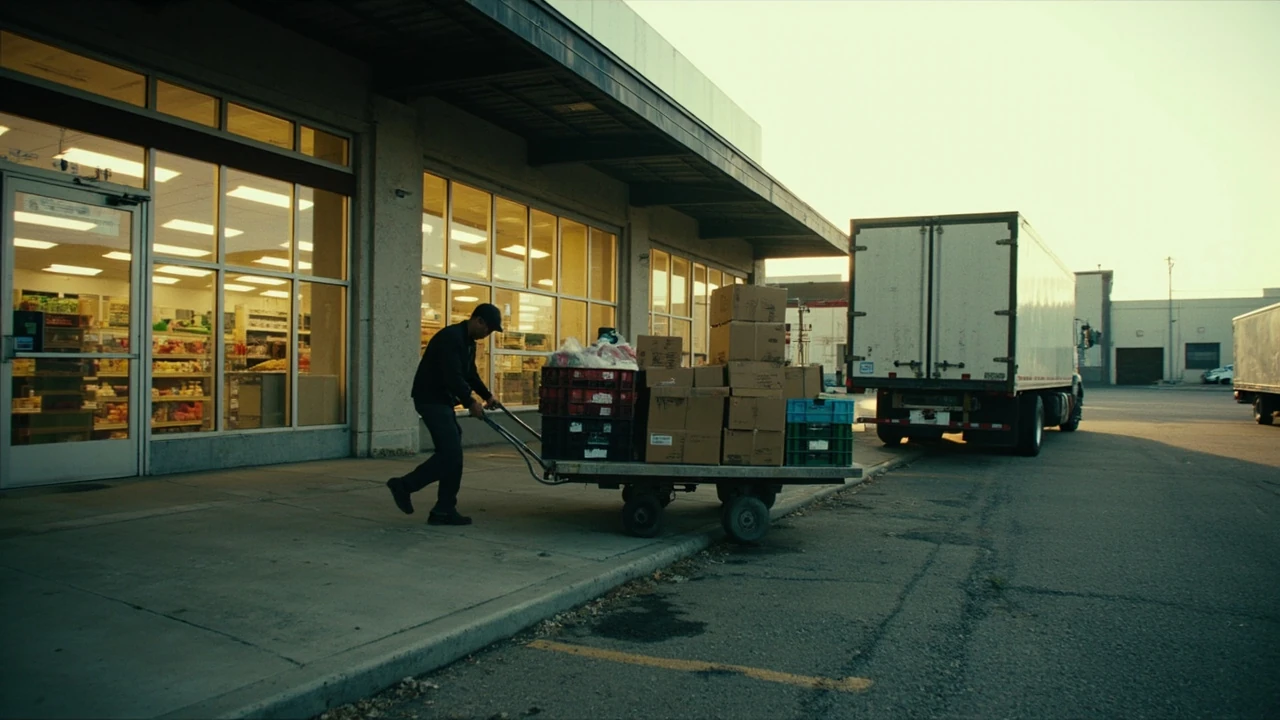
A line cook burns through a case of Roma tomatoes by 2 p.m., a hospital cafeteria needs backup entrées for a snow day, and a catering company realizes it is short on chafing fuel before a Saturday event. Those are the moments when a broadline distributor earns its place on an operator’s speed dial, and Gordon Food Service is one of the names that comes up in those calls. For owners, chefs, and purchasing managers who are weighing whether the distributor fits their operation, the question is not whether the company is large enough. The real question is what the relationship actually delivers day to day: catalog depth, ordering tools, price discipline, store experience, and the small details that decide whether a delivery saves a shift or breaks one.
This guide is a practical look at Gordon Food Service for foodservice operators. It covers what the distributor is, what it sells, how ordering and store pickup work, where the service tends to fit best, and what to compare before signing on. It is written for the operator who has read the marketing page and wants a more honest read on what to expect, including the limits and trade-offs that broadline distribution always involves.
Gordon Food Service at a glance for foodservice operators
Gordon Food Service is a family-led broadline foodservice distributor headquartered in Wyoming, Michigan, and one of the larger privately held distributors in North America. It supplies restaurants, healthcare and education kitchens, caterers, country clubs, convenience stores, and other away-from-home food operations across much of the United States and parts of Canada. The company sells through a combination of route delivery, a commercial store network, and an online ordering platform, which gives operators more than one way to source product.
The key thing to understand is that the company is a broadline distributor, not a cash-and-carry grocery chain. The catalog, pack sizes, pricing logic, payment terms, and minimum orders are built around businesses that buy in cases, splits, and totes rather than individual shoppers who want a pound of deli meat and a single lime. That structure shapes everything from the shopping experience to the way pricing compares with a restaurant supply store or a local produce house.
For operators, the practical value of Gordon Food Service is less about brand recognition and more about whether the catalog, service area, and ordering tools line up with the operation. The next sections walk through what the distributor actually offers, how each channel works, and the trade-offs to weigh before opening an account.
What Gordon Food Service actually sells
The catalog is built around the categories that a working kitchen touches every week. Operators typically interact with five or six product families, and each one has its own sourcing logic, pack sizes, and price points. Understanding the structure helps an operator decide what to buy through the distributor and what to keep sourcing elsewhere.
| Category | What an operator buys here | Typical pack form | Where it tends to make sense |
|---|---|---|---|
| Produce | Fresh fruit, vegetables, herbs, salad greens | Cases, single units, bulk crates | High-volume kitchens that need predictable daily delivery |
| Meat and seafood | Center-of-plate proteins, portioned cuts, frozen seafood | Case-ready, vacuum-sealed, IQF | Operations with enough volume to take case quantities |
| Dairy and eggs | Milk, cream, butter, cheese, shell eggs, egg products | Gallons, flats, 5 lb blocks, cases | Any operation; shelf life is the main planning constraint |
| Frozen | Vegetables, appetizers, desserts, fully prepared entrées | Cases, totes, single-serve packs | Kitchens that balance scratch cooking with speed |
| Dry, canned, and beverage | Pantry staples, oils, flour, sugar, sauces, bottled drinks, coffee | Cases, bulk packs, single units | Long shelf life items that benefit from route consolidation |
| Disposables and equipment | Take-out containers, napkins, gloves, smallwares, cleaning | Cases, sleeves, single units | Convenience for operators who want fewer vendors |
A few practical notes on the catalog:
- Case sizes are designed for commercial kitchens. A small café may not be able to move a 25 pound bag of flour before it loses quality, which is worth checking before committing to broadline delivery for dry goods.
- Brand depth varies by category. The center-store categories (oils, canned goods, condiments) tend to carry a wide range of national and distributor-brand SKUs, while specialty categories like artisan cheese or heirloom produce may be thinner than a dedicated purveyor.
- Private label and exclusive lines exist. Operators who want a specific national brand should confirm it is in the catalog before opening an account, especially for items with regional distribution rights.
How ordering works across delivery, store pickup, and online
Operators usually have three ways to source product from Gordon Food Service: route delivery, walk-in commercial stores, and the online ordering platform. Each channel serves a different rhythm inside a kitchen, and most operators use more than one.
Route delivery for case goods and scheduled staples
Route delivery is the backbone of broadline distribution. A driver follows a set schedule and brings pallets or totes of case goods to the back door. The cadence is usually weekly, sometimes twice a week for high-volume accounts, and the order is built in advance through a sales representative or the online platform. This channel is built for the predictable part of an operator’s inventory: proteins for the week, dairy that turns over quickly, dry pantry items, frozen, and disposables. For an operator thinking about menu pricing strategies that protect margin without losing guests, route delivery is where case economics start to matter, because the price per pound, ounce, or unit on a delivered case is what flows into plate cost.
Commercial store pickup for same-day needs
The Gordon Food Service Store network is the part of the business that surprises first-time visitors, because it functions like a cash-and-carry warehouse for licensed foodservice operators. Operators can walk in, shop the aisles, and take product back to the kitchen the same day. This is the channel that handles the surprise 4 p.m. emergency: a broken bag of rice, a missing garnish, an unexpected banquet shortfall. The pricing structure is different from route delivery, and operators quickly learn to read the store as a problem-solver rather than a primary supply line.
Online ordering for routine replenishment
The online platform lets operators build orders, save standing lists, track purchase history, and route invoices to accounting. It is most useful for the predictable part of the order: the dry goods that get reordered on the same cadence every week, the disposables that need to stay ahead of par, and the specialty items the operator wants to standardize across locations. The platform also exposes current pricing and promotions, which matters for operators who want to compare delivered cost against an alternate vendor before approving the order.
| Channel | Best for | Lead time | Pricing structure |
|---|---|---|---|
| Route delivery | Scheduled case goods, proteins, dairy, dry, frozen, disposables | Set weekly or twice-weekly cadence | Contract or list pricing, often tied to commitment |
| Store pickup | Same-day emergency replenishment, fresh produce, last-mile items | Walk in and shop | Store pricing, often higher than route on staples but useful for short-term needs |
| Online ordering | Standing orders, invoice tracking, multi-location consolidation | Same as the selected delivery or pickup option | Reflects the chosen channel; useful for price checks and substitutions |
Account requirements, payment terms, and minimums
Opening an account with a broadline distributor is not the same as opening a credit card at a grocery store. Operators should expect a vetting process and a few structural commitments that affect how the relationship works day to day.
Who can open an account
Foodservice accounts are limited to licensed businesses and organizations. That typically includes restaurants, caterers, schools, hospitals, nursing facilities, country clubs, churches, government kitchens, and similar operations. The application usually requires a business license, a tax ID or resale certificate, and a foodservice license where the state requires one. Operators who run a home-based or unlicensed business will not qualify, which is a common source of confusion for new food entrepreneurs.
Minimum orders and delivery fees
Broadline distributors set minimum order thresholds that vary by market and by product mix. Falling below the minimum usually triggers a small-order fee or moves the order to the next available delivery window. Operators should ask about the minimum in their specific market, because the published number on a national page may not match what the local branch enforces. Delivery fees, fuel surcharges, and special-handling fees are common and worth itemizing before the first invoice lands.
Payment terms and credit
Most accounts run on net payment terms, often net 15 or net 30, with credit limits that scale with order history. Operators who pay by electronic funds transfer or via the online platform usually get cleaner records and faster issue resolution. Cash-on-delivery is available for some smaller accounts but tends to be the exception. Operators who want to think about whether delivered pricing is actually competitive should keep menu engineering without killing the soul of the menu in mind, because plate cost depends on the real delivered price, not the printed case price.
Where Gordon Food Service tends to fit best
Not every operation is a natural fit for a broadline distributor of this size. The service tends to be a strong match for a few specific operator profiles, and a weaker match for others. The honest read is more useful than a generic recommendation.
Strong fits
- Mid-volume independent restaurants that buy cases of proteins, dairy, and produce on a weekly rhythm and want a single back door to manage.
- Healthcare, education, and corporate dining operations with multiple locations that benefit from a national footprint, standardized catalogs, and consolidated billing.
- Caterers and banquet halls that need both scheduled delivery and same-day store access to handle event overruns.
- Country clubs and resorts that already run a wide SKU base and can absorb case quantities of specialty items.
Weaker fits
- Single-location cafés or food trucks with very tight case turnover, where minimum orders and case pack sizes create waste.
- Highly specialized operators, such as sushi counters or fine-dining tasting menus, who rely on purveyors for specific proteins or produce that broadline catalogs do not carry at the right grade.
- Operators who already have strong direct relationships with local farms, bakeries, or butcher shops and prefer to keep those supply lines intact.
For operators in the weaker-fit category, the answer is rarely all-or-nothing. Many kitchens use Gordon Food Service for staples and disposables while keeping specialty purveyors for the items that define the menu. That kind of split sourcing is normal and does not reflect a failure of the distributor; it reflects the reality of how kitchen supply works.
Comparing Gordon Food Service to other broadline and supply options
Most operators do not choose a distributor in isolation. They compare it against regional broadliners, restaurant supply stores, local produce houses, and direct relationships with farms and manufacturers. The right comparison depends on what the operator actually buys and how the kitchen is built.
| Option | Strength | Weakness | When it makes sense |
|---|---|---|---|
| Gordon Food Service | Broad catalog, store network, national footprint, online tools | Case pack sizes, minimum orders, less specialty depth | Mixed-volume operators who want one vendor for most staples |
| Regional broadline competitor | Often stronger local service and regional specialty items | Smaller footprint, fewer tools, less consistent across markets | Operators who prioritize a personal rep over national reach |
| Cash-and-carry restaurant supply | Walk-in convenience, no minimums, immediate pickup | Higher per-unit pricing, less credit, smaller catalogs | Small operators and emergency runs |
| Direct from farm or manufacturer | Story, freshness, sometimes better unit economics | Logistics, multiple invoices, variable supply | Operators with the volume and time to manage multiple vendors |
| Specialty purveyor | Depth in one category, such as seafood, cheese, or bread | Single category, higher per-case pricing | Operations where one category defines the menu |
The most useful comparison is rarely between two distributors on a single invoice. It is between the total cost of sourcing through a single broadline account and the total cost of sourcing through a split network of purveyors, with logistics, time, and consistency factored in. Operators who do this calculation honestly usually arrive at a split: broadline for the predictable, purveyors for the signature.
Pricing structure and what actually moves the number
Foodservice pricing is not retail pricing. The same SKU can carry a different delivered price depending on case size, commitment, market, and channel. Operators who treat a printed case price as the real cost are usually surprised by the first invoice. The honest read on Gordon Food Service pricing involves a few specific levers.
List pricing versus negotiated pricing
Most operators do not pay published list pricing. Sales representatives build a price file that reflects volume, category mix, and competitive pressure in the market. An operator with steady volume in a few categories can usually negotiate better pricing on those categories in exchange for commitment. Operators with erratic volume pay closer to list and tend to feel the difference on the high-velocity items.
Category mix and freight
Some categories are more profitable for distributors than others, and that gap shows up in the spread between list and negotiated pricing. Dairy, produce, and center-plate proteins are usually the most negotiable categories for steady-volume accounts. Disposables and specialty items tend to carry tighter margins and less room to move. Freight, fuel surcharges, and small-order fees also flow into the final invoice, and they are the items most often overlooked when an operator compares distributor pricing against retail.
Promotions and manufacturer rebates
Broadline distributors pass through manufacturer promotions and rebates on a regular cadence. The mechanism is straightforward in principle and easy to miss in practice: an operator needs to buy the promoted SKU within the promotion window, the distributor reports the purchase to the manufacturer, and the rebate lands as a credit on a future invoice. Operators who ignore this mechanism leave money on the table. The online platform surfaces active promotions, but the sales representative is the better source for a category-level view.
What a first month with Gordon Food Service usually looks like
Operators who have never worked with a broadline distributor often expect the first month to be smooth. In practice, the first thirty days are usually a calibration period. Setting the right expectations helps an operator avoid the small frustrations that sour a relationship before it stabilizes.
- Week one is account setup. The application, credit review, and price file build. The operator will not see product until this clears, and the timeline varies by branch and by completeness of the application.
- Week two is the first delivery or store visit. The first order is usually a mix of staples to test cadence and a few specialty items to confirm catalog depth. Substitutions are common, and the operator should be ready to approve alternates or decline them on the spot.
- Week three is the first real cycle. Standing items get reordered, the price file starts to look familiar, and the operator begins to see which SKUs are reliable and which are not. This is the moment to flag problem items to the sales representative.
- Week four is the first invoice review. Operators who reconcile the invoice against the order, the proof of delivery, and the price file catch most of the issues that will recur. A clean invoice review process is the single biggest lever for keeping the relationship healthy.
Operators who build a habit of reviewing invoices and flagging issues early tend to get better service over time, because the sales representative has a feedback loop. Operators who accept the first invoice without scrutiny usually accept the second one the same way, and small errors compound.
Store experience: what to know before walking in
The Gordon Food Service Store is a different environment from a retail grocery store, and a few practical details are worth knowing before the first visit. The store is open to licensed foodservice operators, and the front desk asks for credentials before issuing a card. The aisles are organized like a warehouse, with pallets and overhead signage rather than retail shelving. Most locations carry fresh produce, dairy, meat, dry goods, frozen, beverages, and a wide selection of disposables and smallwares. Some stores also carry restaurant equipment and a small selection of janitorial supplies.
Two practical habits make a store visit faster:
- Bring a written list organized by aisle zone. Store layouts vary by location, but produce, dairy, and frozen are usually grouped together and the center-store aisles are organized by category.
- Know the store’s hours and the cutoff for same-day pickup. Some locations restrict certain product lines to specific windows, especially for fresh meat and produce cut to order.
The store is most useful as a same-day backup and a way to test product before committing it to a delivered standing order. Operators who lean on it as their primary channel usually find that the per-unit pricing adds up over a quarter, which is why route delivery tends to be the right answer for the predictable part of the order.
Sustainability, sourcing, and the questions operators are asking
Foodservice operators are under more pressure than they used to be to answer questions about where product comes from, how it is grown, and what happens to the packaging. A few categories tend to come up in conversations with Gordon Food Service and similar distributors.
Local and regional sourcing
The distributor works with regional suppliers where the volume and the supply chain support it, and the catalog surfaces local SKUs where available. Operators who want to highlight local sourcing on the menu should ask the sales representative which items in the price file are sourced regionally in the specific market, because the answer is rarely visible from a national catalog page.
Animal welfare and certifications
Operators who need specific certifications, such as USDA Organic, Certified Humane, or Marine Stewardship Council, can usually find them in the catalog, but availability varies by region and by season. Confirming certification at the SKU level before a guest-facing commitment is essential, because the same product can be sourced from multiple suppliers with different certifications.
Packaging and waste
Case packaging, pallet wrap, and coolers are the most visible waste streams from broadline delivery. Operators who want to reduce packaging waste should ask the sales representative about consolidated ordering, returnable totes, and recycling programs in the local market. A surprising amount of progress on this front happens through conversation rather than policy.
How to evaluate Gordon Food Service for a specific operation
Rather than asking whether the distributor is good in the abstract, the more useful question is whether it fits the operation in front of you. The honest evaluation runs through a few specific checks, and the answers usually make the decision clear.
| Check | What to ask | What a good answer looks like |
|---|---|---|
| Service area | Does the route hit our address on the cadence we need? | Clear delivery day and time, with a contingency plan for closures |
| Catalog fit | Are the SKUs we depend on available, and at what case size? | Most staples confirmed, with honest gaps acknowledged |
| Pricing fit | What does the price file look like for our top 20 SKUs? | A price file for the actual order mix, not a generic sample |
| Minimums and fees | What is the minimum order, and what fees apply below it? | Documented minimums, small-order fees, fuel, and special-handling fees |
| Store access | Is there a commercial store nearby, and what are the hours? | A nearby store with hours that match the kitchen’s emergency rhythm |
| Tools and reporting | How do we order, and how do we reconcile invoices? | Online ordering, invoice exports, and a clear escalation path |
Operators who run this check on two or three distributors usually find that the choice is less about brand and more about fit. A distributor with a slightly higher case price but a better route cadence and cleaner invoicing often saves more in practice than a cheaper distributor with a chaotic delivery rhythm. For operators who want to put the choice in a broader growth context, the editorial note on restaurant growth walks through how distribution decisions sit alongside other operating choices.
Limits and trade-offs worth naming
A fair read on Gordon Food Service has to include the limits. Broadline distribution is a powerful tool, and like every powerful tool, it has edges that operators run into sooner or later. Naming them is more useful than pretending they do not exist.
- Case economics are real. Operators who cannot move a case before quality slips will leave money on the table, and the distributor’s pricing model assumes the case moves.
- Specialty depth is uneven. The catalog is broad, but a few categories, especially in the chef-driven and farm-direct space, are thinner than a dedicated purveyor. Operators with a category-defining menu item need a backup vendor for that item.
- Substitutions are routine. Out-of-stocks happen, and the default is usually an alternate SKU rather than a backorder. Operators who care about specific brands need to set substitution rules and review them.
- Service quality varies by branch. A national footprint is not the same as uniform service. The local branch, the local sales representative, and the local driver are the people who actually deliver the experience, and they vary by market.
For most operators, these limits do not disqualify the distributor. They define the right way to use it: as the backbone for the predictable part of the order, with a small network of specialty vendors carrying the items the broadline catalog does not handle as well.
A short checklist for opening an account
Operators who are ready to move from evaluation to a working relationship usually find that the application process is straightforward once the right documents are ready. A short checklist helps the first month run more cleanly.
- Business license, tax ID or resale certificate, and foodservice license where required.
- Top 20 SKU list with case sizes, so the price file can be built against the actual order.
- Preferred delivery day, second-choice day, and store pickup as a backup.
- Substitution rules and a short list of SKUs that should never be substituted without approval.
- An invoice reconciliation process, with a named person responsible for reviewing each delivery.
- A short list of questions for the sales representative, including local sourcing, certifications, and any category-specific concerns.
The first month is the right time to pressure-test the relationship. If the price file matches the order, the delivery lands on the agreed cadence, substitutions are handled cleanly, and invoices reconcile, the account is on solid ground. If any of those are off, the first month is also the right time to flag it and ask the sales representative to fix it before the relationship settles into a pattern.
Frequently asked questions
Is Gordon Food Service only for restaurants?
No. The distributor serves a wide range of foodservice operators, including restaurants, healthcare and education kitchens, caterers, country clubs, government and corporate dining, and convenience stores. The common requirement is that the buyer is a licensed foodservice or food retail operation, not a household shopper.
Can a small café or food truck open an account?
Yes, in most markets, as long as the business is licensed. The practical question is whether the case sizes and minimum orders fit the operation’s volume. Small operators often start with store pickup before moving to route delivery once the order mix and cadence make sense.
How does Gordon Food Service pricing compare to a grocery store?
Foodservice pricing is built around case quantities, longer payment terms, and a different cost structure than retail. On a per-unit basis, delivered broadline pricing is usually lower than retail on the items operators buy in volume, but case size, minimum orders, delivery fees, and fuel surcharges can offset the savings on smaller orders. The honest comparison is between the delivered case price and the realistic alternative, not between the delivered case price and a single grocery item.
What is the difference between Gordon Food Service Store and a regular grocery store?
The store is a cash-and-carry warehouse for licensed foodservice operators. The product mix, pack sizes, and pricing are built around commercial kitchens, and the store is open only to approved account holders. It is most useful for same-day replenishment and emergency runs rather than as a primary supply line for predictable items.
Does Gordon Food Service deliver nationwide?
The distributor operates across a large portion of the United States and parts of Canada, with service area defined by the local branch network. Operators in more remote markets may have different delivery cadences or limited store access. The local branch is the right source for a specific service area answer.
Can I order from Gordon Food Service online?
Yes. The online platform supports account setup, ordering, standing lists, and invoice history. It is the most efficient way to manage the predictable part of the order and to keep a clean record for accounting. The sales representative remains the right contact for negotiations, escalations, and category-level questions.
What payment terms are available for a foodservice account?
Most accounts run on net payment terms, often net 15 or net 30, with credit limits that scale with order history. Cash-on-delivery is available for some smaller accounts but tends to be the exception. Operators who pay by electronic funds transfer usually get cleaner records and faster issue resolution.
How do I know if my operation is a good fit for a broadline distributor?
The honest test is whether the operation buys in case quantities on a regular cadence, has a back door that can take a delivery on a set day, and wants to consolidate vendors. Operations that buy small quantities, rely on specialty purveyors, or have very tight case turnover may find split sourcing a better fit.
What should I do if a delivery is short or a substitution is wrong?
Flag the issue on the proof of delivery before the driver leaves, then notify the sales representative and the branch within the same day. Most issues resolve quickly when the operator documents the problem at the point of delivery. A clean invoice reconciliation process is the single biggest lever for keeping the relationship healthy over time.
How does Gordon Food Service handle sustainability and local sourcing questions?
Availability varies by market and by category. Operators with specific sustainability or local sourcing commitments should ask the sales representative which items in the local price file are sourced regionally, which carry specific certifications, and what packaging and waste programs are available in the market. A surprising amount of progress on this front happens through conversation rather than policy.