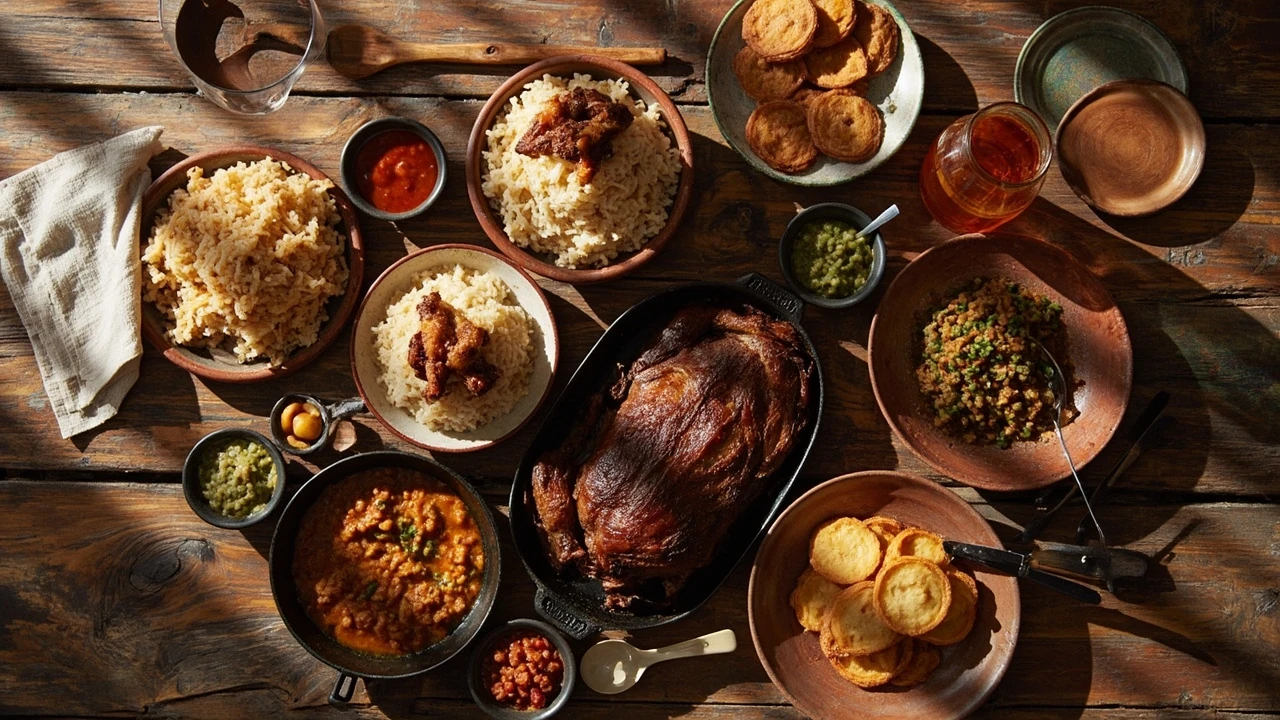
Puerto rican food: what actually defines the cuisine
A wooden spoon resting in a clay pot of arroz con habichuelas tells you almost everything you need to know about puerto rican food. The grains are moist, the beans are tender, the oil pooling at the edge carries the green scent of culantro, and the sofrito that seasoned the pot was made before dawn. The cuisine is shaped by a short list of strong, recurring habits: a flavor base of sofrito in nearly every savory pot, a working relationship between rice and beans, an oven or a lechonera used like a second stove, and a sweet side of the plate that never really goes away. This guide is a practical tour of those habits, the dishes that grew out of them, and the pantry items that make the kitchen recognizable.
For the purpose of this article, puerto rican food refers to the home and restaurant cooking that developed on the island of Puerto Rico and the diasporic communities that carry it. It is not a sealed tradition. It borrows from Taíno ingredients, Spanish colonial technique, African seasoning habits, and Caribbean trade routes, and it keeps borrowing. The point of the guide is to show what holds those influences together once the food lands on a plate.
What gives puerto rican food its flavor base
Most puerto rican food begins with a sofrito. Sofrito is a blended seasoning of onions, cubanelle peppers, garlic, cilantro, and either culantro (recao) or a milder substitute. It is cooked in olive oil or annatto oil until soft, and from there it seasons rice, beans, stews, soups, and braises. Treat sofrito as a technique, not a recipe. Families keep their ratio, some add tomato, some add sweet pepper, and some add a slice of ham for salt, but the green aromatic base stays the same.
The second pillar is annatto, called achiote in much of the Spanish-speaking Caribbean. Annatto seeds steeped in hot oil give the food a deep red-orange color and a mild, earthy flavor. It colors pernil, arroz con pollo, and many holiday rice dishes. The third pillar is the pairing of rice and beans, almost always served together, with the bean liquid seasoning the rice. A pot of habichuelas guisadas and a pot of arroz con grano go hand in hand.
The fourth pillar is the oven, or the lechonera, an improvised pig roast that becomes the social center of a long Sunday or holiday. The final pillar is the sweet counterweight: a slice of flan, a small dish of arroz con dulce, a glass of tamarindo or maví. Puerto rican food is rarely a one-note plate. The cook plans a savory, a starch, a vegetable, and a small sweet in the same meal.
Signature dishes in puerto rican food
Signature dishes are the first place readers look, so it is worth mapping them with the same attention a cook would give a tasting menu. The list below is not a ranking. It is a working catalog of the plates that show up most often in homes, fondas, and restaurants, and the role each one plays at the table.
| Category | Representative dishes | Primary ingredients | Where it appears |
|---|---|---|---|
| Staple rice and beans | Arroz con habichuelas, arroz con gandules, habichuelas guisadas | Long-grain rice, pigeon peas or pink beans, sofrito, pork, potato | Daily plate, holidays, lunch counter |
| Mashed green plantain dishes | Mofongo, mofongo relleno | Green plantains, garlic, chicharrón, broth, olive oil | Dinner, late-night food, coastal towns |
| Roasted and braised meats | Pernil, lechón asado, carne guisada, bistec encebollado | Pork shoulder, pork loin, beef chuck, onions, oregano, bay | Sunday family meal, holidays, road-side lechoneras |
| Fried plantain sides | Tostones, maduros, arañitas | Green or ripe plantains, salt, oil, optional garlic | Side, appetizer, sandwich filling |
| Street and beach food | Alcapurrias, bacalaitos, empanadillas, pinchos, balneario | Root vegetable dough, salt cod, beef, pork, chicken | Beach kiosks, festivals, evening snack |
| Soups and stews | Sancocho, asopao de pollo, mondongo, sopón de pescado | Root vegetables, pumpkin, meat on the bone, rice | Family gathering, rainy day, recovery meal |
| Sweets and breakfast | Flan, tembleque, arroz con dulce, quesito, mallorca | Eggs, milk, coconut, sugar, bread, cream cheese | Dessert, breakfast, panadería counter |
| Drinks | Coffee, tamarindo, maví, parcha, coquito, Medalla | Coffee beans, tamarind, maví bark, passion fruit, coconut, rum | Any hour, especially dessert and beach |
How a traditional puerto rican plate is composed
A common misunderstanding is to treat puerto rican food as a list of separate recipes. In practice, a plate is composed from a small number of moving parts. The cook usually plans a protein, a starch, a legume, a vegetable or salad, and a small sweet, then lets sofrito and annatto do the cross-work.
- Protein: pernil, pollo guisado, bistec encebollado, chuletas, or a fried fish such as chillo.
- Starch: arroz con habichuelas, arroz con gandules, or boiled yuca with garlic sauce.
- Side vegetable: tostones or maduros, a green salad, or a quick curtido of cabbage and onion.
- Legume: a small bowl of habichuelas guisadas on the plate or built into the rice.
- Sweet: a slice of quesito, a small flan, or fresh tropical fruit when in season.
- Drink: café con leche, a glass of tamarindo, or, on weekends, a cold beer.
The proportions matter. Rice and beans are the floor of the plate, not the garnish. Protein is typically modest, often on the bone for flavor, and a single starch beyond the rice is enough. This composition is what gives a puerto rican food plate its balance: savory, starchy, slightly sweet, and a little acidic from the sofrito and the curtido.
Regional differences inside the island
Puerto Rico is small, but the food changes by region. Coastal towns lean on fish and shellfish. Mountain towns lean on heavier root vegetables and slow braises. The south and the central cordillera produce most of the pork and root vegetables, and the lechoneras along Route 184 in the mountains are a tradition in their own right. The northwest, around Mayagüez and Rincón, leans on seafood and plantain snacks, and the east, around Fajardo and Luquillo, leans on fritters and beach food. A practical understanding of puerto rican food is partly a map.
| Region | Local emphasis | Dishes to try | Cooking habit |
|---|---|---|---|
| Central mountains (Guavate and surrounds) | Roast pork and root vegetables | Lechón asado, pasteles, yuca al mojo | Wood-fired pits along the highway |
| South coast (Ponce, Guayama, Salinas) | Hearty one-pot dishes | Sancocho, asopao de pollo, arroz con pollo | Slow stovetop, generous sofrito |
| North coast (San Juan, Arecibo) | City plates, seafood, bakeries | Alcapurrias, bacalaitos, fresh fish, mallorca | Street fryers and panaderías |
| East coast (Fajardo, Luquillo) | Beach kiosks, fritters | Empanadillas, pinchos, alcapurrias | Outdoor fryers near the sand |
| West coast (Mayagüez, Rincón) | Seafood and plantain snacks | Chillo frito, arañitas, ceviche | Open grills and oil-based frying |
The pantry and equipment that make the kitchen recognizable
If you want to cook puerto rican food at home, the most useful starting point is the pantry. A well-stocked shelf turns a generic kitchen into a recognizable one without much ceremony. The list below is the working minimum for a home cook who wants to cover the staples.
- Aromatics: yellow onions, cubanelle peppers, garlic, cilantro, and culantro (recao) when you can find it.
- Rice and legumes: long-grain white rice, pink beans, pigeon peas (gandules), and a few cans for weeknight cooking.
- Roots and tubers: green plantains for mofongo and tostones, ripe plantains for maduros, yuca, yautía, and ñame for sancocho and pasteles.
- Meat and seafood: a bone-in pork shoulder for pernil, beef chuck for carne guisada, and a steady supply of salted cod for bacalaitos.
- Pantry seasonings: dried oregano, bay leaves, sazón with annatto, adobo without pepper if you prefer to control heat, black pepper, and whole cloves.
- Oils and vinegars: olive oil for sofrito, corn or canola oil for frying, and a mild vinegar for curtido and pickled onions.
- Sweet shelf: coconut milk for tembleque and arroz con dulce, evaporated milk for flan, and sugar in the pantry for sweets and adobo.
The equipment list is shorter than people expect. A heavy Dutch oven or caldero is the most important piece because it handles rice, beans, stews, and frying. A wooden pilón, the mortar traditionally used for mofongo, is the second. Beyond those, a decent chef’s knife, a sheet pan for pernil, a stovetop steamer for pasteles, and a decent blender for sofrito are enough to make a complete puerto rican food kitchen work.
How puerto rican food evolved on the island
The history explains why the pantry looks the way it does. The island’s original inhabitants, the Taíno, left behind cassava, yautía, and a working knowledge of root vegetables that became the basis for mofongo and pasteles. Spanish colonization brought rice, wheat, beef, pork, olive oil, citrus, and the technique of the sofrito itself, which has deep roots in the Iberian peninsula. The slave trade brought West African seasoning habits, which shaped the use of green herbs, root vegetables, and the slow braise. The Caribbean trade routes added plantains from West Africa and pigeon peas from the Old World tropics, which became the engine of arroz con gandules.
Through the twentieth century, puerto rican food absorbed new influences. Canned goods and frozen products reached rural kitchens, changing how often a cook could put a meal on the table. Migration to New York sent dishes back and forth between the island and the diaspora, sharpening the profile of mofongo, pernil, and the panadería sweets. None of this replaced the older traditions. It added more tools to them, which is part of why the food stays recognizable even when the ingredient list changes.
How to eat puerto rican food without missing the point
The best way to understand puerto rican food is to eat it the way it is meant to be eaten: as a composed plate at a table with family or friends, not as a single dish on a tasting menu. The following list is a practical way to plan a first meal that covers the ground without overordering.
- Start with a fritter: alcapurrias or bacalaitos, served with a little hot sauce or a squeeze of lime.
- Move to a small bowl of soup if the kitchen is serving sancocho or asopao, especially at lunch.
- Build the main plate from arroz con habichuelas, a piece of pernil or pollo guisado, a side of tostones, and a small salad of cabbage and tomato.
- Try mofongo relleno if you want a single-dish meal, and order it stuffed with pernil, chicharrón, or shrimp.
- Add a sweet at the end: a slice of quesito from a panadería, flan from a family kitchen, or arroz con dulce around the holidays.
- Drink a small glass of tamarindo or maví with the meal, and finish with a small strong coffee.
Two habits will help you read the food more accurately. First, ask about the rice, because every cook has an opinion and the answer tells you a lot. Second, leave room for the second helping, because the first plate is rarely the last.
Comparing puerto rican food with its Caribbean neighbors
Puerto rican food shares ingredients with the rest of the Caribbean, but the seasoning style sets it apart. The table below compares it with the three cuisines it is most often confused with, focusing on the everyday plate rather than the festival food.
| Element | Puerto rican | Cuban | Dominican | Jamaican |
|---|---|---|---|---|
| Seasoning base | Sofrito with culantro and cilantro | Sofrito with tomato, oregano, and bitter orange | Sofrito with oregano, sometimes tomato | Green seasoning with scotch bonnet |
| Signature rice | Arroz con gandules or arroz con habichuelas | Arroz blanco or arroz congrí | La bandera (rice, beans, meat) | Rice and peas with coconut milk |
| Signature starch | Mofongo and tostones | Tostones, yuca con mojo | Mangú, mofongo variant | Hard dough bread, bammy |
| Signature protein | Pernil and lechón asado | Ropa vieja, lechón asado | La bandera meat, pernil | Jerk chicken, curry goat |
| Heat level | Mild, built on sofrito and pepper | Mild, built on oregano and bitter orange | Mild, with small pickled chilies | Hot, with scotch bonnet |
For a broader orientation on the regional cooking of the island and the role of the Caribbean pantry, the English Wikipedia page on Puerto Rican cuisine offers a useful map of the dishes and historical influences covered here. For an authoritative take on the underlying flavor science of sofrito, culantro, and annatto, the Bon Appétit guide to sofrito is a credible starting point that explains why those ingredients behave the way they do in the pot.
Planning a puerto rican food week at home
Cooking puerto rican food at home is easier if you build the week around a few shared bases. The plan below is built on a single batch of sofrito and a single pot of habichuelas, which keeps the cooking time reasonable without giving up the recognizable plate.
- Sunday: pernil in the oven, arroz con habichuelas, tostones, and a small salad. Save the pork bone for weekday beans.
- Monday: chicken and rice (arroz con pollo) using leftover sofrito, with a small bowl of pigeon peas.
- Tuesday: mofongo relleno using leftover pernil, served with a little broth and a curtido.
- Wednesday: a quick habichuelas guisadas with white rice and a fried egg, the weekday workhorse.
- Thursday: bistec encebollado with arroz blanco and a small bowl of beans.
- Friday: alcapurrias or bacalaitos, the weekend approach to the fryer, with a simple salad.
- Saturday: sancocho if the family is gathering, or a light asopao de pollo after a long day.
This is one way to build a week, not the only way. A real puerto rican food week would also include a bakery stop, a coffee break, and at least one long Sunday meal that runs into the late afternoon.
Common mistakes when cooking puerto rican food at home
The cuisine is forgiving, but a few habits consistently weaken the plate. The list below is the short version of what tends to go wrong, and how to fix it.
- Skipping the sofrito and using garlic alone. The sofrito is the flavor base, and shortcuts show up immediately.
- Cooking rice with too much water. The grain should come out dry enough to eat with a fork, not wet.
- Boiling the beans until they fall apart. They should hold their shape and be creamy, not mushy.
- Undercooking the pernil. The crackling and the tender meat come from a long, slow roast with the skin uncovered.
- Serving mofongo dry. It needs broth on the side, or the garlic and chicharrón will dominate the dish.
- Using only salt for seasoning. Adobo, oregano, and bay are part of the everyday flavor profile.
- Forgetting the sweet. A small sweet at the end balances the savory plate, and skipping it makes the meal feel unfinished.
How puerto rican food is changing in restaurants
Restaurant cooking is shaping a new generation of puerto rican food. Young chefs are working with the same pantry as their parents, but they are plating it differently, sourcing more deliberately, and putting sofrito in places it did not used to go. Some of the changes are stylistic, like a composed mofongo in a tasting menu, and some are structural, like a kitchen that buys from small farms on the island and lists the producers on the menu. Both directions keep the food recognizable, which is the point.
Marketing has a role in this evolution, and the editorial framing of those menus is part of how the food reaches new audiences. If you work on a food brand and want to put a specific story on the page, the work starts long before the photographer arrives. From Scratch: Why Specificity Wins Food Marketing explains why the detail in the recipe is the marketing, and the related Food photography that actually sells the dish piece shows what that specificity looks like on the plate.
Frequently asked questions
What is the difference between puerto rican food and Cuban food?
Both cuisines lean on sofrito, rice, beans, and roasted pork, but the seasoning profile differs. Puerto rican sofrito relies on culantro, cilantro, and cubanelle peppers, and the everyday rice is built around pigeon peas or pink beans. Cuban sofrito leans on tomato, oregano, and bitter orange, and the everyday rice is often plain white rice served alongside congrí. The shared vocabulary hides real differences in the pot.
What is sofrito in puerto rican food?
Sofrito is a blended seasoning base made from onions, cubanelle peppers, garlic, cilantro, and culantro, cooked in olive oil or annatto oil until soft. It is the starting point for rice, beans, stews, soups, and braises, and most savory puerto rican food begins with a sofrito step. The exact ratio is a family preference, but the green aromatic base is consistent.
What is mofongo and how is it served?
Mofongo is a mash of fried green plantains with garlic and chicharrón, traditionally pounded in a wooden pilón. It is served either as a side or as a bowl, called mofongo relleno, stuffed with pernil, chicharrón, shrimp, or vegetables, and finished with a little broth. A small curtido of pickled onions or a side of hot sauce is a common companion.
Is puerto rican food spicy?
Everyday puerto rican food is mildly seasoned rather than hot. The heat comes from small amounts of cubanelle pepper in the sofrito, pickled chilies on the side, and a bottle of pique or tabasco at the table. The cook controls the level by adjusting the peppers in the sofrito and by serving the hot sauce separately.
What are the most important pantry items for puerto rican food?
The working pantry starts with long-grain rice, pink beans and pigeon peas, green and ripe plantains, and a steady supply of onions, garlic, and cubanelle peppers. The seasoning shelf should include sazón with annatto, dried oregano, bay leaves, adobo, black pepper, and whole cloves. Olive oil and a neutral frying oil cover the rest of the cooking.
What is pernil and when is it served?
Pernil is a bone-in pork shoulder marinated in sofrito, adobo, oregano, and garlic, then roasted slowly until the skin turns into crackling. It is the centerpiece of the holiday table at Christmas and Easter, and it shows up at Sunday family meals, fundraisers, and roadside lechoneras. Leftover pernil is the starting point for mofongo relleno and sandwich fillings.
What drinks are typical with puerto rican food?
Coffee is the everyday drink, and a small strong cup shows up at breakfast, after lunch, and at the end of a long meal. Fruit drinks made with tamarindo, maví bark, parcha (passion fruit), or lemonade are common at lunch. Coquito, a coconut and rum drink, is reserved for the holiday season, and cold beer shows up at the beach and the family table on weekends.
What is a typical puerto rican food plate at a restaurant?
Most restaurants serve a plate of arroz con habichuelas, a protein such as pernil, pollo guisado, or bistec encebollado, a side of tostones or salad, and a small bowl of habichuelas guisadas. The plate is sized for one main course, with a coffee or a small sweet at the end. Some restaurants also offer mofongo relleno as a single-dish meal, which compresses the plate into a bowl.
Are there vegetarian options in puerto rican food?
Yes. Vegetarian versions of arroz con habichuelas, habichuelas guisadas, mofongo, tostones, and pasteles are common. The cook omits the meat seasoning, increases the sofrito and the olive oil, and sometimes adds root vegetables or mushrooms to the rice for body. The flavor base stays the same, which keeps the dish recognizable.
How is puerto rican food different from Dominican food?
Both cuisines use sofrito and serve rice, beans, and meat together, but the Dominican plate called la bandera is built on a separate rice, a separate bean stew, and a separate meat, served in three distinct parts. The puerto rican plate tends to combine the rice and beans in the same pot as arroz con habichuelas or arroz con gandules, with a separate protein on the side. The seasoning leans on culantro in Puerto Rico, while the Dominican version often adds oregano and a small pickled chili called ají.