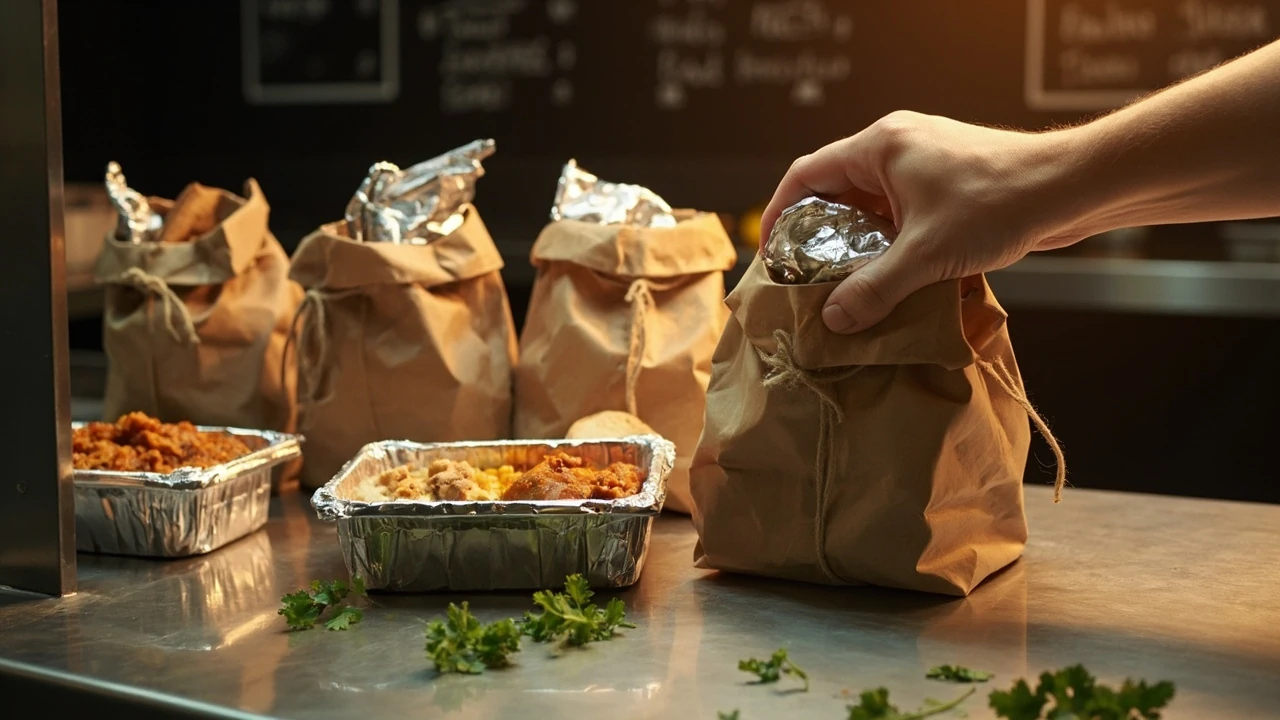
Indian food delivery: a practical operating guide for restaurants
A new curry kitchen in a mid-sized city can sell sixty covers on a Friday night and still lose money the same week if the delivery side of the business leaks heat, sauce, and labor. Indian food delivery is unusually sensitive to the gap between a dish leaving the pass and a guest opening the container at home. Curries thin out, naan turns to cardboard, basmati clumps, and tikka dries, all within the window a courier is racing through traffic. Building a service that holds up over that window is the work that separates a real takeout program from a list of menu items that happen to leave the building.
This guide is for operators, chefs, and owners who want to design the delivery side of an Indian restaurant, or fix one that is already running. It focuses on decisions a single business can make: what to put on the menu, how to package it, how far the delivery radius should be, how to price without losing the order, and how to grow orders without the kitchen collapsing on Saturday night.
What “indian food delivery” actually means in 2026
The phrase covers three different operating models, and each one has different economics. A quick-service counter that sells kati rolls and biryani boxes out of a small kitchen has a different cost structure from a casual dining restaurant adding takeout to its dining room, which in turn is different from a cloud kitchen that exists only to fulfil delivery orders. The packaging, the menu, the marketing, and the labor model all shift with the model, and treating them as the same business is where most early programs go wrong.
It also covers a wide range of cuisines that get folded into the same search term. North Indian butter chicken and dal makhani behave differently in transit than Hyderabadi biryani, Kerala fish curry, or Gujarati thalis. The cuisines share a continent, not a delivery playbook. A menu that treats them as interchangeable will disappoint the regulars of each.
For most small and mid-sized operators, the realistic path is hybrid: a seated restaurant with a delivery program attached, using the same brand, the same suppliers, and often the same kitchen staff. The decisions below are written for that case, with notes for cloud kitchens and counters where the model shifts the answer.
Choose the right menu before you choose a platform
A delivery menu is not a copy of the dining menu with prices raised two dollars. It is a smaller, more deliberate list of dishes that survive a thirty-minute journey, reheat well at home, and feel complete without a server explaining them. Most Indian restaurants that struggle with delivery start with too many items, not too few.
Group dishes by how they travel
Sort every candidate dish into one of three travel behaviors before deciding what goes on the delivery menu.
- Travels well: tikka masala, dal makhani, saag paneer, rogan josh, chana masala, biryani, and most gravies thickened with onion, tomato, or yogurt base. They hold sauce, cool slowly, and reheat evenly.
- Holds up with care: tandoori proteins, kebabs, kofta, stuffed paratha, and most fried items. They need venting, drainage, or a separate container to keep their texture.
- Does not travel: dosa, soft idli, fresh roti off the tava, anything crisp fried to order, kulfi in a soft scoop, and dishes built around contrast at the moment of eating.
The first group can carry the menu. The second group is profitable if the packaging is right. The third group is a guest complaint on a slow courier night, no matter how much customers ask for it on a Friday.
Build meals, not isolated dishes
Indian food is usually eaten as a combination. Guests at a table order a curry, a bread or rice, a side, and a drink as one decision. A delivery menu should encourage the same pattern. Meal bundles built around one or two curries, a choice of bread or rice, a small side, and a drink raise average ticket size, reduce per-order packaging cost, and shorten the time a guest spends staring at thirty checkboxes.
For most restaurants, four to six meals cover eighty percent of orders. A “thali” or “combo” framing works especially well, because it is a familiar concept in Indian dining and lets the operator control portions, packaging, and price in a single SKU.
What a clean delivery menu looks like
| Section | Number of items | Role |
|---|---|---|
| Signature meals | 4-6 | Curry plus rice or bread, plus a side. Highest margin, lowest decision cost. |
| Solo curries | 6-8 | The best sellers from the dining menu, priced with a rice or naan upsell. |
| Biryani and rice dishes | 3-4 | Travel reliably and feel like a complete meal on their own. |
| Breads | 3-4 | Garlic naan, plain naan, roti, paratha. Pre-cooked and reheated, or par-baked. |
| Sides and starters | 4-6 | Samosa, pakora, raita, kachumber, papad. Add value, raise ticket size. |
| Desserts and drinks | 3-5 | Gulab jamun, kulfi, lassi, masala chai concentrate, cold drinks. |
Total items in the 20-30 range are a reasonable target for a new program. Wider than that, and order accuracy drops, ticket size drops, and prep complexity rises without a matching lift in sales.
Packaging that protects the food and the margin
Indian For additional context, food is hot, wet, fragrant, and acidic. Generic takeout boxes do not survive that combination. The packaging program is one of the few areas where a restaurant can spend money and immediately see fewer complaints, lower credit notes, and a longer effective delivery radius.
Match the container to the dish
- Gravy curries belong in leak-proof, microwave-safe polypropylene or bagasse bowls with tight-fitting lids. Aluminum trays are fine for the oven but not for courier bags.
- Rice and biryani travel best in vented or slotted containers that let excess steam escape without drying the grains. A tight-lidded foil tray is the most common mistake here.
- Breads need a small paper bag inside a larger bag, or a vented box. Sealed plastic makes naan sweat and lose its char.
- Fried items and tikka should be placed on a slotted bed or over a paper liner so condensation does not pool underneath.
- Chutneys, raita, and mint sauce need small sealed cups that fit beside, not under, the main container. Leakage from these is the single most common credit-note reason in Indian delivery.
Stacking and labeling
A courier bag is a small, hot, and chaotic environment. Inside it, containers slide, tip, and stack against each other. Use a rigid outer bag or a partitioned insert so a biryani tray does not rest on a samosa box. Label every bag with the order number, the contents, and a “this side up” marker. The cost of a printed sticker is trivial compared to the cost of a returned order.
Heat retention is the other quiet win. Insulated outer bags, foil liners under hot items, and warm marble or stone delivery boxes for short routes can keep food above the temperature where customers complain. They are not free, but they pay for themselves quickly in fewer credits and higher repeat orders.
Pricing delivery without subsidizing it
Delivery has costs the dining room does not: packaging, commission, courier pay or platform fees, and the labor of packing. Pricing a delivery menu at dining-room prices is the most common way a new program quietly loses money.
The three layers of delivery price
- Menu price. The price the guest sees. It should be slightly above the equivalent dine-in dish, typically 10-20 percent, to cover the additional cost of doing the order.
- Delivery fee and service fee. The fee the platform or in-house courier charges. This can be paid by the guest, absorbed by the restaurant, or split. Each option has a different effect on conversion.
- Minimum order value. A practical floor that prevents low-ticket, high-cost orders. For most Indian menus, the right floor is the price of one meal bundle plus a drink.
What to charge and what to absorb
Absorbing the full delivery fee tends to increase order volume but compresses margin to almost nothing on smaller orders. Charging the full fee protects margin but reduces conversion among price-sensitive guests. The middle path works best for most operators: charge a small delivery fee that covers part of the cost, keep the menu price 10-20 percent above dine-in, and let the meal bundles absorb some of the fee as built-in value.
Watch the credit line in the same model. Credits for missing items, late delivery, and damaged food are an invisible cost that pricing alone does not cover. Track credits as a percentage of sales, not as a flat number, so the trend is visible month to month.
Delivery radius and time: the geography of curry
Indian food suffers more than most cuisines from long delivery distances, because many of the core dishes depend on heat and on the contrast between elements. A butter chicken that arrives lukewarm, with a separate container of cold naan, is not the same dish as one served from the pass.
Set a radius based on time, not distance
Plan the delivery area around a maximum delivery time of 25-30 minutes from kitchen to door, not a fixed mile radius. In a dense urban area, that can be 2-3 miles. In a suburban market, it can be 5-7 miles. Inside that zone, push marketing and listings hard. Outside it, the food is unlikely to arrive in good condition, and the complaints will eat the order value.
Stagger prep with predicted order flow
Indian delivery demand tends to peak twice a night, around 6:30 to 7:30 pm and again around 8:30 to 9:30 pm, with a smaller lunch peak on weekends. Build prep around those windows rather than the constant simmer of a dining service. Holding curries too long on a hot plate for a slow delivery night is one of the most common ways Indian food quality slips.
Platforms, in-house couriers, and hybrids
Most Indian restaurants run on a mix of channels. Each one has a different cost, a different customer, and a different implication for the kitchen.
| Channel | Typical commission | Best for | Trade-off |
|---|---|---|---|
| Major third-party platforms | 15-30 percent | Visibility, first-time customers, peak demand | High commission, weak customer data, race-to-the-bottom pricing |
| Aggregator apps with lower commission | 8-15 percent | Established neighborhoods, regulars, brand-led orders | Smaller reach, dependence on the platform for marketing |
| In-house couriers | Direct cost per order | Repeat customers, tight radius, premium positioning | Fixed labor cost, lower volume unless marketing is strong |
| Direct ordering through website or app | Payment processing only | Loyal guests, high-ticket orders, catering | Slow to build traffic, requires its own marketing |
Most successful programs keep two or three channels running. A typical mix is one major platform for reach, a direct-order site or app for repeat guests, and either an in-house courier or a smaller aggregator for the loyal neighborhood base. The exact mix depends on the local market and the marketing budget.
Direct ordering is worth the effort
Direct orders skip the platform commission, let the restaurant own the customer relationship, and make catering easier to sell. The catch is that direct ordering only works if the website, menu, and checkout are genuinely good. Many restaurants underestimate the work of keeping a direct-order channel healthy, and end up sending guests back to the platforms where they started. The 15-minute restaurant website audit is a useful starting point for checking whether the site actually supports delivery orders rather than just listing a phone number.
Marketing indian food delivery in a crowded market
Most Indian restaurants do not have a discovery problem. The problem is that the guest who orders once does not order again because the experience is forgettable, the menu is hard to scan, or the brand blends in with five other curry houses on the platform. Marketing for delivery is mostly about turning first orders into second and third orders, and making the brand visible in the channels that matter.
Five marketing moves that work for indian food delivery
- Photograph the food as it actually arrives. Many Indian delivery menus show dining-room plating that does not match what the guest opens. Honest photos that match the container raise satisfaction and reduce complaints, which in turn lifts the rating on every platform.
- Write menu copy the way a regular would. Skip the textbook descriptions and explain what the dish tastes like, how spicy it is, and what to eat it with. This is where the line between a real menu and a generic list of items becomes obvious.
- Build a small catering offer. Indian food scales well to family meals, office lunches, and small events. A clear catering page with two or three set menus, transparent pricing, and a 24-hour lead time is one of the highest-margin parts of a delivery program.
- Ask for the second order before the first one is finished. A simple “next time, try” line on the receipt, or a small discount on the second order, often does more for retention than a paid ad.
- Protect the brand voice. Indian food is full of stories: regional origins, family recipes, specific masala blends, sourcing. Restaurants that lean into a specific story on their menu, social channels, and packaging tend to stand out more than those that try to please everyone.
For most operators, the work above matters more than the choice of platform. The brand decisions are what make a guest choose one butter chicken over another on a Tuesday night. A useful framing for that work is the idea that specificity wins in food marketing, and the same principle applies to delivery menus as much as to the dining room.
Kitchen design for a delivery program
A dining room kitchen and a delivery kitchen want different things. Dining rewards complex plates built to order. Delivery rewards speed, consistency, and food that holds. A few small changes to the kitchen layout and prep flow can make the delivery program much easier to run.
Where most kitchens lose the most time
- Packing, not cooking. Most delays in delivery programs come from the packing station, not the stove. A dedicated packing area with room for bags, labels, and a ticketing screen is a low-cost change that pays off in seconds saved per order.
- Portion control. Curries sold for delivery are portioned into containers at the pass, not ladled at the table. Standardized ladles, scales, and labeled containers cut variance and complaints.
- Hold-and-rest. Many Indian curries improve after a short rest, and biryani is best cooked and held briefly before service. A small holding area for cooked dishes smooths the gap between the cook and the courier.
Staffing the delivery side
A hybrid restaurant can usually run delivery with one extra body on the line during peak windows, plus a runner or packer at the pass. A cloud kitchen, where there is no dining room at all, has a different staffing model and needs more focus on packing and dispatch than on front-of-house skills. In both cases, the real cost of delivery is the labor at peak, not the courier pay, and that is the line that is most often underestimated.
Working with platforms without losing control
Platforms are useful, but they are not a strategy. Restaurants that build a healthy delivery program treat platforms as one channel among several, and protect the parts of the business the platforms cannot take away: the brand, the recipe, the regulars, and the catering work.
- Use platform data to learn, not to copy. The search terms, order times, and repeat-order patterns are useful intelligence. The pricing suggestions, the ad budgets, and the priority placement are not always in the restaurant’s interest.
- Move the best customers off the platform. A small, repeated nudge in the bag or on the receipt, pointing to direct ordering, protects margin and gives the restaurant access to the guest’s contact information.
- Negotiate commission at scale. Once a restaurant is large enough on a platform to matter, commission rates and placement are negotiable. Many operators never ask.
- Watch the menu on each platform separately. Promoted items, search ranking, and category placement vary by platform. A menu that performs well on one app is not automatically the right menu on another.
How to turn one signature dish into steady delivery orders
Most Indian restaurants have one dish that defines them. It might be a specific butter chicken recipe, a Hyderabadi biryani, a Sindhi curry, or a particular street-food snack. That signature dish is the most useful asset in a delivery program, and it can be the spine of a content and marketing plan as much as a menu.
Build a content plan around the story of the dish: where it comes from, what makes the recipe different, what to drink with it, how to reheat it well at home, and what to order alongside it for guests who have not tried it before. The same dish can carry a blog post, a short video, a catering pitch, and a featured slot on the delivery menu. The point of this kind of content is to give the dish a second life beyond the restaurant walls, and to give guests a reason to order from a specific kitchen rather than from the closest option on the app.
This is also where the photography on the delivery menu does most of the work. A clean, honest, well-lit image of a single signature dish will outsell a generic stock image of an overloaded thali, and will pull better ratings on the platform. The food photography that supports delivery does not have to be elaborate, but it has to look like the food the guest actually receives.
Common mistakes that quietly sink an indian food delivery program
- Pricing delivery at dining-room prices and absorbing the courier fee. The margin disappears, and the order volume does not grow enough to compensate.
- Putting the full dining menu online. The decision cost is too high, prep is too fragmented, and quality is too uneven.
- Skipping the catering side. Indian food is one of the best cuisines for office lunches, family meals, and small events. Leaving catering to chance means leaving a meaningful share of revenue on the table.
- Letting the platform own the brand. Default photos, default descriptions, and default packaging make every restaurant look the same.
- Treating lunch and dinner as the same business. They are not. Lunch needs faster turn, lower ticket, and tighter packaging. Dinner can support a larger bundle and a more relaxed courier window.
- Ignoring the credit line. A few credits a week are normal. A rising credit percentage is a sign that the kitchen, the packaging, or the courier is drifting.
Build a delivery program that holds up on a Saturday night
The test of an indian food delivery program is not the quiet Tuesday order. It is the peak hour, when the kitchen is full, the dining room is full, the courier queue is long, and a single missing chutney cup can sink a four-star rating. The operators who get this right treat delivery as a separate product line that happens to share a kitchen with the dining room, not as an add-on.
Start with a tight menu of dishes that travel well, package them honestly, price them with the full cost of delivery in mind, and keep the radius tight enough that the food arrives in good condition. Add a direct-order channel, a small catering offer, and a content plan that gives the signature dish a life beyond the restaurant. Watch the credit line, the average ticket, and the repeat-order rate, and adjust the menu every quarter based on what the data actually shows.
Indian food delivery is a real business, not a side effect of the dining room. Built well, it carries a meaningful share of revenue, gives the kitchen a second peak, and gives the brand a way to reach guests who never sit down. Built carelessly, it is a constant source of complaints and credit notes. The difference is mostly a series of small, deliberate choices made before the first order goes out the door.
Frequently asked questions
How profitable is indian food delivery for a restaurant?
Indian food delivery is profitable when the menu is tight, the packaging protects the food, and the price covers the real cost of doing the order. Most operators see net margins on delivery in the 8-15 percent range once packaging, platform commission, courier cost, and labor are accounted for. The profitability is higher on meal bundles and catering, and lower on small à la carte orders that absorb the delivery fee.
What indian dishes travel best for delivery?
Dishes with a thick, stable sauce travel best. Butter chicken, dal makhani, saag paneer, rogan josh, chana masala, and most North Indian gravies hold their texture and temperature over a 25-30 minute window. Biryani and other rice dishes travel well if they are packed in a vented container that lets steam escape. Tandoori and kebab dishes travel well with the right packaging but need a vented box to keep their char.
How long should a delivery radius be for indian food?
Plan the radius around a maximum delivery time of 25-30 minutes, not a fixed mileage. In a dense urban area, that is usually 2-3 miles. In a suburban or small-town market, it can be 5-7 miles. Beyond that window, the food quality drops, the complaint rate rises, and the credit line grows faster than the order value.
Should I use a third-party platform or my own couriers?
Most restaurants start with a third-party platform to get visibility, and add direct ordering or in-house couriers once the regulars are established. Platforms are useful for reach but expensive, and they keep ownership of the customer relationship. In-house couriers and a direct-order site are cheaper per order and give the restaurant access to the guest, but they require their own marketing to keep the orders coming.
How should I price indian food for delivery?
Price the delivery menu 10-20 percent above the equivalent dine-in dish, set a minimum order value that covers one meal bundle plus a drink, and decide whether the delivery fee is charged to the guest, absorbed by the restaurant, or split. Watch the credit line and the platform commission carefully, and adjust the menu price if either one drifts.
What packaging works best for indian curries?
Leak-proof, microwave-safe polypropylene or bagasse containers with tight lids are the workhorse of any indian food delivery program. Gravy curries go in sealed bowls, rice and biryani in vented containers, breads in small paper bags inside the larger bag, and chutneys in small sealed cups placed beside the main container. An insulated outer bag and a foil liner under hot dishes help keep temperature steady over a longer route.
How do I reduce complaints on indian food delivery orders?
Most complaints come from missing items, leaked containers, and food that arrives too cold or too dry. Tightening the packing station, labeling every bag with the order number, using leak-proof containers for sauces, and setting a realistic delivery radius all reduce complaints quickly. Photographing the food honestly on the menu also helps, because the guest’s expectation matches what actually arrives.
Is catering worth adding to an indian delivery program?
Catering is one of the highest-margin parts of an indian food delivery program because the orders are larger, the lead time is longer, and the labor is more efficient. A simple catering page with two or three set menus, clear pricing, and a 24-48 hour lead time is usually enough to start. Indian food scales well to office lunches, family events, and small private gatherings, and the catering side of the business often grows faster than the regular delivery side once it is set up properly.
How do I get repeat orders from indian food delivery guests?
Repeat orders come from a combination of consistent food quality, easy reordering, and a reason to come back. Direct ordering through a website or app makes reordering easier. A small discount on the second order, a clear “next time, try” suggestion on the receipt, and a catering reminder for guests who order for a family both work. Above all, the food has to arrive in a condition that makes the guest want to order again, and that comes from the menu and packaging choices made before launch.
What is the biggest mistake restaurants make with indian food delivery?
The most common mistake is treating the delivery program as a copy of the dining room rather than a separate product. The menu is too long, the packaging is generic, the price is too low to cover the real cost, and the radius is too wide to keep the food in good condition. The fix is rarely expensive. It is a series of small, deliberate choices: a tighter menu, better packaging, a realistic radius, and a price that respects the work of doing the order.