How a food bank actually works behind the scenes
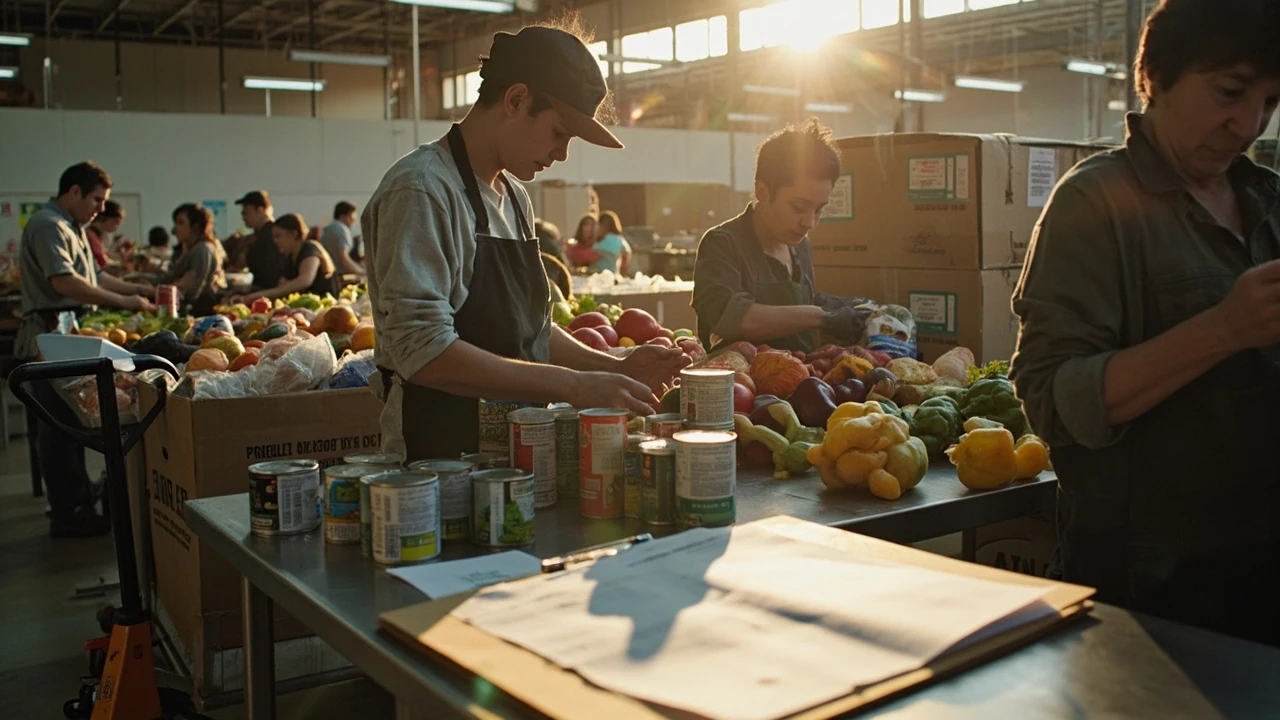
A line of cars pulls up before sunrise, the loading dock opens at 7:15 a.m., and a small crew of paid staff and volunteers begins sorting pallets of canned beans, bread, frozen chicken, and dented-but-sealed pasta sauce that arrived the night before. This is what a working food bank looks like on a Tuesday, far from the polished charity images on social media. The phrase “food bank” gets used loosely in conversation, sometimes for a regional distribution center, sometimes for a small neighborhood pantry, and sometimes for a heated cabinet outside a church. Understanding the difference matters for any restaurant operator who wants to donate, partner, or volunteer with a realistic idea of what the organization can actually handle.
This article explains how a food bank operates, what it can and cannot accept, how food safety and liability rules apply, and how a restaurant can build a reliable donation routine without disrupting service. It also covers the difference between food banks and food pantries, the role of regional and national networks, and the practical decisions that determine whether donated food ends up on a family’s table or in the dumpster.
What a food bank is, and what it is not
The term “food bank” is often used for two different kinds of organizations, and that confusion creates real problems when a restaurant tries to figure out who to call.
A regional food bank is a warehouse-scale operation that receives large donations from farms, manufacturers, wholesalers, retailers, and government programs. It sorts, stores, and redistributes that food to a network of smaller partner agencies. Most regional food banks are members of Feeding America in the United States, or equivalent networks in other countries such as Food Banks Canada, The Trussell Trust in the United Kingdom, or the European Food Banks Federation.
A food pantry, by contrast, is a smaller distribution site that hands food directly to people who need it. Many pantries are run by churches, community centers, or neighborhood nonprofits. They typically receive food from a regional food bank rather than sourcing it themselves.
| Organization type | Scale | Typical sources | Typical customers |
|---|---|---|---|
| Regional food bank | Warehouse, paid staff, trucks | Farms, manufacturers, retailers, government | Partner pantries, shelters, meal programs |
| Food pantry | Small site, mostly volunteers | Regional food bank, local donations | Households, individuals |
| Community kitchen | Commercial kitchen, meal prep | Food bank, purchased ingredients | Hot meals, shelters, after-school programs |
| Mobile pantry | Reefer truck or van, scheduled route | Regional food bank | Neighborhoods with limited pantry access |
When a restaurant asks “can we donate to a food bank,” the practical answer usually means one of three things: dropping surplus prepared food at a nearby community kitchen, scheduling a pickup of untouched shelf-stable inventory with a regional food bank, or signing up to sponsor a specific pantry’s weekly distribution day. Each of those requires a different relationship, and the food safety rules differ for each.
How donated food moves from a restaurant to a family
The path that a tray of unused roasted vegetables or a case of short-dated bread takes from a restaurant to a household involves several steps, and each one has a cost in time, refrigeration, and paperwork. When restaurant owners understand the chain, they can match their donation to the right partner instead of forcing a square peg into a round hole.
- Identification. Staff flag food that is safe but unsellable: over-prepped mise en place, untouched bread from a buffet, sealed items past their “best by” date, or prepared trays that were never served. A manager confirms it meets the partner’s criteria.
- Cooling and storage. Hot food must be cooled from 135°F to 70°F within two hours, then from 70°F to 41°F within four more hours, per standard food code. That usually means a blast chiller or an ice bath, not just walking it to the back door.
- Packaging and labeling. Donations are packed in food-grade containers, labeled with the contents, the date and time it was cooked or opened, and any allergens. Most partners provide or accept specific container types.
- Transport. Either the donor delivers in a temperature-controlled vehicle, or the recipient sends a refrigerated truck on a scheduled route. Some regional food banks run a same-day pickup program for prepared food.
- Inspection at the partner. Trained staff check temperature logs, packaging integrity, and labeling before accepting the donation. Anything that does not meet the standard is composted or discarded, and the donor is usually notified.
- Distribution. Accepted food is sorted, paired with other items to build balanced boxes or meals, and handed out through a pantry, a shelter, a school program, or a mobile route.
The total time from kitchen to client often runs 24 to 72 hours. That is fast for charity logistics and slow compared with restaurant service, which is why same-day donation programs require restaurants to cool and label food before the lunch rush, not at closing time.
What a food bank can and cannot accept from a restaurant
Food safety is the first thing every partner will ask about, and the rules are stricter than most operators expect. The list below reflects the policies used by most regional food banks in the United States and by equivalents in Canada, the UK, and the EU, though local rules vary and your partner’s written policy always wins.
- Accepted shelf-stable items: sealed canned goods, dry pasta, rice, sealed cooking oils, unopened condiments, and packaged snacks well within their date code.
- Accepted refrigerated items: sealed dairy, eggs, and packaged proteins within their use-by date, held at 41°F or below with a temperature log.
- Accepted frozen items: frozen meat, bread, produce, and prepared meals held at 0°F or below, with no evidence of thaw and refreeze.
- Accepted prepared food: cooked, cooled to 41°F within six hours, portioned, labeled with ingredients and date, and transported cold. Many partners require a HACCP plan on file.
- Usually not accepted: food that has been served to guests, food held in a steam table for more than a short window, items prepared in a home kitchen, unpackaged bulk goods, alcohol, and anything past its use-by date without a partner-specific variance.
One of the most common mistakes is treating “best by” and “use by” as the same thing. A “best by” date refers to quality, and many food banks can redistribute sealed items past that date. A “use by” date is a safety window, and items past it are usually refused. If your inventory is sorted by date code at the end of service, your donation prep time drops sharply.
The food safety and liability rules every restaurant should know
Two legal frameworks protect restaurants that donate food in good faith. In the United States, the Bill Emerson Good Samaritan Food Donation Act shields donors from civil and criminal liability when food is donated in apparently wholesome condition to a nonprofit. Canada has a similar provincial framework, and the UK has its own donor protections under the Food Safety Act. The protections are real, but they are not absolute. A donor who knowingly donates contaminated food, or who ignores a known safety problem, is not covered.
For a restaurant, that means three practical habits matter more than the legal fine print:
- Keep temperature logs. If you plan to donate prepared food, document cooking, cooling, and holding temperatures. Logs are your best evidence that the food was safe when it left your kitchen.
- Label everything. Contents, date and time, allergens, and whether the item contains raw animal products. A simple label template printed on Avery sheets is enough for most partners.
- Use a written agreement. Most regional food banks provide a simple donation agreement that defines who is responsible for transport, what happens if a delivery is rejected, and how often you plan to donate. Sign it and keep a copy.
These habits also pay off during health inspections, because a kitchen that documents donation prep is usually a kitchen that documents everything else too.
How to choose the right food bank partner for your restaurant
Not every food bank wants the same kind of donation, and matching your kitchen’s output to the right partner saves a lot of frustration. Start with a short conversation rather than a one-time drop-off. Ask the organization how often it can accept prepared food, what its pickup radius looks like, and whether it has a cooler or freezer slot reserved for restaurants.
| Your situation | Best partner type | What to ask first |
|---|---|---|
| Daily surplus of prepared food, urban location | Regional food bank with a same-day prepared food program | What is your pickup window and minimum quantity? |
| Weekly surplus of short-dated shelf-stable inventory | Regional food bank warehouse | Which categories are short this month? |
| Monthly overstock from catering or events | Regional food bank or a large partner pantry | Do you accept bulk packaged items with a single label? |
| Small quantities from a single café, rural location | Neighborhood food pantry | What days do you accept, and what packaging do you prefer? |
| Surplus from a commissary or central kitchen | Regional food bank with truck-route access | What is your truck capacity and scheduling lead time? |
If you operate more than one location, build a single relationship with the regional food bank and let it route the food to the appropriate pantry, shelter, or community kitchen. That central point of contact also makes it easier to handle paperwork, recurring pickups, and seasonal volume swings around holidays.
What “rescue” looks like in practice
The term “food rescue” describes a specific subcategory of food bank work: redirecting food that is still safe but no longer sellable, often from restaurants, hotels, and catering operations. Rescue programs exist because a meaningful share of food waste in the restaurant industry happens after the food is cooked, not before. The share varies by cuisine, but studies of restaurant waste streams routinely show that plate waste and over-prep together account for the largest fractions of thrown-out food by weight.
A practical rescue routine for a busy restaurant usually follows a predictable pattern. The chef and the manager agree on a small list of items that are safe to donate: surplus soup, untouched bread, sealed protein pouches near their date code, and whole fruit that has crossed an internal quality threshold but is still good to eat. Staff cool the food during the natural slow window between lunch and dinner service, label it, and stage it in a designated donation cooler. The partner picks it up at a fixed time, usually once or twice a week.
The routine works only when it is small and predictable. Trying to donate every stray scrap creates more labor than it saves and risks donating food that does not meet the partner’s standards. A focused list of three to five items is more sustainable than a blanket “everything we have left” approach.
How much waste a restaurant can realistically divert
Numbers vary widely by segment, but the operating range is useful. A full-service restaurant that runs a deliberate prep plan and donates a small, fixed set of items can typically divert between 2 and 6 percent of its purchased food cost from the dumpster to a partner. A catering operation with predictable event leftovers can do better, sometimes 8 to 12 percent, because event food is batched and labeled by design. A quick-service restaurant with a tight par sheet and limited prepared inventory usually sits at the lower end.
Two cautions matter here. The percentage is sensitive to the menu. Restaurants that cook to order and hold little inventory will see smaller diversion rates than restaurants that prep ahead for a lunch rush. And diversion should never come at the cost of over-prepping on purpose. Donation is a way to handle honest surplus, not a license to cook more than the dining room needs.
Where a food bank gets its food, beyond restaurants
Restaurants are a useful but small slice of the supply that keeps a food bank running. The bulk comes from a different supply chain entirely, and understanding it helps explain why your donations matter even when the volume looks modest to you.
| Source category | Typical items | How it reaches a food bank |
|---|---|---|
| Farm and grower donations | Fresh produce, seconds, gleaning from fields | Direct contracts, statewide gleaning networks, USDA programs |
| Manufacturer and co-packer donations | Canned goods, dry goods, beverages, off-spec product | Direct relationships with regional food banks, Feeding America network |
| Retail and grocery rescue | Short-dated packaged items, overripe produce, deli surplus | Daily pickup routes, often run by the food bank itself |
| Government programs | USDA commodities, The Emergency Food Assistance Program (TEFAP) | Allocated through state agencies to regional food banks |
| Food drive donations | Shelf-stable items, household staples | Drop-off at pantries, workplace and school drives |
| Restaurant and foodservice donations | Prepared food, surplus catering, short-dated inventory | Same-day pickup or scheduled routes, sometimes direct to pantries |
Prepared food from restaurants is a small share by weight, but a disproportionately valued share by impact. It adds variety, hot meals, and fresh items to distributions that are otherwise heavy on shelf-stable goods. That is why partners are often willing to send a refrigerated truck for a relatively small load of prepared food when they would not do so for the same weight in canned beans.
The difference between a food bank and a food rescue app
Several commercial apps now connect restaurants with charities that pick up surplus food in real time. They are useful tools, but they are not the same as building a relationship with a food bank. The apps handle the logistics of a one-off pickup and a receipt, which is helpful for tracking tax-deductible donations and for satisfying local organic waste rules in places that have them. A food bank relationship handles a longer-term, larger-volume program with cooler capacity, regulatory familiarity, and a network that can absorb seasonal swings.
For a restaurant that is just starting out, an app is a reasonable first step. It tests the workflow, surfaces the bottlenecks in your prep line, and produces a paper trail for tax purposes. For a restaurant that donates weekly, a direct food bank relationship is usually more reliable and lower-friction per pickup.
Tax treatment of food donations from a restaurant
In the United States, businesses that donate food can generally deduct the cost basis of the donated inventory, plus half the difference between basis and fair market value when certain conditions are met. The rules are detailed and were expanded under the Consolidated Appropriations Act of 2021 and the Food Donation Improvement Act, and they continue to evolve. Restaurants should keep the following documents for every donation:
- A written acknowledgment from the receiving organization, including the date, the items donated, and the organization’s tax status.
- Internal records showing the cost basis of the donated items, including invoices and recipe cards for prepared food.
- Temperature and handling logs for any prepared or refrigerated donations.
- The method used to value the donation, whether cost basis, fair market value, or a qualified appraisal for unusual items.
Work with a tax advisor on the specific election that fits your operation. Canada and the UK have their own donation tax credit and Gift Aid structures, respectively, and the documentation requirements differ.
Common mistakes restaurants make when starting a donation program
Most failed restaurant donation programs fail for the same handful of reasons. Knowing them in advance lets you design around them rather than learn them by losing a partner.
- Starting too big. A daily pickup of every leftover item is hard to sustain. Start with one or two specific items on a fixed weekly schedule.
- Skipping temperature discipline. Donation prep is held to the same standard as service prep. A single temperature failure can end a partnership.
- Donating food that has been served. Once food is on a guest’s plate, it cannot be donated. Build the donation step into prep, not cleanup.
- Ignoring labeling. Every container needs a label. Unlabeled containers are usually discarded at the receiving end because staff cannot verify allergens or age.
- No internal owner. A program without a named person tends to drift. Assign one manager or chef to own the relationship and the routine.
- Forgetting to communicate the impact. The team that donates the food deserves to know it fed people. Share a monthly summary with staff.
A simple first-month plan for a restaurant that wants to start donating
If your restaurant has never donated to a food bank, the first month is mostly about listening, learning, and setting up a small routine. The plan below is deliberately modest and assumes one restaurant location with a single partner.
- Week 1. Identify the regional food bank or partner pantry within delivery range of your kitchen. Make a short call, ask about the program structure, and request a site visit or a written agreement.
- Week 2. Walk the kitchen with the partner’s representative. Agree on a short list of donation-eligible items and the required packaging, labeling, and temperature ranges.
- Week 3. Run a single test donation of one or two items. Track the time, labor, and any temperature excursions. Adjust the routine based on what you learn.
- Week 4. Move to a recurring weekly schedule. Set a calendar reminder for the manager, print the labels, and confirm the pickup window with the partner.
After the first month, review the data. Most kitchens find that the routine takes less than 30 minutes per donation day once it is in place, and the staff engagement is higher than expected because the work has a clear, visible result.
How restaurants can support a food bank beyond donating food
Food is the headline, but it is not the only form of support a restaurant can offer. Several non-food contributions often have an outsized effect on a food bank’s ability to operate.
- Equipment and smallware donations. Walk-ins that have aged out of service, working range tops, prep tables, and hotel pans are useful long after they have left a restaurant’s depreciation schedule. Many regional food banks maintain a list of equipment they need.
- Transportation. Lending a refrigerated van for a single route or sponsoring a delivery day can move more food than a single donation.
- Expertise. Food banks need help with HACCP plans, recipe development for low-cost meals, and commercial kitchen training. A chef who donates two hours a month can save a small pantry from a failed inspection.
- Fundraising and visibility. Hosting a benefit night, donating a percentage of one day’s sales, or running a “round up” register prompt for a partner pantry are all common patterns that raise operating cash, which is the constraint most food banks face more than food itself.
- Volunteer time. Many pantries run on a small number of regular volunteers. A team of five for a Saturday distribution shift is gold.
What a food bank needs during seasonal and crisis moments
A food bank’s calendar has predictable stress points. The late fall and winter holidays raise demand sharply. Back-to-school season increases need for kid-friendly shelf-stable items. Summer is often the hardest fundraising period because the holiday cycle has passed and school is out of session. Weather events and public health emergencies create sharp, sometimes regional, demand spikes that strain cooler and freezer capacity.
For a restaurant, the practical read is that a partner’s needs are not constant. A standing offer of weekly prepared food is more valuable during cold months in cold climates, when a partner’s reach extends to people without reliable kitchen access. A cash donation is more flexible than a food donation in the early summer, when the food bank needs to fund summer feeding programs and pre-position supplies for the next seasonal spike.
Frequently asked questions
What is the difference between a food bank and a food pantry?
A food bank is usually a regional warehouse that collects, sorts, and redistributes large volumes of donated food to a network of partner agencies. A food pantry is a smaller site that hands food directly to households. Most pantries receive their food from a regional food bank rather than sourcing it themselves.
Can a restaurant donate leftover prepared food to a food bank?
Yes, in most regions, but only if the food has not been served to a guest, has been cooled to 41°F or below within the required window, and is labeled with contents, date, and allergens. A written agreement with the receiving organization is also typical, and many partners require a HACCP plan on file.
Do food banks accept food past its “best by” date?
Many regional food banks accept sealed shelf-stable items past their “best by” date, because that date refers to quality, not safety. Items past a “use by” date, which is a safety window, are usually refused. The receiving organization’s written policy always controls.
Are restaurants legally protected when they donate food?
In the United States, the Bill Emerson Good Samaritan Food Donation Act protects donors who give apparently wholesome food to a nonprofit in good faith. Canada and the UK have similar donor protections under their own food safety laws. The protection is not absolute, and it does not cover donations of food known to be unsafe.
What does a food bank do with food it cannot redistribute?
Food that does not meet distribution standards is composted, sent to animal feed programs where regulations allow, or in the worst case, discarded. Tracking how much food is lost at this stage is a key operational metric for most regional food banks.
How often should a restaurant donate to a food bank?
Whatever schedule is realistic and consistent. A weekly pickup of a small, fixed set of items is more sustainable than a daily pickup of everything. The most important variable is reliability, because the partner builds its distribution around your contribution.
Can a restaurant claim a tax deduction for food donations?
In many jurisdictions, yes. In the United States, businesses can generally deduct the cost basis of donated inventory, with enhanced deductions available under specific conditions. Documentation, including the receiving organization’s acknowledgment and your own internal cost records, is required. A tax advisor can confirm the rules for your business.
What is the easiest donation to start with for a busy kitchen?
Sealed, short-dated shelf-stable inventory is usually the easiest place to start, because it does not require temperature control during transport. The next step is a small, fixed prepared food item that your team can cool and label reliably, such as soup or a sauce.
How do food banks keep donated food safe?
Most regional food banks follow HACCP-based procedures, train staff in cold-chain management, and use temperature logs at every transfer point. They also conduct visual inspections and reject donations that do not meet their written standards. Many carry food safety certifications and are audited by their national network.
Where can a restaurant find its nearest food bank?
National networks maintain searchable directories. In the United States, Feeding America lists member food banks by ZIP code. Food Banks Canada, the Trussell Trust in the UK, and the European Food Banks Federation serve similar roles in their regions. Your local health department can also point you to nearby food pantries.
A practical note before you start
If your restaurant donates to a food bank for the first time this month, expect to learn more from the first pickup than from any article, including this one. The list of accepted items, the temperature rules, and the labeling format will differ slightly from one partner to the next. Build the relationship before you build the program, and the program will be easier to run than it looks from the outside.