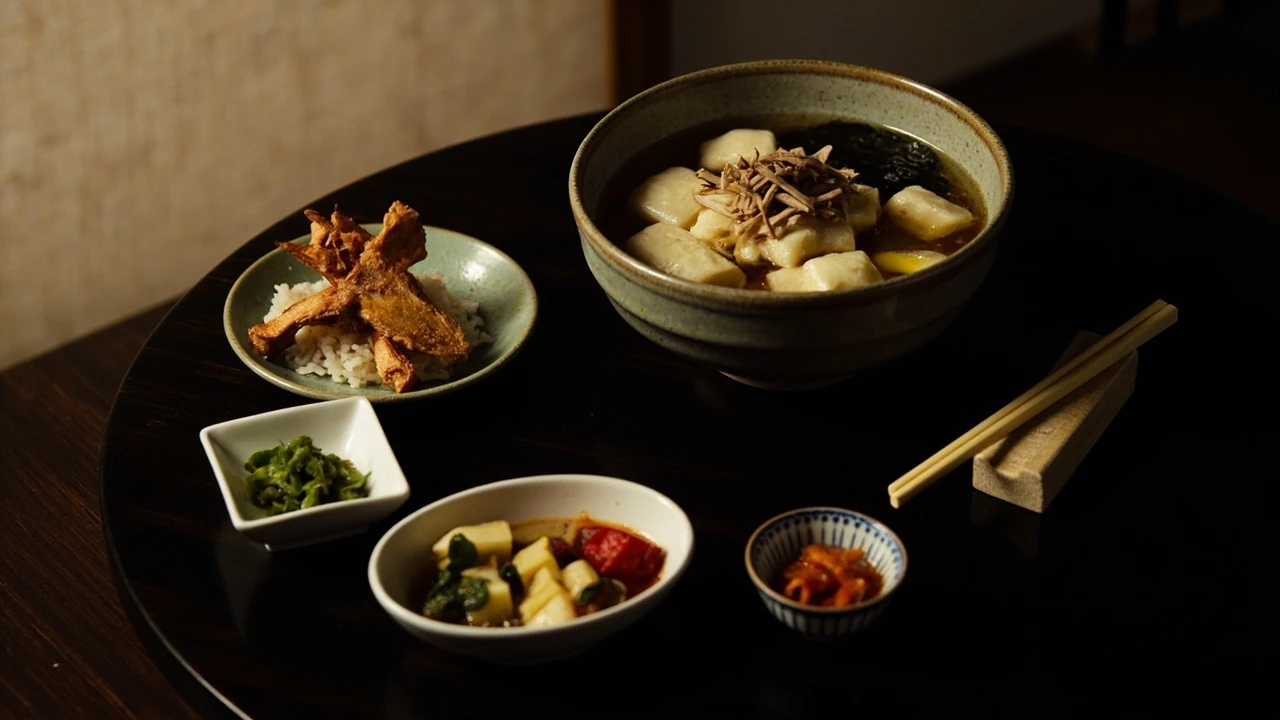
A traveler staring at a wooden menu board outside a small japanese food restaurant in Osaka often has the same problem as a first-time diner in New York: the names do not describe the dish, the meal arrives in stages, and a wrong move with the chopsticks or the soy sauce can feel embarrassing. Most of that uncertainty comes from expecting a Western meal structure from a cuisine that was designed around different rules.
This guide walks through what actually defines japanese food, how a traditional meal is built, what the most common dishes contain, how to order without guessing, and how regional kitchens differ. The goal is practical: by the end, you should be able to read a menu, choose a balanced set of dishes, and eat with reasonable confidence whether you are sitting at a counter, a low table, or a tray on a bullet train.
Japanese food at a glance
Japanese food is a set of cooking principles, not a single repertoire of recipes. Those principles emphasize seasonal ingredients, a clear main flavor in each dish, contrasting textures, and visual restraint. A meal is usually built as a small set of complementary plates rather than one large entrée, and each plate is meant to support the rice that typically anchors the meal.
The four most common building blocks are rice, soup, a main protein, and a few side dishes. Around them sit pickles, seaweed, vegetables, and occasionally noodles. Drinks such as green tea are part of the structure, not an afterthought, and a small sweet at the end signals that the meal is finished.
For travelers and home cooks, the practical takeaway is simple: a good Japanese meal balances starch, protein, vegetables, and acidity, and the chef’s job is to keep each element distinct rather than blend them on one plate. That is why a typical meal looks small by Western portion standards but feels complete.
What defines a traditional Japanese meal
A traditional Japanese meal is structured around a concept called ichiju-sansai, literally “one soup, three sides.” The soup is almost always miso or a clear dashi broth, and the three sides cover a protein, a vegetable, and a pickle or a small acidic dish. Rice is served in its own bowl and treated as a separate category, even though it is on the tray.
Modern restaurant meals in Japan still follow this template most of the time. A set meal called teishoku is the most recognizable example: a bowl of rice, a bowl of soup, a main protein, two or three small sides, and sometimes a small dessert, all priced together. Kaiseki, the multi-course formal style, extends the same idea across many small courses rather than a single tray.
Outside Japan, “Japanese food” is often shorthand for a narrower set of dishes such as sushi, ramen, and teriyaki. Those are real categories within the cuisine, but they represent a small slice of the full daily repertoire. A working understanding of the structure helps put those familiar dishes in context.
The core ingredients most dishes share
Most Japanese food is built from a small set of pantry staples. Recognizing them makes menus, recipes, and grocery shelves easier to navigate.
- Rice: short-grain japonica rice, served plain, flavored, or pressed into sushi and onigiri.
- Dashi: a stock made from kombu (dried kelp) and katsuobushi (dried bonito flakes); the savory backbone of miso soup, noodle broths, and many simmered dishes.
- Soy sauce (shoyu): aged fermented sauce used for seasoning, dipping, and finishing; lighter usukuchi is common in the Kansai region.
- Miso: fermented soybean paste used in soup, glazes, and marinades; varieties include white, red, and mixed.
- Mirin and sake: rice-based cooking liquids that add sweetness, depth, and a clean finish to simmered dishes.
- Sesame: used as oil, paste, and seeds, both for flavor and for visual accent.
- Pickled vegetables (tsukemono): daikon, cucumber, plum, and mustard greens prepared with salt, rice bran, or vinegar.
- Seaweed: nori for wrapping, wakame in soups and salads, and kombu as a stock base.
None of these ingredients is exotic in Japan. They sit in the average home kitchen the way flour, butter, and olive oil do in a European one. When a recipe or menu references an unfamiliar term, it is almost always a combination or treatment of one of these basics.
The main dish categories you will meet on a menu
Menus group dishes differently depending on the restaurant, but the categories below cover most of what you will see. Each has its own logic for how ingredients are prepared, served, and eaten.
Sushi and sashimi
Sushi is vinegared rice combined with a topping or filling. The most common forms are nigiri (a hand-pressed rice oval with a slice of fish on top), maki (rice and filling rolled in nori and sliced into rounds), and gunkan (rice wrapped in nori to hold a soft topping such as roe). Sashimi is sliced raw fish served without rice.
The rice matters more than most first-time diners realize. Properly seasoned sushi rice is what the chef is protecting when soy sauce is offered on the side; the fish is dipped, not the rice, and only the fish side should touch the soy. Wasabi and pickled ginger are used in small amounts as palate cleansers between pieces, not as a topping on every bite. To place this section in context, the Japan Air Lines food poisoning incident offers a concise background reference.
Donburi and rice bowls
Donburi means “bowl,” and the category covers any rice bowl topped with a single cooked dish. The most familiar versions are gyudon (thinly sliced beef and onion simmered in a sweet-savory sauce), katsudon (a breaded pork cutlet with egg over rice), oyakodon (chicken and egg), and tempura don (assorted fried vegetables and seafood over rice). For quick meals, a donburi is the everyday workhorse of Japanese food.
Noodle dishes
Three noodle families dominate: ramen, udon, and soba. Ramen uses wheat noodles in a flavored broth, with regional styles such as shoyu (soy-based), miso, shio (salt), and tonkotsu (pork bone). Udon are thick wheat noodles served hot in broth or cold with a dipping sauce. Soba are thin buckwheat noodles served the same two ways. Each region has its own conventions for broth depth, noodle firmness, and toppings.
| Noodle type | Base ingredient | Common styles | Typical setting |
|---|---|---|---|
| Ramen | Wheat flour, kansui | Shoyu, miso, shio, tonkotsu | Casual counter shops and chains |
| Udon | Wheat flour, thicker cut | Kake, kitsune, tempura udon, cold bukkake | Family shops, casual lunch counters |
| Soba | Buckwheat, often blended with wheat | Mori (cold), kake (hot), zaru | Specialist soba shops, formal set meals |
Grilled and fried dishes
Grilling is one of the cleanest expressions of ingredient quality in Japanese food. Yakitori are skewered chicken pieces cooked over charcoal, seasoned with salt (shio) or a sweet-savory sauce (tare). Yakimono is a broader category covering grilled fish and meats, often finished with a light brush of sauce or salt. Frying shows up as tempura, which is a light, almost lacy batter served immediately, and katsu, which is a panko-breaded cutlet sliced into strips and eaten with rice, shredded cabbage, and a thick fruit-based sauce.
Hot pots, stews, and simmered dishes
Winter menus in Japan are dominated by hot pots. Nabe is a shared pot of broth into which thin slices of meat, leafy greens, tofu, and mushrooms are dipped and cooked at the table. Sukiyaki uses a sweeter soy-based broth and typically includes thin beef, tofu, and vegetables cooked and dipped in beaten raw egg before eating. Shabu-shabu is similar, with a lighter kombu broth and very thin meat swished briefly through the bubbling pot.
Simmered dishes, called nimono
or niimono, cover everything from slow-cooked root vegetables to fish in a soy-mirin-dashi glaze. They appear at home and in bento boxes as quiet, deeply flavored side dishes.
Small sides and snacks
Small dishes, sometimes called okazu or zensai depending on context, are the connective tissue of a Japanese meal. They include edamame, pickled vegetables, small grilled fish, cold tofu with condiments, simmered hijiki seaweed, and rolled omelet (tamagoyaki). At a bar or izakaya, these are the dishes that fill a table alongside drinks.
How a Japanese meal is usually sequenced
Meal structure in Japan is built on a logic most diners pick up only by accident. The sequence is designed to highlight the rice and to keep each dish tasting like itself rather than blending into the next.
- Drink and small appetizer. Green tea is the default. At an izakaya, beer or a highball often arrives with a small bowl of edamame or pickled vegetables.
- Rice and soup. If a set meal is served, the rice and miso soup usually appear at the same time as the main dish. Rice is treated as the anchor, not a side.
- Main protein or centerpiece. This is the grilled fish, the cutlet, the simmered meat, or the plate of sushi. It is the visual and flavor focus of the meal.
- Sides and pickles. Pickled vegetables, seaweed, or a small salad reset the palate between bites of the main.
- Dessert or fruit. Often understated: a slice of seasonal fruit, a small sweet bean confection, or mochi. In a restaurant, the check is usually brought only after the meal is clearly finished.
One practical detail: soup and rice are not finished at the same time, and most diners leave a small amount of either rather than scraping the bowl. Finishing everything is fine, but polishing the rice bowl while the fish is still on the plate would read as odd.
Regional kitchens and what changes outside Tokyo
Treatments of japanese food vary more by region than is often appreciated. The country stretches across climates and coastlines, and the same dish can taste quite different in Hokkaido than it does in Kyushu.
| Region | Staple ingredients | Characteristic dishes | Notes for diners |
|---|---|---|---|
| Hokkaido | Dairy, corn, potatoes, fresh seafood | Soup curry, miso ramen, fresh scallops and crab | Heartier portions, richer broths, seafood served simply |
| Tohoku | Rice, pork, fermented foods | Wanko soba, beef tongue, inaniwa udon | Strong noodle traditions, pickles and fermented miso |
| Kanto (Tokyo area) | Soy sauce-forward seasoning, dark dashi | Edomae sushi, monjayaki, tonkotsu-shoyu ramen | Darker, stronger soy sauce; thicker broths |
| Kansai (Osaka, Kyoto) | Lighter usukuchi soy, dashi from kombu | Okonomiyaki, takoyaki, kaiseki, kitsune udon | Delicate seasoning; Kyoto is the center of formal kaiseki |
| Chugoku and Shikoku | Citrus, fresh fish, udon | Sanuki udon, seafood okonomiyaki, lemon-flavored dishes | Citrus used freely; udon culture is strong in Kagawa |
| Kyushu | Pork, sweet potatoes, spicy condiments | Hakata tonkotsu ramen, motsunabe, champon | Pork-centric; richer, often richer broths; a hot-pot tradition |
For a diner, the practical point is that “Japanese food” is not a single flavor profile. A miso soup in Kyoto is milder and lighter than the same soup in Tokyo, and ramen in Fukuoka is a different dish from ramen in Sapporo. Menus in regional airports and train stations often flag the origin; reading that line tells you a lot about what to expect. As a separate reference, the food poisoning aboard a commercial aircraft adds source-specific context to this discussion.
Etiquette that actually matters in everyday settings
Etiquette for Japanese food is sometimes described as a long list of prohibitions, but most of the rules are about respecting the chef’s work and the shared table. The ones below are the ones that show up in ordinary settings such as restaurants, homes, and business lunches.
- Don’t stick chopsticks upright in rice. It mirrors incense at a funeral and is considered the strongest food taboo in Japanese settings.
- Don’t pass food chopstick to chopstick. Use the back of your chopsticks or a small plate to transfer food, especially at shared dishes. The chopstick-to-chopstick gesture echoes a funeral rite.
- Use the small end of chopsticks for shared plates. Many restaurants provide a separate set for serving. If not, use the clean reverse end.
- Slurping noodles is acceptable, and even expected. Slurping cools the noodles and signals enjoyment. It is not impolite at a noodle counter.
- Pour drinks for others, not yourself. At a shared table, pour for the person next to you and let them pour for you. The server will usually pour for the guest at a restaurant.
- Say itadakimasu before eating and gochisousama after. These are not strictly required but are normal in homes, casual restaurants, and most business meals.
One habit worth unlearning from abroad: tipping is not part of the culture. Service is included, and leaving extra money on the table can confuse the staff. A polite thank-you is the right form of acknowledgment.
How to order at a Japanese restaurant without guessing
Outside Japan, ordering japanese food can feel like guessing. A few habits make it almost mechanical.
- Look for the set meal (teishoku or set menu). A set gives you rice, soup, a main, and a few sides, and is the safest way to get a balanced meal at a fair price.
- Read the toppings, not the dish name. “Ramen” tells you almost nothing; “miso ramen with chashu, corn, and butter” tells you the flavor direction and the richness.
- Ask about the day’s recommendation. In Japanese, osusume or the written 本日のおすすめ usually points to the freshest or most confident dish the kitchen is producing that day.
- Watch what the regulars order. At a counter shop, the person two seats down is almost always eating the local default, and the kitchen moves faster for it.
- Order one more dish than you think you need. Japanese food portions are calibrated; a single rice bowl plus one side is usually enough, but adding a small side of pickles or a salad rounds it out.
If the menu has pictures, use them. Most Japanese restaurants outside tourist districts do not, and the photos are reliable rather than aspirational. Where the menu is only in Japanese, Google Lens on a phone will translate it well enough to make a confident choice.
Common mistakes travelers and first-time diners make
Most problems with Japanese food come from expectations borrowed from other cuisines. A few patterns show up again and again.
- Treating the meal as a single large dish. Japanese meals are composed of small elements; ordering only one large item can leave the meal feeling incomplete.
- Covering everything in soy sauce. Many dishes are already seasoned. Pouring soy sauce over a grilled fish or a piece of nigiri overwhelms the chef’s balance.
- Mixing wasabi into soy sauce. The chef has already placed the right amount of wasabi between the fish and the rice in nigiri. Adding more from the side is rarely needed and can be read as a comment on the chef’s judgment.
- Eating sushi one piece at a time without breaks. Pickled ginger is there to clean the palate between different fish, not to be eaten with the fish itself.
- Leaving chopsticks across the bowl. In many settings, chopsticks are placed parallel across the top of the bowl or on a chopstick rest, not laid pointing at the person across the table.
None of these mistakes will cause a real problem in a casual restaurant, but correcting them quickly is part of becoming a confident diner rather than a hesitant one.
Drinks that pair with the meal
Beverages are part of the structure of Japanese food, not an accessory. The most common pairings are worth knowing.
| Drink | What it pairs with | Notes |
|---|---|---|
| Green tea (ocha) | Almost everything, especially set meals | Unsweetened; the default in homes and casual restaurants |
| Genmaicha | Hearty dishes, rice bowls, grilled fish | Green tea with roasted rice; a slightly nutty flavor |
| Hojicha | Late-evening meals, oily fried dishes | Roasted green tea, low in caffeine, mellow |
| Sake | Sashimi, grilled fish, simmered dishes | Served warm or chilled; junmai styles are food-friendly |
| Beer | Izakaya menus, fried food, grilled skewers | First drink of an evening at most casual settings |
| Highball | Salty snacks, grilled chicken, fried dishes | Whisky and soda, a default izakaya order |
Outside an izakaya or a specialty bar, pairing choices are usually simple: tea with a meal, water with a hot day, and a small beer or sake if the setting is a counter shop or a late dinner. Strong-flavored dishes such as curry and tonkotsu ramen are usually paired with water or tea rather than sake.
Japanese food at home: a starter pantry
Cooking Japanese food at home does not require a long ingredient list. A small set of staples covers most everyday recipes, and the rest can be added as needed.
- Short-grain rice. Calrose in the United States or any japonica variety; rinse until the water runs nearly clear.
- Soy sauce, mirin, sake. The “three friends” that season most simmered dishes. A small bottle of each will last for months.
- Dashi. Either instant granules or real kombu and katsuobushi. Granules are fine for most home cooking.
- Miso. White miso is the most flexible; a tub keeps in the fridge for several months.
- Rice vinegar. For sushi rice, salad dressings, and quick pickles.
- Sesame oil and toasted sesame seeds. For finishing vegetables, noodles, and cold salads.
- Nori and wakame. Nori for hand rolls and rice balls; wakame for miso soup and salads.
With these on hand, the everyday rotation covers rice bowls, miso soup, simple grilled fish, vegetable sides, and at least one noodle dish. Anything more elaborate can be added one recipe at a time.
Vegetarian, vegan, and allergen notes
Japanese food has a long tradition of plant-based cooking rooted in Buddhist temple cuisine, called shojin ryori, so vegetarian options exist. In everyday restaurants, however, dashi made from bonito and sauces with hidden anchovy are common, and asking about the broth base is the first step for vegetarian or vegan diners.
The five most common allergens to flag are soy, wheat, sesame, fish-based dashi, and egg. Many set meals can be modified, but a small sign that the kitchen cannot guarantee a fully allergen-free dish is common. Travelers with severe allergies often carry a translation card, since ingredient lists are rarely printed in detail on a menu.
Frequently asked questions
What counts as Japanese food?
The term covers any cuisine that follows Japanese cooking principles: rice-anchored meals, seasonal ingredients, dashi-based seasoning, and a small set of complementary plates. This includes everyday home cooking, formal kaiseki, regional noodle styles, and the global categories of sushi and ramen that originated in Japan.
What is the difference between sushi and sashimi?
Sushi is vinegared rice served with a topping or filling, while sashimi is sliced raw fish served on its own. The rice in sushi is an essential part of the dish; sashimi is judged on the cut, freshness, and the simple garnishes that accompany it.
Is ramen originally from Japan?
Yes. Ramen as eaten in Japan developed in the early twentieth century from Chinese wheat-noodle soups, but the regional styles, broths, and toppings that define modern ramen are distinctly Japanese. Each major city in Japan now has its own recognized variation.
What is the healthiest way to eat Japanese food?
A traditional set meal is naturally balanced: rice for starch, miso soup for hydration and umami, a small portion of grilled or simmered protein, and a few vegetable sides. The habits to keep are small portions of protein, generous vegetables and pickles, and a slow pace rather than adding large amounts of fried food to every meal.
Is tipping expected at Japanese restaurants?
No. Service is included, and leaving cash on the table can confuse the staff. A verbal thank-you, or in more formal settings a polite bow, is the expected form of appreciation.
What should I order if I am eating Japanese food for the first time?
Start with a teishoku set meal if it is available, or with a familiar noodle dish such as tempura udon or shoyu ramen. Pair it with a side of pickles or a small salad. This combination is mild, balanced, and uses dishes that even the most traditional kitchens prepare well.
Are there vegetarian options at most Japanese restaurants?
Often, but not always. Vegetable sushi, tofu dishes, vegetable tempura, and edamame are widely available. The catch is usually the dashi in miso soup or the broth in noodles. Asking “is the dashi made from fish?” is a quick way to find out.
What is the best region in Japan for food travel?
It depends on the goal. Osaka is famous for casual street food, Kyoto for formal kaiseki, Fukuoka for tonkotsu ramen, Hokkaido for seafood and soup curry, and Kanazawa for a refined balance of kaiseki and market food. A first trip that combines Tokyo and one of these regions covers most of the cuisine’s range.
How do I eat sushi politely with chopsticks?
Pick up the piece so that the fish touches the soy sauce, not the rice, and dip only the fish side lightly. Eat the whole piece in one bite. Use a small amount of pickled ginger between different types of fish to reset the palate rather than with the fish itself.
Why are Japanese portions so small?
The meal is built from several small dishes rather than one large entrée, and each dish is meant to be tasted on its own. Eating a full traditional meal of rice, soup, a main, two sides, and pickles covers more food than the small plates suggest at first glance.
Practical next steps for a confident first meal
The fastest way to get comfortable with Japanese food is to eat one traditional set meal in a setting where the kitchen is doing the work for you. A teishoku at lunch, a counter ramen shop, or a casual izakaya in the early evening will all show the structure of the cuisine in a way that a single dish cannot. From there, the variations become easier to read: regional broth styles, seasonal fish, and the way a chef balances a single plate all start to make sense.
Two resources from this site are worth keeping open while you build that familiarity: the menu engineering notes on how a thoughtful menu is structured and the guide to food photography that actually sells the dish. Both are useful for anyone thinking about Japanese food as a menu, a brand, or simply a meal to photograph well.