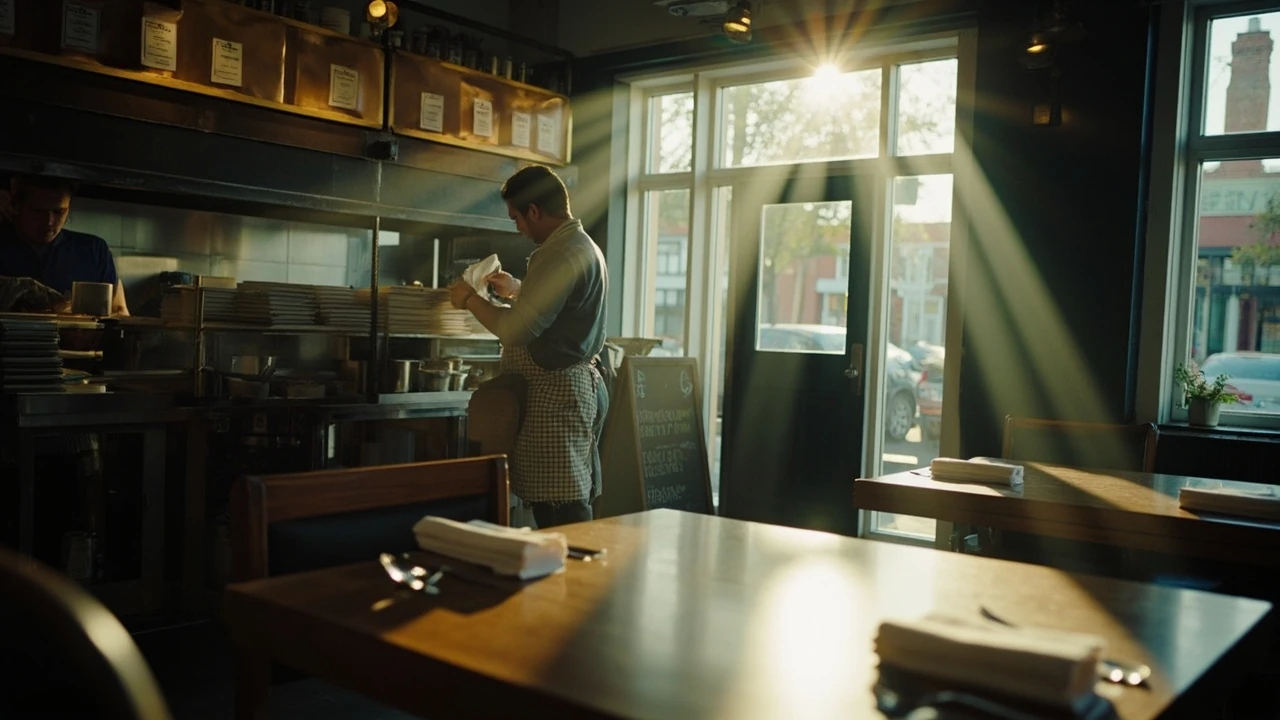
A half-finished prep list, a folded stack of menus by the host stand, a dishwasher running through a final cycle. The lights in the dining room flip on about ninety minutes before the doors unlock for the first seating. In restaurant operations, that stretch of time is what many cooks and floor managers call the food open: the controlled handoff between a quiet building and a working service. It is not a single action, and it rarely happens the same way twice.
The phrase food open shows up in kitchen handbooks, point-of-sale setup guides, staff group chats, and small business checklists. Used loosely, it can mean three different things at once: the moment a food business opens for the day, the wider process of launching a new restaurant concept, or the technical state of a kitchen when it begins accepting orders. Each reading matters, and each one carries its own risks, costs, and small decisions that compound across a week.
This guide treats food open as one editorial concept and breaks it into the parts a working operator actually has to think about: what the day-of food open looks like, what a launch food open requires, and what a system-level food open means for a kitchen running on a POS or delivery platform. Along the way, the article links to related pieces on restaurant websites and menu pricing where the conversation crosses into adjacent territory.
What a food open actually covers in a working kitchen
Most independent restaurants use the words “open” and “food open” interchangeably, but inside the building they refer to two different moments. Open usually means the moment the front door unlocks. Food open, in the stricter sense, is when the kitchen is ready to fire the first ticket of the day. That gap can be as short as fifteen minutes in a coffee bar that serves pastries only, or as long as two hours in a full-service restaurant that does a tasting menu.
The pre-service routine that makes the food open clean is built from small physical checks. Walk-ins are checked for temperature, a thermometer sits in a sanitizer bucket, the espresso machine is primed, and the line cooks have confirmed the prep board against the day’s features. None of these steps is dramatic on its own. The point of grouping them under one phrase is that they happen as a single beat, not as a scattered to-do list.
For the front of house, the food open includes its own quiet sequence: floors swept, tables wiped, point-of-sale terminals booted, daily specials written on the board, and the music playlist set to a reasonable volume. A host who can run that list in twenty minutes without checking their phone usually knows the restaurant better than the owner does.
Why the language matters
Calling the start of service a food open instead of just “opening” does a small amount of useful work. It separates the act of serving food from the act of greeting guests, which is useful when the dining room opens for drinks only or when a café starts serving coffee before the kitchen is technically live. It also gives managers a clean word to use in scheduling tools and prep sheets: “FO” (food open) versus “DO” (doors open).
When a new team member hears “food open at 4pm”, they know the kitchen needs to be fully ready by 4pm, even if the front door stays locked until 4:30pm. That kind of vocabulary prevents the most common slow-day mistake, which is starting service before the line is actually prepared to take orders.
The two-hour window before a food open
Most working kitchens build their day-of food open around a predictable two-hour ramp. The exact timing depends on the menu, the labor model, and the size of the space, but the underlying structure tends to be similar. Treating that window as a fixed object, rather than a flexible buffer, is one of the cheapest operational upgrades a small food business can make.
Ninety minutes out: systems and surfaces
This is the part of the food open that happens with the lights still half up and the radio off. Walk-ins are logged, prep coolers are checked against the prep sheet, and the dish pit is reset. A line cook who knows the menu can walk the line and read every station silently, the way a pilot walks a cockpit.
Boiling water, heating stock, and pulling proteins to temperature all start here, because none of them happen instantly. The dishwasher is run through a full cycle so the first load of clean plates is ready before the first table turns over. Floors are swept and mopped, not just brushed, because a sticky floor tells a guest more about the kitchen than the menu does.
Sixty minutes out: prep and portions
About an hour before the food open, the prep board is filled. Sauces are portioned, salads are washed, garnishes are picked, and bread is sliced if the menu calls for it. Anything that can be done in batch is done in batch, because the first hour of service tends to land three or four tickets at once.
For menus built around a small set of ingredients, this is also the moment when the team checks yield. If a cook cut two kilograms of onions yesterday and used only one and a half, the rest should be clearly labeled, dated, and assigned to today’s prep. Wasted prep is one of the quietest drains on margin, and it becomes obvious as soon as the food open rolls around.
Thirty minutes out: line call and lineup
The final half hour before a food open is a brief, structured meeting. The chef calls the menu. Eighty-six items are reviewed. Any dish that depends on a feature ingredient that did not arrive is removed from the line until the situation is solved. The floor manager reviews the reservation book, the server stations, and any large-party notes.
This is also when a manager confirms that the POS is online, the card reader is paired, and the online ordering tablet is awake. A system that is technically open but functionally asleep is the most expensive way to start a service, because guests wait, tickets back up, and the team loses the calm rhythm they spent ninety minutes building.
| Time before food open | Kitchen focus | Front of house focus | Common failure point |
|---|---|---|---|
| 2 hours | Walk-in temps, equipment startup, stock on heat | Floors, trash, music, lights | Forgetting the espresso machine or water lines |
| 90 minutes | Line check, prep board review, dish machine cycle | POS boot, reservation review, table setup | POS not logged in or printer offline |
| 60 minutes | Portioning, sauces, bread, garnishes | Specials written, server station restocked | Unlabeled prep, stale bread |
| 30 minutes | Menu call, 86 board update, tasting | Lineup, role assignments, door count | Team members arriving late |
| 0 minutes | Doors unlocked, first ticket fires | First guests seated, water poured | Holding the door before the line is ready |
Launch food open: opening a new food business from scratch
The phrase food open also shows up in a very different context: the day a brand-new restaurant, café, or food truck serves its first guest. The stakes are higher, the timeline is longer, and the to-do list looks nothing like the daily ramp above. A launch food open is closer to a controlled product release than to a normal Tuesday lunch service.
Independent operators often underestimate how long a launch food open actually takes. The visible work, like a buildout and a sign, is what most people plan around. The invisible work, like permits, supplier onboarding, staff training, and a soft opening, is what usually decides whether the first week goes well or badly.
The eight-week runway most operators need
For a small full-service restaurant, the realistic runway from “keys in hand” to “first paying guest” is closer to six to ten weeks than to two. During that window, the food open is not a single moment but a series of smaller openings: a friends-and-family night, a staff training service, a soft opening with reduced capacity, and finally a public launch.
Each of those smaller openings exists to test something specific. The friends-and-family night is for kitchen timing. The staff training service is for floor flow. The soft opening is for the POS, the reservation system, and the small bugs that only appear when real guests are walking through the door. A team that skips these steps and jumps straight to a public food open tends to learn the same lessons in front of strangers, which is the most expensive way to learn them.
Permits, licenses, and the paperwork behind a food open
Almost every city, county, or state has a separate license, permit, or inspection tied to the act of selling food. A typical independent restaurant in the United States can expect to coordinate a food service permit, a business license, a sales tax registration, a sign permit, an occupancy permit, and at least one fire inspection. Some jurisdictions also require a separate permit for outdoor seating, for serving alcohol, or for playing music.
The exact list depends on the address, the concept, and the operator’s legal structure. What does not change is the order: the building cannot be occupied as a food business until the relevant health authority has signed off, and the kitchen cannot legally serve food until the operator has the right paperwork in hand. A food open that happens before those documents exist is a soft opening at best and a code violation at worst.
For an overview of how regulatory food businesses are usually classified in the United States, the Wikipedia foodservice entry is a reasonable starting point. For state-by-state specifics, the relevant state department of health or agriculture is usually the authoritative source.
Suppliers, vendors, and the supply side of a food open
A brand-new food business has to stand up its supply chain before the first service. That means picking a primary produce vendor, a protein supplier, a dry goods source, a bread partner, and a beverage distributor. Each of those relationships takes time to set up, especially the credit application that almost every distributor runs.
For a launch food open, the practical move is to start with one primary vendor per category, run a short test order, and confirm delivery windows and minimum order amounts. Relying on retail suppliers in the first week is a common early mistake, because retail pricing cannot support a menu and the packaging is not designed for a working kitchen.
| Category | What to confirm | Common first-week risk |
|---|---|---|
| Produce | Delivery days, minimum order, credit terms | Substituted items, inconsistent quality |
| Protein | Cut specs, portion weight, delivery window | Late delivery on the busiest night |
| Dairy and bread | Daily vs. three-times-a-week delivery | Stale bread by Saturday brunch |
| Dry goods | Lead time on specialty items | Running out of a key spice midweek |
| Beverages | CO2 rental, glassware, ice supply | No ice on a 90-degree day |
| Smallwares | Backup of high-wear items (spatulas, towels) | Towel shortage by day four |
System food open: when the kitchen goes live
There is a third meaning of food open that shows up in technical and operations work. A system food open refers to the moment a kitchen switches from prep mode to service mode inside a piece of software: a POS terminal, a kitchen display system, a delivery platform, or an online ordering site. It is a small event with outsized consequences, because every order that fires before the system is fully open tends to print wrong, route wrong, or never print at all.
For most small operators, a system food open happens once a day and lasts for the entire service. The system is “open” when the kitchen is accepting tickets, when the front of house can take orders, and when the delivery channel is routing items to the right tablet. When the last ticket of the night is closed, the system is “closed” and the kitchen shifts back to prep mode for the next day.
Where the technical food open tends to break
The most common technical failure before a system food open is a printer that is offline. Tickets fire, but nothing prints, and the kitchen does not see them. The second most common failure is a modifier map that is misaligned: a menu item has been renamed, but the kitchen display still shows the old name with the old price. The third is a delivery tablet that has gone to sleep, so a courier shows up and the order is sitting in a queue nobody is watching.
Each of these failures is invisible to a guest who walks in, and each of them is visible within the first ten minutes of service. A 15-minute pre-service check that includes a test print, a test order, and a test card swipe prevents almost all of them. The investment is small; the cost of skipping it is usually one confused table and one lost order.
Independent operators who run on a single POS and a single printer should think about the system food open the same way they think about a pilot’s preflight: a short, boring checklist that exists to make sure nothing surprising is hiding in the wiring.
- Boot the POS terminals and confirm all printers respond.
- Open the kitchen display and verify the menu matches today’s 86 board.
- Check the online ordering tablet and confirm it is logged in.
- Run a single test transaction, void it, and confirm it routes to the right station.
- Confirm the credit card terminal is paired and the tip prompt is set.
- Note any failed steps in a small operations log, not in someone’s head.
How a food open affects the guest experience
Guests rarely use the phrase food open, but they feel the consequences of it within the first three minutes of a visit. The first interaction is usually with the door: is it unlocked at the time it claims to be unlocked? The second is with the host stand: is somebody there who can seat them? The third is with the menu: does the menu match the kitchen, or are half the items crossed out by hand? Each of those micro-moments is a small test of whether the food open was actually finished before the doors opened.
A clean food open is one of the few operational upgrades that improves almost every metric at once. Order accuracy goes up because the line is calm. Ticket times go down because the kitchen is already at temperature. Server confidence goes up because specials are written and tables are set. Reviews improve because the small annoyances that drive one-star comments never appear.
A messy food open does the opposite. The first table waits an extra ten minutes for a drink, the second table is told the special is sold out, the third table watches the host apologize to the fourth. None of these problems is fatal on its own. Together, they set the tone for a service that the team is now playing catch-up on for the rest of the night.
Where restaurants lose the food open
The most expensive part of a food open is the gap between what is scheduled and what is actually ready. A line cook scheduled at 2pm for a 4pm food open should not be walking in the back door at 3:45pm. A prep cook scheduled at 9am for a 4pm food open should not be discovered at 3:30pm with a half-finished mise en place. The phrase “we’ll catch up” is the most common sentence in a struggling service, and it almost always starts with a missed food open.
Another common loss point is the menu. If a dish was added on Tuesday, was it added in the POS, on the printed menu, on the delivery platform, on the website, and on the staff training sheet? Most inconsistencies between what is sold and what is served come from one of those five places, not from a confused cook. The food open is the first moment those inconsistencies become visible to a guest, so it is the cheapest moment to fix them.
Soft openings versus hard openings
Most experienced operators separate the launch food open into a soft phase and a hard phase. The soft phase runs anywhere from three days to three weeks, depending on the concept, and it is designed to surface problems in a low-stakes environment. The hard phase is the public food open, which is the moment the marketing plan has been pointing toward.
A soft food open typically runs at reduced capacity, often with a limited menu, and almost always with a discount or a complimentary item. The goal is not to make money. The goal is to run the kitchen and the floor through a realistic service so the team can find the small problems that do not show up in training.
A hard food open, by contrast, is the public launch. The marketing is live, the press is invited, and the menu is full. By this point, the team should have already solved the most obvious operational problems in the soft phase, and the goal of the hard food open is to convert attention into regulars.
| Dimension | Soft food open | Hard food open |
|---|---|---|
| Capacity | Reduced, often 30-50 percent of seats | Full house by design |
| Menu | Limited, focused on kitchen strengths | Full menu, including long lead-time items |
| Pricing | Discounted or comped for feedback | Full menu price, no comps |
| Audience | Friends, family, industry peers | Public, press, regulars |
| Goal | Find and fix operational problems | Build reputation, fill the room |
| Marketing | Soft signals, mostly owned channels | Paid, earned, and owned media |
Marketing the food open without overpromising
There is a marketing version of the food open as well, and it deserves its own paragraph. Launch announcements tend to swing between two failure modes: underselling the concept because the operator is nervous, or overselling it because the marketing has been running for months. Neither is a good look on day one.
The honest version of a launch announcement answers a small set of questions. What is the food? Where is it? When is it open? Who is the team behind it? And what should a first-time guest expect on their first visit? Anything beyond that tends to be a promise the kitchen will have to keep, and kitchens under stress are not great at keeping promises they did not need to make.
For a deeper look at how to position a launch announcement, the brand identity work described in this guide to restaurant branding is a useful complement. The technical foundation of the launch lives in the operations above; the way it lands in the world lives in the brand work.
Common food open mistakes and how to avoid them
Most food open problems are not exotic. They are the same handful of issues showing up in different buildings. Recognizing them in advance is the cheapest way to avoid them, because each one has a small, practical fix that fits inside the two-hour ramp.
- Holding the door before the line is ready. A guest seated twenty minutes before the kitchen is calm is a guest who waits twenty minutes for a drink. The fix is a strict policy: the line calls the kitchen ready, then the host unlocks the door.
- Serving a menu that the kitchen has not tested at volume. A dish that works for eight covers a night can collapse at thirty. The fix is a soft food open that runs the kitchen near capacity before the public launch.
- Forgetting the smallwares. A working kitchen without enough clean spatulas, side towels, or small plates is a kitchen that runs out of steam in the first hour. The fix is a smallware count built into the thirty-minute lineup.
- Printing specials that the kitchen cannot produce. A daily special that the chef did not prep for is a free pass for a bad review. The fix is a daily tasting of every special on the line, not at the chef’s table.
- Skipping the system check. A POS that is logged out, a printer that is offline, or a delivery tablet that is asleep costs the same as a missing cook. The fix is a fifteen-minute system walk at the top of the ramp.
- Understaffing the first hour. The first hour of service is not the same as the second hour. Tickets cluster. Guests ask questions. The fix is a brief overlap at the top of the shift so the team can absorb the spike.
How often a food open should be re-examined
A food open is not a one-time project. It is a routine that should be reviewed at least once a quarter, because menus change, labor changes, suppliers change, and the team changes. A routine that worked at three covers a night can quietly fail at fifteen, and a routine that worked in summer can quietly fail in winter, when menu mix shifts toward braises and longer cook times.
For most small operators, the easiest way to review the food open is to walk the line with a notebook about once a month. Where did the team lose time? What did the kitchen run out of? What did the floor have to apologize for? Those notes, kept in one place, become the operating manual that a new manager can read in twenty minutes and a new cook can be trained on in a single shadow shift.
When to redesign the food open from scratch
There are three moments when a food open usually needs a full redesign instead of a small tune-up. The first is a menu overhaul, because the prep list has changed and the timing has shifted. The second is a remodel, because the physical flow is different and the old choreography no longer works. The third is a change in the leadership team, because a new chef or a new general manager brings a different theory of how a service should feel.
In each of those cases, the safest move is to treat the next food open as a launch food open: a soft week, a reduced menu, and a brief overlap between the outgoing team and the incoming team. The cost of a soft week is small. The cost of skipping it is a month of slow services while the team relearns the same lessons.
Frequently asked questions
What does “food open” mean in a restaurant?
In restaurant work, “food open” usually refers to the moment the kitchen is ready to accept and fire its first tickets of the day. It is sometimes used interchangeably with “doors open”, but many operators separate the two: the kitchen can be food open before the dining room unlocks, or the dining room can be open for drinks before the kitchen is food open.
How is a daily food open different from a launch food open?
A daily food open is the routine a kitchen runs through each service: prep checks, line call, and a small system test. A launch food open is a one-time event tied to opening a brand-new food business, which includes permits, supplier setup, staff training, a soft opening phase, and a public launch. The launch version is longer, more expensive, and harder to undo, so it benefits from more planning.
How long before opening should a kitchen start prepping?
For a small full-service restaurant, most kitchens start the prep ramp about two hours before the food open. Coffee bars and bakeries often run a shorter ramp. Fine-dining kitchens with a tasting menu can run closer to three or four hours. The exact timing is less important than the consistency: a kitchen that runs the same ramp every day builds a rhythm that the team can feel.
Do I need a soft opening before a public food open?
For a new restaurant, food truck, or café, a soft opening is almost always worth the time. It surfaces the small operational problems that a training session cannot, including ticket flow, POS quirks, and timing on the slowest dish on the menu. Skipping a soft opening is one of the most common reasons a launch food open feels rough to early guests.
What should a manager check 30 minutes before a food open?
A short, consistent checklist works best: menu call, 86 board review, a tasting of any specials, a test print from the POS, a glance at the reservation book, and a quick role assignment for the floor. The point is not to add work but to confirm that the work done earlier in the day actually shows up in the room when the first guest walks in.
Can a delivery-only kitchen run a faster food open?
Yes. A delivery-only or ghost kitchen can usually compress the ramp because there is no dining room, no host stand, and no front-of-house choreography. The system checks still matter: a delivery tablet that is asleep or a printer that is offline is the same problem in a smaller building. Most ghost kitchens run a thirty-to-sixty-minute ramp before the food open.
How does a food open change for a seasonal menu?
Seasonal menus change the prep list, the cook times, and the suppliers, so the food open usually needs a small redesign at the start of each season. A winter menu built around braises and long simmers needs more lead time on proteins and stocks. A summer menu built around raw and chilled dishes needs tighter cold-chain checks. The two-hour ramp is a starting point, not a fixed rule.
What is the most common food open mistake?
Holding the door before the kitchen is actually ready is the most expensive everyday mistake, because it sets the tone for the entire service. The fix is structural: a line cook or a chef calls the kitchen ready, then the host unlocks the door. That single rule, written down and enforced, prevents more first-hour problems than any equipment purchase.
How does staffing affect the food open?
Staffing is the variable that quietly changes the food open the most. A line with one extra cook can run the ramp in half the time. A floor with one fewer server can lose the first ten minutes. Most experienced operators build a small overlap into the top of the shift specifically to absorb the spike that comes with the first hour after the food open.
What metrics tell me a food open is working?
Three numbers cover most of it. First, ticket time on the first ten tickets of the day, which should be within a minute or two of the rest of service. Second, order accuracy on the first hour, which is usually higher when the line is calm. Third, comp and void rate, which tends to spike when the kitchen is not actually ready. A small operations log, kept daily, makes those numbers visible without much extra work.